November 9, 2026 | Kelly Youngblood
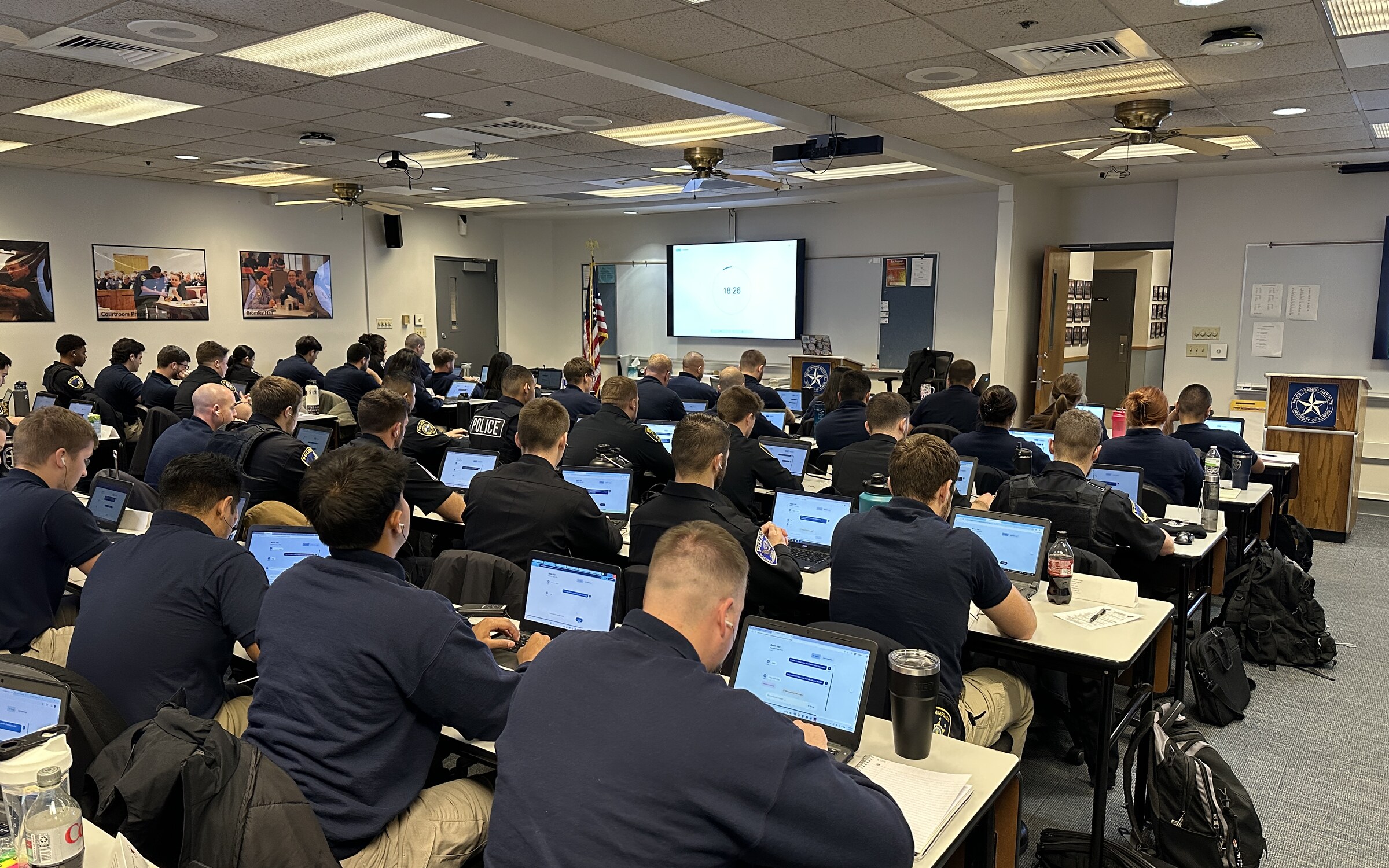
A PhD student in the Institute of Communications Research collaborated with students and researchers from across the University of Illinois to develop an AI platform that trains law enforcement officers for real-world communication scenarios.
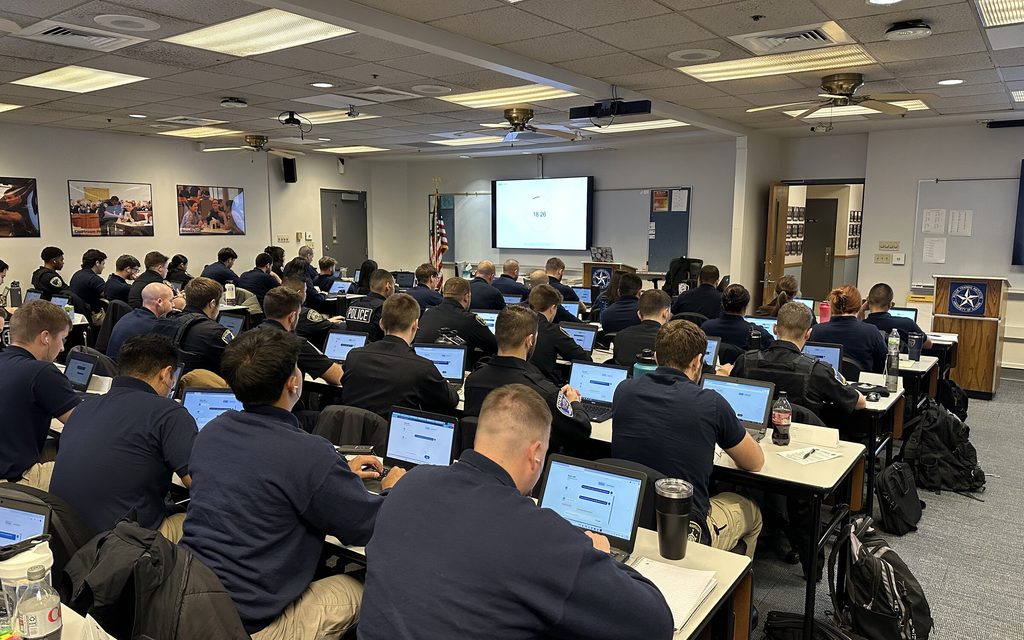
Duo Wang, an ICR doctoral student and researcher—along with Jen Whiting, a research assistant at the University of Illinois Police Training Institute and doctoral student in the College of Education, and Kyrian Liang (BS ’26, Grainger Engineering), doctoral student at the iSchool—designed Voysses, an AI-powered communication training platform that allows police recruits to practice difficult, high-stakes conversations through realistic, responsive simulations.
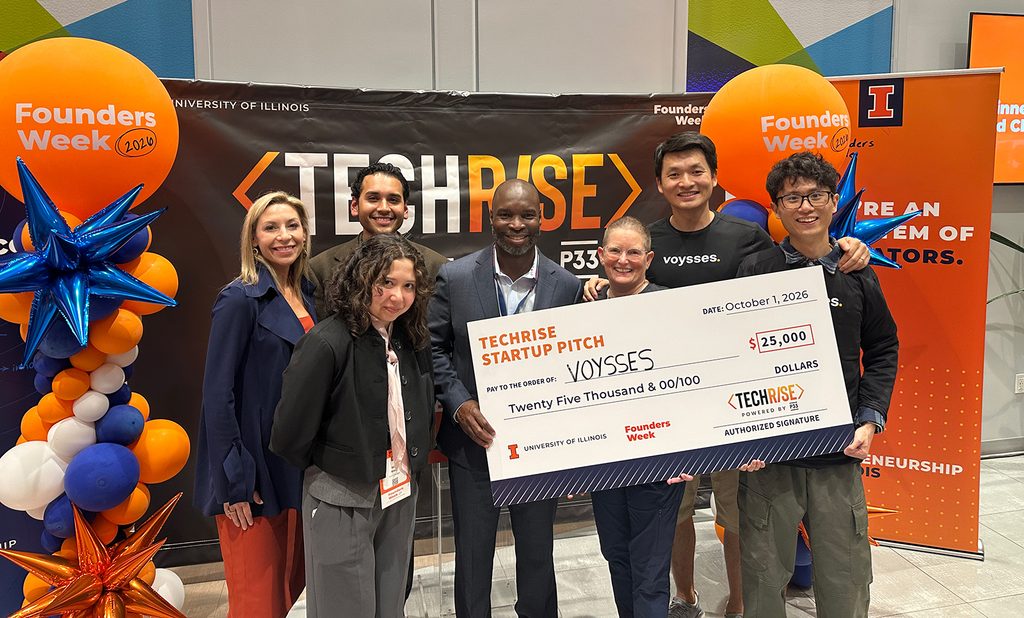
In October, the Voysses team won the TechRise pitch competition, earning $25,000 to go towards their startup. They also won Best Pitch and were named runner-up in the 2026 Cozad New Venture Challenge held in April, earning more than $10,000.
Seeing our research translate into real social value is the best reward we could ask for.
Duo Wang
Institute of Communications Research Doctoral StudentVoysses uses conversational AI to create interactive training scenarios where recruits can practice critical skills such as trauma-informed communication—situations that are difficult to reproduce safely and consistently in conventional training.
Joe Gallo, director of the Illinois Police Training Institute (PTI), said Voysses addresses one of the most significant challenges in law enforcement training—the limited opportunity for officers to practice communication and interpersonal skills in a realistic and repeatable environment.
“PTI believes that how officers communicate with and treat people is one of the most important aspects of policing. The Voysses platform allows recruits to engage in interactive scenarios where communication, active listening, empathy, and decision-making are just as important as tactical skills,” Gallo said. “Through this process, recruits strengthen their understanding of procedural justice and learn how effective communication can de-escalate conflict, improve outcomes, and enhance public trust and legitimacy.”
While the AI training doesn’t replace traditional live-actor training, police recruits can interact with AI personas in Voysses that have realistic backstories and psychological characteristics. The scenarios are unscripted and the AI responds based on what recruits say or type, with each case tied to PTI’s learning objectives and assessment rubrics.

“I hope Voysses can give officers more opportunities to practice at a lower cost, helping them become more proficient and confident in communication and de-escalation,” said Wang, who also has a PhD in information sciences from Jilin University in China. “Those experiences encourage us and reinforce our belief in the value of this work. Seeing our research translate into real social value is the best reward we could ask for.”
The team is looking to expand its use to include training on traffic stops, gender-responsive police scenarios, and other instances that are difficult to recreate, such as interviewing a child witness.
“There is not an officer on the street right now who’s ever been allowed to practice talking to a child in crisis,” said Whiting, who has been a research assistant at PTI for more than three years. “Through our startup, we hope to change that.”
They also plan to work with additional police academies, agencies, and state-mandated communication and de-escalation training programs.
Wang’s advisor, Mike Yao, advertising professor with an appointment in the Institute of Communications Research, said Wang’s research and application is a compelling example of ICR’s interdisciplinary training and, more broadly, of the kind of research the College of Media is increasingly positioned to do.
“What excites me most about this project is not just its application to police training, but how communication theory and research can inform the design of AI and future media platforms,” Yao said. “I see this as an example of the unique contributions our college can make as communication, AI, and emerging technologies increasingly converge.”
Share on social