Institute of Communications Research welcomes 2026 cohort of doctoral students


The Institute of Communications Research is excited to announce their newest cohort! Please learn more about the students’ research interests below and join us in welcoming them to the University of Illinois College of Media community this fall. For more information, see full student profiles.

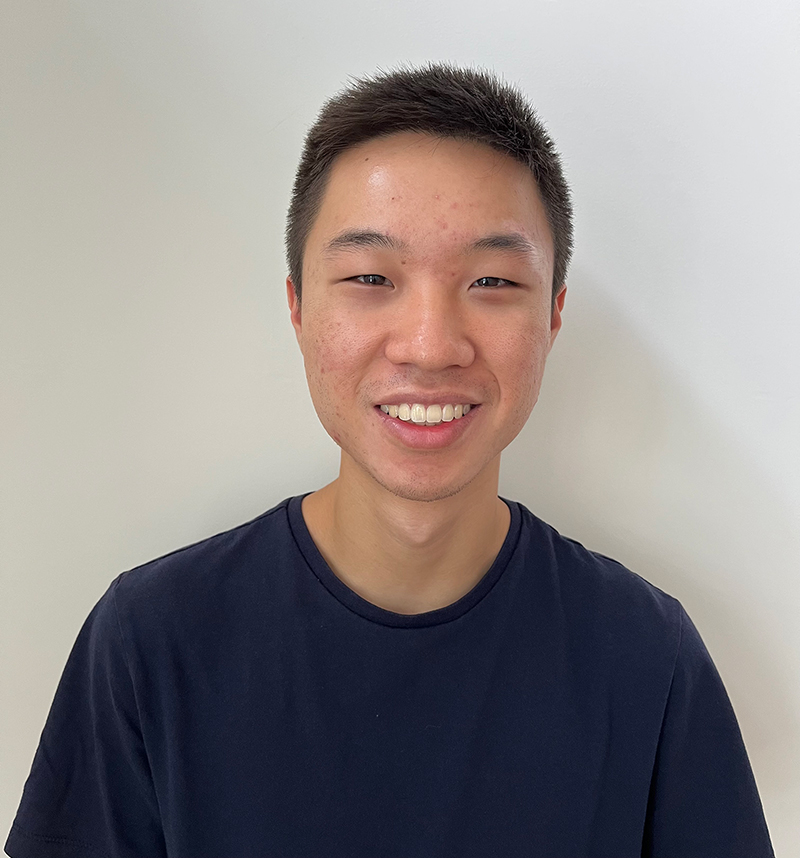
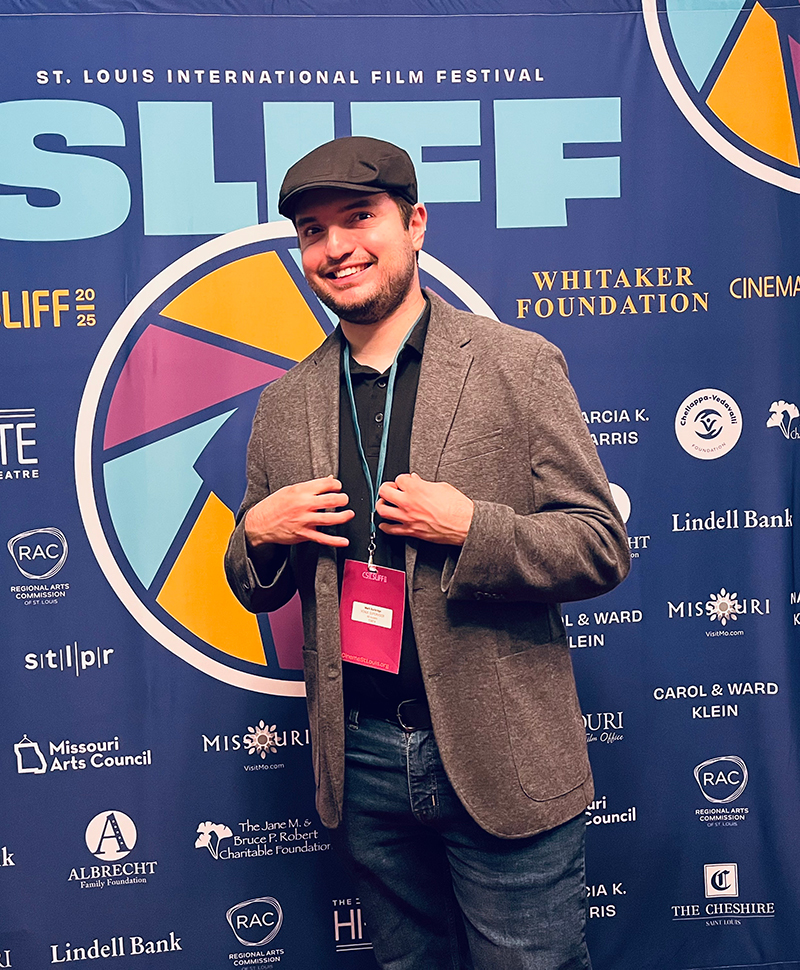
Mark Burbridge

Mark Burbridge’s primary research areas center around film criticism, media studies, and digital media studies, with specific research focus on the evolution of film criticism, histories of film industry and media markets, and how emerging technologies affect popular film discourse.

Boram Cho

Boram Cho’s research interests include AI creativity, human-AI interaction and collaboration, persuasion knowledge, emerging technologies and media in children and older adults, and ethical AI use.

Matthew Huh

Matthew Huh’s research focuses on cultural and audience shifts found in contemporary pop culture, animation, and nostalgia, along with the impact of blockbuster media in film culture.

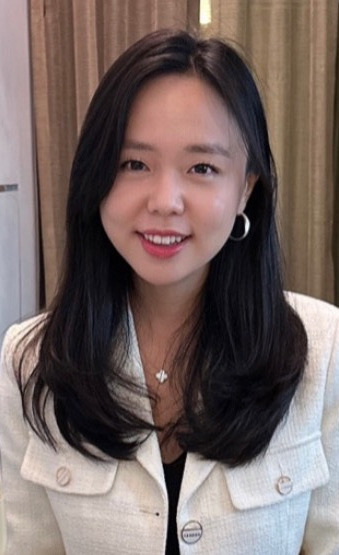
Jiayi Joy Wang

Jiayi (Joy) Wang’s research focuses on artificial intelligence in advertising and consumer behavior, with particular interest in how AI-generated advertising and persuasion knowledge shape consumer responses across digital platforms.

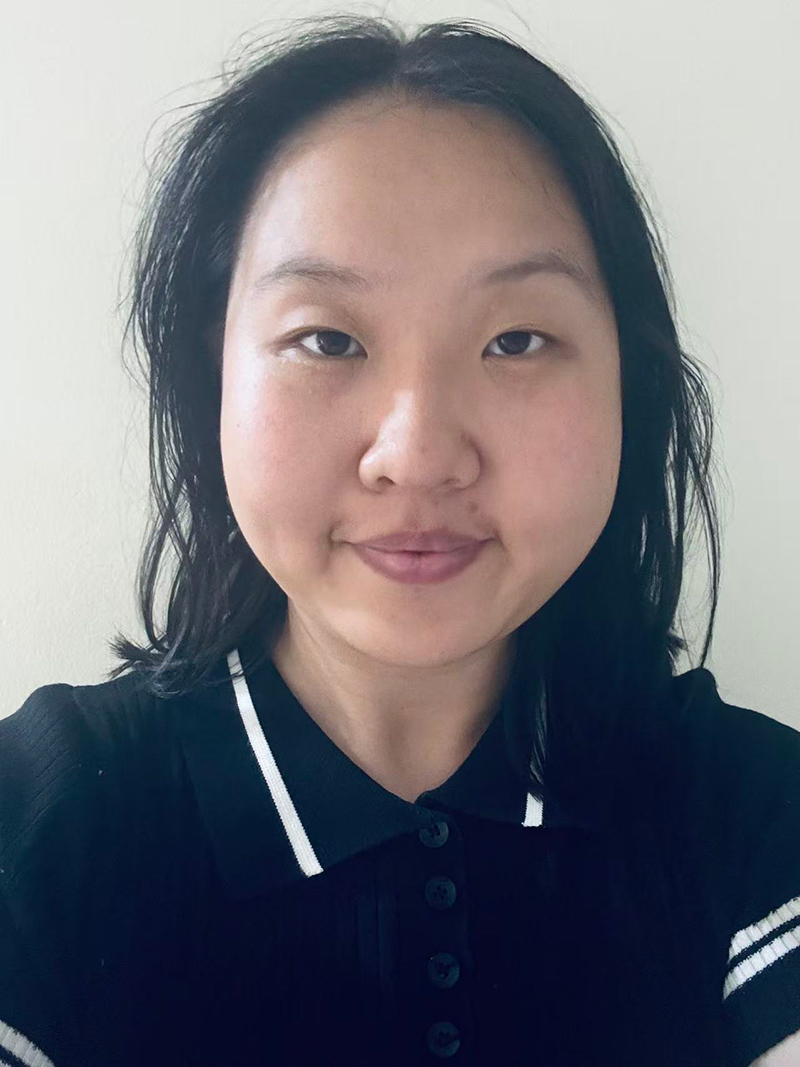
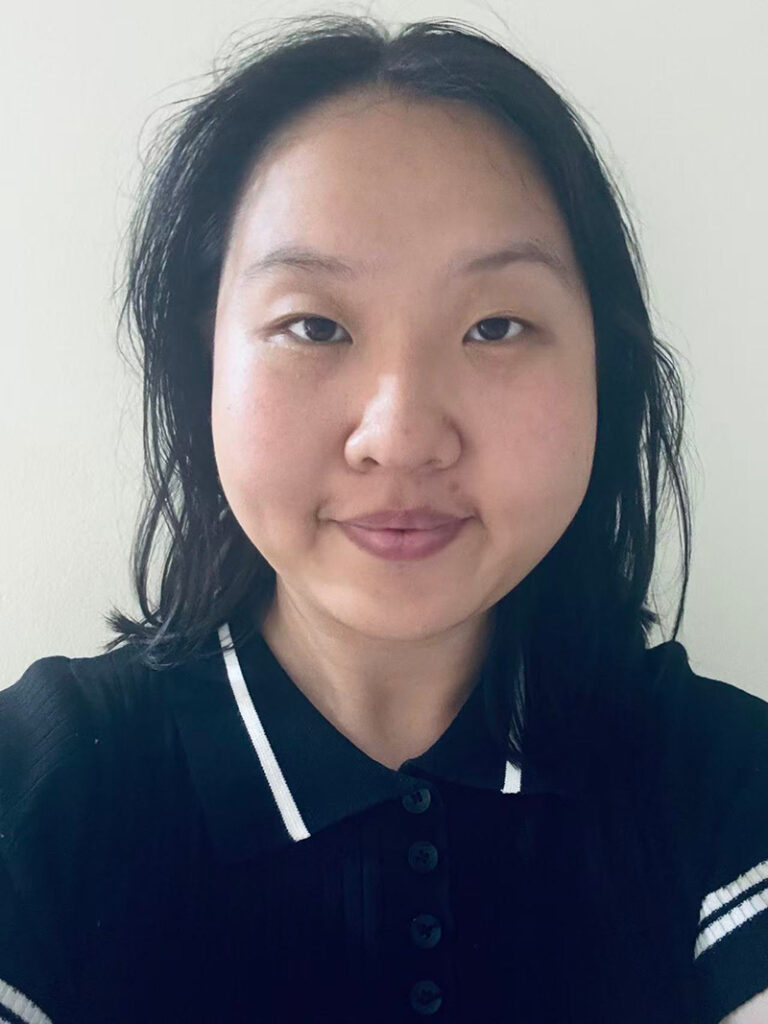
Chenqi Zhu

Chenqi Zhu’s research interests lie in the intersection of media and communication study, history of science, and science technology studies. She is interested in how communicative, scientific, and technological practices condition and transform each other across historical trajectories, and to their constitutive role in structuring human nature and broader social formations.

Mark Burbridge

Mark Burbridge

Email: markab6@illinois.edu

Research Interests

My primary research areas center around film criticism, media studies, and digital media studies. My specific research interests center around: 

  • The Evolution of Film Criticism 
  • The Histories of Film Industry and Media Markets 
  • How Emerging Technologies Effect Popular Film Discours

Courses Taught

  • MACS 100: Introduction to Popular TV and Movies

Academic Roles

  • Graduate Teaching Assistant

Awards and Honors

  • Graduate Opportunity Award Recipient – UCLA 
  • John J. Pauly Award for Outstanding Student Achievement – SLU

Related Links

Chenqi Zhu

Chenqi Zhu

Email: chenqiz2@illinois.edu

Research Interests

Chenqi’s research interests lie in the intersection of media and communication study, history of science and STS. Generally, she’s drawn to how communicative, scientific and technological practices condition and transform each other across historical trajectories, and to their constitutive role in structuring human nature and broader social formations. At a more specific and current focus, she examines how the computational and automated transformation of media semiotics both contributes to and is reconfigured by artificial intelligence, tracing its continuities and ruptures with historical foundations, as well as the challenges it poses for communicative practices where various human activities and selfhood may be redefined. 

Prior to joining ICR, Chenqi earned her bachelor’s degree in Journalism and Communication from Shanghai International Studies University and was a visiting student at the University of California, Berkeley.

Recent Publications/Presentations

Chenqi Zhu, Re-Embodying the Interface: A Historical Inquiry into Human-Computer Interaction, 2025 History of Science Society Annual Meeting, HSS, New Orleans, Louisiana, USA, November 13-16, 2025. 

Chenqi Zhu, AI-generated Images Present Reduction of Internal Cultural Diversity through Contracted Semiotic Selection, 2025 International Communication Association Regional Conference, ICA, Hefei, China, October 19-22, 2025. 

Chenqi Zhu, Illusory Freedom As A Veil Of Deep Passivity: The “Biological Turn” In Viewing Experience From Television To Online Short Dramas, 10th International Conference on Communication & Media Studies, Université Paris 1 Panthéon-Sorbonne, Paris, France, Sep 11-12, 2025. 

Chenqi Zhu, Transparency and reverence: research on relation between polytype scientific knowledge and public perception of climate change, Public Communication of Science and Technology Symposium 2024:Communicating Science across Cultures, PCST, Suzhou, China. October 17-19, 2024.

Courses Taught

  • MACS 100: Intro to Popular TV & Movies

Academic Roles

  • Teaching Assistant (TA) for MACS 100

Jiayi (Joy) Wang

Jiayi Joy Wang

Email: jiayiw13@Illinois.edu

Research Interests

Joy is a doctoral student at the Institute of Communications Research (ICR). Her research focuses on artificial intelligence in advertising and consumer behavior, with particular interest in how AI-generated advertising and persuasion knowledge shape consumer responses across digital platforms. She has contributed to multiple research projects examining AI-generated advertising and consumer trust in emerging media technologies.

Prior to joining ICR, Joy earned an M.S. in Advertising and a B.A. in Communication from the University of Illinois Urbana-Champaign.

Recent Publications/Presentations

Pierre, L., Zambrano Rodriguez, V. C., & Wang, J. (2026). Measuring Consumer Aversion toward AI in Marketing Communication and Assessing Its Relationship to Brand Perceptions and Purchase Intention. Journal of Consumer Behaviour. https://doi.org/10.1002/cb.70163

Pierre, L., Wang, J., & Zambrano Rodriguez, V. C. (2026). Exploring the influence of ‘artificial intelligence’ mentions in advertising and persuasion knowledge on brand skepticism, perceived manipulativeness, and purchase intention. Journal of Marketing Communications. https://doi.org/10.1080/13527266.2025.2609808.

Courses Taught

  • ADV 175 
  • ADV 480

Awards and Honors

  • Bart A. Cummings Advertising Gift Fund, University of Illinois, 2025

Boram Cho

Boram Cho

Email: boramc2@illinois.edu

Research Interests

AI Creativity, Human–AI Interaction and Collaboration, Persuasion Knowledge, Emerging Technologies and Media in Children and Older Adults, and Ethical AI Use

Recent Publications/Presentations

Boram Cho, Jiyeon Chang, Michelle Nelson, Joy Wang, “I don’t want ads, I just want information”: When and how persuasion knowledge is activated during product search on AI and online platforms, 2026 AEJMC Conference, New Orleans, Louisiana 

Boram Cho, Jiyeon Chang, Michelle Nelson, Children and AI Mind Attribution: Reasoning and Learning with ChatGPT through Social Learning Theory, 2026 ICA Conference, Cape Town, South Africa 

Boram Cho, Jiyeon Chang, Joy Wang, Michelle Nelson, From mom to disobedient dog and used car salesman: Consumers view AI and Online Platforms in contemporary search differently depending on persuasion intent, 2026 AMA Winter Academic Conference, Madrid, Spain 

Jiyeon Chang, Joy Wang, Boram Cho, Mengying Liu, Zhengyuan Hu, Michelle Nelson, “But I Still want to talk to my doctor”: Exploring the perceived informational value of AI-assisted search across product categories using Information Foraging Theory, 2026 AMA Winter Academic Conference, Madrid, Spain

Courses Taught

  • ADV 150: Introduction to Advertising (Spring, Fall 2026) 
  • ADV 360: Innovations in Advertising (Fall 2025)

Academic Roles

  • Instructor of record, ADV 150: Introduction to Advertising (Spring, Fall 2026) 
  • Teaching Assistant, ADV 393: Advertising & Society (Spring 2026, Spring 2025, Fall 2024) 
  • Instructor of record, ADV 360: Innovations in Advertising (Fall 2025) 
  • Teaching Assistant, ADV 201: Social Media and Personal Branding (Fall 2024)

Awards and Honors

  • James Webb Young Travel Fund, Charles H. Sandage Department of Advertising, University of Illinois Urbana-Champaign (Spring 2026)  
  • Graduate College’s Conference Presentation Award, University of Illinois Urbana-Champaign (Spring 2026) 
  • Bart A. Cummings Advertising Gift Fund, University of Illinois Urbana-Champaign (Fall 2025) 
  • AEJMC WMSF (Washington Media Scholars Foundation) Graduate Research Scholarship (Spring 2025)

Matthew Huh

Matthew Huh

Email: mh131@illinois.edu

Research Interests

  • Film Studies 
  • Popular Culture Studies 
  • Blockbuster and Contemporary American Cinema 
  • Nostalgia and Pastiche 
  • Animation History and Aesthetics 
  • Media Convergence 
  • Metatextuality 
  • Genre Studies 
  • Fandom and Audience Studies 

Matthew Huh is a first-year Ph.D. student in Communications and Media at the Institute of Communications Research. His research focuses on cultural and audience shifts found in contemporary pop culture, animation, and nostalgia, along with the impact of blockbuster media in film culture. Using techniques of historiography, his goal is to recognize how contemporary Hollywood goes beyond the multiplex and instead, to study the changes and impact on audience reception. 

He earned a B.A. in Cinema and Screenwriting from The University of Iowa, and later earned an M.A. in Film and Media Studies from Columbia University, where he completed a master’s thesis entitled “Comparative Pastiche and Nostalgia in Contemporary Hollywood: The Lion King (2019) Dangers and Spider-Verse Reinventions”.

Recent Publications/Presentations

“Comparative Pastiche and Nostalgia in Contemporary Hollywood: The Lion King (2019) Dangers and Spider-Verse Reinventions”, Society for Cinema and Media Studies 2026 Annual Conference, Chicago, IL – March 2026 

“Through the Multiverse: The Nostalgic Reinvention of Spider-Verse”, The Superhero Project: 9th Global Meeting, Eastbourne, UK – September 2025

Courses Taught

  • MACS 100: Introduction to Popular TV and Movies

Related Links

College of Media welcomes Fall 2026 with investiture, promotions, and leadership appointments


This fall, the College of Media announces a faculty investiture, two Dean’s Fellows, two faculty promotions, and three leadership appointments.

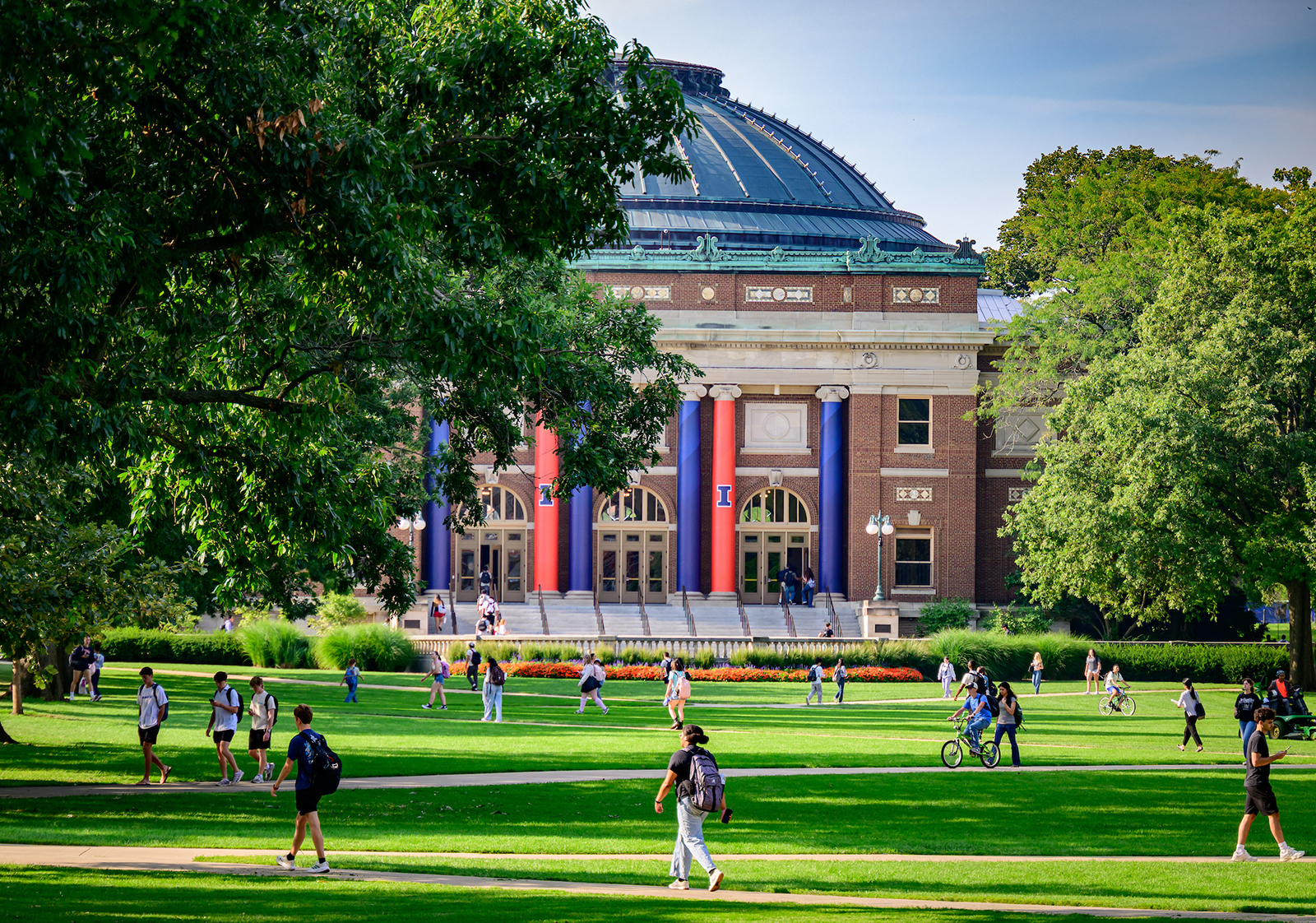
Fall 2026 Quad Foellinger Auditorium

Craft appointed as the Karin and Folke Dovring Professor in Journalism and Democratic Society

Stephanie Craft

Stephanie Craft, a professor in the Department of Journalism with an appointment in the Institute of Communications Research, and associate dean for academic and faculty affairs, was named the Karin and Folke Dovring Professor in Journalism and Democratic Society. The professorship supports a distinguished faculty member whose research advances our understanding of journalism and democratic society.

The Dovring Professorship was initially established by Karin and Folke Dovring in 2001. Karin was a foreign correspondent, an internationally recognized communication analyst, and the author of English as Lingua Franca: Double Talk in Global Persuasion (1997) and The Road of Propaganda (1959). Her husband, Folke, was a distinguished professor of land economics who taught at the University of Illinois from 1960 to 1987.

Craft, whose research focuses on news literacy, misinformation, and journalism ethics—particularly how people evaluate and understand news—joined the University of Illinois in 2013. She is best known for her efforts to build news literacy theory by uniting scholars around shared definitions and measures of important concepts (such as “Defining and Conceptualizing News Literacy” and “Developing and Validating a 15-Item True/False Measure of News Literacy Knowledge”) and for her research on the ethical obligations of journalism that arise from its democratic functions and the resulting tension between independence and accountability (such as a special edition of Mass Communication and Society addressing “Media and the Future of Democracy”).

She is the co-author of a widely used introductory textbook, Principles of American Journalism: An Introduction (2025), now in its 4th edition, and serves on the editorial boards of the Journal of Media Ethics, Journalism Practice, and Journalism & Communication Monographs. Craft is also a former head of the Journalism Studies Division of the International Communication Association and of the Media Ethics Division of the Association for Education in Journalism and Mass Communication.

King and Maslowska appointed as Dean’s Fellows focusing on AI

Colleen King, clinical associate professor in the Department of Journalism and director of the Richard and Leslie Frank Center for Leadership and Innovation in Media, and Ewa Maslowska, associate professor in the Chales H. Sandage Department of Advertising with an appointment in the Institute of Communications Research, will serve as Dean’s Fellows for the 2026–27 academic year, with a focus on artificial intelligence.

King will concentrate primarily on AI in curriculum and instruction, while Maslowska will focus on AI in media research and innovation. Both will work to convene discussions across departments and units as the College of Media collectively navigates the perils and possibilities of the AI era.

The Dean’s Fellows Program provides faculty in the College of Media with academic leadership experience through mentoring opportunities, collaboration with colleagues within and beyond the College, and leadership roles on key strategic initiatives and projects.

Faculty Promotions

In the Department of Journalism, Christopher Ball, who has an appointment in the Institute of Communications Research, has been promoted to associate professor with indefinite tenure, and Colleen King has been promoted to clinical associate professor.

Leadership Appointments

Jenny Oyallon-Koloski, associate professor in the Department of Media & Cinema Studies with an appointment in the Institute of Communications Research, will serve as the new director of the Roger Ebert Center for Film Studies.

Leona Yi-Fan Su, associate professor in the Charles H. Sandage Department of Advertising with an appointment in the Institute of Communications Research, will serve as the new director of the Institute of Communications Research.

Kevin Wise, professor in the Charles H. Sandage Department of Advertising with an appointment in the Institute of Communications Research, will serve as Advertising’s associate head of graduate studies.

Share on social


Posted in: , , , , , ,

ICR Student Research Spotlight: Seo-Jeong (Rachel) Heo


Seo-Jeong (Rachel) Heo is a PhD candidate in the Institute of Communications Research, which houses the world’s oldest doctoral program in communications and media. Heo’s research interest focuses on what happens as AI takes on a bigger role in consumers’ lives.

Seo Jeong Rachel Heo

Describe your areas of research interest.

I’m especially interested in three questions. First, how do people make sense of AI in the first place—what do they believe a machine can genuinely experience, claim, do, or create? Second, what changes when AI moves from simply providing information to recommending, interpreting, and eventually acting on a consumer’s behalf? And third, what happens when AI becomes emotional—when it recognizes how we feel, expresses emotions of its own, or begins to function more like a companion than a tool?

How do you approach your research?

I study these questions in advertising and consumer decision-making across contexts such as virtual influencers, generative AI advertising, conversational AI, social robots, AI shopping agents, and emotionally responsive AI. I also try to study these technologies in settings that resemble how people actually encounter them. Rather than relying only on written scenarios, many of my studies use live AI conversations, interactive advertising interfaces, and simulated shopping environments where participants actually interact with or delegate tasks to an AI. That allows me to study not just what people say they would do with AI, but how they respond when the technology is actively participating in the decision.

As AI moves from communicating with consumers to influencing their decisions, to acting for them, and even relating to them, it keeps entering roles that were once occupied by people. I want to understand how consumers decide what role a machine is allowed to play in each of those roles—and what happens when it crosses the line.
Seo-Jeong (Rachel) Heo

ICR Doctoral Student

Why does your research matter?

Even if you never think of yourself as an “AI person,” AI is increasingly involved in ordinary decisions around you. It can influence which products you see, explain why an advertised option supposedly fits you, recommend what to buy, create the advertising itself, or even complete parts of a purchase on your behalf. At the same time, companies are designing AI to sound warmer, more understanding, and more human.

Each of those changes raises a different question that matters beyond AI itself. When AI creates or endorses something, we have to decide what kinds of claims we consider credible coming from a machine. When AI recommends something, we have to decide how much weight to give its judgment. When it acts for us, we have to decide how much control we are willing to hand over. And when it becomes emotionally responsive, we have to decide whether we are still interacting with a tool or beginning to treat it as a social partner.

Those are ultimately questions about persuasion, autonomy, responsibility, and relationships. They matter because AI is increasingly being inserted into moments where consumers are vulnerable to influence—when they are uncertain about what to choose, when they are delegating a consequential decision, or even when they are looking for emotional support. Understanding when these systems help people and when they become uncomfortable, misleading, or overly influential can inform not only advertising practice, but also how companies design AI and how consumers are protected as these technologies become more deeply embedded in everyday life.

How did ICR help you develop and hone in on your research area?

ICR gave me the freedom to follow a research question across disciplinary boundaries. My work is grounded in advertising and consumer psychology, but it also draws from communication, social psychology, human–computer interaction, and research on emotion and emerging technology. Having faculty with expertise spanning AI, computational approaches, and emotional and physiological processes made it possible for me to think about consumer–AI interaction from more than one perspective.

ICR also broadened my methodological training. In addition to experimental and survey methods, coursework in analytics and computational research introduced me to R-based data analysis (a free, open-source software environment designed for statistical computing and graphics) and encouraged me to think more broadly about the kinds of data and methods I can use. That combination of theoretical breadth and methodological flexibility helped me move from studying individual AI phenomena to developing a more connected research program.

Just as importantly, ICR taught me to keep asking, “What is the theoretical question underneath the new technology?” AI changes incredibly quickly. A platform or feature that feels novel today may look completely different a few years from now, so I learned not to build my research around a particular technology. Instead, I focus on the more enduring human questions underneath it—how people infer minds and intentions, respond to persuasion, give up control, assign responsibility, and form relationships.

What led you to be interested in your research area?

I became interested in AI because I kept noticing that the most interesting part was not whether the technology worked—it was how quickly people began treating it as something more than technology.

A conversational AI can produce a technically correct answer, but people still ask whether it really understands them. A virtual influencer can present a product perfectly, but consumers may still wonder whether it could actually have experienced what it is describing. And an AI can make a very good recommendation, yet that recommendation feels different once the system moves from saying, “Here is what I think you should buy,” to saying, “I can buy it for you.” That shift toward agentic AI, which can search, choose, and execute decisions on the consumer’s behalf, made me especially interested in what happens when people stop simply taking advice from AI and begin giving it authority.

What other aspects of your research do you find interesting?

AI systems are increasingly designed not only to be capable, but to be emotionally responsive—to recognize distress, offer reassurance, express emotion, and maintain ongoing conversations. That creates a very different set of questions. What does it mean when a machine says, “I understand,” or even, “I feel the same way”? When does that make the interaction feel supportive, and when does it feel artificial or manipulative? And what happens when repeated emotional interaction develops into something that consumers experience as a relationship?

Those moments are what continue to draw me to this area. As AI moves from communicating with consumers to influencing their decisions, to acting for them, and even relating to them, it keeps entering roles that were once occupied by people. I want to understand how consumers decide what role a machine is allowed to play in each of those roles—and what happens when it crosses the line.

Share on social

Media faculty, students present research at 2026 Association for Education in Journalism and Mass Communication annual conference


Faculty and graduate students from the College of Media co-presented various topics of research at the 109th annual conference of the Association for Education in Journalism and Mass Communication on August 5-8, 2026, in New Orleans, Louisiana.

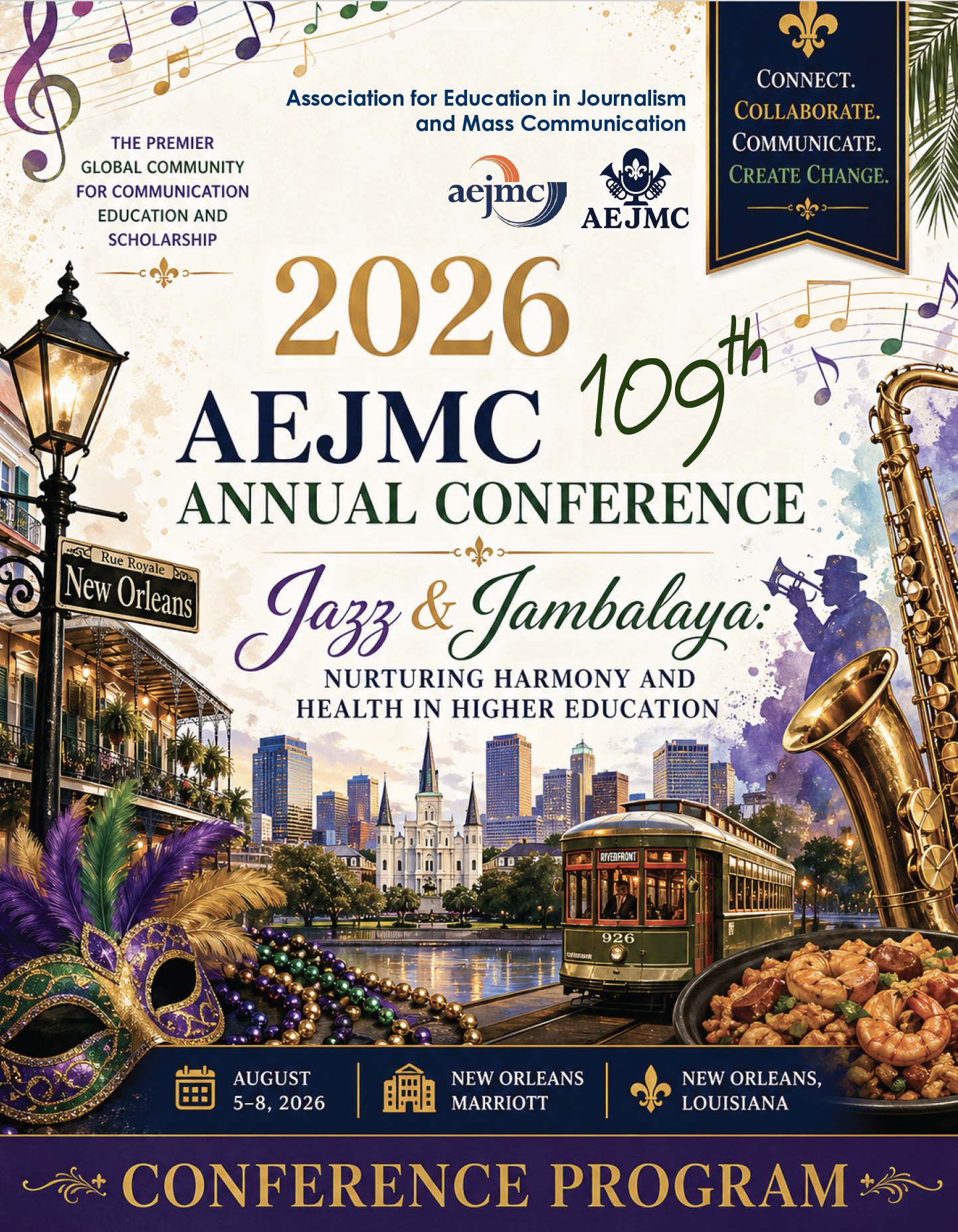
AEJMC cover

This year’s conference theme was “Jazz & Jambalaya: Nurturing Harmony and Health in Higher Education.” Presenters included faculty in the Institute of Communications Research, the Charles H. Sandage Department of Advertising, and the Department of Journalism; and graduate students in ICR’s PhD program and the MS advertising program. 

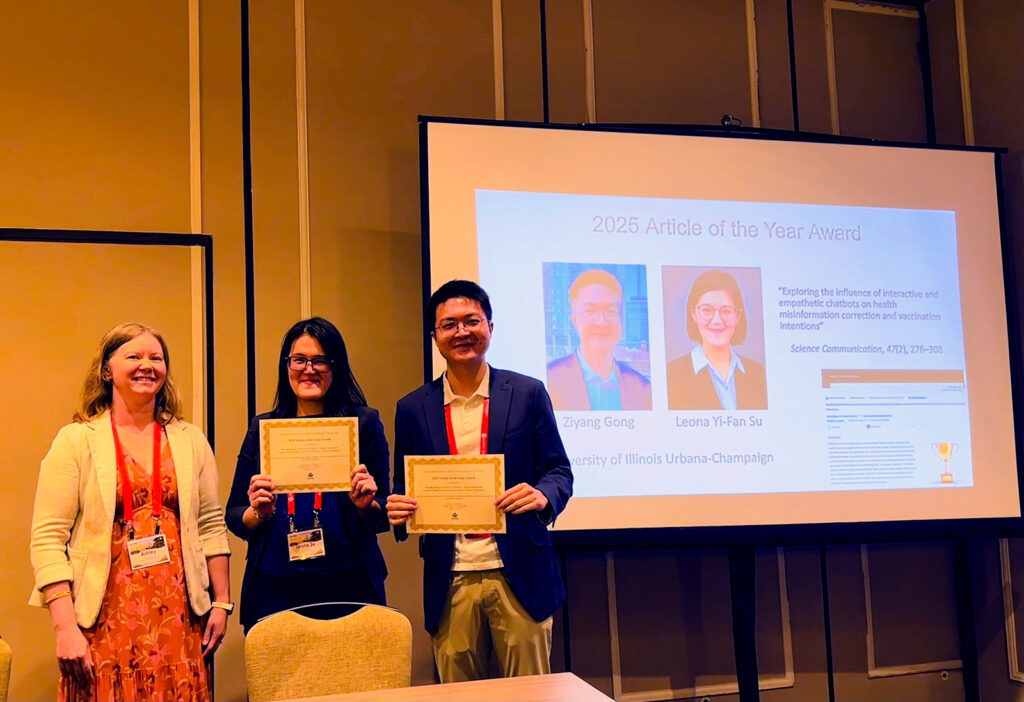
A Science Communication paper, “Exploring the Influence of Interactive and Empathetic Chatbots on Health Misinformation Correction and Vaccination Intentions,” co-authored by ICR Director Leona Yi-Fan Su and iSchool doctoral student Mobius Ziyang Gong (MS ’22, advertising) received the 2025 Article of the Year Award from AEJMC’s Communicating Science, Health, Environment and Risk Division.

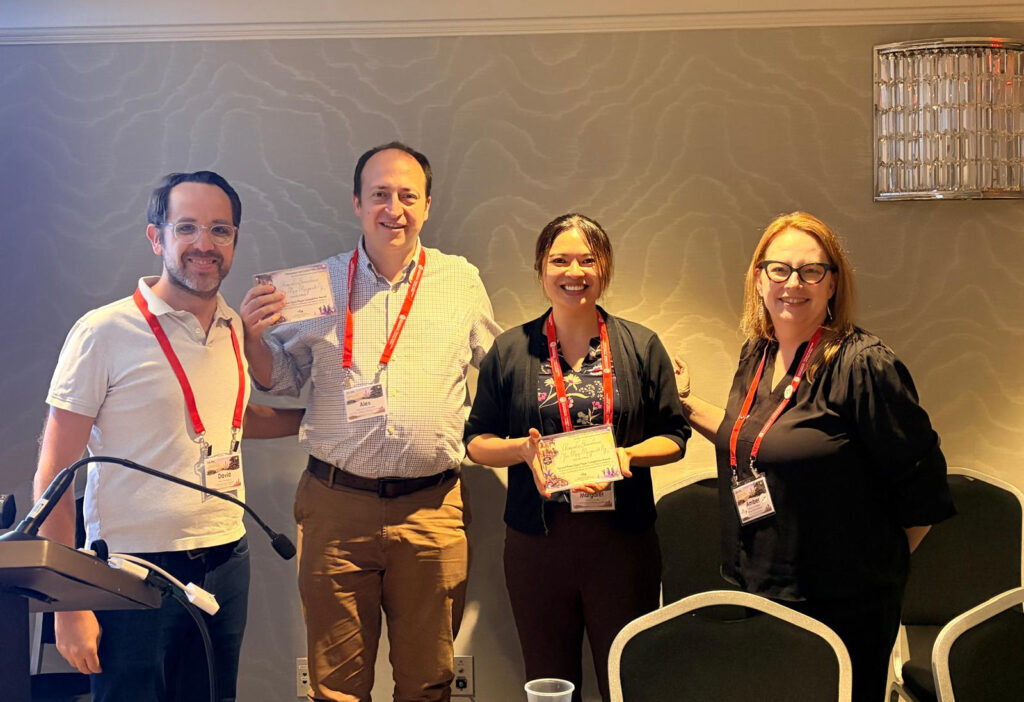
Journalism Professors Alexandre Gonçalves and Margaret Yee Man Ng received Second Place Open Competition Award for their paper “Analyzing News Outlet Social Media Use: Platform Adoption, Usage, and Migration Across Two Decades (2005–2025),” in the Newspaper and Online News Division.

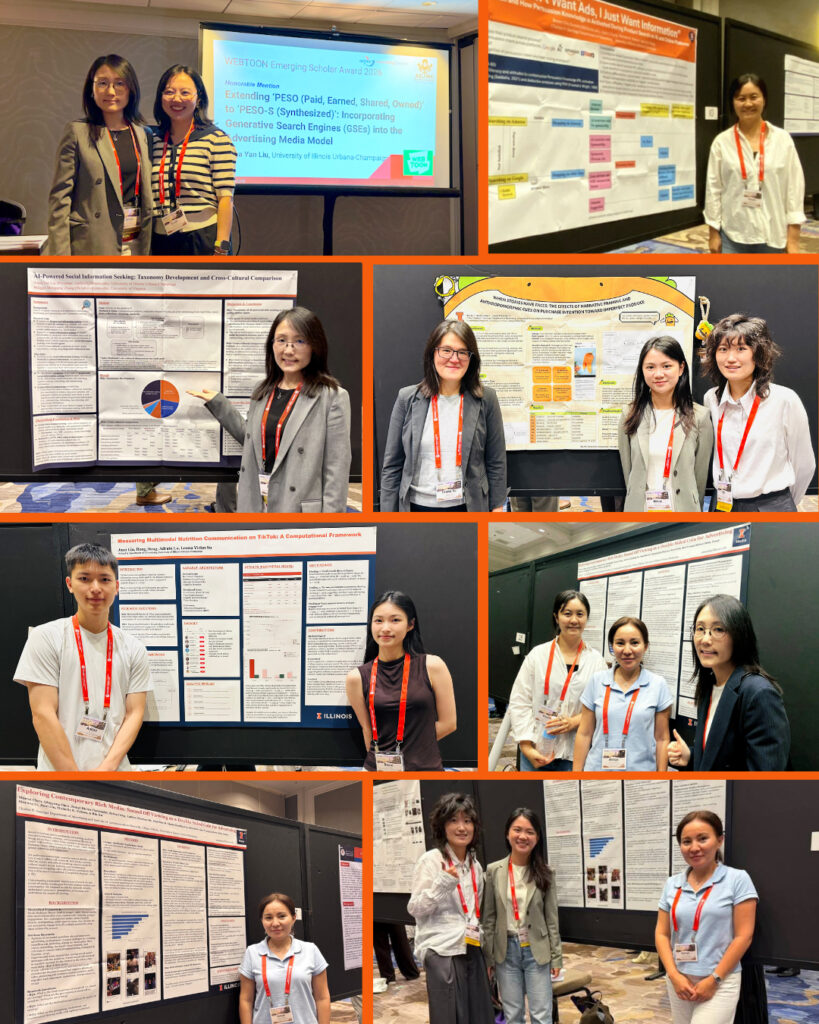
In addition, two ICR doctoral students received awards at the conference including Anthea Xiaohua He, who received second place in the Washington Media Scholar Fund Graduate Research Scholarship competition, and Anna Liu, who received an honorable mention for the Webtoon Emerging Scholar Award.

The AEJMC aims to promote the highest possible standards for journalism and mass communication education, to cultivate the widest possible range of communication research, to encourage the implementation of a multi-cultural society in the classroom and curriculum, and to defend and maintain freedom of communication to achieve better professional practice and a better-informed public.

College of Media research presenters and presentations are listed below. (Please see the AEJMC conference program for complete listings and participants.)

Article of the Year winners
Su and Gong received Article of the Year Award in the Communicating Science, Health, Environment and Risk Division.
Gonçalves and Ng received the Second Place Open Competition Award for their paper in the Newspaper and Online News Division.

Scholar-to-Scholar (Poster) Refereed Research Paper Session

Visual Communication Across Digital Contexts

“Visual Metaphor Complexity: Structural, Semantic, and Cognitive Dimensions”

  • Aiman Kazybayeva, ICR doctoral student
  • Kevin Wise

“Measuring Mulodal Nutrition Communication on TikTok: A Computational Framework”

  • Jiaxi Liu, iSchool
  • Leona Yi-Fan Su
  • Rong Deng, MS Advertising student
  • Yijun Lu, iSchool

Consumer Literacy & Persuasion Knowledge

“I Don’t Want Ads, I Just Want Information”: When and How Persuasion Knowledge is Activated During Product Search on AI and Online Platforms”

  • Boram Cho, MS Advertising student
  • Jiyeon Chang, ICR doctoral student
  • Michelle Nelson
  • Jiayi (Joy) Wang, (BA ’24, LAS; MS ’26, advertising)

“AI-Generated Images in Food Advertising: An Equity and Construal-Level Perspective on Disclosure and Appeal Effects”

Persuasion Message Design

“Exploring Contemporary Rich Media: Sound Off Viewing as a Double-Sided Coin for Advertising”

  • Aiman Kazybayeva, ICR doctoral student
  • Michelle Nelson
  • Haochen Ji, ICR doctoral student
  • Jiaxi Liu, iSchool
  • Minrui Chen, iSchool
  • Grace Shiyang Li, MS Advertising student
  • Seon Kim, MS Advertising student
  • Reina Deng, MS Advertising student
  • Seo-Young (Selene) Kim, ICR doctoral student
  • Nengi Divine Daminabo, MS Advertising student
  • Qingyang Chen, MS Advertising student
  • Anthea Xiaohua He, ICR doctoral student
  • Rin Xu, MS Advertising student

Communicating Climate: Framing, Narratives & Environmental Risk

“Toward Circular Fashion: A Content Analysis of Fashion Brands’ U.S. Take-Back Programs”

AI in Society: Media Frames, Bias, and Human Connection

“Understanding Attachment to Digital Media Accounts: The Role of Extended Self in Attachment and Digital Hoarding”

AI Transparency, Trust & Strategic Communication

“Legitimizing AI Through Environmental CSR: Effects on Public Attitudes and Intentions”

Media Management, Economics and Entrepreneurship Division

“When Stories Have Faces: The Effects of Narrative Framing and Anthropomorphic Cues on Purchase Intention toward Imperfect Produce”

AI Adoption and Cross-Cultural Perspectives

“AI-Powered Information Seeking on Social Media: A Computational Analysis and Cross-Cultural Comparison on Global Users’ @Grok Behaviors”

  • Anna Yan Liu, ICR doctoral student
  • Maggie Mengqing Zhang, ICR doctoral student

Award Panel Session

James W. Tankard Jr./AEJMC-Knudson Latin America Prize Book Awards

Moderating/Presiding

2026 AEJMC-Knudson Latin America Prize

The Patina of Distrust: What People Do with Misinformation [The MIT Press, 2025]

Discussant

Research Panel Session

From K-pop to AI: Emerging Perspective

“Too Agreeable to Trust? When and Why Corrective AI Can Be More Persuasive”

  • Seo-Jeong Heo, ICR doctoral student

Refereed Research Paper Session

Digital Platforms, Media Markets, and Political Influence

“For Profits or for Prophets? Journalistic Legitimization of Political Prediction Markets as Predictive Public Opinion”

  • Sakshi Bhalla, ICR doctoral student

Share on social

Media faculty, students present research at 2026 International Communication Association conference


Faculty and graduate students from the College of Media co-presented various topics of research at the 76th annual International Communication Association Conference—the largest academic conference for communication scholars—on June 4-8, 2026, in Cape Town, South Africa. The ICA aims to advance the scholarly study of human communication by encouraging and facilitating excellence in academic research worldwide. 

ICA 2026 program cover

This year’s conference theme addressed “Communication and Inequalities in Context.” College of Media presenters included faculty in the Institute of Communications Research and the Charles H. Sandage Department of Advertising; graduate students in the MS advertising program; and doctoral students in the Institute of Communications Research PhD program. 

College of Media research presenters and presentations are listed below in bold.

Pre-Conference: A Causal Inference Institute in Communication Studies
Organizers

  • Shuning Lu, U of Maryland, College Park, USA
  • Ewa Maslowska, Associate Professor, Advertising
  • Harsh Taneja, Associate Professor, Advertising

When Communication Makes the Difference: From Signals to Relational Dynamics
Human-Machine Communication
“Reconsidering Gender: A Computational Examination of Conversational Dynamics between Human and Gendered AI”

  • Weizi Liu, Texas Christian U, USA
  • Haocan Sun, Beijing Normal U, CHINA
  • Mike Yao, Professor, Advertising

Human-Machine Care: Well-Being and Vulnerability
Human-Machine Communication
“Emotionally Vulnerable Subtype of Internet Gaming Disorder: Measuring and Exploring the Pathology of Problematic Generative AI Use”

  • Di Wu, Beijing Normal U, CHINA
  • Haocan Sun, Beijing Normal U, CHINA
  • Weizi Liu, Texas Christian U, USA
  • Guoming Yu, Beijing Normal U, CHINA
  • Mike Yao, Professor, Advertising

Top Papers in Human-Machine Communication
Human-Machine Communication
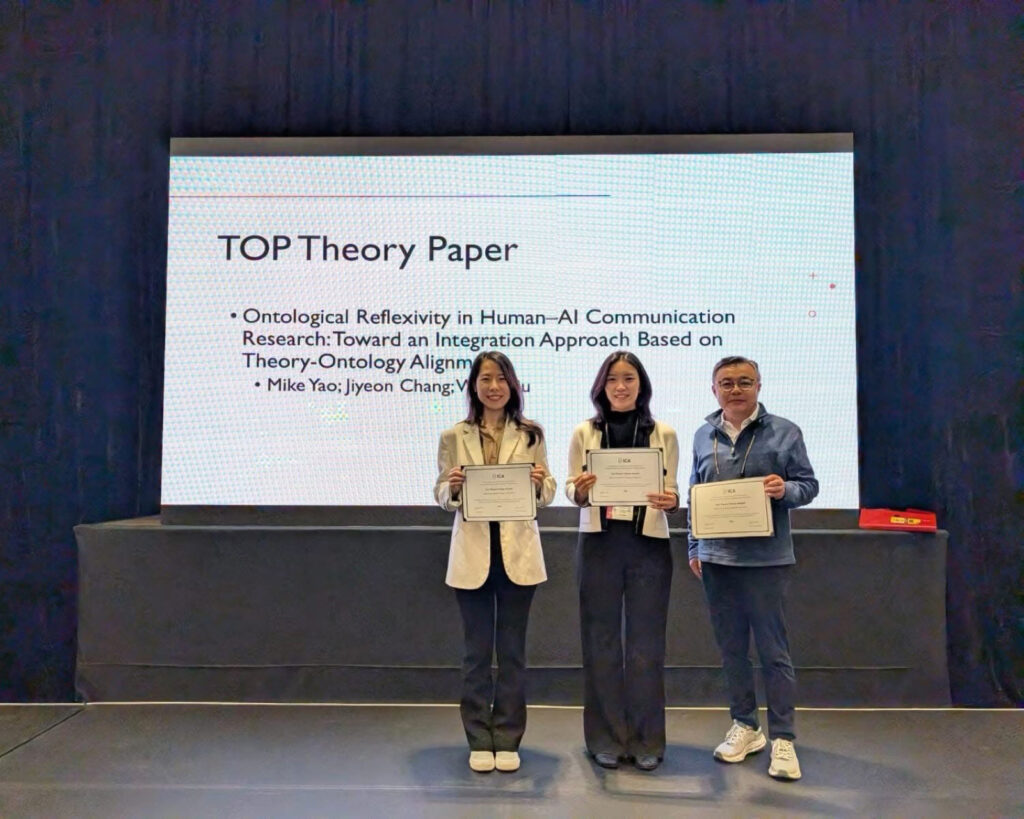
“Ontological Reflexivity in Human–AI Communication Research: Toward an Integration Approach Based on Theory-Ontology Alignment”

  • Mike Yao, Professor, Advertising
  • Jiyeon Chang, Student, ICR
  • Weizi Liu, Texas Christian U, USA
Media faculty and students at ICA

Persuasion and Consumer Behavior
Information Systems
“The Brand Transparency Paradox: Consumer Reactions to Explicit Mentions of Artificial Intelligence”

  • Viviana Zambrano Rodriguez, U of South Carolina, USA
  • Louvins Pierre, Assistant Professor, Advertising

“Exploring How Attitudes toward AI and Disclosure Influence Purchase Intention of AI-Integrated Products through Hedonic, Social, and Epistemic Value”

  • Louvins Pierre, Assistant Professor, Advertising
  • Viviana C. Zambrano Rodriguez, U of South Carolina, USA
  • Yanbo Li, Student, ICR

AI in News Production and Consumption
Information Systems
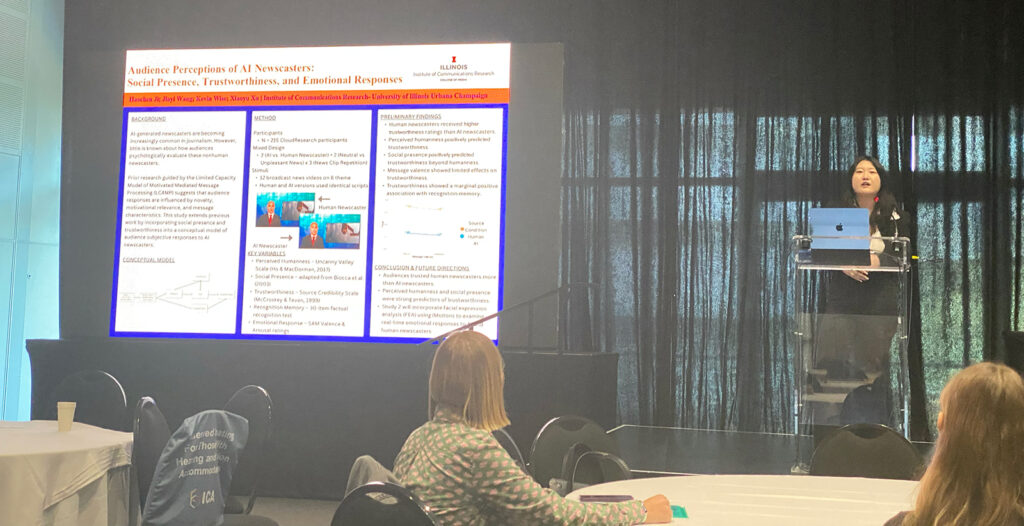
“Audience Perceptions of AI Newscasters: Social Presence, Trust, and Emotional Responses”

  • Haochen Ji, Student, ICR
  • Jiayi Wang, Student, MS Advertising
  • Kevin Wise, Professor, Advertising
  • Xiaoyu Xu, State U of New York at Cortland, USA
Media grad student presenting at ICA

AI Taking Over: Promises and Pitfalls of AI Use in Research, Journalism, and Society
Computational Methods
“When Machines Start Writing: Assessing the Impact of Generative AI on Journalism Labor Markets”

  • Sakshi Bhalla, Student, ICR
  • Jennifer Henrichsen, Washington State U, USA
  • Benjamin Toff, U of Minnesota, USA

Cognitive and Emotional Processing
Information Systems
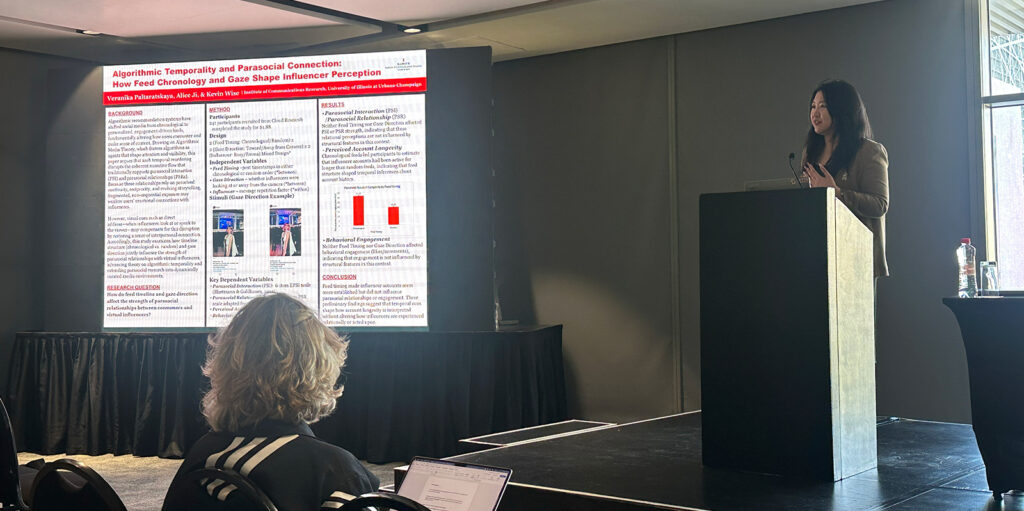
“Algorithmic Temporality and Parasocial Connection: How Feed Chronology and Gaze Shape Influencer Perception”

  • Veranika Paltaratskaya, Student, ICR
  • Alice Ji, Student, ICR
  • Kevin Wise, Professor, Advertising
Media grad student presenting at ICA

Editorial Board Meeting: Journal of Computer-Mediated Communication (JCMC)

  • Chair: Mike Yao, Professor, Advertising

MIAU-steerable AI: Trust, Adoption, Dependency, and Behavioral Regulation in Generative Tech Ecosystems
Communication and Technology
“Social Media Exit and Platform Loyalty: Generational Differences in Platform Abandonment”

  • Margaret Yee Man Ng, Associate Professor, Journalism
  • Ewa Maslowska, Associate Professor, Advertising

Computational Methods Research Escalator
Computational Methods
“When AI Imagines Consumers: A Computational Analysis of Representational Bias in Generative AI Brand Imagery”

  • Haochen Ji, Student, ICR

Co-Constructing Trust in HMC
Human-Machine Communication
Revisiting Trust in the Era of Generative AI: Factorial Structure and Latent Profiles”

  • Haocan Sun, Beijing Normal U, CHINA
  • Weizi Liu, Texas Christian U, USA
  • Di Wu, Beijing Normal U, CHINA
  • Guoming Yu, Beijing Normal U, CHINA       
  • Mike Yao, Professor, Advertising

Growing up with AI: Children’s and Adolescents’ Understanding, Trust, and Risk
Children, Adolescents, and Media
“Children and AI Mind Attribution: Reasoning and Learning with ChatGPT through Social Learning Theory”

  • Boram Cho, Student, MS Advertising
  • Jiyeon Chang, Student, ICR
  • Michelle Nelson, Professor, Advertising

Top Papers Session
Information Systems
“Following the News: Polarization and the Networked Structure of Attention”

  • Sakshi Bhalla, Student, ICR

Perception, Trust, and Bias of Artificial Intelligence
Information Systems
“Emotional and Social Drivers of Artificial Intelligence Pessimism Aversion: Extending the Appraisal Tendency Framework to AI Environments”

  • Heng Zhang, Chongqing U, CHINA
  • Nansong Zhou, Student, ICR
  • Jer Shyuan Ng, Royal Melbourne Institute of Technology, AUSTRALIA
  • Shiyi Zhang, Chongqing U, CHINA

Masculinities, Femininities in Digital Communication
Feminist Scholarship
“Masculine Anxiety and the Making of Racialized Nationalism in China: A Qualitative Investigation Into Sunxiaochuan Bar”

  • Nini Zhou, Student, ICR
  • JungHwan Yang, U of Illinois Urbana-Champaign, USA

(Photos by Boram Cho.)

College of Media
119 Gregory Hall
810 S. Wright St.
Urbana, IL 61801
217-333-2350