The Charles H. Sandage Department of Advertising and the Hub for Brand Innovation and Advertising Technology have created a new professional workshop series for students through the Emerging Leaders Program, which aims to immerse students in the advertising industry.
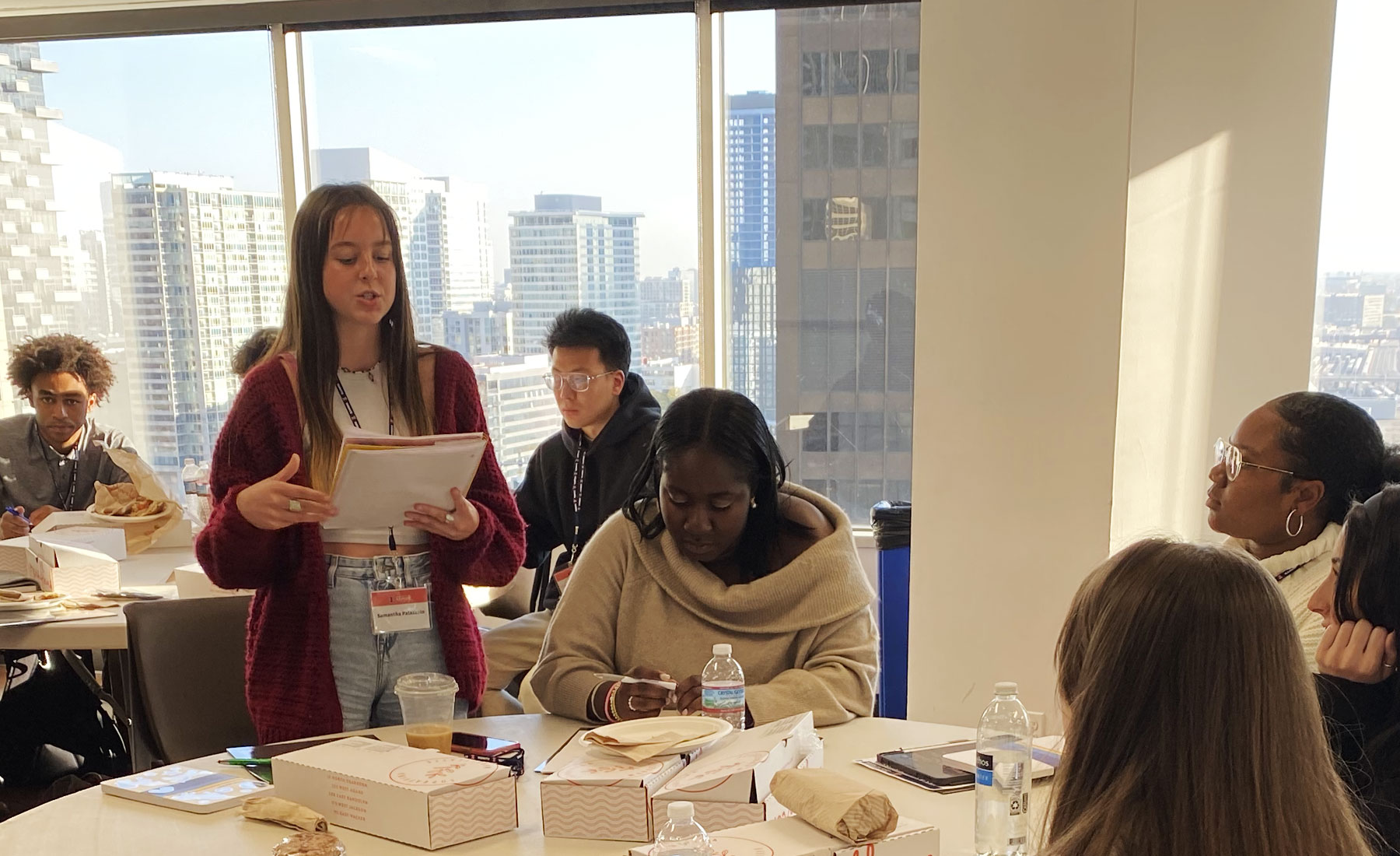
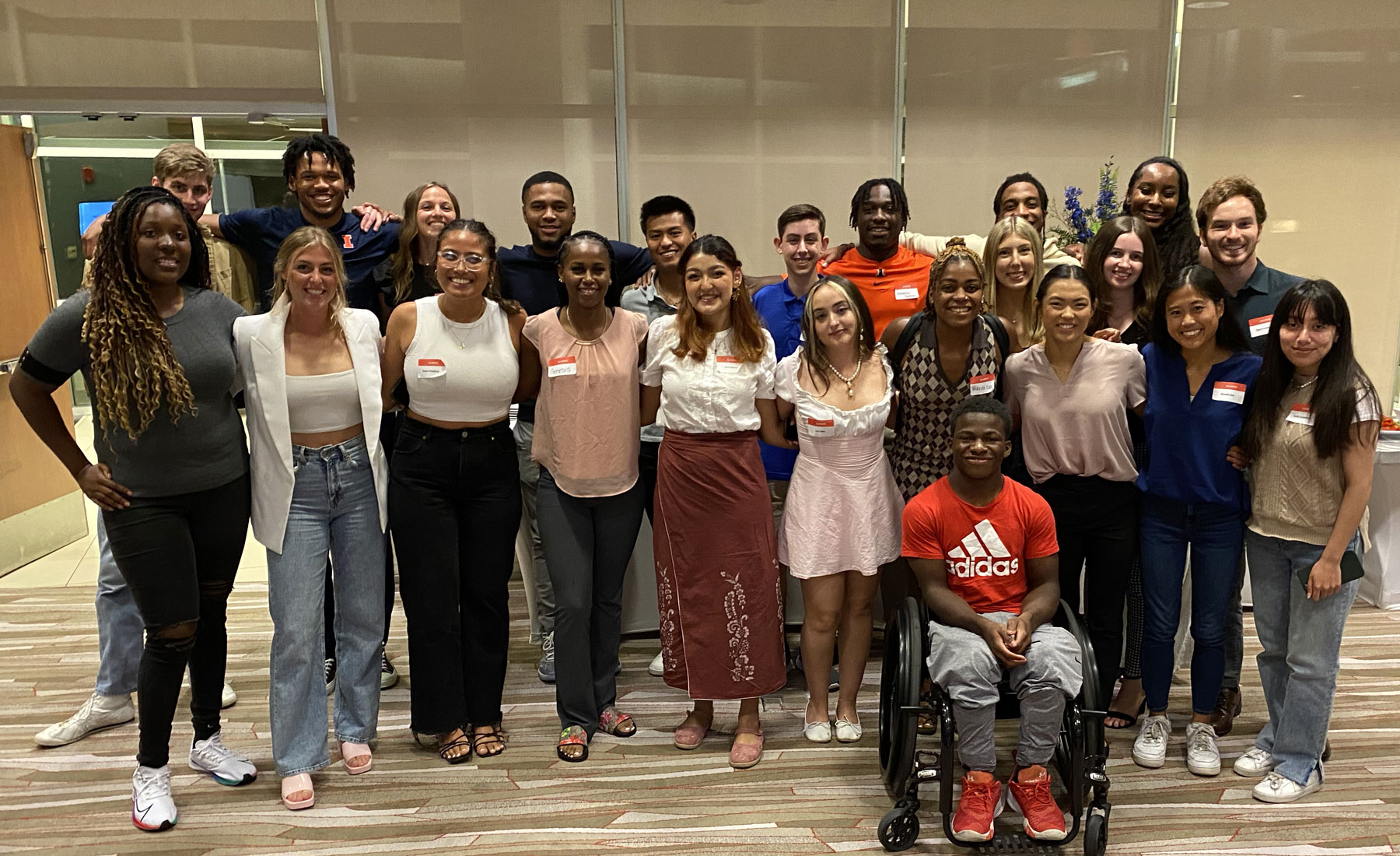
Thirty advertising students were selected for the 2022-23 academic year to gain experience in innovative areas of advertising, and network with University of Illinois alumni and industry guests in three workshops at the Illini Center in downtown Chicago.
“These immersive events allow students in the Emerging Leaders Program to interact with and learn from industry leaders in an experiential learning format,” said Michelle Nelson, professor of advertising and acting head of the department. “These experiences will also give students a unique advantage when they enter the job market.”
The program has focused on three themes in their workshops: programmatic advertising, brand strategy, and product marketing.
Susan Muirhead, associate director of the Brand Hub, was glad to develop an opportunity for students to apply their advertising skills outside of the classroom and gain a closer look at the advertising industry.
“I hope [students] learn about what the industry is doing so they’ll get a pulse on what’s happening and what the emerging trends are,” Muirhead said.
The sessions consist of a three-hour workshop where students work on a group project or exercise, followed by a two-hour networking event where students engage with peers and attending professionals and alumni.
Muirhead said the events have been a fun opportunity for both students and professionals to meet each other.
“I think [the industry professionals] are really impressed with the energy, the passion, and the talent, and how bright our students are.”
In October, the first workshop on the future of advertising technology was presented by The Trade Desk, which offers an independent media-buying platform.
“I learned about measuring audiences and media planning and the digital aspect of advertisements,” said Asia Griffin, a senior in advertising. “Just being able to network and talk to people at The Trade Desk was a great experience.”
In February, global advertising agency Leo Burnett presented on brand strategy and the students completed a Cultural Insights exercise, a tool actively used by the brand strategy team at Leo Burnett.
“I want to be more involved with Chicago-based companies,” said Joshua Watson, junior in advertising. “It’s also a good opportunity to learn more about what Leo Burnett is, what a job looks like there, and even just seeing all the people [who work] there.”
TikTok will host the last workshop in April, focusing on TikTok search engine optimization and product marketing.
Danielle Rowaiye, a junior in advertising, has enjoyed the program so far.
“I’m just excited to get to meet up with the same people again and have that same opportunity to network and to learn,” Rowaiye said.
Students and companies interested in participating in future Emerging Leaders Program events can contact Susan Muirhead at muirhea@illinois.edu.
January 9, 2023 | Kelly Youngblood and Vivian La, Communications Intern
(Photos by Isabella Pennebaker, photography intern.)
The first cohort of students in the Brand Ambassador Program are halfway through their yearlong experience, which pairs a student interested in social media and brand management with Fighting Illini student-athletes and local organizations.
Since its inception just four months ago, the program is already making a positive impact for student ambassadors, student-athletes, and the community at large.
“I think it’s been incredibly successful on both ends,” said Carrie Wilson-Brown, lecturer in media and cinema studies and advertising, and a faculty lead for the program (pictured at right). “I know the athletes are really excited to have our student ambassadors give as much input as possible into their feeds and I know the ambassadors are really thrilled with that kind of hands-on experience.”
The purpose of the program is to offer students experiential learning to enhance their social media management skills and to help student-athletes develop their brand. It also focuses on aiding local organizations with digital promotion.
“It really is a great partnership between community members, and also gives our students a range of experiences in real-world circumstances,” said Wilson-Brown.
With a mission to educate students about the most current advertising trends and to provide them with leading-edge experiences that go beyond classroom theory, both the Sandage Department of Advertising and the Brand Hub are shaping the field of strategic brand communication.
“The Brand Ambassador Program is another novel professional development opportunity for advertising students that the Brand Hub has coordinated,” said Professor Mike Yao, head of the Sandage Department of Advertising. “We are proud to foster this collaboration. Students are applying the advertising, branding, and social media strategy skills that they’ve acquired through our curriculum, and through their own experiences, to support the success of their peers and the local community.”
Nearly all of the 20 student ambassadors are advertising majors. Some ambassadors have paired up with local organizations such as Visit Champaign County to help highlight local events and businesses with their own robust social media following. Most are working with Fighting Illini student-athletes to strategize and create content for their social media.
The Brand Ambassador Program helps student-athletes address last year’s changes to the NCAA Name, Image, and Likeness (NIL) policy, which now allows all NCAA D1, D2, and D3 student-athletes to be compensated for their name, image, and likeness, regardless of whether their state has NIL laws in place.
Wilson-Brown said the updated NIL policy has created an incentive for student-athletes to enhance their brand and increase their social media presence. As a result, student-athletes recognize the importance of a digital persona and a professionally curated social media feed.
“The ambassador program is an opportunity to use the talents of students and faculty to help athletes sculpt a brand for themselves online and hopefully to monetize themselves with local and national sponsorships as well,” she added.
Wilson-Brown noted the students are ambassadors, not agents, and do not directly facilitate any sponsorship deals or monetary contracts.
The Brand Ambassador Program operates in conjunction with the INFLUENCE program, which was launched by the University of Illinois Division of Intercollegiate Athletics last year. INFLUENCE is an educational approach to the monetization of an athlete’s name, image and likeness that emphasizes brand and strategy development along with business and financial concepts. INFLUENCE is powered by NIL sports technology company Opendorse, which features all Fighting Illini athletes within its athlete endorsement website.
Kaylee Patthana, a junior majoring in advertising, is working with Illini women’s volleyball player Kennedy Collins to help promote her personal brand. Patthana said she and Collins have discussed ways she can expand her brand to include not only her college athletic persona but also her personal interests such as fashion and lifestyle aesthetics.
Patthana says that the close-knit nature of the ambassador group is her favorite aspect of the program: “I love that in this program I have a network of people around me that I can talk to and work with who also love to do what I do,” she said.
Jack Struthers (pictured at top), a senior in advertising working with an Illini soccer player, said the ambassador program is mutually beneficial for Media students who want real-world experience and athletes looking to expand their brands.
Struthers said managing a social media presence as a student-athlete can be overwhelming and this partnership can help address some of those challenges.
“Getting paired with an ambassador from the College of Media who kind of understands how the [sports endorsement] ecosystem works and understands how [social media] works and can inject content—I think it’s extremely powerful,” he said.
Emily Gonzalez is a senior in advertising working with an Illini women’s basketball player. Through this partnership, Gonzalez gets to share her expertise on social media trends to help create relevant content, such as a “day in the life” video.
“It’s all about the analytical side of things and just trying to communicate possible trends that are taking off,” said Gonzalez, who is now considering a career path in social media management.
Brand Ambassadors meet monthly with Wilson-Brown to update their progress, reporting about post content and analytics. After a semester of guiding brand ambassadors, Wilson-Brown said she’s excited to expand the program, whether that’s adding more students, more athletes, or more partnering organizations.
“I find students have a much more nuanced understanding of how to use these digital tools every day and so we’re able to collaborate really beautifully on that and I think that’s really humbling,” she said. “It’s a really great learning opportunity that we have in the Advertising department.”
When Angela Aguayo, associate professor of media and cinema studies, was considering a project for her MACS 199: Documentary and Social Change honors course that would help her students connect the community through media, the idea for a student-generated podcast came to mind.
She knew podcasts were a familiar forum for university students and would offer an opportunity for them to talk about meaningful topics, helping them to make sense of what they’ve endured in the last couple of years.
“These are kids who missed rituals around their formative years because of what happened [with the COVID-19 pandemic] and they’re trying to pick up the pieces and understand what education means to them. So, I thought this [podcast] would be a really great way to integrate the practices of storytelling with their own experience,” Aguayo said.
What she didn’t anticipate is how much she would learn by listening to each of her student’s stories, which spotlight the highs and lows of the college experience in a post-isolation world.
“This is a wonderful moment—they delivered more than I expected. Many of these students are science and engineering majors and I was delighted at their embrace of media arts practice, and I learned so much about them through the stories they filed,” Aguayo said.
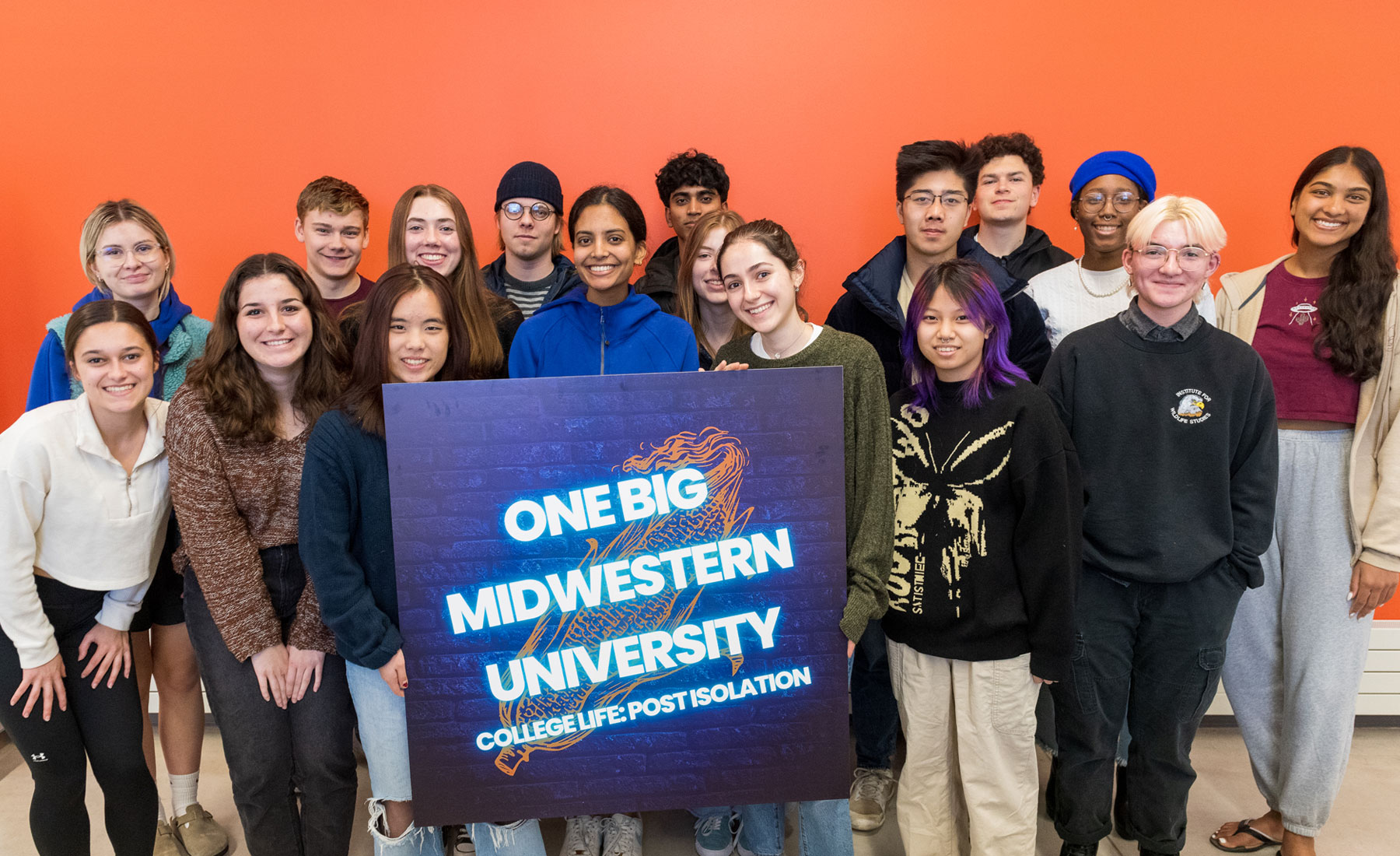
Aguayo’s course, which was restricted to Chancellor’s Scholars in the Campus Honors Program, drew students from the Grainger College of Engineering to the College of Education to the College of Fine and Applied Arts. Their 19-episode podcast, which is aptly named “One Big Midwestern University,” features students talking about how to make friends as college freshmen, finding simple joys, isolation, the pressure to find jobs, anti-transgender culture, and more.
Each episode, averaging 10 minutes long, addresses something different. Aguayo promises that listeners will “hear from people you’ve never met” and “learn about spaces you probably wouldn’t normally enter.”
“I was moved by the students’ willingness to share and be vulnerable. They saw that in the most effective documentary films that created change, that’s what was there, getting to something real and honest,” Aguayo said. “Your audio can be messed up a little bit and your images can’t all be great but if you’re delivering real and honest [material], it’s compelling.”
Freshman Elias Newton, majoring in architecture, chose to talk about dealing with feelings of loneliness and substance use on campus. Newton said the project helped him to realize that “most people are going through something.”
Newton also appreciated the class’s emphasis on learning the art of storytelling.
“With storytelling versus other forms of portraying issues, storytelling is what’s the most memorable and the most impactful and the most moving,” he said.
Emma Schmahl, a freshman studying elementary education, filed a story on making friends as a freshman. Schmahl said she wanted to hear people’s personal experiences, and to get advice on what works and what doesn’t.
“The assignment taught me how to talk to people in an interview setting and then [how to take] these pieces of audio and [make] something out of it,” Schmahl said.
The “One Big Midwestern University” podcast is also made possible thanks to Aguayo’s Illinois Community Media Project, funded by Chancellor Jones’s Call to Action to Address Racism & Social Injustice Research Program. One pillar of her project, which began nearly two years ago, is finding ways to get students to engage with communities around media production.
Last semester, one of Aguayo’s media and cinema studies classes worked with the Champaign-Urbana Public Health District and Immigrant Services of Champaign-Urbana to organize a family photo booth, creating 60 framed photos for local immigrant families.
Aguayo is grateful to be at the University of Illinois, where she feels encouraged to offer her students hands-on learning experiences with community media.
“I came to this campus because I wanted to be with people who innovate and think about the university’s connection to the world. It’s exciting to be in an environment where innovation in public engagement is supported, and to be at an institution that brings the smartest and the brightest and the accomplished students to campus,” Aguayo said.
While most of the students in the class are new media-makers, Aguayo said when she first suggested the idea of a podcast to her students, they were excited and eager to tell stories that connect people.
“Many of them had ever done anything like this, but it turned out amazing,” she said. “They understood what it meant to bring voices to the table that we don’t hear all the time, they understood what it meant to tell stories that mattered to people, they understood what it meant to be vulnerable in that process and that thrilled me. [Their] stories are captivating.”
Matthew Schmitt, a freshman double-majoring in computer engineering and physics, focused on using exercise to maintain mental health on college campuses.
Schmitt said the class offers an invaluable experience, using sound to convey a message and even perhaps spark a social change.
“I think we need more people with the skills that this class is teaching us,” he said. “The class teaches us we can use these forms of media to try to cause some sort of social change. And that’s important because a lot of people don’t think that they can cause change just by creating something and putting it out there, but you can. I think it’s important to know that you can cause the change that you want to see in the world.”
“One Big Midwestern University” debuts on Spotify on December 15. The podcast will soon be listed on Apple Podcasts and Google Podcasts. The united hope of the class is that it might bring people together to discuss topics that are important to students and that it provides value to the community.
“I think it would be nice if [people] listened to it and they hear real stories that are a little bit different from what they’ve heard before,” Schmahl said. “I just want people to hear it and feel like they can relate to other people’s experiences and know that what they’re experiencing—if it’s happy or not so happy or stressful—other people are experiencing the same things and they’re not alone.”
“Do you think it’s possible to build a computer that simulates real life? … If you were living in a simulation, would you be able to tell?” So begins The Goji Project, a short science fiction film produced by students in MACS 480: Advanced Filmmaking last spring. The film has received recognition from three film festivals this fall.
Students in media and cinema studies, advertising, and theatre collaborated on a short film for Advanced Filmmaking in Spring 2022, which received honors from three film fests this fall. Pictured are Raiya Wen (BFA ’22, FAA); Lincoln Rogers (BS ’22, advertising); and Robyn Pease (senior in media and cinema studies).
The Goji Project won Best Sci-Fi from Crown Point International Film Festival in October, which awards films in a monthly competition for filmmakers around the world. It also received an honorable mention for a student film at Art Film Awards, and a certificate of achievement in the Sci-Fi Short category at LA International Film Festival’s Indie Short Fest.
Students produced The Goji Project in the course taught by Victor Font, lecturer in the Department of Media & Cinema Studies, and premiered it at the UIUC Student Film Festival in April. The nearly 23-minute film was written and directed by Lincoln Rogers, then a senior in advertising who graduated in May 2022.
“The best part of the whole process for me was the connections I made with the other people in the class,” said Rogers, who is now a creative maker at SOCIALDEVIANT, an advertising service in Chicago. “When you’re in go-mode, on the clock, filming, those connections happen really quickly…. And what started as a script that I read to the class over a Zoom meeting became this story that was really meaningful to everybody, that we all got to have a hand in bringing to life.”
Rogers was inspired by a philosophical piece called “The Simulation Argument” by Nick Bostrom: “How likely is it that we are the first real humans, rather than digital copies made by humans far more advanced than us?” Rogers explained. He contemplated how people derive value from their lives and make sense of patterns and coincidences.
What started as a script that I read to the class over a Zoom meeting became this story that was really meaningful to everybody, that we all got to have a hand in bringing to life.
Lincoln Rogers
Writer and Director of The Goji Project
“My favorite scene is the conversation between the two Gojis, when orange-hair Goji says [to blue-hair Goji] that, ‘No matter what the simulation means, it is beautiful.’ The unknowns of the universe can be terrifying, but they came together in this crazy way to create a beautiful world for us.”
As a Media student, Rogers knew he wanted to make movies and said Font “is an amazing professor” and took his Advanced Filmmaking course twice “because it was such a valuable experience.” Rogers is already working on his next film—another sci-fi—”about a man who works at an insurance agency who has an advanced AI assistant implanted in his brain.”
Font created the Advanced Filmmaking course in 2019 but it wasn’t offered in 2020 due to the pandemic. The Department of Media & Cinema Studies has been collaborating with the Department of Theatre in the College of Fine and Applied Arts to recruit student actors for their Advanced Filmmaking course. This fall, Theatre’s Advanced Scriptwriting course will generate the script to be used this spring. The class will also collaborate again with Krannert Center for the Performing Arts, as they did in 2019 with the Department of Theatre to create the short film Red Ball. The MACS course plans to film before spring break and to edit a first draft to present at the 2023 UIUC Student Film Festival.
“More resources lead to more talent, better productions, and more achievements,” Font said about the cross-campus collaboration. He also hopes their recognition by film festivals will attract more students interested in pursuing media and cinema studies as a major and a career.
“I’m sure this is our first award of a lot and better ones to come,” Font added.
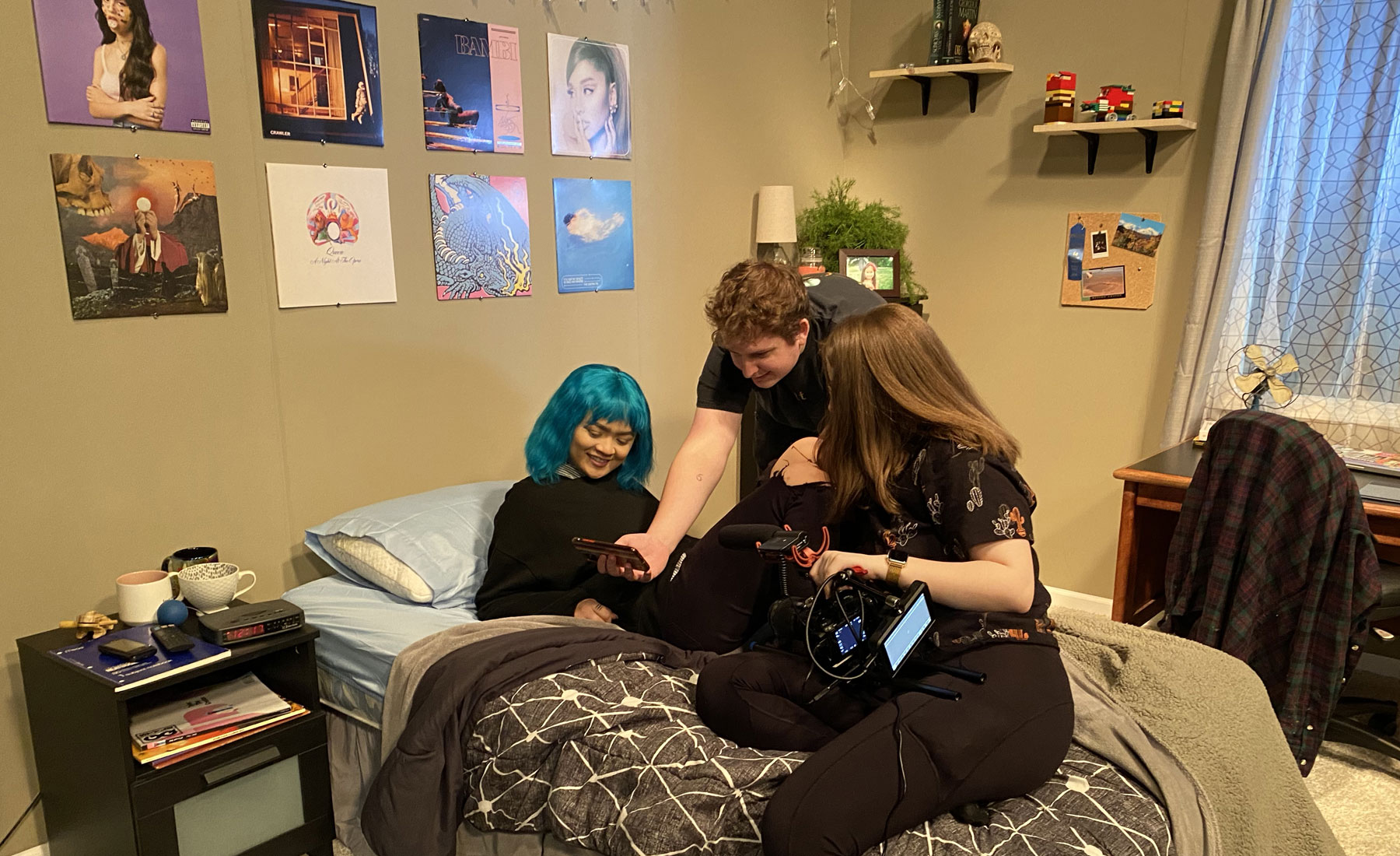
See behind-the-scenes photos from various stages of filming The Goji Project, which used the new production studio in Gregory Hall to hold auditions and the television studio set at Illinois Public Media to construct a dorm room.
Watch The Goji Project:
Film credits:
Written and Directed by: Lincoln Rogers (BS ’22, advertising)
Executive Producer: Victor Font, lecturer of media and cinema studies
Original Score: Tony Rogers (Lincoln’s father)
Director of Photography: Robyn Pease (Class of 2023, media and cinema studies)
Chief Lighting Technician: Nathan Carlberg (BS ’22, media and cinema studies)
Starring: Raiya Wen and Ben Mathew (both BFA ’22, theatre/acting, College of Fine and Applied Arts)
November 7, 2022 | Faith Lee, Communications Intern
Through the annual Roger Ebert Fellows program, established in 2015 at the College of Media, three undergraduate students are selected each fall to gain in-depth learning experiences that focus on critical thinking, arts and entertainment criticism, and interpretative journalism.
The 2022-23 Roger Ebert Fellows are Levi (Lee) Beckett, Andrew Stover, and Tania Trejo, all media and cinema studies majors.
Named after the late Pulitzer Prize-winning film critic and University of Illinois journalism alumnus Roger Ebert, the Ebert Fellows will receive a stipend and work closely with Michael Phillips, film critic for the Chicago Tribune, to strengthen their writing, radio, video, and storytelling skills across a wide range of multimedia platforms. The experience, coordinated through the Roger Ebert Center for Film Studies, will prepare them for an increasingly competitive arts and entertainment media job market.
Over the past two years, the COVID-19 pandemic caused the program to adopt a hybrid model, but this year will offer more in-person interactions. The students will connect monthly with Phillips for workshops. They will also attend film festivals, including the True/False Film Fest in Columbia, Missouri, in March.
“It’s been very difficult to work around the limitations of what we had to do when it was almost entirely online,” Phillips said. “I sense that people are eager and grateful for a return to as much in-person activity as they feel is possible.”
Phillips has been an advisor and mentor since the program began and has enjoyed working with the students. He hopes that they learn as much from him as he does from them.
“I want to make them more confident about doing something they’ve never done before,” Phillips said. “I try to get all of us to think hard about what it is we’re trying to say when we write something and how well we’ve argued our point.”
Meet the 2022-23 Ebert Fellows:
Lee Beckett is a junior in media and cinema studies, with a minor in political science. Beckett has always enjoyed the art of filmmaking and critiquing films. He appreciates Roger Ebert’s work and is excited to explore new opportunities and to network.
“I think by getting experience and hearing from people who have learned by trial and error is the best way to learn,” Beckett said. “We’re going to go to a couple film festivals and we’re going to meet with some people who are making content in the local area and also in Chicago, so I’m hoping to learn from professionals.”
On campus, Beckett is involved in the Young Democratic Socialists of America and Red Bison, an ecological restoration organization.
Beckett’s favorite film is Fantastic Mr. Fox because he “really likes the story and the characters and it’s simple and fun, but it also has a deeper theme underneath.”
Andrew Stover is a junior in media and cinema studies, with a minor in critical film production. He developed his interest in film in 2016 and created a blog dedicated to reviewing films. Stover is a longtime fan of Roger Ebert’s work and is honored to be chosen as a fellow.
“I have a genuine passion for film criticism, and I was excited to be selected. It’s a great honor,” Stover said. “I hope to gain more experience outside of film.”
Stover continues his passion for critiquing films by writing reviews for Film Threat, an independent film review site where he’s published more than 125 reviews. He looks forward to working with Phillips and the other fellows to expand his skills.
“Having a broad knowledge of film, podcasting, and other forms of media that I will learn about during this fellowship will help me be able to do more than just film-centric [work],” Stover said.
Stover said his favorite satirical comedy is The Truman Show because he “admires Jim Carrey’s dramatic turn as Truman Burbank” and thinks it is one of his best performances.
Tania Trejo is a senior in media and cinema studies. She loves to plan and create films. Trejo hopes to highlight the Latino community in her work in the future.
“This fellowship will help me achieve my goals by providing me with different skills such as interviewing, writing, and podcasting,” Trejo said. “I will also get more exposure and access. Since I will be working with people who are in the industry, I am excited to ask more questions about what they do.”
Trejo said she is also excited to attend film festivals and watch films that she would not normally watch on her own.
Currently, her favorite movie is Everything Everywhere All at Once because “the movie itself tackles issues that first-generation American families face in a funny and sentimental way.”
Eight projects led by College of Media faculty and staff have been selected to receive funding as part of the Mark L. Brandt Public Engagement Fellows program, established this year to provide undergraduate Media students with professional experience in public engagement activities. It also provides opportunities for students to participate in programs that support first-generation college students, students from underrepresented groups, and/or students with significant financial need.
“We are delighted to be honoring Mark Brandt’s legacy through opportunities for our students to work with College of Media faculty and staff on projects that make a difference in our community, our state, and the nation,” said Dean Tracy Sulkin.
Brandt was a 1986 alumnus of Illinois who retired early from a career in finance at General Electric. After his death in 2021, the College of Media received an estate gift of just over $1 million to create the Brandt Public Engagement Fellows program. The trustee of his estate, Mary Leyendecker, chose to ensure that his legacy makes a positive impact on students and society. The funds will provide internships for up to 40 Media students annually, with opportunities announced in both fall and spring semesters.
Below is a list of the projects, activities, and programs that received funding for Brandt Public Engagement Fellows for Fall 2022. College of Media undergraduate students who wish to apply for these opportunities should check their email inbox for the October 3 Advising Newsletter for more details.
Mis/Disinformation in Asian and Asian American Communities Research Project Led by Rachel Kuo, Assistant Professor of Media & Cinema Studies The Brandt Fellow will support research on a project that studies the historical and political contexts of mis/disinformation in Asian and Asian American communities through the use of community education workshops, oral histories, and focus groups. Working closely with the PI, the Brandt Fellow will support data collection and analysis; facilitate community research workshops and skills-trainings; and co-write and produce resource guides on Asian and Asian American history and ethnic media; and meet different community partners.
Roger Ebert Center for Film Studies Led by Julie Turnock, Associate Professor of Media & Cinema Studies This academic year (2022-2023) is the inaugural year of the Roger Ebert Center for Film Studies. The Brandt Fellow will primarily use their skills in web design, graphic design, and public relations, to build and update a public-facing website for the Ebert Center, and work with the College of Media’s Director of Communications to publicize Ebert Center events via social media. They will also play a key role to help make the activities of the Ebert Center available to the local community.
SHIELD Illinois Research Project Led by: Ewa Maslowska, Assistant Professor of Advertising Margaret Ng, Assistant Professor of Journalism Harsh Taneja, Associate Professor of Advertising The Brandt Fellows will help with a project with SHIELD Illinois—the community COVID-19 saliva-based testing program of the State of Illinois. Our project aims to understand public attitudes, news framing, and diffusion networks related to SHIELD COVID-19 testing through social media discourse and news coverage. The Brandt Fellows will take part in the process of data gathering and analysis and develop visualizations.
IMEDIA Led by: Amanda Ciafone, Associate Professor of Media & Cinema Studies, Director of Graduate Studies for the Institute of Communications Research CL Cole, Department Head, Professor of Media & Cinema Studies Stephanie Craft, Associate Dean for Academic Affairs, Professor of Journalism Michelle Nelson, Professor of Advertising The Brandt Fellow will help develop the digital communications strategy of the Initiative for Media Education Inquiry and Action. IMEDIA is a collaboration between the College of Media and the College of Education to help fill high school teachers’ needs for media literacy training and curriculum development in light of new Illinois State mandates requiring a unit of “media literacy” in all public Illinois high schools.
New Voices Internship Program Led by Daniel Almanza, Assistant Director of Media Career Services The New Voices Internship Program provides first-generation college students with support and opportunities to grow their resume as soon as they join the College of Media. Students in the program are given opportunities for professional development through workshop-style meetings with the Assistant Director of Career Services, as well as other members of the campus community. In addition to interviews, students will participate in projects based on their interests, as they align with the content needs of the College of Media.
Brand Hub Led by Susan Muirhead, Visiting Associate Director, Hub for Brand Innovation and Advertising Technology The Brandt Fellow will work with the Brand Hub on further development of their community and outreach efforts primarily through the development of Fall and Spring Brand Hub Marketing Fairs, in partnership with the Champaign Public Library. This includes support with program development, event marketing materials, and with the recruitment of student volunteers at these events. They will also be instrumental in the implementation of a pipeline system for nonprofits to work with the Brand Hub and courses in the Charles H. Sandage Department of Advertising. The Brandt Fellow will also assist, where possible, with the development of the second year of the Impact Marketing and Fundraising Fellowship program, which is set to launch in early June 2023.
Illinois Community Media Project Led by Angela Aguayo, Associate Professor of Media & Cinema Studies The Illinois Community Media Project is a grant-funded project to bring media production, curation, and documentation to underserved communities. We begin with building connections with local service organizations and through collaborative identification of social problems, design a media production outreach program. Our Illinois Community Media team works hands-on with students to connect classroom knowledge with the community. The Brandt Fellows will assist in planning public-facing speaker visits, organizing, and assisting with community-based projects, creating documentation content of events, and building website and social media presence for the organization.
News, Brews & Beatz Led by Moss Bresnahan, Executive Director of Illinois Public Media Illinois Public Media produces a quarterly series called News, Brews & Beatz—a space for diverse voices to engage in breakthrough conversations on community issues and realistic solutions. Each quarter, News, Brews & Beatz focuses on a different topic in a way that elevates Black voices and shares what individuals and nonprofit groups are doing to build community. The Brandt Fellow will assist with this multiplatform initiative, which includes content airing on TV, radio, and social media. They will also create short videos for TikTok and other social media as part of the News, Brews & Beatz initiative.
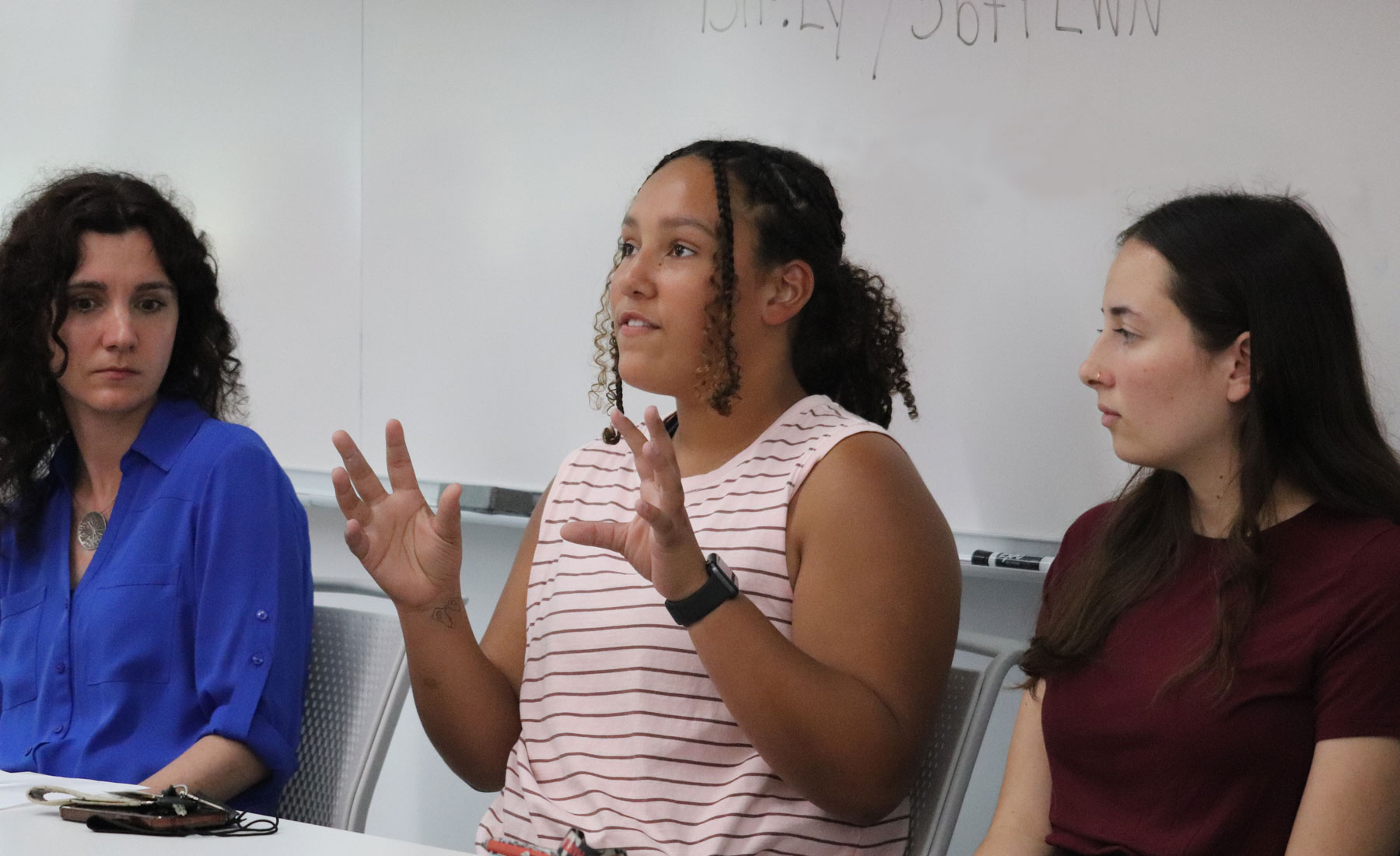
Pictured at top: Media alumna Dora Valkanova (PhD ’20, ICR), Urbana High School student Halie Thompson, and sophomore in journalism Ashley Gilbert discussed ways in which students were audiences and creators of social media content at an IMEDIA media literacy workshop this summer for public school educators. IMEDIA is one of the funding recipients in the Mark L. Brandt Public Engagement Fellows program.
“There is no question that many Illini student-athletes are among the most high-profile brands in the State of Illinois,” said Dr. Mike Yao, professor of digital media and head of the Charles H. Sandage Department of Advertising in the College of Media. “We could not be more excited for our outstanding students to grow alongside student-athletes and local businesses with whom they share the Illinois experience. Today’s personal branding opportunities are limitless, and I look forward to seeing the results.”
The Brand Ambassador Program requires a rigorous application process and provides students with a passion for brand marketing and social media with hands-on training to become effective, creative, and positive brand managers. Fighting Illini student-athletes along with Visit Champaign County, the City of Urbana, the Champaign Community Economic Development Corporation, and other organizations will be paired with individual brand ambassadors in order to establish and better develop their personal brand strategies.
Last year’s changes to state law and NCAA policy allow student-athletes to monetize their name, image, and likeness (NIL), and this shift has created an incentive for student-athletes to increase their social media presences as they begin to play a prominent role in the marketing efforts of both regional and national corporations. Opendorse, a leading NIL technology platform, projects that the student-athlete NIL market could reach $1 billion annually, with a significant majority of NIL activity leveraging student-athletes’ social media presences.
NCAA Women’s Gymnastics Championships individual qualifier Mia Takekawa is one student-athlete who will benefit from this new initiative.
“It’s amazing to consider that I will have a personal social media expert,” Takekawa said. “I’m always wondering how to increase my online presence, and I’m excited to see how this helps elevate my profile to get more NIL deals.”
The Brand Ambassador Program operates in parallel with the INFLUENCE Program, the Division of Intercollegiate Athletics educational approach to NIL, which emphasizes brand and strategy development along with business and financial concepts.
“The University of Illinois has some of the finest advertising students in the nation, and I am delighted that our student-athletes will get the benefit of this new program,” said Josh Whitman, director of Athletics. “I am grateful to the College of Media, Dr. Yao, and the many others who worked to include our student-athletes in this new endeavor.”
The Brand Ambassador Program will begin at the start of the Fall 2022 semester. The program currently has 21 advertising students and serves 10 student-athlete brands (two of whom are Media majors) and brands in the community.
Students in MACS 150: Introduction to Digital Media Production, taught by Derek Long, assistant professor of media and cinema studies, celebrated their final work of the spring semester at an in-class awards ceremony called the “CORNIs,” where students received Camera Operators’ Registry of Note at Illinois certificates and small trophies, and watched the winning films.
In the course, which draws majors across campus, students learn photography, Photoshop, web design using HTML and CSS, and podcast production. They apply these skills to their final videos, which could be short fiction, documentary, or experimental films of about five minutes in teams of three or four. At the end of the course, Long wants students to learn what kind of media creator they are and to discover which part of the process they enjoy most.
“In the videos, students bring all the digital production skills they learn in MACS 150 to bear: framing and composition, storytelling structure, thinking about audiences, lighting and cinematography, sound recording, design, editing, and postproduction,” Long said. “They also need to make their videos in ways that accord with accepted practices of copyright and fair use, and they make cases for their use of copyrighted material in statements of attribution and fair use for each project. The assignment also serves as a culmination of students’ training in inclusive collaboration. They must draft and pitch a pre-production proposal that distributes labor equitably, and they write peer- and self-evaluations of their collaboration.”
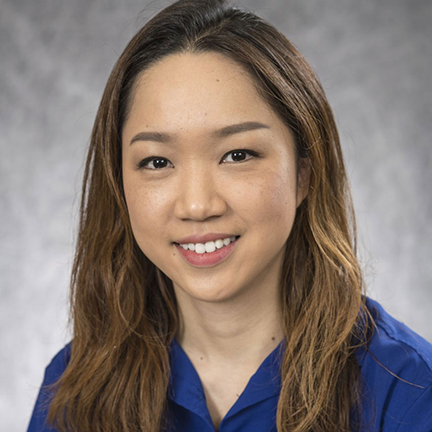
Hye Soo Nah, a doctoral student at the Institute of Communications Research, has had a paper accepted for publication in Computers in Human Behavior, a scholarly journal dedicated to examining the use of computers from a psychological perspective.
The paper addresses how people are influenced by “parasocial” interactions online, such as with YouTubers, TikTokers, Twitch streamers, etc. Nah found that speakers who self-disclosed while speaking (i.e., sharing personal information about themselves) were perceived as more authentic, likable, and therefore more persuasive.
Abstract: This research demonstrates how a media performer’s self-disclosure in a parasocial interaction increases viewers’ likelihood to agree with the performer’s message. Two randomized experiments supported a serial multiple mediator model where a performer’s self-disclosure positively affected viewers’ message acceptance via increased perceptions of performer authenticity and feelings of interpersonal liking. In Study 1 (n = 415), participants were randomly assigned to watch a short video where the performer, a male college student, either engaged in self-disclosure or did not while presenting a prosocial, mental health-related message. Throughout both versions of the video (self-disclosure, no-disclosure), the performer gazed and spoke directly into the camera and addressed the viewer’s presence, thereby engaging in parasocial interaction. Study 2 (n = 520) was a close conceptual replication of Study 1 and provided additional support for the serial multiple mediator model.
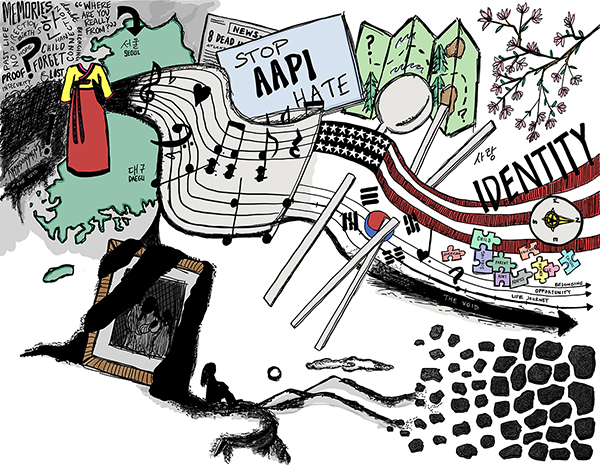
Kirby Cook (MS ’21, advertising), a doctoral student at the Institute of Communications Research in the College of Media, won third place and a $200 award in the annual Image of Research competition, a multidisciplinary event celebrating the diversity and breadth of student research at UIUC. The graduate student edition of the competition is organized by the Scholarly Commons of the University Library and the Graduate College.
Cook won for her image “The Identity Conflict: Lifelong Journey of a Korean Adoptee.”
“Art and qualitative research come together in this depiction of a lifelong identity journey for Korean adoptees,” Cook wrote in her description. “Beyond the boundaries of prescribed methods, data collection, and formulaic approaches, this collage represents the abstract complexities of research and what lies beyond charts and tables. How does one capture the essence of an individual’s personal history; their pain, their future? While my research focuses primarily on material items belonging to Korean adoptees and their meanings, I recognize that there is more behind their stories.”
















 Hye Soo Nah, a doctoral student at the Institute of Communications Research, has had a paper accepted for publication in Computers in Human Behavior, a scholarly journal dedicated to examining the use of computers from a psychological perspective.