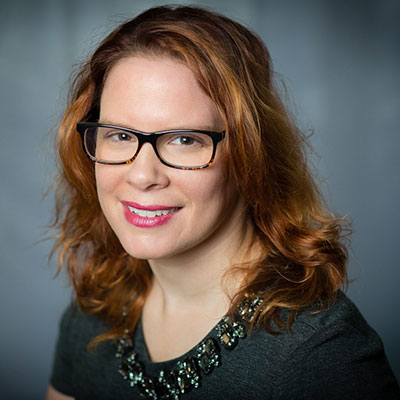
Q&A with Angela Aguayo

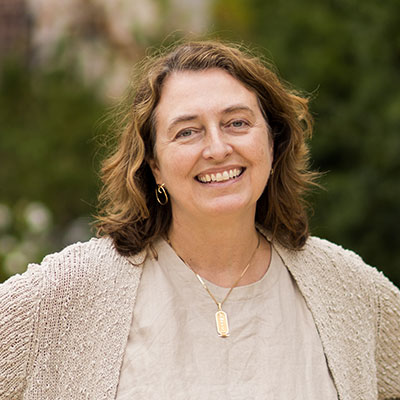
Get to know some of our College of Media faculty. Angela Aguayo is an associate professor of media and cinema studies (MACS) and served as the acting director for the Roger Ebert Center for Film Studies in 2023-24. She is also the director of the Illinois Community Media Project, which uses the production process, the gathering and reporting of information, to address community problems. (Learn more about the Illinois Community Media Project in this “I on the Media” video with Aguayo.)

Angela Aguayo

What are some of the classes you teach?
I teach various classes that have to do with audio-visual culture. Much of my specialization is in documentary. In Gender and Pop Culture, we examine how gender is articulated in movies, TV, music, and more. The class is constantly changing with the currents of what’s happening in the world. In Intro to Documentary, I encourage students to take up skills in interviewing and documentation and look into its history. The class also asks what it means to pick up a camera and engage with the world. A teacher once told me, “When documentaries are done correctly, they change who you are.” I teach New Media and Society, which addresses how new technologies are integrated into our lives—and how those technologies are partial and biased but also have capacities to engage with the world and change things. I also teach a capstone senior portfolio class for media and cinema studies majors. In that class, students look and apply for jobs, think about internships, and develop themselves professionally like finding funding for their work or applying for grad school.

What are your research interests?
I’m forever fascinated with how people use the camera to access the political process, engage with the world, and articulate themselves when they don’t see something articulated in their culture. All of my work and scholarship has been about that process. It’s deeply sociological, in that I’m not preoccupied with the theater screen or traditional understandings of film culture. Rather, I’m interested in everyday people interacting with the screen and the tools of production to create new worlds around them. 

What do you enjoy about working with college students?
It’s this beautiful time in human development when young people are becoming unrooted from the things that created them—their families, communities, and homes—and choosing what to bring along and what to add to their lives that will be different from their family legacy. That is an interesting open space for dialogues about the world. I find those discussions with students energizing and keep me thinking freshly. I’ve been teaching for about 25 years, and I see real differences in the generations of students, which is refreshing. 

What are some projects you are involved with?
I’m about to start writing a new book: “Collective Matters,” which circles how people pick up the camera and engage the world to address community problems. For example, what does that look like when the only sex education is through film, or schools if they’re lucky? This has resulted in people picking up the camera, recording their lives, and sharing them with others to address absences in resources and information. My book looks at sex education, and how youth media programs have given young people access to their voice, among other topics.

I’m also writing a few grants around AI and representations of mental health in mainstream media. And I’m working with community partners to think through how we can use documentary production to give community members access to technology and authorship, whether that’s veterans finding out how to use their cell phones and record, or houseless people who don’t get access to technology. How do we help them articulate their life on their terms?

What is your favorite part of what you do?
I love that every single day is different. I wake up and think about developing projects with the smartest people I know, working with the brightest students, and thinking about how we can address some of our major problems. I talk about the things that are important to me. I don’t know that many people get to do that. I have a lot of control over what I teach, how I teach it, and what I spend my time with. In a geeky way, I love intellectual puzzles—how to get a grant, make a journal article and publish it, write books, and think about structure. Everything I do is a giant intellectual puzzle.

What are some of your hobbies and interests?
I see an incredible amount of live music. I spent a lot of money on concert tickets last year. I did see Taylor Swift in Los Angeles when they recorded the Eras Tour. And then I paid $20 to see the same concert in the theater. It doesn’t make much sense. I like to see concerts on campus—we just had Ani DiFranco, Emmylou Harris, and Shawn Colvin. There’s something special about enjoying music with people in a room, whether slow, orchestral, or fast, and dancing. I appreciate that process.

I love to cook. I’ll brag about myself. I’m a great sourdough baker—country loaves, sandwich bread, pecan rolls, all kinds of things. Another MACS professor, Anita Chan, helped me learn how to make kombucha. I’m working my way through the different fermented foods. It’s good for your gut.

I love spending time with my family. I spend a lot of time on a sports field every year. My son who is 12 years old is an avid club soccer player, and now basketball. So I spend most of my weekends in small towns, big towns, all across Illinois.

What advice do you have for a student in the College of Media?
University lifestyle is overwhelming. So there’s a lot to get caught up in and explore. Especially in your first couple of years, you must try as many things as possible. In that process, you’ll learn who your people are and what you’re interested in. When you have an idea, you should do what you love often and frequently, especially when it connects with your career choices. 

For MACS majors, there’s so much you can do to help prepare for the moment from graduation to your career. Take every opportunity in your classroom to make something you think might showcase your skills. Take the opportunity to push yourself to learn things outside your classroom purview. So learn cameras, technical skills, etc., because you have no idea where you’ll find yourself and what skills will be useful. I did this as a young person and was surprised by what ended up being valuable to me, which were the things I didn’t give too much thought to. 

If you orient your studies in an entrepreneurial way, you’ll find yourself at the end of your degree with opportunities, rather than scrambling to figure out what you need to be successful. The classroom stuff is essential and foundational, but not inclusive of everything you should know.

—Interview by Kris Modi, New Voices Intern
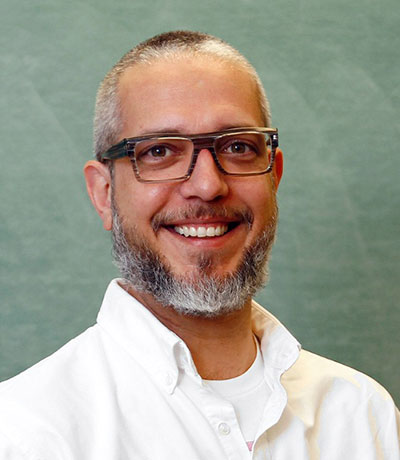
Q&A with Colleen King

Get to know some of our College of Media faculty. Colleen King is director of the Richard and Leslie Frank Center for Leadership and Innovation in Media and clinical assistant professor of journalism.

Colleen King

How did you get your start in journalism? 
I went to George Washington University in Washington, D.C., and there I majored in political communication, which is a cross section of political science and journalism. While I was a student at GW, I got an internship at CBS News in Washington, which is how I got into TV news. I have spent 17 years in TV news; almost 15 of them at MSNBC, where my final job was executive producer of the 11th Hour with Brian Williams. 

How did you know you wanted to get involved with journalism?
I grew up in a household where my parents subscribed to Time, Newsweek, and the local newspaper. They also watched the news every night and on Sundays watched the political talk shows, so I kind of grew up around news. What I loved learning about news in college was that you didn’t have to pick a side, you didn’t have to agree with some positions and not others, and you could really look at things at a neutral angle. I really loved the idea of having a front-row seat to the news as it was happening.

What is your current job position at the University of Illinois?
Currently, I am director of the Frank Center for Leadership and Innovation in Media and a clinical assistant professor of journalism. The Frank Center was created out of a generous donation from Rich and Leslie Frank. Rich is an alum of Illinois and Leslie, his wife, is a former local news anchor and an Emmy award-winning news anchor from Seattle and Los Angeles. They funded the Frank Center to create experiences for students of all kinds. So, it’s bringing high level journalists to campus to meet with students here. The workshops and event programming help in supporting what everyone is learning at the College of Media and additional experiences beyond that, too.

What type of classes do you teach now?
This semester, I’m teaching JOUR 313: Writing for Television and Streaming News. I have also taught JOUR 200: Introduction to Journalism, JOUR 210: Newsgathering across Platforms, and JOUR 494: Navigating the Job Market. The classes are all fun in their own way, but the JOUR 313 class is dear to my heart because it’s something I spent doing every day, so that is kind of fun to develop as a class.  

What is one of your favorite career experiences?
Highlights of my career have been predominantly in the control room where I have gotten to cover some major events in American history, such as presidential elections and political campaigns. I have also covered all sorts of breaking news like hurricanes, school shootings, wildfires, and floods. I loved covering politics and that was usually what I would be covering most days.

Was it hard to stay objective while covering the news?
No, I think part of being a journalist is learning how to report a story and not take a side. One of the things I loved most about it was getting to say what was happening and talk to experts that could help me predict where stories were going rather than taking a side and advocating. 

What advice would you give to College of Media students?
My advice would be to pursue what you love and what you’re interested in, because if you do what you love it won’t feel like work ultimately down the road. Also, gain as many experiences as you can as an intern or as someone shadowing a professional in the field to understand what the job looks like day-to-day and know if it’s the right fit for you. Don’t be afraid of the word “no” and not getting a job or an interview. “No” just helps you get more creative about other options and other things to pursue. 

—Interview by Mila Mitrovic, New Voices Intern

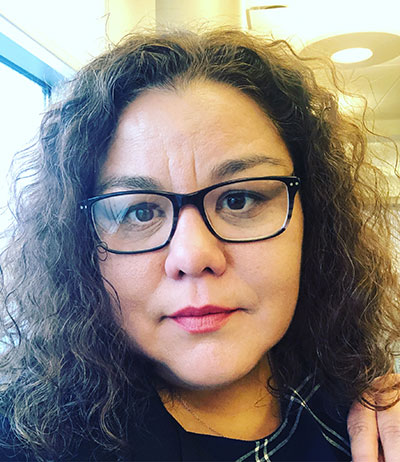
Q&A with Shachar Meron

Get to know some of our College of Media faculty. Shachar Meron is a senior lecturer in advertising.

Shachar Meron

What is your educational background? 
I actually started out as an art major as a freshman, then I shifted after that to the Division of General Studies as an undeclared student, trying to find my way. I wanted something that was creative but would still have a viable job opportunity. I took ADV 150, which I thought was so cool, and that’s how I got into advertising. 

I got my bachelor’s degree in advertising here at Illinois and then I stuck around a little extra to get my master’s in advertising here from the College of Media.

You owned an advertising business—can you tell me more about your experience with that?
I have one currently, and I also had a different one years ago. The one years ago, I was in Chicago, and I had a creative partner. I was a writer and strategist, and she was an art director and designer. We worked together at a few agencies, and we had some freelance work that we did together. We used that to launch a business called BatesMeron Sweet Design. It still exists, we named it after ourselves, we started just the two of us. It was a brand design boutique so companies that were new that needed branding, or ones that needed rebranding would come to us. I did that for five years, then I sold my half to my partner and went onto other things, including coming down here to teach. Now I own a brand strategy consultancy called Bluegreen Branding. It’s a virtual agency consultancy. I have a different partner that I work with now, but we both have jobs, so this is something that we do on the side. My consulting business has been going on for about five years now. We got our start and then about a year later, Covid hit and all of the sudden, it was a real benefit to having a virtual agency.  

What is your favorite class to teach?
I don’t want to choose! I feel like they’re my children and I can’t pick! I like different things about different classes. I’m glad that I’ve been able to create all of them the way that I want to. I really like ADV 250 Advertising and Brand Strategy because it’s very big picture, like here is the world of advertising and brands and how it fits together. Whereas my ADV 400 copywriting class is enjoyable because it’s creative, and it’s where I started. I really like ADV 490 Sandage Studios/Agency Experience because it’s a small tight-knit group, and we run it more like a business than an actual class. So I can’t really pick just one. 

What is your favorite part of teaching college students?
There’s a certain hunger in people who are young and curious and are still exploring all of their options, while learning about new things for the first time. I really enjoy being a part of all that. I really like collaborating with students, I like being able to meet with them one on one and a lot of times it’s a conversation about their career, or their future. I think that’s my favorite part, learning more about them and trying to help them find their way.

How have you seen the advertising industry change over the years, and where do you see it heading in the future?
With advertising, it’s often on the forefront of change in society and brands; lots of times advertising is focused on what’s new. At the same time, there are universal fundamentals of advertising that don’t change and I’m glad that we teach them here because it helps them stay relevant. For example, no matter what technologies are being introduced or changing the way we communicate, it’s still about forming a connection with your target audience. We’re in the persuasion business, which means understanding the people you’re trying to connect with and then trying to show them here’s a brand that meets what you want and need. As far as things that are changing, I’m using AI in my own consultancy work and also I’m starting to teach AI more in my classes, and I’m excited by that technology. Also just thinking about globalization, brands are much more multicultural than they used to be. The Internet is a part of that reason, but not the entire thing. Brands try to be more mission driven and value driven than ever before, which is a good thing but it’s not always relevant to the market that we’re talking about. There’s a lot that’s always changing.

What is your biggest piece of advice to college students?
Explore what interests you, but with the purpose of eventually creating your own path and your own career around what you want and what you’re good at. In advertising there’s like a million directions you could go. You can really make your career your own, you could start your own companies, you could create your own roles, all that kind of stuff. But many students hesitate to try new things and to explore. I think a lot of times, it comes down to short-term thinking like not taking a class because they don’t like when it meets. I get that, but then you’re passing up a class that is based around the future you want. There are so many opportunities to try things during this time of your life, just try them, check them out. But keep an eye out, if you’re like, hey, I like this, look for what more you can do. 

—Interview by Rhia Thakkar, New Voices Intern 

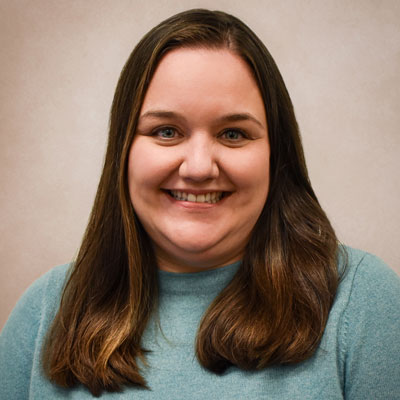
Q&A with Alison Davis

Get to know some of our College of Media faculty. Alison Davis is a lecturer in journalism and a seven-time regional Emmy Award winner.

Alison Davis

Why did you become a lecturer in the College of Media?
When I was working for the Big Ten Network, there were times that different professors would go on sabbatical, and I would fill in, teaching their classes, particularly the television production class. I loved it! I realized how fun it was teaching and working with students, seeing them learn new things, and watching their eyes light up when they understood something. Then, I saw a position opening and thought, “Well, maybe I would like to do this full-time; maybe I should consider teaching.” I ended up applying, and this is my fourth year of teaching in the Department of Journalism.

What courses do you currently teach?
I teach JOUR 215: Multimedia Reporting; JOUR 240: Introduction to Documentary Storytelling & Production; JOUR 340: Video Reporting & Storytelling; and JOUR 440: Advanced Documentary Storytelling & Production. For the first time this semester, Professor Stretch Ledford and I are teaching a globally focused documentary class, where we’re taking six students to Sierra Leone over spring break 2024 to produce documentaries about the issue of period poverty in Western Africa.

What did your career look like before returning to the University of Illinois Urbana-Champaign?
After I received my undergraduate and master’s degrees here, I worked for many years at the local PBS station, making shows and national documentaries. I worked for the Big 10 Network, creating documentaries about the University of Illinois—some sports stories and also stories that told the richness of the University, ranging from a biography on the man who invented the LED to our first African American captain of the basketball team; kind of the full gamut. My background is in filmmaking, and it’s great to teach that to students here.

For the past two decades, you’ve been producing national documentaries, receiving numerous regional Emmy Awards and over 20 Emmy nominations. What sparked your interest in doing such a thing?
I remember when I was an undergraduate, we were divided into tracks, and at that point, I was a broadcast journalism major. I loved doing videos and being able to tell stories—being a storyteller is something I have always loved doing since I was little. When I was in the news, I always felt there was more of a story, and I felt limited by doing a 30-second/minute-and-a-half package. I studied abroad in London, where I worked at a film company, and it was a blast, so when I came back, I did more work in video. After I was a freshly graduated person in my 20s, I had a chance to have my own television show and work in all of these different roles, learning what to do within those roles. It was an experience.

How did it feel to know your work was being noticed in a significant way that was shaping people’s opinions?
That was an incredible thing. We would enter the regional Emmys and feel like we didn’t have a shot at winning, but whenever I would, I just felt this unbelievable moment of shock and gratefulness. I remember the first time I won in Chicago. It was for a documentary I did about an architect who graduated from the University of Illinois and had built the capital of Australia, Canberra, but had died in obscurity. I recall sitting at this table—and they put you at a table with nominees in your category—and I was young, in my 30s, against older men. I talked to them about what projects they did, and they all sounded incredible compared to mine; then it was announced that I won. I took my mom and sister to that, and they couldn’t believe it; we were ecstatic.

What’s the biggest piece of advice you have for your students and others?
Don’t give up. If you’re making a video or any media project, you’re going to get frustrated. It could be technical problems when you’re trying to film. It could be your editing, and you’re sick of looking at this stuff that you don’t think you want to look at again. But don’t give up. Think about the goal of what you’re trying to create and keep working hard. Students, in general, should attend the whole University. Make use of the resources and all the great things here.

—Interview by Chloe Barbarise, New Voices Intern

Q&A with Josh Heuman

Get to know some of our College of Media faculty. Josh Heuman is a teaching assistant professor in the Department of Media & Cinema Studies and the Department of Journalism. He received the 2022 College of Media Award for Excellence in Undergraduate Teaching by a Specialized Faculty Member. 

Josh Heuman

What is your favorite class to teach? 
We’re not supposed to have favorites, like you don’t have a favorite child. Usually, we get to teach courses that we want to teach. Even when you are teaching something that you didn’t necessarily pick yourself, you find the interest in each class you teach. 

I do enjoy all the courses I teach, but Creative and Information Economies (MACS 264) is probably my favorite because it’s a material that’s closest to my own work and it is always changing. This course gives a broad introduction to media industries. We take a really close look at film, music, and television industries. I think part of the fun of the course is looking at things that cut across all different kinds of media industries. So before too long in the course, we’ll talk about things like labor markets and geographies of media industries, allowing lots of interesting comparisons.

What are some other classes that you teach?
I usually teach the History of American Journalism course (JOUR 205), and then this semester I’ve just started the Media Law course (JOUR 311), which is really exciting for me; that’s what I taught at other universities in the past. 

What are some projects that you are involved in?
The big project that I’m interested in pursuing over the long term is looking at the historical development of radio and television and writing, and especially the way that we come to the role of the radio and television writer as a professional. I think in a lot of cases, when we do look back on the history of radio and television writing, or other kinds of writing as well, we’re telling the stories of the triumph of art or the defeat of art, as if that’s what that kind of work should be.

When you go back to the beginnings of the field, they were very ambivalent about this ideal of art. I think looking more closely at how early radio and television writers imagine themselves, how they were shaped by outside forces, gives a much more complicated picture of what that role was at the time.

What are some past projects of yours? 
I think a lot of my projects revolve around questions of industry and regulation. By looking at television writers’ contracts and the idea of the figure of the showrunner is really interesting. This really reflects specific transformations in television. I am also interested in writers as it relates to authorship and ownership of series formats.

How do you conduct your research?
I think with different projects, it works out in different ways. Usually, I find myself looking at documents from a particular time period. I’m really thinking about radio and television writing. I was just flipping through Writer’s Digest—the writer magazines with amateur writers from the ’20s through the ’60s, and just seeing what they’re saying. I was thinking about two questions: How does one do radio and then television writing? What are the characteristics of a radio or television writer and the way that that gets defined in those materials for aspiring writers?

What made you want to teach?
I think going to graduate school and having the excitement of looking at these complex systems that shape our world and the interest of working within those systems was something that has always been present in my life. Media is incredibly interesting. I also think that when I was entering into graduate school was a particular moment when media and cultural studies were colliding. If you wanted to know about the world, the field of media and cultural studies was and is an especially exciting place to work. I’m really glad to be in Illinois and teaching the kind of students who are really engaged, really interested. 

What is some advice you want to give to students? 
Be curious. Sleep well. Watch and listen and play and read as much as you can. I think we forget that part of our cultural citizenship is not watching everything, but try to watch and listen widely, you have to be in it to win it. I think too often when opportunities are put in front of us, there’s a tendency to say, “Oh, that’s not for me.”

Talk to your teachers. I feel like it doesn’t happen a lot, but if things are going wrong, better communication would help solve those problems. If things are going right, we can help you reach that next level. 

—Interview by Paige Terando, New Voices Intern

Q&A with Jason P. Chambers

Jason P. Chambers

Get to know some of our College of Media faculty. Jason P. Chambers is the associate dean for access and engagement and professor of advertising. 

How long have you been a professor at the College of Media? What sparked your interest in teaching advertising?
I’ve been at the College of Media since August 2001. I started working here directly out of graduate school from The Ohio State University. I have always been interested in advertising, ever since I was a kid. I was one of those kids who didn’t change the channel when commercials came on—I always wanted to watch and pay attention to the content. In graduate school, I specifically examined the African American experience in advertising as professionals, entrepreneurs, agency owners, executives, and other similar roles. When I joined the College of Media, they were interested in someone who could combine history with advertising. I had this exact experience through my research, so it was the perfect opportunity.

What classes and topics do you currently teach?
Because of my administrative role as the associate dean for access and engagement, I focus my time in teaching ADV 175: Diversity in Advertising. It looks at race, ethnicity, sexual orientation, gender, age, and intersectionality. It also dives deeper into targeted advertising towards members of those communities or groups and the challenges, stereotypes, and opportunities as a result. 

What are your research interests?
Research-wise, my next book is on a gentleman named Tom Burrell. Tom Burrell was one of the first African Americans in the Advertising Hall of Fame. He’s from Chicago, and his agency, Burrell Advertising/Burrell Communications Group, was founded in Chicago in 1971. My interest remains, even after 20 years, in African American entrepreneurship and analyzing how it plays out in the advertising industry.

What do you enjoy the most about working with college students?
What I enjoy most is seeing the light come on when students can make connections between the topics I’m teaching and their interests. Much of my role is to facilitate how students grow in reaching their interests. It’s not just about dispensing information in one direction but finding ways to help students grow intellectually and professionally. After having been here for 20 years, I have seen students I taught 10, 12, and 20 years ago, nearly running Fortune 50 or Fortune 100 companies. You get to witness the minuscule role you played in that growth. It’s really gratifying to see.

What’s the biggest piece of advice you have for students graduating from the College of Media?
My biggest piece of advice is to keep learning and stay nimble. The world of advertising is in an ongoing state of flux. It’s rarely stable in terms of the way that things are done and the roles that exist within the industry. It’s also just as important to stay as flexible as you can, for as long as you can. Flexibility gives you the opportunity to take opportunities. Avoid making decisions that get you so far into your career that you get to a place where you can’t leave or feel the need to stay. Whatever the case may be, stay as nimble as possible for as long as possible.

What are some of your hobbies?
I watched far too much football. The Ohio State football, in particular, being from Ohio and graduating from The Ohio State University. I also dabble in woodworking, I’m quite the DIY’er. I’m currently building a book set of built-in shelves and cabinets in my basement. Those hobbies, in addition to hanging out with my family, my kids, and my wife, are how I like to spend my free time.

—Interview by Lauren Barjami, New Voices Intern

Q&A with Marisa Peacock

Get to know some of our College of Media faculty. Marisa Peacock has been an advertising lecturer since Fall 2019.

Peacock

What is the best part about advertising?
Two things. The first one is simple: Every industry needs advertising—it’s always going to exist. Secondly, advertising is constantly changing and creating. I specialize in social media, which didn’t exist at one point in my timeline, thus everyone is going to be doing something that doesn’t exist just yet within advertising! The limits are endless.

What is your best memory so far from your time spent at the College of Media?
Definitely working with all the students—their energy, openness, curiosity, and willingness to experiment recharges and fills me up every time. It’s a remarkable experience to work with students who put themselves into their work and achieve great things while having fun. 

What classes do you currently teach at the College of Media?
I teach ADV 498: The Sandage Project, which is an eight-week capstone class that is typically taken during the last year of coursework. A capstone class utilizes all your skills and talents over the past years to work on a real campaign with a real client! I taught it seven times, and in every instance the client wanted to pick more than one campaign. The class helps students to work in a team, execute a campaign, and use their creativity. 

What is the best way to network in advertising?
UIUC being a Top 10 school is an amazing start. You’re a part of a lot of moving parts and a huge entity. There is always something going on here and someone to talk to. Additionally, I’d say the best way to network is simply to just be yourself—don’t be afraid to promote yourself. People want to be around other people who like what they do, have great stories, and are interested in multiple things. Be that person in your own way. 

—Interview by Emily Campos, New Voices Intern

Q&A with Patrick Vargas

Get to know some of our College of Media faculty! Patrick Vargas is a professor of advertising. He currently teaches Advertising Research Methods (ADV 281), Psychology of Advertising (ADV 478), and sometimes a graduate-level research or seminar class. 

Patrick Vargas

What is your research interest? 
I study attitudes and persuasion. I also have an interest in stereotyping and prejudice. Generally, in social caution. 

What are some of your hobbies? 
I like to read, and I have started working out on a rowing machine. I am weirdly competitive with myself, so I am always trying to row faster than I have the day before. My row machine has a tracker that tells me how fast I am rowing, the amount of energy I am using, and other cool statistics, which ties in with my nerdy love of numbers. Also, I enjoy playing around with my two cats.  

What is your favorite movie or TV show? 
One of my favorite movies is 2001: A Space Odyssey, the Stanley Kubrick movie. I love how it is ambiguous and most of the special effects still hold up even though it’s been more than 50 years since it was released.  

What is your favorite genre of music or favorite band? 
My favorite genre of music would be reggae music that was produced by Lee Perry roughly between 1970 and 1977. There were about seven or eight years where he was doing really amazing work and I like to listen to that! 

What advice do you have for a student graduating from the College of Media? 
I feel like there is a whole world out there and you should go out and see the rest of the world. If you want to go to Chicago after, great! But try to spend time somewhere else, like live in Australia or Belgium and experience the world. It is pretty neat! 

—Interview by Isabel Mercado, New Voices Intern

College of Media
119 Gregory Hall
810 S. Wright St.
Urbana, IL 61801
217-333-2350