Q&A with Former RNC Chairman Michael Steele

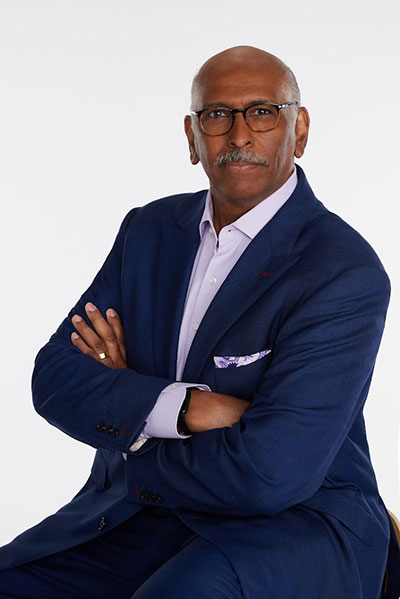
Join the College of Media and the Frank Center via Zoom for a conversation with Michael Steele, former Republican National Committee Chairman and current co-host of The Weekend on MSNBC, discussing Donald Trump’s campaign and trials, the future of the GOP, Speaker of the House of Representatives Mike Johnson’s future, and more.

The Q&A will be led by Colleen King, director of the Frank Center and clinical assistant professor of journalism.

Presented by the Richard and Leslie Frank Center for Leadership and Innovation in Media.

About Michael Steele

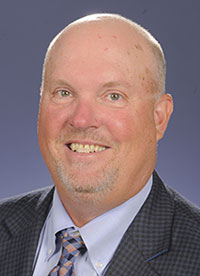
Michael Steele

When he was elected Lt. Governor of Maryland in 2003, Michael Steele made history as the first African American elected to statewide office; and again with his subsequent chairmanship of the Republican National Committee in 2009.

As chairman of the RNC, Michael Steele was charged with revitalizing the Republican Party. A self-described “Lincoln Republican,” under Steele’s leadership the RNC broke fundraising records (over $192 million raised during the 2010 cycle) and Republicans won 63 House seats, the biggest pickup since 1938.

As Lt. Governor of Maryland, Steele’s priorities included reforming the state’s Minority Business Enterprise program, improving the quality of Maryland’s public education system, expanding economic development in the state, and fostering cooperation between government and faith-based organizations to help those in need.

Steele’s ability as a communicator and commentator has been showcased as a political analyst for MSNBC and recently in his role as co-host of MSNBC’s The Weekend. He has appeared on Meet the Press, Face the Nation, HBO’s Real Time with Bill Maher, and Comedy Central’s The Daily Show. In addition to his work in television, Steele co-hosted the daily radio program Steele & Ungar on the POTUS Channel on SiriusXM and is the host of The Michael Steele Podcast.

Steele is a graduate of Georgetown Law Center (’91), an Aspen Institute Rodel Fellow in Public Leadership, and a University of Chicago Institute of Politics Fellow. He currently serves as Chairman of the U.S. Vote Foundation and Holder of the Chair for The Gwendolyn S. & Colbert L. King Endowed Chair in Public Policy Lecture Series at Howard University. He has served as a Senior Fellow in International and Public Affairs at Brown University Watson Institute.
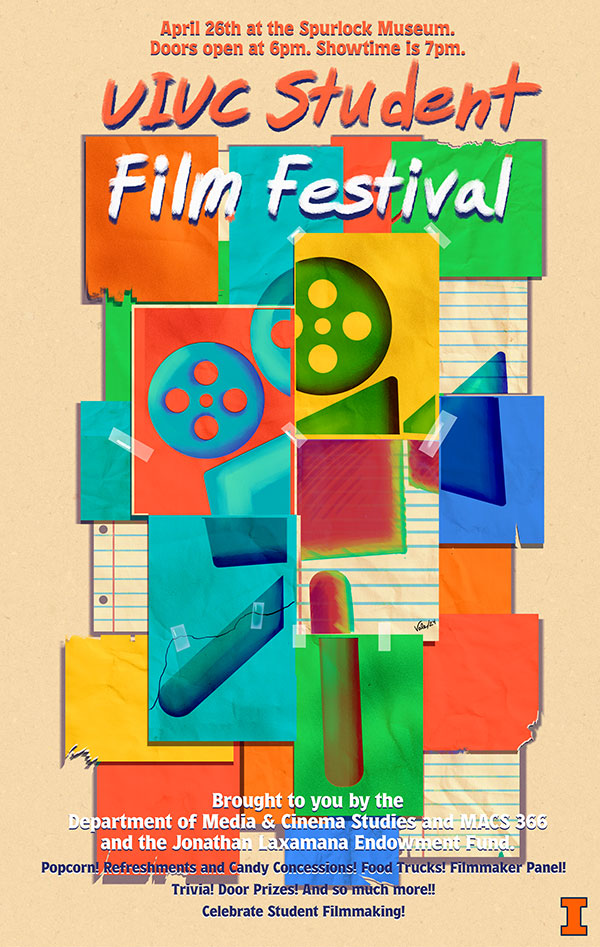
UIUC Student Film Festival 2024


UPDATE: Watch a recording of the 2024 UIUC Student Film Festival, featuring 13 film selections created by students at the University of Illinois. 

UIUC Student Film Fest 2024 poster

Join us for a celebration of student filmmaking at the 15th annual UIUC Student Film Festival, featuring the work of students from across the University of Illinois campus. Programming will include roughly 2 hours of student shorts, a filmmaker panel, and some trivia and door prizes!

Doors open at 6 p.m.

This event is produced, programmed, and curated by students in MACS 366: Film Festivals. 

Sponsored by the Department of Media & Cinema Studies and the Jonathan Laxamana Endowment Fund.


Q&A with Kara Swisher

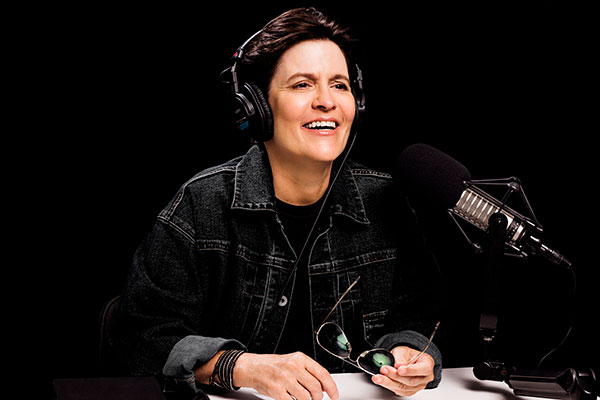
Kara Swisher

Join the College of Media via Zoom for a Q&A with tech journalist Kara Swisher, host of the interview podcast On with Kara Swisher and cohost of the tech/business/politics podcast Pivot with NYU Marketing Professor Scott Galloway, both distributed by New York Magazine. Her third book, Burn Book: A Tech Love Story, will be out in March 2024.

Swisher has been covering the technology industry since the early ’90s, interviewing prominent figures such as Steve Jobs, Bill Gates, Mark Zuckerberg, Elon Musk, Jeff Bezos, and Sheryl Sandberg. Her early and no-holds-barred coverage of the tech industry earned her a reputation as “Silicon Valley’s most feared and well-liked journalist.” In addition to tech execs and CEOs, she has also interviewed politicians, celebrities, and more, including President Barack Obama, Hillary Clinton, Conan O’Brien, and Kim Kardashian.

Swisher was cofounder and editor-at-large of the technology news website Recode, host of the Recode Decode and Sway podcasts, and coexecutive producer of the tech and media conference Code. She was a former contributing opinion writer for The New York Times and has also worked for The Wall Street Journal and The Washington Post. 

The Q&A will be led by Colleen King, director of the Frank Center and clinical assistant professor of journalism. 

Presented by the Richard and Leslie Frank Center for Leadership and Innovation in Media.

(Photo of Kara Swisher by Philip Montgomery.) 

Posted in Uncategorized

A Conversation with Brian Williams


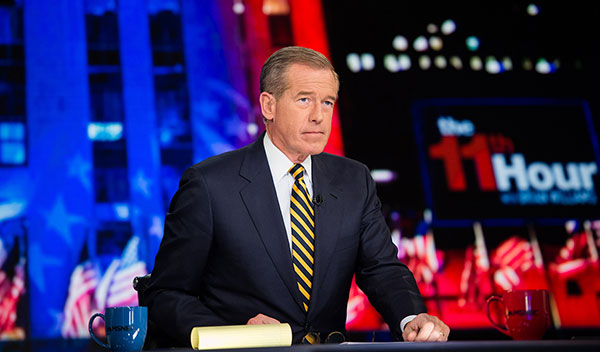
Brian Williams

Brian Williams, former anchor of MSNBC’s The 11th Hour with Brian Williams and NBC Nightly News with Brian Williams, will be on campus for a conversation about the evolution of broadcast news in America.

A 40-year veteran of television news, Williams has received a dozen Emmy Awards, 11 Edward R. Murrow Awards, the duPont-Columbia Award, the Walter Cronkite Award for Excellence in Journalism, and the industry’s highest honor: the George Foster Peabody Award.

The conversation will be led by Colleen King, director of the Frank Center and clinical assistant professor of journalism. King worked closely with Williams as his executive producer of The 11th Hour. 

Questions may be submitted in advance through the Zoom registration form or through this online submission form.

This event is presented by the Richard and Leslie Frank Center for Leadership and Innovation in Media. 

About Brian Williams

Brian Williams

Brian Williams is a 40-year veteran of television news and is among the most highly decorated journalists of his generation. After 28 years at NBC News, he signed off the air for the last time on December 9, 2021. 

Over the course of his career, he covered every major story imaginable: political conventions and presidential elections, our nation’s wars in Iraq and Afghanistan, conflict in the Middle East, natural disasters, and countless mass-casualty tragedies in the United States and abroad. He traveled to more than two dozen countries, many of them aboard Air Force One. He has interviewed six American presidents. 

His work has been richly rewarded, with a dozen Emmy Awards, 11 Edward R. Murrow Awards, the duPont-Columbia Award, the Walter Cronkite Award for Excellence in Journalism, and the industry’s highest honor: the George Foster Peabody Award, which he received for his tireless coverage of Hurricane Katrina and its aftermath. His televised reports from New Orleans were praised by Vanity Fair as “Murrow-worthy.”

During the decade he spent as anchor and managing editor of NBC Nightly News, it was the most-watched news broadcast in the United States—and Williams was viewed by more people on a daily basis than any other broadcaster. At the time of his retirement from NBC, he was anchor of the critically-acclaimed 11th Hour with Brian Williams, which chronicled the 2016 election and its aftermath, including the January 6th insurrection and the failed attempt to overturn a presidential election. 

Williams joined NBC in 1993 after a dozen years in local news. Two years later, he was named Chief White House Correspondent. In 2007, Time magazine named him one of the 100 most influential people in the world. Along the way, he became a favorite of late-night talk show audiences, and in 2008 he became the first evening news anchor to host Saturday Night Live. In 2014, Williams was inducted into the New Jersey Hall of Fame by fellow member Bruce Springsteen. 

Beyond his family, his first love has always been firefighting—and that remains true today. He applied for enrollment in the fire academy at the age of 18, and has served as a volunteer firefighter for many years. He is currently an active and fully accredited member of the fire service in Ocean County, New Jersey. He has been a member of the Leary Firefighters Foundation Board of Directors for 10 years, where he is proud to advocate for the needs of the nation’s 130,000 volunteer firefighters.

Roger Ebert Lecture: Iranian Cinema

Kaveh Askari

The Roger Ebert Lecture, “Provenance, Fakes, and Feuds: Building Expertise around Transnational Genre in 1960s Iran,” will be presented by Kaveh Askari, an associate professor and director of film studies at Michigan State University. 

Kaveh Askari’s research and teaching focus on cinema and media history in a global context. Special areas of interest include art cinema, media circulation, film and the other arts, and cinemas of the Middle East.

Askari is the author of Relaying Cinema in Midcentury Iran: Material Cultures in Transit, which won the 2023 Katherine Singer Kovács Book Award from the Society for Cinema and Media Studies. He also wrote Making Movies into Art: Picture Craft from the Magic Lantern to Early Hollywood (2014) and is the co-editor of several volumes including a special issue of Film History titled “South by South/West Asia: Transregional Histories of Middle East–South Asia Cinemas” (2021) and “Performing New Media, 1890-1915” (2014).

View screening details on Thursday, October 26.

Presented by the Roger Ebert Center for Film Studies.

Ebert Center Screening: Iranian Cinema 

Cry of Midnight film

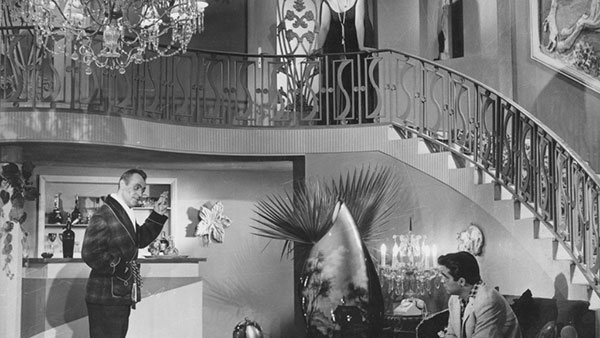
A screening of Fariyad-e Nim-e Shab / Cry of Midnight will be held on Thursday, Oct. 26. The 1961 film was directed by Samuel Khachikian, who was described as the “Iranian Hitchcock,” and was known for his strong female characters and the use of crime cinema motifs. In this film, a young man becomes entangled with a criminal gang but eventually finds his way back to the innocent girl that he’s in love with.

The Roger Ebert Lecture will be presented on Friday, Oct. 27, by Kaveh Askari, an associate professor and director of film studies at Michigan State University. 

Askari is the author of Relaying Cinema in Midcentury Iran: Material Cultures in Transit, which won the 2023 Katherine Singer Kovács Book Award from the Society for Cinema and Media Studies. He also wrote Making Movies into Art: Picture Craft from the Magic Lantern to early Hollywood (2014) and is the co-editor of several volumes including a special issue of Film History titled “South by South/West Asia: Transregional Histories of Middle East–South Asia Cinemas” (2021) and “Performing New Media, 1890-1915” (2014).

Presented by the Roger Ebert Center for Film Studies.

Posted in Uncategorized
College of Media
119 Gregory Hall
810 S. Wright St.
Urbana, IL 61801
217-333-2350