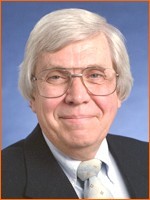
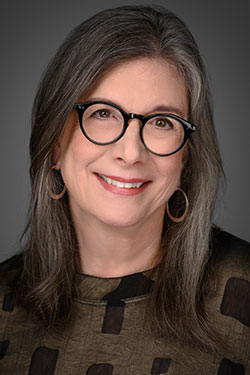
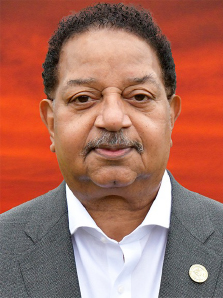
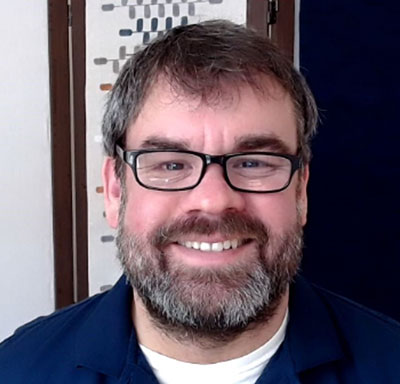
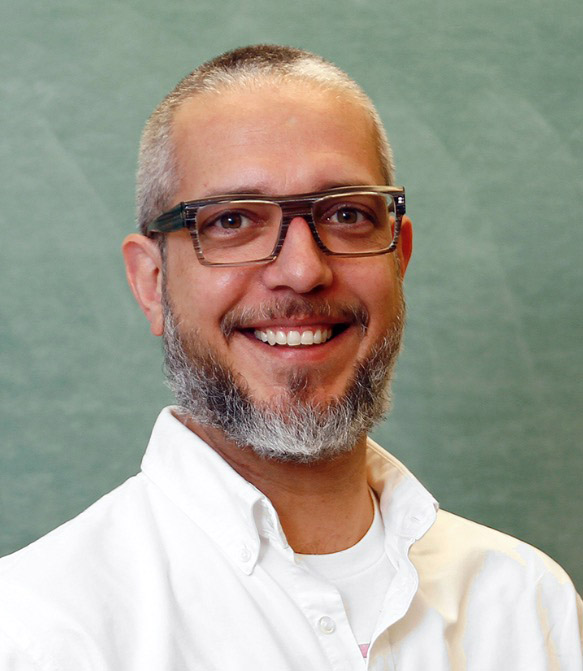
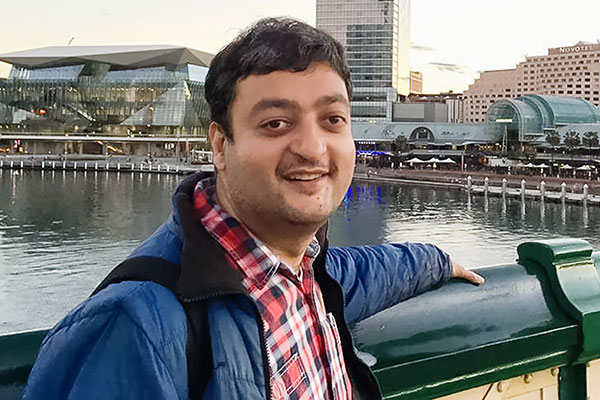
John Nerone

Professor Emeritus

Affiliations

  • Department of Media & Cinema Studies
  • Institute of Communications Research

Education

  • Ph.D., Notre Dame University (History)

Research and Creative Endeavor

Nerone is the author or co-author of four books and numerous articles, including “Violence Against the Press: Policing the Public Sphere in U.S. History” (Oxford University Press, 1994), “Last Rights: Revisiting Four Theories of the Press” (University of Illinois Press, 1995), and, with Kevin Barnhurst, “The Form of News: A History” (Guilford Press, 2001), which won the Suzanne Langer Award of the Media Ecology Association and the International Communication Association’s Book of the Year Award. He also co-edits (with Robert W. McChesney) a book series on the History of Communication. His service as a faculty member has included several terms on the faculty senate, membership on the General Education Board, a full range of committees in the College of Media, and service as head of the ICR’s Program Evaluation Committee and as Placement Officer. His areas of interest include the history of communications, historical research methods, American culture.

Clifford Christians

Professor Emeritus

Affiliations

  • Department of Journalism
  • Department of Media & Cinema Studies
  • Institute of Communications Research

Education

  • Ph.D., University of Illinois Urbana-Champaign (Communications)

Background

Christians is the former director of the Institute of Communications Research and chair of the doctoral program in communications, positions he held from 1987-2001 and from 2007-2009. He has been a visiting scholar in philosophical ethics at Princeton University, a research fellow in social ethics and also a visiting scholar at the University of Chicago, and a PEW fellow in ethics at Oxford University. He has a Doctor of Letters D.Litt Honoris Causa Degree from Marquette University and an honorary Doctor of Humane Letters degree from Emerson College. He was a Charles H. Sandage Distinguished Professor, has won six teaching awards, and is a faculty member in the Fulbright Specialist Program. His research is in the philosophy of technology, communication theory, and media ethics. A Festschrift Ethics and Evil in the Public Sphere has been published in his honor.

He is a founding member of the International Ethics Roundtables with venues in Stellenbosch, Dubai, Delhi, and Beijing. He has lectured or given papers or taught classes in thirty-five countries. He is listed in Whos Who in America, Whos Who in the World, International Whos Who in Education, and Outstanding Scholars of the 21st Century: Communication Ethics. The Carl Couch Center for Social and Internet Research offers annually the Clifford G. Christians Ethics Research Award. He has been given academic awards such as these: Ethics Scholar Award (Lambda Pi Eta Honor Society, Duquesne University; the AEJMC Presidential Award for distinguished service and AEJMCs Paul J. Deutschmann Award for Excellence in Research; James A. Jaksa Ethics Scholar in Residence; Ralph Crossman and FIRST Scholar awards (University of Colorado); Fellow at the University of Stellenbosch Institute for Advanced Study; Honor Medal for Distinguished Service in Journalism (University of Missouri); Best Edited Book of the Year (with Lee Wilkins, Handbook for Media Ethics); Kappa Tau Alpha Award for Normative Theories of the Media; Distinguished Scholar Award from the National Communication Association; James W. Carey Media Research Award; First Place Faculty Research Paper award (with Stephen Ward, from Media Ethics Division, AEJMC); Louis Forsdale Award as Outstanding Educator in the Field of Media Ecology; Charles Colson Award for Outstanding Contribution to Ethics, Media and Culture; and the Guido H. Stempel III Award for Journalism and Mass Communication Research.

Research and Creative Endeavor

He has published essays on professional ethics in Journalism Monographs, Journal of Broadcasting, Journalism History, Ethical Perspectives: Journal of the European Ethics Network, Ethical Space: The International Journal of Communication Ethics, Journal of Communication, Journal of Mass Media Ethics, Media Development, Communication, Qualitative Inquiry, Media Ethics, Communication Research Trends, Equid Novi: African Journalism Studies, Qualitative Inquiry, Communications and Convergence Review, European Journal of Communication and the International Journal of Mass Communication Research. He has contributed the entries on media ethics or its equivalent to a dozen encyclopedias and handbooks. He serves on the Editorial Boards of two dozen academic journals, is the former editor of Critical Studies in Media Communication and of The Ellul Forum, and currently serves as the Executive Publisher of Media Ethics. His work has been translated into French, German, Spanish, Romanian, Portuguese, Ukranian, Mandarin, and Korean.

He completed the third edition of Rivers and Schramm’s Responsibility in Mass Communication, has co authored Jacques Ellul: Interpretive Essays with Jay Van Hook, and has written Teaching Ethics in Journalism Education with Catherine Covert. His book by Oxford University Press was published in 1993, Good News: Social Ethics and the Press, co authored with John Ferre and Mark Fackler. His book with Michael Traber Communication Ethics and Universal Values was published by Sage, 1997. In 2002 he co-edited with Sharon Bracci, Moral Engagement in Public Life: Theorists for Contemporary Ethics. His book with colleagues Glasser, McQuail, Nordenstreng and White, Normative Theories of the Media (2009), and (with Linda Steiner) Key Concepts in Critical Cultural Studies (2010) were both published by the University of Illinois Press. His Handbook of Mass Media Ethics (with Lee Wilkins) was published by Routledge in 2009 (2nd ed, forthcoming). With John Merrill he edited Ethical Communication: Five Moral Stances in Human Dialogue, University of Missouri Press, 2009. Oxford University Press published his book with Mark Fackler and John Ferre, Ethics for Public Communication, in 2012. His sales-leader textbook, Media Ethics: Cases and Moral Reasoning with Mark Fackler, Kathy McKee, Peggy Kreshel, Robert Woods, is in its ninth edition (2011) with the 10th forthcoming. He co-edited (with Kaarle Nordenstreng), Communication Theories in a Multicultural World (Lang, 2014).

No posts found.
headshot of Clifford Christians

Contact

217-333-1549

William E. Berry

Associate Professor Emeritus

Affiliations

  • Charles H. Sandage Department of Advertising

Education

  • Diploma, Chicago Counseling and Psychotherapy Center (Client-Directed Clinical Therapy)
  • Ph.D., University of Illinois at Urbana-Champaign (Communications Research)
  • M.S., University of Illinois at Urbana-Champaign (Journalism)
  • B.A., Morehouse College (English)

Course Specialties

  • Advertising and Public Relations Management
  • Crisis Communication
  • Global Representations of Race and Ethnicity In Advertising
  • Public Policy for New Media Technologies

Background

Berry’s research and teaching focus is on strategic managerial communication, digital communication technologies and information access in less advanced countries, and advertising and mediated communication practices in the Dominican Republic and Spanish-speaking Caribbean.

Prior to joining the Illinois faculty, Berry worked for 10 years in the telecommunications industry with the AT&T/Illinois Bell organization and the successor Ameritech/Illinois corporation, where he held senior management positions in corporate communications, advertising, strategic planning and customer relations. Specific assignments and responsibilities included: director-external affairs; district manager-corporate issues and corporate public policy; senior manager-advertising; and director-corporate information.

Previously he worked for six years in journalism as an Associated Press reporter in New York City, and as senior staff editor and managing editor with Johnson Publishing Co. (Ebony, Jet, WJPC-AM, etc.) in Chicago. In addition, while on the faculty at Illinois, Berry has served as editorial consultant and writing coach for Morningstar FundInvestor magazine, a publication within the Morningstar mutual funds organization. He has published in both consumer and scholarly media, and he has presented his research at national and international conferences.

He was a Charles E. Merrill Scholar at Durham University and received a diploma from the Chicago Counseling and Psychotherapy Center after completing both the academic and clinical practicum in Client-Centered therapy. Berry is a two-time recipient of the highly competitive Fulbright Fellowship. During academic year 1999-2000, he received the Fulbright Senior Scholar award and lectured and conducted research in the Dominican Republic at Pontificia Universidad Catolica Madre y Maestra in Santiago, and was Visiting Scholar in Residence at the International Education Resource Center at Universidad APEC in Santo Domingo. He received a second Fulbright award to return to the Dominican Republic for four weeks during January 2007 and May/June 2007 to conduct curriculum review and assessment of the journalism and marketing undergraduate and graduate programs, and to organize faculty professional development seminars at PUCMM. At Illinois, he has received a campuswide award for undergraduate teaching.

He teaches courses in global consumerism, advertising practices in emerging economic nation-states, strategic public relations, and racialized representations in the media.

Recent presentations and publications include, “Putting Crisis Communication Theory Into Action: Untangling Public Information Politics, Policies and Practices to Reach Underprivileged Communities During Katrina-esque Diasters” (2008); “Images and Representation of Middle Class Latinos In Advertisements” (2006); “Mi CAFTA es su CAFTA: Advertising and Communicating the Caribbean American Free Trade Agreement in the Dominican Republic Via the Internet” (2006); “La Presensa Dominicana y la Construcion y Representacion de Identidad African: Photographic Framings of Haitians, Africans, and African Americans in Daily Newspapers in the Dominican Republic” (2005); “Con cellular hay mas orpotunidad: New Communication Technologies and the Democratization of Access to Information and Economic Opportunity in the Dominican Republic and Beyond” (2005); “Communication Policy History In International Perspective” (2004); “Miranda Rights and Cyberspace Realities: Risks to the Right to Remain Silent” (2003).

In addition to his Illinois responsibilities, Berry is a member of the Board of Directors of the Provena Health Corporation, a health system that includes six hospitals, 16 long-term care and senior residential facilities, 28 clinics, five home health agencies and other health-related activities operating in Illinois and Indiana.

Bill Berry

Contact

217-333-0128

Kevin Wise

Professor
Associate Head of Graduate Studies

Affiliations

  • Charles H. Sandage Department of Advertising
  • Institute of Communications Research

Education

  • PhD, Stanford University (Communication)
  • MA, Indiana University (Telecommunications)
  • BGS, Indiana University (General Studies)

Course Specialties

  • ADV 280: Introduction to Advertising Media
  • ADV 580: Advertising Theory

Background

I came to the College of Media in 2013 after spending 9 years at the Missouri School of Journalism, where I co-founded and co-directed the PRIME Lab and taught in the School’s Strategic Communication sequence.

Research and Creative Endeavor

My research explores the psychology underlying interactive media use. In other words, how do different attributes of medium, message, person, and situation influence the processes and outcomes of media use? I primarily address this question through experiments that measure physiological and self-report indicators of cognition, emotion, and motivation.

Current/Prospective Students: Collaborating with students on research is one of my great joys. Please feel free to email me anytime if you’re interested in learning more about research and/or working in a media research lab.

If you’re not currently at the University of Illinois but interested in coming here, please feel free to email me about student assistantship opportunities.

Related Links

No posts found.
Kevin Wise

Contact

217-333-2350

John Wirtz

Associate Professor

Affiliations

  • Charles H. Sandage Department of Advertising
  • Institute of Communications Research

Education

  • Ph.D., University of Minnesota (Mass communication)
  • M.A., University of Minnesota (Communication studies)
  • B.S., Valley Forge Christian College (Theology)

Course Specialties

  • Introduction to public relations
  • Public relations writing
  • Advanced public relations
  • Social media and public relations

Background

Wirtz received a Ph.D. in mass communication in 2009 from the University of Minnesota. His studies there focused on how theories of human behavior (primarily grounded in psychology) can help us better understand how exposure to mass media content influences our thoughts and behavior. After completing his Ph.D., Wirtz was assistant professor at Texas Tech University for three years, before joining the Department of Advertising at the College of Media this fall.

Prior to attending graduate school, Wirtz worked for 11 years in a number of positions with public relations and marketing responsibilities. He worked for six years at an international NGO in donor relations and event planning. He also worked for five years directing fund raising, alumni relations and marketing efforts at two universities in the Midwest.

Research and Creative Endeavor

Wirtz’s research focuses on the intersection of interpersonal communication and mass media content. More specifically, Wirtz is interested in how conversation influences how individuals respond to ads—what they remember about the ads, how they evaluate the ads and whether they are more or less likely to take action on recommendations in the ads—based on the type of conversations they have prior to and while viewing the ads.

Wirtz also has an applied component to his research, as he also studies how to make mass media health campaigns more effective and culturally relevant. An example here is a recent research project involving adult Hispanics that tested different styles of presenting information about healthy eating habits and the importance of regular moderate exercise.

Wirtz’s research has appeared in Public Relations Journal, Psychological Science, Human Communication Research, and Communication Studies.

Related Links

Wirtz

Contact

217-333-1602

Patrick Vargas

Professor

Affiliations

  • Charles H. Sandage Department of Advertising
  • Institute of Communications Research
  • Department of Psychology
  • Department of Recreation, Sport and Tourism
  • School of Information Sciences Informatics Programs 
  • Center for Social and Behavioral Sciences

Education

  • Ph.D., The Ohio State University (Social Psychology)
  • M.A., The Ohio State University (Psychology)
  • B.A., St. Mary’s College of Maryland (Philosophy, Psychology)

Course Specialties

  • Advertising Research Methods
  • Attitude-Behavior Relations
  • Psychology of Advertising

Background

Vargas double-majored in philosophy and psychology at St. Mary’s College of Maryland and went on to pursue graduate studies in social psychology (with a minor in quantitative psychology) at The Ohio State University. While at OSU, he worked most closely with professors Bill von Hippel, Rich Petty and Bob Arkin. In 1997-98, Vargas worked as a post-doctoral researcher under the guidance of Joe Forgas at the University of New South Wales. Since 1998, Vargas has been at the University of Illinois Urbana-Champaign.

Research and Creative Endeavor

Vargas has broad research interests spanning social psychology, consumer behavior, advertising, and marketing. A significant portion of his work examines implicit attitudes, stereotyping, prejudice, and how these relate to information processing biases that can influence social judgments and behaviors. His research program bridges social psychological processes with consumer behavior and marketing strategy. 

He has explored topics like linguistic intergroup bias, implicit stereotyping as a predictor of discrimination, and using implicit attitude measures to understand consumer responses to advertising. Vargas has also studied affective influences on cognition, such as the roles of mood and emotion in processes like eyewitness memory, decision-making, and well-being. Additionally, his research explores areas of consumer psychology, investigating phenomena like materialism, responses to marketing visuals and branding, the influence of virtual self-representation, and persuasion dynamics in advertising and marketing communications.

Related Links

No posts found.
Patrick Vargas

Contact

217-333-0325

Harsh Taneja

Associate Professor

Affiliations

  • Charles H. Sandage Department of Advertising
  • Institute of Communications Research
  • Center for Social and Behavioral Science

Education

  • Ph.D. Northwestern University
  • M.A. Mudra Institute of Communications, Ahmedabad, (MICA) India
  • B.E. NSIT, University of Delhi, India

Course Specialties

  • Audience Analysis
  • Network Analysis 
  • Seminar in Media and Communication Research

Background

Harsh Taneja is interested in how people consume media. He teaches and researches about media audiences, an area that is relevant to all media majors and beyond, regardless of whether they want to pursue advertising, journalism or media studies. His teaching draws on contemporary and historical conversations about media metrics, data and AI. 

Before becoming an academic researcher, Harsh has worked in the global media and advertising industry, including as an audience researcher at the Global News Division of the BBC.

Research and Creative Endeavor

Harsh Taneja is interested in how people consume media in an environment where they purportedly have plenty of choice. Within this broader question, his work focuses on global internet audiences, as well as how people consume news on digital media.

Related Links

No posts found.

Leona Yi-Fan Su

Associate Professor
Director, Institute of Communications Research

Affiliations

  • Charles H. Sandage Department of Advertising
  • Institute of Communications Research

Education

  • PhD, University of Wisconsin-Madison (Mass Communications)
  • MPA, University of Wisconsin-Madison (Public Affairs)
  • MS, National Taiwan University (Chemistry)
  • BS, National Chiao-Tung University (Applied Chemistry)

Course Specialties

  • ADV 490: Social media analytics*
  • ADV 492: Tech and advertising campaigns
  • ADV 581: Quantitative research methods in advertising*

* made the List of Teachers Ranked as Excellent by Their Students

Background

Dr. Su is a faculty affiliate at the Institute of Communications Research, the Center for Digital Agriculture (CDA), and the Informatics Programs. She is on the editorial board of Environmental Communication and has served as a reviewer for the National Science Foundation (NSF) and more than 20 journals.

Su’s research examines the interplay between media and society, with a particular focus on how social media and new technologies influence human communication and social behaviors in the context of scientific and health topics. It has appeared in New Media & SocietyInformation, Communication & SocietyTelematics and InformaticsScience CommunicationHealth CommunicationEnvironmental Communication, and Science and Public Policy, among other peer-reviewed publications.

Awards

Su is currently a co-principal investigator on an NSF-funded project that examines the effectiveness of using humor for communication about science, particularly on social media. As a principal investigator, she is also leading a CDA project that computationally analyzes tweets about an emerging food technology, with the aim of understanding branding strategies and public opinion.

Research and Creative Endeavor

Su’s key research areas include studies on social normshumorincivilitysocial mediaengagement metricsvirtual assistantsbig datamachine learningbrand communicationscience communicationhealth communication, and environmental communication.

Critical strands of her current work involve:

  1. Optimizing the use of digital tools to improve scientific literacy and debunk misinformation;
  2. Helping communicators design digital media tools and messages that will enhance public understanding of, and engagement with, science and health topics;
  3. Using text analytics to understand public opinion related to controversial or emerging science, technological, and health issues; and
  4. Using data-driven approaches to develop marketing strategies that will help brands and technology companies engage with consumers more effectively online.

Methodologically, Su’s research involves the use of surveys, experiments, and computational approaches such as large-scale text analytics.

She is enthusiastic about engaging in a range of interdisciplinary and collaborative research projects on science and health issues. She also enjoys collaborating with students, and encourages them to contact her if they are interested in learning more about her research or working with her on projects.

Select Publications

  • Lee, S.#, Yao, M., & Su, L. Y.-F. (forthcoming). Expressing unpopular opinion or trolling: Can dark personalities differentiate them? Telematics and Informatics, 63. doi: 10.1016/j.tele.2021.101645
  • Gong, Z.#, Su, L. Y.-F., Zhang, J. S.#, Chen, T.#, & Wang, Y.-C. (2022). Understanding the association between date labels and consumer-level food waste. Food Quality and Preference. 96. doi: 10.1016/j.foodqual.2021.104373
  • Su, L. Y.-F., McKasy, M., Cacciatore, M. A., Yeo, S. K., DeGrauw, A., & Zhang, S. J.# (2022). Generating science buzz: An examination of multidimensional engagement with humorous scientific messages on Twitter and Instagram. Science Communication, 44 (1), 30-59. doi: 10.1177/10755470211063902
  • Su, L. Y.-F., Scheufele, D. A., Brossard, D., & Xenos, M. A. (2021). Political and personality predispositions and topical contexts matter: Effects of uncivil comments on science news engagement intentions. New Media & Society, 23(5), 894-919. doi: 10.1177/1461444820904365
  • Yeo, S. K., Cacciatore, M. A., Su, L. Y.-F., McKasy, M., & O’Neill, L. (2021). Following science on social media: The effects of humor and source likability. Public Understanding of Science, 30(5), 552-569. doi:10.1177/0963662520986942
  • Yeo, S. K.*, Su, L. Y.-F.*, Cacciatore, M. A., McKasy, M., & Qian, S#. (2020). Predicting intentions to engage with scientific messages on Twitter: The roles of mirth and need for humor. Science Communication, 42(4), 481-507. doi: 10.1177/1075547020942512 (*equally contributed)
  •  Lee, T. K. & Su, L. Y.-F. (2020). When a personal HPV story on a blog influences perceived social norms: The roles of personal experience, framing, perceived similarity, and social media metrics. Health Communication, 35(4), 438-446. doi: 10.1080/10410236.2019.1567440
  • Yeo, S. K., Su, L. Y.-F., Scheufele, D. A., Brossard, D., Xenos, M. A., & Corley, E. A. (2019). The effect of comment moderation on perceived bias in science news. Information, Communication & Society, 22(1), 129-146. doi: 10.1080/1369118X.2017.1356861
  • Su, L. Y.-F., Xenos, M. A., Rose, K. M., Wirz, C. D., Scheufele, D. A., & Brossard, D. (2018). Uncivil and personal? Comparing patterns of incivility in comments on the Facebook pages of news outlets. New Media & Society, 20(10), 3678-3699. doi: 10.1177/1461444818757205
  • Su, L. Y.-F., Scheufele, D. A., Bell, L., Brossard, D., & Xenos, M. A. (2017). Information-sharing and community-building: Exploring the use of Twitter in science public relations. Science Communication, 39(5), 569-597. doi: 10.1177/1075547017734226
  • Su, L. Y.-F., Cacciatore, M. A., Liang, X., Brossard, D., Scheufele, D. A., & Xenos, M. A. (2017). Analyzing public sentiments online: Combining human- and computer-based content analysis. Information, Communication & Society, 20(3), 406-427. doi:10.1080/1369118X.2016.1182197
  • Spartz, J. T., Su, L. Y.-F., Griffin, R., Brossard, D., & Dunwoody, S. (2017). YouTube, social norms and perceived salience of climate change in the American mind. Environmental Communication, 11(1), 1-16. doi:10.1080/17524032.2015.1047887
  • Su, L. Y.-F., Cacciatore, M. A., Brossard, D., Corley, E. A., Scheufele, D. A., & Xenos, M. A. (2016). Attitudinal gaps: How experts and lay audiences form policy attitudes toward controversial science. Science and Public Policy, 43(2), 196-206. doi:10.1093/scipol/scv031
  • Su, L. Y.-F., Akin, H., Brossard, D., Scheufele, D., & Xenos, M. (2015). Science news consumption patterns and their implications for public understanding of science. Journalism & Mass Communication Quarterly, 92(3), 597-616. doi: 10.1177/1077699015586415
  • Su, L. Y.-F., Cacciatore, M. A., Scheufele, D. A., Brossard, D., & Xenos, M. (2014). Inequalities in scientific understanding: Differentiating between factual and perceived knowledge gaps. Science Communication, 36(3), 352-378. doi: 10.1177/1075547014529093
  • # a student author/co-author at the time of submission

Related Links

No posts found.
headshot of Leona Yi-Fan Su

Contact

217-300-8273

Peter Sheldon

Senior Lecturer

Affiliations

  • Charles H. Sandage Department of Advertising

Education

  • BA, Advertising, Michigan State University 
  • MS, Advertising, University of Texas at Austin 

Course Specialties

  • Content Creation
  • Creative Concepts I and II
  • Consultant, AAF creative team in the National Scholastic Advertising Competition

Background

Peter S. Sheldon started his creative career as a copywriter in Chicago and ended up as a creative director in Richmond, Virginia. Most of the agencies he worked at along the way no longer exist, although he insists that this is not entirely his fault. His creative work has been recognized by the Clio Awards, The One Show, Communication Arts magazine, and both the Chicago and Richmond Addys.

Currently, Sheldon teaches introductory and advanced courses in creativity in advertising at the University of Illinois at Urbana-Champaign. In 2014, he was named winner of the Association for Education in Journalism and Mass Communications Advertising Division’s Distinguished Teaching Award. He has been awarded the University of Illinois Campus Award for Excellence in Undergraduate Education in 2003 and 2010. He has also received the Department of Advertising Excellence in Teaching award for 2005-2006, 2007-2008, 2009-2010 and 2010-2011.

Many mock his hair although it is clearly out of jealousy.

No posts found.
headshot of Peter Sheldon

Contact

217-333-0618

College of Media
119 Gregory Hall
810 S. Wright St.
Urbana, IL 61801
217-333-2350