Take 5 with Media Alumni: Alex Studer


Alex Studer (BS ‘17, advertising) is the director of web strategy at Peacock. He joined the streaming service in 2020—playing a key role in its launch—and now leads all major web initiatives and experimentation strategies across PeacockTV.com. Previously, Studer worked in the advertising industry as an account executive at Deutsch NY, where he supported the ACUVUE account, and later at Ogilvy NY, where he led client workstreams for Gerber and Nestlé. Studer has received multiple industry honors, including a Sports Emmy, Webby nomination, and three Webby honorable mentions. He has also been recognized as a 2023 MAIPer to Watch and was honored as an ADCOLOR FUTURE in 2019.

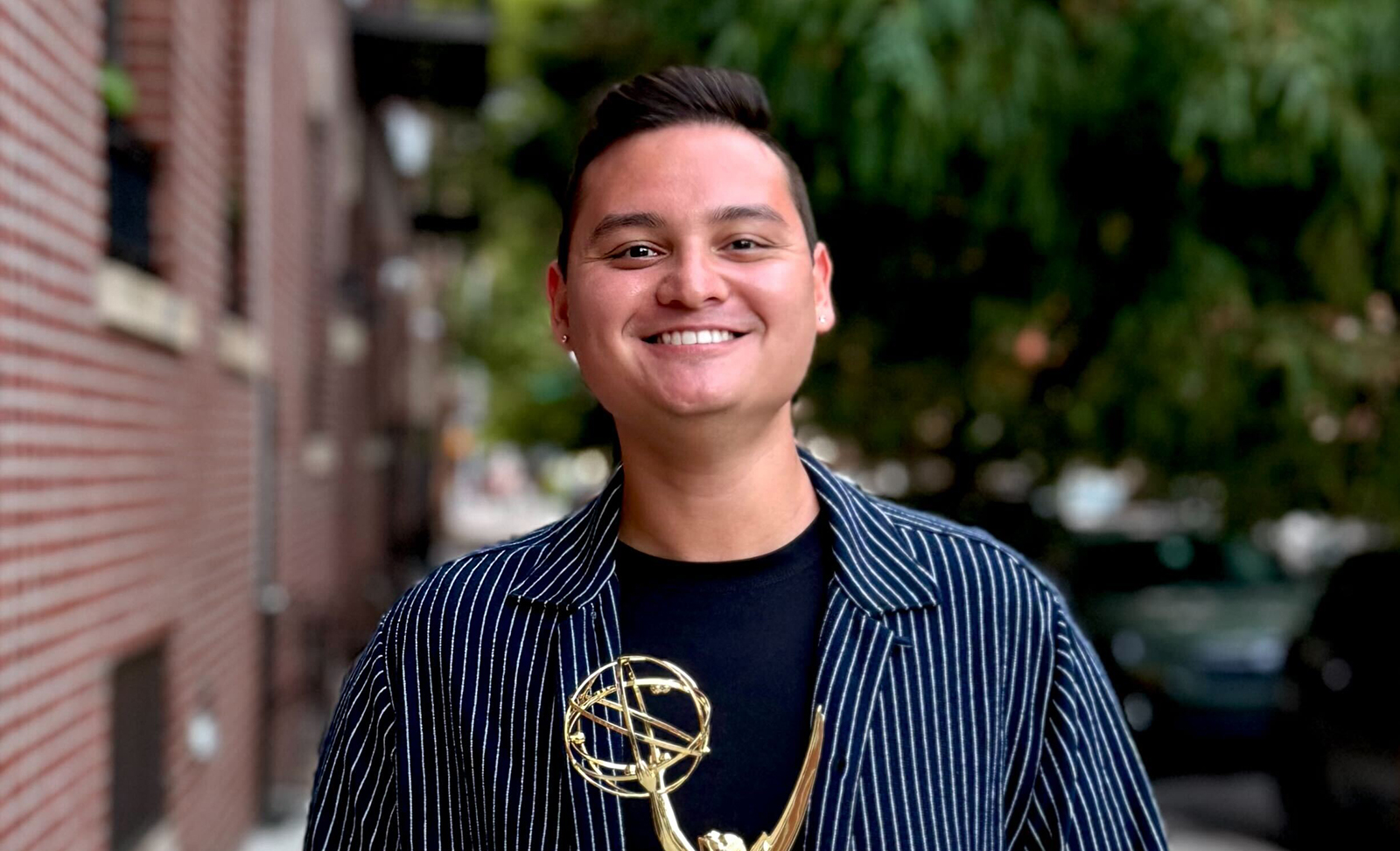
Alex Studer- Emmy

1. What is your current role at Peacock?

Currently, I’m the director of web strategy on the growth go-to-market team here at Peacock. I’ve been at the company for six years now and have been one of the key acquisition and experimentation leaders who have helped launch and grow the business. Put simply, my team runs our website (PeacockTV.com). We are responsible for everything consumers see when they come to our site, and we run experiments to try to get new users to sign up as efficiently as possible.

2. What do you find most challenging and most rewarding about your career?

The fast pace at which the marketing/advertising world moves is both a challenge and a reward for me. Each year, there are new advancements in technology, evolving consumer sentiments and values, and shifting company structures (e.g., mergers) in the industry that all result in a need to think into the future to stay ahead of it. This can for sure be daunting but also is satisfying as it challenges me to keep learning, adapting, and evolving alongside the industry.

3. When did you first realize advertising was the career path you wanted to pursue?

I started my journey at the University of Illinois as a pre-med psychology major. I spent my freshman year exploring different majors in the STEM world (electrical engineering, calculus, physics, and chemistry, to name a few), but everything changed my sophomore year on Quad Day when I stumbled upon the American Advertising Federation booth.

I’ll never forget my first AAF meeting and how inspired I was when learning that careers in advertising/marketing existed. The idea that you could have a career in a field where you analyze consumer behavior and use creativity to influence it really made an impact on me and motivated me to one day break into the industry.  After getting heavily involved in AAF throughout my sophomore year, I was elected to the executive board my junior year and ended up running AAF Illinois as president my senior year. AAF is the reason I was able to finally discover a career path that felt more in line with my passions and interests. It’s also the reason I fell in love with NYC, thanks to our industry immersion visits here.

4. What advice would you give to students trying to break into the advertising industry today?

The biggest piece of advice I would give is to fully maximize and learn how to talk about all your past experiences to help land your future ones. Even before I started gaining industry experience, I was able to gain relevant, transferable skills through my involvement in student organizations, which later helped me land internships.

Once you start to compile your own set of experiences, I’d encourage students to focus on networking with those who are in the advertising industry, and to seek out professional organizations that can help further your career. For instance, I was fortunate to land my first ad agency internship at Bailey Lauerman in Omaha, Nebraska, after meeting a senior leader during an AAF Illinois campus visit.

My senior year, I decided I wanted to start my career in NYC, but recognized I didn’t have a strong network outside of Chicago. I applied to the Multicultural Advertising Internship Program and became a finalist, which gave me the opportunity to move to NYC after graduation to intern at Saatchi & Saatchi NY. My career in NYC wouldn’t have been a possibility without these prior experiences as I was able to finally start building my network and career here!

Alex Studer Olympics
Alex Studer with fellow members of the 2024 Paris Olympics campaign team for Peacock.

5. You were part of a campaign team that earned the Sports Emmy for Outstanding Interactive Experience for the 2024 Paris Olympics. What was your role for that campaign and what was it like to receive that recognition?

My team was responsible for the website acquisition and experimentation strategy to garner as many new subscribers as possible for the Olympics. For all organic traffic and paid media, our website served as a destination to learn more about the Olympics and helped consumers sign up for Peacock as seamlessly as possible to start streaming.

If I’m being candid, receiving this recognition didn’t feel real until I opened the (heavy!!) box the Emmy came in and saw my name on it. Early in my career, I was given valuable feedback from a mentor that I don’t take the appropriate amount of time to celebrate my wins and instead immediately look ahead to the next one. I challenged myself for this award to start to shift that and will definitely incorporate more celebration and reflection into any future awards/recognition my career brings me!

Receiving an Emmy was without a doubt a career highlight so far! It doesn’t feel like an “all-at-once” type of recognition, and instead feels more like a culmination of all my past wins, failures, lessons learned, etc. I feel fortunate to have this under my belt, and every day feel reminded of the accomplishment when I walk past the statue at home.

Share on social
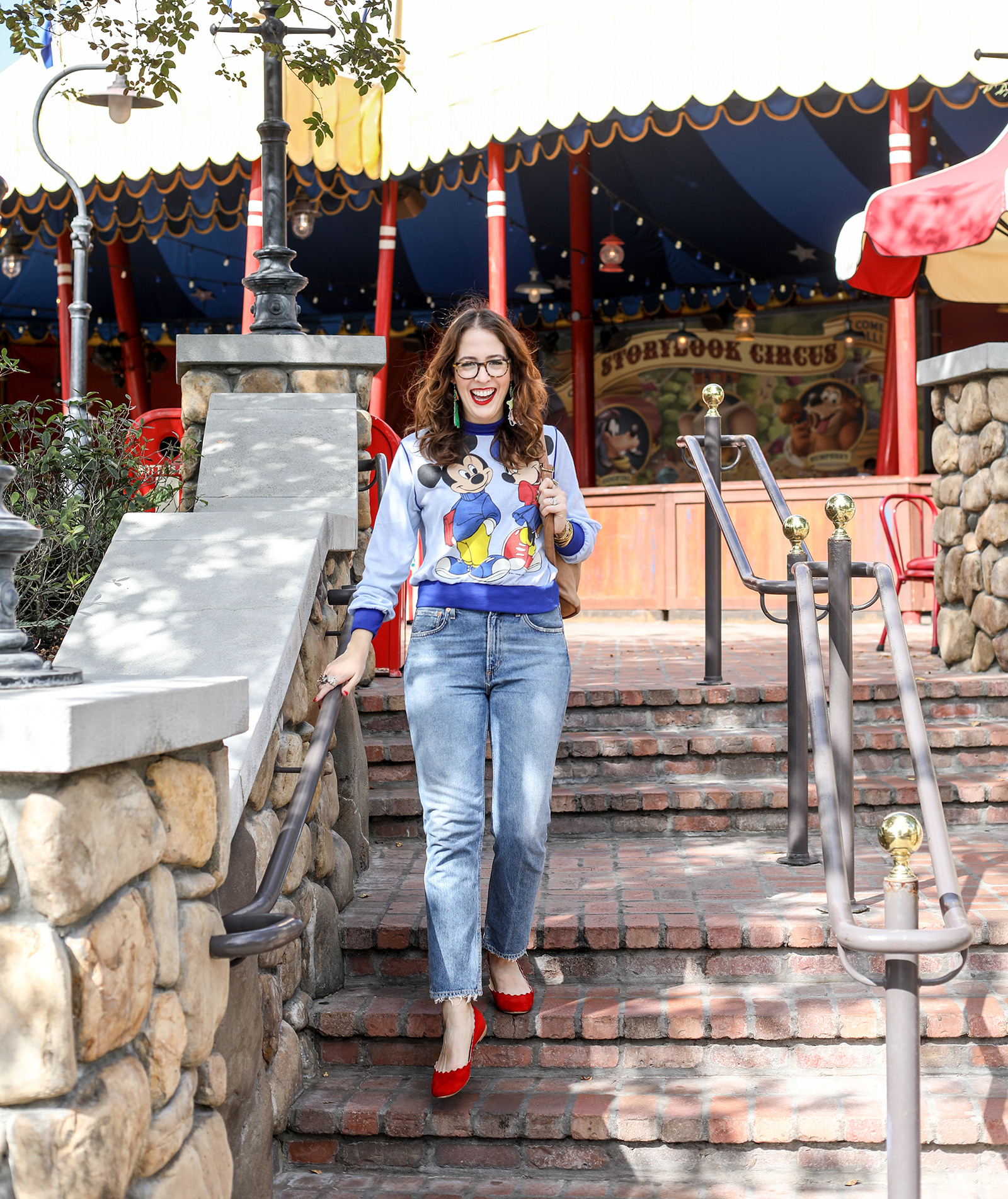
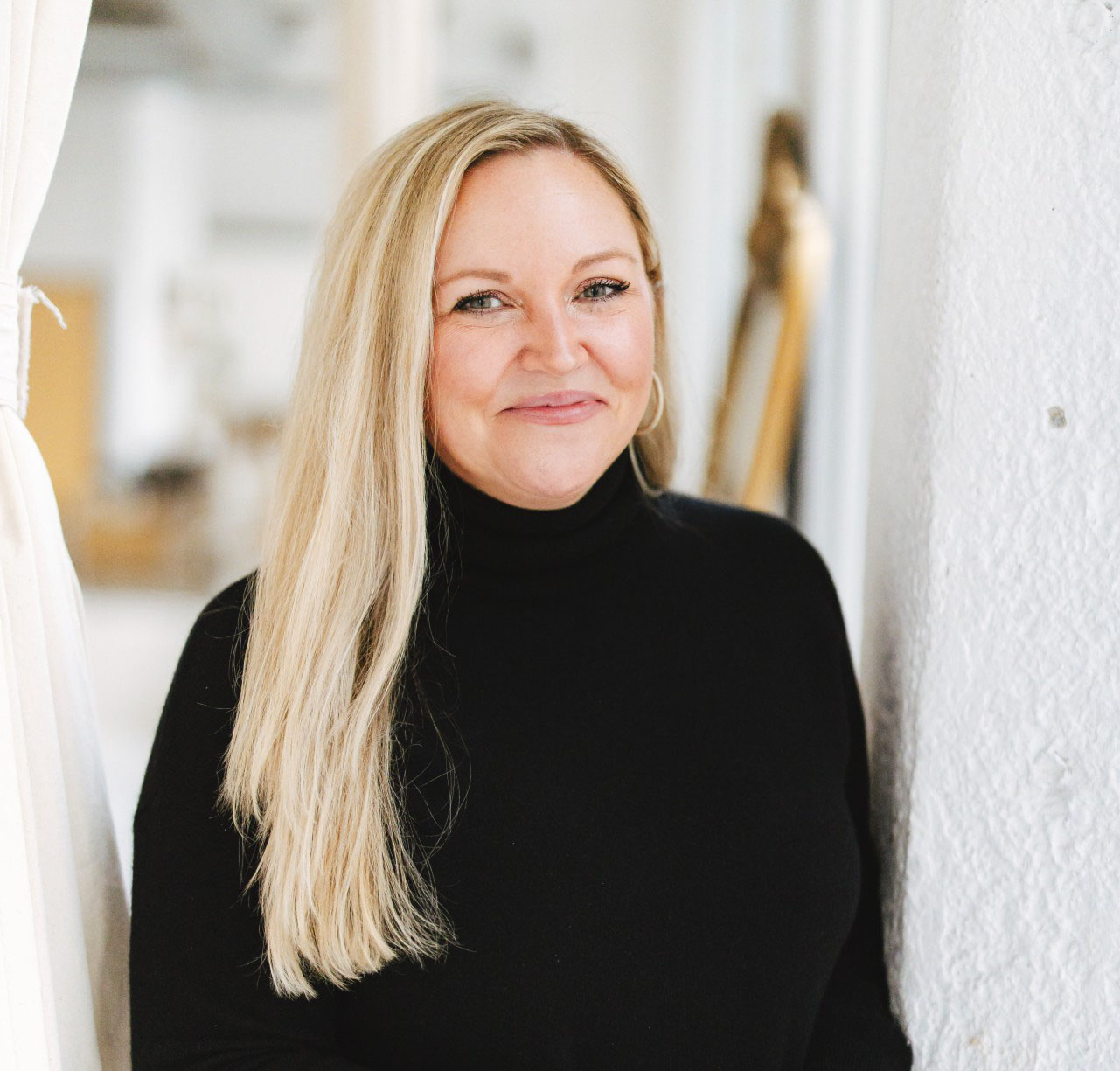
Take 5 with Media Alumni: Carlye Wisel


Carlye Wisel (BS ’09, journalism) was a lifestyle reporter interviewing famous musicians and celebrities like Mick Jagger and Kim Kardashian before a bachelorette trip to Disney World changed her career trajectory. Now, as a freelance journalist covering Disney and Universal theme parks, Wisel has contributed to magazines like Travel + Leisure, Glamour, National Geographic,and TIME, shares creative content with nearly 60,000 Instagram followers, and hosts a highly rated podcast, Very Amusing.Learn more about this College of Media alum who has built a journalistic career at the intersection of pop culture, travel, and joy.

1. You started as a lifestyle reporter, but a visit to Walt Disney World changed your life. What about that experience hooked you and made you focus full-time on theme parks?

Part of what I love about having a journalism background and having experience in reporting is that you can choose any career you want. If you randomly end up in Orlando and ask yourself, ‘What is going on in this city?’ you can [turn it into] a job, which is exactly what happened to me. I got married in 2015 and my husband suggested I go to Disney World for my bachelorette party. There were 11 or 12 of us, and it was the most complicated vacation I’ve ever planned in my entire life. A normal person would think it was too difficult, and never want to go back again, but me, as a reporter, went, ‘What’s going on here?’ And I needed to just dial in and figure out how people do this, and that hunt for more information and learning more about Disney World has sustained me 10 years to this day, where I’m still invested and curious in everything that’s happening there.

2. On the outside, it appears that you have a “dream job.” Is that accurate or a misconception? What kinds of challenges does your job present that most people wouldn’t realize?

I love my job, but it is, at the end of the day, challenging. While no one wants to hear someone complain about how often I have to go to the Magic Kingdom, there is an element to reporting on one of, if not the largest, entertainment companies in the world that often gets under-discussed. Everything I say—even if I say it casually into a mic instead of written down for a major publication—has to be at the same level of expertise and professionalism. That is where the lines blur, and it can be really tricky, especially when you host your own podcast. Because I can’t ever tell people something that isn’t fact-checked or isn’t true. Everyone makes mistakes, but as a reporter, it’s very important to me that even if I’m yapping in my house [on my podcast], just telling a story about a theme park, all of it has to be true and accurate. And so, I do still very much live a life of a newspaper reporter, even in this fun context.

3. You’ve won numerous awards for your stories, with your work published in a variety of outlets including The New York Times. What’s one story you’ve written throughout your career that stands out the most?

The most challenging story that I have written while covering theme parks was definitely the one I wrote for Vox after Walt Disney World reopened during the pandemic. My job for a long time was real light and fun. It was roller coasters, it was “lands,” it was fun-themed cupcakes. And then it became local government, union mandates, and wastewater levels. It really became a very serious reporting job. And that shift was something I didn’t expect but thank goodness I had the training for it. I went to Disney World for the reopening, and it was really challenging to report about, because I felt like ‘I’m in this space, I need to make sure I represent every single person in this puzzle.’ I needed to represent cast members, who are the employees at Walt Disney World. I needed to represent local government. I spoke to [Florida State House Representative] Anna Eskamani, who is incredible, just one of the most prolific voices in Florida government today. I was able to really piece together a full picture of what it’s like, not just, ‘These are the lines! These are the 6-foot tape [markers] on the ground.’ I was able to really report about it from all angles, and that was extremely challenging, but definitely one of the proudest moments of my career, because I felt like I really was in a time and place where I was able to cover it as accurately as humanly possible.

4. Has your podcast changed the way you think about storytelling compared to print or online journalism? Is podcasting and creating content for social media an evolution of more traditional reporting?

I’m still a journalist, but I think that podcast host, content creator, reporter—that all needs to be woven in, which is modern-day journalism in a nutshell. I do think the lines have blurred a lot, because there is a huge spectrum. I don’t think you have to choose which bucket you’re in, and if people perceive you as a content creator, that’s totally fine. Just as the way social media evolves, my career has shifted. And I really don’t know what happens next. Now the modern model of what I do is, ‘If you’re freelance, you have a niche, you’re known for this one thing. You write some stories, you have a podcast, you’re on social media, you post videos, and maybe you have a newsletter.’ And what’s interesting is that four years from now, that won’t be the case. But because I have a journalism background, because I chose to study a trade and not just a subject, I really do feel like I can pivot to whatever comes next, because at the end of the day, it’s all storytelling. And if you can get information out in a clear, concise way, that’s really all that matters, not the formula from which that comes.

5. What advice would you give to students or aspiring journalists who want to tell stories that capture wonder, creativity, and joy? Do you have any suggestions for students who want to turn their passion for writing about a niche topic into a profession?

The great thing about graduating from the College of Media is that you’re going to have the skills, no question. Now, the challenge is finding out how to make your passion your profession. Let’s say you have a different media job and want to report on this one wacky thing. You can self-publish posts, newsletters, even videos about it. You can become an expert, the face of that, and likely be hired to report about it. 

Remember, at the end of the day, you came from studies that benefit you in any career you end up taking. Having the expertise is only half of it. The more abilities you have, the easier it’s going to be to get work. Early on in my career, I would upsell a story by [providing photos]. If you have video skills, on-camera skills, voiceover skills, it will always benefit you. The more experience that you can have under your belt in all these different facets of reporting, the easier it’s going to be—freelance or full-time—to land a job.

Share on social

Take 5 with Media Alumni: Jason Kim


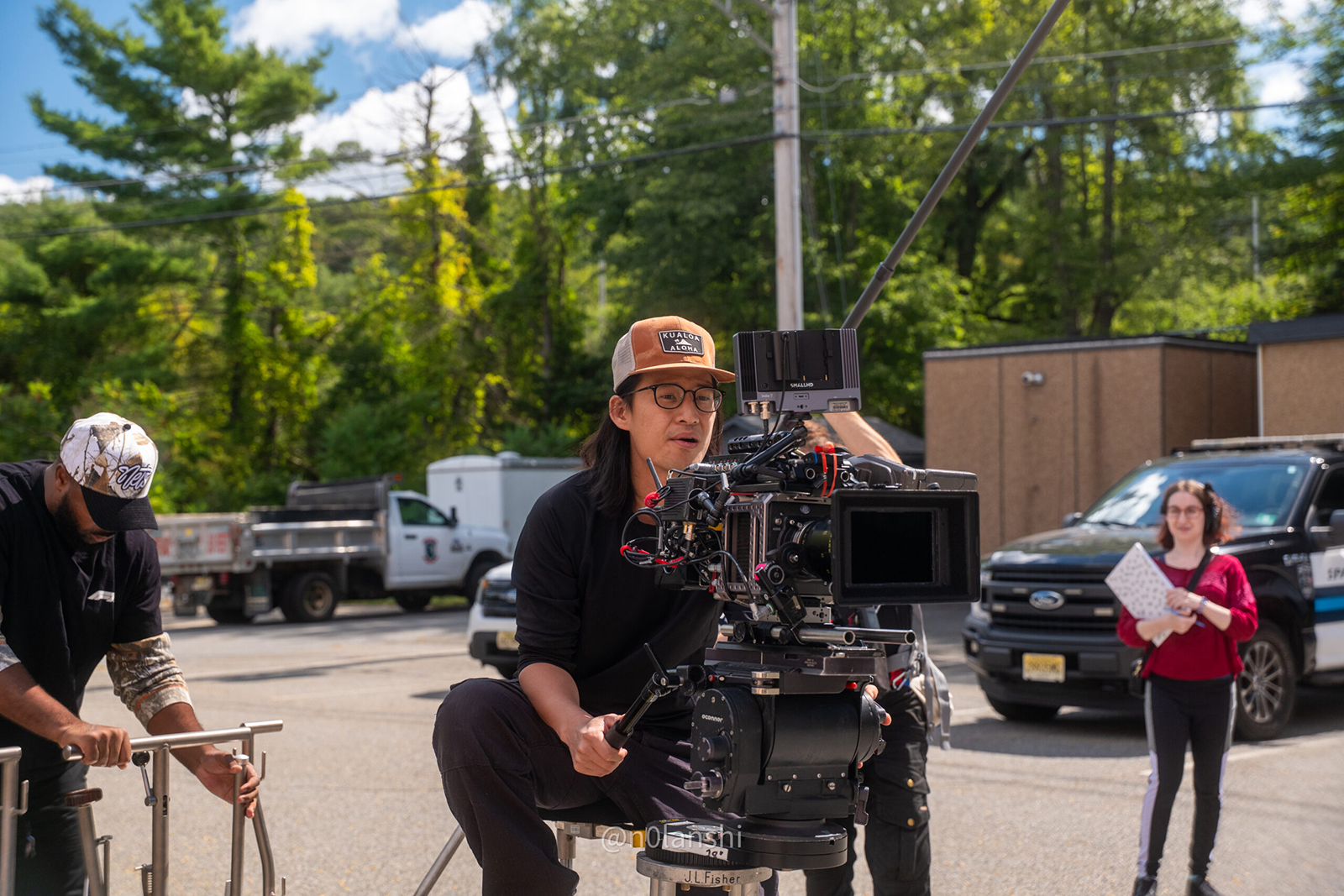
Jason Kim (BS ’13, media and cinema studies) is a director of photography and editor at Omnicom Studios in New York as well as director and executive producer of his own production company, House Productions LLC. Kim has earned numerous awards for his film work including a 2018 Telly Award for “General Branding” and a 2022 Webby Award for Advertising, Media & PR, “Best Use of Animation or Motion Graphics.” Learn more about this College of Media alum whose work is shaping the future of storytelling across film, advertising, and digital media.

Jason Kim

1. What first drew you to filmmaking and production, and how did that evolve into starting your own company, House Productions?

It’s difficult to pinpoint any one moment in time that drew me into filmmaking except for when I saw Taxi Driver, directed by Martin Scorsese and written by Paul Schrader. The inverse relationship between hero and circumstance—its anti-hero arc—showed me anything was possible in storytelling. I pursued being an artist through the medium of film ever since. House Productions allows me to hone my storytelling practice, learning, experimenting, and growing as a filmmaker. Today, House Productions produces high quality corporate videos and films I write and direct, including my latest project, Selfless.

2. Winning awards like the Telly and Webby, among others, is a huge accomplishment. Is there one project that felt especially meaningful to you?

The one project that has special meaning to me is working with the government to produce, write, direct, and edit a documentary series on the Stonewall National Monument, which helped pave the way for the gay rights movement. It’s not the most entertaining documentary but I learned a lot, and producing a document that recollects a period of time in Greenwich Village, Manhattan, is special to me.

Watch the 15-part series:

3. What advice would you give to students who want to break into directing or production but don’t know where to start?

Directing and producing are two separate paths. The best way to break into producing and production is to gain experience on set wherever you are and move to a bigger production market as soon as possible. Working with more experienced and nuanced crews, getting hands-on experience with the minutiae of filmmaking, and administrating complex paperwork is the name of the game.

As the adage goes, there is no one way to directing. Everyone has their own unique story and journey to how they come to directing. The best way to start is just to start. Get your hands on a script or write one. Find friends who will act and crew for you. Every project I’ve directed has included a learning curve, creative risk-taking, and a financial commitment. Not every project will feel true or significant. Moving past doubt, problem-solving limitations, and exercising curiosity are the first steps to directing.

Jason Kim at table

4. The media landscape is constantly changing—how do you keep your work both current and true to your vision?

The media landscape is more turbulent than ever, especially with the consolidation of traditional media companies with data-driven companies. Media production is under disruption from AI generation, with film projection being made especially vulnerable.

Disruption will have matured when AI artists can tell equally visually compelling stories—replicating the work of filmmakers, artists, craftspeople, and designers, as well as the human emotion and camaraderie in front of and behind the camera. Even still, if the art, intent, and motivations are pure, then I believe that work will have currency and truth.

5. What’s one dream project you’d love to direct or produce in the future?

My dream project is an indie sci-fi retro-noir that investigates the existence of hope in an Orwellian society. The goal is to receive a small working production budget to create something beautiful, meaningful, and artistic to satisfy the tastes of arthouse cinephiles as well as mainstream audiences. As film is a business, I have no delusion that a director must be profitable in their artistry to continue to practice directing. I believe a sci-fi genre within a low budget independent film context has the potential to break the ceiling and achieve commercial and artistic appeal. Complex VFX will be eschewed, instead of relying on ornate set design, practical effects, costumes, and locations for world-building. Then, the story itself will be the determinant of its success.

Another dream project of mine is to create a documentary on the early phases of the Internet developed at ILLINOIS through the ILLIAC computer and PLATO network. Researching the history of these emerging communication systems as a media and cinema studies major was the highlight of my time on campus. I would love to dive deeper into these early networks’ role in shaping society as we know it today, from the maturation of social networks to the advent of artificial intelligence. To premiere this document that encompasses the past, present, and future of digital communication would be a dream.

Share on social

Journalism alum, ocean expert Annie Crawley wins 2025 Illini Comeback Award


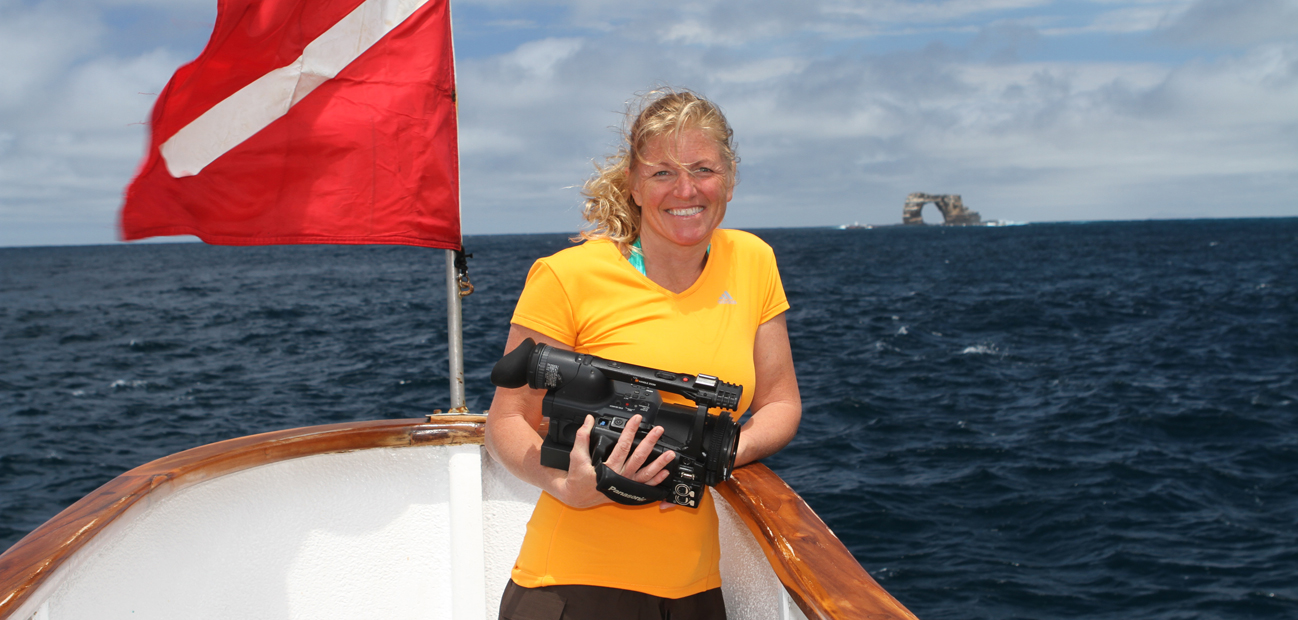
Annie Crawley (BS ’90, journalism) was one of two recipients to win the University of Illinois Alumni Association’s 2025 Illini Comeback Award.

Annie Crawley

Crawley, a.k.a. “Ocean Annie,” is a pioneering underwater filmmaker, environmental photojournalist, author, and ocean advocate whose career spans more than three decades.  

She has become a driving force for ocean literacy, exploration and conservation through immersive storytelling and education. She founded “Dive Into Your Imagination”—a series of award-winning illustrated books and award-winning DVDs that have reached global audiences, inspiring millions to care for and become a voice for oceans.

The College of Media is hosting a special screening of Crawley’s film The Island of the Shark, Guardians of Malpelo, followed by a Q&A with Crawley on Wednesday, Sept. 24, at 4:30 p.m. at Spurlock Musem. The event is free and open to the public. Participants may also join by registering for the Zoom link.

Crawley’s recent work includes ocean-themed visual compositions for symphonies with renowned composer Stella Sung—merging science, music, and art to spotlight noise, chemical, and sound pollution. Her latest documentary, The Island of the Shark: Guardians of Malpelo, highlights shark conservation and the fight against illegal fishing in Colombia.

As a columnist for Scuba Diving Magazine and an in-demand speaker, Crawley challenges us to dive deeper—to hear the ocean’s story and recognize the role we all play in the ocean’s future.

Since 1980, when the Illini Comeback Award was established, the UIAA has invited prominent and accomplished alumni back to the campus to participate in various activities during Homecoming Weekend.

Honorees are provided opportunities to interact with current students and share information about their professional experiences and the value of their University of Illinois education.

UIAA Alumni Awards will be presented in conjunction with Homecoming Week, September 21-27.

Read more about Annie Crawley.

Read more about UIAA’s 2025 Alumni Awards.

Share on social

‘Hot Ones’ host, journalism alum Sean Evans featured in TIME magazine’s list of Most Influential Creators of 2025


Sean Evans
Photo by Fred Zwicky

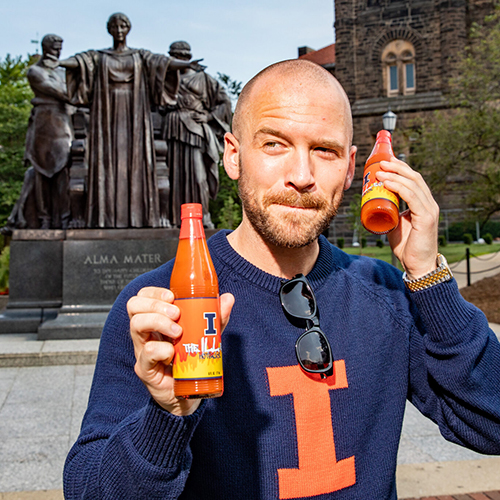
Sean Evans (BS ’08, journalism) was featured in the inaugural TIME100 Creators list: The Most Influential Digital Voices of 2025.

Evans is the host of the Emmy Award-nominated Hot Ones, the YouTube series launched in 2015 in which celebrities are interviewed while eating progressively spicy chicken wings.

The show, which is most known for Evans’s deep research on his guests and thought-provoking questions, has run for 27 seasons so far and includes interviews with a slew of famous celebrities such as Gordon Ramsay, Billie Eilish, Sydney Sweeney, and Key & Peele.

The 2025 TIME100 Creators recognizes those individuals who are shaping the future and changing the way people inform themselves.

Read more.

Share on social

Journalism alum Will Leitch’s latest novel optioned for film by Lionsgate


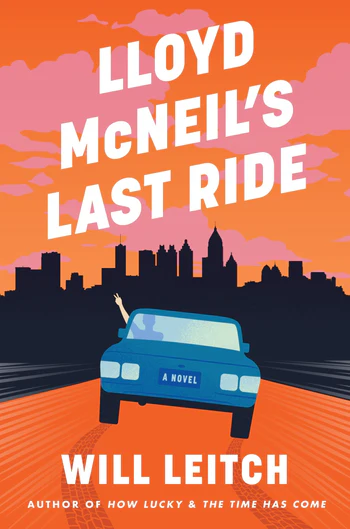
Will Leitch (BS ’98, journalism), author, sportswriter, contributing editor for New York magazine, and podcast co-host, will serve as an executive producer of the movie adaptation of his latest novel Lloyd McNeil’s Last Ride.

Leitch-bookcover

Lionsgate purchased the rights to the novel, published by Harper in May, which focuses on Lloyd McNeil, a beat cop in Atlanta who only has months to live. When McNeil learns his teenage son would receive a higher pension if he died in the line of duty, he devises a plan.

“With audiences desperate for more original and authentic stories worthy of the big screen, we couldn’t be more excited to be the home for Will Leitch’s truly original tale following the indelible Lloyd McNeil,” said Erin Westerman, co-president of Lionsgate Motion Picture Group. “Through action, humor, and great pathos, his book serves at once as both a manual and an inspiration for how to live life to the fullest.”

Leitch, also the author of How Lucky (praised by Stephen King as “a fantastic novel”), is a former sports editor for The Daily Illini and was inducted into the Illini Media Hall of Fame in 2022.

Read more.

Alum Murray Kalis wins 2025 College of Media Distinguished Alumni Award 


For his outstanding career accomplishments and generous monetary support of advertising students, Murray Kalis (BS ’61) was recognized by the College of Media with the 2025 Distinguished Alumni Award. 

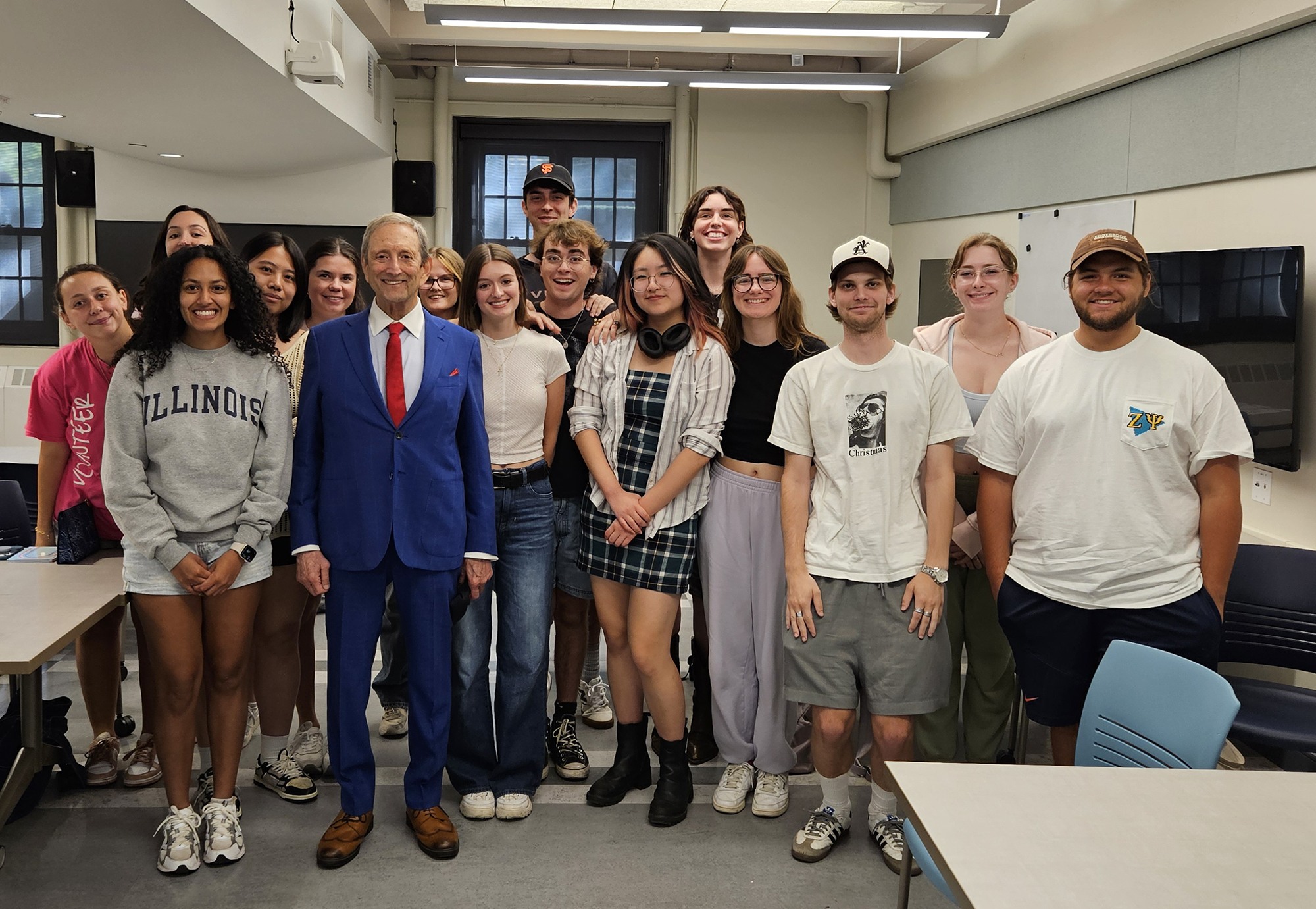
Murray Kalis with class
Murray Kalis with advertising students during one of his visits to the College of Media.

Kalis, whose work has taken him across the world and back, heading his own agency, and serving as chair of the largest global network of independent agencies, has experienced some remarkable moments throughout his 50 years (and counting) in advertising. 

He’s helped numerous companies build their brands, including United Airlines, Nestle, KFC, Wetzel’s Pretzels, Hormel Foods, and Starbucks Coffee. Most recently, a former client brought him in as a strategic investor for Dave’s Hot Chicken, where he is creating TV and social media advertising that has helped it grow to over 300 restaurants, and just begun international expansion.  

In 2020, he established the Murray Kalis Award for Creativity in Advertising to provide monetary gifts to advertising students judged for creative excellence. Students who demonstrate smart positioning, outstanding creative concepts, strong execution, and a “wow” factor receive awards for Best Single Ad, Best Campaign, and Best Portfolio. 

“The response to the Award for Creativity in Advertising has been beyond what I anticipated,” Kalis said. “The students are thrilled to express creative ideas. And the questions I get when I teach are insightful, mature, and often surprising.”

“Murray Kalis has charted an exciting career in advertising and shares his wealth of experience, advice, and encouragement with our students,” said Dean Tracy Sulkin. “The College of Media appreciates the time he devotes to our classes—as well as his advocacy of creativity through the award that he established—and we are proud to honor him with the 2025 Distinguished Alumni Award.”   

Murray Kalis early on his career
Murray Kalis early in his advertising career.

As a student at the University of Illinois, Kalis felt fortunate to be taught by the legendary “Father of Advertising Education” Professor Charles H. Sandage. 

“I can picture him to this day. He made an impression on me that still guides my work,” Kalis said. “He discovered advertising could impart its own magic: That a great ad can do more than sell, it can add value to the product itself.” 

Kalis said Sandage always approached advertising from a highly philosophical and intellectual way and encouraged critical thinking. “He used a kind of Socratic method [of teaching].” 

If students gave an incorrect answer, Sandage had a way of guiding them to the right one. 

“He would start asking you questions, and he would lead you to understand, to try to defend your position, and suddenly you realize, ‘Oh, that doesn’t make any sense,’” Kalis said. 

After receiving his bachelor’s degree—and thanks to the University of Illinois Reserve Officers’ Training Corps program—Kalis was commissioned as a lieutenant in the United States Army where he put his civilian education in advertising to work in psychological operations.

“I had two years of active duty basically running an ad agency,” he said. “We found illustrators and writers among the draftees, and we would create leaflets to be dropped out of planes.”  

Following his military service, a master’s degree in fine arts, and a college teaching position in Iowa, Murray joined ad agency Leo Burnett in Chicago. 

There, he quickly rose up from junior copywriter to creative director in an era when the ad industry resembled the glossy, high-profile lifestyles portrayed in the television series Mad Men.  

Murray Kalis checking lens

As a member of the Academy of Television Arts and Sciences and Emmys judge, Kalis met Mad Men star Jon Hamm at a reception for the cast and producers.  

Kalis said they discussed the similarities of the TV show and his real-life experience in advertising, which included “making those pitches, dealing with clients, and having to work your way through three-martini lunches.” 

Kalis’s creative career also introduced him to actor Tom Hanks. To prepare for a role as a Chicago advertising executive in the 1986 film Nothing in Common, Hanks followed Kalis around the office to get a feel for his daily routine.  

At this point in his career, Kalis says he is mainly working in social media, which is a lot different than when he first started in the business. Then, there were just three television channels that offered an opportunity to advertise. 

While media delivery options have changed over the years, Kalis said the purpose of advertising—finding solutions to consumer problems—has remained the same.  

“The media changes,” he said, “but people don’t. It’s Maslow’s Hierarchy of Needs, just like when I was entering Greg Hall for the first time.”

After all these years, Kalis is still full of energy and enthusiasm for the advertising industry.

“I love the biz. I love doing this stuff,” Kalis said. “I love looking at a product and figuring out how to match it with a consumer.” 

Above: Murray Kalis was creative director for this Dave’s Hot Chicken ad.

Share on social
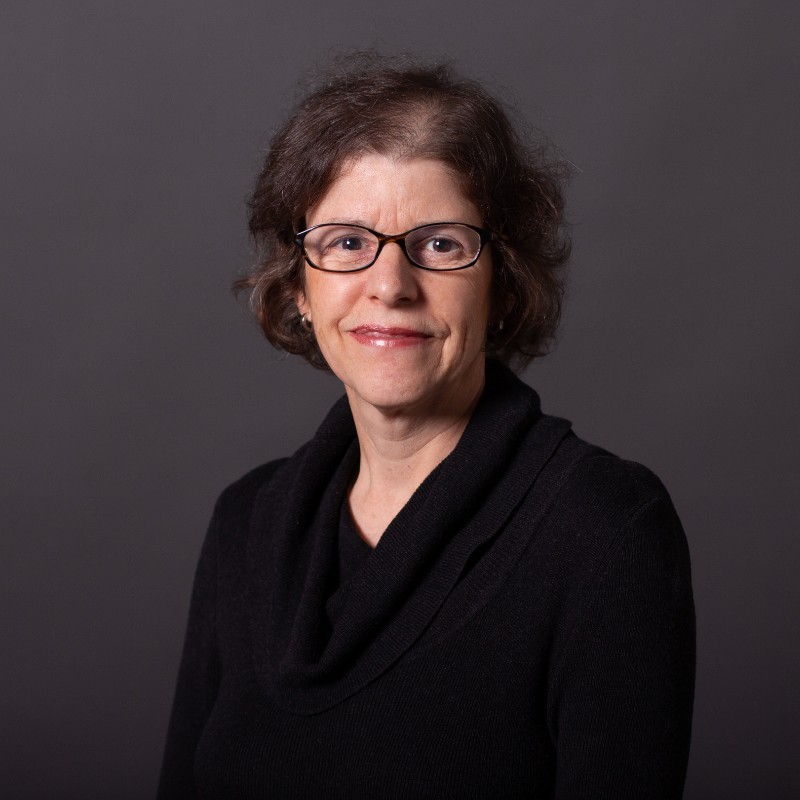
Journalism alum Stephanie Lulay wins 2025 College of Media Emerging Leader Award


Stephanie Lulay’s (BS ’08, journalism) start-up venture, Block Club Chicago—whose mission is to deliver reliable, nonpartisan, and essential coverage of Chicago’s diverse neighborhoods—has become a news staple for readers throughout the city since its founding in 2018.

Stephanie Lulay

Lulay serves as executive editor and co-founder of the award-winning newsroom, which has 18,000 paid subscribers, more than 130,000 newsletter subscribers, and an average of 2.3 million pageviews a month. Over seven years, the newsroom has grown from a staff of eight reporters and editors to a staff of 39. Lulay credits her journalism education at Illinois as a key to her success.

“The [University of Illinois] gave me the problem-solving skills and the confidence I needed to succeed in this industry,” she said.

In honor of her career accomplishments and her continued engagement as an alum, Lulay was chosen as the winner of the 2025 College of Media Emerging Leader Award.

“The College of Media is pleased to award Stephanie Lulay as our 2025 Emerging Leader for her innovative and entrepreneurial path in the journalism industry, along with her enthusiasm for sharing her experiences with our students and alumni,” said Dean Tracy Sulkin. “Stephanie is an alum who exemplifies, in an ever-changing media landscape, how to enhance the lives of people in our state.”

Lulay calls Block Club Chicago a “freemium site”—very few articles are paywalled and most stories are accessible for free, including breaking news, health, election coverage, and news from underserved South Side and West Side neighborhoods. They also produce twice-weekly Block Club Chicago podcasts, hosted by fellow Illinois journalism alum Jon Hansen (BS ’06).

The [University of Illinois] gave me the problem-solving skills and the confidence I needed to succeed in this industry.

Their reporter model is different from traditional newspapers, too. Rather than having beats, reporters are assigned to neighborhoods, tasked with covering whatever news is most important that day. 

Lulay says their “big bet” is when they put reporters on the ground every day, it will lead to a more accurate portrayal of the neighborhoods in Chicago and build reader trust.

“That’s what makes me so excited about working for a local newsroom in this time. I When you know who is serving you, and you see them all the time — at your kid’s school, at a community meeting —that is key to rebuilding trust between media and people,” Lulay said. 

Lulay says she took what she learned at college with her into the workforce—including the hands-on experience she gained from writing and editing for The Daily Illini and the confidence she built from working closely with Brant Houston, Knight Chair Professor in Investigative and Enterprise Reporting in the Department of Journalism.

Staff of Block Club Chicago
The staff of Block Club Chicago.

“Brant really encouraged me to dig into some big investigative stories and to not think of myself just as a student, but as an investigative journalist,” she said. “Because of that, I was able to get real-life professional experience.”

When Lulay and 115 reporters across the country lost their jobs after DNAinfo sites shuttered in November 2017, one of the first calls she made was to Houston. 

Lulay describes Houston as “a godfather in the nonprofit news movement,” and said he gave her the right connections and insight to think through their plan at the start of Block Club Chicago.

Lulay has stayed engaged with College of Media students through educational webinars and classroom visits.

She hopes Block Club Chicago’s success might inspire others to start up similar newsrooms across the country, especially recent College of Media graduates.

“I would love to see some Illini students graduate, pop up in a news desert, and start a newsroom there,” Lulay said. “It’s hard work, but there is so much opportunity right now in nonprofit news and I’d love to see some students capitalizing on that.”

Share on social

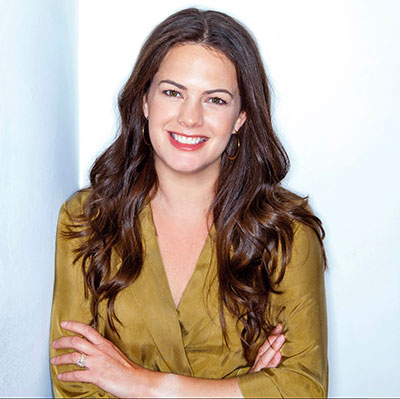
Netflix director Emma Miller to be alumni speaker at Media Convocation


Netflix director Emma Miller (BS ’08, media studies) says returning to campus to speak at the 2025 College of Media Convocation ceremony feels like a full-circle moment for her.

Emma Miller

As a Media student at Illinois, she remembers renting DVDs through Netflix’s mail subscription service for her film classes.

“I could watch films on my own time, which was really exciting because there was one video shop in town and all the film students would race to check out the film,” she said.

While Netflix was a lifesaver for her as a student, her current role at the global streaming service has proven to be an even more incredible opportunity.

“It’s amazing and I’m having the best time. I really love it, and I have to say [my job] has exceeded my expectations in a lot of ways,” she said.

Miller, who was named one of The Hollywood Reporter’s “35 Rising Executives 35 and Under” in 2018, joined Netflix in 2023 as director of overall deals in the series division.

I appreciate everything Illinois did to get me here and hopefully I can give something back and inspire at least one student.

Since then, her title has changed to director of the studio scripted series division, but her role has essentially stayed the same.

Part of her job is to oversee deals with certain creative entities. For example, she covers Aggregate Films, founded by Jason Bateman (Ozark), and 21 Laps Entertainment, founded by Shawn Levy (Stranger Things).

Miller also works on ground-up development, doing first-reviews of projects and pitches from writers and producers.

“I’m basically one of the people at Netflix who buys projects and then supervises the creative development of those projects from the pitch to all the way out when it’s on the air,” she said.

Most of her work is reading first-episode scripts and giving notes to guide the writers, “almost like an editor would do in publishing.”

If Netflix picks up the series, Miller will do the same for all the episodes at the script level. While most of her work is in the creative domain, Miller also handles some business responsibilities as well. She oversees the production of projects, including budget management, hiring of actors and directors, and traveling to shoots on location to get shows up and running. She also covers technical aspects like editing sound mixes, visual effects, and film cuts. 

As Miller approaches her two-year anniversary at Netflix, she’s looking forward to the release of a few exciting projects she’s managed.

Forever, a reimagination of the 1975 novel by Judy Blume, premieres on Netflix on May 8. Black Rabbit, starring Jason Bateman and Jude Law, is awaiting an air date. Miller is also working on post-production of Man on Fire, a television remake of the 2004 film starring Denzel Washington.

“I love Netflix and I’m really enthusiastic about what we’re doing,” Miller said. “I will say it’s just really fun to know that a lot of people are going to watch your work and the kind of impact you can have on culture is thrilling.”

Miller says she first learned about the power of media and how it can shape the way you experience the world as a student at Illinois. She credits a Women in Film class for changing the course of her academic career from English to media studies (now called media and cinema studies).

Miller, who serves on the College of Media Alumni Leadership Council and won the 2023 Emerging Leader Award, continues to engage with the college as a panelist for Media Career Nights and soon, to address the College of Media’s Class of 2025.

“I appreciate everything Illinois did to get me here and hopefully I can give something back and inspire at least one student,” she said.

Share on social

Advertising, ICR alum receives prestigious 2025 Erwin Ephron Demystification Award


hlen Katz

Helen Katz (MS ’86, advertising; PhD ’88, ICR), EVP of Research at Publicis Media, has been named the recipient of the prestigious 2025 Erwin Ephron Demystification Award. This lifetime achievement award honors industry leaders who are exceptional communicators and excel in making complex subjects accessible, embodying the spirit of legendary advertising research guru Erwin Ephron.

Katz, the 11th recipient of this esteemed award, has had a significant impact throughout her career, most recently leading the global data intelligence practice at Publicis Media. In her speeches and writings, Katz has consistently and passionately argued that effective media selection requires reliable measurement based on high-quality data.

She has also distinguished herself as a teacher, serving as an adjunct professor at both DePaul University and New York University. In addition to numerous articles in industry publications and academic journals, Katz has authored three textbooks on advertising and media, including the widely acclaimed The Media Handbook, now in its 8th edition. 

Katz is a member of the U.S. Joint Industry Committee on alternative currencies, a member of the Media Rating Council, and of the ARF Board of Trustees. She served on the James Webb Young Advisory Board and continues to support the Charles H. Sandage Department of Advertising through case studies for classes. 

Read more.

Share on social

College of Media
119 Gregory Hall
810 S. Wright St.
Urbana, IL 61801
217-333-2350