Study: Shoppable ads get more attention on streaming


Right now, shoppable ads are much more common on social media than in streaming. That means that they’re more unexpected in streaming—a novelty. People may pay more attention to these kinds of ads, but they also may be more wary.

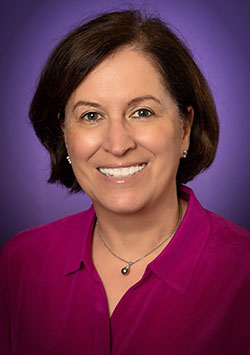
Michelle Nelson

Professor and Head of the Charles H. Sandage Department of Advertising
Michelle Nelson
Professor Michelle Nelson (Photo by L. Brian Stauffer)

A new study from College of Media faculty and students claims that consumers pay more attention to shoppable ads when streaming than when browsing social media—for better or for worse.

The research article, “Why Some Shoppable Ads Persuade: Expectancy Violations and Ad Value Across Streaming TV and Social Media,” was led by ICR doctoral student Alice Ji, with Michelle Nelson, professor and head of the Charles H. Sandage Department of Advertising, and Ruiheng (Rachel) Sun (MS ’25, advertising).

Overall, the study found that consumers respond to shoppable ads “based on how they interpret that unexpectedness, whether the violation is appraised as useful, innovative, or irritating.”

In the UK trade publication MediaCat, Nelson said most ads are invasive unless they offer some value to the consumer.

“Maybe they offer a discount, or maybe they provide valuable information to us. Ads that interrupt our media experience tend to be regarded as most intrusive,” Nelson said.

Read full article
P&G learned how to sell soap then created iconic brands


Ivory was one of the first packaged goods that led the branding revolution.

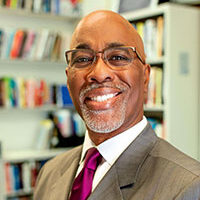
Jason P. Chambers

Professor of Advertising
Jason P. Chambers

In celebration of America’s 250th birthday this year, the USA Today network is taking a look at iconic companies that were founded and flourished in the nation.

Jason P. Chambers, professor of advertising and associate dean for access and engagement, shared his insights on the branding impact of Proctor & Gamble (P&G), the makers of Ivory soap, in the “Iconic Brands” series, which celebrates American ingenuity with a deeply reported examination of how brands intersect with history, community, and everyday life.

Chambers said brands like P&G emerged in the last decades of the 19th century as the manufacturing industry surged after the Civil War. Not only did the economy get bigger due to growing steel, railroad, and oil industries, but American consumers changed as well.

As more laborers worked in factories, not farms, they had more money, but less time. Consumers were more inclined to buy items that a previous generation would have made themselves—from clothing to crackers to soap, he added.

Share on social

How well does NPR incorporate history into its journalism?


When journalists don’t have access to historical tools, and don’t have that impetus to go and check out things, they are presenting news that is really not informing the public. And nobody wants to do that.

Melita M. Garza

When news stories ignore the past, the audience sometimes struggles to fully understand the issue. Because of this, history professors stress the importance of incorporating historical context into news coverage of current events. Doing so enables journalists to bring forth a more complete and informed story, which benefits the audience.

Melita Garza, associate professor and Tom and June Netzel Sleeman Scholar in Business Journalism, stressed the importance of including current events within the context of historical background in this installment of the News Literacy Edition of the NPR Public Editor. In her research, Garza says she has seen journalists declare something “unprecedented” when what they reported on was not, in fact, unprecedented.

Read full article

Social media stampedes: How mass user exit reshapes the digital landscape


Leaving social media does not always mean disengagement from news, but it does disrupt habitual news consumption. Some people report feeling less informed about current events after quitting Facebook, as social media is a key news source for many. However, they also experience benefits like reduced anxiety and improved well-being.

Margaret Ng

According to the Pew Research Center, at least half of U.S. adults rely on social media for information about current events. But what happens when they leave those platforms behind?

Margaret Ng, associate professor journalism, explores the phenomenon of “social media stampedes”—cases of mass user exodus from a specific platform, the (un)successful migration to alternative sites, and the long-term implications for trusted digital information networks—in this opinion piece for MediaWell.

Read full article

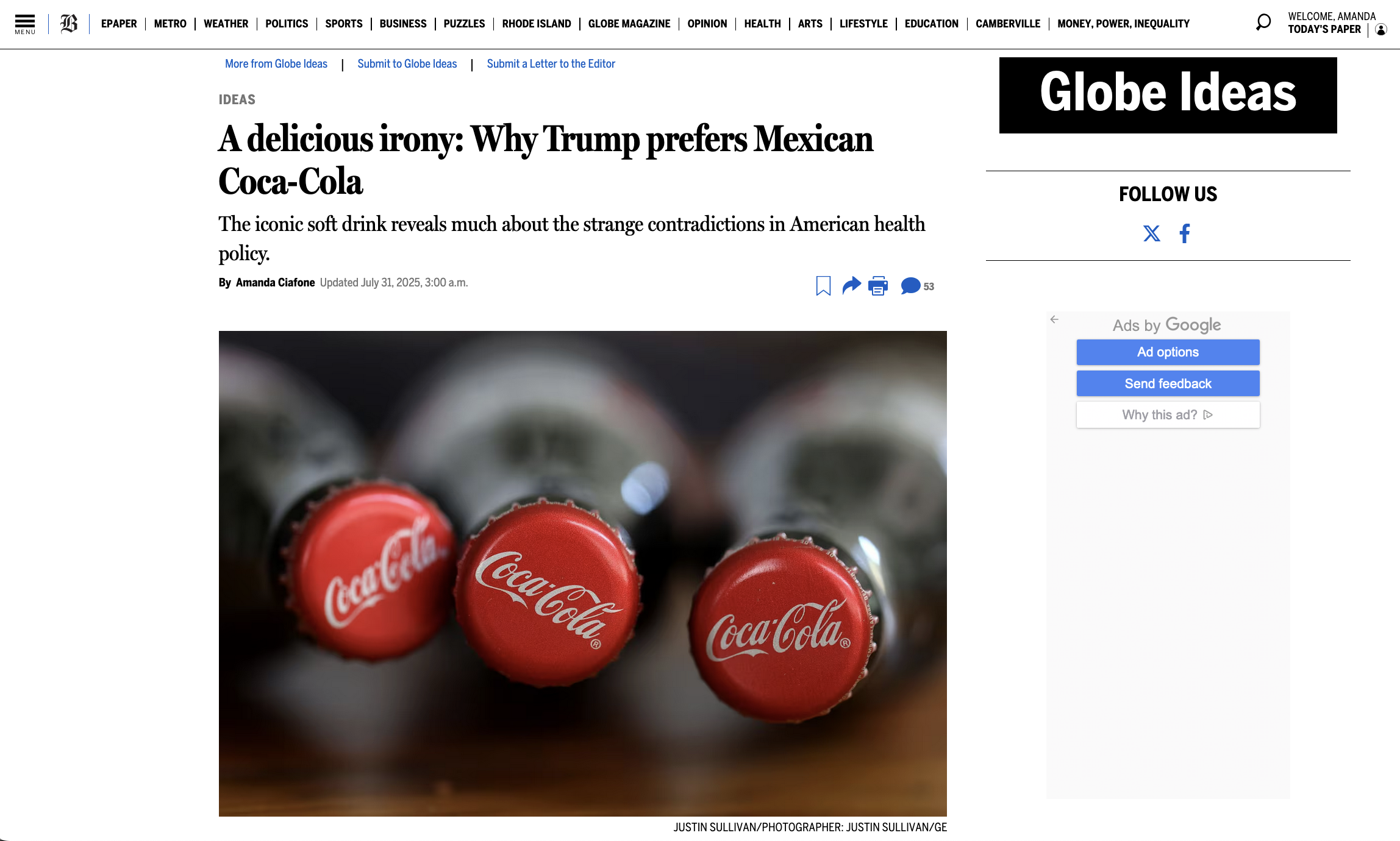
A delicious irony: Why Trump prefers Mexican Coca-Cola


Border walls and tariffs must be high against Mexico, but the Cokes it exports to the United States get a pass. A product beloved by immigrants and cool kids alike, it is known for its real cane sugar and retro glass bottle. And it’s a product that, in its very sweetness, shows that taste is political—that what we consume is shaped by trade policies, subsidies, and the strength of our regulatory institutions.

Amanda Ciafone- Coke

Amanda Ciafone, associate professor of media and cinema studies, discusses the strange contradictions in American health policy in a Boston Globe op-ed piece titled “A delicious irony: Why Trump prefers Mexican Coca-Cola.”

“When President Trump recently professed his preference for ‘REAL Cane Sugar in Coke in the United States,’ he may have been remembering the Cokes of his youth. More likely he was thinking of the taste of a ‘Mexican Coke,’ the only version of Coca-Cola sweetened with real sugar, rather than high-fructose corn syrup, that is commercially available in the United States—and it’s imported from Mexico,” Ciafone writes. “It was hard not to marvel at the irony.”

The future of AI: In the home, on the battlefield, in space, sports and beyond


I suspect AI will continue to be used to help political strategists in creating, testing and managing campaigns. This means we’ll probably receive even more personalized ads—I’m hopeful that we, as citizens, are able to know what is AI and what is not, and what is truthful and what is not, so we can make more informed decisions in the voting booth.

Screenshot-News-Gazette-AI-article-with-Michelle-Nelson-1

Ready or not, here it comes—artificial intelligence is everywhere and it’s only going to become more prevalent in the years to come, say those in the know. Michelle Nelson, professor and head of the Charles H. Sandage Department of Advertising, was one of several University of Illinois faculty who shared future predictions of AI in their area of expertise in this News-Gazette article. Nelson, who offered insights about AI and political advertising, said while artificial intelligence is used in many ways across the advertising industry, humans are still needed in the field.

Who is reading Indian newspapers? Here’s why it’s important to know


News is vital to an informed democracy and newspapers in India remain the most credible news providers. Reinstating a national readership survey is essential—not just for the publishing industry but for the health of India’s public discourse.

Harsh Taneja

As a part of an ongoing research project, Harsh Taneja, associate professor of new and emerging media in the Charles H. Sandage Department of Advertising, recently published an opinion piece in the India news outlet Scroll-in. He focuses on the implications of not counting newspaper readership on advertising markets and the impact on democracy if the most credible providers of news disappear.

The Indian Readership Survey, suspended since 2020, is a crucial measure of public discourse, media habits, and socio-economic trends. “For the print media industry in India and their advertisers, this survey provides crucial insights into readership patterns,” Taneja wrote. “Newspapers need advertisers to stay afloat, and advertisers need readership numbers to justify their spending. Readership surveys make that possible.

“Newspapers play an integral role in civic culture,” Taneja continued. “Being informed empowers people to make more responsible individual and collective decisions. At a time when social media is rife with misinformation, and almost half of India’s internet users use WhatsApp for news, credible sources of information such as newspapers are more important than ever.”

Our Elders’ Stories Bridge the Past to the Present. This Mother’s Day, Let’s Honor Them by Listening 


Stories of the past might be whitewashed, rewritten, or replaced in official spaces, but people’s consciousness of the past can’t be stripped away.

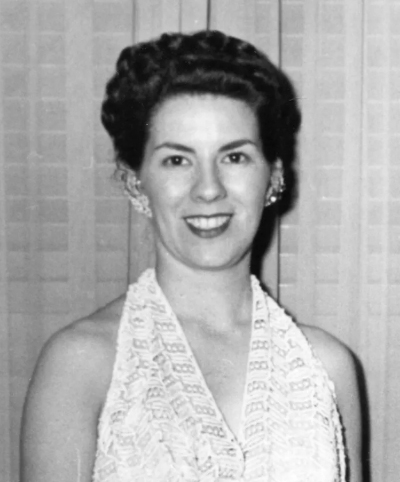
Melita Garza's mother
Melita Garza’s mother, Linda Rosa Caballero Hinojosa de Garza, circa 1940s.

In this Newsweek opinion piece, Melita Garza, associate professor and Tom and June Netzel Sleeman Scholar in Business Journalism, combines a Mother’s Day remembrance with a call to use oral history to preserve the lived experiences of events that some want to see removed from museums, books, and other official histories.

“In drawing on these personal recollections, I hope to make the case that listening to our mothers and recording their stories is a way to honor them that will endure long after the flowers have wilted, the perfume faded, and the chocolate box recycled. I say this not just as a daughter, but also as a media historian who spent more than 20 years as a reporter telling the stories of others in the Milwaukee Journal, the Los Angeles Times, the Chicago Tribune, and Bloomberg News,” Garza said.

How soon will TV networks move to paid-streaming model?


Slowly but surely, streaming is becoming the preferred method of watching television and increasingly there is little content that is not available on streaming. Slowly but surely, the trend is that all content is migrating to become available on streaming, and on occasion exclusively so.

Harsh Taneja

Harsh Taneja, associate professor of new and emerging media in the Charles H. Sandage Department of Advertising, was quoted in The News-Gazette’s “Kathy’s Mailbag” series on March 14.

Addressing how soon TV networks would move to a paid-streaming model, Taneja says there is no reason to believe that network shows belonging to the biggest broadcast networks will become streaming-only. At least not yet.

“Broadcast and cable TV is very much alive, (and) will be in fall 2025. However, it isn’t thriving,” he said.

Jenny Oyallon-Koloski’s piece makes 2024 best video essays by ‘Sight and Sound’


Why did I choose the most explanatory chapter from Oyallon-Koloski’s videographic book Storytelling in Motion? Because I think that her visualizations of Laban Movement Analysis using the stylized acting of Hollywood musicals should be mandatory viewing for character animators.’

Jenny Oyallon-Koloski

Jenny Oyallon-Koloski, assistant professor of Media & Cinema Studies, had a video essay from her book, Storytelling in Motion: Cinematic Choreography and the Film Musical, featured in Sight and Sound’s best video essays of 2024.

Oyallon-Koloski’s video essay, Seeing Movement in Cinema: An Introduction to Laban Movement Analysis, comes from chapter two of her book, which provides a videographic introduction to Laban Movement Analysis and the taxonomic principles that guide Laban/Bartenieff Movement Studies.

Using examples from Singin’ in the Rain, An American in Paris, Top Hat, Stormy Weather, Gentlemen Prefer Blondes, and Meet Me in St. Louis, Oyallon-Koloski breaks down the core categories of this movement system: Body, Effort, Space, and Shape. She also explains the intersections between elements through specific examples that illustrate how the performers in these films deliberately combine and isolate aspects of figure movement to convey their characters’ intentions.

The annual poll, which gives contributors the chance to share their personal highlights of videographic criticism, included 47 voters from 17 countries, drawn from the varied fields of videographic criticism, including academia, online publication and film festivals.

Film scholar Oswald Iten, who voted to include Oyalllon’s Koloski’s video essay on the list, said it should be considered “mandatory viewing for character animators.”

Watch her video essay:

College of Media
119 Gregory Hall
810 S. Wright St.
Urbana, IL 61801
217-333-2350