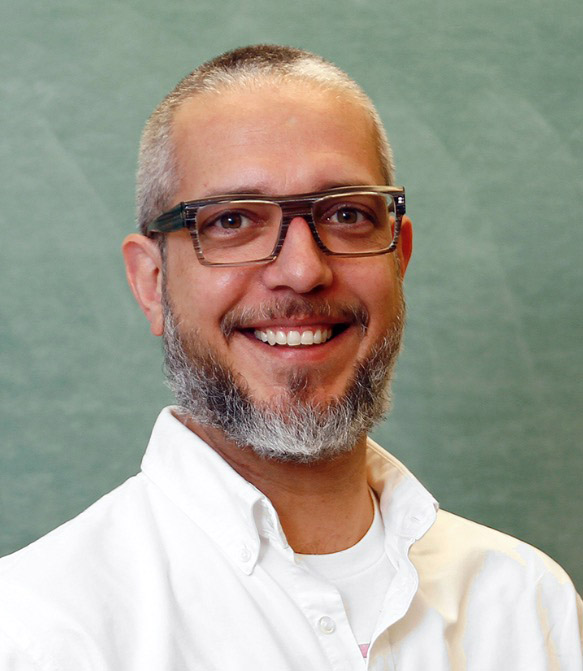
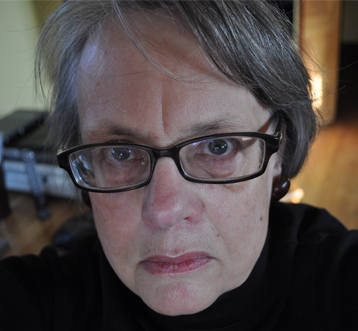
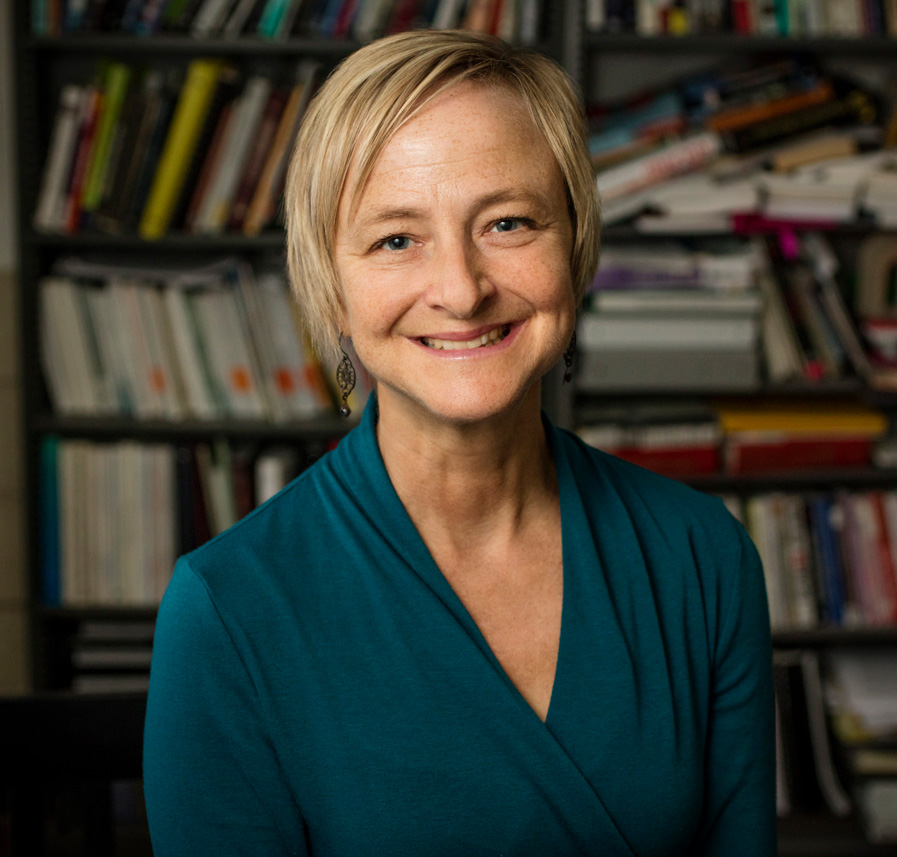
Patrick Vargas

Professor

Affiliations

  • Charles H. Sandage Department of Advertising
  • Institute of Communications Research
  • Department of Psychology
  • Department of Recreation, Sport and Tourism
  • School of Information Sciences Informatics Programs 
  • Center for Social and Behavioral Sciences

Education

  • Ph.D., The Ohio State University (Social Psychology)
  • M.A., The Ohio State University (Psychology)
  • B.A., St. Mary’s College of Maryland (Philosophy, Psychology)

Course Specialties

  • Advertising Research Methods
  • Attitude-Behavior Relations
  • Psychology of Advertising

Background

Vargas double-majored in philosophy and psychology at St. Mary’s College of Maryland and went on to pursue graduate studies in social psychology (with a minor in quantitative psychology) at The Ohio State University. While at OSU, he worked most closely with professors Bill von Hippel, Rich Petty and Bob Arkin. In 1997-98, Vargas worked as a post-doctoral researcher under the guidance of Joe Forgas at the University of New South Wales. Since 1998, Vargas has been at the University of Illinois Urbana-Champaign.

Research and Creative Endeavor

Vargas has broad research interests spanning social psychology, consumer behavior, advertising, and marketing. A significant portion of his work examines implicit attitudes, stereotyping, prejudice, and how these relate to information processing biases that can influence social judgments and behaviors. His research program bridges social psychological processes with consumer behavior and marketing strategy. 

He has explored topics like linguistic intergroup bias, implicit stereotyping as a predictor of discrimination, and using implicit attitude measures to understand consumer responses to advertising. Vargas has also studied affective influences on cognition, such as the roles of mood and emotion in processes like eyewitness memory, decision-making, and well-being. Additionally, his research explores areas of consumer psychology, investigating phenomena like materialism, responses to marketing visuals and branding, the influence of virtual self-representation, and persuasion dynamics in advertising and marketing communications.

Related Links

No posts found.
Patrick Vargas

Contact

217-333-0325

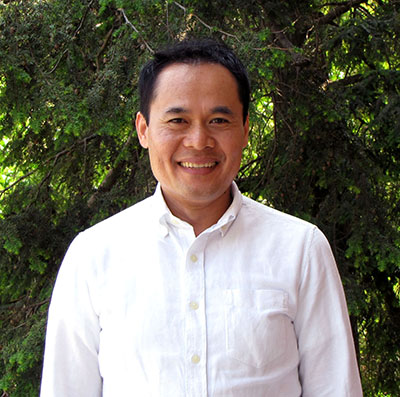
Harsh Taneja

Associate Professor

Affiliations

  • Charles H. Sandage Department of Advertising
  • Institute of Communications Research
  • Center for Social and Behavioral Science

Education

  • Ph.D. Northwestern University
  • M.A. Mudra Institute of Communications, Ahmedabad, (MICA) India
  • B.E. NSIT, University of Delhi, India

Course Specialties

  • Audience Analysis
  • Network Analysis 
  • Seminar in Media and Communication Research

Background

Harsh Taneja is interested in how people consume media. He teaches and researches about media audiences, an area that is relevant to all media majors and beyond, regardless of whether they want to pursue advertising, journalism or media studies. His teaching draws on contemporary and historical conversations about media metrics, data and AI. 

Before becoming an academic researcher, Harsh has worked in the global media and advertising industry, including as an audience researcher at the Global News Division of the BBC.

Research and Creative Endeavor

Harsh Taneja is interested in how people consume media in an environment where they purportedly have plenty of choice. Within this broader question, his work focuses on global internet audiences, as well as how people consume news on digital media.

Related Links

No posts found.

Leona Yi-Fan Su

Associate Professor
Director, Institute of Communications Research

Affiliations

  • Charles H. Sandage Department of Advertising
  • Institute of Communications Research

Education

  • PhD, University of Wisconsin-Madison (Mass Communications)
  • MPA, University of Wisconsin-Madison (Public Affairs)
  • MS, National Taiwan University (Chemistry)
  • BS, National Chiao-Tung University (Applied Chemistry)

Course Specialties

  • ADV 490: Social media analytics*
  • ADV 492: Tech and advertising campaigns
  • ADV 581: Quantitative research methods in advertising*

* made the List of Teachers Ranked as Excellent by Their Students

Background

Dr. Su is a faculty affiliate at the Institute of Communications Research, the Center for Digital Agriculture (CDA), and the Informatics Programs. She is on the editorial board of Environmental Communication and has served as a reviewer for the National Science Foundation (NSF) and more than 20 journals.

Su’s research examines the interplay between media and society, with a particular focus on how social media and new technologies influence human communication and social behaviors in the context of scientific and health topics. It has appeared in New Media & SocietyInformation, Communication & SocietyTelematics and InformaticsScience CommunicationHealth CommunicationEnvironmental Communication, and Science and Public Policy, among other peer-reviewed publications.

Awards

Su is currently a co-principal investigator on an NSF-funded project that examines the effectiveness of using humor for communication about science, particularly on social media. As a principal investigator, she is also leading a CDA project that computationally analyzes tweets about an emerging food technology, with the aim of understanding branding strategies and public opinion.

Research and Creative Endeavor

Su’s key research areas include studies on social normshumorincivilitysocial mediaengagement metricsvirtual assistantsbig datamachine learningbrand communicationscience communicationhealth communication, and environmental communication.

Critical strands of her current work involve:

  1. Optimizing the use of digital tools to improve scientific literacy and debunk misinformation;
  2. Helping communicators design digital media tools and messages that will enhance public understanding of, and engagement with, science and health topics;
  3. Using text analytics to understand public opinion related to controversial or emerging science, technological, and health issues; and
  4. Using data-driven approaches to develop marketing strategies that will help brands and technology companies engage with consumers more effectively online.

Methodologically, Su’s research involves the use of surveys, experiments, and computational approaches such as large-scale text analytics.

She is enthusiastic about engaging in a range of interdisciplinary and collaborative research projects on science and health issues. She also enjoys collaborating with students, and encourages them to contact her if they are interested in learning more about her research or working with her on projects.

Select Publications

  • Lee, S.#, Yao, M., & Su, L. Y.-F. (forthcoming). Expressing unpopular opinion or trolling: Can dark personalities differentiate them? Telematics and Informatics, 63. doi: 10.1016/j.tele.2021.101645
  • Gong, Z.#, Su, L. Y.-F., Zhang, J. S.#, Chen, T.#, & Wang, Y.-C. (2022). Understanding the association between date labels and consumer-level food waste. Food Quality and Preference. 96. doi: 10.1016/j.foodqual.2021.104373
  • Su, L. Y.-F., McKasy, M., Cacciatore, M. A., Yeo, S. K., DeGrauw, A., & Zhang, S. J.# (2022). Generating science buzz: An examination of multidimensional engagement with humorous scientific messages on Twitter and Instagram. Science Communication, 44 (1), 30-59. doi: 10.1177/10755470211063902
  • Su, L. Y.-F., Scheufele, D. A., Brossard, D., & Xenos, M. A. (2021). Political and personality predispositions and topical contexts matter: Effects of uncivil comments on science news engagement intentions. New Media & Society, 23(5), 894-919. doi: 10.1177/1461444820904365
  • Yeo, S. K., Cacciatore, M. A., Su, L. Y.-F., McKasy, M., & O’Neill, L. (2021). Following science on social media: The effects of humor and source likability. Public Understanding of Science, 30(5), 552-569. doi:10.1177/0963662520986942
  • Yeo, S. K.*, Su, L. Y.-F.*, Cacciatore, M. A., McKasy, M., & Qian, S#. (2020). Predicting intentions to engage with scientific messages on Twitter: The roles of mirth and need for humor. Science Communication, 42(4), 481-507. doi: 10.1177/1075547020942512 (*equally contributed)
  •  Lee, T. K. & Su, L. Y.-F. (2020). When a personal HPV story on a blog influences perceived social norms: The roles of personal experience, framing, perceived similarity, and social media metrics. Health Communication, 35(4), 438-446. doi: 10.1080/10410236.2019.1567440
  • Yeo, S. K., Su, L. Y.-F., Scheufele, D. A., Brossard, D., Xenos, M. A., & Corley, E. A. (2019). The effect of comment moderation on perceived bias in science news. Information, Communication & Society, 22(1), 129-146. doi: 10.1080/1369118X.2017.1356861
  • Su, L. Y.-F., Xenos, M. A., Rose, K. M., Wirz, C. D., Scheufele, D. A., & Brossard, D. (2018). Uncivil and personal? Comparing patterns of incivility in comments on the Facebook pages of news outlets. New Media & Society, 20(10), 3678-3699. doi: 10.1177/1461444818757205
  • Su, L. Y.-F., Scheufele, D. A., Bell, L., Brossard, D., & Xenos, M. A. (2017). Information-sharing and community-building: Exploring the use of Twitter in science public relations. Science Communication, 39(5), 569-597. doi: 10.1177/1075547017734226
  • Su, L. Y.-F., Cacciatore, M. A., Liang, X., Brossard, D., Scheufele, D. A., & Xenos, M. A. (2017). Analyzing public sentiments online: Combining human- and computer-based content analysis. Information, Communication & Society, 20(3), 406-427. doi:10.1080/1369118X.2016.1182197
  • Spartz, J. T., Su, L. Y.-F., Griffin, R., Brossard, D., & Dunwoody, S. (2017). YouTube, social norms and perceived salience of climate change in the American mind. Environmental Communication, 11(1), 1-16. doi:10.1080/17524032.2015.1047887
  • Su, L. Y.-F., Cacciatore, M. A., Brossard, D., Corley, E. A., Scheufele, D. A., & Xenos, M. A. (2016). Attitudinal gaps: How experts and lay audiences form policy attitudes toward controversial science. Science and Public Policy, 43(2), 196-206. doi:10.1093/scipol/scv031
  • Su, L. Y.-F., Akin, H., Brossard, D., Scheufele, D., & Xenos, M. (2015). Science news consumption patterns and their implications for public understanding of science. Journalism & Mass Communication Quarterly, 92(3), 597-616. doi: 10.1177/1077699015586415
  • Su, L. Y.-F., Cacciatore, M. A., Scheufele, D. A., Brossard, D., & Xenos, M. (2014). Inequalities in scientific understanding: Differentiating between factual and perceived knowledge gaps. Science Communication, 36(3), 352-378. doi: 10.1177/1075547014529093
  • # a student author/co-author at the time of submission

Related Links

No posts found.
headshot of Leona Yi-Fan Su

Contact

217-300-8273

Sela Sar

Professor

Affiliations

  • Charles H. Sandage Department of Advertising
  • Institute of Communications Research
  • Center for Social and Behavioral Science

Education

  • Ph.D., University of Minnesota (Mass Communication) 
  • M.A., University of Minnesota (Mass Communication)

Course Specialties

Sar has taught a variety of small and large-lecture courses at the undergraduate and graduate levels:

  • ADV 281 Advertising Research Methods
  • ADV 476 Global Advertising 
  • ADV 483 Audience Analysis and Media Planning
  • ADV 497 Colloquium in Advertising
  • ADV 550 Foundations of Advertising
  • ADV 581 Quantitative Research Methods in Advertising 
  • ADV 588 Graduate Seminar II 
  • ADV 590 Special Topics in Advertising
  • ADV 597 Proseminar in Advertising
  • ADV 598 MS Professional Project 
  • MDIA 587 PhD Proseminar I

Background and Research

Sar is an advertising professor whose research focuses on affect, emotions, advertising, and consumer behavior. His work examines how emotional and motivational processes shape advertising responses, with a particular emphasis on electroencephalography (EEG) and self-report measures. He also studies mood, memory, judgment, decision making, and responses to social, risk, and health advertising, as well as emotional communication online using affective computational approaches.

Sar is a Senior Associate Editor of the International Journal of Advertising and serves on the editorial boards of the Journal of AdvertisingJournal of Current Issues and Research in Advertising, and Journal of Interactive Advertising. He is a former President of the American Academy of Advertising and former Director of the Institute of Communications Research. His research has been published in leading journals in advertising, consumer research, communication, and media.

Related Links

No posts found.
Sela Sar

Contact

217-244-1229

Sang-Hwa Oh

Associate Professor

Affiliations

  • Charles H. Sandage Department of Advertising
  • Institute of Communications Research
  • Illinois Informatics
  • Carl R. Woese Institute for Genomic Biology (IGB)

Education

  • PhD, University South Carolina (Mass Communications/Public Health)
  • MA, Sogang University (Mass Communications)
  • BA, Ewha Womans University (Social Welfare/Mass Communications)

Course Specialties

  • AI & Digital Health
  • Entertainment Branding: Branding K-pop
  • Public Relations Strategies
  • Persuasion and Consumer Response
  • Social Media and Personal Branding
  • Graduate Seminar I
  • Graduate Seminar II

Background

Dr. Oh is an interdisciplinary researcher, teacher, and consultant for societal- and individual-levels of wellbeing via innovative communications and media strategies. Her research investigates the realms of emerging media effects and scrutinizes the dissemination of health and risk misinformation. She explores how digital technologies can be leveraged for promote health prevention and the public good. Her research addresses three main themes: 1) the role of media and emerging communication technologies in shaping the public’s understanding of urgent public health and social issues, and influencing behaviors at both individual and policy levels; 2) strategies to mitigate the harmful consequences of misinformation; and 3) how brands in both the private and public sectors can enhance their communication efforts to promote public good through strategic approaches that emphasize transparency, trust, and emotional engagement.

Before embarking on her academic career, Dr. Oh lent her expertise to Samsung iMarketKorea, a leading B2B marketplace in the early to mid-2000s, excelling for five years as a Strategic Planning and Communication Manager. Dr. Oh served as the Faculty Chair of the Public Relations Minor Program and as Faculty Advisor for the Korean Student Association (KSA) at the University of Illinois Urbana-Champaign.

Awards

2025: Inaugural Teri Thompson Outstanding Article Award for best article published in Health Communication since the journal’s inception. Taylor & Francis Group. National Communication Association, Denver, United States. 

2024: JWY Research Award, Department of Advertising, University of Illinois Urbana-Champaign, United States.

2021: Best Research Paper, 2nd place, Global Colloquium, Korea Advertising Society (KAS), Korea.

2016: Rainbow Top Research Paper Award, Korea Health Communication Association.

2015: Red Raider Public Relations Research Award, International Public Relations Research Conference.

2014: Outstanding Graduate Student Research Award, University of South Carolina.

2011: Third-Place Award, Communicating Science, Health, Environment, and Risk Division, 94th annual conference of the Association for Education in Journalism and Mass Communication.

Research and Creative Endeavor

Dr. Oh’s work inherently possesses an interdisciplinary nature, combining insights from diverse fields including but not limited to communication, media effects, public relations, public health, psychology, sociology, and computational analysis. This approach helps a comprehensive view of digital media effects and misinformation. Dr. Oh serves on the editorial board of Health Communication and The Korean Journal of Advertising and Public Relations. Her research has been published in esteemed journals such as Health Communication, Risk Analysis, Mass Communication & Society, International Journal of Communication, and Public Understanding of Science, among other prestigious journals in her research field. Additionally, she acted as a reviewer for the National Science Foundation (NSF). 

Select Publications

#Chen, J., #Gumusel, E., #Sutton, J., Zhou, K. Z., & S.-H. Oh. (Accepted). Regulating deceptive design: A comparative analysis of U.S. and EU laws on dark patterns. The Hawaii International Conference on System Sciences.

Maslowska, E., #Guo, Z., Oh, S.-H., & Smit, E. S. (2025). Exploring Public Health Agencies’ Communication on Social Media in the Early Stages of the Covid-19 Pandemic An International PerspectiveJournal of Health Communication 6(1), 1-26.

Kim, SJ., & Oh, S.-H. (2024). The challenges of engaging African American communities during a public health crisis: The role of government information, COVID-19 discourse, and emotional content on social media. Journal of Strategic Communication, 1-17.

Kim, S.-H., Oh, S.-H., Zain, A., Heo, Y, & Jun, J. (2023). Transition from idealized science to culture of skepticism in South Korea: Micro-level evidence for the two-culture model of public understanding of science. International Journal of Public Opinion Research.

Yoo, WH., Hong, YS., & Oh, S.-H. (2023). Communication inequalities in the COVID-19 pandemic: socioeconomic differences and preventive behaviors in the United States and South KoreaBMC Public Health 23 (1), 1290.

Yoo, WH.,&Oh, S.-H. (2023).The Effects of Social Determinants of Health on COVID-19-Preventive Behavioral Intention in South Korea and the United States: Mediating Role of Health Communication. Korean Advertising Studies.

Kim, L#., & Oh, S.-H+ (2023). Predicting Telephone Anxiety: Use of Digital Communication Technologies, Language and Cultural Barriers, and Phone Avoidance. Communication Research Reportshttps://doi.org/10.1080/08824096.2023.2221845

Yoo, WH., Oh, S.-H., & Kim, T. (2023). How Social Media Exposure Influences Preventive Behavioral Intention during the COVID-19 Outbreak in South Korea: A Communication Mediation Model Approach. Journal of Creative Communications. 18 (2), 166-182.

Yoo, WH., Oh, S.-H., & Chio, D-H. (2023). Exposure to COVID-19 Misinformation across Instant Messaging Apps: Moderating Roles of News Media and Interpersonal Communication. International Journal of Communication, 17, 712-734. 

Oh, S.-H+., Lee, Cj., & Park, SH#. (2022). Trust matters: The effect of social media use on public health policy support through (mis)beliefs in the context of HPV vaccination. Health Communication.  Published online ahead of printhttps://doi.org/10.1080/10410236.2022.2096985

Oh, S.-H+., Lee, S-Y#., & Han, CH#. (2021). The effects of social media use on preventive behaviors during infectious disease outbreaks: The mediating role of self-relevant emotions and public risk perception. Health Communication36(8), 972-981. 

Ham C-D., Chung, UC#., Kim, WJ#., Lee, SY#., & Oh, S.-H. (2021). Greener than others? Exploring generational differences in green perceptions and purchase intentions of the US consumer: Consumer socialization and social intelligence perspectives. International Journal of Market Research64(3), 376-396.

Lim, HJ, Oh, S.-H., Kim Y., & Kim, J.-N. (2019). Activists and their communicative behaviors for effective crisis communication in the age of social media. Asian Journal of Public Relation3(1), 1-14.  

# undergraduate student, graduate student or post-doctoral student

corresponding author

Related Links
No posts found.

Angharad N. Valdivia

Professor Emerita

Affiliations

  • Institute of Communications Research
  • Department of Media & Cinema Studies
  • Latina/o Studies
  • Gender & Women’s Studies
  • Latin American and Caribbean Studies
  • Unit for Interpretive Criticism
  • Global Studies
  • Women & Gender in Global Perspective

Education

  • Ph.D., University of Illinois Urbana-Champaign (Communications)
  • BA in History and Communication, University of California at San Diego

Course Specialties

  • Proseminar to doctoral studies
  • International Communications
  • Popular Culture
  • Latin American in Film
  • Sex and Gender in Popular Media
  • Disney Studies
  • Introduction to Popular Television and Movies
  • Introduction to Media Studies

Background

Professor Valdivia served as the Inaugural Head of the Media and Cinema Studies Department. As well, she served as the Interim Director of the Institute of Communications Research for five years, 2009-2014. Within communications research, Valdivia combines the areas of gender studies with ethnic studies and Latin American studies. She brings these together in the examination of contemporary mainstream popular culture in an approach that explores the tension between agency and structure within a transnational setting. She has conducted field research in Nicaragua, Peru and Chile. Current research projects include hybridity theory as it applies to Latina/o Studies, ambiguity as a strategy of ethnic representation and differentiation within Latinidad, and transnationalism as it applies to the discipline of Latina/o Studies. She has been a visiting scholar at the University of California at San Diego, Cambridge University-Lucy Cavendish College (UK), York University in Toronto, St. Louis University in Madrid, Universidad the Chile; Universidad del Norte, Barranquilla, Colombia; and Universidad Jaume 1, Castellon Spain. She is working on two book-length manuscripts titled, The Gender of Latinidad (Blackwell) and Latina/os and the Media (Polity), as well as on several other projects. Additionally she is the managing editor of the Encyclopedia of Media Studies (Blackwell), an eight-volume project designed to map out the field. Valdivia has lectured broadly on her areas of research and is a dedicated mentor to graduate students and junior faculty of color. Valdivia is an affiliate faculty member in the Women and Gender in a Global Perspective Program and the Center for Latin American and Caribbean Studies.

Research and Creative Endeavor

Valdivia served as editor-in-chief of the journal Communication Theory (2008-2011). She is the author of “A Latina in the Land of Hollywood” (Arizona, 2000) and the editor of “Latina/o Communication Studies Today” (Peter Lang, 2008), “The Media Studies Companion” (Blackwell, 2003, 2006), “Feminism, Multiculturalism, and the Media: Global Diversities” (Sage, 1995) and the communication and culture section of the “Routledge International Encyclopedia of Women” (2000). She is also co-editor of “Mapping Latina/o Studies: An Interdisciplinary Reader,” (Peter Lang, 2012). She has published essays in the Communication Review, Global Media Journal, Journal of Communication, the Journal of International Communication, Girlhood Studies, Popular Communication, the Journal of Children and the Media, the Review of Education/Pedagogy/Cultural Studies, the International Journal of Inclusive Education, Women and Language, Chasqui, and in many edited anthologies. Her areas of interest include gender and ethnicity in popular culture and international communications, especially U.S. Latina/o and Latin American, media studies, international communications and feminist studies.

No posts found.
Angharad N. Valdivia

Contact

217-244-1422

Julie Turnock

Professor

Affiliations

  • Department of Media & Cinema Studies
  • Institute of Communications Research
  • Department of Comparative & World Literature 
  • Department of English 
  • Unit for Criticism & Interpretive Theory

Education

  • Ph.D., Media and Cinema Studies, University of Chicago, 2008
  • M.A., Film and Television, University of Amsterdam, 2001
  • M.A., Art History, Indiana University, 1998
  • B.S., Modern Languages, Georgetown University, 1993

Course Specialties

  • Survey of World Cinema I and II 
  • Film Theory and Criticism (graduate and undergraduate) 
  • Special Effects: History and Aesthetics 
  • History of Film Criticism 
  • Historiography of Cinema (graduate level) 
  • Digital Cinema 
  • Cinema of the 1970s 
  • Women’s Cinema (graduate level) 
  • Topics in Contemporary Cinema 
  • American Cinema of the 1980s

Awards

  • 2024, National Endowment for the Humanities Fellowship
  • 2009-2010, Andrew W. Mellon/ACLS Early Career Fellowship, Recent Doctoral Recipients, Davis Institute of the Humanities, University of California, Davis 

Research and Creative Endeavor

Books:

The Empire of Effects: Industrial Light and Magic and the Rendering of Realism (University of Texas Press, 2022). 

Plastic Reality: Special Effects, Technology, and the Emergence of 1970s Blockbuster Aesthetics (Columbia University Press, 2015). 

Selected Articles: 

“Jurassic Park’s Smoothing Pass: The Dinosaur Input Device and Digital Materialism,” The Jurassic Park Book: New Perspectives on the Classic 1990s Blockbuster,” Matt Melia ed. (Bloomsbury Academic Press, November 2023.)

“The Auteurist Special Effects Film: Kubrick’s 2001: A Space Odyssey and the ‘Single-Generation Look.’” In The Hollywood Renaissance: Revisiting American Cinema’s Most Celebrated Era, Peter Krämer and Yannis Tzioumakis eds. (Bloomsbury Academic Press, 2018): 71-90. 

“Special Effects: Auteur Renaissance, 1968-1980” and “Special Effects: Post-War Hollywood, 1947-1967” in Editing and Special Visual Effects: Behind the Silver Screen, volume eds. Charles Keil and Kristen Whissel, series ed. Jon Lewis (Rutgers University Press/Academy of Motion Picture Arts and Sciences, 2016): 116-128. 

“Patient Research on the Slapstick Lots: From Trick Men to Special Effects Artists in Silent Hollywood,” Early Popular Visual Culture 13:2 (2015): 152-173. 

“’The True Stars of Star Wars?’: Experimental Filmmakers the in 1970s and 1980s Special Effects Industry.” Film History 26.4 (2014): 120-145. 

“Removing the Pane of Glass: The Hobbit, 3D High Frame Rate Filmmaking, and the Rhetoric of Cinematic Realism,” Film Criticism (Spring/Summer 2013): 30-59. 

“The ILM Version: Recent Digital Effects and the Aesthetics of 1970s Cinematography” Film History 24:2 (2012): 158-168. 

“The Screen on the Set: The Problem of Classical Studio Rear Projection,” Cinema Journal 51.2 (Winter, February 2012): 157-162.

Related Links

No posts found.
Julie Turnock

Contact

217-333-1549

Ann Reisner

Associate Professor Emerita

Affiliations

  • Department of Media & Cinema Studies
  • Institute of Communications Research
  • Department of Natural Resources and Environmental Sciences

Education

  • Ph.D., University of Wisconsin-Madison, Mass Communications/Sociology minor, 1987
  • M.S., University of Wisconsin-Madison, Agricultural Journalism, 1979
  • B.S., University of Wisconsin-Oshkosh, Microbiology and Public Health, 1974

Course Specialties

  • Environmental Communications
  • Agricultural Communications
  • Research Methods
  • Media Activism
  • Sociology of the Press

Background

Dr. Ann Reisner is an Associate Professor Emerita in the Department of Media & Cinema Studies, the Institute of Communications Research and an affiliate in the Department of Natural Resources and Environmental Sciences. Her primary research interests are in the areas of environmental communications and the sociology of the press. She is currently developing a monograph on using media research to develop policy at the individual, group and national levels and a separate text on the role of environmental film in mobilization. Her current teaching is in Communication and Environmental Social Movements, Media and Society and Watching the Environment.

No posts found.
headshot of Ann Reisner

Contact

217-333-4787

Matthew Ehrlich

Professor Emeritus 

Affiliations

  • Department of Journalism 
  • Institute of Communications Research

Education

  • Ph.D., University of Illinois Urbana-Champaign
  • M.S., University of Kansas
  • B.J., University of Missouri

Background

Ehrlich is a winner of the Campus Award for Excellence in Undergraduate Teaching, the University of Illinois’ highest teaching honor. Previously he was an assistant professor at the University of Oklahoma. He is also a former reporter, producer, editor and anchor for WILL-AM, Urbana; KANU-FM, Lawrence, Kan.; KCUR-FM, Kansas City; KBIA-FM, Columbia, Mo.; and KOPN-FM, Columbia, Mo. Ehrlich has earned honors from the Ohio State Awards, Society of Professional Journalists, Illinois Broadcasters Association, Indiana Associated Press and Kansas Association of Broadcasters.

Research and Creative Endeavor

Ehrlich’s research focuses on social and cultural history. His most recent book is The Krebiozen Hoax: How a Mysterious Cancer Drug Shook Organized Medicine. His earlier books include Dangerous Ideas on Campus: Sex, Conspiracy, and Academic Freedom in the Age of JFK; Kansas City vs. Oakland: The Bitter Sports Rivalry That Defined an Era; Radio Utopia: Postwar Audio Documentary in the Public Interest, which won the 2012 James W. Tankard Book Award from the Association for Education in Journalism and Mass Communication; Journalism in the Movies, which was named an Outstanding Title by the Association of American University Presses; and Heroes and Scoundrels: The Image of the Journalist in Popular Culture, which was coauthored with Joe Saltzman. Ehrlich also has written several scholarly articles on broadcast news, audio documentary, journalism history, and cinematic portrayals of the press. He has won top paper honors from the Association for Education in Journalism and Mass Communication and from the International Communication Association.

Related Links

No posts found.
Matthew Ehrlich

Contact

217-333-1365

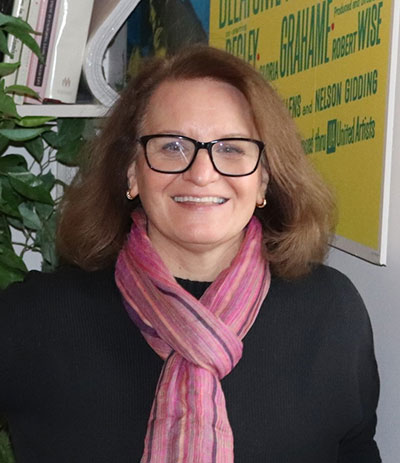
Michelle Nelson

Professor and Head

Affiliations

  • Charles H. Sandage Department of Advertising
  • Institute of Communications Research 
  • Affiliate Faculty, Family Resiliency Center

Education

  • PhD in Communications, 1997, University of Illinois at Urbana-Champaign 
  • MA in Journalism and Mass Communication, 1991, University of Wisconsin-Madison 
  • BS in English, 1989, University of Wisconsin-Madison

Course Specialties

Nelson has taught a variety of small and large-lecture courses at the undergraduate and graduate levels.

  • ADV 199 Advertising & Identity in a Globalized World (Fall 2009)
  • ADV 283 Advertising and Brand Strategy (Spring 2017)
  • ADV 399 Global Advertising Studies (Spring on campus; ADV 399 Summer Rome, Italy; 2011)
  • ADV 393 Advertising & Society (Spring 2016)
  • ADV 476 Global Advertising (Fall 2007, 2009, 2010, 2012, 2014)
  • ADV 481 Advertising Research Methods (Spring 2007)
  • ADV 482 Qualitative Analysis in Advertising (Fall 2016, Fall 2017)
  • ADV 483 Audience Analysis (Fall 2006, 2007, 2008, 2009, 2010; Spring 2008)
  • ADV 491 Advertising Management Planning (Spring 2007, Spring 2012)

Graduate Courses

  • ADV 582 Qualitative Research Methods in Advertising (Fall 2011, 2012, 2013, 2014, 2015, 2016, 2017)
  • ADV 585 Advertising Planning and Decision Making (Spring 2015)
  • ADV 587 Graduate Seminar: Theory (Spring 2009)
  • ADV 588 Graduate Seminar II (Spring 2012)
  • ADV 597 Proseminar in Advertising (Fall 2013)
  • ADV 598 Professional Project (Fall-Summer 2012; Fall 2013; Fall 2015, Fall 2016, Fall 2017)

Background

Nelson studies and teaches advertising and consumer research. She has published nearly 70 peer-reviewed articles and book chapters. She is associate editor of the International Journal of Advertising. She has worked, researched, or taught in the United Kingdom, Denmark, Austria, United States, and Jamaica.

Research and Creative Endeavor

Nelson’s early research examined individual differences with respect to persuasion and consumer behavior (e.g., gender, culture). However, she is probably best known for her research on brands in entertainment (e.g., games, movies). While investigating the prevalence and response to branded messages, Nelson became interested in consumers’ media literacy or persuasion knowledge about these so-called hidden brand techniques. As a result, Nelson’s current research and public engagement endeavors focus on advertising/media literacy. For example, Nelson is pursuing longitudinal ethnographic work with parents and pre-school children to understand the development of consumer literacy. At the same time, Nelson is interested in assessing advertising/consumer literacy among adults and understanding how literacy influences the persuasion process and marketplace behaviors. She is currently involved in an international research project (funded by NIH) related to culture, health, and advertising in Jamaica.

In addition, Nelson has a continued research interest and fascination with new technology, branding, and media. She is pursuing research with a team of students and faculty related to virtual reality mediated experiences.

Related Links

Media Literacy Research

Making Media for a Healthier U

Video

No posts found.
Michelle Nelson

Contact

217-344-5068

College of Media
119 Gregory Hall
810 S. Wright St.
Urbana, IL 61801
217-333-2350