Advertising and ICR faculty and graduate students recognized at 2024 AAA conference


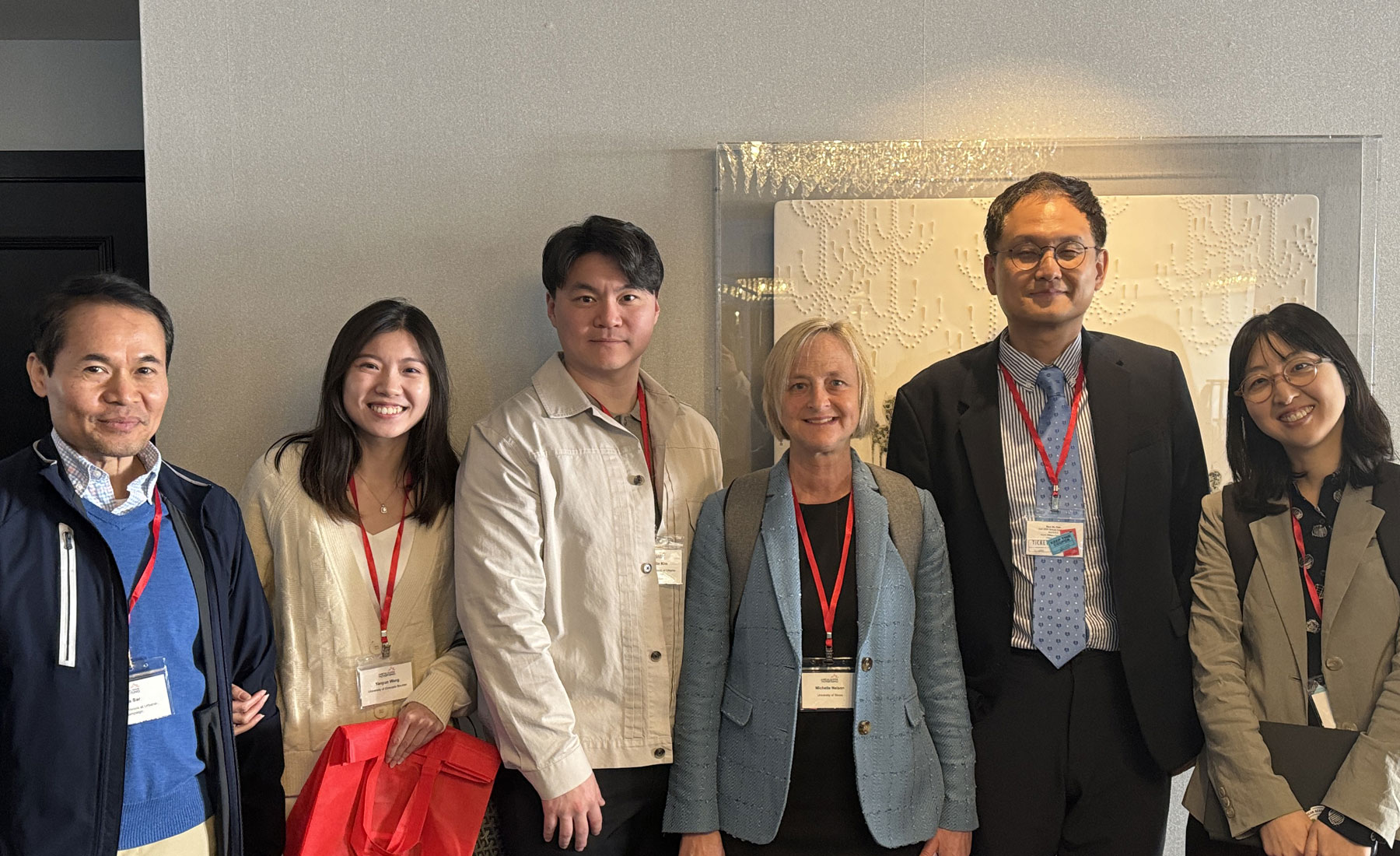
AAA group of faculty and students

Faculty and graduate students in the Charles H. Sandage Department of Advertising and Institute of Communications Research were honored with awards and presented research at the annual conference of the American Academy of Advertising, held March 14-17, 2024, in Portland, Oregon. 

Nelson AAA award

Professor Michelle Nelson, head of the Charles H. Sandage Department of Advertising, won AAA’s Career Award, the Ivan L. Preston Outstanding Contribution to Research on Advertising Award. As AAA’s top research award, this is designed to honor an individual who has made an outstanding contribution to the discipline of advertising through a systematic and sustained program of published research. The award carries a $1,000 prize. This award is given only to active AAA members for exemplary research on advertising across 20 years or more. 

Chang-Dae Ham, associate professor of advertising and associate head of graduate studies, was elected vice president of AAA and began his term on the executive committee.

Kevin Wise, professor of advertising, was appointed head of AAA’s graduate student committee. 

ICR student WooJin Kim (Advisor: Chang-Dae Ham) won a doctoral dissertation competition award for “When Humans Anthropomorphize Nonhumans: Examining the Role of AI Interactivity and Human Motivations.” Floria Yujin Lee, a graduate student in advertising, won a travel fellowship award. 

(Pictured at top: Professors Sela Sar at left, Michelle Nelson in center, and Chang-Dae Ham at right at the conference with graduate students.)

Presentations

Pre-Conference Panel Session: “How to Develop a Successful Journal Submission: Advice from Editors and Leading Experts” – with presentation “Best practices for experimental studies” by Sela Sar, professor of advertising

Special Session: “Stepping out of the Ivory Tower: Engaged Research & Teaching in Advertising” led by Professor Michelle Nelson

Research paper presentations: 

AAA students present
“Hey, You Put Ads in My Netflix: How Audiences Negotiate the Changing Streaming Video Landscape”
Floria Yujin Lee (MS Advertising), Masashi Fukada (MS Advertising), Paris Baptiste (MS Advertising), Xinle Du (MS Advertising); Professor Michelle Nelson 

“Exploring Motivation to Follow Virtual Influencers (VIs): The Role of Emotional Attachment as a Mechanism for Generating Positive Effects in VI-Endorsed Advertising”
Professor Chang-Dae Ham and Seo Jeong Heo (ICR) 

“When Lonely Hearts Meet Talkative Artificial Intelligence (AI) Chatbot: Exploring the Role of AI Interactivity in Sociality Motivation in the Context of AI-Powered Advertising”
WooJin Kim (ICR), Professor Chang-Dae Ham, Dongchan Lee (Northwestern University), Se Il Park (ICR), Seo Jeong Heo (ICR), Floria Yujin Lee (MS Advertising) 

Michelle and Regina with alpaca and llama

(Pictured above: Alumna Regina Ahn (MS ’14, advertising; PhD ’19, ICR) and Professor Michelle Nelson met a llama and alpaca during the AAA conference.)

See more photos from the conference.
 

How will generative artificial intelligence affect political advertising in 2024?


Michelle Nelson
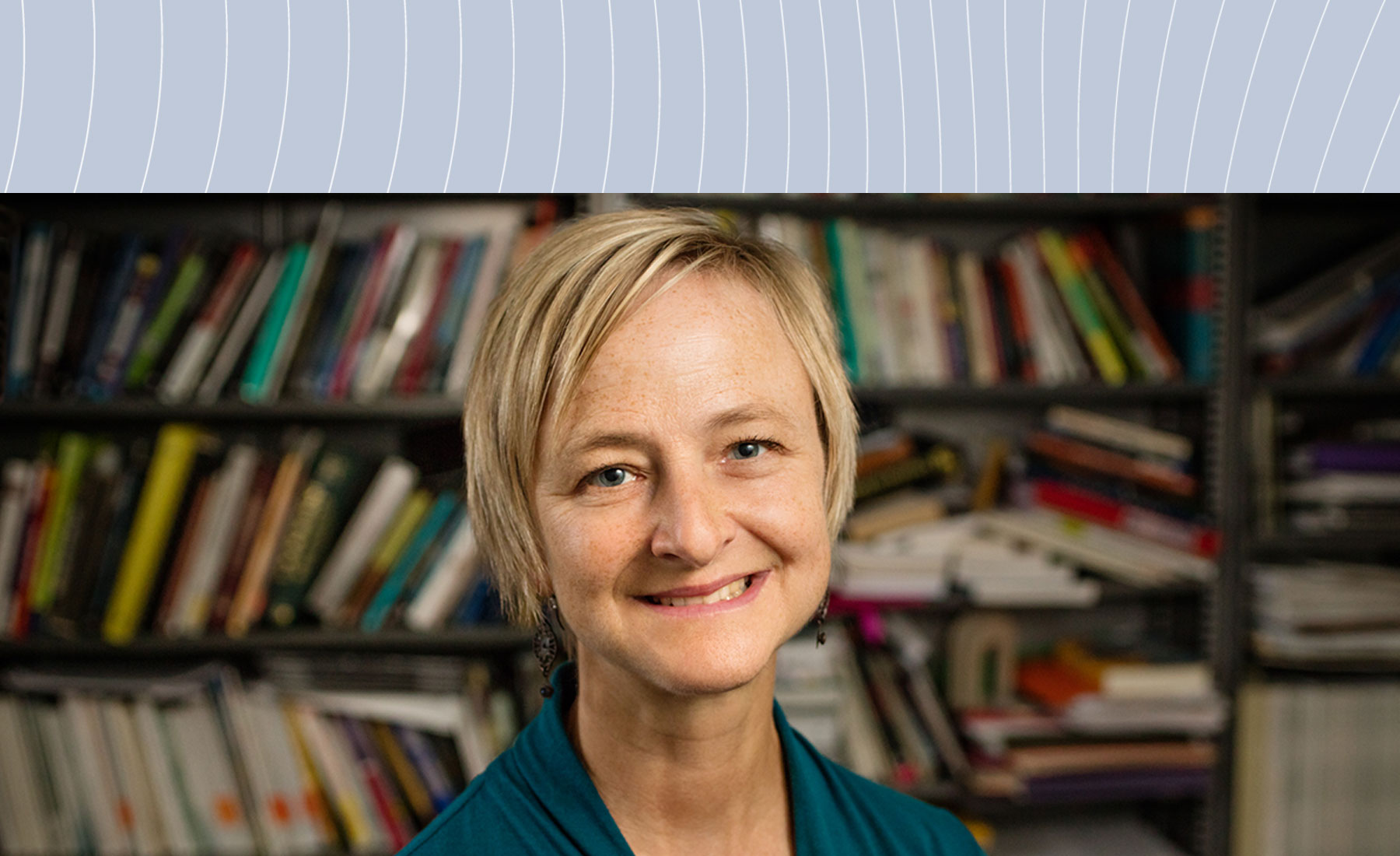
Michelle Nelson, professor and head of the Charles H. Sandage Department of Advertising, says voters should expect to see a lot more generative AI in political ads during the 2024 election cycle, warning that it might be difficult-to-impossible to tell what’s real and what’s fake. (Photo by L. Brian Stauffer.)

It’s estimated that $12 billion will be spent on political ads this election cycle—30% more than in 2020. The sheer volume of ads is remarkable, and there is vast potential to use this political information to contribute to democracy: to reach more potential voters and provide accurate information. There’s also more potential than ever for generative artificial intelligence to misrepresent candidates and policies, leading to confusion in the voting booth. News Bureau editor Lois Yoksoulian spoke with advertising professor and department head Michelle Nelson about the topic.

How is AI used in political ads, and what are some recent examples of AI-generated political ads?

After President Joe Biden announced his re-election bid, the Republican National Committee released an AI-generated political advertisement that depicted a dystopian world should Biden be re-elected. The video ad features a number of “what if” questions (e.g., What if crime worsens?) with AI-generated images. This is a classic fear appeal-negative attack ad. Emotional ads reach us, and we remember them—like the famous Daisy political ad used during the 1964 election cycle or the Willie Horton ad used in 1988. But they may also get some backlash for being too negative, too manipulative, especially because they are using AI.

Some say the Joe Biden RNC ad is the first AI-generated ad, but it’s hard to prove. However, in the top left corner of the ad, you see a disclosure in a small font: “Built entirely with AI imagery.” The video description on the GOP’s YouTube page says, “An AI-generated look into the country’s possible future if Joe Biden is re-elected in 2024.” So they are not hiding the use of AI. There’s also a spoof ad that ran on The Daily Show, which uses an AI-generated voiceover for Biden. It’s pretty easy these days to use AI tools to create content and make it look pretty real.

Are the entities behind these types of ads required to disclose that AI has been used?

The Federal Election Commission, the governmental body that regulates political communication, including advertising in the U.S., sought public comments on amending a regulation related to the use of deliberately deceptive AI in campaign ads at their meeting titled 2023: REG 2023-02 Artificial Intelligence in Campaign Ads. They have not yet made a ruling here. However, states such as California, Texas, Michigan, Washington, and Minnesota have enacted new state laws where any deepfake AI images, video, or audio need to be labeled in. A similar law is being discussed here in Illinois. It’s not clear how these state laws relate to the Constitution.

Some tech companies have started requiring disclosures. For example, Google indicated that all AI-generated political ads shown on YouTube or other Google platforms “that alter people or events” must have a prominent disclosure. There is also a verification process for political ads in some regions.

Microsoft has started their “Content Credentials as a Service” which is like a watermarking tool—it lets users digitally sign and authenticate the media—whether it’s an image or video through their Coalition for Content Provenance and Authenticity. The idea is that the watermark serves as metadata so users can see the history of the content. For example, “how, when, and by whom the content was created or edited,” whether by a person or AI. This information stays with the content so anyone can see the origin.

To what extent AI-generated political content is now being watermarked or disclosed I have no idea. It seems difficult to police all of these images at this moment in time.

What is the potential harm of using AI in political ads? 

The concerns for harm relate to possibilities for deepfakes and disinformation. Others can re-create something using AI voice or images without authorization to create stories and content that are absolutely untrue.

We’ve had tools and technology in the past, like Photoshop to manipulate existing images. Do you remember the 2004 ads featuring altered photos depicting John Kerry, the Democratic nominee for president, and Jane Fonda at an anti-Vietnam War rally? Ads are regularly embellished or altered: The colors or lighting are changed to make people look ominous or more youthful. But this is different. This is a whole new level. Anyone can make AI messages using free tools such as Open AI’s ChatGPT or Google’s Bard. This may be good when used responsibly, or it may be harmful.

Our research shows that many people don’t know that the First Amendment protects political advertising in the U.S. Political advertising is not held up to the same standards as commercial advertising, say for a cheeseburger. The Truth-in-Advertising laws by the Federal Trade Commission do not apply to political ads. That means political ads can legally be deceptive or lie. Of course, there are libel laws, but they are rarely used in this arena.

Beyond this regulatory difference in commercial and political advertising, the idea is that we want free-flowing political information to contribute to a dialogue that can enhance our democracy. Too much regulation can have a chilling effect on political speech. Yet the potential today with AI to lie and deceive and to deploy these messages in a personalized manner and at a grand scale offers a challenge perhaps to our thinking about regulation and political advertising.

Do you have any advice on how consumers can spot the use of generative AI in political ads?

They can’t. You can look for irregularities like the number of legs on the cat. But it is getting harder and harder to tell if AI makes an image or video. Whether it’s Taylor Swift, an image of Trump in jail, or a funny meme, we can’t always tell, especially as we scroll through our social media feeds. The best we can do is hope that the tech industry develops systems able to trace the origin of the content so we can see who made the image and when and how. If this tech is built in, it’s harder to fool people. We could also encourage disclosure mandates among tech companies.

But in the age of this kind of media and in an election year, we need to focus on the basics of media literacy—looking for reliable sources of information, watching the political debates and trying to form our own informed opinions.

Editor’s note: To reach Michelle Nelson, call 217-344-5068; email nelsonmr@illinois.edu

View original press release.

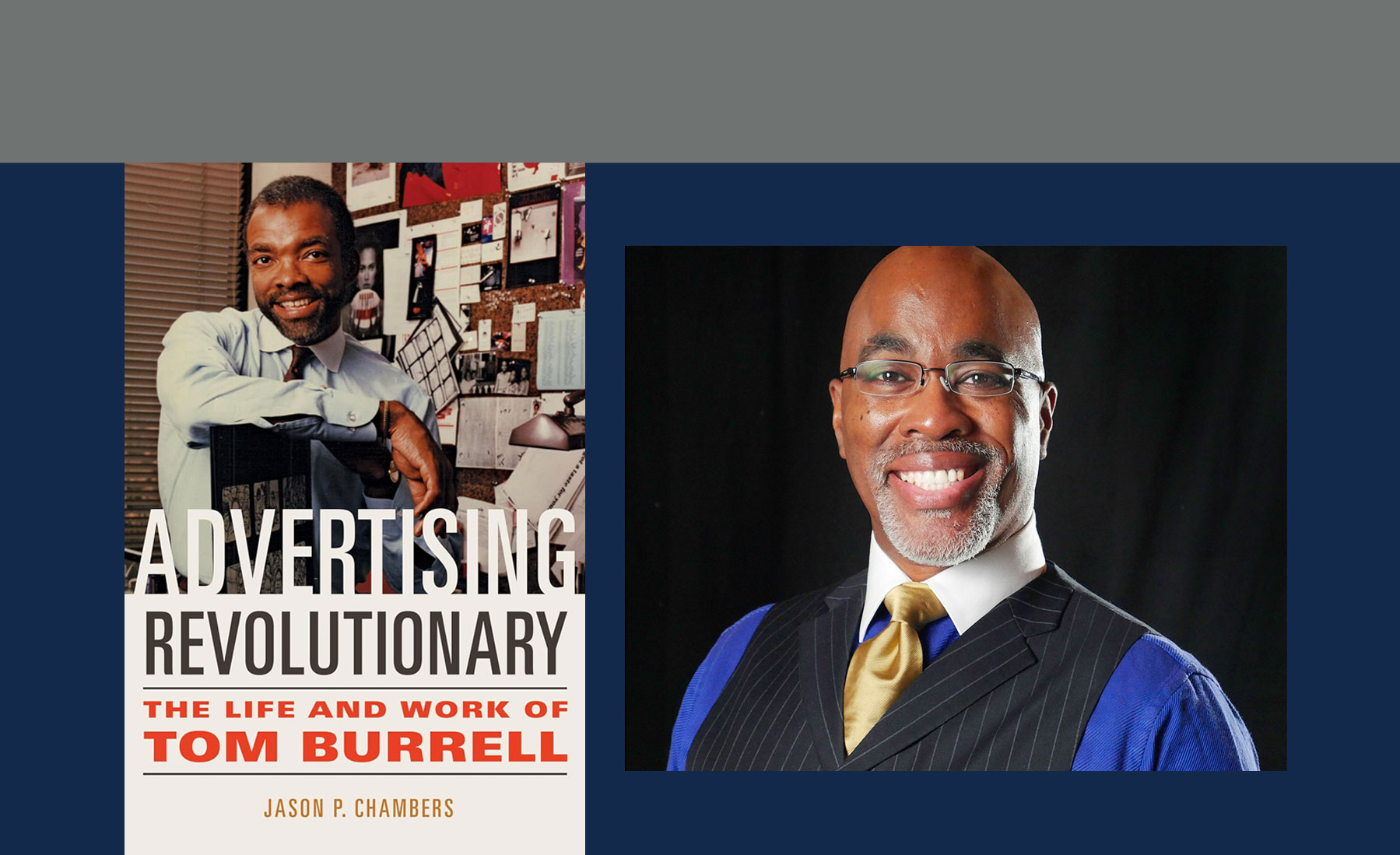
Jason P. Chambers’s new book ‘Advertising Revolutionary: The Life and Work of Tom Burrell’ details ad exec’s influence on industry’s approach to African Americans


Jason P. Chambers

Advertising Professor Jason P. Chambers’s new biography about Tom Burrell, a renowned Black visionary who changed the face of the ad industry for African Americans, will be published on February 6. 

While Advertising Revolutionary: The Life and Work of Tom Burrell (University of Illinois Press) will appeal to those interested in advertising and its history, Chambers said it’s written for a broad audience to enjoy.

“If you have an interest in biographies, Chicago, Chicago stories, Chicago entrepreneurs, African American entrepreneurs, what goes into the creation of an advertising campaign, and client relationships, I think you’d be interested in this story,” Chambers said. 

Chambers, who is also the associate dean for diversity, equity, and inclusion at the College of Media, describes Burrell as his “favorite person in the history of the [advertising] industry.”

“He started in advertising at a time in which the number of African Americans operating in a professional capacity could have been measured in the dozens,” Chambers said, adding that Burrell was the first Black copywriter at a mainstream agency in Chicago. “He is one of the people who is singularly responsible for helping to get African Americans on TV.”

Burrell not only created a place for African Americans within the advertising industry, but he also changed their representation in advertisements. His concept, known as “Positive Realism,” was relatively simple—present realistic and positive images of African Americans using products and brands—yet it was considered revolutionary at the time. 

"Advertising Revolutionary: The Life and Work of Tom Burrell"

Chambers said if you saw a television ad for McDonald’s or Coca-Cola in the 1980s or 1990s that depicted African Americans, Burrell’s agency probably created it.

Thanks to Burrell’s early pioneering efforts, there’s a greater breadth of representation in advertising today, Chambers said. More Hispanic Americans, Asian Americans, LGBTQ community members, and people with different physical abilities are included in current brand messaging than ever before. 

Despite a more inclusive environment, Chambers still questions how much of advertising today is culturally sensitive and how much is culturally representative.

“It’s one of those things that can have two steps forward and a step back,” he said. “It’s not linear progress, but it’s nonetheless, progress.”

Chambers, who also co-edited Building the Black Metropolis: African American Entrepreneurship in Chicago in 2017, said the catalyst for his second book occurred while doing research for his first book, Madison Avenue and the Color Line: African Americans in the Advertising Industry, published in 2009. 

Chambers had the opportunity to interview Burrell on several occasions during that time. He also spent two weeks at Burrell’s ad agency in Chicago through the Advertising Education Foundation Visiting Professor Program, which Chambers says, “deepened my admiration for him.”

The AEF Visiting Professor Program allows professors to visit advertising agencies to enhance their understanding of current developments and practices in advertising and marketing to inform their teaching and research. 

Spending one-on-one time with the industry legend before he retired, coupled with a desire to write a biography, is what led Chambers to call Burrell one day in 2011. Chambers recalls standing in his kitchen, calling Burrell’s office, and thinking “it was a long shot because I was fairly certain that he would try to write his own book.” 

After some consideration, Burrell opted not to write his autobiography, opening the door for Chambers to write the book. 

Chambers spent the next few years interviewing Burrell, mostly at his home in Chicago, along with several other sources who knew him well. 

Challenges did arise throughout the process as Chambers soon realized writing a biography, which relies heavily on oral interviews alongside extensive archival research, can prove difficult. There was even a point when Chambers stepped away from writing the book, having concerns about not being able to interview some key figures in Burrell’s life, such as his original business partner who had passed away before Chambers could interview him.

But Chambers found a renewed motivation after an encounter with two of his professional academic heroes at an event in Chicago. 

Christopher Robert Reed, professor emeritus at Roosevelt University, and Darlene Clark Hine, professor emerita at Michigan State University, both African American historians, gave him the push he needed to get back to writing the book.

“After I told them about the struggles that I was having in terms of deciding to move on from the book, they both said the same thing,” Chambers said. “They said write it anyway. Just tell the readers what happened and write it anyway.”

His experience has taught him a few lessons about courage and writing that he shares with his students. 

“I think the thing that students have to be reminded of is a lack of confidence in work that you’re going to publish is just part of it, and you have to give yourself a license to have those feelings,” he said. “But ultimately the difference between a writer and somebody who writes is that a writer has to make their work public. They have to try and publish.”

Julie Turnock awarded National Endowment for the Humanities Fellowship


Turnock

Julie Turnock, professor of media and cinema studies, was awarded a National Endowment for the Humanities Fellowship for a book project titled Beyond King Kong: Special Effects in the Hollywood Studio Era, 1915–1965. 

She will receive $60,000 in funding to research and write a book about the technical, labor, industrial, and aesthetic history of the special effects industry during the Hollywood studio era.

Turnock’s book project is a history of the labor performed by unsung “below-the-line” effects workers of the era. Through archival historical research, oral history accounts, interviews, theoretical discourse, and formal visual analyses, this project presents a polemic for considering the “specialness” of effects work not from the point of view of the film but from the position of the specially contracted labor. As a labor history, it centers the workers of the Hollywood studio era who are rarely considered in cinema histories, training attention onto those whose skills make much of “movie magic” possible.  

Turnock served as the inaugural director of the Roger Ebert Center for Film Studies and is on sabbatical this academic year. 

The NEH awarded $33.8 million in grants for 260 humanities projects across the country, including 82 fellowships. The fellowship program supports advanced research in the humanities, and recipients produce articles, books, digital materials or other scholarly resources. NEH Fellowships are competitive awards granted to individual scholars pursuing projects that embody exceptional research, rigorous analysis, and clear writing.

The NEH has received an average of 1,120 applications per year for fellowships in the last five rounds of competition, according to its website. During that time, it awarded an average of 79 fellowships per year for a funding rate of 7%, making the fellowships among the most competitive humanities awards in the country.

The NEH is an independent federal agency and one of the largest funders of humanities programs in the U.S. It supports research and learning in history, literature, philosophy and other areas of the humanities by funding selected peer-reviewed proposals from around the nation.

See University of Illinois News Bureau press release.

Maslowska selected as Center for Advanced Study Associate for 2024-25 academic year


Ewa Maslowska

Ewa Maslowska, associate professor of advertising, was selected as a Center for Advanced Study Associate for the 2024-25 academic year, pending Board of Trustees approval. 

As a CAS Associate, Maslowska will take time off from teaching in Fall 2024 to focus on her research of fake online reviews.

Consumer reviews on many e-commerce and travel websites, social media platforms, and entertainment pages have been shown to play a crucial role in consumers’ purchase decisions. As a result, companies started motivating consumers to write reviews by providing various incentives. However, there’s been little research on the process of review generation or review perception, depending on the different levels of review incentives. 

Maslowska said her project “aims to investigate how incentives affect reviewers’ motivations and their reviews.” She also plans “to identify textual markers of incentivized and fake reviews and investigate whether it’s possible to train consumers to recognize such reviews, or at least make them more skeptical about them.” 

Maslowska, who also serves as faculty lead of the computer science + advertising degree program in the Charles H. Sandage Department of Advertising, was appointed a CAS Associate in the Spring 2024 semester upon the recommendation of CAS professors and with concurrence of campus and university administrations.

CAS Associates are tenured Illinois faculty members whose project proposals are selected in an annual competition. They are granted one semester of teaching release to pursue an individual scholarly or creative project. 

The Center for Advanced Study works with every department on campus to identify and support the most productive, high-achieving, and innovative faculty at Illinois, providing them with connections and funding to pursue their work. Members of this accomplished community are invited to participate in CAS activities throughout the year and given opportunities to present their work to the CAS community. See CAS’s upcoming events.

Institute of Communications Research to present Distinguished Speaker Series this spring


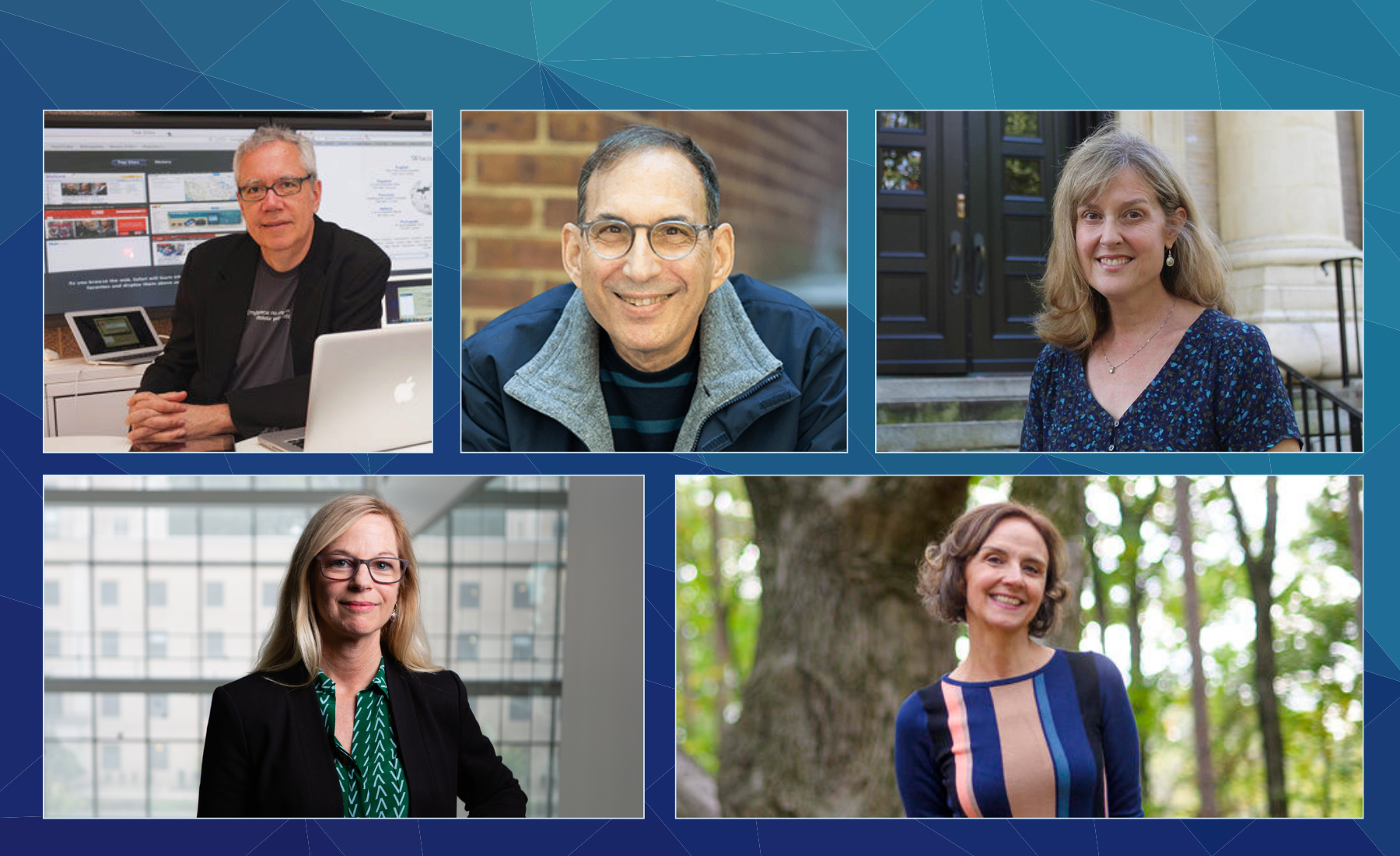
ICR Distinguished Speakers Spring 2024

The Institute of Communications Research will present a Distinguished Speaker Series this spring, showcasing some of the most renowned scholars in the fields of communication and media studies. 

“This is our chance to engage with and glean insights from the thought leaders in our field,” said Mike Yao, director of the Institute of Communications Research and professor of digital media in the Charles H. Sandage Department of Advertising.

Researchers with a variety of expertise will participate in the enriching series, which offers an opportunity to interact with speakers, a keynote talk, followed by a light reception.

Yao encourages others to attend the series to connect, engage, and be inspired by the guest speakers.  

PRESENTERS

Steve Jones

“Don’t Go Chasing Waterfalls, or, Navigating the Streams of Communication and Technology”
February 22: Steve Jones (MS ’84, journalism; PhD ’87, ICR), Distinguished Professor of Communication at the University of Illinois Chicago; current editor of New Media & Society and co-editor of Mobile Media & Communication. Jones’s books have earned him critical acclaim and interviews in national and international media. His research has been funded by the National Science Foundation, National Institutes of Health, Centers for Disease Control, and the Tides Foundation. 

Turow

“Marketers’ Cultivation of Digital Resignation in an AI Media Era”
March 28: Joseph Turow, Robert Lewis Shayon Professor of Media Systems & Industries at the Annenberg School for Communication at the University of Pennsylvania. Turow is an elected Fellow of the International Communication Association and was presented with a Distinguished Scholar Award by the National Communication Association. He has authored 12 books, edited five, and written more than 160 articles on mass media industries. This talk is co-sponsored by the Charles H. Sandage Department of Advertising.

Mary Beth Oliver

“Media-Induced Self-Transcendence: Evidence and New Directions”
April 4: Mary Beth Oliver, Donald P. Bellisario Professor of Media Studies in the Department of Film/Video & Media Studies at Penn State and Fellow and immediate past president of the International Communication Association. She is former co-editor of Media Psychology and associate editor of the Journal of Communication, Communication Theory, and Journal of Media Psychology. Her recent publications have appeared in numerous communication journals. This talk is co-sponsored by the Department of Communication.

Lisa Parks

“The Other Side of the Smart Phone: MEMS Sensors and the Tiny Matters of Mediation”
April 10: Lisa Parks,
Distinguished Professor of Film and Media Studies and director of the Global Media Technologies and Cultures Lab at University of California, Santa Barbara. Parks is a media scholar with a research focus on satellite technologies and media globalization; critical studies of media infrastructures; media, militarization, and surveillance; and environmental media. She is a 2018 MacArthur “Genius” Fellow. This talk is co-sponsored by the Humanities Research Institute.

Nicole Ellison

“Reflecting Identity, Signaling Attention, Shaping Language: Examining Digital Social Practices”
April 25: Nicole Ellison, 
Karl E. Weick Collegiate Professor of Information and Professor of Communication and Media at the University of Michigan, and current chief editor of the Journal of Computer-Mediated Communication. Ellison’s research interests include computer-mediated communication, mediated interpersonal interaction, self-presentation, use of social media in organizations, relationship initiation and maintenance in online contexts, virtual communities, social network sites, online dating sites, educational uses of new technologies, and college access and social media. This talk is co-sponsored by the School of Information Sciences.

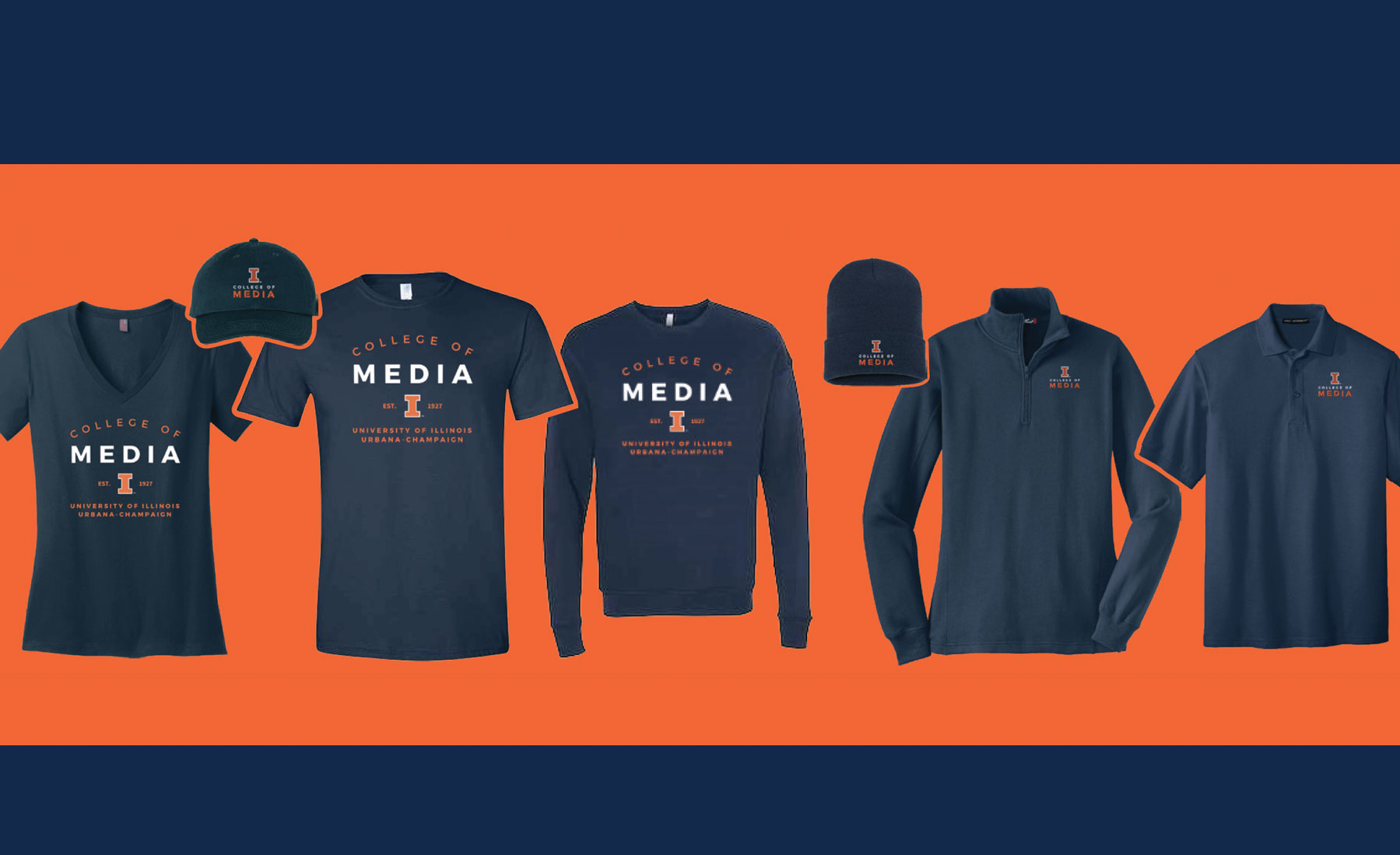
College of Media apparel on sale for limited time


Media apparel shop

Show off your University of Illinois and college pride with branded apparel items featuring the College of Media, Advertising, Journalism, Media & Cinema Studies, and the Institute of Communications Research.

From November 9 through December 4, a College of Media apparel shop will be open with items to purchase including branded sweatshirts, ball caps, T-shirts, beanies, polo shirts, and quarter-zip pullovers. 

Orders will be ready to ship or pick up locally by Monday, Dec. 18. Customers can select shipping via USPS Priority Mail or via UPS Ground shipping, or pick up orders from Dixon Graphics at 312 S. Neil in Champaign (open Monday-Friday, 8 a.m.-5 p.m.). USPS International Priority Mail is available as well.  

To browse the shop, visit https://stores.inksoft.com/ui_media_shop/shop/home

The shop will close at 11:59 p.m. on Monday, Dec. 4.

Alice Ji

Alice Ji

Email: rji3@illinois.edu

Research Interests

My research centers on the psychology of persuasion in digital media, with a particular focus on social media platforms. I investigate how consumers interpret and react to persuasive messages such as advertisements and health-related messages by brands and social media influencers. I am also interested in the effects of misinformation and their mitigation, as well as the impact of LLM conversational agents like GPT models on cognitive processing.

Recent Publications/Presentations

Wise, K., Willis, E., Ji, A., Paltaratskaya, V. (2025, November). Reimagining the Presentation of Important Safety Information (ISI) in Social Media Pharmaceutical Advertising. NCA 111th Annual Convention, Colorado, US. 

Liu, A. Y., Ji, A., Taneja, H., & Nelson, M. R. (2025). Stakeholder-desired audiences: Fans’ 
audience data imaginaries and how they shape industry data practices. Convergence, 0(0). 
https://doi.org/10.1177/13548565251366412

Paltaratskaya, V., Ji, A., Mazumdar, P., & Wise, K. (2025). Beyond Buzzwords: The Development of Large Language Models and Their Use in Advertising and Strategic Communication Research. Journal of Current Issues & Research in Advertising, 1–40. https://doi.org/10.1080/10641734.2025.2498996

Wise, K., Paltaratskaya, V., & Ji, A. (2025). Media choice. In De Gruyter Handbook of Media Psychology. Walter de Gruyter GmbH & Co KG. 

Ji, A., Paltaratskaya, V., & Wise, K. (2025, June). The Effect of Message Fatigue on Visual Attention to, and Elaboration of Mental Health Infographics. Annual Conference of the International Communication Association (ICA 2025), Colorado, US. 

Ji, A., Khowaja, L., Gilloly, K., Luo, H., Oshodi, N., Randolph, Z., Sun, R., Wang, C.-Y., Nelson, M. R. (2025, March). TikTok Made Me Buy It: Breaking Expectations with Shoppable Ads. American Academy of Advertising 2025 Annual Conference, Pennsylvania, US.

Courses Taught

  • ADV 480: Social Media Analytics 
  • ADV 305: Adtech and the Digital World 
  • ADV 150: Introduction to Advertising 
  • MACS 100: Intro to Popular TV & Movies

Awards and Honors

  • 2025 Bart A. Cummings Gift Fund, University of Illinois 
  • 2025 Graduate Student Conference Scholarship, American Academy of Advertising
  • 2024 Fall List of Teachers Ranked as Excellent by Their Students

Related Links

Study: YouTube did not actively direct users toward anti-vaccine content during COVID-19


YouTube

New research led by data science experts at the University of Illinois Urbana-Champaign and United Nations Global Pulse found that there is no strong evidence that YouTube promoted anti-vaccine sentiment during the COVID-19 pandemic. 

The study, published in the Journal of Medical Internet Research, performed an algorithmic audit to examine if YouTube’s recommendation system acted as a “rabbit hole,” leading users searching for vaccine-related videos to anti-vaccine content. 

For the study, the researchers asked World Health Organization-trained participants and workers from Amazon Mechanical Turk to intentionally find an anti-vaccine video with as few clicks as possible, starting from an initial informational COVID-19 video posted by the WHO. They compared the recommendations seen by these users to related videos that are obtained from the YouTube application programming interface and to YouTube’s Up-Next recommended videos that were seen by clean browsers without any user-identifying cookies. 

The team then used machine learning methods to classify anti-vaccine content, analyzing more than 27,000 video recommendations made by YouTube.

Margaret Ng
Margaret Ng.

“We found no evidence that YouTube promotes anti-vaccine content to its users,” said Margaret Yee Man Ng, an Illinois assistant professor of journalism with an appointment in the Institute of Communications Research and lead author of the study. “The average share of anti-vaccine or vaccine hesitancy videos remained below 6% at all steps in users’ recommendation trajectories.”

The initial goal of the research was to better understand YouTube’s famously opaque techniques for content recommendations—going beyond querying the platform’s application programming interfaces to collect real-world data—and whether these techniques funnel users toward anti-vaccine sentiment and vaccine hesitancy. 

“We wanted to learn about how different entities were using the platform to disseminate their content so that we could develop recommendations for how YouTube could do a better job of not pushing misinformation,” said UN Global Pulse researcher Katherine Hoffmann Pham, a co-author of the study. “Contrary to public belief, YouTube wasn’t promoting anti-vaccine content. The study reveals that YouTube’s algorithms instead recommended other health-related content that was not explicitly related to vaccination.”

“The videos that users were directed to were longer and contained more popular content, and attempted to push a blockbuster strategy to engage users by promoting other reliably successful content across the platform,” Ng said.  

 The study also allowed the researchers to examine how users’ real-world experiences differ from the personalized recommendations obtained by querying YouTube’s “RelatedToVideo” application programming interface. This API is designed to help programmers search for related content on the platform or using clean browsers, replicating the experience of a new user visiting YouTube with no search or view history, which is often used to study the platform’s recommendation system. 

The study reports that the watch histories of users significantly affect video recommendations, suggesting that data from the API or a clean browser does not offer an accurate picture of the suggestions that real users are seeing. Real users saw slightly more pro-vaccine content as they advanced through their recommendation trajectories. In contrast, searches performed by the API or clean browsers during the study were drawn toward irrelevant recommendations as they advanced.

“I think one benefit of this study relative to others is that it proposes a relatively lightweight methodology to gather real data on how people navigate through YouTube’s video recommendations,” Pham said. “So unlike the APIs, which will just sort of randomly suggest new links, the users can critically review the links and pick one, which sort of mimics the behavior that many people would use on YouTube in reality.” 

Understanding recommendation systems is important because it promotes transparency and holds them accountable,” added co-author Miguel Luengo-Oroz, a professor at the Telecommunications School of the Universidad Politecnica de Madrid. ”This helps people understand the choices being made for them by platform designers.”

Ng is also affiliated with the Department of computer science, the National Center for Supercomputing Applications, and the Center for Social and Behavioral Science at Illinois. 


Editor’s notes

To contact Margaret Yee Man Ng, call 217-300-8186; email ymn@illinois.edu.

The paper “Exploring YouTube’s recommendation system in the context of COVID-19 vaccines: Computational and comparative analysis of video trajectories” is available online. DOI: 10.2196/49061

View original press release.

ICR welcomes 2023 cohort


The Institute of Communications Research is excited to announce our newest cohort! Please learn more about the students’ research interests below and join us in welcoming them to the University of Illinois College of Media community this fall. For more information, see full student profiles.

Weiting Du

Weiting Du earned his master’s degree in journalism from Michigan State University, specializing in science and environmental journalism, and holds a bachelor’s degree in ecological environmental engineering from Chongqing University. Weiting’s research interests encompass media effects and risk communication under the context of climate change, with a particular interest in climate inactions. In parallel, Weiting explores how contemporary visual imagery represents the complex interplay between human-environment relationships, collective memories, and broader societal issues. Weiting’s past research covers topics such as the social power of photography in China and persuasive health messages.

Yewon Hong

Yewon Hong received her master’s degree in cultural studies/critical theory and analysis from the University of Amsterdam and a bachelor’s degree in comparative literature from Yonsei University. Her research interests include cuteness, aesthetics, affect, game, critical theory, cultural studies, and cultural analysis.


Yanbo Li

Yanbo Li’s research interests lie at the intersection of computational communication and political communication. Specifically, Li is interested in using computational methods to learn about online misinformation and incivility contagion inside and between different countries and the possible factors that foster these processes.


Veranika Paltaratskaya

Veranika Paltaratskaya completed her bachelor’s degree in neuroscience and art history at Emory University, and her master’s in advertising at UIUC. Veranika’s master’s thesis focused on the topic of time perception during media use. Her current research focuses on time perception, message fatigue, and computational approaches to communications research. 


Se II (James) Park

Se II (James) Park received his master’s in advertising and bachelor’s in communication, both from the University of Illinois Urbana-Champaign. Se Il’s interdisciplinary research focuses on persuasive messages in the context of emerging technologies such as Artificial Intelligence, Blockchain, Metaverse, and Web 3.0. He wants to examine the difference in consumer behavior in a more immersive and intelligent virtual. In addition, he worked for the Korean government agency, KOTRA, as a marketing consultant in Chicago and for a blockchain project, WEMIX, as a business development and PR manager in Korea.

Nisa Rahman

Nisa Rahman received her MS in advertising from the College of Media at the University of Illinois Urbana-Champaign and BA in communication from Purdue University – West Lafayette. Nisa’s research interest lies in emerging technologies and their effect on social behavior in the context of health communication. This exploration takes shape through studies utilizing anthropomorphic conversational agents, i.e., “chatbots” to debunk health misinformation and persuade behavior change, as well as the effect of modality in cognitive processing. Nisa is also interested in the intersections between gender presentations and its influence in Human-AI Communication. 

Wei Xiao

Wei Xiao received her MA in communication, culture, and technology from Georgetown University and BA in communication and economics from University of Wisconsin-Madison. She is broadly interested in exploring alternative approaches to the reasoning behind sharing dis/misinformation to debunk dis/misinformation or inoculate people against misinformation. Her research also involves technology policy topics, such as data privacy, free expression, and AI governance. While fighting traditional disinformation, Wei is equally dedicated to addressing the potential ramifications inherent in AI-amplified disinformation scenarios. 

Junwei Zhan

Junwei Zhan received his master’s degree in fine arts from the University of Oregon. Before joining ICR, he explored gardens and vehicles in Japan as media to better understand the condition and method of language/culture. Junwei’s research interests are centered around the relations between subjectivity, governmentality, global media network and the network’s interpretive power, which eradicate the boundary between public/private space, human/posthuman and self-governing/self-enslaving. Besides his academic research on communication and media, he is also a cross-disciplinary artist.

Zixuan Melodie Zhao

Zixuan (Melodie) Zhao earned her BA and MA degrees in journalism from the University of Missouri. She is primarily researching the social and psychological effects of media messages and digital media use. Her specific interests revolve around the interactions between interactive media technologies and individuals’ identity, perceptions of “otherness,” and social relationships, as well as their role in driving social mobilization or polarization. 

Nini Zhou

Nini Zhou’s research interests include critical studies of communication, free labor of women online, and female digital communities.


College of Media
119 Gregory Hall
810 S. Wright St.
Urbana, IL 61801
217-333-2350