Students win Illinois Broadcasters Association Student Silver Dome Award for Television Photojournalism


Students win IBA Silver Dome award

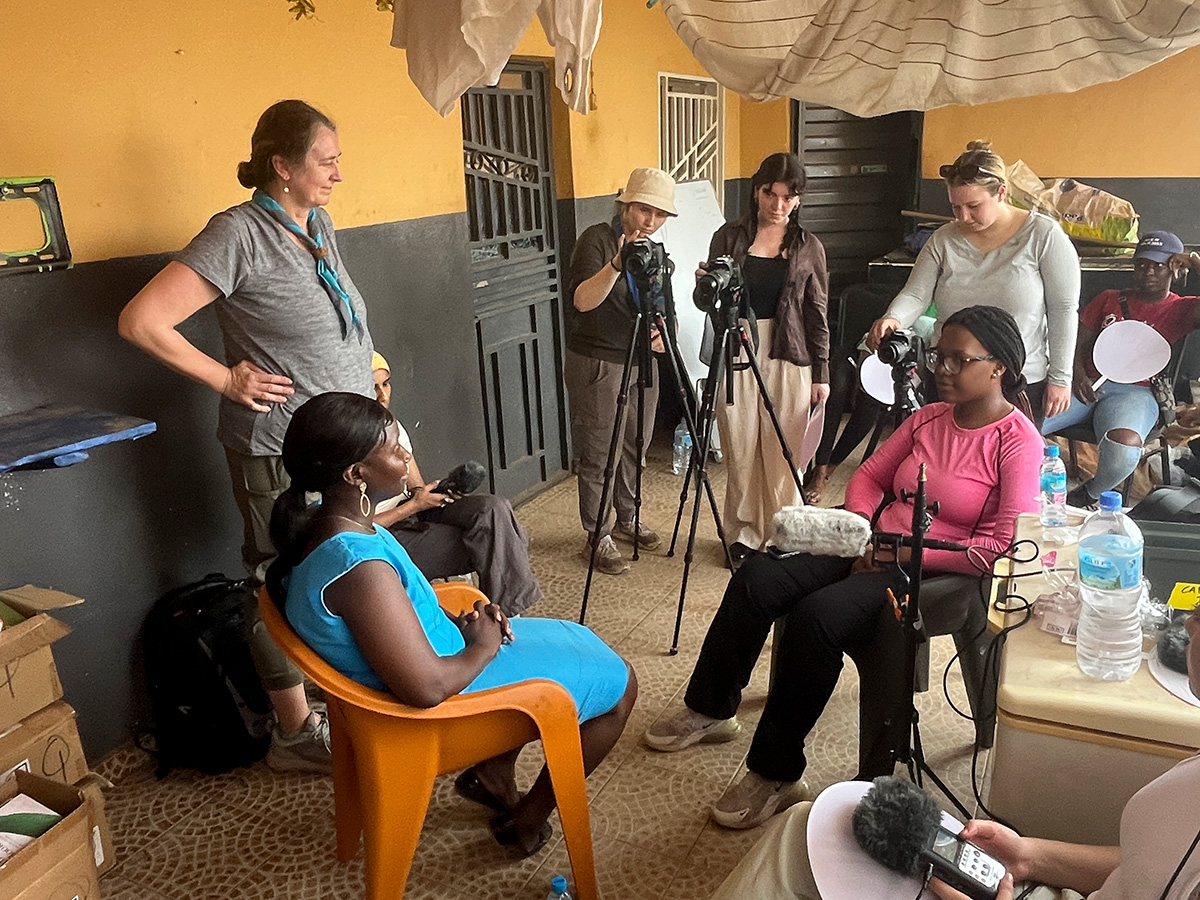
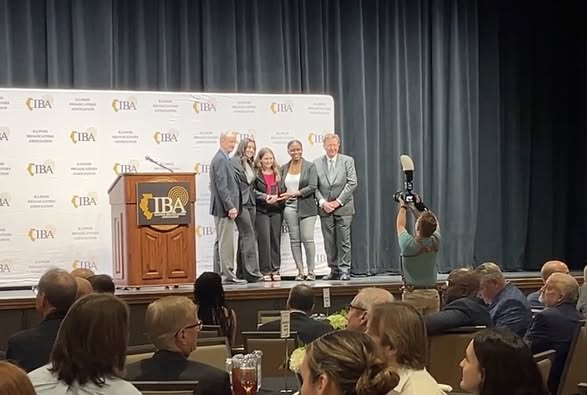
Students from University of Illinois and Fourah Bay College in Sierra Leone won first place in the 2024 Illinois Broadcasters Association Student Silver Dome Award for Television Photojournalism.

Illinois journalism students Maggie Knutte, Faith Lee, Nour Longi, Piper Pascarella, and Stephanie Wayda, and agricultural communications student Elena Cleary, along with Fourah Bay College broadcast journalism students, were selected for their entry “The Women of Uman Tok Reframe Menstruation in Sierra Leone.”

Learn more at a screening and discussion on Thursday, Feb. 13, 2025, on “Uman Tok: A Discussion on Global Collaboration and Period Poverty.”

Learn more about the IBA awards and the student documentary.

Share on social

New album by journalism alum Professor Emeritus Jay Rosenstein makes ‘Illinois Entertainer’ Top 10 lists


Woke Mountain Boys album cover

Jay Rosenstein (BS ’82, Grainger Engineering; MS ’98, journalism; MFA ’17, FAA), professor emeritus of media and cinema studies, recorded and released a new album with his band the Woke Mountain Boys titled Afraid of Leaving Home.The album was recently selected for two top ten Best Albums of 2024 lists from Illinois Entertainer.

Rosenstein plays guitar and harmonica on the 6-track album, in addition to singing vocals, and mixed and produced the album with Alex Poeppel. 

The album was ranked #4 for Local Albums as selected by Illinois Entertainer staff and #10 for journalist Jeff Elbel’s top picks for 2024.

Read Illinois Entertainer’s review of Afraid of Leaving Home.

New experiential learning opportunities for Media students include international, domestic trips


Three experiential learning opportunities are being offered to students this spring including two new trips—one to the nation’s capital and another to two Scandinavian countries—as well as a return visit to the West African country of Sierra Leone.

Washington, D.C., March 19-22

Capitol Hill

Colleen King, clinical assistant professor of journalism and director of the Richard and Leslie Frank Center for Leadership and Innovation in Media, will be taking eight students to Washington, D.C., to visit news outlets and key government locations. 

In addition to participating in newsroom tours, students will receive journalism advice for coursework and career planning; learn to identify local journalism beats; and understand the basics of how professional newsrooms and control rooms operate.

The trip is designed to help students gain invaluable knowledge about U.S. history and the First Amendment to better cover politics, campaigns, and elections, as well as the day-to-day workings of the U.S. government.

Some of the sites the students will visit include the NBC News/MSNBC Washington bureau, the CBS News Washington bureau, Politico, the Albritton Journalism Institute and its website NOTUS (News of the United States), a tour of Capitol Hill, and a visit to the National Archives.

(Update: See photos from their trip to DC.)

Sierra Leone, West Africa, March 14-22

Sierra Leone
Students film in Sierra Leone in Spring 2024. (Photo by Charles “Stretch” Ledford.)

Charles “Stretch” Ledford, associate professor of journalism, and Alison Davis, lecturer in journalism, will lead a return trip back to Freetown, Sierra Leone, with six students in the “Globally Focused Advanced Documentary Filmmaking” class. 

Under the supervision of Ledford, Davis, and Dr. Francis Sowa, dean of communications, media, and information studies at the University of Sierra Leone’s Fourah Bay College, Illinois and Fourah Bay journalism students will continue production of the documentary film Uman Tok: Tailoring Hope, Reclaiming Futures. An early cut of the film won first place in the 2024 Illinois Broadcasters Association Student Silver Dome Award for Television Photojournalism.

The multi-year international reporting project tells the story of Uman Tok, a small, woman-led nonprofit in Freetown, Sierra Leone’s capital city. Uman Tok (“woman talk” in the local language) employs 15 marginalized women at a living wage to produce reusable, washable menstrual pads for schoolgirls around the country who otherwise would not have a means of managing their monthly periods.  

In addition to collaborating on the documentary film, students will be working on a virtual reality experience, a podcast, and an ink-on-paper comic book for readers of any level.  

The media the journalism students produce will be used in an advertising campaign for Uman Tok created by students in the Charles H. Sandage Department of Advertising’s capstone course this spring. 

This year, both Illinois journalism students and their peers from Fourah Bay College will not only work together in the field, but also live together on the same compound, in an environment designed to foster organic collaboration, shared learning, and more authentic and deeply reported stories. 

Read more about the origin of the documentary and the students’ first trip to Sierra Leone in 2024.

Scandinavia Tour, May 26-June 4

Scandinavia

Marisa Peacock, senior lecturer in advertising, is planning a 10-day study abroad trip for 21 students to Copenhagen, Denmark, and Stockholm, Sweden.

Designed to give students a deep dive into the branding, advertising, and cultural strategies of major global companies, the trip will also provide a broader exploration of Scandinavian design, architecture, and culture. 

Students will visit corporate headquarters of iconic companies like LEGO, IKEA, H&M, and UNIQLO to understand their global marketing strategies and meet with alumni working with these brands in fields of design, marketing, and communication.  

Additionally, the itinerary includes visits to renowned cultural and design sites such as the Swedish Museum of Architecture and Design, Nyhavn harbor, and the Louisiana Museum of Modern Art.

Peacock said she pitched the idea of visiting the area due to an interest in Scandinavian design, which blends functionality with simplicity and modernity, and because brands like IKEA, LEGO, and UNIQLO incorporate corporate responsibility with a dedication to diversity, inclusion, and sustainability, which is also an important hallmark of brand building. 

Share on social

Journalism alum Nicole Anderson Cobb shares experience with historical research and theater-making in new book

Dramaturgy and History book

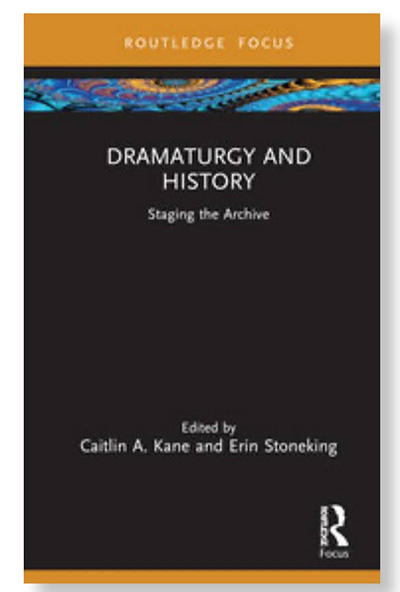
Nicole Anderson Cobb (MS ’16, journalism) shared her experience with historical research and theater-making in the newly released edited volume Dramaturgy & History: Staging The Archive.

Dramaturgy and History provides a practical account of an aspect of dramaturgical practice that is often taken for granted: dramaturgs’ engagements with history and historiography.

Anderson Cobb’s chapter centers on her time as an artist-in-residence at Allerton Park & Retreat Center in Monticello, Illinois, in collaboration with Latrelle Bright. 

“I hope my essay ‘Beyond Land Acknowledgement: Rendering Central Illinois History along the Potawatomi Trail of Death’ will be useful for other scholars, and theater-makers and those interested in remembering complex histories in their local spaces,” she said.

Read more about her experience as Allerton’s artist-in-residence from 2022-2023.

Journalism alum Stuart Lieberman named head of communications at SailGP

Stuart Lieberman (BS ’10, journalism; BA ’10, LAS) was named head of communications at SailGP, overseeing media, public relations, and communications in North and South America.

SailGP is an international sailing competition that features high-performance F50 foiling catamarans, where teams compete across a season of multiple grands prix around the world. 

Before Lieberman joined SailGP, he spent 10 yeas as a freelance writer for the United States Olympic & Paralympic Committee. 

Lieberman also co-wrote a book with U.S. Paralympian Melissa Stockwell, The Power of Choice: My Journey from Wounded Warrior to World Champion.

Cassandra L.C. Troy

Assistant Professor

Affiliations

  • Department of Journalism
  • Institute of Communications Research

Education

  • PhD in Mass Communications, 2024, Pennsylvania State University 
  • MS in Communication, 2018, Purdue University 
  • Graduate Certificate in Strategic Communication Management, 2018, Purdue University 
  • BFA in Communication Arts, 2014, Virginia Commonwealth University 
  • BA in Foreign Language (German), 2014, Virginia Commonwealth University 
  • Certificate in Product Innovation, 2014, Virginia Commonwealth University

Course Specialties

  • JOUR 460: Environmental Journalism

Background

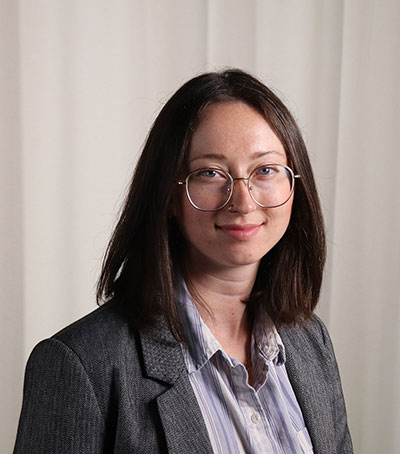
Dr. Troy is an assistant professor in the Department of Journalism. Prior to earning her PhD, she worked in nonprofit and sustainability communication. These professional experiences gave her the opportunity to work on a range of educational and strategic communication efforts, such as explanatory signage design, newsletter writing, social media management, and crisis communication planning. That same work also impressed upon her the urgency and complexity involved in communicating environmental issues like climate change to a wide range of audiences. Ultimately, a desire to better understand how to communicate about pressing environmental topics for constructive societal impact motivated her to pursue a PhD at Penn State and a career in academia.

Research and Creative Endeavor

Dr. Troy’s research focuses broadly on strategic environmental communication. Much of her work focuses on climate change in particular and she is specifically interested in examining positive or solutions-oriented environmental messaging as well as psychological drivers and inhibitors of collective pro-environmental and pro-social action in response to such content. She conducts both quantitative and qualitative research.

Related Links

Cassandra Troy

Contact

217-300-1068

Alumna Cheryl Whitlow Thompson makes lasting impact with career as renowned multimedia journalist


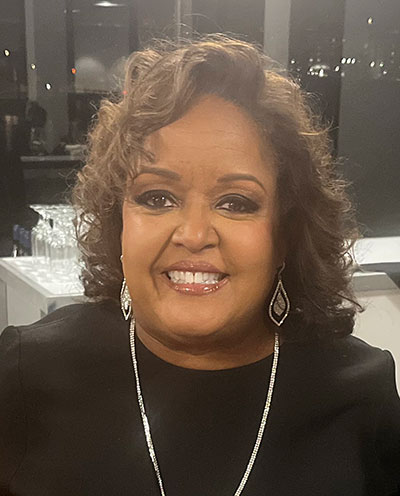
Cheryl Whitlow Thompson (BS ’82, LAS; MS ’84, journalism) will be the first to tell you journalism is not just a job to her—it’s who she is. 

Cheryl Thompson

Digging deep to uncover truths, holding those in power accountable, and asking the tough questions comes naturally to the investigative correspondent and senior editor at NPR who has spent the better part of three decades making a significant impact in the field of journalism—and earning numerous accolades for her exceptional work along the way.

In December, Thompson was honored with the 2024 Washington Association of Black Journalists Legacy Award for breaking barriers and increasing access and opportunities to people of color in journalism. 

Thompson, who also teaches journalism as an associate professor at George Washington University, recently added the title of author to her long list of accomplishments.

In Forgotten Souls: The Lost Tuskegee Airmen, Thompson shares true stories from families of the first Black military pilots and airmen who didn’t return from Europe in WWII.

“I think being a Black woman whose father was a Tuskegee Airman absolutely helped me connect with these families,” said Thompson. Her debut book is set to come out in the fall of 2025.

Thompson was born and raised in Chicago. She joined her two brothers at the University of Illinois Urbana-Champaign and earned a bachelor’s degree in speech communication in 1982. After graduation, Thompson considered going to law school but decided to pursue a master’s degree in journalism after working for a semester at an NBC affiliate in Chicago.

Thompson says she has fond memories of her time at Illinois, especially as a member of the Black Chorus led by the legendary conductor and professor of music Ollie Watts Davis, and as a student of professor of journalism Robert “Bob” Reid, who passed away in 2004.

“My savior was Professor Bob Reid. He was my advisor, and he was my savior. He really cared and had a big hand in whatever success I have had,” she said.

Thompson, who had mostly broadcast experience coming out of college, joined The News-Gazette after graduate school where she began to cultivate her inquisitive nature.

“I just had this sort of curiosity. When I would [work on] stories, I wanted to know more and more and more,” she said.

It’s also where she found another important mentor in John Foreman, long-time editor and publisher who passed away in 2018.

Thompson said she learned a lot from Foreman, including how to dig deeper on a story, and kept in touch with him long after she left the newspaper.

“I sent him every big story I did over the years because I wanted him to be proud and see what I turned into,” she said in this News-Gazette article.  

“I still say what we do is very honorable, and I don’t apologize for it,” she said. “It’s powerful. We can have impact, and we can make a difference.”

Thompson said she would always receive a handwritten note from Foreman in return saying, “I’m proud of you, kiddo”—a gesture she greatly appreciated.

If Thompson’s fire to become an investigative reporter began at The News-Gazette, her post at the Los Angeles Daily News really stoked it.

At the LA newspaper, Thompson spent six months covering the second largest school district in the country, going after stories and breaking news that eventually led to the resignation of the superintendent. Thompson said she was hooked after that.

“That was when it really all started, and I never looked back,” she said.

Thompson, who worked at the Chicago TribuneThe Kansas City Star, and The Gainesville Sun, spent 22 years at The Washinton Post, writing about political corruption, guns and criminal justice, and immigration.

She also served as the Post’s White House correspondent during Barack Obama’s first term, covered the Department of Justice, and was part of a team that won the Pulitzer Prize for National reporting in 2002 and 2016.

“I had a good run. I can’t tell you what an amazing time I had at The Washington Post,” she said.

With a desire to broaden her knowledge as a multimedia journalist, Thompson moved to NPR in 2019 and became the inaugural editor of the station’s investigations team in 2021.

Thompson earned a third shared Pulitzer Prize as the investigative reporting coach on “No Compromise,” a podcast about gun rights advocates that won the 2021 Pulitzer for Audio Reporting. She received NPR’s Public Service Journalism award the same year.

Although Thompson admits today’s era of journalism can lack reverence, she still feels it’s a noble and worthwhile profession.

“I still say what we do is very honorable, and I don’t apologize for it,” she said. “It’s powerful. We can have impact, and we can make a difference.”

Thompson couldn’t begin to count the number of hours she’s spent over the years working on her craft, but she doesn’t mind as long as she’s producing good journalism.

When she’s at home in her office she feels inspired by the more than four dozen national, regional, and local awards that hang on her wall.

“When I think I can’t do something, I just look around the room and say, ‘I got this,’” she said.
Share on social

Alexandre Gonçalves

Assistant Professor

Affiliations

  • Department of Journalism
  • Institute of Communications Research

Education

  • PhD in Communication, Columbia University
  • MSc in Comparative Media Studies, MIT
  • BA in Journalism, Faculdade Cásper Líbero (Brazil)
  • BSc in Computer Science, Unicamp (Brazil)

Background

Alexandre Gonçalves studies the role of social media in the rise of new social movements. He is also interested in the use of computational methods to understand media ecosystems. During his doctorate, he was involved in projects at the Tow Center for Digital Journalism and the Brown Institute for Media Innovation. He also conducted research at the MIT Center for Civic Media. As a Google Journalism Fellow, he worked at the Pew Research Center’s Journalism Project. Before moving to the U.S., he worked in Brazil as a science reporter for mainstream media publications and as a software developer.

Related Links

No posts found.
Alex Goncalves

Contact

217-244-2245

Journalism student partners with Education Justice Project as Humanities in Action scholar


Courtney Dillon

We CU Community Engaged Scholars and the Humanities Research Institute at Illinois selected Courtney Dillon, a senior earning a dual degree in journalism and in sociology, as one of five Humanities in Action scholars to work with community partners throughout the Fall 2024 semester.

The Humanities in Action program, now in its third year, aims to eliminate financial barriers that prevent undergraduate humanities students an opportunity to engage in community projects.

Dillon, who is on the pre-law track, learned about the program from a friend who was previously a Humanities in Action scholar. After doing some research on the program, she found that it aligned with her career goals of community engagement work through criminal or civil rights law.

The School of Social Work’s Community Learning Lab matched Dillon with the Education Justice Project, or EJP, a college-in-prison program that organizes educational programming at Danville Correctional Center through the University of Illinois. 

“I wanted to work with them because I wanted to be a part of helping people beyond serving their sentence, and that’s what I want to do in my career as well,” Dillon said. “No matter how little my task might be, I love the fact that I’m in a position where I can help somebody else. I think that’s amazing, especially to put my areas of study into work.”

Dillon has been able to assist EJP remotely with research to help produce their annual reentry guide, which provides information on housing, employment, healthcare, finances, and other resources for incarcerated individuals, their families, and service agencies across Illinois. Dillon rewrites information to be accessible for people of all backgrounds to comprehend the guide. 

As a Humanities in Action scholar, Dillon also enjoys interacting with the other students in her cohort and learning about the importance of ethical service.

“We really focus on the importance of grounding ourselves in the work that we’re doing and understanding that we are in a state of privilege that we’re able to help somebody else and [we learn] not to take those opportunities for granted,” she said.

Dillon hopes that her work with the Education Justice Project will impact individuals that read the reentry guide.

“If the guide helps just one person, that’s a win for me,” Dillon said. “There are so many people that might be reentering society and just have no idea where to start, and I think this guide is an amazing resource. I love that there’s an organization that dedicates so much time to creating it every year.”

Share on social

Excerpts from ‘Bridging Divides’ series: Engaging with People, Perspectives, and Policies When You Don’t Agree: Lessons from Journalism


As part of the College of Media’s three-part webinar series this fall, “Bridging Divides: Conversations on Media and Disagreement,” faculty from the Departments of Advertising, Journalism, and Media & Cinema Studies led Q&As to explore how productive discussions occur across lines of disagreement and difference. 

Leon Dash and Colleen King

Below, read excerpts from “Engaging with People, Perspectives, and Policies When You Don’t Agree: Lessons from Journalism.” Note: Answers have been condensed for length and clarity.

Panelists: 

  • Leon Dash, Professor and Swanlund Chair, Department of Journalism; 1995 Pulitzer Prize Winner for Explanatory Reporting
  • Colleen King, Clinical Assistant Professor, Department of Journalism; Director of the Richard and Leslie Frank Center for Leadership and Innovation in Media; former Executive Producer for MSNBC’s The 11th Hour with Brian Williams  


King: How do you have all your life experiences and not put them in a story?

Dash: You get used to keeping your personal opinion, your personal reactions out of stories. It’s discipline that becomes a part of you and working as a reporter. And, you know, an editor is not going to let your opinion go past him or her. They’re going to stop you and say, ‘Oh, no, no, you’re giving me your opinion here.’

King: News judgment really cannot be totally objective. So how do journalists approach the selection of stories at times of great polarization?

Dash: Probably from their personal interests. News objectivity is a goal, but as I said, it is very difficult to achieve pure objectivity. But you know when you’re being unfair. And so that was, for me, my measure. Fairness or unfairness. [As for] what stories to select to cover, they almost present themselves.

King: How can the press go about rebuilding trust with audience members, especially younger audiences who maybe aren’t as familiar with traditional news media?

Dash: That’s a good question because [I’m] dealing with a freshman class this semester and I’ve been surprised when they tell me they get most of the information from TikTok.

And I really don’t have an answer to that question. I talk to them and I give them a current events quiz. Some of them do quite well on it. The ones that do well on the current events are reading traditional news outlets. Here the students have access as part of their student fees to The New York TimesUSA Today, and Wall Street Journal. And some of them do take advantage of that and read those papers regularly, not daily, and so they’re well up to the mark on current events.

Others follow traditional social media that they have always followed and they’re not really up on current events. So, I really don’t have an answer for that. I would like to see an answer for that. Maybe this is a part of an evolution that we have to go through as a society.

King: What are some of your big takeaways or advice for students in public affairs reporting?

Dash: It’s important to remain calm and not be defensive or offensive. I’m always telling them you have to have a bit of aggression in terms of advocating for the public, the politicians, and with the people who are elected officials. You must always be polite, and professional, but ask the question that needs to be asked.

If it’s a matter of embezzling money, you ask about it. If you know the amount of money that was embezzled, you cite that in your question and it’s public. So always be prepared to do that, no matter what the reaction of the official or the politician is to your question.


Read excerpts from the other “Bridging Divides” Q&As:

What Does it Mean to Be an Informed Critic?

Reaching Across the Aisle: Advertising and Messaging in an Age of Polarization

Share on social

College of Media
119 Gregory Hall
810 S. Wright St.
Urbana, IL 61801
217-333-2350