Charlie Meyerson (BS ’77, MS ’78, journalism), who creates ChicagoPublicSquare.com was named in the Chicago Reader’s Best of Chicago edition for “Best free daily roundup in your inbox.”
“Square reflects all facets of Meyerson’s rich personality, his ear for news, his eye for finding interesting takes on that news, and his taste for quirky bits of human interest,” wrote Chicago Reader critic Jack Helbig.
Chicago Public Square is an email newsletter that Meyerson began producing in 2017. He has spent four decades as a journalist, working in Chicago newsrooms at various radio stations, as well as at the Chicago Tribune.
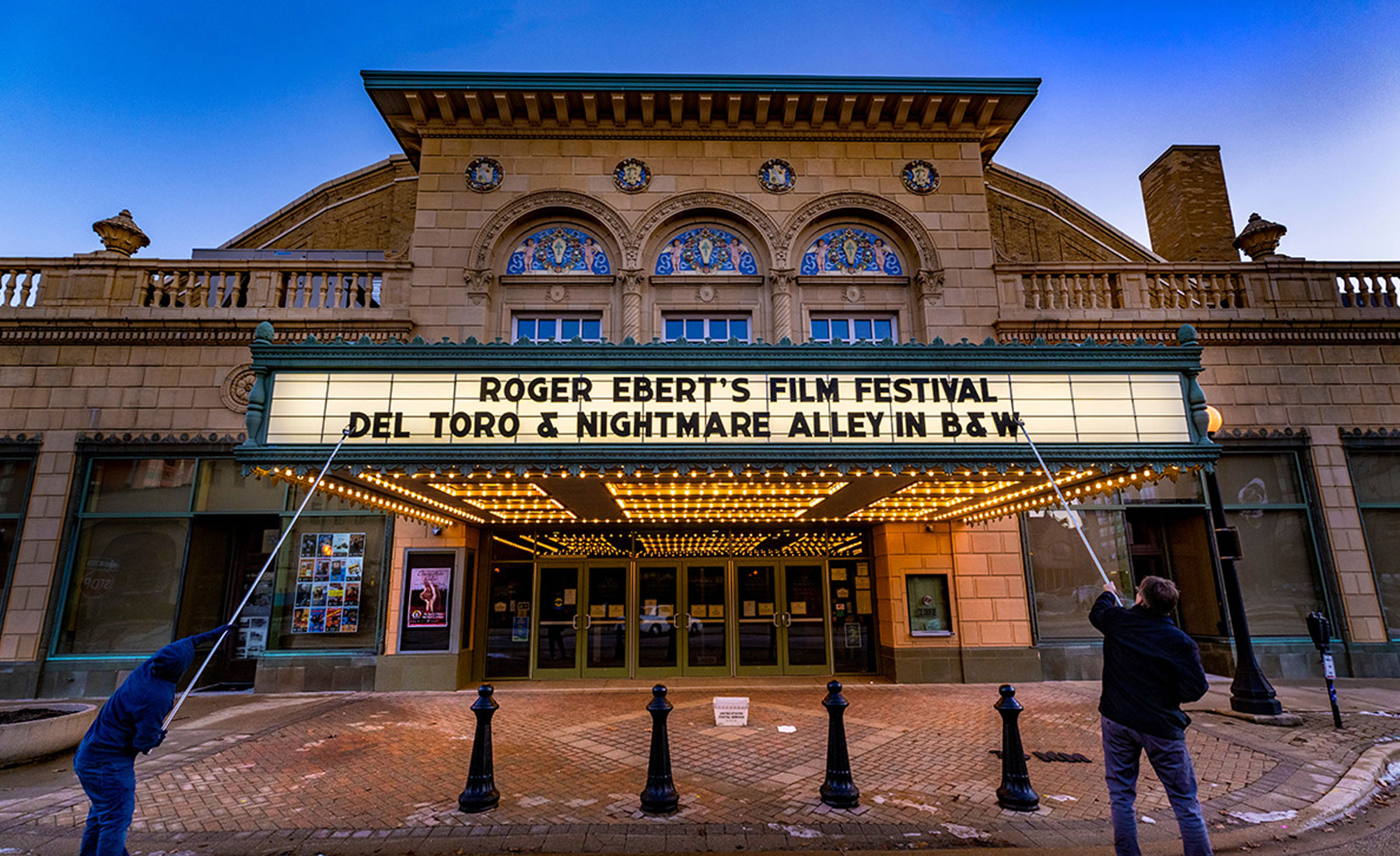
Ebertfest will be held April 20-23 at the Virginia Theatre in downtown Champaign, with related talks and panel discussions at the Hyatt Place in Champaign and at the University of Illinois Urbana-Champaign. The festival is a College of Media event. (Photo by Fred Zwicky.)
The 22nd Annual Roger Ebert’s Film Festival, co-founded and hosted by Chaz Ebert and also known as Ebertfest, announced that director Guillermo del Toro will return to the festival in April alongside screenwriter Kim Morgan with a black-and-white version of their Oscar-nominated movie Nightmare Alley. Director Terry Zwigoff also will attend with his cult classic film Ghost World.
Announced last year prior to the festival’s rescheduling to 2022, directors Azazel Jacobs and Ramin Bahrani are also in the Ebertfest lineup. Jacobs will appear with the movie French Exit and Bahrani with The White Tiger—both recent critically acclaimed movies that audiences did not get to watch on the big screen during the pandemic.
Best known for his Academy Award-winning fantasy films Pan’s Labyrinth in 2006 and The Shape of Water in 2017, del Toro is considered among the most creative and visionary artists of his generation, with a distinctive style showcased through his work as a filmmaker, screenwriter, producer and author. The Shape of Water earned the Oscars for best director and best picture.
“Del Toro is a director with a genuine visual sense, with a way of drawing us into his story and evoking the mood with the very look and texture of his shots,” Roger Ebert once wrote. The director appeared at Ebertfest in 2016.
Recalling his last visit to Ebertfest in 2006, Zwigoff said the festival and Roger Ebert’s legacy are important for filmmakers. “Roger was a very wise and enlightened guy,” Zwigoff said. “If the film was a good one, he didn’t care who was in it, or what the budget was, or who made it. If it was good, he embraced it.”
Festival co-founder and host Chaz Ebert, the wife of Roger Ebert—an Urbana native and University of Illinois Urbana-Champaign journalism alumnus who gained a wide following as a film critic until his death in 2013—said she is excited by the return to an in-person festival this year.
“Watching movies during quarantine and then again afterward reinforced for me how totally different it is to watch movies in the cinema,” she said. “There are some movies that you don’t want to watch on a little screen unless you have to and, even if you have streamed some of these movies, you are going to get a very different experience seeing them at the festival.
“This is certainly the case for Nightmare Alley, where we’ll screen the black-and-white version that represents the filmmakers’ original vision for the film.”
Ebertfest organizers aim for variety in its programming by curating a mix of small gems, independent films and classics—old and new—as well as blending musical performances into the schedule.
The alt-country band Clem Snide will open the 2022 festival, and musical presentations will be part of other Ebertfest movies this year. A silent movie screening of Siren of the Tropics, starring Josephine Baker, will be accompanied by 10 musicians from Renee Baker’s Chicago Modern Orchestra. In addition, the festival will follow other movies on the schedule with live musical performances that will be announced shortly.
Ebertfest will also feature an “audience choice” movie, the Alfred Hitchcock film The 39 Steps. Among Roger Ebert’s all-time favorite movies, the 1935 British film is an early work that puts on display all of the style elements that Hitchcock is known for.
The festival will announce more films and filmmaker guests in the next few weeks.
Ebertfest will be held April 20-23 at the Virginia Theatre in downtown Champaign, with related talks and panel discussions at the Hyatt Place in Champaign and at the University of Illinois Urbana-Champaign.
Passes are available for purchase at $200, including all processing fees. Four passes purchased together are $700. Also available are a small number of University of Illinois student passes priced at $150 each. Passes may be purchased through the festival website or at the Virginia Theatre box office, 203 W. Park Ave., Champaign, 217-356-9063. Updates will be posted on the festival website. Depending on available seating, tickets for individual movies may be available April 1.
Roger Ebert’s Film Festival is an event of the College of Media at the University of Illinois Urbana-Champaign. For additional information, visit http://www.ebertfest.com.
Anyone interested in supporting the event as a festival sponsor may contact Andy Hall, the festival’s project coordinator, at amhall2@illinois.edu.
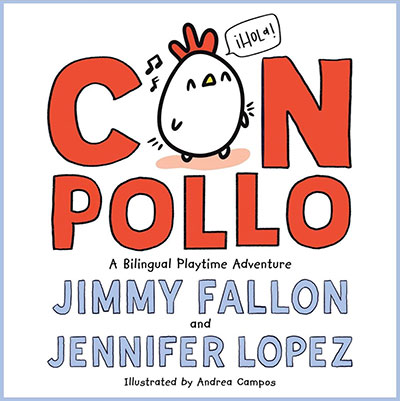
Andrea Campos (BS ’12, advertising) has teamed up with Jimmy Fallon and Jennifer Lopez for her debut picture book. Con Pollo: A Bilingual Playtime Adventure, which was co-authored by Fallon and Lopez, centers around a bilingual chicken, which was brought to life by Campos’s illustrations. Con Pollo will be released on October 11, 2022.
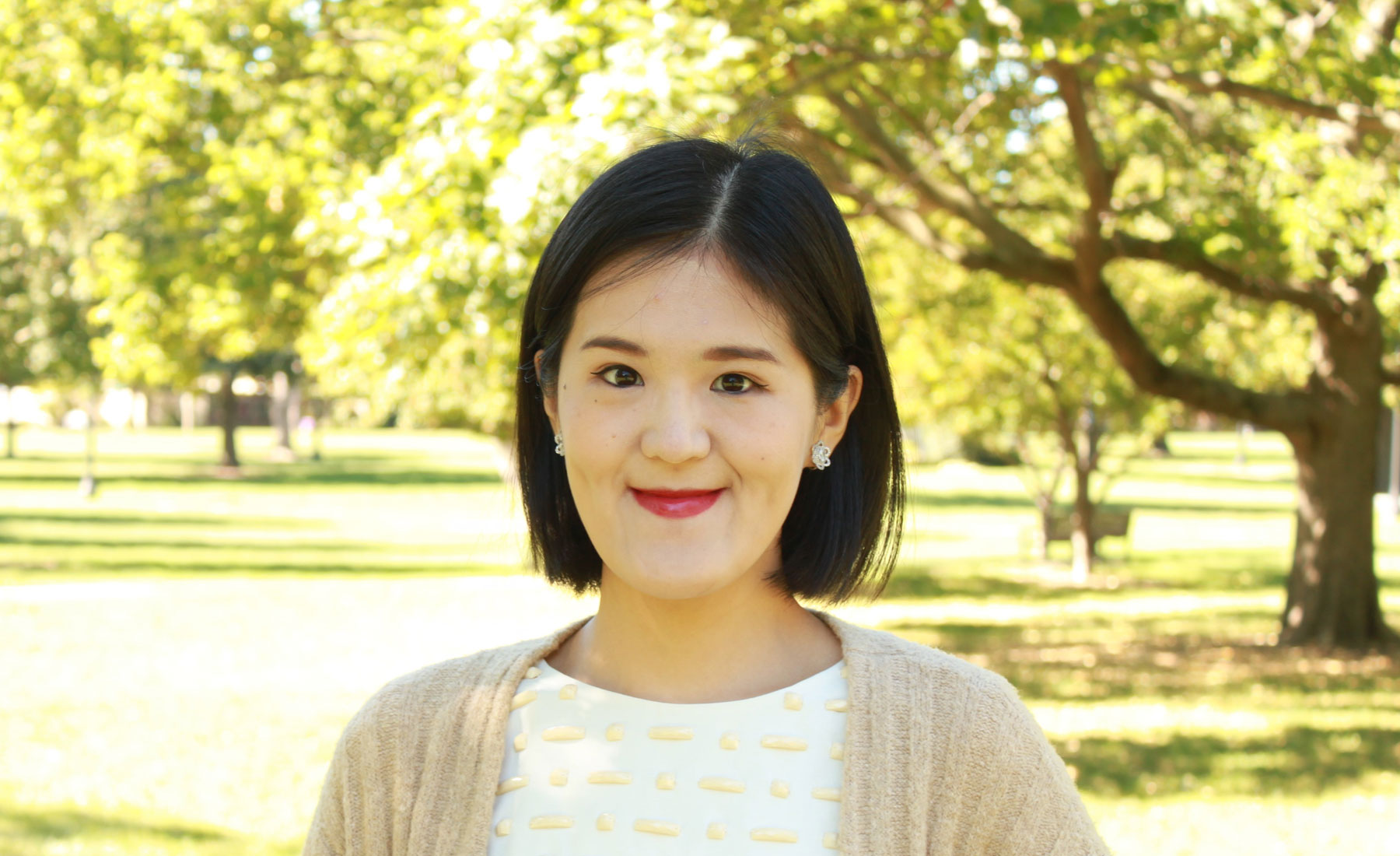
College of Media master’s and doctoral degree alumna Shizue Kishi (MS ’79, advertising; PhD ’83, ICR) received the 41st Shirakawa Shinobu Award from the Tokyo Advertising Association for distinguished contributions to the advertising industry.
Kishi is the first female honoree to win this award, named after the advertising director at Shiseido, the largest cosmetic company in Japan. Kishi will retire on March 31, 2022, after her many years of service as dean of the School of Business at Tokyo Keizai University.
Her publications on media models and communication effects of advertising appeared in Journal of Marketing Research, Journal of Advertising Research, Proceedings of the American Academy of Advertising, as well as in Japanese academic journals. Her book, Contemporary Advertising (coauthored with Hiroshi Tanaka and Kazue Shimamura), was awarded a prize for an excellent textbook from the Japan Academy of Advertising in 2001.
After a successful run as the executive producer for MSNBC’s The11th Hour with Brian Williams, Colleen King decided to shift her career focus from broadcast TV news to education, pursuing her master’s in journalism and mass communication.
King, who joined the College of Media in February, looks forward to providing students with “front-row seats” to professional journalism today as programming ramps up at the Frank Center.
She hopes that students will be able to hear from high-profile speakers, get connected with internship opportunities, and learn from professionals directly through panels, workshops, and symposia.
“I want to fulfill the Franks’ mission of making Illinois a top choice for all future journalists and I want every media professional to think of UIUC graduates as the best potential talent for their newsrooms,” King said.
King, who spent 17 years at news outlets from CBS News to Fox News, has produced political news about such high-profile events as presidential elections, inaugurations, and Supreme Court nominations, as well as other national news stories such as the Parkland, Florida, school shooting and several devastating hurricanes.
Colleen King works in the control room during The 11th Hour.
During her time at The 11th Hour, King helped the show transform from what was supposed to be a six-week, half-hour news digest to a permanent full-hour program that became the number one rated cable newscast in the 11 p.m. time slot.
“I loved my time in television and I am so proud of all of the time and effort I put into that work,” she said. “Some of my most rewarding moments in journalism were working with younger team members and staffers and watching them learn and develop skills that helped them rise through the ranks in journalism, so [the transition] was a natural progression for me,” she added.
After leaving MSNBC in 2019, King earned her master’s degree from Kent State University, concentrating on journalism education. That time allowed her to consider how to apply her newsroom skills in the classroom.
“I can [provide] students with my firsthand experience of being in multiple newsrooms for all hours of the day and all days of the week covering a range of stories,” King said. “I’ve experienced firsthand what they’ll be walking into and I hope that my knowledge and skills can be an asset for them—both in learning how to navigate their roles in journalism and introducing them to professional opportunities that can help them develop their own career paths.”
This semester, King is teaching JOUR 494: Navigating the Job Market. She feels that it is the perfect way to begin her career in education and she is excited to equip and prepare students for their own journalism careers.
“It’s incredibly inspiring to be surrounded by student journalists because they have the drive and passion that makes us remember why we got into this business,” King said.
Students can look forward to more Frank Center programming later this spring. Past panel discussions can be viewed on YouTube:
Sarah Min (BS ’93, journalism) has always wanted to have a public service chapter of her life. After an extensive career as a media executive, Min now focuses on advocating for people of color and women through nonprofit and political work.
“I think we’re in a situation right now where a lot of things in our system are converging to create a climate of hate and polarization,” Min said.
In 2019, she began serving on the board of directors for nonprofits like civil rights advocacy group Color of Change, political action committee EMILY’s List, and engaging with grassroots organizations like the Korean American Community Foundation, with the goal of building civic engagement.
Min saw the power of media in shaping narratives about underrepresented communities.
“Stories—how they’re portrayed and who’s telling them—influence systemic injustice and the biases that we have just as everyday people and consumers of media at scale,” she said.
Min believes it’s important for students to gain real-world media experience as part of their education. In 2020, she established the Daily Illini Journalism Scholarship Fund with her husband Matt Pincus. The fund supports undergraduates in journalism who are committed to working at least one semester at The Daily Illini.
Min said her experiences as a production assistant as well as special projects editor and a reporter for InPrint at The Daily Illini, where she made lifelong friends, were some of her most fun and formative years.
“I’m grateful for that opportunity of being able to learn in an academic setting, but then simultaneously being able to put it into practice,” she said. “[The Daily Illini] was not just a club in the way that we were doing something together, but we also produced something that everybody read every day.”
Min credits the College of Media for facilitating industry connections that launched her career. As a student, Min was drawn to magazine journalism, and was encouraged by journalism mentors Dana Ewell, Jo Thomas, and Bonnie (Bellew) Layton.
“I was fortunate to have mentors who understood the career I wanted, and people who coached me along the way and connected me,” Min said.
Her career began in New York City at Glamour magazine, where she began as an editorial assistant. She held managing editor positions at other magazines including Vibe and Domino, which she helped launch. Min also was president of the publishing company McSweeney’s, founded by fellow journalism alum and author Dave Eggers (BS ’02).
Then, with the rise of digital media and smartphones, Min said “the world changed.” She became executive vice president for marketing and corporate development for ScrollMotion, a mobile enterprise technology company.
Min’s career in for-profit media ended with her time in media consulting, working with companies such as HBO and Penguin Random House.
Min said she recognizes the role that journalism and communications plays in trying to address issues like AANHPI racism.
“I think it’s all our responsibility to be able to tell our own stories, to help other people tell our stories, and to understand our stories,” Min said.
Through the President’s commission, she hopes to bring her professional and personal experience to her role as co-chair of the Data Disaggregation Subcommittee, which will expand the collection and use of disaggregated data at the federal, state, and local levels on AA and NHPI communities, and facilitate improved research on policy and program outcomes for AA and NHPI communities.
“I am honored to be among such a diverse group of leaders who have dedicated much of their lives to improving economic opportunity, environmental health, and equity of AANHPI and all Americans,” she said.
The College of Media at the University of Illinois Urbana-Champaign is excited to announce that the Roger Ebert Center for Film Studies will officially launch this year, with programming to begin in Fall 2022.
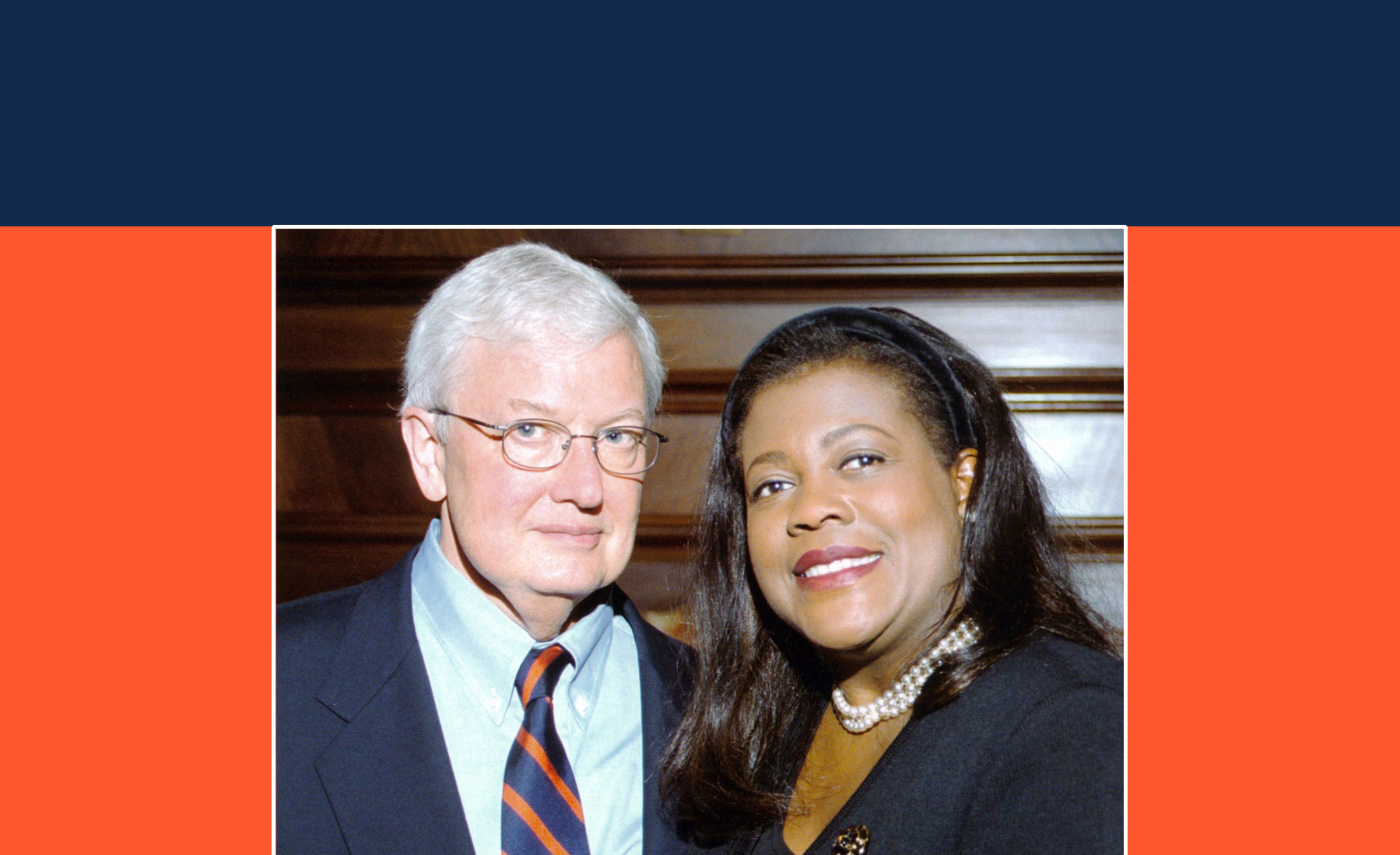
Thanks to gifts totaling more than $5 million from a collection of donors—inspired by a lead gift from Roger and Chaz Ebert (pictured at right)—funding will support robust annual programming, including the Ebert Symposium, Ebert Lecture, and a screening series.
The famed Roger Ebert, who died in 2013, was an Urbana native, a University of Illinois journalism alumnus (BS ’64), a longtime film critic for the Chicago Sun-Times, and co-host of numerous televised movie review shows. He was the first film critic to win a Pulitzer Prize and the first film critic honored with a star on the Hollywood Walk of Fame.
“Unlike many centers on film studies, which focus primarily on the skills of making a film, Roger’s Center will also focus on analysis and study of films, the state of the industry, and the impact of film on individuals and society for personal and social change,” said Chaz Ebert, CEO of Ebert Digital LLC and cofounder of Ebertfest.
“This new center will undoubtedly elevate the University of Illinois and the College of Media in the discipline of film studies,” said Dean Tracy Sulkin. “We are eager to realize the Eberts’ vision of making Illinois the place that inspires generations of students and scholars and are grateful for the generosity of those who are supporting us in making this happen.”
A faculty member from the Department of Media & Cinema Studies will be appointed director of the Roger Ebert Center for Film Studies. The director will coordinate event programming, Ebert research grants and travel grants for film studies, the Ebert Fellows Program for undergraduate students, and equipment and operations support for the teaching of film production.
“Through its support of engaging research, production, and public lectures and discussions, the Roger Ebert Center for Film Studies will enrich experiences and facilitate connections, especially for our students and faculty in media and cinema studies,” said Professor CL Cole, head of the Department of Media & Cinema Studies.
Special kick-off events will be scheduled during the 2022-23 academic year, and, in collaboration with the Spurlock Museum, the Knight Auditorium will be outfitted with new equipment to create a first-rate screening space for campus.
When the Eberts established the endowment for the center in 2009, Roger said: “The University of Illinois is deep in my heart as a great institution. It informed and enriched me. Although there were no film courses when I was an undergraduate, it nevertheless guided me in my lifelong love of film.”
The University of Illinois is honored to celebrate Ebert’s legacy through this new center.
If you wish to contribute to the center, you can give online and select “Roger Ebert Center for Film Studies” under Champion Innovation in Media Research & Collaborations.
For media inquiries, please contact Holly Rushakoff at the College of Media at (217) 333-3949 or media-news@illinois.edu.
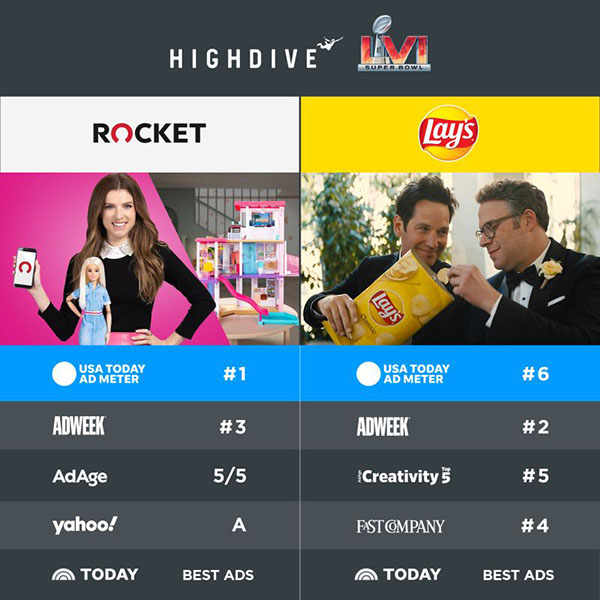
Advertising alum Patrick Burke (BS ’95), executive creative director of the Chicago-based ad agency Highdive, has once again topped the charts with award-winning Super Bowl ads. His team created both the Rocket Mortgage commercial and the Lay’s potato chip commercial, earning the #1 and #6 spots on the USA Today Super Bowl Ad Meter poll.
He got the #1 and #2 spots for Rocket Mortgage in 2021 and the #5 spot for them in 2020.
With Rocket Mortgage this year, Burke served as creative director, overseeing a team. His role on the Lay’s ad was more hands-on.
Burke told Adweek that the team starts each project like any other assignment by getting to one single insight that can drive the creative. Read his interview.
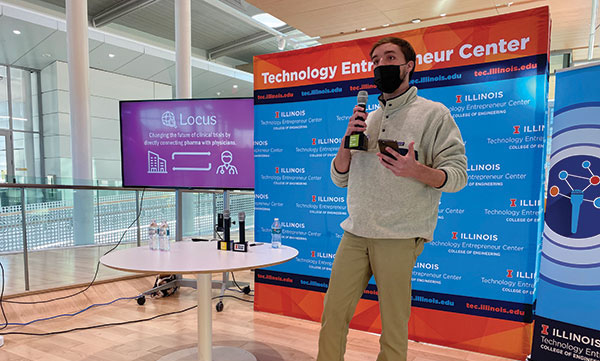
In Fall 2021, computer science + advertising sophomore Carter Smith practiced presenting his business concept at SocialFuse, a campus pitching and networking event. He’s working on a platform to give pharmaceutical companies a way to identify and recruit participants for clinical trials using deep learning.
Smith was inspired by family members who work in clinical trial administration.
“Our conversations [about the patient recruitment process] led me to think about how much more efficient the process could be if pharmaceutical companies and physicians were brought together in one place, which was the beginning of Locus,” he said.
“SocialFuse was a great place to share what started as an idea, receive feedback on the way it was conceptualized, and shape my goals for the project,” Smith said. “It was a really exciting atmosphere and gave me a chance to connect with many entrepreneurial students on campus, as well as leaders of University incubator programs.”
After the experience of pitching his idea, Smith is now focusing on research and implementation of state-of-the-art natural language processing and data analysis methods.
Smith chose CS + Advertising because he wanted to learn from two prestigious programs at Illinois that will prepare him for many intriguing career opportunities.
“Learning technical and creative skills as part of two fantastic communities is really a one-of-a-kind experience,” he said. “A lot of my comfort with creating new ideas is because of the CS + Advertising curriculum.”
Leona Yi-Fan Su, assistant professor in the Charles H. Sandage Department of Advertising, is interested in how humor can help people engage with science.
“Science is thought of as serious,” Su said. “So you can think of humor as a way to catalyze that and make people get interested in science and be more willing to interact with science and scientists.”
While humor has been extensively studied in fields like advertising and marketing, she said, its role in science communication is less known.
Su is a co-principal investigator on an NSF-funded project that was awarded $750,000 in 2019 to examine the effectiveness of using humor for communication about science, particularly on social media. Sara Yeo, associate professor at the University of Utah, is the principal investigator, and the other co-principal investigator is Michael Cacciatore, professor at the University of Georgia.
“It’s important to keep in mind that humor plays a role, but different types of humor can play differently on different social media platforms and when communicating about various issues,” Su said.
Humor is often thought of as a simple construct, Su said. But really, it has a range of different types and techniques, such as benign versus aggressive humor. She also noted the differences in online culture between Twitter and Instagram.
In a recently published article, Su and her coauthors reported that wordplay and satire were positively linked to the number of likes and retweets a Twitter post received. On the other hand, anthropomorphic humor—attributing human characteristics to animals or objects—was negatively linked to the presence of comments, and humor was not linked to user engagement on Instagram.
Scientists and communicators have ample opportunities to interact with the public online, Su said.
“I think it’s important to encourage scientists to share their work with the public and to help with public engagement,” she added, and noted that her work can help them select message strategies.
Su’s broader interest is in how social media and other digital media change people’s perceptions and understandings of science. This also includes looking at the marketing techniques and brand communication strategies used on digital media by agricultural and technology businesses. For example, as a principal investigator, she is leading a project at the Center for Digital Agriculture that analyzes tweets about an emerging food technology, with the aim of understanding branding strategies and public opinion.
Above all, Su said, a key aim of her research is to bridge the gap between the general public and science.
The public should not be viewed merely as passive information receivers, Su said. That is, people don’t often make decisions solely on the facts presented to them.
It’s a common misconception that people will be more supportive of science if they “are more knowledgeable about science,” she said, but in fact, their attitudes toward science can also be affected by heuristic cues such as their politics and other predisposition factors.
Having earned her bachelor’s and master’s degrees in chemistry, Su changed her academic focus after realizing she was more interested in understanding how science is communicated.
“I feel like there’s a gap [within] science communication,” she said. “When I was a scientist, I realized there are times you feel like what you are doing is just a language of your own.”
Su hopes her research will not only help scientists, but anyone who has to communicate complex topics.
“I do hope that some of our findings here in [science] communication can actually be applied or extended to other fields,” she said. “We have to know how messages can be more effectively communicated.”



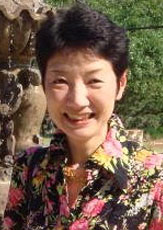
 College of Media master’s and doctoral degree alumna Shizue Kishi (MS ’79, advertising; PhD ’83, ICR) received the 41st Shirakawa Shinobu Award from the Tokyo Advertising Association for distinguished contributions to the advertising industry.