August 20, 2025 | Sharita Forrest, University of Illinois News Bureau
Teachers and high school students live in vastly different media worlds, and that’s one of several digital divides that undermine the efficacy of state-mandated media literacy instruction in Illinois high schools, a recent study suggests.

The researchers—Institute of Communications Research doctoral student Sakshi Bhalla and Michelle Nelson, professor and head of advertising, both of the University of Illinois Urbana-Champaign; and Michael A. Spikes, director of the Teach for Chicago Journalism Program at Northwestern University—interviewed 20 educators from across the state of Illinois about the nature and challenges of media literacy education in their schools. The findings, published in the Journal of Media Literacy Education, indicate that these efforts are undermined by differing media choices, skills, and perceptions of media literacy, as well as socioeconomic and political disparities.
Under a recent Illinois law, Public Act 102-0055, public high schools are required to provide at least one unit of media literacy instruction. However, a significant hurdle to effective instruction is the digital divide between the media experiences of teachers—whose media experiences are based on legacy media such as television and social media platforms with less relevance to youths, such as Facebook—and those of their students, whose worlds revolve around digital and social platforms such as TikTok and Snapchat, the researchers said.
“We discovered that there are a lot of differences in how teachers and students access the media, whether it is in terms of the platforms or more structural determinants such as teachers getting news from mainstream news media, for example, and students getting news from TikTok or partisan commentators on YouTube,” said Bhalla, the first author of the paper. “To foster meaningful media literacy, we must consider the role of students’ lived experiences, while extending lessons on media access, evaluation, and creation across a stratified population.”
Recruited from different regions of Illinois, the educators in the study represented a diverse group in terms of school size, socioeconomic profiles, and participants’ disciplines, which included art, English, and library sciences. Participants were interviewed about their awareness of the Illinois law, their understanding of the aptitudes that constitute media literacy, the challenges of teaching the subject in their schools’ settings, and the resources they need to support instruction, Nelson said.

Because the state mandate was passed without providing resources or much training, some teachers felt constrained because they did not want to navigate into political waters, and they were left wondering what to do.
Michelle Nelson
Professor and Head of the Charles H. Sandage Department of Advertising
The Illinois law, which took effect at the beginning of 2022-23 school year, defines media literacy as “the ability to access, analyze, evaluate, create, and communicate using a variety of objective forms, including print, visual, audio, interactive, and digital texts.”
However, the researchers said that this definition of media literacy presumes a single, shared media experience that is no longer accurate, and “the idiosyncrasies of unique media use—particularly in social and digital media—mean there may be no ‘common ground’ upon which to analyze, evaluate, or create.”
Accordingly, some teachers said they were unfamiliar with the platforms used by their students and relied on their pupils to teach them how to use these technologies, while others struggled to respond when students mentioned media or commentators they used for news and information.
Nearly half of those in the study worked in schools where at least 40% of the students were low income, and the researchers said that students’ socioeconomic profiles determine whether students are taught basic functional skills or higher-level analytical skills. In low-income schools, instruction focused on building functional skills such as keyboarding and other technical proficiencies associated with jobs, whereas teachers in more affluent school districts said that their curricula focused on higher-level skills such as critical analysis of the media landscape and assessing media’s credibility and accuracy.
With few resources for planning course content, some teachers based instruction on current events, with students discussing controversial issues such as gun violence and the war in Ukraine.
“Because the state mandate was passed without providing resources or much training, some teachers felt constrained because they did not want to navigate into political waters, and they were left wondering what to do,” Nelson said. Teachers grappled with maintaining neutrality during class discussions, which they said were often “hijacked” by students’ emotional responses to particular issues based on the types and political leanings of the media they consumed, along with those of the students’ parents and the broader community.
“Students are discovering themselves through different political ideologies. And teachers found students to be a lot more political following the 2016 presidential election, issues surrounding COVID-19, and movements such as Black Lives Matter and Blue Lives Matter, and how all of these things were entering the world of emerging adults,” Bhalla said.
But when teachers pointed out fallacious information in the media or pointed out credible sources to correct misinformation, they said their pupils perceived them as biased or responded in ways that indicated they were unconvinced by facts.
“Those in the study also struggled with the complexities of defining right-leaning or left-leaning media and evaluating media bias, because it’s multidimensional and changes with every article, news story, and political event,” Bhalla said.
Despite these many challenges, most of the teachers in the study believed that teaching media literacy and discussing controversial topics in today’s polarized climate are important. However, to be effective, media literacy education in Illinois schools must understand the media world that young people inhabit; provide better resources for them, their teachers, and schools; and provide learning for all students, honing functional skills as well as higher level proficiencies, the researchers said.
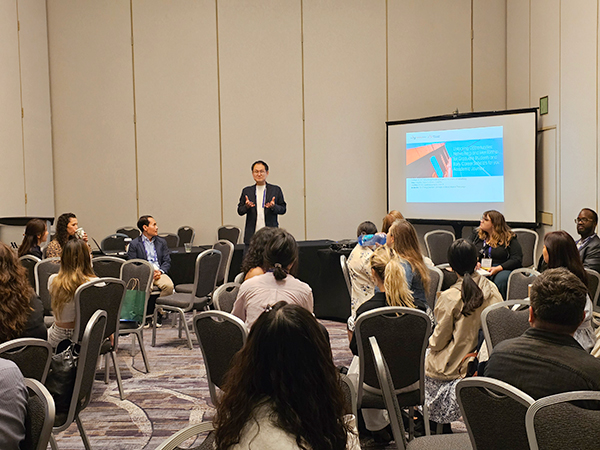
The team used their findings to develop media literacy workshops for Illinois teachers during the summers of 2022 and 2023 through the Initiative for Media Education Inquiry and Action. An initiative of faculty and students in the College of Media and College of Education, IMEDIA supports teachers in integrating media education into their classrooms. “We had participants work in groups to create lesson plans and then share those with other people, so when everybody left, we hoped that they would have at least one lesson that they could implement the following school year,” Nelson said.
Editor’s note:
To reach Michelle Nelson, email nelsonmr@illinois.edu.
To reach Sakshi Bhalla, email sakshib3@illinois.edu.
The paper “Classroom contexts: Teachers talk teaching media literacy” is available online or from the News Bureau.
DOI: 10.23860/JMLE-2025-17-2-3
Share on social