A One-Man Telemundo on TikTok


You’re seeing some of the same trends that we see in the English-speaking community, but they’re much more pronounced in the Latino community, especially the immigrant community.

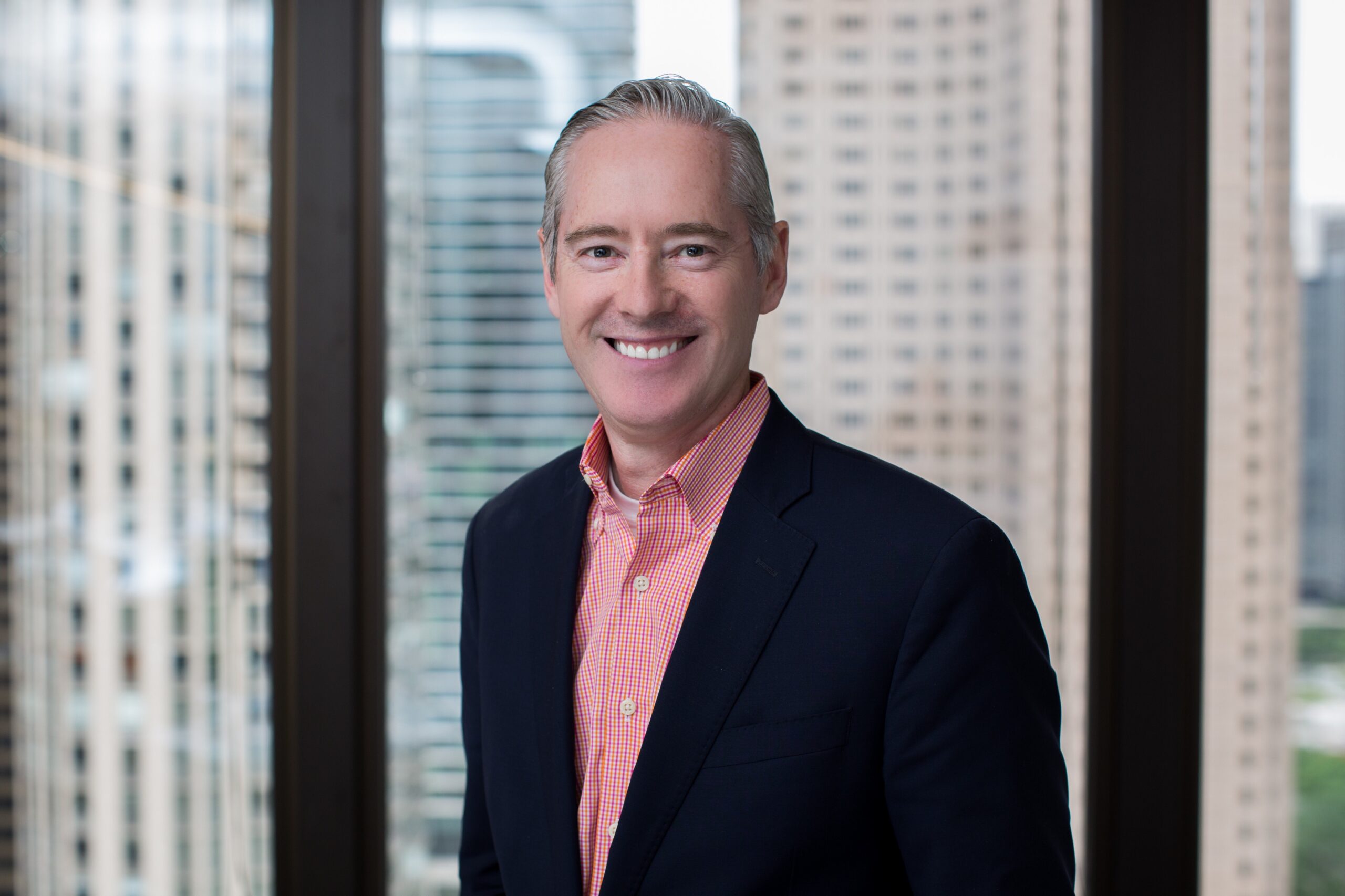
Melita M. Garza

Melita Garza, associate professor and Tom and June Netzel Sleeman Scholar in Business Journalism, was quoted in a New York Times article about Carlos Espina’s social media influence in the Latino community regarding political and immigrant issues in the United States. 

Garza said Latinos are tuning in less to legacy Spanish-language television networks like Telemundo and Univision and turning more to social media for news.

“You’re seeing some of the same trends that we see in the English-speaking community, but they’re much more pronounced in the Latino community, especially the immigrant community,” she said.

CU-Citizen Access News Outlet Gets Students Their Clips, and the Community Their News


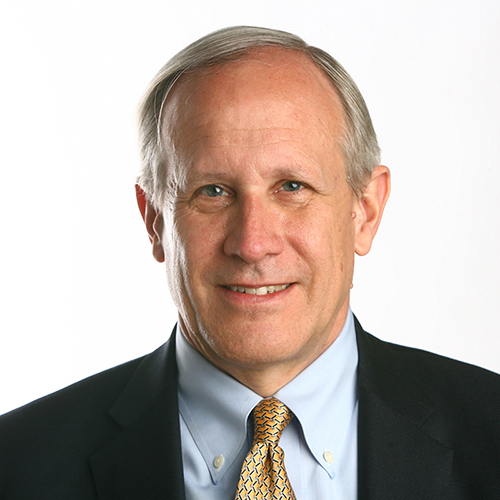
Brant Houston

If you pick up the 2023 book Changing Models for Journalism by Brant Houston, Knight Chair Professor in Investigative and Enterprise Reporting in the Department of Journalism, you would read about the collapse of traditional media and the changes in the news landscape over the past decade, written by an award-winning journalist who has spent years researching journalism models.

You would learn about the digital age, blogging, nonprofits, investigative centers and the rise in university-led student reporting programs—which is fitting because Houston founded his own such program in 2009 at the University of Illinois Urbana-Champaign. The watchdog community reporting outlet, CU-CitizenAccess, is run entirely by him and his managing editor, Dylan Tiger, as well as a cadre of student journalists.

Journalism alum, film projection pioneer Bob Endres passes away

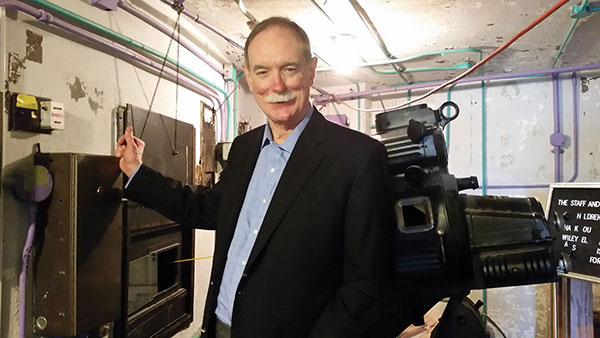
Endres

Robert “Bob” Endres (BS ’62, MS ’63, journalism), a pioneering figure in film projection and a generous University of Illinois donor, passed away on June 25, 2024. He was 85.

During college, Endres worked at WILL as an engineer and a film critic. Endres said the valuable experience he gained at WILL served him well in his first job after college as a radio talk show host and DJ in his hometown of Streator, Illinois.

Endres would go on to work as head projectionist at the Kankakee Theater until moving to New York City in 1974 to fulfill a lifelong dream as head projectionist at Radio City Music Hall. In 1999, he became a projection technician in Dolby’s New York City screening room where he worked for the remainder of his career. 

Endres was a member of the Society of Motion Picture and Television Engineers and worked as a projectionist for advertising agencies, film laboratories, and movie studios. He also acted as background projectionist for CBS on the television shows Search for Tomorrow, As the World Turns, and Captain Kangaroo. 

His career highlights include Abel Gance’s Napoleon, with its three-screen triptych at Radio City; the 25th anniversary celebration of the Metropolitan Opera; running “dailies” screenings for Sydney Lumet on seven of his pictures, including his last; and working for director Otto Preminger in his home screening room in Manhattan. 

In 2017, Endres created the Robert O. Endres Endowed Internship at Illinois Public Media to support student internships with WILL. Since it began, the fund has helped a total of seven Media students further their education and gain real-world experience through internships.

Endres was named a member of the President’s Council, the University of Illinois Foundation’s donor-recognition program for those who give at the highest levels (totaling $50,000 or more) and a member of College of Media’s Dean’s Society, for donors who give $10,000 and above.

Read his obituary.

Read his essay “25 Years at Radio City.”

How the power of Minions and Gen Z propelled the ‘Despicable Me’ franchise


You note your popularity specifically when you get internalized into meme culture.

Carrie Wilson-Brown

Carrie Wilson-Brown, a lecturer of media and cinema studies and of advertising, was quoted in a Los Angeles Times article about the cross-cultural and cross-generational appeal of the Despicable Me movie franchise, and its fame beyond the film.

“You note your popularity specifically when you get internalized into meme culture,” Wilson-Brown said. “In terms of Despicable Me and the Minions specifically, all of a sudden, they kind of transcended out of the film and into internet culture.”

Media faculty, students present research at 2024 International Communication Association conference


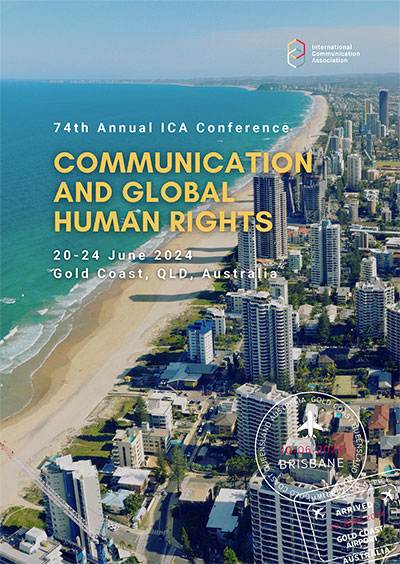
Faculty, graduate students, and recent alumni from the College of Media co-presented 16 topics of research at the 74th annual International Communication Association Conference—the largest academic conference for communication scholars—on June 20-24, 2024, in Gold Coast, Queensland, Australia. The ICA aims to advance the scholarly study of human communication by encouraging and facilitating excellence in academic research worldwide. 

ICA Conference Cover

This year’s conference theme addressed “Communication and Global Human Rights.” Media presenters included faculty in the Institute of Communications Research, the Charles H. Sandage Department of Advertising, and the Department of Journalism; graduate students in the MS Advertising program; and doctoral students in the Institute of Communications Research PhD program. 

Media research presenters and presentations are listed below. (Note: Presenters/authors from other units or institutions are not included. Please see the ICA conference program for full author listings.)

Theme: Environmental Risk and Science Communication
“Satire and Perceived Trustworthiness in Communicating About Renewable Energy”

  • Leona Yi-Fan Su, Assistant Professor, Advertising and ICR
  • Jennifer Shiyue Zhang, ICR student

Theme: Crisis Communication
“Public Engagement in an Era of Misinformation: Examining Corporate Responsible and Ethical Communication on Twitter”

Yanbo Li, ICR student

Theme: Continuing Effects and Practice of Stereotypes in Intercultural Communication
“Effects of Chinese Female Images in Controversial Advertisements on Audience Attitudes and Purchase Intention”

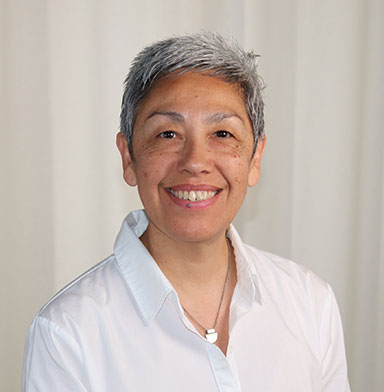
  • Ruiheng (Rachel) Sun, MS Advertising student (pictured below)
Rachel Sun
Rachel Sun

Theme: Hello Chatbot! Can We Talk?
“How Conversational-Agent Modality Affects Charitable Behavioral Intentions: The Roles of Communication Style and Anthropomorphism”

Theme: Stigma, Infodemic, and Social Media
“Unmasking the COVID-19 Infodemic: An In-Depth Examination of Information Dissemination and Misinformation Propagation on Twitter During the COVID-19 Pandemic”

Theme: Information Systems and Health Communication
“Combating Optimistic Bias: Evaluating the Role of Self-Focused Augmented Reality in Enhancing E-Cigarette Risk Perception Among Users”

  • Lizi Ma, MS Advertising alum (December ’23)

Theme: Information Systems and Health Communication
“Understanding (Counter-) Persuasive Effects of Personalized Health Messages Through Psychological Reactance Theory: Privacy Intrusion as a Freedom Threat”

Theme: Journalistic Acts on Social Media
“The Journalists’ Exodus: Navigating the Transition From Twitter to Other Alternative Platforms”

Theme: Navigating New Visibility That’s Feline Perplexing: Examining Emerging Dynamics around Data and Disclosure
“A Picture Is Worth a Thousand Doubts: The Counterintuitive Impact of Chat Log Screenshots”

Theme: Information Systems and Persuasive Effects
“Recall or Perception? Social Media Engagement Metrics, Perceived Social Endorsement, and Perceptions of Message Credibility”

Theme: Global Communication: Marco and Micro Perspectives
“Relational Surveillance Through Alipay Within the Localized Chinese Context”

  • Ran Ju, ICR alum (PhD ’23)

Theme: Information Systems and AI
“Playing Hide and Seek With Algorithms: Investigating Digital Media Users’ Algorithm Refinement Behavior”

  • Ewa Maslowska, Associate Professor, Advertising and ICR
  • Jiwon Oh, ICR student
  • Jiyeon Chang, ICR student

Theme: Algorithms, Social Media and Online Engagement
“Analyzing the Political Leanings of YouTube Recommendations in Brazil: A Network-Based Approach Using YouTube Audience on Twitter”

Theme: Information Systems and Methodological Considerations, Science, and Climate
“Extending Message Framing to Virtual Space: An Experimental Study on the Impact of Self-Focused vs. Non-Self-Focused AR Embodiments on Vaping Risk Perceptions”

  • Mike Yao, Professor and Director of ICR, Advertising and ICR

Theme: Information Systems at Work
“Targeting Against Disinformation: The Effect of Microtargeted Corrections on the Impact of Fake News”

Melodie Zhao
Melodie Zhao

Theme: Information Systems in the Social Context
“Unraveling the Impact of User-Generated Content and Producer-Generated Content on K-Pop Fan Identity and Motivations”

  • Zixuan (Melodie) Zhao, ICR student (pictured at right)

Share on social

Derek Long takes on history of Hollywood film distribution in his first book, ‘Playing the Percentages’


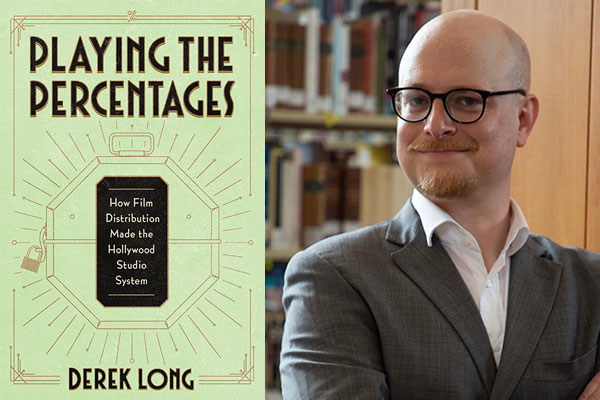
Derek Long, assistant professor of media and cinema studies, sheds light on a rarely covered piece of Hollywood history in his first book, Playing the Percentages: How Film Distribution Made the Hollywood Studio System.

Derek Long publishes book

Praised as “invaluable to media industry scholars of the past and present,” the book is a comprehensive history of film distribution in the United States during the silent era that illustrates the importance of power struggles between distributors and exhibitors over booking, pricing, and playing time (i.e., how long it stays in theaters).

“When people think about Hollywood as an industry, maybe they think about the more glamorous aspects of it like stars, producers, or figures in Hollywood,” Long said. “But I was interested in how Hollywood came to be an industrial institution and the history of that, particularly in the silent era.”

Playing the Percentages, set for release on April 16, considers the economic history of the industry’s film distribution process from 1910 through 1930, including booking, circuiting, and packaging marketing practices.

While many Hollywood histories focus on linear narratives such as industry growth and improvements in technology, Long said there was a “hole in the scholarship” regarding the various ways films were distributed, sold, or marketed. 

“That was a story nobody had really told, at least in an American context, and so I wanted to fill that gap,” he said. 

Long didn’t begin writing Playing the Percentages until 2017, but the project developed out of his dissertation over a decade ago. 

Previous histories basically think about distribution as a mechanism or industrially organized system of shipping films out when there’s a lot more to it than that.

In addition to using digital libraries, Long conducted extensive archival research across the country, visiting the Margaret Herrick Library in California, which is the archives and repository of the Academy of Motion Picture Arts and Sciences; the Warner Brothers Archives at University of Southern California; the Library of Congress in Washington, D.C.; the New York Public Library; the Shubert Archives in New York; and the Harry Ransom Center at the University of Texas.

After months of research, Long said it became apparent that developing the system of film distribution was not a straight line and his book highlights those crucial changes in the system brought about by live theater, the rise of longer feature-length films, and the transition to sound. 

“Previous histories basically think about distribution as a mechanism or industrially organized system of shipping films out when there’s a lot more to it than that,” Long said. “Actually, the history of building that system is part and parcel of the history of Hollywood as an industry, and how it came to be so powerful, particularly in the 1930s and ’40s.” 

Long, whose course specialties include film history, media distribution, and digital tools and historiography, has incorporated his research discoveries into his lectures on classical Hollywood and how distribution works. 

In addition to teaching and writing, Long is also the creator and developer of Early Cinema History Online, a filmographic database of credits for over 35,000 early American films. The searchable archive, which serves as a reference tool for scholars, features credits for titles released in the United States from 1908 through 1920. 

He also organizes the annual MACS Student Showcase, screening student work that has been produced in MACS classes throughout the academic year. This year’s showcase will be held on Saturday, May 4, at the Spurlock Museum.

Long is already thinking about a sequel to his first book, which would look at film distribution relationships in the 1930s and ’40s, including how race was a factor.  

“I want to look at alternative systems of distribution, particularly for race cinemas, films specifically for African American audiences,” Long said. “That was essentially a completely segregated and different form of distribution.”

In the meantime, Long is enjoying the feeling of accomplishment after completing his first book.

“It’s very exciting to see your book in print for the first time,” Long said. “Especially when you’ve been working on it for so long.”

Long’s book, Playing the Percentages, will be available on April 16; use code UTXM25 for a discounted price.
Share on social

College announces additions to leadership team


The College of Media is pleased to announce several additions to the leadership team.

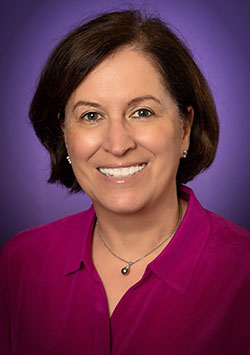
Stephanie Craft will be assuming the position of Head of the Department of Journalism, effective June 16, 2018. Her research focuses on news literacy and journalism ethics.

Mike Yao will become Interim Head of the Charles H. Sandage Department of Advertising, also beginning June 16, 2018. His research research focuses on the social and psychological impacts of interactive digital media.  

Michelle Nelson will become the College’s inaugural Associate Dean for Research and Creative Endeavor, effective August 16, 2018. Her research interest lies in advertising literacy and the use of media literacy to promote healthier behaviors among children and adolescents.

“Faculty and students in the College of Media are already producing a great variety of innovative and impactful research and creative endeavor,” Nelson said. “I look forward to helping to support and promote their efforts inside the college and to external audiences in this new position. I’m excited to work with faculty and students so that together we can do more to strengthen our research culture.”

Congratulations to all!

Share on social

Kissel to speak at 2018 Convocation


Dave Kissel

The College of Media is pleased to announce that Dave Kissel, a 1985 journalism graduate, will be the alumni speaker at the College of Media Convocation ceremony on Sunday, May 13, 2018. He has built a distinguished career in marketing, advertising and sports for Fortune 500 clients by leading high-impact teams at world-class agencies and media companies.

Kissel is currently a member of the senior management team of DDB, one of the largest and most awarded advertising agencies in the world, and a partner to McDonald’s Corporation in 44 countries. He is responsible for the global leadership and coordination of DDB’s worldwide McDonald’s relationships, helping each office deliver innovative strategy, content and experiences to measurably grow the McDonald’s brand and business.

He moved into DDB’s McDonald’s global role after having been a key architect and builder of Omnicom’s We Are Unlimited, called by The Wall Street Journal as the “Advertising Agency of the Future;” an agency designed specifically for McDonald’s U.S. Dave helped establish the agency, source its talent, develop its first work and, as the agency’s Chief Delivery Officer, helped create the agency’s operating system and technology tools.

In addition, Kissel is currently a Strategic Advisor to, and the former CEO of, InStadium, a national Nielsen-measured sports media network consisting of 450+ pro and college teams. Under his leadership, InStadium transformed into a multi-media video and gaming platform for major brands. Prior to InStadium, he helped create and scale the award-winning agency Zócalo Group, Omnicom’s first dedicated social media agency, a division of Critical Mass.

A frequent speaker on sports marketing, advertising and social media, Kissel has more than 25 years of accomplishments and awards in sports media and marketing, is an advisor to Block Six Analytics, a sports-analytics technology company, and to the University of Illinois’ College of Media’s Executive Board. He lives in a northern suburb of Chicago with his wife and fellow Illini alumnus, Sue, and his three daughters.

Share on social

Archives acquires Ebert materials


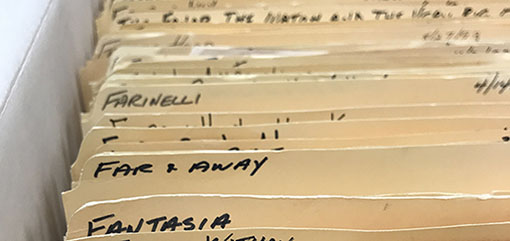
Ebert file folders

An important part of the legacy of the noted film critic, Urbana native, and U of I alumnus Roger Ebert has come home to the University of Illinois at Urbana-Champaign, thanks to a recent donation from the Chicago Sun-Times.

The University of Illinois at Urbana-Champaign Archives has acquired the motion picture press kit files used by Ebert when he served as film critic for the newspaper. The files include 35mm slides and black and white glossy photographs, press release information promoting films from the 1980s through the early 2000s, as well as tear sheets of reviews by the Pulitzer Prize-winning critic.

Nine file drawers of color slides and approximately 57 file drawers of press kits for more than 5,200 films spanning a substantial portion of Ebert’s time as the Sun-Times film critic now reside at Illinois awaiting arrangement and description to make them accessible to students, scholars, and the public. The University Archives and the Communications Library at Illinois have already starting working together to create a complete index of all of the thousands of reviews Ebert wrote.

“This is an important story for the university to have,” said University Archivist William Maher. “What Roger learned here, how he honed his craft, got critical experience and gained confidence–all  of that carried him forward. It propelled him. The university gave him that platform, at the same time that he changed the university himself.” 

Other universities had approached the Sun-Times for the materials, however Chaz Ebert, Ebert’s widow and publisher of RogerEbert.com, wanted to see the materials go to the University of Illinois, Ebert’s alma mater.

“Chaz’s efforts to connect us with the Sun-Times have been an invaluable step forward to bring the Roger Ebert archival legacy home,” noted Maher.

There is little doubt that Ebert would be pleased with the decision. In Life Itself, Ebert’s 2011 memoir, he said, “I loved the University. It took me from childhood to my life.” 

It was this influence and spirit that inspired an online exhibit all about Roger Ebert and his time at Illinois which made its debut at the 2017 Roger Ebert Film Festival this past April. The exhibit, created by the University Archives and containing examples of Ebert’s early writings as a student as well as his original correspondence with his faculty mentor, Dan Curley, is viewable at archives.library.illinois.edu/ebert. 

Ultimately, the Sun-Times materials will reside within close proximity to the Roger Ebert Center being established within the College of Media at Illinois. The Ebert Center will offer undergraduate scholarships and mentoring, along with other programs to “inspire critical thinking and illuminate the human condition,” to those interested in filmmaking and film criticism.

“The College of Media is proud to have played a role in acquiring these materials for the University of Illinois,” said Wojtek Chodzko-Zajko, interim dean of the College of Media. “Roger loved this place; he established his film festival and the Ebert Center here, visited often and introduced us to Chaz, who has become a valued member of our media family. Roger’s enduring legacy is safe in her hands and with the University of Illinois Archives.”

For more information about the Ebert Center, visit https://media.illinois.edu/ebertcenter.

See original press release.

Share on social

McCraw named 2017 convocation speaker


David E. McCraw, a 1976 journalism graduate from Monticello, Illinois, will be the 2017 College of Media convocation speaker.

McCraw is vice president and deputy general counsel for The New York Times. He has a master’s degree from Cornell and a JD from Albany Law School.

McCraw has worked as a journalist and a free-lance writer, has taught journalism and worked as a lawyer at a New York law firm. He has been with The Times since 2002 and is also an adjunct professor at NYU Law School.

His work at The Times includes Freedom of Information Act requests, overseeing commercial litigation, and advising journalists on issues in news gathering including privacy laws. He also runs crisis response when a journalist runs into issue while reporting internationally.

McCraw gained national attention in Oct. 2016 when a brief letter he wrote to Donald Trump’s attorney in defense of a free press went viral. 

Share on social

College of Media
119 Gregory Hall
810 S. Wright St.
Urbana, IL 61801
217-333-2350