Eli Murray selected as winner of 2024 College of Media Emerging Leader Award


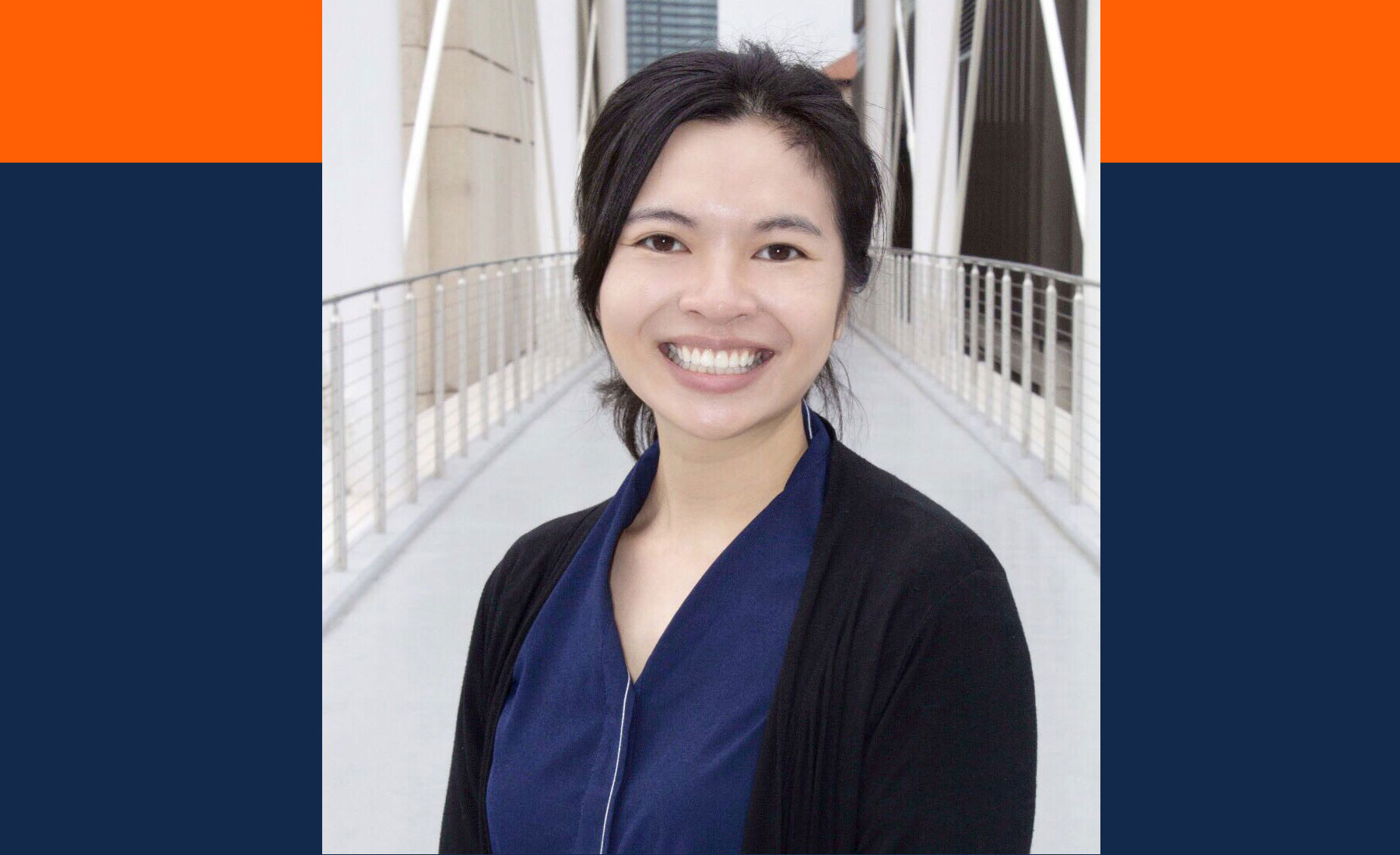
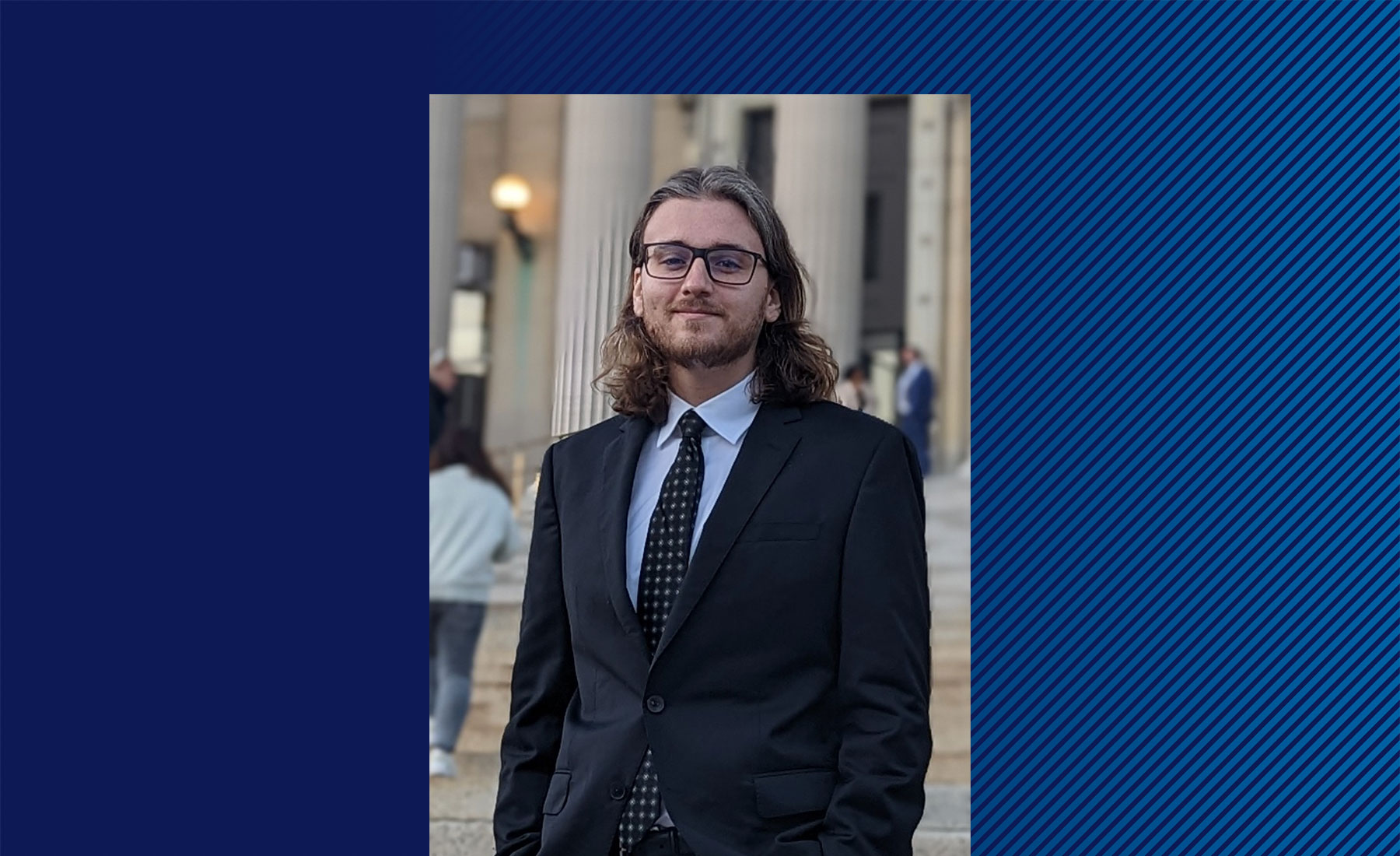
Eli Murray

A multimedia piece about an avalanche in Washington published by the New York Times in 2012, which included video, interactive graphics, and animated simulations, changed the way newsrooms presented storytelling. 

It also inspired Media alum and Pulitzer-Prize winning reporter Eli Murray (BS ’15, journalism) to think about a career as a data journalist. 

“I was in college when the New York Times published ‘Snow Fall’ and it was ground-breaking. It was the first time I had ever seen a story like that and so I felt really inspired and [felt] that was something I wanted to pursue,” Murray said.

Murray would go on to excel at visual storytelling, first at the Tampa Bay Times, where he would earn a Pulitzer Prize in Investigative Reporting in 2022, and now at the New York Times as a graphics editor. 

The College of Media is honoring Murray’s early career accomplishments and his engagement with the college, selecting him as the recipient of the 2024 College of Media Emerging Leader Award. 

“In addition to his outstanding journalistic achievements, Eli Murray has returned to campus to share his expertise with the College of Media, at events for students and for the public,” said Dean Tracy Sulkin. “He is wonderfully deserving of this year’s Emerging Leader Award.”

Murray considers himself lucky to have discovered the potential of data journalism as a student at the University of Illinois and says visual elements allow a journalist to reach a wider audience.

“I think a story that is just [relying on] data is not as strong as it can be, but I think that a story that is just about anecdotes and about people is also not as strong as it can be,” he added. 

In his current role, Murray uses code to pull data from websites and public records, crunch and analyze numbers, and create visual elements to tell stories. 

“I really do feel strongly that visuals are important in journalism, and I think that the New York Times is really setting the standard for what people can do visually in online journalism,” Murray said.

Murray is also an adjunct professor at the University of South Florida, teaching students how to code JavaScript from scratch in an online data visualization course. He’s hoping to inspire more students to consider a career in data journalism.

Murray’s interest in data journalism was bolstered during a news design class his junior year with Eric Meyer, retired associate professor of journalism. During a weeklong segment on WordPress, students learned about coding in HTML and CSS. 

“I really enjoyed that. It just clicked for me, and I recognized that I could use these skills to do journalism,” Murray said.

Murray got a few books and taught himself how to code. During his senior year, he worked at The Daily Illini as a beat reporter and then as a web developer. 

He credits his time at the DI with helping him grow his skills, build his confidence, and produce clips to land his first job after graduation.

While researching a story, Murray says it can often be difficult to figure out what the information is trying to tell you, so early on he visualizes the facts through charts and graphics.

Murray compares the process of exploring data through visuals to shucking oysters and looking for pearls. 

“You may open a hundred oysters and find two pearls in there but those are the two graphics that you can bring forward and say, ‘These are saying something enlightening. These are the ones that I’m going to share with readers,’” Murray said. 

Murray and two colleagues at the Tampa Bay Times published “Poisoned” in 2021, a six-part series uncovering the truth about dangerous lead levels at a battery recycling plant in Florida. 

Murray, who became a certified lead inspector throughout the course of his research, spent nearly two years building a database from thousands of pages of PDFs and analyzing the results. 

The reporting, which garnered Murray and his team a Pulitzer Prize, led to the implementation of new safety regulations to better protect the lives of workers and nearby residents.

Although Murray says he’s most confident working with facts and figures, affecting real change in the lives of people is the most gratifying aspect of his job. 

When he was interviewing the wife of a factory worker whose son had experienced the detrimental effects of lead poisoning, Murray realized the significance of telling their story. 

“To [the family], it was their whole entire life,” Murray said. “[Their] entire life revolved around getting care for [their] son who was lead poisoned and so that just made it really concrete to me. The reason we do this is for people, and going forward it makes me to want to put more emphasis on that side of things in my own work.”

Murray has always been motivated to find the objective truth. He advises those starting out in their journalism careers to go into a story with an open mind and be willing to go where the story takes you. 

“It’s important to be able to pivot when new information comes in and to be able to talk to people who disagree with the things that you’re seeing on the ground,” he said.

As a young reporter who has already won the most prestigious award in journalism, Murray’s career goals remain unchanged.

“I wouldn’t say that there’s any more pressure than there was at any [other] time,” he said. “Fortunately, I’m pretty early in my career, so I hope I’ve got enough time to keep doing more good work.”

Advertising recognizes faculty, graduate students with awards for exceptional teaching, research


Congrats!

The Charles H. Sandage Department of Advertising has honored several faculty and graduate students with awards for extraordinary teaching, research, service, and mentoring. 

The recipients received $500 to be placed in a discretionary account to support their teaching, service, or research, and a certificate.  

Named after James Webb Young, a legendary advertising executive and first chairman of the Advertising Council in 1945, the 2023-24 recipients include:

Faculty Awards

JWY Teaching Award 
Marisa Peacock

JWY Research Award 
Sang-Hwa Oh

JWY Service Award 
Steve Hall 

JWY Mentor Award 
Chang-Dae Ham 

Graduate Student Awards 

JWY Teaching Award 
Kirby Cook 

JWY Research Award
Jennifer Zhang 

Media faculty and TAs make list of teachers ranked as excellent


Congrats!

Congratulations to all of the College of Media faculty and teaching assistants who were ranked as excellent by their students!

This list is based on Instructor and Course Evaluation System (ICES) questionnaire forms completed by students during the Fall 2023 semester. Only those instructors who distributed ICES forms at least once during this time period and who released their data for publication are included in the list. View the complete list. 

Note: * denotes that the instructor ratings were outstanding.


ADVERTISING

KENT BROWN – ADV 314 

STEVE HALL – ADV 150 

* CHANG-DAE HAM – ADV 581

* JACQUELINE HITCHON – ADV 350

TERRY KASDAN – ADV 409

* EVA MASLOWSKA – ADV 580 

* SHACHAR MERON – ADV 250, ADV 290, ADV 400

MICHELLE NELSON – ADV 550

SANG-HWA OH – ADV 587 

* MARISA PEACOCK – ADV 498 

AUGUST SCHIESS – ADV 491

PETER SHELDON – ADV 452

ALLISON VANCE – ADV 350


JOURNALISM

CHRISTOPHER BALL – JOUR 101, JOUR 451

* ALISON DAVIS – JOUR 215, JOUR 240

ALEXANDRE GONÇALVES – JOUR 102

* COLLEEN KING – JOUR 200

STEPHANIE CRAFT – JOUR 460

* VINCE LARA-CINISOMO – JOUR 210

CHARLES “STRETCH” LEDFORD – JOUR 215, JOUR 335

* CAROL LOMBARDI – JOUR 220


MEDIA

DANIEL ALMANZA – MEDIA 199

AMANDA MORLEY – MEDIA 100


MEDIA & CINEMA STUDIES

CL COLE – MACS 224, MACS 356

VICTOR FONT – MACS 140

JONATHAN KNIPP – MACS 101

RACHEL KUO – MACS 351 


STRATEGIC BRAND COMMUNICATION

SHACHAR MERON – SBC 500


TEACHING ASSISTANTS

* P. BATISTE – ADV 250 

N. FAISAL – ADV 150 

* M. FUKADA – ADV 250

S. HEO – ADV 360 

* S. PARK – ADV 250

* A. CANO – MACS 101

* T. CHEN – MACS 150

J. CINTRON – MACS 100

Y. GAO – MACS 101 

Y. KANG – MACS 101

Q. LUAN – MACS 100

J. ROBINSON – MACS 101

N. ZHOU – MACS 100

Projects involving College of Media faculty, doctoral students receive funding from Chancellor’s Call to Action Research Program


Campus

Two faculty members in the College of Media were named recipients of the 2024-25 Chancellor’s Call to Action Research Program to address system bias and social injustice through cross-disciplinary research. This year, the program focuses on areas that span domestic, international, and transnational spaces.

Victor Font, a lecturer in the Department of Media & Cinema Studies, is collaborating on a project called “Co-creating Knowledge for Antiracist and Transnational Solidarities through Radical Practices of Care, Hope and Human Urbanisms.” His team will receive $99,560.

Anita Say Chan, associate professor in the School of Information Sciences and in the Department of Media & Cinema Studies, received $100,000 for a project she leads called “Activating a Peer-to-Peer Train the Trainers Network for Digital Equity Network in East Central Illinois: Advancing Racial Justice in Non-Profit Digital Navigation Programs.” Doctoral students at the College of Media’s Institute of Communications Research, Jorge Rojas Alvarez and Jiwon Oh, will also work on this initiative.

In its third year, the Chancellor’s Call to Action Research Program will distribute $1.2 million in funding to 11 research projects that support the vision of the University’s Campus-Community Compact to Accelerate Social Justice and partner with community organizations to solve and/or understand historical and current social injustices as they intersect with race.

Learn more about the College of Media-affiliated projects below. Read a full list of the projects funded for 2024-25.


Co-creating Knowledge for Antiracist and Transnational Solidarities through Radical Practices of Care, Hope, and Humane Urbanisms

This project aims co-create non-hierarchical learning spaces for our long-time collaborators, working across campus-community and social-spatial divides, to share social justice pedagogies and digital media methods as pathways for realizing antiracist, transnational solidarities we wish to forge across global color lines.

We build on decades-long relations of trust that faculty members at University of Illinois Urbana-Champaign have nurtured with academics and community groups in the U.S., South Africa, and Brazil to co-create knowledge about everyday practices of care and reciprocity that marginalized urban communities use to struggle beyond dominant divisive lines of race, gender, class, ethnicity and nationality. We refer to such ideals as humane urbanism, where life, not profit, is centered.

Using traditional action research along with emerging digital humanities methodologies, we host digital stories online through a multilingual multimedia website and host activist-in-residence at the University of Illinois Urbana-Champaign campus to gather direct narratives and counter-narratives of urban activists, and uncover how concealed daily practices of radical care and reciprocity in marginalized communities nurture hope and activate imagination of an alternative just future.

The goal of this project facilitating knowledge co-production among academics and community-based organizers is to learn possible paths and pragmatic strategies toward shared ideals of transnational justice.

Project leaders include Faranak Miraftab, College of Fine and Applied Arts; Ken Salo, College of Fine and Applied Arts; Helen Neville, College of Liberal Arts and Sciences; Magdalena Novoa, College of Fine and Applied Arts; Victor Font, College of Media; Teresa Barnes, College of Liberal Arts and Sciences; Atyeh Ashtari University of Memphis; Ricardo Nascimento UNILABE, Brazil; Efadul Hug, Smith College; Sarah Bassett, Arizona State University; Koni Benson, University of Western Cape; Greg Ruiters, University of Western Cape; Clarissa Freitas, Federal University of Ceara; Jose Ricardo Vargas de Faria, Federal University of Paraná; Giselle Tanaka, Federal University of Rio de Janeiroc. Community Members: Rob Robinson, Partners for Dignity and Rights; Dawn Blackman, Randolph Street Community Garden; James Kilgore, First Followers; Ann Rasmus, University of YMCA.


Activating a Peer-to-Peer Train the Trainers Network for Digital Equity Network in East Central Illinois: Advancing Racial Justice in Non-Profit Digital Navigation Programs

The “Peer-to-Peer (P2P) Train-the-Trainers for Broadband Equity” Digital Navigators Program is a collaborative initiative jointly led by the Community Data Clinic at UIUC and the Urbana-Champaign Big Broadband (UC2B) non-profit to address persistent issues of Broadband and Digital Inequity in East Central Illinois EC-IL, particularly affecting historically marginalized and infrastructurally underserved populations.

Leveraging existing partnerships with five community organizations – the Housing Authority of Champaign County, Cunningham Township, Project Success of Vermilion County, Champaign-Urbana Public Health District and First Followers, this project aims to establish a Digital Navigators Network and seed a new EC-IL Broadband Equity Community Hub in Champaign Park District’s multi-purpose Martens Center.

The partnership network will support the development of a local Digital Navigators Program, training 36 new community-facing Digital Navigators, equipping them with new or refurbished laptops, and leveraging resources developed in two years of prior work around broadband equity education and programming with this network.

This project’s overarching goals will enhance affordable broadband adoption, empower community members with essential digital skills, and enhance access to community technology centers. By bringing together expertise from diverse organizations, the initiative seeks to bridge the digital divide and create opportunities for improved digital connectivity and inclusivity in EC-IL. This project was developed in alignment with and prior funding from the Illinois Office of Broadband’s Digital Equity + Inclusion Programming

In addition to Chan, project leaders include Tracy Smith, Technology Services; Paul Hixson, Urbana-Champaign Big Broadband Not-for-Profit; Julian Chin, School of Information Sciences; Jessica Black, Lead for America Fellowship Program. Doctoral students at the College of Media’s Institute of Communications Research, Jorge Rojas Alvarez and Jiwon Oh, will also work on this initiative.

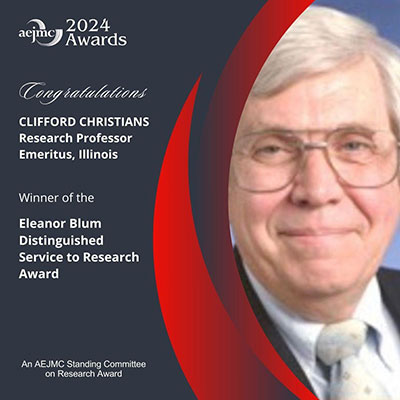
Clifford Christians receives AEJMC’s Eleanor Blum Distinguished Service to Research Award


Christians wins AEJMC Blum Award

Clifford Christians, research professor emeritus of communications, and professor emeritus of media studies and of journalism, will receive the 2024 Eleanor Blum Distinguished Service to Research Award from the Association for Education in Journalism and Mass Communication. The award will be presented at AEJMC’s 107th annual conference in Philadelphia this August.

“I am convinced that Dr. Christians should get credit for creating, leading, and developing the entire subfield of media and journalism ethics, not just in the United States, but in the world. At the least, without his work and his inspiration, media ethics would be entirely impoverished and thin,” said Linda Steiner (PhD ’79, ICR), editor of Journalism & Communication Monographs.

The Blum Distinguished Service to Research Award was created to recognize people who have devoted substantial parts of their careers to promoting research in mass communication, and those who have spent much of their professional lives to mentoring students in areas of research. It is named in honor of the first recipient, Eleanor Blum, a long-time communications librarian at the University of Illinois Urbana-Champaign. 

Christians (PhD ’74, ICR) is a former director of the Institute of Communications Research at the College of Media and chair of the doctoral program in communications, positions he held from 1987-2001 and from 2007-2009. 

The Association for Education in Journalism and Mass Communication is a nonprofit, educational association of journalism and mass communication educators, students, and media professionals. AEJMC’s mission is to promote the highest possible standards for journalism and mass communication education, to cultivate the widest possible range of communication research, to encourage the implementation of a multi-cultural society in the classroom and curriculum, and to defend and maintain freedom of communication in an effort to achieve better professional practice and a better informed public.

Advertising and ICR faculty and graduate students recognized at 2024 AAA conference


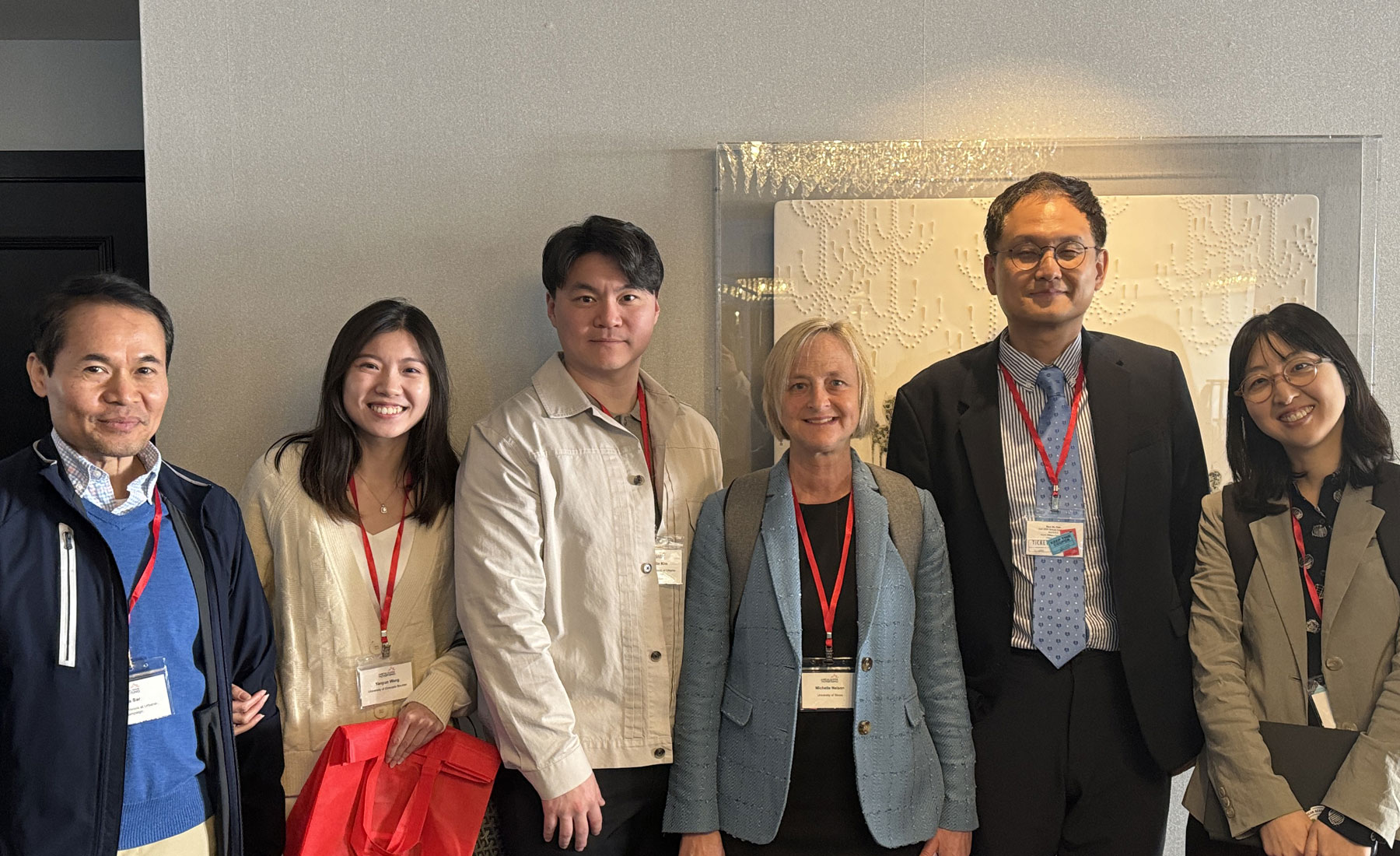
AAA group of faculty and students

Faculty and graduate students in the Charles H. Sandage Department of Advertising and Institute of Communications Research were honored with awards and presented research at the annual conference of the American Academy of Advertising, held March 14-17, 2024, in Portland, Oregon. 

Nelson AAA award

Professor Michelle Nelson, head of the Charles H. Sandage Department of Advertising, won AAA’s Career Award, the Ivan L. Preston Outstanding Contribution to Research on Advertising Award. As AAA’s top research award, this is designed to honor an individual who has made an outstanding contribution to the discipline of advertising through a systematic and sustained program of published research. The award carries a $1,000 prize. This award is given only to active AAA members for exemplary research on advertising across 20 years or more. 

Chang-Dae Ham, associate professor of advertising and associate head of graduate studies, was elected vice president of AAA and began his term on the executive committee.

Kevin Wise, professor of advertising, was appointed head of AAA’s graduate student committee. 

ICR student WooJin Kim (Advisor: Chang-Dae Ham) won a doctoral dissertation competition award for “When Humans Anthropomorphize Nonhumans: Examining the Role of AI Interactivity and Human Motivations.” Floria Yujin Lee, a graduate student in advertising, won a travel fellowship award. 

(Pictured at top: Professors Sela Sar at left, Michelle Nelson in center, and Chang-Dae Ham at right at the conference with graduate students.)

Presentations

Pre-Conference Panel Session: “How to Develop a Successful Journal Submission: Advice from Editors and Leading Experts” – with presentation “Best practices for experimental studies” by Sela Sar, professor of advertising

Special Session: “Stepping out of the Ivory Tower: Engaged Research & Teaching in Advertising” led by Professor Michelle Nelson

Research paper presentations: 

AAA students present
“Hey, You Put Ads in My Netflix: How Audiences Negotiate the Changing Streaming Video Landscape”
Floria Yujin Lee (MS Advertising), Masashi Fukada (MS Advertising), Paris Baptiste (MS Advertising), Xinle Du (MS Advertising); Professor Michelle Nelson 

“Exploring Motivation to Follow Virtual Influencers (VIs): The Role of Emotional Attachment as a Mechanism for Generating Positive Effects in VI-Endorsed Advertising”
Professor Chang-Dae Ham and Seo Jeong Heo (ICR) 

“When Lonely Hearts Meet Talkative Artificial Intelligence (AI) Chatbot: Exploring the Role of AI Interactivity in Sociality Motivation in the Context of AI-Powered Advertising”
WooJin Kim (ICR), Professor Chang-Dae Ham, Dongchan Lee (Northwestern University), Se Il Park (ICR), Seo Jeong Heo (ICR), Floria Yujin Lee (MS Advertising) 

Michelle and Regina with alpaca and llama

(Pictured above: Alumna Regina Ahn (MS ’14, advertising; PhD ’19, ICR) and Professor Michelle Nelson met a llama and alpaca during the AAA conference.)

See more photos from the conference.


Angela Aguayo selected as 2024-25 Humanities Research Institute Faculty Fellow


Angela Aguayo

Angela Aguayo, associate professor of media and cinema studies and acting director of the Roger Ebert Center for Film Studies, has been selected as a 2024-25 Humanities Research Institute Faculty Fellow.

As an HRI Faculty Fellow, Aguayo will be provided with research funds and one semester of release time to work on a new book, titled Collective Matters: Documentary Film Practice and Public Engagement in the US, 1970-Present.

Her book will address the micro-practices of public engagement with documentary production that have led to sustained media culture. When the larger culture is deeply divided, the traditions and strategies of community-centered documentary storytelling build connections between people.

“There is a long tradition of communities representing themselves, acquiring equipment, pinning a sheet to a wall, and projecting images made by the community for the community,” Aguayo said. “These early films addressed social problems, local needs, and aspired to compel hearts rather than turn profits. This tradition had evolved over the years, shaped by technological innovation and years of connecting media-making with communities who need validation, visibility, and representation.”

Drawing upon research in media, communication, and cultural studies, and informed by interviews with media workers, filmmakers, and activists, the book will consider how community-centered documentary storytelling provides frameworks for larger civic-sector conversations.

“These are the types of media that start and sustain conversations in the world, beyond the screening room, about what could and should be done to activate the conditions for a more equitable and just world,” Aguayo added.

Aguayo will join six other faculty members and seven graduate students who will meet at the Humanities Research Institute throughout the year to address how they are rethinking research paradigms. She will take leave from teaching for the Fall 2024 semester.

The upcoming project will be Aguayo’s third book. Her first book was a reader on theories of public argumentation. Her second book, Documentary Resistance, addressed the possibilities for documentary and social change.

HRI grants fellowships to Illinois faculty and graduate students, who spend the year engaged in research and writing. All HRI Fellows participate in HRI activities, including the yearlong Fellows Seminar.

HRI’s 2024-25 theme, “Think Again…,” is an invitation to revisit well-known texts, to upend dominant narratives, to historicize what appears self-evident in the present, and/or to ask what happens when we juxtapose x with y in ways never been done before. “Think Again” underscores the opportunity to think across diverse interdisciplinary formations, and to identify when, how, and under what conditions new ones may be happening.

Amanda Ciafone lends Coca-Cola expertise to new TV series ‘A History of the World in Six Glasses’


Amanda Ciafone filming
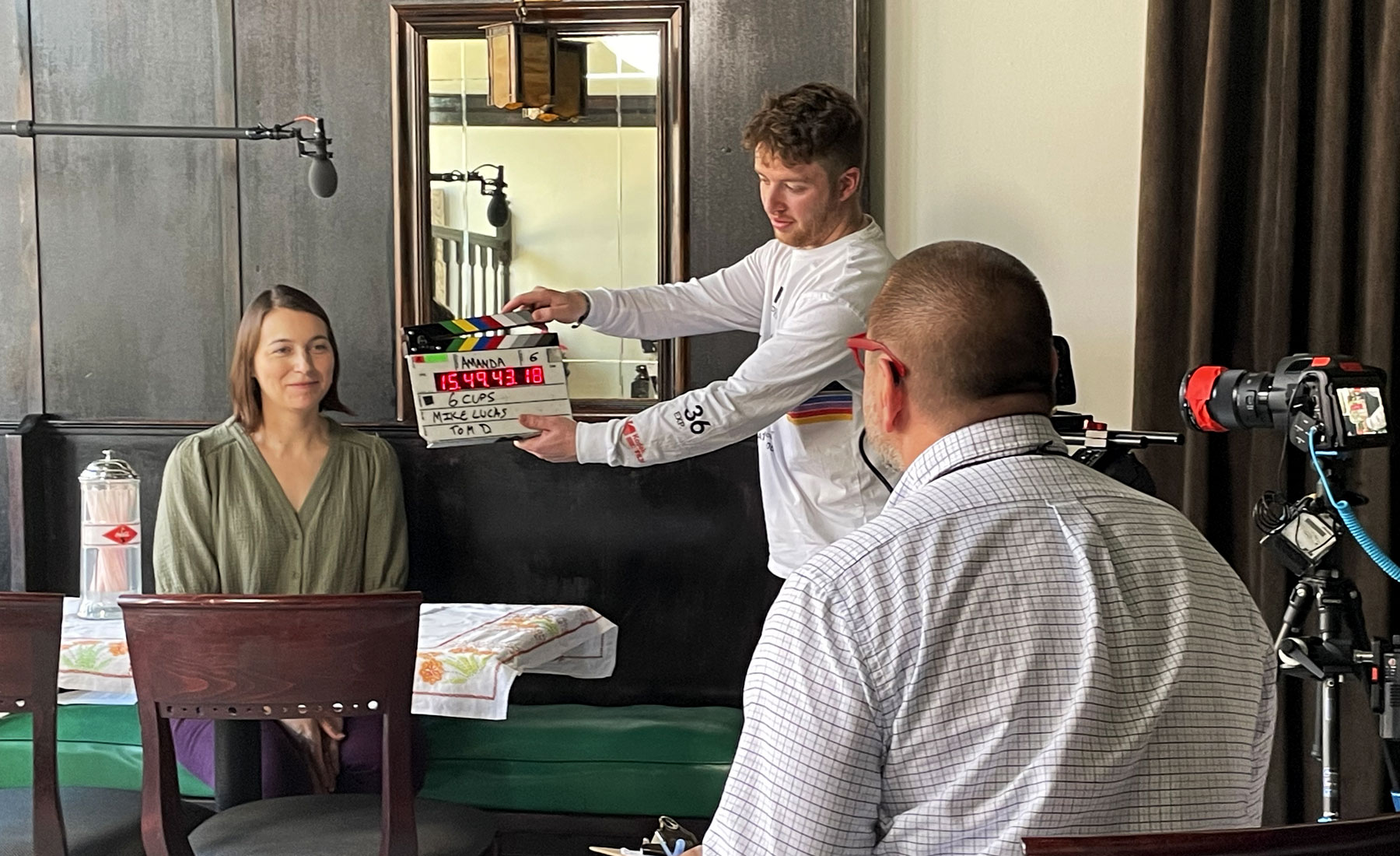
Amanda Ciafone, associate professor of media and cinema studies with an appointment in the Institute of Communications Research, was interviewed on August 19, 2022, at Flesor’s Candy Kitchen in Tuscola, Illinois, for the soda episode of the new TV series ‘A History of the World in Six Glasses.’ 

From a corner table in the Coca-Cola-branded brick building of Flesor’s Candy Kitchen (est. 1901) in Tuscola, Illinois—with a nostalgic Coca-Cola straw canister positioned nearby—Amanda Ciafone, associate professor of media and cinema studies, shared stories about Coca-Cola’s origins with producers of the new TV series A History of the World in Six Glasses.

Streaming on Fox Nation, the six-episode series stars comedians Dan Aykroyd, co-host Jim Belushi, and their friends Kevin Nealon, Jon Lovitz, and George Wendt. It’s based on a book of the same title by Tom Standage, who is interviewed in the broadcast among other authors and historians, where the history of beer, spirits, soda, wine, tea, and coffee are explored. The episodes are peppered with retro stock footage and ads, bubbly animations, as well as anecdotes, trivia, and taste tests around the bar from the chummy cast. 

Ciafone is featured in episode three—”Soda: American Fizz Goes Global”—drawing upon her research of Coke from her first book, Counter-Cola: A Multinational History of the Global Corporation (University of California, 2019). Ciafone’s book examines the Coca-Cola Company and the politics, cultural representations, and social movements around the multinational corporation’s impact on the environment, consumer health, workers’ rights and conditions, and international cultures and economies. She also has an appointment in the Institute of Communications Research and is ICR’s director of graduate studies.

“With the rising temperance movement in the late 19th century, [pharmacist and inventor] John Pemberton realized taking the red wine out will allow his drink to be marketable to a wider consumer base,” Ciafone explained in the episode. “So he’s seeking ingredients that will give you that kind of buzzy uplift without the alcohol, and he turns to coca and kola and puts them together to make this drink: Coca-Cola.”

Ciafone also described how social concerns, such as kids drinking caffeine, affected Coca-Cola.

“While the temperance movement, and eventually Prohibition, was a great boon to Coca-Cola because it didn’t have alcohol, those same forces of concern about people’s consumption of drinks that had ingredients that were potentially risky or unknown eventually brought Coca-Cola under the focus of both popular movements and government regulators.”

But of course, Coca-Cola survived court cases, brand wars, sugar substitutions, and other sticky situations.

Ciafone paraphrased a famous management guru, Peter Drucker, who said that “Coca-Cola is fundamentally an advertiser with access to a distribution system,” she said. “And it’s true. So much of their business is the production of the image around the drinks.”

To learn more about the popularity of soda (or pop), its place in American history, and its global impact, watch A History of the World in Six Glasses on Fox Nation.

Margaret Ng selected for 2023-24 James W. Carey Faculty Fellowship and AEJMC Emerging Scholar Award


Margaret Ng

Margaret Ng, assistant professor of journalism with an appointment in the Institute of Communications Research, has been selected for 2023-24 James W. Carey Faculty Fellowship. She was also recognized with the Association for Education in Journalism and Mass Communication Emerging Scholar Grant.

Ng will receive stipends to support her research on social media platform migration, within broader shifts in digital communication culture. The recognitions support her pioneering inquiry into this contemporary phenomenon in journalism.

The James W. Carey Fund for Faculty Excellence, established in 2021 through the generosity of the Carey family, is a prestigious recognition designed to bolster the research activities of faculty in ICR, the world’s oldest program for interdisciplinary research and doctoral education in communication and media studies. At ICR, Carey earned his doctoral degree, was a research professor, and served as director (1969-76); he also served as dean of the College of Media.

Ng said the Carey Faculty Fellowship’s research support will assist her to explore the social and cultural implications of the platform migration phenomenon. 

“It would detail, for instance, how circumstances like voluntary and forced platform discontinuance (a platform closing due to financial reasons or the de-platforming of notable figures) are influenced by a complex interplay of factors like culture, economics, and social identity,” she said. 

Ng was also recently awarded a $3,500 grant from the Association for Education in Journalism and Mass Communication. The AEJMC Emerging Scholar Award will enable Ng to study how journalists are grappling with platform migration in the wake of Elon Musk’s Twitter takeover in October 2022. 

She will hire a research assistant and administer a mixed-method approach that encompasses computational analysis of activities by 900 journalists on Twitter (now X) and Mastodon and qualitative interviews of 10 to 15 active journalists. The new knowledge helps journalists assess the risks and benefits of platform changes, facilitating smoother transitions and audience maintenance in the future.The results will appear in a journal publication and a chapter in her book, setting the scholarly discourse around the topic.  

“Both the James W. Carey Faculty Fellowship and AEJMC Emerging Scholar Award, along with the opportunity to bring on board the Mark L. Brandt Public Engagement Fellows, focus largely on the topic of my scholarly book project—platform migration,” Ng said. 

Ng will also team up with a student Brandt Fellow to engage with journalists and the public, potentially through a webinar, to provide a better understanding of the experiences, challenges, and strategies journalists employed following Musk’s Twitter takeover. The Mark L. Brandt Public Engagement Fellows program was established to support Media students assisting faculty and staff with public engagement projects.  

Julie Turnock awarded National Endowment for the Humanities Fellowship


Turnock

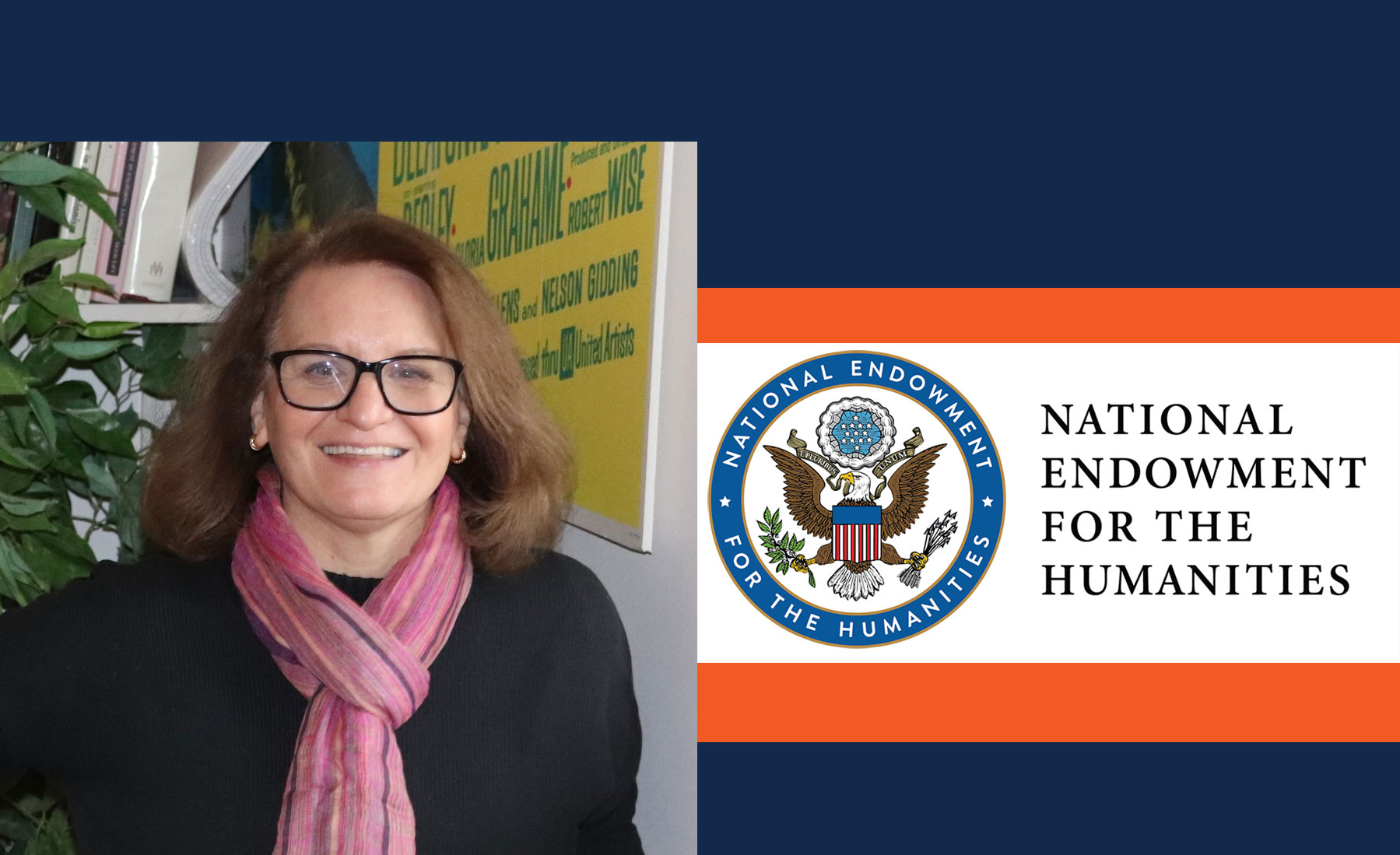
Julie Turnock, professor of media and cinema studies, was awarded a National Endowment for the Humanities Fellowship for a book project titled Beyond King Kong: Special Effects in the Hollywood Studio Era, 1915–1965. 

She will receive $60,000 in funding to research and write a book about the technical, labor, industrial, and aesthetic history of the special effects industry during the Hollywood studio era.

Turnock’s book project is a history of the labor performed by unsung “below-the-line” effects workers of the era. Through archival historical research, oral history accounts, interviews, theoretical discourse, and formal visual analyses, this project presents a polemic for considering the “specialness” of effects work not from the point of view of the film but from the position of the specially contracted labor. As a labor history, it centers the workers of the Hollywood studio era who are rarely considered in cinema histories, training attention onto those whose skills make much of “movie magic” possible.  

Turnock served as the inaugural director of the Roger Ebert Center for Film Studies and is on sabbatical this academic year. 

The NEH awarded $33.8 million in grants for 260 humanities projects across the country, including 82 fellowships. The fellowship program supports advanced research in the humanities, and recipients produce articles, books, digital materials or other scholarly resources. NEH Fellowships are competitive awards granted to individual scholars pursuing projects that embody exceptional research, rigorous analysis, and clear writing.

The NEH has received an average of 1,120 applications per year for fellowships in the last five rounds of competition, according to its website. During that time, it awarded an average of 79 fellowships per year for a funding rate of 7%, making the fellowships among the most competitive humanities awards in the country.

The NEH is an independent federal agency and one of the largest funders of humanities programs in the U.S. It supports research and learning in history, literature, philosophy and other areas of the humanities by funding selected peer-reviewed proposals from around the nation.

See University of Illinois News Bureau press release.

College of Media
119 Gregory Hall
810 S. Wright St.
Urbana, IL 61801
217-333-2350