Wei Xiao

Wei Xiao

Email: weixiao8@Illinois.edu

Research Interests

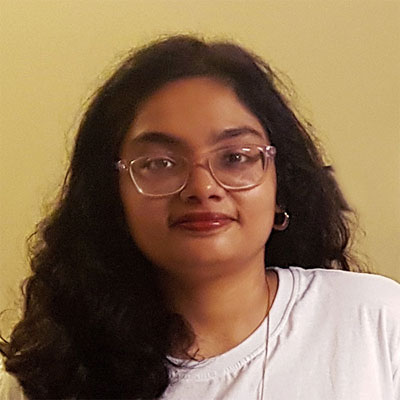
Wei Xiao is a Ph.D student in ICR. She is broadly interested in exploring alternative approaches to the reasoning behind sharing dis/misinformation to debunk dis/misinformation or inoculate people against misinformation. Her research also involves technology policy topics, such as data privacy, free expression, and AI governance. While fighting traditional disinformation, Wei is equally dedicated to addressing the potential ramifications inherent in AI-amplified disinformation scenarios. 

Prior to coming to the ICR, Wei received her MA in communication, culture, and technology from Georgetown University and BA in communication and economics from University of Wisconsin-Madison.

Courses Taught

  • MACS 100

Nisa Rahman

Nisa Rahman

Email: nisapr2@illinois.edu

Research Interests

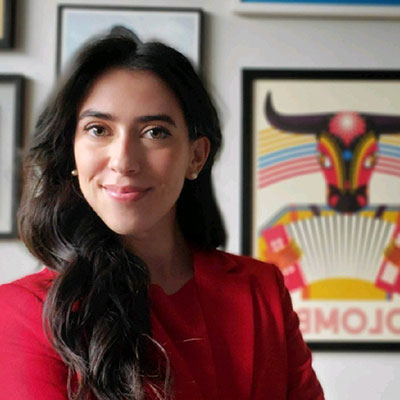
Nisa Rahman is a PhD candidate at the Institute of Communications Research. Nisa’s research interest lies in emerging technologies and their effect on social behavior in the context of health communication. This exploration takes shape through studies utilizing anthropomorphic conversational agents, i.e., “chatbots” to debunk health misinformation and persuade behavior change, as well as the effect of modality in cognitive processing. Nisa is also interested in the intersections between gender presentations and its influence in Human-AI Communication. 

Prior to joining the ICR, Nisa Rahman received her MS in advertising from the College of Media at the University of Illinois Urbana-Champaign and BA in communication from Purdue University – West Lafayette.

Recent Publications/Presentations

Conference Presentations 
Zhang, J. S., Rahman, N., Su, L. Y.-F., & Wang, Y-C. (2022, August). Examining Food Safety Knowledge: The Roles of Media Attention, Trust, Food Habits/Attitudes, and Demographics. The 72nd Conference of the Association for Education in Journalism and Mass Communication, Detroit, Michigan. 

Liu, W., Rahman, N., & Yao, M. Z. (2022, November). Gender Identity and Influence in Human-Machine Communication: A Mixed-Methods Exploration. Submitted at the 73rd annual conference of the International Communication Association.

Courses Taught

  • ADV 393: Advertising & Society (TA, Spring 2022) 
  • ADV 281: Advertising Research Methods (TA, Fall 2022 to present)

Awards and Honors

Earl M. Cummings Advertising Education Research Award (Spring 2022)

What Most People Don’t Know about Me

I enjoy watching media from different cultures and languages, thrifting and cooking in my free time.

Nini Zhou

Nini Zhou

Email: niniz2@illinois.edu

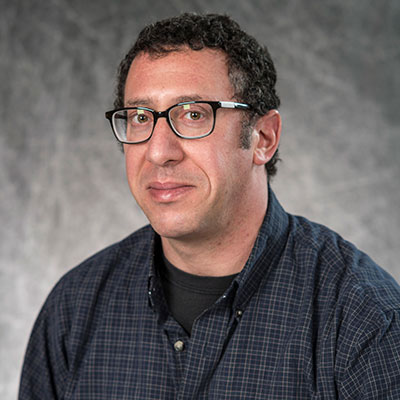
Research Interests

  • Critical studies of communication
  • Free labor of women online
  • Female digital communities

Courses Taught

MACS 100: Intro to Popular TV & Movies

Academic Roles

Teaching Assistant for MACS 100

Q&A with Isabel Morales

Get to know some of our College of Media alumni. Isabel Morales (BS ’13, journalism) is the media relations manager at The Nature Conservancy. Morales also participated in a Media Career Night alumni panel on “Nonprofits” in Spring 2022. Watch a recording of the session here.  

Isabel Morales

Why did you major in journalism and how has it influenced your career path?
Majoring in broadcast journalism came from following a passion of reading, writing, and pop culture growing up. In high school I worked on the interviewing and design/layout of our school newspaper, which played a role in my decision to major in journalism at the University of Illinois Urbana-Champaign. As a freshman I got involved in The Daily Illini as a page designer, allowing me to try out so many different aspects of news later on such as editing and radio segments. Having the ability to dip into different areas of interest, I fell in love with the production side of journalism! So I found an internship at a local TV station practicing pulling segments as a news anchor. I got my first broadcast journalism job at WNBC, which fostered my ideal company culture with the amount of nurture and willingness to learn from each other. I then moved on to a concept producer for an NBC affiliate in Chicago, where I would work overnight cutting scripts and writing articles. After my time in NBC, I had a complete lifestyle change where I became a PR coordinator for the Museum of Science and Industry. I realized at this job that I enjoyed storytelling and being a voice for a brand. My current role is with The Nature Conservancy, a nonprofit organization, where I use my storytelling abilities through visual media, producing news, and being a reporter.  

What is one of your favorite memories as a College of Media student?
For one of my broadcasting classes we had to check out equipment, one being a giant tripod. I remember being on the Quad with my classmates feeling silly with all the equipment we had to have tracking down students for a quick quote, but having my peers who were also so passionate in this career made this memory so sentimental to me. After being on the Quad we would all go edit our pieces together, learn from one another, and form an inclusive environment. The College of Media being a small college really unites and promotes a close-knit community, which I found in my classes and being a part of the college overall. 

How do you think the College of Media prepared you for your career?
The college prepared me in so many ways! Connecting with your classmates, special guests, professors, and resources go a long way. The University of Illinois Urbana-Champaign in general has endless opportunities with internships, professional development events, classes, and overall embraces you to explore new and a variety of things.

What are three skills that you think a Media student needs to be successful?
First, be curious! Curiosity innovates ideas and interests. Second, be transparent with yourself and the work you are accomplishing. Know why you are pursuing what you want and be transparent with who you are working with to maintain clarity. Last but not least, be flexible. There are going to be days where you have a variety of things to do or things that may not go your way but having the ability to adapt in your environment will go a long way.

What advice do you have for current Media students?
Try out what you can and what you have time for! Don’t overwhelm yourself; quality over quantity. I’d also say to put yourself in a space where you can have a continuous drive, be encouraged, and have confidence. 

Who inspired you?
Everyone I worked with at The Daily Illini! The DI has talented, curious, and warm people with limitless motivation to explore new parts of the field, which really refreshed and influenced me to achieve anything I put my mind to. I also met my husband at the DI!

What are you most proud of?
My entire career journey. I came a long way and feel empowered looking back at my decisions and accomplishments. I’m also proud of not staying in a traditional career track. The people I surrounded myself with in both a professional and friend capacity always influenced me to grow and do what I love. I found that the more I challenged and strived for all my desires I felt fulfilled. What I am proud of now is being in a role and environment that stimulates growth with each other but within your own skill set as well.

—Interview by Emily Campos, New Voices Intern

Q&A with Josh Heuman

Get to know some of our College of Media faculty. Josh Heuman is a teaching assistant professor in the Department of Media & Cinema Studies and the Department of Journalism. He received the 2022 College of Media Award for Excellence in Undergraduate Teaching by a Specialized Faculty Member. 

Josh Heuman

What is your favorite class to teach? 
We’re not supposed to have favorites, like you don’t have a favorite child. Usually, we get to teach courses that we want to teach. Even when you are teaching something that you didn’t necessarily pick yourself, you find the interest in each class you teach. 

I do enjoy all the courses I teach, but Creative and Information Economies (MACS 264) is probably my favorite because it’s a material that’s closest to my own work and it is always changing. This course gives a broad introduction to media industries. We take a really close look at film, music, and television industries. I think part of the fun of the course is looking at things that cut across all different kinds of media industries. So before too long in the course, we’ll talk about things like labor markets and geographies of media industries, allowing lots of interesting comparisons.

What are some other classes that you teach?
I usually teach the History of American Journalism course (JOUR 205), and then this semester I’ve just started the Media Law course (JOUR 311), which is really exciting for me; that’s what I taught at other universities in the past. 

What are some projects that you are involved in?
The big project that I’m interested in pursuing over the long term is looking at the historical development of radio and television and writing, and especially the way that we come to the role of the radio and television writer as a professional. I think in a lot of cases, when we do look back on the history of radio and television writing, or other kinds of writing as well, we’re telling the stories of the triumph of art or the defeat of art, as if that’s what that kind of work should be.

When you go back to the beginnings of the field, they were very ambivalent about this ideal of art. I think looking more closely at how early radio and television writers imagine themselves, how they were shaped by outside forces, gives a much more complicated picture of what that role was at the time.

What are some past projects of yours? 
I think a lot of my projects revolve around questions of industry and regulation. By looking at television writers’ contracts and the idea of the figure of the showrunner is really interesting. This really reflects specific transformations in television. I am also interested in writers as it relates to authorship and ownership of series formats.

How do you conduct your research?
I think with different projects, it works out in different ways. Usually, I find myself looking at documents from a particular time period. I’m really thinking about radio and television writing. I was just flipping through Writer’s Digest—the writer magazines with amateur writers from the ’20s through the ’60s, and just seeing what they’re saying. I was thinking about two questions: How does one do radio and then television writing? What are the characteristics of a radio or television writer and the way that that gets defined in those materials for aspiring writers?

What made you want to teach?
I think going to graduate school and having the excitement of looking at these complex systems that shape our world and the interest of working within those systems was something that has always been present in my life. Media is incredibly interesting. I also think that when I was entering into graduate school was a particular moment when media and cultural studies were colliding. If you wanted to know about the world, the field of media and cultural studies was and is an especially exciting place to work. I’m really glad to be in Illinois and teaching the kind of students who are really engaged, really interested. 

What is some advice you want to give to students? 
Be curious. Sleep well. Watch and listen and play and read as much as you can. I think we forget that part of our cultural citizenship is not watching everything, but try to watch and listen widely, you have to be in it to win it. I think too often when opportunities are put in front of us, there’s a tendency to say, “Oh, that’s not for me.”

Talk to your teachers. I feel like it doesn’t happen a lot, but if things are going wrong, better communication would help solve those problems. If things are going right, we can help you reach that next level. 

—Interview by Paige Terando, New Voices Intern

Q&A with Steven Pratten

Get to know some of our College of Media alumni. Steven Pratten (BS ’15, media and cinema studies) is a senior digital media manager at the Gies College of Business at the University of Illinois Urbana-Champaign. Pratten also participated in a Media Career Night alumni panel on “Digital Communication” in Spring 2023. Watch a recording of the session here.  

Steven Pratten

When did you know that you wanted to study media and cinema studies?
In junior high, my fascination with local TV production began. I was amazed by how networks could produce multiple shows in a day with such fast turnaround. Being from Champaign-Urbana, WCIA News was a local network that I noticed played an essential role in informing and creating a sense of community in the smaller market. This sparked my passion for media, and I even created a small news set in my basement where I forced my friends to act as reporters and anchors. Although, it may seem outdated, editing on tape gave me a solid technical foundation in media. In high school, my interest in media evolved into my affinity for horror movies. I would make 50-hour-long horror movies, about one per year, and even focused on advanced editing, which became one of my favorite things. I also started to explore graphic design and marketing by creating posters for my movies. When it was time to consider college, the media and cinema studies major in the College of Media caught my attention. I knew it was the ideal fit for me since the University of Illinois is a world-class university in my hometown. I had the opportunity to join different clubs, work at WILL/Illinois Public Media, and freelanced on the side. These experiences, along with my education, gave me the technical and theoretical skills I needed to succeed in my career after graduation.

How do you think the College of Media prepared you for your career?
Through the College of Media and the media and cinema studies program, I was exposed to a wide range of media. This experience equipped me with the tools to consume media with the understanding that everything in media exists within the context of its time and its creators. The audience shapes how it’s received. This understanding prepared me for my experience in content creation, where I had to craft my messages in a way that resonated with the target audience and created an impactful experience for them. 

Moreover, being involved in the College of Media provided me with various opportunities, including participating in Ebertfest, joining different RSOs, and serving as a student ambassador. It gave me insight to all the different paths I could pursue in my career. It was a very well-rounded program that had plenty of specific things you would take away, while giving you the opportunity to mold it into your own experience.  

What are one or two skills that you think a Media student needs to be successful?
The media industry is a rapidly evolving field, not just in terms of technical advancement in camera or platforms, but also in the changing channels of consumption, audience preferences, and shifting demographics. Therefore, the ability to learn and adapt is crucial, and it’s more important than simply possessing knowledge. Instead, you should look ahead and think about what will make yourself, your work, or your organization stand out. As the competition for audience attention increases, having a forward-thinking outlook on the future is becoming increasingly necessary. 

What are your responsibilities as senior digital media manager?
I’m responsible for ensuring that the Gies College of Business produces high quality, pedagogically sound video content for our global audience of learners. I manage a group of video producers and graphic designers that make that content and ensure that it is up to the standards of Illinois Gies College of Business. Ultimately, our goal is to make sure our videos teach and educate people. We create dynamic and engaging video content while maintaining its educational value.

Apart from this, I also handle typical aspects of the media industry such as ensuring projects hit crucial milestones and forecasting potential issues. If a milestone is missed, we evaluate how we can work through any constraints to produce high-quality content. 

Project management is another big part of my job. I place great value on supporting our staff by providing them with the necessary resources and tools to reach their full potential and bring their best work to the table.

In addition, a significant portion of my attention is focused on the development of a new production building, Steven S. Wymer Hall. This building will have two 40-by-40 production sound stages, and we are designing them in a way that will enhance our content and expand its capabilities. It’s exciting to build a future workplace that my team is eager to be a part of. 

What advice would you give to students who are graduating soon from the College of Media?
Graduation is an exciting time, but it can also bring about anxiety. It marks the beginning of a new chapter in your life. My advice is to allow your interests to guide you to your first job or jobs. It’s easy to become fixated on job titles, salaries, or locations, but true fulfillment and success come from having a genuine interest in your work. Allowing your interests to guide your career choices will set you up for sustainable success throughout your professional life. Don’t be afraid to take on unknown roles, as you never know where they may take you. Use your internal passion as a compass as you embark on your professional journey!

—Interview by Lauren Barjami, New Voices Intern

Q&A with Grace Chen

Get to know some of our College of Media alumni. Grace Chen (MS ’10 advertising) is a product manager at Meta. 

Grace Chen

When did you know that you wanted to study advertising?
As a child, I remember being very fascinated with old catalog ads. Throughout my childhood, a lot of advertising consisted of subscription-based magazines and order catalogs. I always thought about how much I loved seeing all these creative advertisements and innovative ideas. It even made me feel like I wanted to buy everything in the magazine. As I grew up, viewing TV commercials seemed like the coolest thing ever to me, for some reason. I’ve always been interested in studying advertising. 

What are your main responsibilities as a product manager at Meta?
As a product manager at Meta, I work with engineers to build new products for Meta. I primarily work on a private communication team. My team’s mission is to help people start and continue conversations on the Facebook app.

If you could describe the advertising industry in one word, what would it be?
Adaptive. A lot has changed since I started my first job in advertising, and change will continue to be constant in this industry. In the past, TV advertisements were a major shift in the industry. Now, advertising is completely digital. When I started my career, digital used to be about 5 to 10 percent of a client’s budget, and now it’s near 100 percent for some companies. People need to be adaptive to work in this industry and it will continue to evolve.

What are one or two skills you think one needs to be successful in the advertising industry?
It’s important to not limit your understanding of advertising in terms of studying this major or finding a job. Today, media and technology are treated very similarly in the industry. Advertising, while part of media, is also part of technology. As a student, I believed I needed to get into an agency role right away, or work in the client side at some point. I didn’t realize that the industry is much bigger. It’s a good reminder to students entering the industry to notice how it has evolved, and the various opportunities that have been created as a result of the industry evolving. Another skill is adapting an understanding of the food chain of advertising. For example, if you join an agency and are at the lower end of the food chain, meaning more entry-level positions, you naturally have less say in your role. You may also find yourself wanting to have different responsibilities. It’s important that you know who the designated decision maker is in order to be efficient in responding to the needs of your job.

What is the most meaningful part of your job?
Right now, the most meaningful part of my job is working alongside a team of people I enjoy working with and who inspire me to be better! In the past, what I enjoyed the most about my job was being introduced to different product types and industries. In general, my interest in advertising sparked my curiosity to discover how aspects of the industry work together. It also gave me a good glimpse into the categories of products I could work for, whether it was working for pet foods, coffee products, entertainment services, and many more.

What advice would you give to students soon to graduate from the College of Media?
This next chapter in your life is the start of everything, not the end of things. Certainly, the job market may be tough at times. It’s quite common and normal for people to feel a lot of uncertainty at times, especially considering that the economy is totally different now than in previous generations. Despite this, it’s important to remember that this is just the beginning, and you can continue to build your brand. This could be achieved by building up your portfolio from something you’ve never considered before. Always remember to stay hopeful and keep going!

Hear more from Grace Chen, who participated in a Media Career Night alumni panel on technology and media in Fall 2022. Watch a recording of the session here.

—Interview by Lauren Barjami, New Voices Intern

Q&A with Jason P. Chambers

Jason P. Chambers

Get to know some of our College of Media faculty. Jason P. Chambers is the associate dean for access and engagement and professor of advertising. 

How long have you been a professor at the College of Media? What sparked your interest in teaching advertising?
I’ve been at the College of Media since August 2001. I started working here directly out of graduate school from The Ohio State University. I have always been interested in advertising, ever since I was a kid. I was one of those kids who didn’t change the channel when commercials came on—I always wanted to watch and pay attention to the content. In graduate school, I specifically examined the African American experience in advertising as professionals, entrepreneurs, agency owners, executives, and other similar roles. When I joined the College of Media, they were interested in someone who could combine history with advertising. I had this exact experience through my research, so it was the perfect opportunity.

What classes and topics do you currently teach?
Because of my administrative role as the associate dean for access and engagement, I focus my time in teaching ADV 175: Diversity in Advertising. It looks at race, ethnicity, sexual orientation, gender, age, and intersectionality. It also dives deeper into targeted advertising towards members of those communities or groups and the challenges, stereotypes, and opportunities as a result. 

What are your research interests?
Research-wise, my next book is on a gentleman named Tom Burrell. Tom Burrell was one of the first African Americans in the Advertising Hall of Fame. He’s from Chicago, and his agency, Burrell Advertising/Burrell Communications Group, was founded in Chicago in 1971. My interest remains, even after 20 years, in African American entrepreneurship and analyzing how it plays out in the advertising industry.

What do you enjoy the most about working with college students?
What I enjoy most is seeing the light come on when students can make connections between the topics I’m teaching and their interests. Much of my role is to facilitate how students grow in reaching their interests. It’s not just about dispensing information in one direction but finding ways to help students grow intellectually and professionally. After having been here for 20 years, I have seen students I taught 10, 12, and 20 years ago, nearly running Fortune 50 or Fortune 100 companies. You get to witness the minuscule role you played in that growth. It’s really gratifying to see.

What’s the biggest piece of advice you have for students graduating from the College of Media?
My biggest piece of advice is to keep learning and stay nimble. The world of advertising is in an ongoing state of flux. It’s rarely stable in terms of the way that things are done and the roles that exist within the industry. It’s also just as important to stay as flexible as you can, for as long as you can. Flexibility gives you the opportunity to take opportunities. Avoid making decisions that get you so far into your career that you get to a place where you can’t leave or feel the need to stay. Whatever the case may be, stay as nimble as possible for as long as possible.

What are some of your hobbies?
I watched far too much football. The Ohio State football, in particular, being from Ohio and graduating from The Ohio State University. I also dabble in woodworking, I’m quite the DIY’er. I’m currently building a book set of built-in shelves and cabinets in my basement. Those hobbies, in addition to hanging out with my family, my kids, and my wife, are how I like to spend my free time.

—Interview by Lauren Barjami, New Voices Intern

Q&A with Marisa Peacock

Get to know some of our College of Media faculty. Marisa Peacock has been an advertising lecturer since Fall 2019.

Peacock

What is the best part about advertising?
Two things. The first one is simple: Every industry needs advertising—it’s always going to exist. Secondly, advertising is constantly changing and creating. I specialize in social media, which didn’t exist at one point in my timeline, thus everyone is going to be doing something that doesn’t exist just yet within advertising! The limits are endless.

What is your best memory so far from your time spent at the College of Media?
Definitely working with all the students—their energy, openness, curiosity, and willingness to experiment recharges and fills me up every time. It’s a remarkable experience to work with students who put themselves into their work and achieve great things while having fun. 

What classes do you currently teach at the College of Media?
I teach ADV 498: The Sandage Project, which is an eight-week capstone class that is typically taken during the last year of coursework. A capstone class utilizes all your skills and talents over the past years to work on a real campaign with a real client! I taught it seven times, and in every instance the client wanted to pick more than one campaign. The class helps students to work in a team, execute a campaign, and use their creativity. 

What is the best way to network in advertising?
UIUC being a Top 10 school is an amazing start. You’re a part of a lot of moving parts and a huge entity. There is always something going on here and someone to talk to. Additionally, I’d say the best way to network is simply to just be yourself—don’t be afraid to promote yourself. People want to be around other people who like what they do, have great stories, and are interested in multiple things. Be that person in your own way. 

—Interview by Emily Campos, New Voices Intern

Yan (Anna) Liu

Anna Yan Liu

Email: yanliu10@illinois.edu

Research Interests

Anna studies emerging technologies, data and quantification, persuasion, and strategic communication. Her research follows two lines: (1) Broadly, how emerging technologies transform content generation and media exposure in strategic communication. More specifically, how AI-generated summaries (AIGS) synthesize information, how they transform strategic communication message and media strategies in the contexts of social media, search engines, and online review platforms, as well as how consumers process the synthesized and streamlined information in AIGS. Additionally, her research on generative AI (GenAI) also explores GenAI and users’ information-seeking, as well as GenAI and creativity. (2) Broadly, Anna studies the social impact of data and quantification in strategic communication. More specifically, how brands and organizations communicate numerical data effectively and ethically in persuasive messages, and how to leverage regulatory forces and consumers’ data literacy to strengthen consumer protection. 

She employs a mixed-method approach, using computational methods (e.g., computer vision, machine learning, sentiment analysis, etc.), traditional quantitative (e.g., experiment, survey, content analysis), and qualitative methods (e.g., interview, netnography) in her research. 

She has 5 years of professional experience in the marketing research industry. Before joining ICR, Anna was a Senior Research Manager at Ipsos (Beijing office), one of the world’s top three marketing research firms, where she conducted research on brands, advertising, media, products, and consumers using a various methods, including survey, experiment, content analysis, focus group, in-depth interview, observation, home visit, shop-along, consumer diary, eye-tracking, social media analytics, etc. 

Anna earned a B.A. in journalism from Renmin University of China and an M.S.S.c. in advertising from Chinese University of Hong Kong.

Recent Publications/Presentations

Baptiste, P.*, Fukada, M.*, Lee, Y.*, Liu, A. Y.*, & Nelson, M. R.* (In press). How Audiences Negotiate the Changing Streaming Video Landscape: Accepting or Avoiding Advertising Depends on Your Advertising Socialization. Advertising & Society Quarterly. 

Liu, A. Y. & Zhang, M. M. (2026). Positivity Bias in AI-Generated Summaries of User-Generated Content: Exploring Its Sources and Impact on Public Sentiment. Computational Communication Research. https://doi.org/10.5117/CCR2026.2.4.LIU

Liu, A. Y. (2025). Ephemeral Visibility and Externally Visible Production: How Algorithmic Automation Accelerates Fans’ Data Work. New Media & Society. https://doi.org/10.1177/14614448251393480

Liu, A. Y., Ji, A. R., Taneja, H. & Nelson, M. R. (2025). Stakeholder-Desired Audiences: Fans’ Audience Data Imaginaries and How They Shape Industry Data Practices. Convergence: The International Journal of Research into New Media Technologies. https://doi.org/10.1177/13548565251366412

Liu, A. Y., & Taneja, H. (2025). Visibility of K-pop in the US: Global Rankings, ‘Audience Mis-aggregation’, and Mainstream Attention to Niche Genre. Convergence: The International Journal of Research into New Media Technologies. https://doi.org/10.1177/13548565251320755

Pan, S., & Liu, A. Y. (2018). Examining the Effect of WeChat Usage on Social Capital among Chinese College Students. Chinese Journal of Journalism & Communication, 40(4), 126-143. http://cjjc.ruc.edu.cn/CN/Y2018/V40/I4/126

Liu, A. Y., & Zhang, M. M. (2026, Aug 5-8). AI-Powered Social Information Seeking: Taxonomy Development and Cross-Cultural Comparison. Association for Education in Journalism and Mass Communication (AEJMC) Annual Conference, New Orleans, United States. 

Liu, A. Y. (2025, Jun 12-16). Context Matters: Exploring Consumers’ Sense-Making of Online Ratings in the Social Context. International Communication Association (ICA) Annual Conference, Denver, United States. 

Gong, Z., Chen, T., Liu, A. Y., Xuan, J., & Su, L. Y. F. (2025, March 6-9). Navigating Consumer Acceptance of Cultured Meat: An Exploratory Narrative Review of Communication Strategies. American Academy of Advertising (AAA) Annual Conference, Pittsburgh, United States. 

* The authors contributed to the work equally.

Courses Taught

  • ADV 281 Advertising Research Method (Instructor of Record) 
  • ADV 360 Innovations in Advertising (TA) 
  • ADV 284 Consumer Insight (TA) 
  • ADV 250 Advertising and Brand Strategy (TA) 
  • ADV 201 Social Media and Personal Branding (TA) 
  • ADV 200 Data Literacy (TA) 
  • ADV 150 Introduction to Advertising (TA) 
  • MACS 100 Introduction to Popular TV & Movies (TA)

Awards and Honors

  • Webtoon Emerging Scholar Award (Honorable Mention), AEJMC Advertising Division 
  • 2026 James Webb Young Fund, Summer Scholar, Department of Advertising, University of Illinois Urbana-Champaign (Faculty supervisor: Dr. Michelle Nelson)
  • James Webb Young Grad Research Award, Department of Advertising, University of Illinois Urbana-Champaign 
  • Bart A. Cummings Advertising Gift Fund (Research fund for dissertation), Department of Advertising, University of Illinois Urbana-Champaign  
  • Petullo Fellowship, Department of Advertising, University of Illinois Urbana-Champaign  
  • James Webb Young Travel Fund, Department of Advertising, University of Illinois Urbana-Champaign
  • MusicID 2024 Digital Research Fellowship

Related Links
College of Media
119 Gregory Hall
810 S. Wright St.
Urbana, IL 61801
217-333-2350