acvance@illinois.edu
acvance@illinois.edu
rtenneti@illinois.edu

mhered4@illinois.edu
January 19, 2023

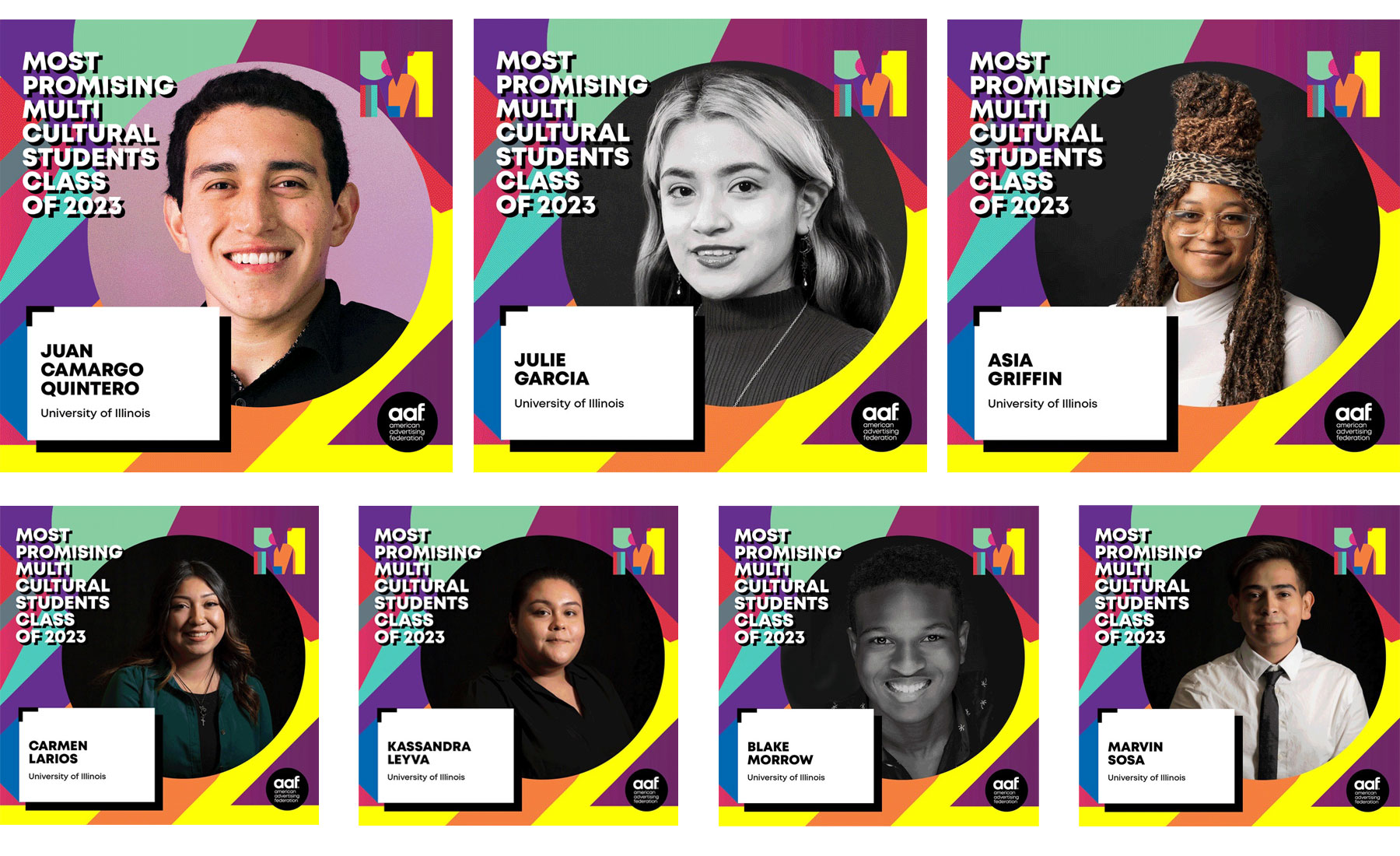
Seven seniors in the University of Illinois chapter of the American Advertising Federation were named to the American Advertising Federation’s Most Promising Multicultural Students Class of 2023—an honor given to only 50 students each year throughout the United States. Honorees include advertising majors Julie Garcia, Asia Griffin, Carmen Larios, Kassandra Leyva, Blake Morrow, and Marvin Sosa, and chemistry major Juan Camargo Quintero.
In 1997, the American Advertising Federation created the Most Promising Multicultural Students program to connect the advertising industry with the nation’s top multicultural college students. Since the program’s inception, the AAF Illinois chapter has had more winners than any other university or college.
Recognizing the top 50 multicultural college seniors across the nation, the Most Promising program promotes diversity, equity, and inclusion within the advertising industry, giving advertising, media, communications, and tech companies the opportunity to tap into high-achieving talent of diverse college students from across the country.
Each year, students of racial or ethnic diversity from the AAF’s 140+ college chapters apply to the program. Advertising leaders select the highest-achieving diverse seniors to participate.
In February, the winning students will participate in a four-day industry immersion program in New York City with the highest-level industry executives and companies that includes professional development and personal branding workshops. They will also be recognized at the annual Building Bridges for Our Future awards luncheon.
The event serves as a recruiting opportunity for industry leaders to develop a diverse group, representing the best from the country to serve as the next generation of advertising leaders. It also offers students invaluable network, learning, and immersion experiences with professionals from top advertisers, media companies, and advertising agencies.
January 10, 2023 | Kelly Youngblood

Since Mike Wychocki (BS ’83, advertising) graduated from the University of Illinois College of Media nearly 40 years ago, he has helped build and sell two advertising/marketing agencies, traveled around the world, and become Chief Marketing Officer of a global container-shipping transportation company.
In all that time, Wychocki has never forgotten a certain College of Media associate dean and a professor, both of whom played a vital role in his education and professional success.
“One of the things that keeps me connected to the University of Illinois and the College of Media is, at the time, we had a Dean of Students named William Alfeld. He helped me get across the finish line,” Wychocki said. “I think if it weren’t for Dean Alfeld, I probably wouldn’t have graduated.
“Dean Alfeld was one of those kind gentlemen who had a big heart. He would always help me figure something out,” Wychocki said of the late Alfeld, who served as associate dean at the college from 1962 to 1992.
Wychocki, a first-generation college student from the south side of Chicago, was unfamiliar with the collegiate lifestyle and overwhelmed upon his arrival.
He initially struggled with academics and didn’t care for the large lecture-type classes held in huge auditoriums. Thankfully, Alfeld helped him navigate the challenge of introductory courses, and helped identify the strengths and talents that enabled him to thrive in the major.

Wychocki also recalls an advertising professor who had a profound impact on his career—the late Gordon White, who Wychocki describes as “the second most influential person” he encountered as a student on campus. White, who taught classes in advertising creative strategy, also earned his MS and PhD degrees in the college.
“[Professor White] taught me a lot and was very supportive of me. He gave me the confidence to know that I was a good storyteller. And I believe that all advertising starts with a good story,” he said.
“Taking several journalism classes also helped and Professor White explaining how to craft and express a strong message definitely kept me inspired in my career over the years,” Wychocki added. “Plus, Professor White was an actual Mad Men Creative Director at BBDO on Madison Avenue in NYC in the 1960s and he taught us how the U.S. ad market transited from long-format ads in the 1950s to short, clever, and pithy ads just like Don Draper reminded us 30 years later.”
Wychocki also has fond memories of his time working at WILL-TV as a production assistant, production manager, and assistant producer. He said engaging in hands-on learning at WILL was a pivotal decision that helped guide him to choose a path in marketing and advertising.
The advertising education he received at Illinois has enabled him to create numerous career opportunities, including his current role as CMO of EagleRail. About seven years ago, Wychocki started out as a freelance marketing consultant for EagleRail, a global transportation solution that automates short-haul container shuttling between ports and intermodal facilities.
Wychocki describes the company concept as “doing with a 60,000-pound box what Amazon warehouses do with a 60-pound box. Robotically lift it, shuttle it, and set it back down in the right spot.” He developed that elevator pitch seven years ago, and still uses it today.
After just a few months of joining the company, Wychocki purchased majority interest of EagleRail from the company’s inventor and took the lead as Chairman and Chief Executive Officer. More recently, he decided to focus on the marketing and sales side of the business and hired his own replacement.
“I always knew my job here was to sell this concept—create this story from the whole cloth. I recently hired my own replacement with international operational and global finance experience and gave myself the title of Chief Marketing Officer,” he said.
No matter how far his career has taken him away from the University of Illinois campus, he will always recall the unique places and traditions that students still enjoy today, such has hanging out on the Quad and “geeking out” to the Marching Illini band perform at sporting events.
If he had any career advice to give current advertising students, Wychocki says it would be to work hard to create, cultivate, and value professional relationships. While a good strategy and creative execution are important, nothing helps you succeed long-term like creating a personal connection with the people you’re working with, whether it’s a client or a colleague.
“I’m a huge believer in positive relationships as currency. I think it is one of the keys to success,” he said. “You have three elements in life that will determine the level you achieve professionally: how smart you are, how hard you work, and how well you work with other people. If you’ve got two out of three, you’ll be a success…and working well with others is the lowest investment and highest return of the three.”
Wychocki also recommends being yourself and understanding your own strengths first.
“If you know what your brand is and know what your strengths are, then you’ll know how to position yourself either for jobs or accounts or freelance opportunities that are right for you,” he said. “Be yourself and find out what your internal brand is. If you want to figure out how to create someone else’s brand, first you’ve got to figure out your brand, and then you’ll be in the best position to succeed.”

January 9, 2023 | Kelly Youngblood and Vivian La, Communications Intern

The first cohort of students in the Brand Ambassador Program are halfway through their yearlong experience, which pairs a student interested in social media and brand management with Fighting Illini student-athletes and local organizations.
Since its inception just four months ago, the program is already making a positive impact for student ambassadors, student-athletes, and the community at large.
“I think it’s been incredibly successful on both ends,” said Carrie Wilson-Brown, lecturer in media and cinema studies and advertising, and a faculty lead for the program (pictured at right). “I know the athletes are really excited to have our student ambassadors give as much input as possible into their feeds and I know the ambassadors are really thrilled with that kind of hands-on experience.”
The purpose of the program is to offer students experiential learning to enhance their social media management skills and to help student-athletes develop their brand. It also focuses on aiding local organizations with digital promotion.
“It really is a great partnership between community members, and also gives our students a range of experiences in real-world circumstances,” said Wilson-Brown.
The inaugural program, which first kicked off in August, is one of the latest initiatives of the Hub for Brand Innovation and Advertising Technology and the Charles H. Sandage Department of Advertising.

With a mission to educate students about the most current advertising trends and to provide them with leading-edge experiences that go beyond classroom theory, both the Sandage Department of Advertising and the Brand Hub are shaping the field of strategic brand communication.
“The Brand Ambassador Program is another novel professional development opportunity for advertising students that the Brand Hub has coordinated,” said Professor Mike Yao, head of the Sandage Department of Advertising. “We are proud to foster this collaboration. Students are applying the advertising, branding, and social media strategy skills that they’ve acquired through our curriculum, and through their own experiences, to support the success of their peers and the local community.”
Nearly all of the 20 student ambassadors are advertising majors. Some ambassadors have paired up with local organizations such as Visit Champaign County to help highlight local events and businesses with their own robust social media following. Most are working with Fighting Illini student-athletes to strategize and create content for their social media.
The Brand Ambassador Program helps student-athletes address last year’s changes to the NCAA Name, Image, and Likeness (NIL) policy, which now allows all NCAA D1, D2, and D3 student-athletes to be compensated for their name, image, and likeness, regardless of whether their state has NIL laws in place.
Wilson-Brown said the updated NIL policy has created an incentive for student-athletes to enhance their brand and increase their social media presence. As a result, student-athletes recognize the importance of a digital persona and a professionally curated social media feed.
“The ambassador program is an opportunity to use the talents of students and faculty to help athletes sculpt a brand for themselves online and hopefully to monetize themselves with local and national sponsorships as well,” she added.
Wilson-Brown noted the students are ambassadors, not agents, and do not directly facilitate any sponsorship deals or monetary contracts.
The Brand Ambassador Program operates in conjunction with the INFLUENCE program, which was launched by the University of Illinois Division of Intercollegiate Athletics last year. INFLUENCE is an educational approach to the monetization of an athlete’s name, image and likeness that emphasizes brand and strategy development along with business and financial concepts. INFLUENCE is powered by NIL sports technology company Opendorse, which features all Fighting Illini athletes within its athlete endorsement website.
Kaylee Patthana, a junior majoring in advertising, is working with Illini women’s volleyball player Kennedy Collins to help promote her personal brand. Patthana said she and Collins have discussed ways she can expand her brand to include not only her college athletic persona but also her personal interests such as fashion and lifestyle aesthetics.
Patthana says that the close-knit nature of the ambassador group is her favorite aspect of the program: “I love that in this program I have a network of people around me that I can talk to and work with who also love to do what I do,” she said.
Jack Struthers (pictured at top), a senior in advertising working with an Illini soccer player, said the ambassador program is mutually beneficial for Media students who want real-world experience and athletes looking to expand their brands.
Struthers said managing a social media presence as a student-athlete can be overwhelming and this partnership can help address some of those challenges.
“Getting paired with an ambassador from the College of Media who kind of understands how the [sports endorsement] ecosystem works and understands how [social media] works and can inject content—I think it’s extremely powerful,” he said.
Emily Gonzalez is a senior in advertising working with an Illini women’s basketball player. Through this partnership, Gonzalez gets to share her expertise on social media trends to help create relevant content, such as a “day in the life” video.
“It’s all about the analytical side of things and just trying to communicate possible trends that are taking off,” said Gonzalez, who is now considering a career path in social media management.
Brand Ambassadors meet monthly with Wilson-Brown to update their progress, reporting about post content and analytics. After a semester of guiding brand ambassadors, Wilson-Brown said she’s excited to expand the program, whether that’s adding more students, more athletes, or more partnering organizations.
“I find students have a much more nuanced understanding of how to use these digital tools every day and so we’re able to collaborate really beautifully on that and I think that’s really humbling,” she said. “It’s a really great learning opportunity that we have in the Advertising department.”
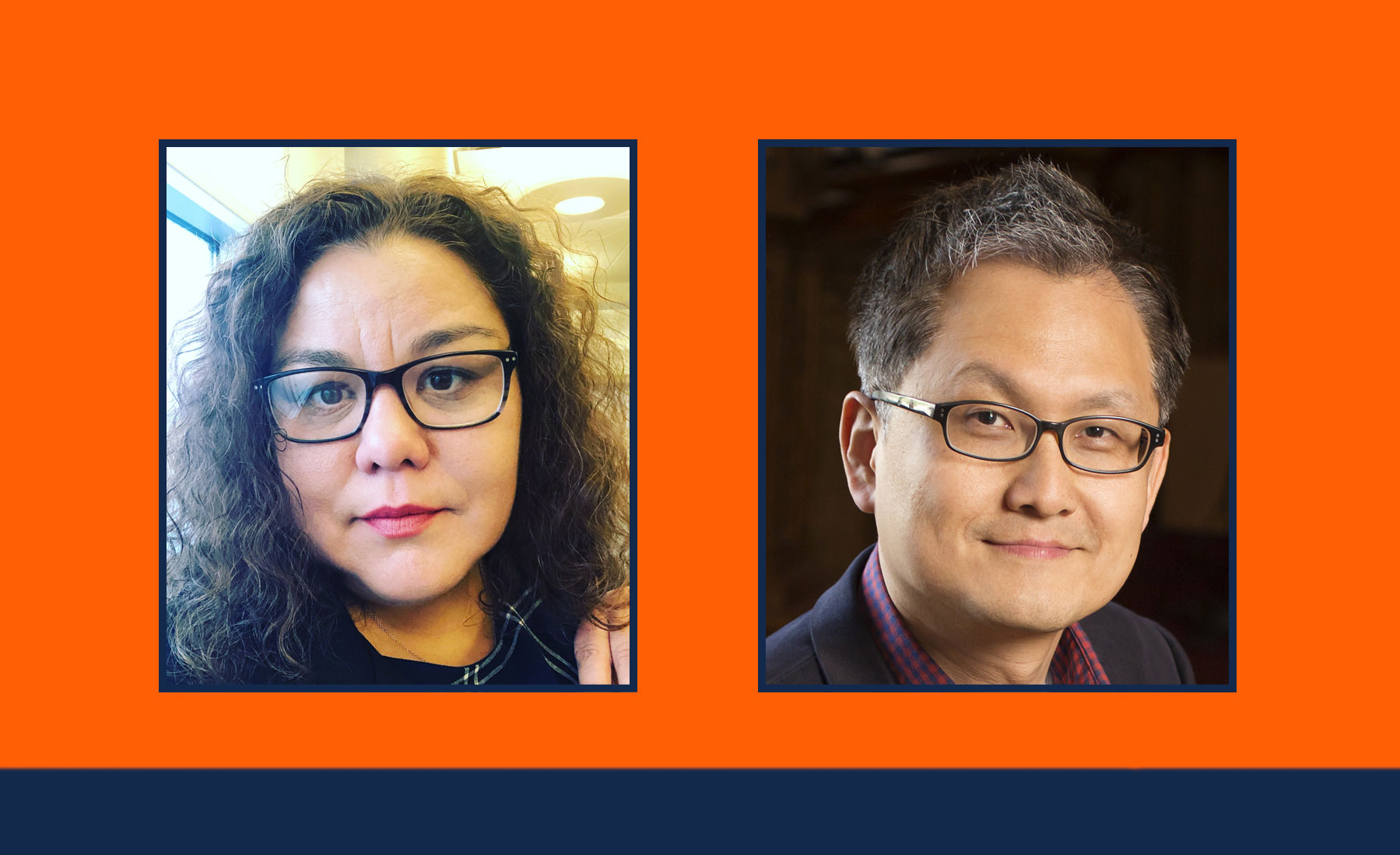

Two College of Media faculty members affiliated with the Institute of Communications Research have been selected as James W. Carey Faculty Fellows for academic years 2022-2024. Both Angela Aguayo, associate professor of media and cinema studies, and Chang-Dae Ham, associate professor of advertising and director of graduate studies in advertising, will receive the honor and a stipend to support their research activities.
As a Carey Faculty Fellow, Aguayo will work on a book project called Collective Matters, which examines how traditions in the humanities, health care, law, and education manifest through documentary in non-theatrical spaces, addressing the rituals of media producing, screening, and circulating that bind communities across time. During his Carey Faculty Fellow tenure, Ham will conduct research on digital data literacy and privacy issues.
Established in 2021, the James W. Carey Fund for Faculty Excellence was endowed by Carey’s four sons to honor their father’s legacy at the College of Media and within the field of media. At ICR, Carey earned his doctoral degree, was a research professor, and served as director (1969-1976); he also served as dean of the college. The Carey Fund supports research activities of the outstanding faculty in ICR, the world’s oldest program for interdisciplinary research and doctoral education in communication and media studies.
To join Carey’s family, former students, colleagues, and friends in growing the endowment, please visit the College of Media giving page, click on the orange “Give Online Now” button, and select the Carey Fund under “Nurture Excellence in Media Faculty.”
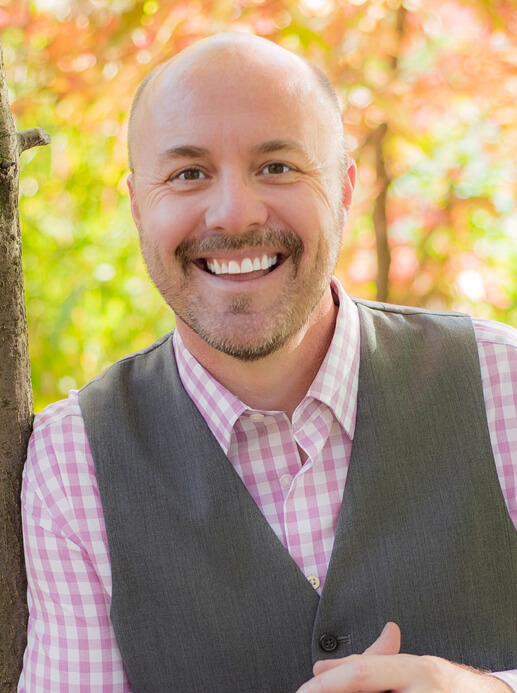
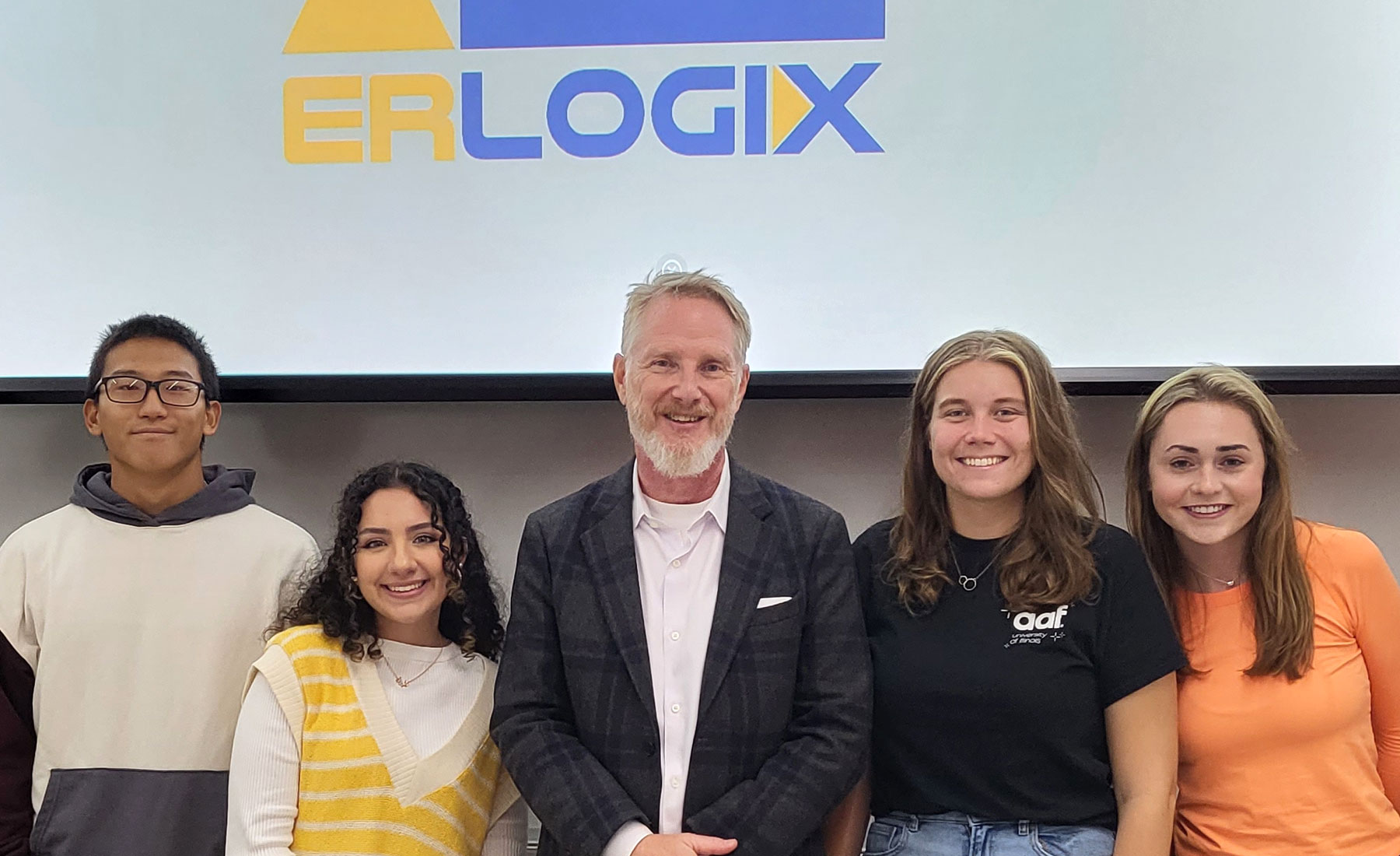
Kevin Finke (BS ’92, advertising) received a University of Illinois Alumni Association Comeback Award, given to prominent and accomplished alumni who are invited to participate in various activities during Homecoming Weekend, with a focus on providing opportunities for honorees to interact with current students, and sharing information about their professional experiences and the value of their University of Illinois education.
Finke is founder and chief experience officer of Experience Willow, a human-centered design and consulting firm in Decatur, Georgia. At Illinois, he was an athlete in volleyball; a student leader in the Student Alumni Association (as well as Alpha Tau Omega and Mortar Board); and Homecoming king. Finke is an in-demand speaker and conference facilitator, and he is proud to be an active member of the LGBTQ community, where he advocates for equitable and inclusive business environments. He and his husband Rob Stalder live and work together in Decatur, Georgia.
Finke (pictured below, fifth from left) met with seniors in Media during the Student Leader Lunch and was part of a panel discussion with other alumni award winners.

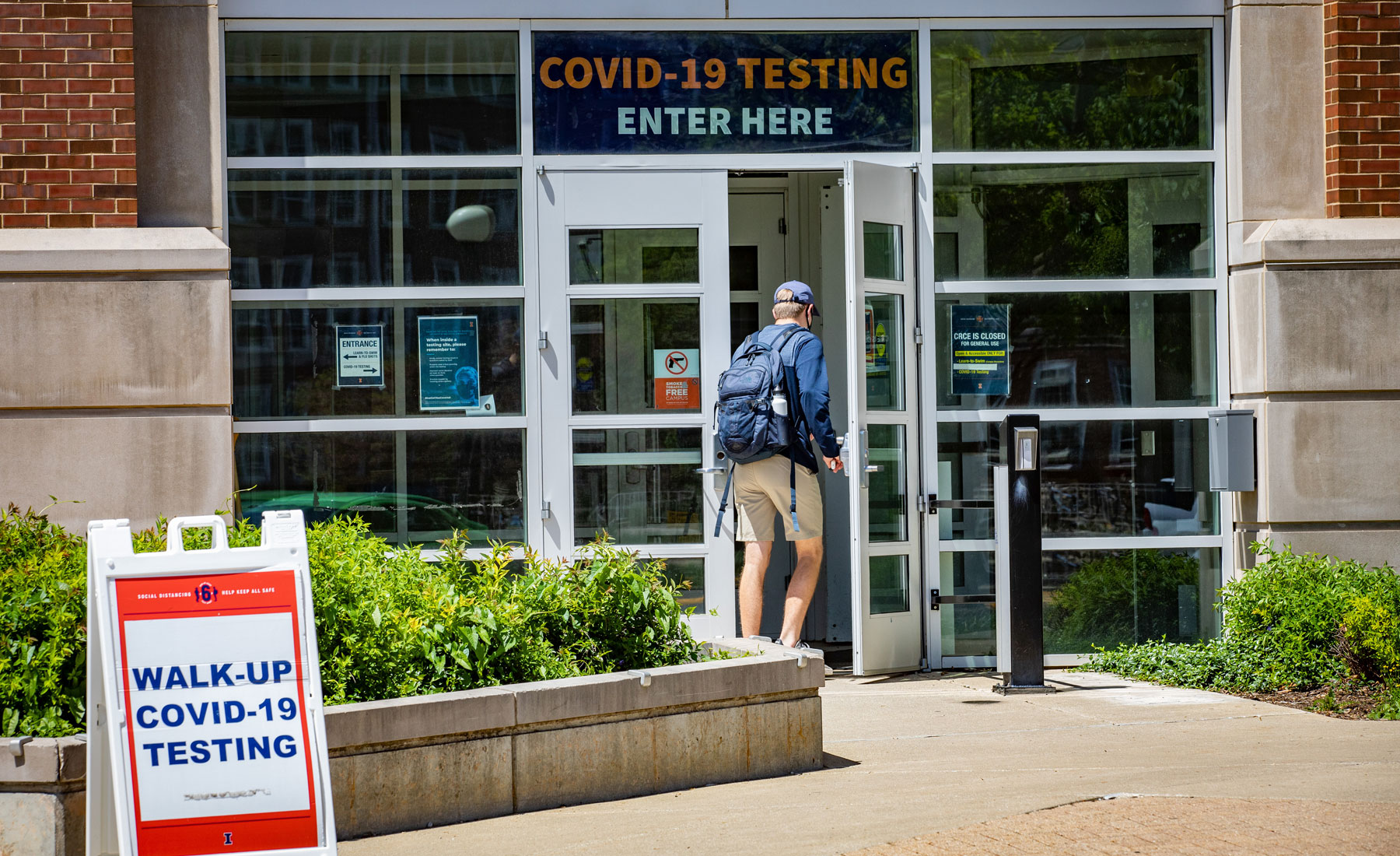

Three College of Media faculty have received a $25,000 research grant from SHIELD Illinois for a project that will examine public attitudes, news framing, and online engagement about SHIELD COVID-19 testing. The analyses will help inform best practices and strategies for future campaigns addressing public health crises.
SHIELD is the University of Illinois System’s statewide saliva-based COVID-19 testing program that began in Fall 2020. More than 1,700 K-12 schools, community colleges, universities, and other organizations make up the program’s client base.

The faculty members conducting the research are Ewa Maslowska, assistant professor of advertising; Margaret Ng, assistant professor of journalism; and Harsh Taneja, associate professor of new and emerging media in the Charles H. Sandage Department of Advertising. Last spring, they formed a research group called MUSE to study media users and consumers through interdisciplinary methods. The SHIELD research is the group’s first funded project.
Maslowska, Taneja, and Ng broadly research media usage: Maslowska specializes in marketing communication and consumer behavior. Taneja focuses on how and why people consume media. Ng studies how data from social media platforms can be used to explore an event or issue in a different way.
The group will investigate social media discourse, news coverage, and other data to understand how the public responded to SHIELD’s communications. Their findings will be published in academic articles, compiled into a report for the general public, and posted on an interactive online dashboard in summer 2023. SHIELD plans to use the findings to further benefit the state of Illinois.
In initial observations, Taneja said that COVID-19 is different from past public health crises because of the influence of social media.
In terms of physical transmission, “COVID -19 is perhaps similar to several other bugs in the past in how far and fast it can spread,” he said. “And then you add social media, which is available to both increase the scale and the speed of transmission of information about it.”
In a state as diverse as Illinois, geographic differences also must be considered when analyzing public perceptions of COVID-19.
“We are very mindful of the fact that attitudes towards COVID, in general, downstate, tend to be very different from attitudes towards COVID, than, let’s say, in Chicago,” Taneja added.
Even though vaccine hesitancy has existed before COVID-19, Ng said that this pandemic was the first time every citizen needed to make a personal decision about vaccination in a relatively short period of time. While social media has become the main source of information, misinformation about vaccination is also widespread.
“With minimal restrictions on post content, misinformation easily becomes widespread on social media,” Ng said. “That’s why a study on the SHIELD health campaign will reveal the opportunities and challenges the effort encountered in the past two years.”
The last few years have given media scholars like Ng and her colleagues new research opportunities. The pandemic and other public health crises shouldn’t just be understood from a biological perspective, she argues.
“It really depends on the communication side—communication scholars have a very unique position to help make sure that society as a whole can get that benefit from vaccination,” Ng said. “And I’m very glad that we got the funding so that our media expertise can benefit the whole state at both a societal level and at an individual level.”
—Vivian La, Communications Intern
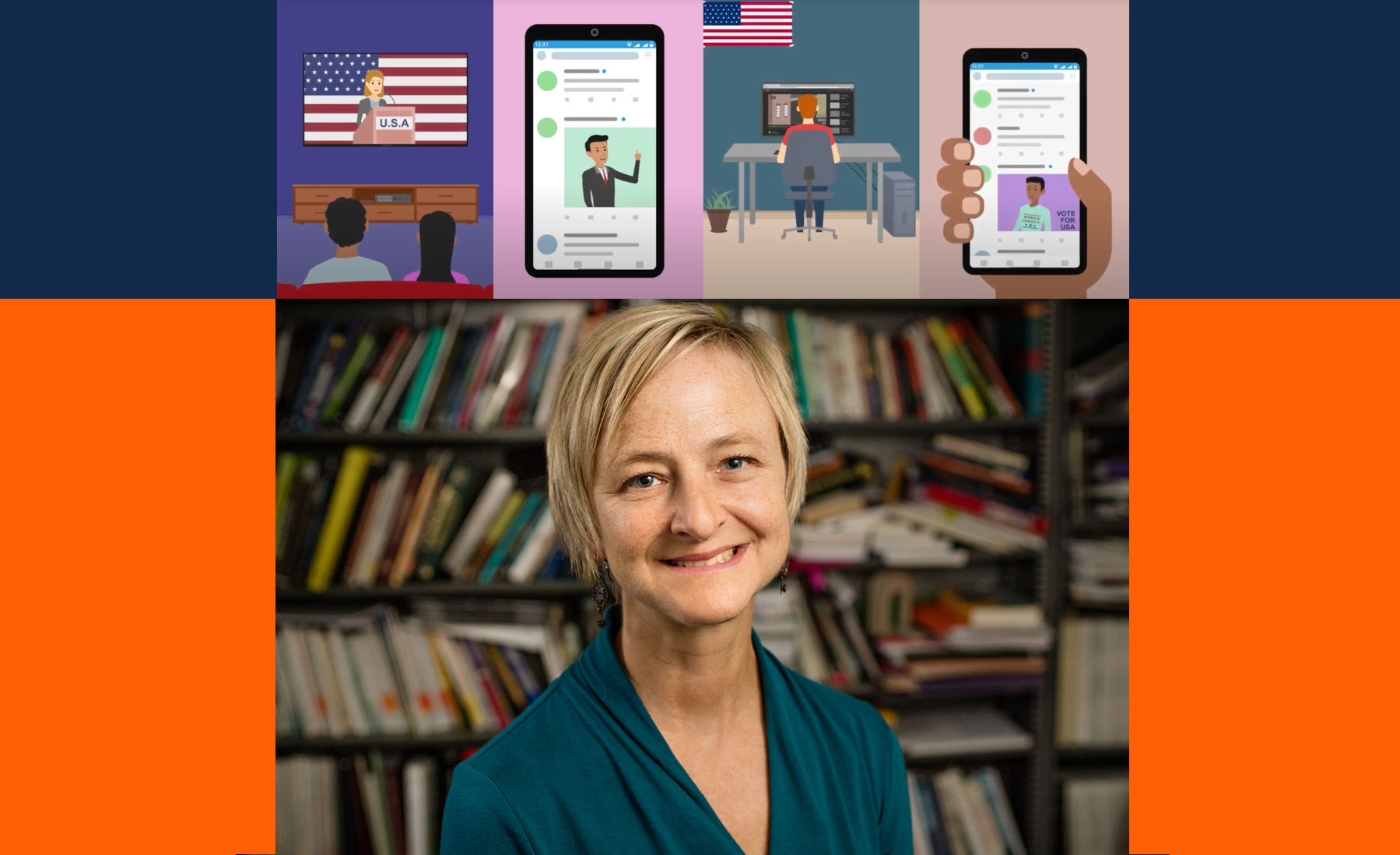

It can be challenging to distinguish between a paid political ad and one that is not in today’s media environment, especially on social media. News Bureau editor Lois Yoksoulian spoke with advertising professor Michelle Nelson about the topic. New research from Nelson and her colleagues found that most adults—even those who are politically engaged and educated—do not fully understand online targeting, sources and funding for political ads, or the unique regulatory environment for political speech that is different from commercial speech.

Are political ads regulated, and how do they differ from commercial ads?
Political ads are a form of political speech, which is given more protection than commercial speech under the First Amendment, with the idea that the free flow of political information is essential for the functioning of a democracy. Commercial speech, which includes advertising for products and services, has been defined as speech that merely proposes a commercial transaction.
Only commercial speech is regulated by the Federal Trade Commission, motivated by the governmental interest of providing true and nonmisleading information to consumers. Not all commercial speech is advertising, and not all advertising is commercial speech. An ad for a McDonald’s burger is commercial speech, subject to the FTC rules regarding false and misleading information. An ad for a candidate is political speech, not subject to the FTC rules or any content-based guidelines.
However, the Supreme Court has said that time, place and manner restrictions can apply to political ads. For example, laws that require funding disclosure don’t compromise the content of the speech because they provide citizens with information regarding the message’s source. So, there is some regulation for political ads regarding source disclosure.
Is this level of regulation adequate?
No, especially on social media. For example, the “Stand By Your Ad” provision of the 2002 Bipartisan Campaign Reform Act, which requires anyone running for federal office to include the “I approve this message” as part of their ads, only applies to TV and radio, not to social media.
What this means for U.S. voters is that they may not be able to know the true source of the political message. It’s like the Federal Election Commission hasn’t caught up to what’s happening in the media environment. Increasingly, people are getting their political ads and information online. I believe that people have the right to know the source of messages so they can best evaluate the message.
False ads can be challenged through defamation and libel, but those processes take time. The challenge must be filed by the parties who feel wronged, and they probably will not be resolved before that campaign period is long over. So, these measures probably are not strong deterrents.
Any regulations about the message content may be seen as ”chilling” political speech. I’m not sure we want the government to censor ads’ content.
How can citizens determine who is behind a political ad if it is unclear?
As political speech, political advertising is regulated by the FEC. There are clear rules for source disclaimers such as who paid for it, whether it was endorsed by the candidate—on radio, newspaper, TV, outdoor and “communications placed for a fee on another person’s website”—but none exist for social media.
Ironically, some of the big tech companies are offering transparency. You can find out some information. For example, Meta offers an ad library, so you can see which organizations are spending money on the platform and how many ads were run, etc., and from there, you could click on the organization’s website. Google now has a verification process and offers transparency on who’s running ads online, and the FEC offers information about super PACS. People could visit OpenSecrets.org to find out more information about super PACS, as well.
However, that’s a lot of work. Most people probably do not have the time for this intensive search. It would be better, in my opinion, if there were clear, consistent and conspicuous guidelines for source disclosure in digital media, where people could see the organization and link to the organization’s website and donors.
What are some of the differences between political ads that we might see on television versus those we might encounter on social media?
First, it’s pretty easy to recognize a TV or radio ad. However, it’s not always so easy in social media. The FTC requires that paid advertisements or influencers include a “clear and conspicuous” disclosure—but not all ads have that disclosure, or it’s not so clear and conspicuous.
Second, you may not encounter political ads on all of your social media. In October 2019, Twitter announced it would stop accepting paid political advertising. This change was a significant move for a technology company whose revenue relied partly on political advertising. The action set off a series of decisions from other social media companies to regulate paid political advertising. While some companies also banned paid political advertising or instilled fact-checking, some platforms remained open for paid political advertising. YouTube announced it would do some limited fact-checking but would not allow microtargeting of ads.
I doubt there will be any governmental restrictions on political advertising on social media, but, interestingly, more than half of American surveyed in a Pew Research Center poll believed that social media shouldn’t allow political ads.
Third, some research suggests that a more diverse set of candidates advertise on Facebook, and the content of the messages may be less negative, less issue-focused and more partisan than TV commercials. This probably means that social media advertising is more targeted—probably to those who already agree with the messages. So we aren’t seeing a broad array of messages in our social media feed—we see those that we already know or with which we agree. The messages may be more like reminder messages or nudges to vote than informational content.
What steps can citizens take to increase their political advertising literacy in preparation for the current midterm and upcoming 2024 presidential election cycles?
Everyone could learn more about political advertising regulations and sources. Our research group made the brief video (see below) to help all voters understand some of the key issues. We also have a website with more information, tips and even a quiz where you can check out your knowledge.
Also, the Annenberg Public Policy Center runs a fact check website where you can get all kinds of information on ads and check out if an ad is false or misleading from across the political spectrum.
And know that even though most political ads are probably providing some good information, we should all carefully scrutinize the information and check a variety of sources before entering the voting booth.
Editor’s note: To reach Michelle Nelson, call 217-344-5068; email nelsonmr@illinois.edu.
—Lois Yoksoulian, Physical Science Editor, University of Illinois News Bureau