Aiman’s research focuses on advertising, consumer behavior, neuromarketing, and biometrics. She applies methods such as eye-tracking, facial recognition, and GSR to study how consumers process advertising messages and make decisions.
Recent Publications and Presentations
Paltaratskaya, V., Zhang, J., Gupta, M., Kazybayeva, A., Peterson, M., & Wise, K. (2023– 2024). Visual attention, comprehension, and memory for visual metaphor in advertising. Submitted to the conference: The Association for Education in Journalism and Mass Communication (AEJMC).
Kazybayeva, A., Smykova, M., & Dushchanova, M. S. (2023). Investigating consumer behavior and psychotypes in the luxury real estate market. KazUEFIT Bulletin, 2(51)
Kazybayeva, A., Rakhimbekova, A., & Wise, K. (2024). Assessing educational potential of AI-generated content: Eye-tracking approach. Poster presentation at Bolashak 23.
Smykova, M., Orazgalieva, E., Abuzhalitova, A., & Kazybayeva, A. (2021). A study of consumer attitudes toward university advertising: A neuromarketing approach. Bulletin of the Karaganda University, 4(104). [In Russian]
Smykova, M., Kazybayeva, A., & Sokhatskaya, N. (2021). Neuromarketing studies of tourism service providers’ advertisements. Bulletin of Eurasian National University named after Gumilyov, Economics, 4. [In Russian]
Academic Roles
Aiman previously served as Dean of the School of Management at Almaty Management University (AlmaU). Before that, she was Program Leader for the Marketing educational program and Chair of the Department of Management, Marketing, and Logistics. She also founded and continues to head the Neuromarketing Laboratory at AlmaU, combining research and practice in consumer behavior studies. She has taught courses in marketing, marketing research, consumer behavior, and neuromarketing.
Currently, Aiman is a PhD student in Communication and Media at the University of Illinois Urbana-Champaign, specializing in advertising, where she also serves as a Teaching Assistant.
Awards and Honors
Scholar of the “500 Researchers” Bolashaq Program (2023)
The Best Teacher of Higher Education Institutions of the Republic of Kazakhstan (2020)
Member of the Presidential Personnel Reserve of the Republic of Kazakhstan
My primary research interests lie in persuasion and information behaviors, with a particular focus on how consumers process and respond to health-related advertising crafted with persuasive strategies.
Before joining ICR, I earned my MSc in Communication Science from the University of Amsterdam, where I focused on persuasive communication, and received my Bachelor of Economics from Renmin University of China.
Courses Taught
I am a Teaching Assistant for ADV 284: Consumer Insights and ADV 305: Advertising Technology and the Digital World for the Fall 2025 semester.
What Most People Don’t Know about Me
I am a huge fan of fantasy stories! I have written a total of over 100,000 words of fan fiction, with some stories still in progress.
Film Theory, with a focus on Third and Fourth Cinema
Indigenous Representation in Film
Media and Sociology: Representation, Exploitation, and Labor
Intersectional Approaches to Media Studies (race, class, gender, sexuality)
Critical Theory and Media’s Impact on Empathy and Social Responsibility
Recent Publications/Presentations
“Children of the Corn Sweats” (film in development)
Recipie for Revenge (2024): Director of Photography
“Indigenous Voices Reshaping Cinema: Native American Representation in Dances with Wolves (1990) and Montford: The Chickasaw Rancher (2021).” Oregon Undergraduate Research Journal: McNair Special Issue 21, no. 3 (August 2023): 29–45. https://doi.org/10.5399/uo/ourj.
Academic Roles
Thomas is a Graduate Teaching Assistant and Graduate Student Representative for the Society of Cinema and Media Studies. He previously served as a TA for “Billy Wilder’s Hollywood,” and was a Discussion Leader for “Introduction to Cinema” and “Introduction to Television.”
Awards and Honors
Shriram Fellow, USC School of Cinematic Arts (2023–2024)
McNair Scholar, University of Oregon (2023)
Cinema Studies Departmental Honors, University of Oregon (2023)
New Century Scholar, All-USA Academic Team (2021)
All-Oregon Academic Team (2021)
What Most People Don’t Know about Me
What most people don’t know about me is that my journey has taken me to some truly unexpected places—both geographically and professionally. During my years in the retail construction industry, I worked across 44 U.S. states and two territories, which gave me a deep appreciation for the sheer variety of American life and landscapes. But one of the most surreal experiences came years later: I stood within a football field’s distance of Reactor #4 at the Chernobyl Nuclear Power Plant—a place marked by tragedy, history, and myth. Just two days after that, I stood on the Potemkin Stairs in Odesa, the exact location where Sergei Eisenstein shot his iconic montage sequence. That moment was a strange and moving collision of history, media, and memory—one that reminded me why I’m drawn to cinema and its ability to shape how we understand the world.
August 20, 2025 | Sharita Forrest, University of Illinois News Bureau
Teachers and high school students live in vastly different media worlds, and that’s one of several digital divides that undermine the efficacy of state-mandated media literacy instruction in Illinois high schools, a recent study suggests.
Professor and head of Advertising Michelle Nelson (right) and ICR doctoral student Sakshi Bhalla conducted a study that explored the state of Illinois’ mandate on media literacy instruction for high school students.
The researchers—Institute of Communications Research doctoral student Sakshi Bhalla and Michelle Nelson, professor and head of advertising, both of the University of Illinois Urbana-Champaign; and Michael A. Spikes, director of the Teach for Chicago Journalism Program at Northwestern University—interviewed 20 educators from across the state of Illinois about the nature and challenges of media literacy education in their schools. The findings, published in the Journal of Media Literacy Education, indicate that these efforts are undermined by differing media choices, skills, and perceptions of media literacy, as well as socioeconomic and political disparities.
Under a recent Illinois law, Public Act 102-0055, public high schools are required to provide at least one unit of media literacy instruction. However, a significant hurdle to effective instruction is the digital divide between the media experiences of teachers—whose media experiences are based on legacy media such as television and social media platforms with less relevance to youths, such as Facebook—and those of their students, whose worlds revolve around digital and social platforms such as TikTok and Snapchat, the researchers said.
“We discovered that there are a lot of differences in how teachers and students access the media, whether it is in terms of the platforms or more structural determinants such as teachers getting news from mainstream news media, for example, and students getting news from TikTok or partisan commentators on YouTube,” said Bhalla, the first author of the paper. “To foster meaningful media literacy, we must consider the role of students’ lived experiences, while extending lessons on media access, evaluation, and creation across a stratified population.”
Recruited from different regions of Illinois, the educators in the study represented a diverse group in terms of school size, socioeconomic profiles, and participants’ disciplines, which included art, English, and library sciences. Participants were interviewed about their awareness of the Illinois law, their understanding of the aptitudes that constitute media literacy, the challenges of teaching the subject in their schools’ settings, and the resources they need to support instruction, Nelson said.
Because the state mandate was passed without providing resources or much training, some teachers felt constrained because they did not want to navigate into political waters, and they were left wondering what to do.
Michelle Nelson
Professor and Head of the Charles H. Sandage Department of Advertising
The Illinois law, which took effect at the beginning of 2022-23 school year, defines media literacy as “the ability to access, analyze, evaluate, create, and communicate using a variety of objective forms, including print, visual, audio, interactive, and digital texts.”
However, the researchers said that this definition of media literacy presumes a single, shared media experience that is no longer accurate, and “the idiosyncrasies of unique media use—particularly in social and digital media—mean there may be no ‘common ground’ upon which to analyze, evaluate, or create.”
Accordingly, some teachers said they were unfamiliar with the platforms used by their students and relied on their pupils to teach them how to use these technologies, while others struggled to respond when students mentioned media or commentators they used for news and information.
Nearly half of those in the study worked in schools where at least 40% of the students were low income, and the researchers said that students’ socioeconomic profiles determine whether students are taught basic functional skills or higher-level analytical skills. In low-income schools, instruction focused on building functional skills such as keyboarding and other technical proficiencies associated with jobs, whereas teachers in more affluent school districts said that their curricula focused on higher-level skills such as critical analysis of the media landscape and assessing media’s credibility and accuracy.
With few resources for planning course content, some teachers based instruction on current events, with students discussing controversial issues such as gun violence and the war in Ukraine.
“Because the state mandate was passed without providing resources or much training, some teachers felt constrained because they did not want to navigate into political waters, and they were left wondering what to do,” Nelson said. Teachers grappled with maintaining neutrality during class discussions, which they said were often “hijacked” by students’ emotional responses to particular issues based on the types and political leanings of the media they consumed, along with those of the students’ parents and the broader community.
“Students are discovering themselves through different political ideologies. And teachers found students to be a lot more political following the 2016 presidential election, issues surrounding COVID-19, and movements such as Black Lives Matter and Blue Lives Matter, and how all of these things were entering the world of emerging adults,” Bhalla said.
But when teachers pointed out fallacious information in the media or pointed out credible sources to correct misinformation, they said their pupils perceived them as biased or responded in ways that indicated they were unconvinced by facts.
“Those in the study also struggled with the complexities of defining right-leaning or left-leaning media and evaluating media bias, because it’s multidimensional and changes with every article, news story, and political event,” Bhalla said.
Despite these many challenges, most of the teachers in the study believed that teaching media literacy and discussing controversial topics in today’s polarized climate are important. However, to be effective, media literacy education in Illinois schools must understand the media world that young people inhabit; provide better resources for them, their teachers, and schools; and provide learning for all students, honing functional skills as well as higher level proficiencies, the researchers said.
The team used their findings to develop media literacy workshops for Illinois teachers during the summers of 2022 and 2023 through the Initiative for Media Education Inquiry and Action. An initiative of faculty and students in the College of Media and College of Education, IMEDIA supports teachers in integrating media education into their classrooms. “We had participants work in groups to create lesson plans and then share those with other people, so when everybody left, we hoped that they would have at least one lesson that they could implement the following school year,” Nelson said.
This fall, the College of Media announces two new department heads, seven faculty promotions, and one new faculty member.
In the Charles H. Sandage Department of Advertising, Sang-Hwa Oh has been promoted to associate professor with indefinite tenure. Carrie Wilson-Brown has been promoted to senior lecturer. Penne Heede joins the department as a new lecturer.
In the Department of Journalism, Professor Jeffrey Magee has been named interim head. He previously served in the College of Media as associate dean for academic affairs from 2019 to 2022. Alison Davis and Josh Heuman have both been promoted to senior lecturer.
In the Institute of Communications Research, Amanda Ciafone, associate professor of media and cinema studies, will serve as interim director of graduate studies for Fall 2025. Derek Long, associate professor of media and cinema studies, will return as director of graduate studies in Spring 2026.
Continuing for a second term within the college administration, Jason P. Chambers, professor of advertising, will serve as associate dean for access and engagement, and Stephanie Craft, professor of journalism, will serve as associate dean for academic and faculty affairs.
This year’s conference theme was “Leading in Times of Momentous Change: Individual and Collective Opportunities.” Presenters included faculty in the Institute of Communications Research, the Charles H. Sandage Department of Advertising, and the Department of Journalism; and graduate students in ICR’s PhD program and the MS advertising program.
The AEJMC aims to promote the highest possible standards for journalism and mass communication education, to cultivate the widest possible range of communication research, to encourage the implementation of a multi-cultural society in the classroom and curriculum, and to defend and maintain freedom of communication to achieve better professional practice and a better-informed public.
College of Media research presenters and presentations are listed below. (Please see the AEJMC conference program for complete listings and participants.)
Commission on the Status of Women, AEJMC Council of Affiliates, and Lillian Lodge Kopenhaver Center for the Advancement of Women in Communication, Florida International University
Workshop Session: Women Faculty Moving Forward: Pathways to Success
Washington Media Scholars Foundation Graduate Research Scholarship Winners
“Invisible Persuasion in LLM-Based Recommendation: How Flattery Style and Product Involvement Shape Intention to follow Recommendation and Click-to-Action via Consumer Judgment Confidence”
Seo-Jeong Heo, ICR doctoral student
“What makes generative AI ads persuasive? Regulatory Fit Theory Application”
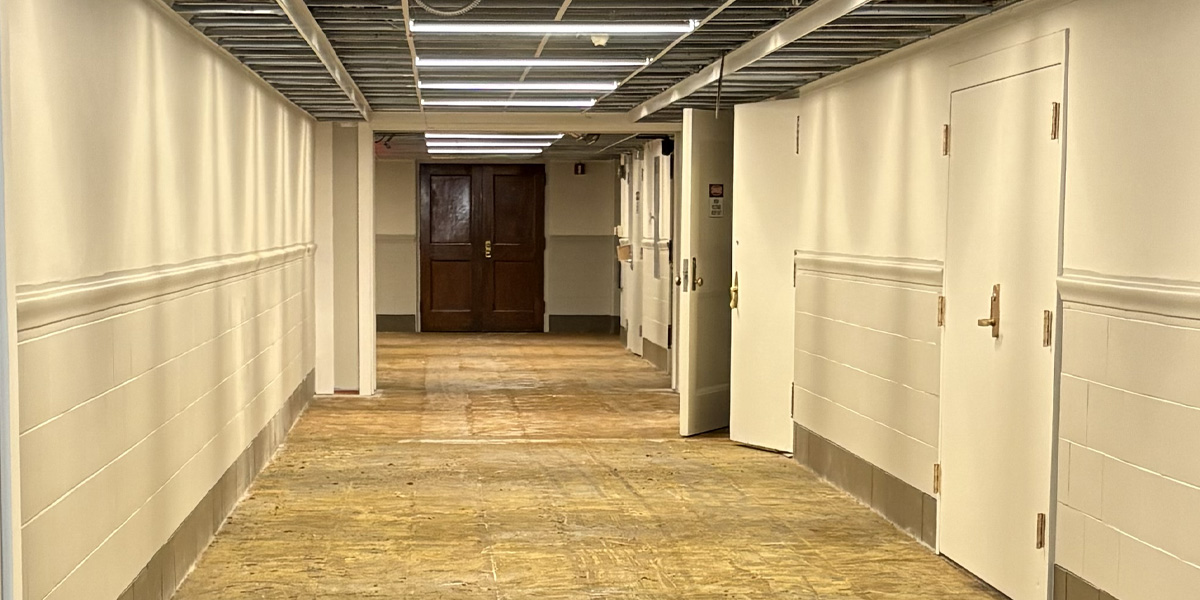
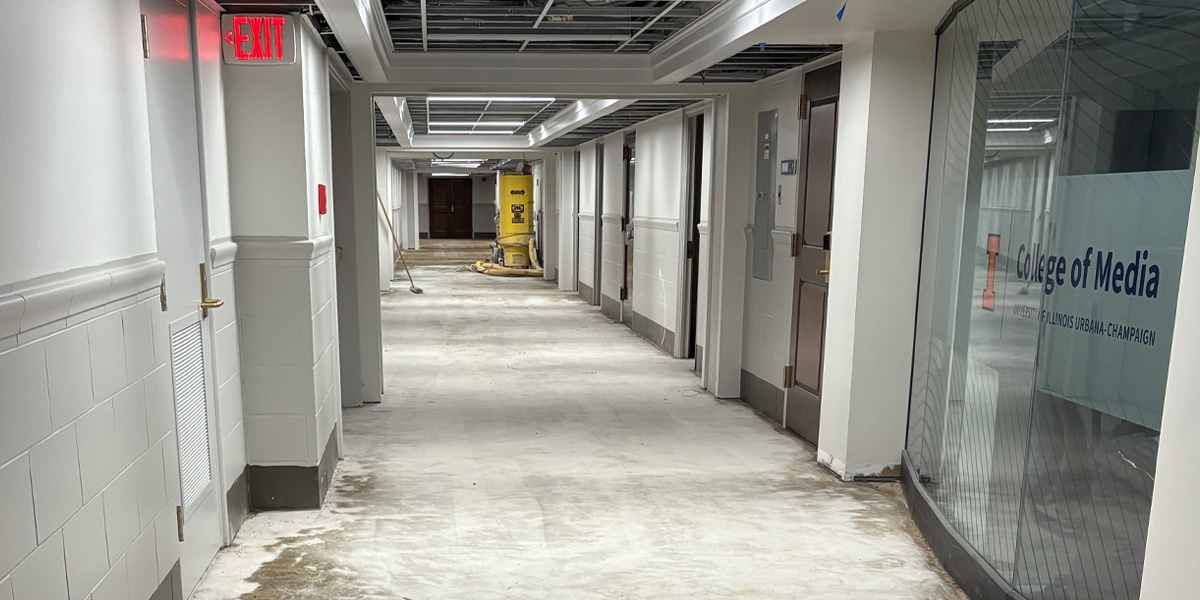
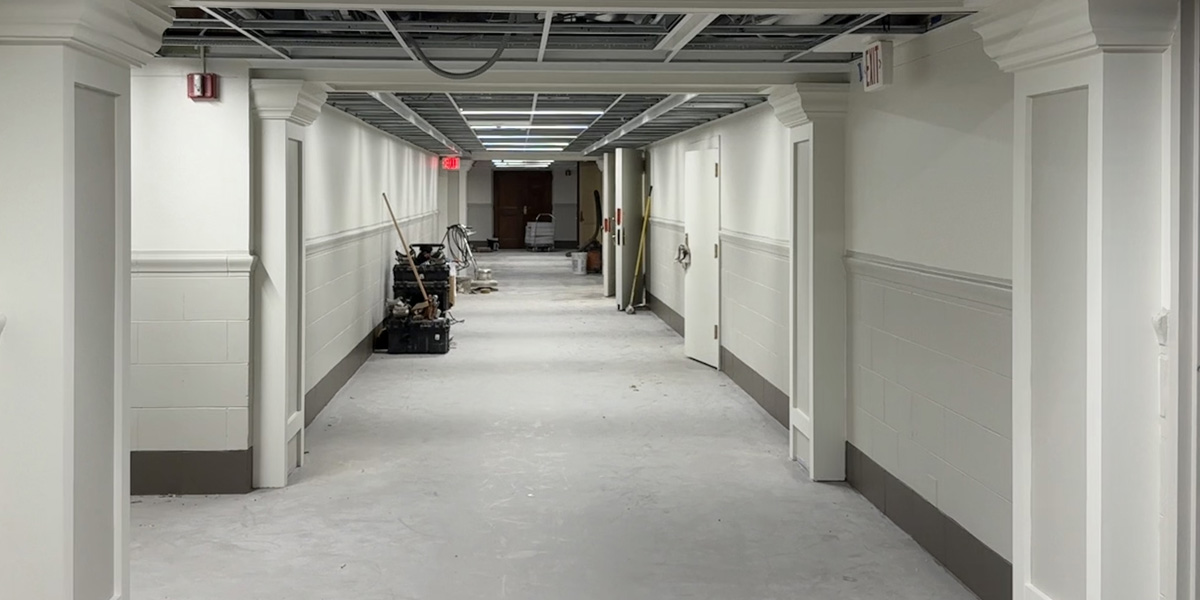
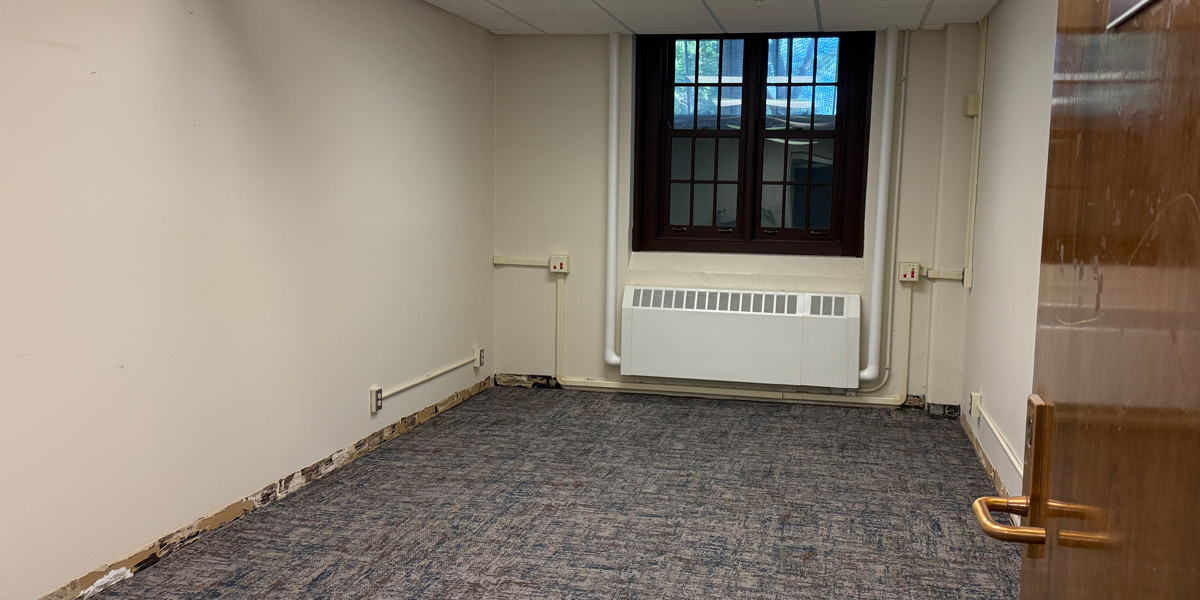
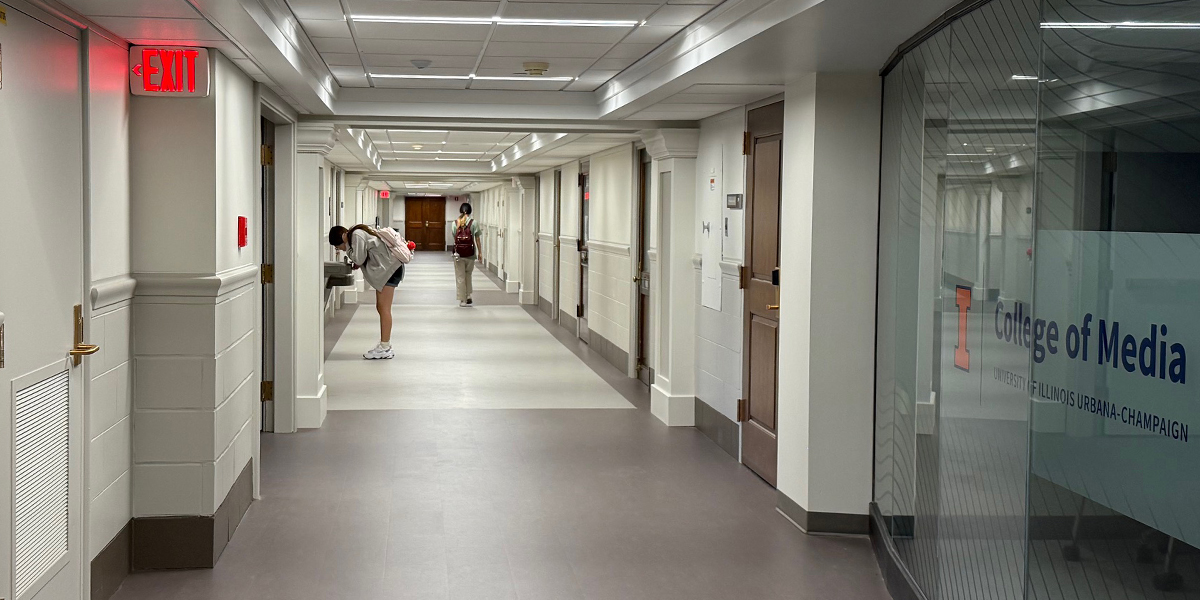
This will result in the creation of a new hybrid/flexible, state-of-the-art classroom (see architectural rendering above), which will open in Spring 2026, and a renovated main corridor, plus updated flooring throughout, including in faculty offices.
See photos depicting the original spaces, the renovation process, and the architectural renderings.
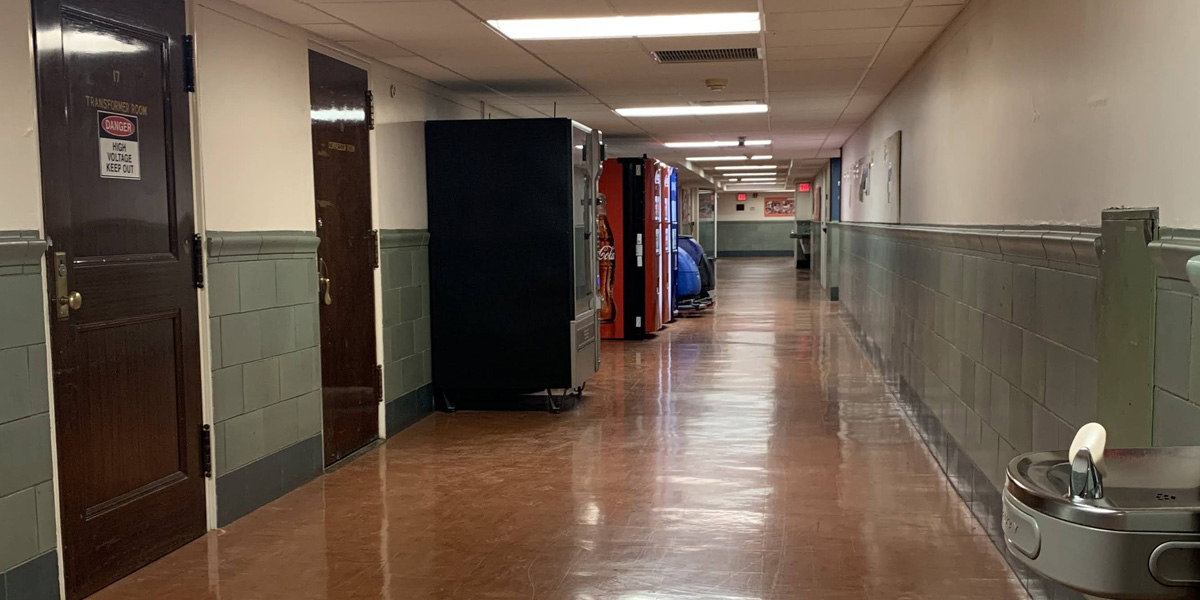
Gregory Hall Lower-Level Corridor
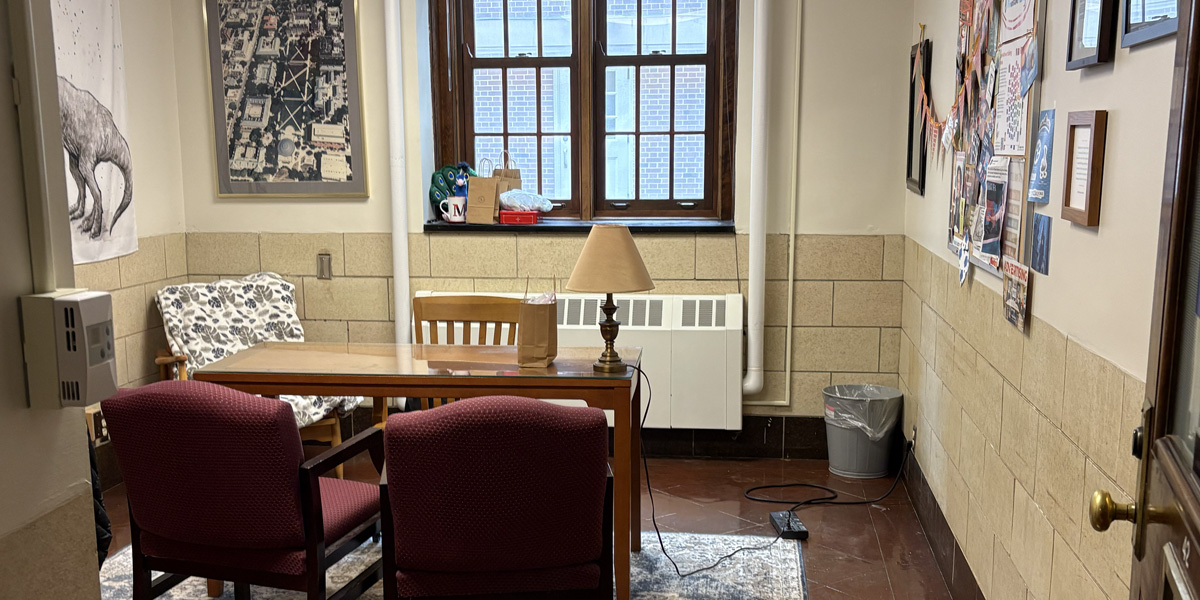
Before Renovations
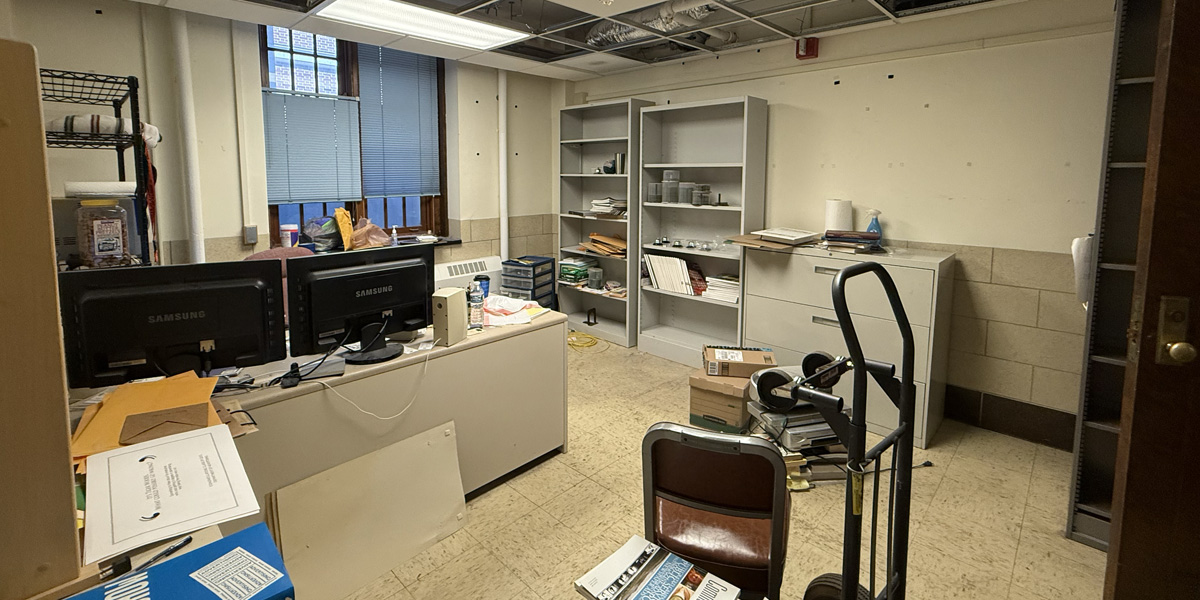
Substantial work in the lower level of Gregory Hall has not occurred since the 1990s. See photos of the original corridor and a faculty office.
Gregory Hall lower level corridor before renovations
Gregory Hall lower level corridor before renovations
Gregory Hall lower level faculty office before renovations
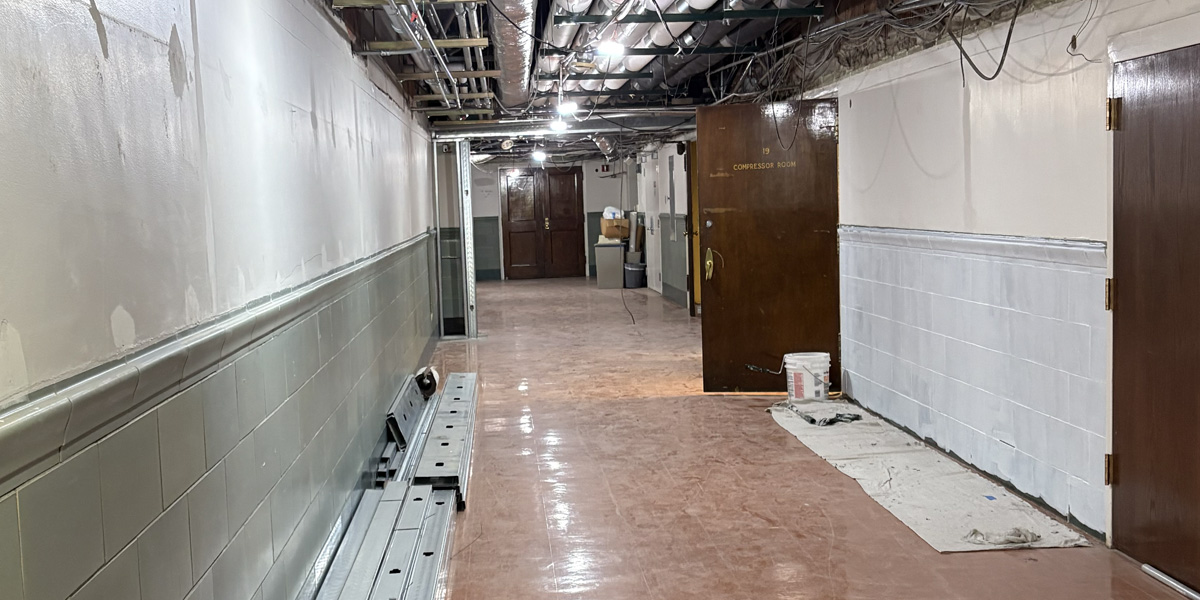
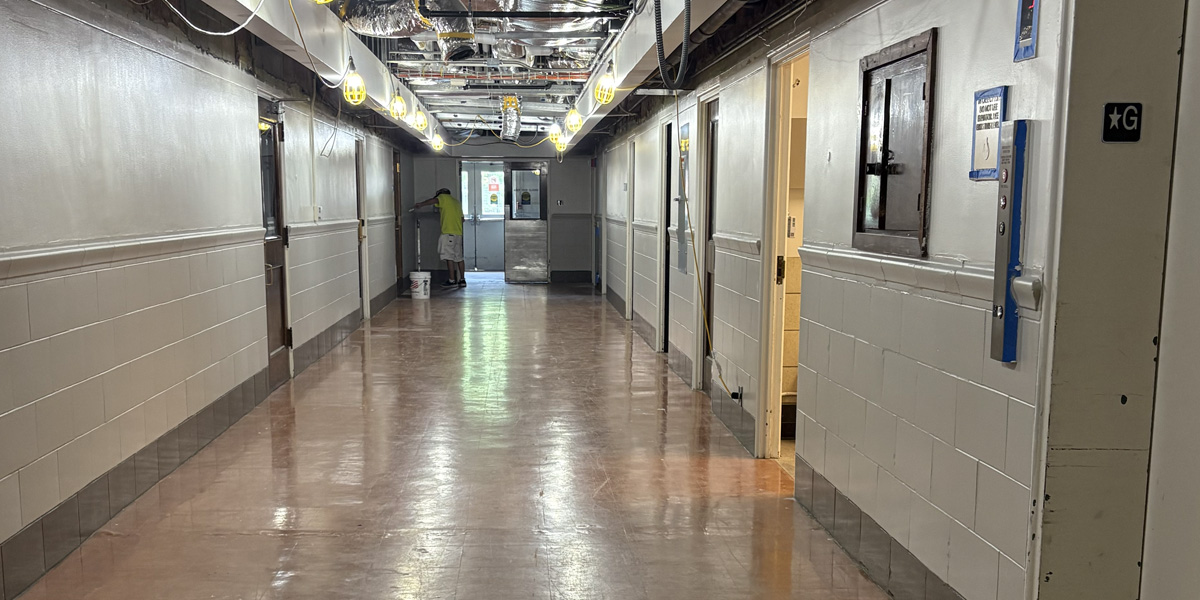
Renovation Progress
Renovations included painted walls throughout the entire hallway, including the east and west wings, new lighting, and new flooring, including in faculty offices.
Painting primer in the hallways
Painting in the hallways
Lights installed and floor removed
Floor removal process
Floor mitigated, walls painted, lights in, and portals built
Crown molding detail
New floor installed in hallway
New carpet installed in faculty office
Ceiling tiles installed
First day of Fall 2025 classes
Architectural Rendering
The corridor renovations will be complete by the start of Fall 2025. By Spring 2026, new digital signage will be installed in place of bulletin boards that previously lined the walls.
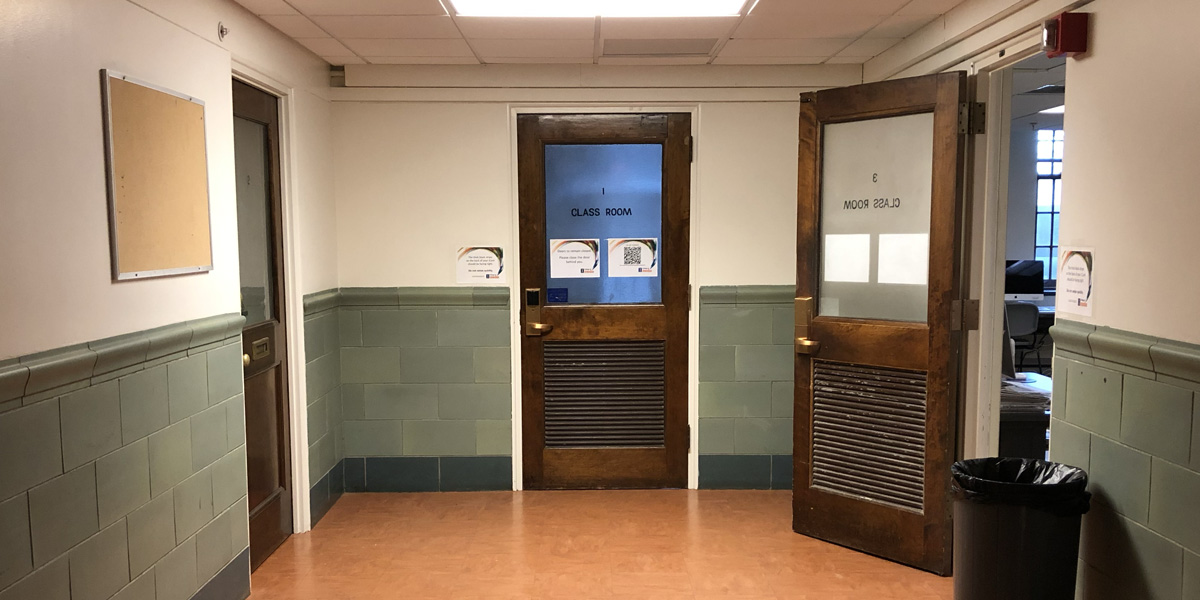
Gregory Hall Room 1
Before Renovations
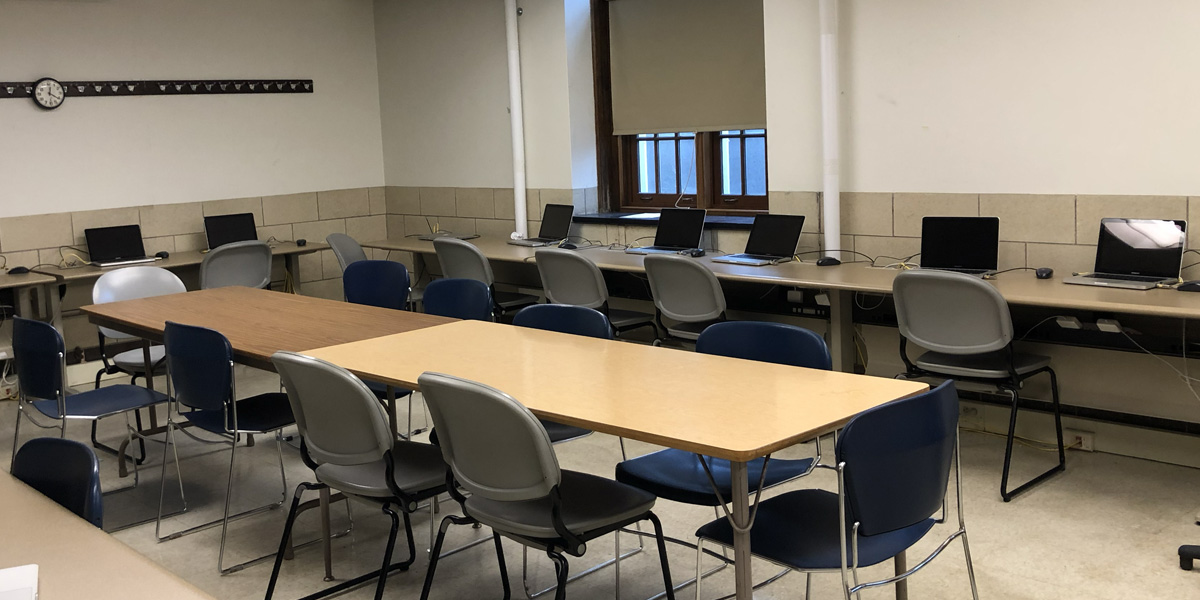
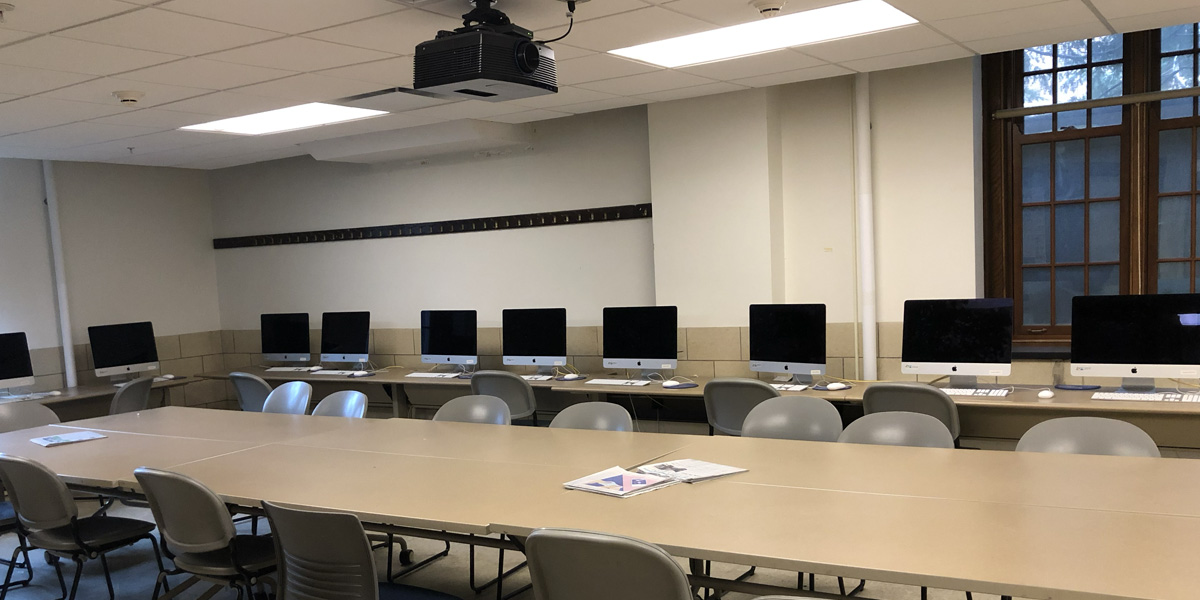
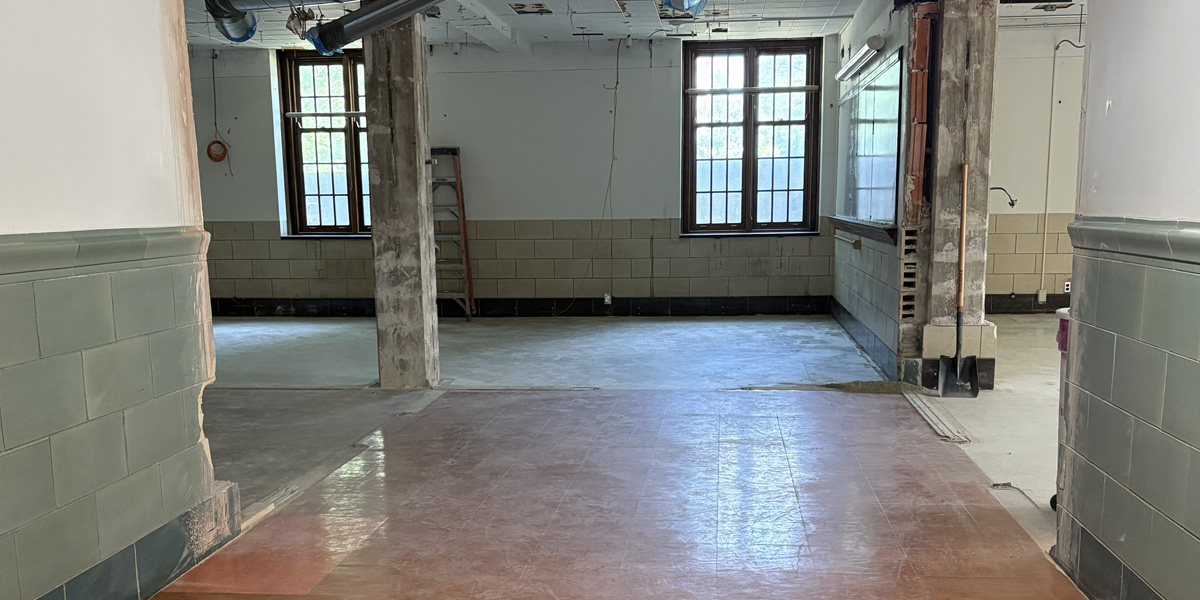
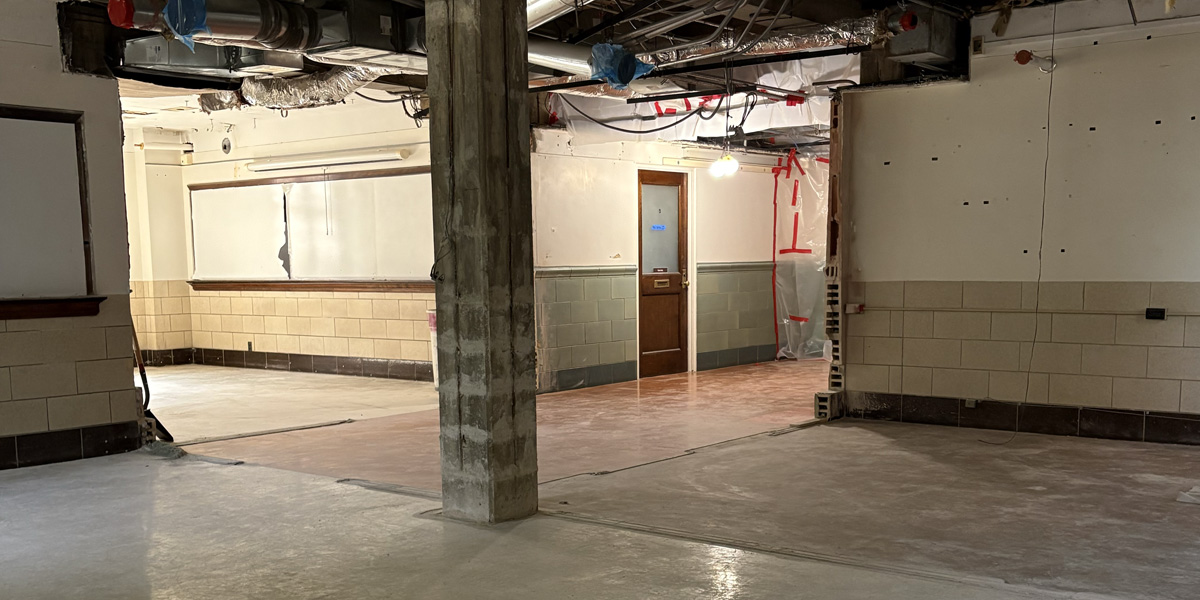
Rooms 1, 2, and 3 on the east wing were two smaller classrooms and a faculty office.
Gregory Hall Rooms 1, 2, and 3 before renovation
Gregory Hall Room 1 before renovation
Gregory Hall Room 2 faculty office moving out before renovation
Gregory Hall Room 3 before renovation
Renovation Progress
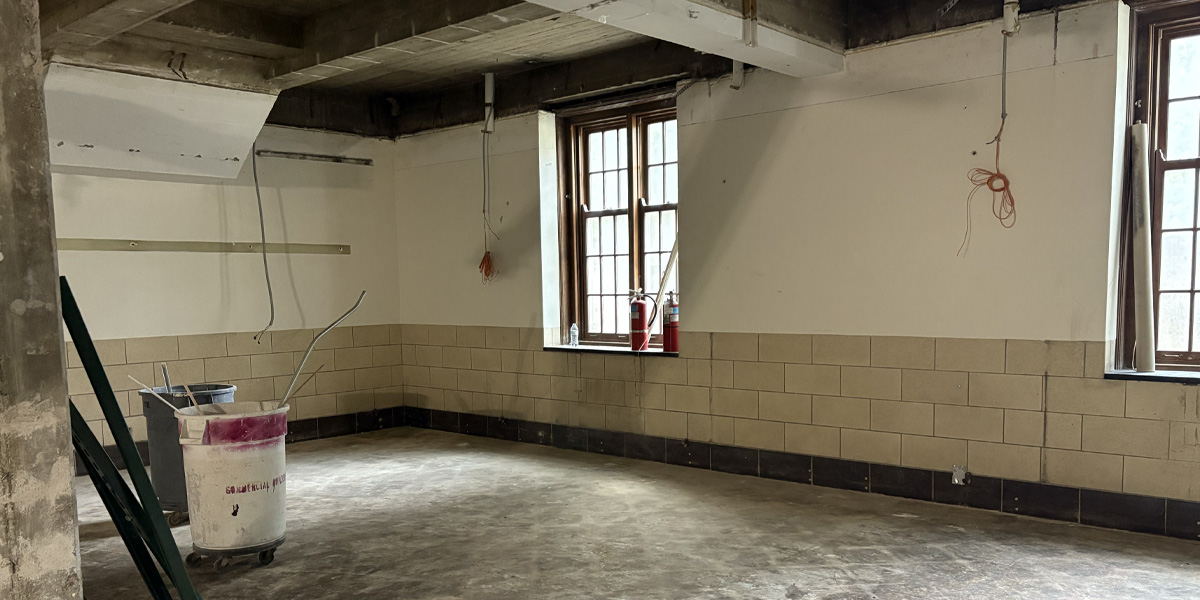
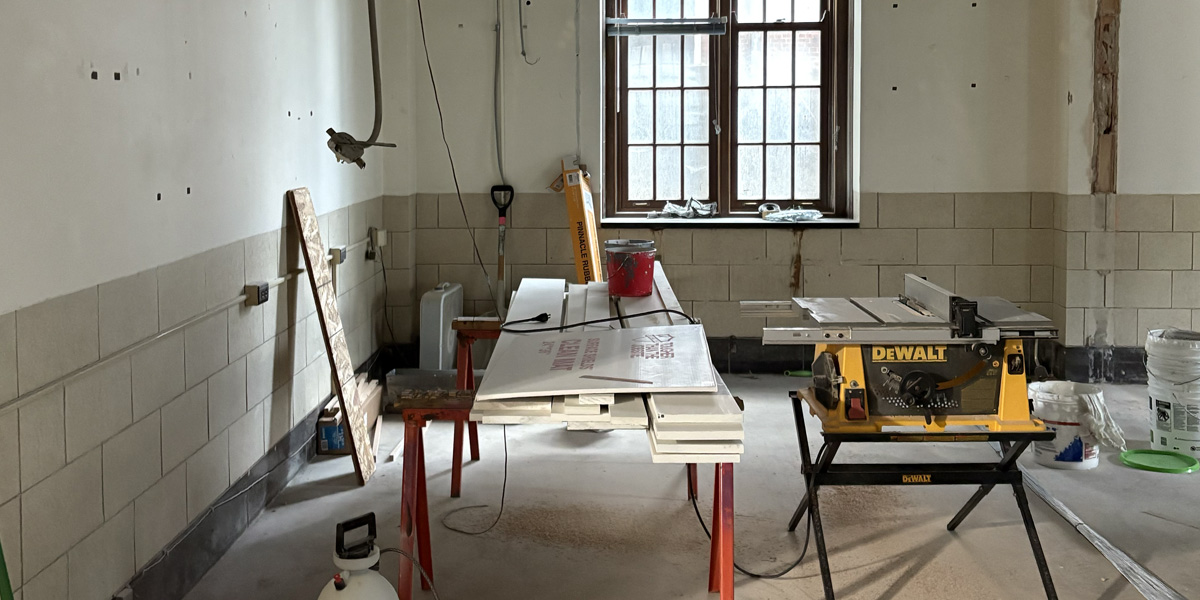
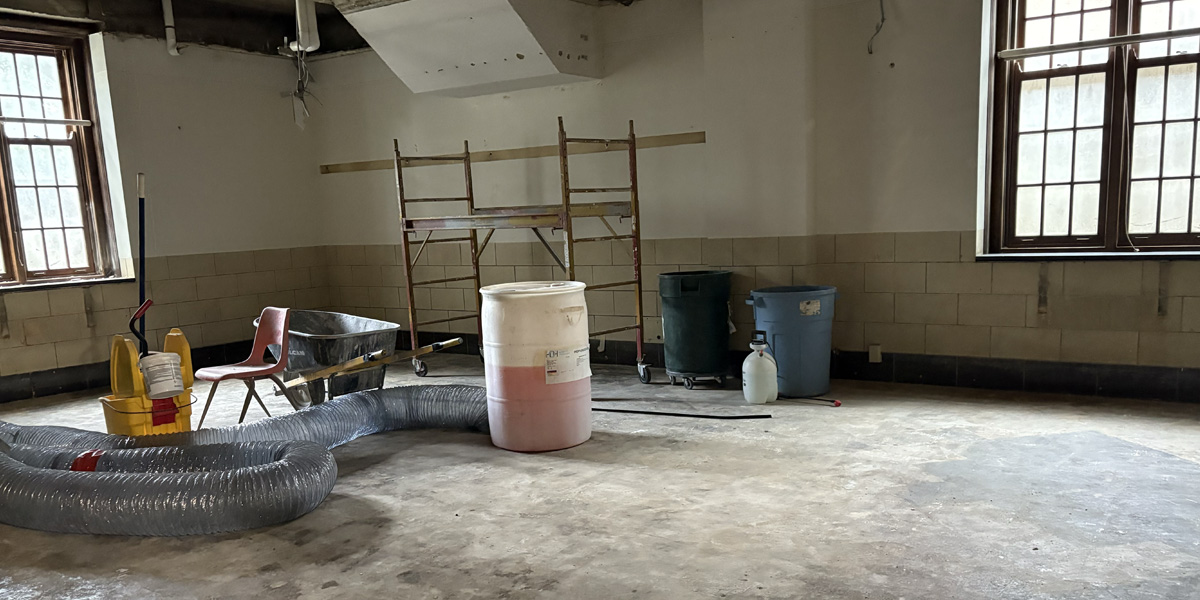
Renovations included knocking down walls to combine Rooms 1, 2, and 3 into a new hybrid/flexible, state-of-the-art classroom.
Gregory Hall Room 1 after demo
Gregory Hall Room 2 after demo
Gregory Hall Room 3 after demo
Gregory Hall Rooms 1, 2, 3 after demo, from hallway
Gregory Hall Rooms 1, 2, 3 after demo
Gregory Hall Rooms 1, 2, 3 after demo, from northwest corner
Gregory Hall Rooms 1, 2, 3, looking south, with the last wall knocked down
Architectural Renderings
By Spring 2026, Room 1 will offer classes by all three departments in the College of Media, supporting activities such as advertising brand consultations, journalism press conferences, and media and cinema studies production, and will enable hybrid teaching and conferencing.
—Photos by Meghan Burnett and Holly Rushakoff. Architectural renderings by Reifsteck Wakefield Fanning.
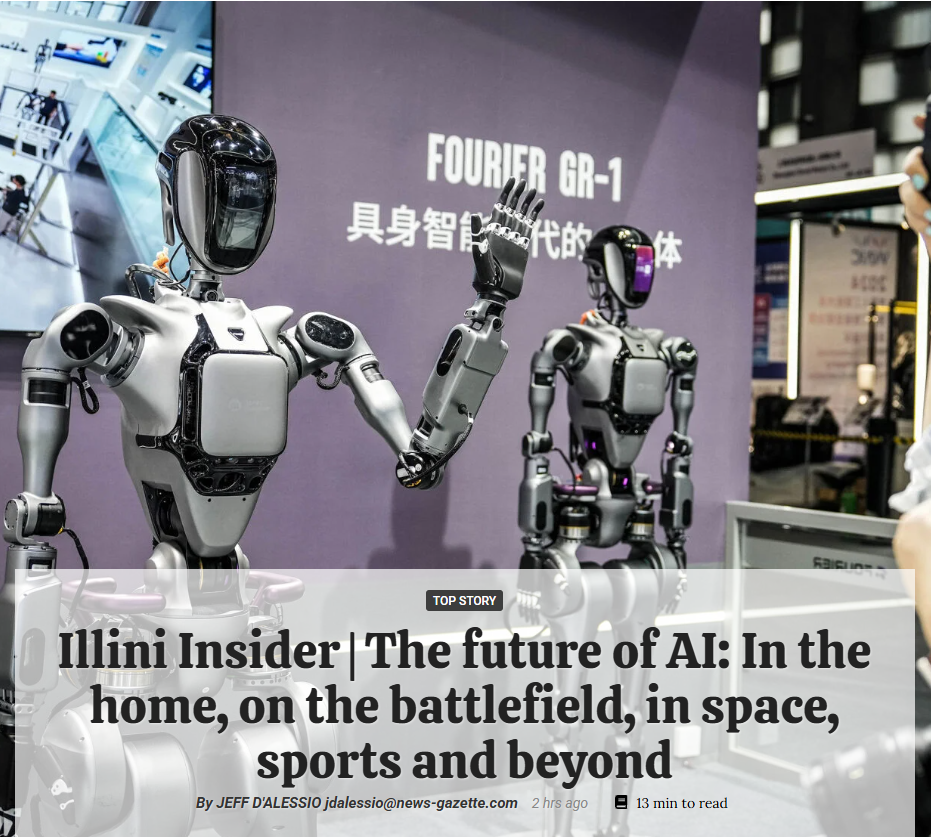
I suspect AI will continue to be used to help political strategists in creating, testing and managing campaigns. This means we’ll probably receive even more personalized ads—I’m hopeful that we, as citizens, are able to know what is AI and what is not, and what is truthful and what is not, so we can make more informed decisions in the voting booth.
Michelle Nelson, Professor and Head of the Charles H. Sandage Department of Advertising
Ready or not, here it comes—artificial intelligence is everywhere and it’s only going to become more prevalent in the years to come, say those in the know. Michelle Nelson, professor and head of the Charles H. Sandage Department of Advertising, was one of several University of Illinois faculty who shared future predictions of AI in their area of expertise in this News-Gazette article. Nelson, who offered insights about AI and political advertising, said while artificial intelligence is used in many ways across the advertising industry, humans are still needed in the field.
Faculty, graduate students, and recent alumni from the College of Media co-presented various topics of research at the 75th annual International Communication Association Conference—the largest academic conference for communication scholars—on June 12-16, 2025, in Denver, Colorado. The ICA aims to advance the scholarly study of human communication by encouraging and facilitating excellence in academic research worldwide.
This year’s conference theme addressed “Disrupting and Consolidating Communication Research.” College of Media presenters included faculty in the Institute of Communications Research and the Charles H. Sandage Department of Advertising; graduate students in the MS advertising program; and doctoral students in the Institute of Communications Research PhD program.
College of Media research presenters and presentations are listed below in bold. (Please see the ICA conference program for complete listings.)
Angharad Valdivia and Supathida Kulpavaropas
Intersectional Experiences of Oppression and Resistance
Chair: Angharad Valdivia, Professor Emerita, Institute of Communications Research
Making Sense of AI Across the Media Industries: Disrupting Communication Research by Bridging Divides
“Enterprise AI: Hidden Ironies for Creators, Marketers, and Media Scholars”
Mike Yao, Professor of Digital Media, Advertising; Director of the Institute of Communications Research
Playing for a Better Life: Serious Games and Gamification
“The Power of Play: The Effectiveness of Serious Game on Depression Stigma”
Nansong Zhou, ICR student
Donghan Fu, Wuhan U, China
Zikun Liu, Wuhan U, China
Feminist Disruptions: Institutionalizing Gender in Communication Studies
“Intersectional FSD, a Utopia Yet to Be Achieved”
Angharad Valdivia, Professor Emerita, Institute of Communications Research
Alice Ji
Media Literacy and Information Environments
“The Effect of Message Fatigue on Visual Attention to, and Elaboration of Mental Health Infographics”
Alice Ji, ICR student
Veranika Paltaratskaya, ICR student
Kevin Wise, Professor of Advertising
Conversations With the Machine (Priming, Tensions, Failure, Impact)
“Competitors or Complements? Examining the Effect of Human-AI Interaction on Human-Human Interaction”
Maggie Zhang, ICR student
Sakshi Bhalla, ICR student
Yanbo Li
Algorithmic Bias and Transparency
Chair: Yanbo Li, ICR student
“Recommendation Transitions on YouTube”
Yanbo Li, ICR student
Sakshi Bhalla, ICR student
Harsh Taneja, Associate Professor of New and Emerging Media, Advertising
Organizers
Kevin Wise (center) with Chen (Crystal) Chen at left, PhD ’23, ICR; and Yanfang Wu at right, Wise’s former student while at Missouri
Consolidating Communication Research Through Causal Inference
Shuning Lu, U of Maryland
Ewa Maslowska, Associate Professor of Advertising
Harsh Taneja, Associate Professor of New and Emerging Media, Advertising
Nathan Walter, Northwestern U
Information Processing and Health Outcomes
“Debunking COVID-19 Falsehoods: A Test of Three Cognitive Predispositions as Buffers for Partisan Influences”
Wei Wang, U of Wisconsin–Madison
Yihan Danny Jia, Boston U
Maria Grabe, Boston U
Kevin Mudavadi, Indiana U Bloomington
Gillian Paxton, ICR student
Jennifer Hwang, U of California, Los Angeles
Jimmy Ochieng, Indiana U Bloomington
MIAO-nipulating Trust: AI Dialogue, Verification, and Cross-Platform Misinformation
“Comparing Conversational Agents’ and Social Media Posts’ Roles in Correcting Health Misinformation”
Ziyang Gong, iSchool
Junqi Shao, iSchool
Nisa Rahman, ICR student
Leona Yi-Fan Su, Associate Professor of Advertising
Personalization and Privacy
“Shh… Is Algorithm Listening?” How Folk Beliefs and Knowledge Shape Our Coping Mechanisms Against Targeted Ads”
Jiyeon Chang, ICR student
Se Il Park, ICR student
Yujin Lee, ICR student
Language and Social Interaction Research Escalator Session
“The Market of Marriage: Matchmaking and the Reinforcement of Gender and Class Boundaries in China”
Anqi Peng, ICR student
Making Sense of the Machine and the Communication with it
Mike Yao, Harsh Taneja, and ICR students
“The Minds Behind the Prompts: How Mental Models Shape User Interaction with Generative AI”
Weizi Liu (MS ’19, advertising; PhD ’24, iSchool)
Mike Yao, Professor of Digital Media, Advertising; Director of the Institute of Communications Research
“From ‘Ghostly Companions’ to ‘Invisible Mechanisms’: Exploring Lay Representations and Performance Expectations of AI Across Task Contexts”
Jiyeon Chang, ICR student
Mike Yao, Professor of Digital Media, Advertising; Director of the Institute of Communications Research
Weizi Liu (MS ’19, advertising; PhD ’24, iSchool)
Popular Media and Culture Research Escalator Session
“Reclaiming Dignity or Reinforcing Misogyny? A Study of Sigma Male Meme Localization in China”
Weiting Du, ICR student
Anna Liu
Promising Student Papers
“Online Ratings in the Social Context: Exploring Consumers’ Critical Data Literacy and Sense-Making of Numeric Information”
Anna Liu, ICR student
Communicating with the Machine: Dynamics and Sophistication
“Testing the Machine-Likeness Hypothesis: How Humans Communicate Like Intelligent Agents”
Hai Liang, Chinese U of Hong Kong, HONG KONG
Longhan Wei, Chinese U of Hong Kong, HONG KONG
Maggie Zhang, ICR student
Jiyuan Qi, Chinese U of Hong Kong, HONG KONG
Anfan Chen, Hong Kong Baptist U, HONG KONG
GATO-lyzing Minds: Digital Advocacy, Social Cues, and Online Persuasion Tactics
“When Humans Anthropomorphize Non-Humans: The Influence of Language Cues and Human Motivation on Anthropomorphism and Persuasion”
WooJin Kim, U of Colorado Boulder
Chang-Dae Ham, Professor of Advertising and Associate Head of Graduate Studies
Supathida Kulpavaropas
Advertising and Consumer Behavior
“Does the Phrase ‘Limited Edition’ Embedded in Ad Matter? The Influence of an Advertising Attribute on Consumer’s Choices and Variety-Seeking Behavior”
Supathida Kulpavaropas (PhD ’17, ICR)
Sela Sar, Professor of Advertising
Xiaowei Zhang (MS ’23, advertising)
Qing Ang (MS ’24, advertising)
Virtual Social Processes
Chair: Sela Sar, Professor of Advertising
“What Makes Fake News More Viral? Emotions as Catalyst for Fake News Virality”
Sela Sar, Professor of Advertising
George Anghelcev, Northwestern U
Qing Ang (MS ’24, advertising)
Xiaowei Zhang (MS ’23, advertising)
Critical (Race) Disruptions and Transformations in Dominant Communication Paradigms
“The Tensions Between Internationalizing and Intersectionalities in the ICA”
Angharad Valdivia, Professor Emerita, Institute of Communications Research
Update May 29, 2025: Congratulations to the students who presented “Uman Tok: Tailoring Hope, Renewing Futures in Sierra Leone” for receiving an award for Outstanding Oral Presentation at the Undergraduate Research Symposium from theOffice of Undergraduate Research! Some of these students previously won an award in 2024 for Outstanding Exhibit on this same research topic, which they continued work on in 2025.
Updated April 28, 2025
Students from all four majors in the College of Media participated in the annual University of Illinois Undergraduate Research Week, held April 20-26.
The Undergraduate Research Symposium, the signature event held on Thursday, April 24, at the Illini Union, features presentations, posters, and performances from students across campus.
Below is a list of Media student presentations as well as acknowledgements of Media graduate students and faculty who have mentored students presenting at Undergraduate Research Week.
Oral Panel
Health Modalities
“Evaluating the Persuasiveness of LLM-based Chatbots in Health Communication”
Tuesday, April 22, 4-6 p.m., Illini Union Rooms A, B, C, and South Lounge
“Salesperson-Product Matching Recommender System”
Alexia Rendon, Junior, Computer Science + Advertising, COM
“Understanding High school Students’ Experiences in a Culturally Responsive Computing Program”
Skyla Jin, Freshman, Computer Science + Advertising, COM
“Virtual Reality Game for Interactive Motion Planning”
Grace He, Junior, Computer Science + Advertising, COM
Omosefe Edomwande, Freshman, Computer Science, ENG
Undergraduate Research Apprenticeship Program
The Undergraduate Research Apprenticeship Program offers undergraduate students with little or no research experience the opportunity to work with graduate students and postdoctoral scholars on their research projects, explore the culture and process of research, and build on their existing abilities within a community of scholars.
Nina Issel, Sophomore, Journalism (COM)
Media Research Mentors
Doctoral student Veranika Paltaratskaya (above right), Institute of Communications Research, was the research mentor for Alina Huang, sophomore in communication and psychology (LAS), who presented “Understanding Consumer Interactions with Product Transparency Apps (PTAs) Using the Persuasion Knowledge Model” as part of the Social Science & Human Behavior poster presentations.
Doctoral student Alice Ji (above right), Institute of Communications Research, was the research mentor for Ayushi Maskey, junior in statistics + computer science (LAS), who presented “The Effect of Message Fatigue on Attention to Mental Health Messages” as part of the Heath & Wellness poster presentations.
Kevin Wise, professor of advertising, was the research mentor for Pushti Vora, junior in brain and cognitive sciences (LAS) who presented “The Impact of Mindless Scrolling on Dopamine Regulation and its Parallels to Gambling Addiction” as part of the Social Science & Human Behavior poster presentations.