2026 News Layout Updates


Lede left border:Either university presses will embrace new technology and offer scholarly content in new forms to researchers and under new business models, or they will follow the music industry and spend all of their resources on trying to protect their territory — unsuccessfully.

Creative team doing whiteboard excercise.
Diverse team of designers smiling while brainstorming together with sticky notes.

A new paper co-written by a University of Illinois Urbana-Champaign scholar who studies how authenticity and aesthetics intersect with branding found that interracial couples featured in advertisements enhanced brand outcomes relative to white couples, but also decreased brand outcomes relative to Black, Hispanic and Asian couples.

The findings point to such effects being driven by the perception of the couple’s “warmth,” which is either strengthened or weakened by the presence of other dominant or nondominant racial group members, said Rosanna K. Smith, a professor of business administration at the Gies College of Business at Illinois and a co-author of the research.

“We found that the perceived warmth of the couple in the ad drove brand outcomes,” said Smith, who is also a John. M. Jones Faculty Fellow and the co-coordinator of the Gies Business Research Lab. “Interracial couples increased brand evaluations and the desire to purchase from the brand relative to white couples, but interracial couples decreased brand outcomes relative to minority couples.”

The paper was co-written by Nicole Davis of the University of Kentucky and Julio Sevilla of the University of Georgia and published in the Journal of Consumer Research.

Lede no border: Either university presses will embrace new technology and offer scholarly content in new forms to researchers and under new business models, or they will follow the music industry and spend all of their resources on trying to protect their territory — unsuccessfully.

Either university presses will embrace new technology and offer scholarly content in new forms to researchers and under new business models, or they will follow the music industry and spend all of their resources on trying to protect their territory — unsuccessfully.

Liz Shallenberger

UX Liaison

Share on social

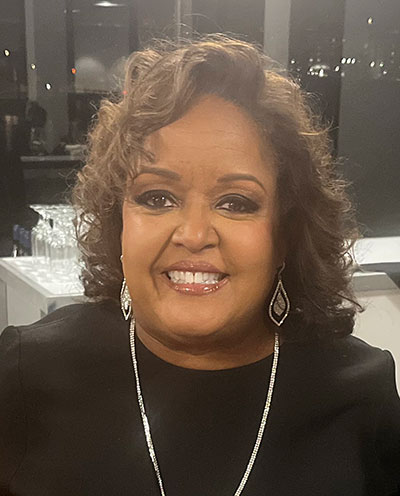
Alumna Cheryl Whitlow Thompson makes lasting impact with career as renowned multimedia journalist


Cheryl Whitlow Thompson (BS ’82, LAS; MS ’84, journalism) will be the first to tell you journalism is not just a job to her—it’s who she is. 

Cheryl Thompson

Digging deep to uncover truths, holding those in power accountable, and asking the tough questions comes naturally to the investigative correspondent and senior editor at NPR who has spent the better part of three decades making a significant impact in the field of journalism—and earning numerous accolades for her exceptional work along the way.

In December, Thompson was honored with the 2024 Washington Association of Black Journalists Legacy Award for breaking barriers and increasing access and opportunities to people of color in journalism. 

Thompson, who also teaches journalism as an associate professor at George Washington University, recently added the title of author to her long list of accomplishments.

In Forgotten Souls: The Lost Tuskegee Airmen, Thompson shares true stories from families of the first Black military pilots and airmen who didn’t return from Europe in WWII.

“I think being a Black woman whose father was a Tuskegee Airman absolutely helped me connect with these families,” said Thompson. Her debut book is set to come out in the fall of 2025.

Thompson was born and raised in Chicago. She joined her two brothers at the University of Illinois Urbana-Champaign and earned a bachelor’s degree in speech communication in 1982. After graduation, Thompson considered going to law school but decided to pursue a master’s degree in journalism after working for a semester at an NBC affiliate in Chicago.

Thompson says she has fond memories of her time at Illinois, especially as a member of the Black Chorus led by the legendary conductor and professor of music Ollie Watts Davis, and as a student of professor of journalism Robert “Bob” Reid, who passed away in 2004.

“My savior was Professor Bob Reid. He was my advisor, and he was my savior. He really cared and had a big hand in whatever success I have had,” she said.

Thompson, who had mostly broadcast experience coming out of college, joined The News-Gazette after graduate school where she began to cultivate her inquisitive nature.

“I just had this sort of curiosity. When I would [work on] stories, I wanted to know more and more and more,” she said.

It’s also where she found another important mentor in John Foreman, long-time editor and publisher who passed away in 2018.

Thompson said she learned a lot from Foreman, including how to dig deeper on a story, and kept in touch with him long after she left the newspaper.

“I sent him every big story I did over the years because I wanted him to be proud and see what I turned into,” she said in this News-Gazette article.  

“I still say what we do is very honorable, and I don’t apologize for it,” she said. “It’s powerful. We can have impact, and we can make a difference.”

Thompson said she would always receive a handwritten note from Foreman in return saying, “I’m proud of you, kiddo”—a gesture she greatly appreciated.

If Thompson’s fire to become an investigative reporter began at The News-Gazette, her post at the Los Angeles Daily News really stoked it.

At the LA newspaper, Thompson spent six months covering the second largest school district in the country, going after stories and breaking news that eventually led to the resignation of the superintendent. Thompson said she was hooked after that.

“That was when it really all started, and I never looked back,” she said.

Thompson, who worked at the Chicago TribuneThe Kansas City Star, and The Gainesville Sun, spent 22 years at The Washinton Post, writing about political corruption, guns and criminal justice, and immigration.

She also served as the Post’s White House correspondent during Barack Obama’s first term, covered the Department of Justice, and was part of a team that won the Pulitzer Prize for National reporting in 2002 and 2016.

“I had a good run. I can’t tell you what an amazing time I had at The Washington Post,” she said.

With a desire to broaden her knowledge as a multimedia journalist, Thompson moved to NPR in 2019 and became the inaugural editor of the station’s investigations team in 2021.

Thompson earned a third shared Pulitzer Prize as the investigative reporting coach on “No Compromise,” a podcast about gun rights advocates that won the 2021 Pulitzer for Audio Reporting. She received NPR’s Public Service Journalism award the same year.

Although Thompson admits today’s era of journalism can lack reverence, she still feels it’s a noble and worthwhile profession.

“I still say what we do is very honorable, and I don’t apologize for it,” she said. “It’s powerful. We can have impact, and we can make a difference.”

Thompson couldn’t begin to count the number of hours she’s spent over the years working on her craft, but she doesn’t mind as long as she’s producing good journalism.

When she’s at home in her office she feels inspired by the more than four dozen national, regional, and local awards that hang on her wall.

“When I think I can’t do something, I just look around the room and say, ‘I got this,’” she said.

Share on social

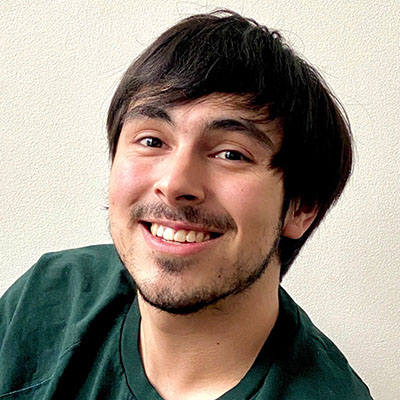
Alexandre Gonçalves

Assistant Professor

Affiliations

  • Department of Journalism
  • Institute of Communications Research

Education

  • PhD in Communication, Columbia University
  • MSc in Comparative Media Studies, MIT
  • BA in Journalism, Faculdade Cásper Líbero (Brazil)
  • BSc in Computer Science, Unicamp (Brazil)

Background

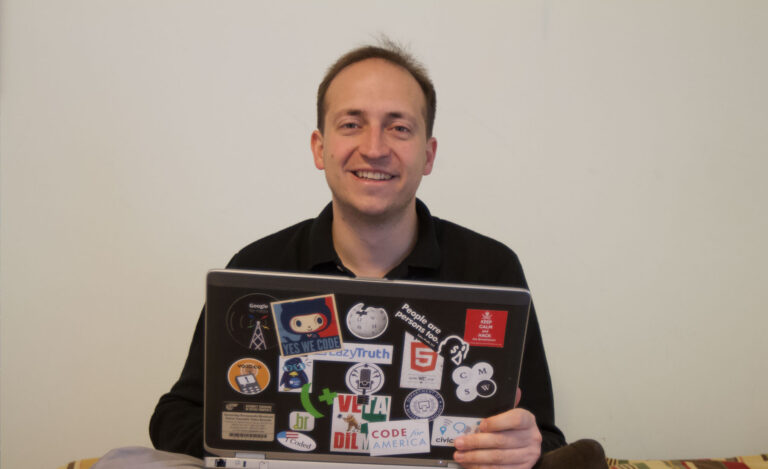
Alexandre Gonçalves studies the role of social media in the rise of new social movements. He is also interested in the use of computational methods to understand media ecosystems. During his doctorate, he was involved in projects at the Tow Center for Digital Journalism and the Brown Institute for Media Innovation. He also conducted research at the MIT Center for Civic Media. As a Google Journalism Fellow, he worked at the Pew Research Center’s Journalism Project. Before moving to the U.S., he worked in Brazil as a science reporter for mainstream media publications and as a software developer.

Related Links

Alex Goncalves

Contact

217-244-2245

There are lessons to learn from the news ghosts of journalism’s past


As a female journalist of color with 22 years in the industry and now a professor of journalism, I believe that obliviousness to journalism’s trailblazers—both their errors and biases and their accomplishments and innovations—leaves the media professional in a state of historical amnesia.

Melita Garza, associate professor and Tom and June Netzel Sleeman Scholar in Business Journalism, wrote an op-ed piece for the Chicago Tribune Opinion titled, “There are lessons to learn from the news ghosts of journalism’s past.”

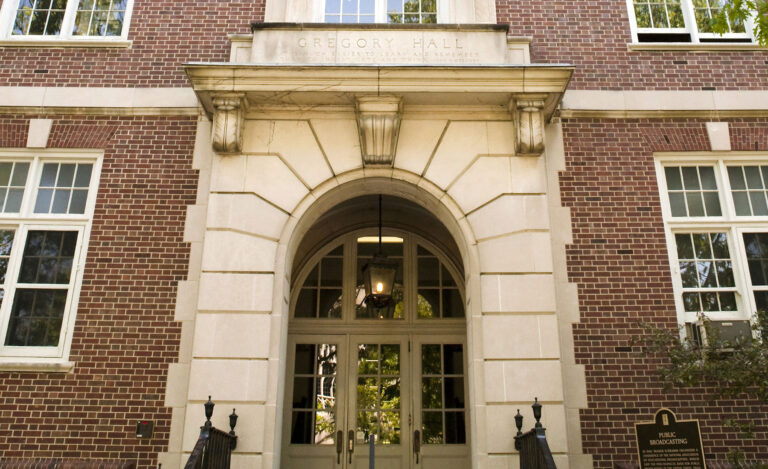
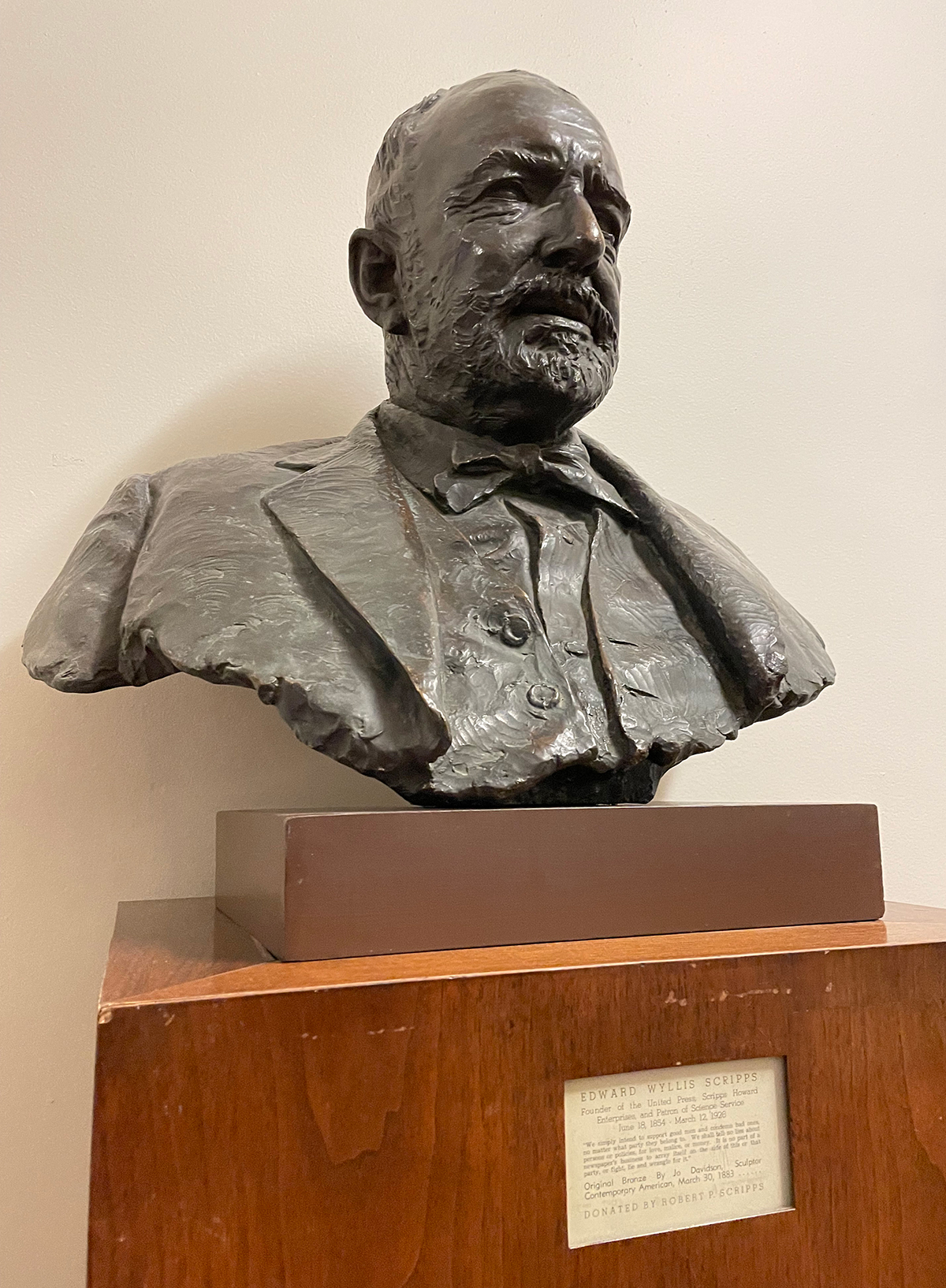
In the article—inspired by the Editors’ Hall of Fame in Gregory Hall—Garza urges today’s journalists to “revere the past, learn from mistakes, and work to build legacies of truth.”

Scripps bust

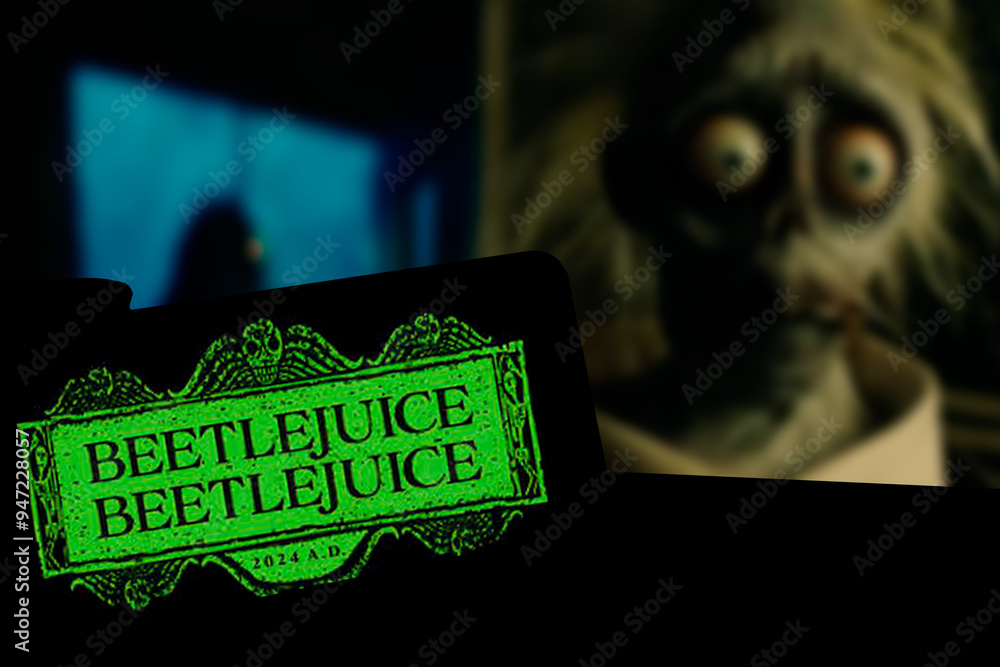
Blue tongues and an exposed brain: How ‘Beetlejuice Beetlejuice’ visual effects went back to basics


They were, to the industry, a kind of proof of concept that both aesthetically they can be successful, and also they could be marketed as an attraction, ‘Come see what the movies do now.’

Beetlejuice

Digital effects in films have existed for decades. Their true watershed moments came in 1991 with James Cameron’s Terminator 2: Judgment Day and 1993’s Steven Spielberg blockbuster Jurassic Park. Though the films had a limited number of CGI shots, the effects—a liquid morphing into a robot and dinosaurs roaming the planet—showed the industry that such technology could appeal to audiences, even though the execution was still expensive and difficult to pull off, says Illinois professor of media and cinema studies Julie Turnock.

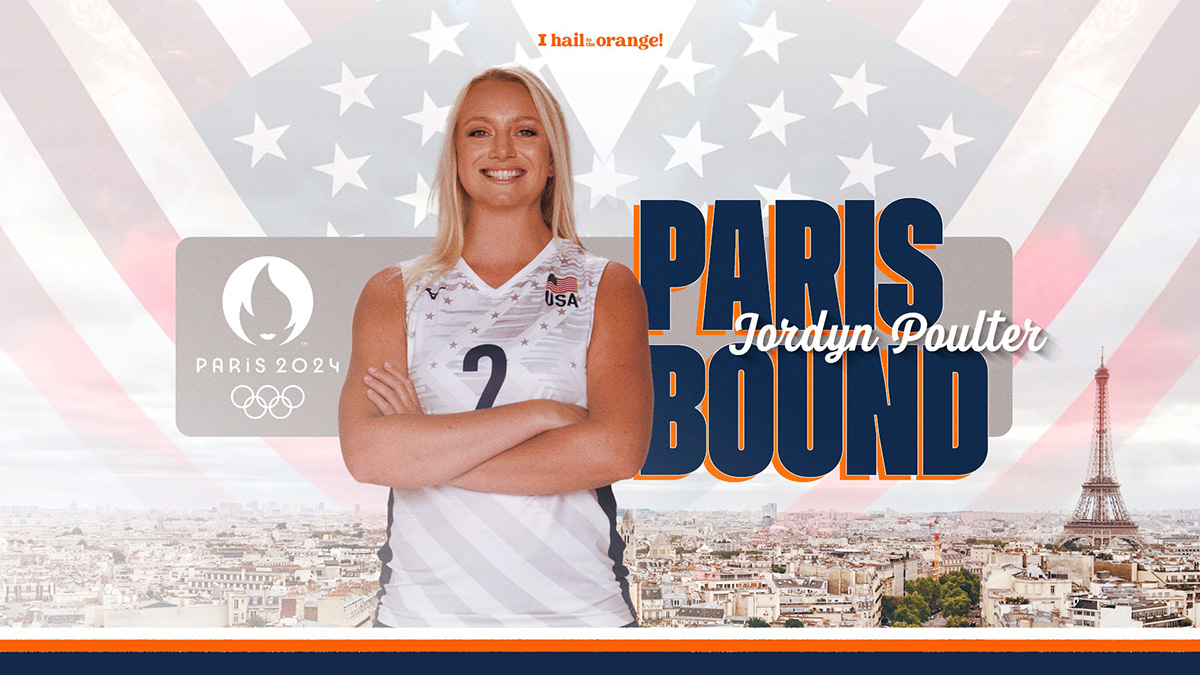
MACS alum Jordyn Poulter named to 2024 U.S. Women’s Volleyball Olympic roster

Poulter going to Olympics

Former Illinois setter Jordyn Poulter (BS ’18, MACS) was named to the U.S. Women’s National Volleyball Team for the 2024 Olympic Games in Paris this summer. The All-American setter is one of 12 selected for the roster. 

Poulter, who was chosen as Best Setter at the COVID-delayed 2021 Tokyo Olympics, helped the U.S. earn its first-ever gold medal three years ago.

During her time at Illinois, Poulter was a three-time All-American, earning first-team accolades as a senior in 2018. During her senior year, the Colorado native was named the Big Ten Co-Setter of the Year, AVCA Northeast Region Player of the Year, and a finalist for the Honda Award. Poulter also led the Illini to the program’s fourth-ever NCAA National Semifinal appearance.

The Women’s Olympic indoor volleyball competition runs July 27-August 11. 

Read more.

Melita Garza wins 2024 essay contest sponsored by ‘Journalism History’

Salazar USPS stamp

Melita Garza, associate professor and Tom and June Netzel Sleeman Scholar in Business Journalism, won the 2024 essay contest sponsored by AEJMC’s Journalism History.

Melita M. GarzaThe competition in Journalism History, the academic journal of the Association for Education in Journalism and Mass Communication’s history division, first began in 2018 and has featured essays around specific themes. This year’s theme focused on civil rights in light of the 60th anniversary of the Civil Rights Act of 1964.
Garza’s essay, titled “Ruben Salazar: Beyond Postage Stamp Memory,” highlights the work of Salazar at the “Los Angeles Times” and at a Spanish-language station KMEX regarding the Mexican American freedom struggle.

“I am grateful that Journalism History chose to commemorate this milestone legislation, whose spirit, more than a half-century after its passage, is still hauntingly unfulfilled,” Garza said. “Moreover, I’m thrilled to bring greater recognition to pathbreaking journalist Ruben Salazar, who lost his life in 1970 while covering one of the nation’s largest Mexican American civil rights marches.”

(Postage stamp image is copyright United States Postal Service. All rights reserved.)

Advertising alum Armando Sanchez-Monsivais named to Creative Ladder 2024 Cannes Lion Cohort

Armando Sanchez-Monsivais (BS ’19, advertising), ad product specialist at Twitch and a member of the James Webb Young Advisory Board in the Charles H. Sandage Department of Advertising, was named to the Creative Ladder 2024 Cannes Lion Cohort.

Sanchez-Monsivais is one of six creatives chosen to receive an all-expenses-paid trip to the prestigious Cannes Lions International Festival of Creativity, held June 17-24, to gain invaluable exposure, connect with industry leaders, and showcase their unique perspectives on a global stage. 

Held annually in Cannes, France, the Cannes Lions International Festival of Creativity is home to the world’s most prestigious advertising awards. It’s also an opportunity to celebrate creativity, effectiveness, and innovation in the global advertising, marketing, and communication industries.

In addition to his role at Twitch, Sanchez-Monsivais serves as a committee member on the Mosaic Next Gen Leadership Council, an initiative by the American Advertising Federation; an advisory board member for ADCOLOR Conferences and Awards; and was selected for the Rising Leaders Academy at the Creative Ladder. 

Armando Sanchez-Monsivais

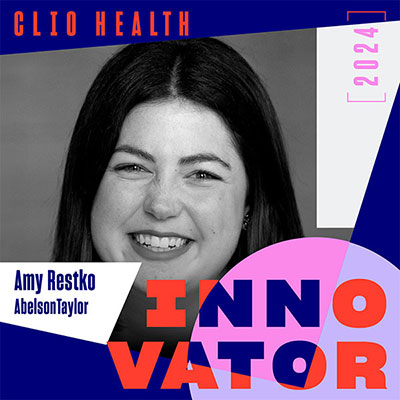
Advertising alumna Amy Restko named a Clio Health Innovator

Amy Restko (BA ’13, LAS; MS ’14, advertising), planning director at Chicago advertising agency AbelsonTaylor Group, has been selected as one of 20 Clio Health Innovators. 

The 2024 honorees, recognized as top talents from around the globe, will be celebrated at the Clio Health Awards on June 12. The Clios were founded in 1959 to celebrate creative excellence in advertising.

“Being selected as a Clio Health Innovator is an immense honor and validation of the work that I and my colleagues at AbelsonTaylor Group do every day. It shows that you can do amazing things when you make your work fun and feel supported and encouraged to explore new territory,” Restko said.

Restko joined AbelsonTaylor Group in 2016 and served as an account planner before her promotion as planning director in 2022. 

Read more about Restko and her role as a leading advertising executive.

Amy Restko

Q&A with Rosie Powers

Get to know some of our College of Media alumni. Rosie Powers (BS ‘12, journalism) is a self-employed consultant. Powers also participated in a Media Career Night alumni panel on “Nonprofits” in Spring 2022. Watch a recording of the session here.

Rosie Powers

How did the College of Media prepare you for your future?
The college had great courses that addressed the changing media landscape. Pairing that with traditional journalism skills of writing and copy editing felt like a good mix. I took a multimedia journalism course at the beginning of social media, and the idea of being a multimedia reporter was new and cutting-edge. You’d be someone reporting live on the field rather than solely writing in the newsroom, and it helped me think of myself as more than a writer. The College of Media also provided a well-connected alumni network, so it was easier for students like me to apply for internships and jobs after we were introduced to those who came before us.

During and right after college, how did you go about getting internships and jobs?
I applied everywhere in Chicago because I was an overachiever, but between my freshman and sophomore years, I had an internship at Lake County Journal, where I wrote a couple of stories a week. The following summer, I interned as a digital producer at WGN, then I interned at NBC, and later The Washington Post. I knew I wanted to do digital production, and even though my background was in newspapers, I applied to television stations. I realized early on that I could re-envision my skill set, so my advice would be don’t be afraid to apply for everything, even if you fear not having the skill set or experience required. Just try it because I think places are eager to teach people, and I had great experiences with all my internships.

What has your career path looked like since graduation?
I graduated from the College of Media in 2012 as a news-editorial journalism major with a minor in environmental science. After graduation I had an internship with The Washington Post; then I moved on to work for the Chicago Sun-Times, specifically for Oak Park and River Forest—those suburban publications—for a few years, and then I worked as a digital producer at ABC 7 Chicago. I liked my journalism career, and I’m proud of it, but in my mid-20s, I was ready for a change. I realized I could take my writing and storytelling skills from journalism and apply them to help nonprofits and further causes that are important to me, and it’s been about eight or nine years now down this new path. I totally pivoted my career.

What does your career look like now after this pivotal moment?
I work for myself, so I’m like a self-employed contractor. I used to work full-time, but I discovered advertising and branding agencies specific to the nonprofit space. I thought that was cool and I could be a consultant; now, I work with three different consultancies, and Mission Minded, a branding agency, is one of them. I do brand and website strategy for them while working with Column & Row, a consultancy that does web strategy and SEO with nonprofits and foundations, and I’m a consultant with Tiny Windows Consulting in Chicago, doing digital communications work. I do different types of strategy depending on who I’m working with, whether it’s brand, web, or digital communications.

What are you most proud of?
My career transition. I thought during high school that I would be in journalism forever and also because of my parents—my dad worked the same job for 30 years. When I was growing up, I thought, “I’m going to pick my job, and the path is always the same.” I was proud of my journalism career; it was rewarding, but I felt I achieved what I wanted there and wanted what was next. That pivot was freeing, exciting, and scary because I’d never thought about doing anything else professionally. But I knew I wanted something else and went for that, even though it was terrifying, having to relearn how to do other things. I think there’s a full circle—maybe this is what I wanted to do all the time but didn’t know it existed. I was able to do that, do journalism for a few years, and get a great experience.

What’s one piece of advice you would give students?
College is four of the greatest years, and—this is stereotypical to say—it goes by fast, especially after freshman year. Remember to enjoy it, even with all the stress about internships and questioning what you’re doing over the summer. Remember to try new things to broaden your horizons and envision your skill set. Don’t put yourself in one box because you’re not going to know what you want to do in 10 years or 15; for me, it totally changed, and there’s no way you can know that when you’re a freshman.

—Interview by Chloe Barbarise, New Voices Intern

College of Media
119 Gregory Hall
810 S. Wright St.
Urbana, IL 61801
217-333-2350