Study: YouTube did not actively direct users toward anti-vaccine content during COVID-19


YouTube

New research led by data science experts at the University of Illinois Urbana-Champaign and United Nations Global Pulse found that there is no strong evidence that YouTube promoted anti-vaccine sentiment during the COVID-19 pandemic. 

The study, published in the Journal of Medical Internet Research, performed an algorithmic audit to examine if YouTube’s recommendation system acted as a “rabbit hole,” leading users searching for vaccine-related videos to anti-vaccine content. 

For the study, the researchers asked World Health Organization-trained participants and workers from Amazon Mechanical Turk to intentionally find an anti-vaccine video with as few clicks as possible, starting from an initial informational COVID-19 video posted by the WHO. They compared the recommendations seen by these users to related videos that are obtained from the YouTube application programming interface and to YouTube’s Up-Next recommended videos that were seen by clean browsers without any user-identifying cookies. 

The team then used machine learning methods to classify anti-vaccine content, analyzing more than 27,000 video recommendations made by YouTube.

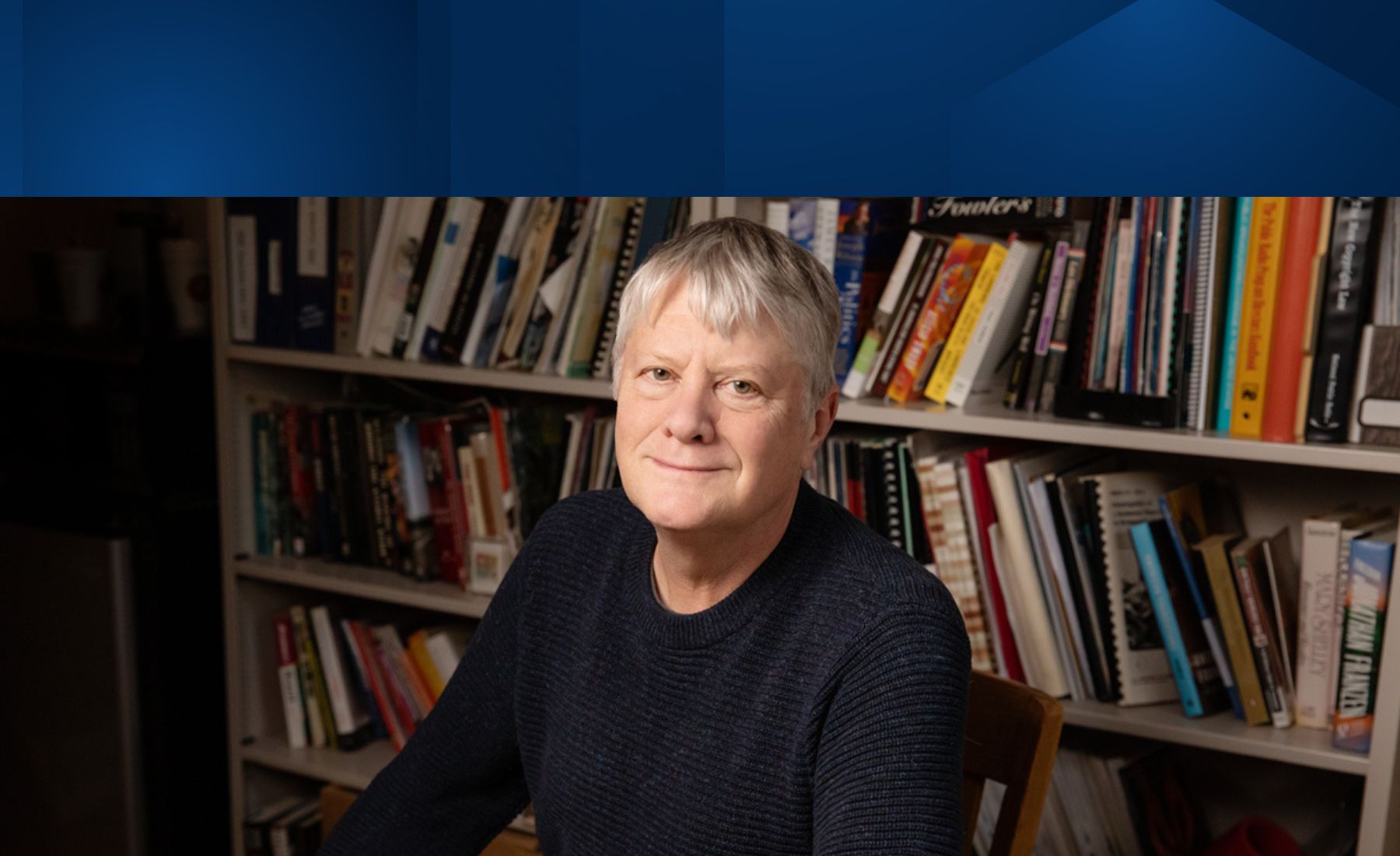
Margaret Ng
Margaret Ng.

“We found no evidence that YouTube promotes anti-vaccine content to its users,” said Margaret Yee Man Ng, an Illinois assistant professor of journalism with an appointment in the Institute of Communications Research and lead author of the study. “The average share of anti-vaccine or vaccine hesitancy videos remained below 6% at all steps in users’ recommendation trajectories.”

The initial goal of the research was to better understand YouTube’s famously opaque techniques for content recommendations—going beyond querying the platform’s application programming interfaces to collect real-world data—and whether these techniques funnel users toward anti-vaccine sentiment and vaccine hesitancy. 

“We wanted to learn about how different entities were using the platform to disseminate their content so that we could develop recommendations for how YouTube could do a better job of not pushing misinformation,” said UN Global Pulse researcher Katherine Hoffmann Pham, a co-author of the study. “Contrary to public belief, YouTube wasn’t promoting anti-vaccine content. The study reveals that YouTube’s algorithms instead recommended other health-related content that was not explicitly related to vaccination.”

“The videos that users were directed to were longer and contained more popular content, and attempted to push a blockbuster strategy to engage users by promoting other reliably successful content across the platform,” Ng said.  

 The study also allowed the researchers to examine how users’ real-world experiences differ from the personalized recommendations obtained by querying YouTube’s “RelatedToVideo” application programming interface. This API is designed to help programmers search for related content on the platform or using clean browsers, replicating the experience of a new user visiting YouTube with no search or view history, which is often used to study the platform’s recommendation system. 

The study reports that the watch histories of users significantly affect video recommendations, suggesting that data from the API or a clean browser does not offer an accurate picture of the suggestions that real users are seeing. Real users saw slightly more pro-vaccine content as they advanced through their recommendation trajectories. In contrast, searches performed by the API or clean browsers during the study were drawn toward irrelevant recommendations as they advanced.

“I think one benefit of this study relative to others is that it proposes a relatively lightweight methodology to gather real data on how people navigate through YouTube’s video recommendations,” Pham said. “So unlike the APIs, which will just sort of randomly suggest new links, the users can critically review the links and pick one, which sort of mimics the behavior that many people would use on YouTube in reality.” 

Understanding recommendation systems is important because it promotes transparency and holds them accountable,” added co-author Miguel Luengo-Oroz, a professor at the Telecommunications School of the Universidad Politecnica de Madrid. ”This helps people understand the choices being made for them by platform designers.”

Ng is also affiliated with the Department of computer science, the National Center for Supercomputing Applications, and the Center for Social and Behavioral Science at Illinois. 


Editor’s notes

To contact Margaret Yee Man Ng, call 217-300-8186; email ymn@illinois.edu.

The paper “Exploring YouTube’s recommendation system in the context of COVID-19 vaccines: Computational and comparative analysis of video trajectories” is available online. DOI: 10.2196/49061
View original press release.

ICR welcomes 2023 cohort


The Institute of Communications Research is excited to announce our newest cohort! Please learn more about the students’ research interests below and join us in welcoming them to the University of Illinois College of Media community this fall. For more information, see full student profiles.

Weiting Du

Weiting Du earned his master’s degree in journalism from Michigan State University, specializing in science and environmental journalism, and holds a bachelor’s degree in ecological environmental engineering from Chongqing University. Weiting’s research interests encompass media effects and risk communication under the context of climate change, with a particular interest in climate inactions. In parallel, Weiting explores how contemporary visual imagery represents the complex interplay between human-environment relationships, collective memories, and broader societal issues. Weiting’s past research covers topics such as the social power of photography in China and persuasive health messages.

Yewon Hong

Yewon Hong received her master’s degree in cultural studies/critical theory and analysis from the University of Amsterdam and a bachelor’s degree in comparative literature from Yonsei University. Her research interests include cuteness, aesthetics, affect, game, critical theory, cultural studies, and cultural analysis.


Yanbo Li

Yanbo Li’s research interests lie at the intersection of computational communication and political communication. Specifically, Li is interested in using computational methods to learn about online misinformation and incivility contagion inside and between different countries and the possible factors that foster these processes.


Veranika Paltaratskaya

Veranika Paltaratskaya completed her bachelor’s degree in neuroscience and art history at Emory University, and her master’s in advertising at UIUC. Veranika’s master’s thesis focused on the topic of time perception during media use. Her current research focuses on time perception, message fatigue, and computational approaches to communications research. 


Se II (James) Park

Se II (James) Park received his master’s in advertising and bachelor’s in communication, both from the University of Illinois Urbana-Champaign. Se Il’s interdisciplinary research focuses on persuasive messages in the context of emerging technologies such as Artificial Intelligence, Blockchain, Metaverse, and Web 3.0. He wants to examine the difference in consumer behavior in a more immersive and intelligent virtual. In addition, he worked for the Korean government agency, KOTRA, as a marketing consultant in Chicago and for a blockchain project, WEMIX, as a business development and PR manager in Korea.

Nisa Rahman

Nisa Rahman received her MS in advertising from the College of Media at the University of Illinois Urbana-Champaign and BA in communication from Purdue University – West Lafayette. Nisa’s research interest lies in emerging technologies and their effect on social behavior in the context of health communication. This exploration takes shape through studies utilizing anthropomorphic conversational agents, i.e., “chatbots” to debunk health misinformation and persuade behavior change, as well as the effect of modality in cognitive processing. Nisa is also interested in the intersections between gender presentations and its influence in Human-AI Communication. 

Wei Xiao

Wei Xiao received her MA in communication, culture, and technology from Georgetown University and BA in communication and economics from University of Wisconsin-Madison. She is broadly interested in exploring alternative approaches to the reasoning behind sharing dis/misinformation to debunk dis/misinformation or inoculate people against misinformation. Her research also involves technology policy topics, such as data privacy, free expression, and AI governance. While fighting traditional disinformation, Wei is equally dedicated to addressing the potential ramifications inherent in AI-amplified disinformation scenarios. 

Junwei Zhan

Junwei Zhan received his master’s degree in fine arts from the University of Oregon. Before joining ICR, he explored gardens and vehicles in Japan as media to better understand the condition and method of language/culture. Junwei’s research interests are centered around the relations between subjectivity, governmentality, global media network and the network’s interpretive power, which eradicate the boundary between public/private space, human/posthuman and self-governing/self-enslaving. Besides his academic research on communication and media, he is also a cross-disciplinary artist.

Zixuan Melodie Zhao

Zixuan (Melodie) Zhao earned her BA and MA degrees in journalism from the University of Missouri. She is primarily researching the social and psychological effects of media messages and digital media use. Her specific interests revolve around the interactions between interactive media technologies and individuals’ identity, perceptions of “otherness,” and social relationships, as well as their role in driving social mobilization or polarization. 

Nini Zhou

Nini Zhou’s research interests include critical studies of communication, free labor of women online, and female digital communities.


Advertising and ICR alum Ronald Taylor passes away

Ronald E. Taylor (MS ’71, advertising; PhD ’83, communications, ICR), devoted scholar, teacher, and mentor, passed away at his home in Tennessee on September 11. 

After receiving his PhD from the Institute of Communications Research at the University of Illinois Urbana-Champaign, Taylor joined the University of Tennessee as the head of the Department of Advertising, where he built a nationally recognized advertising program at both the undergraduate and graduate levels. 

During his tenure, the Department of Advertising was rated by US News & World Report as one of the top eight advertising graduate programs in the country. After a reorganization of the college, Taylor served as the director of the School of Advertising and Public Relations until 2011. 

Taylor was an active member of the American Academy of Advertising, where he served as secretary. In 2013, he was awarded AAA’s Charles H. Sandage Award for Teaching Excellence, which recognizes outstanding contributions to advertising education. 

Academically, he was a champion of qualitative research and a recognized leader in advertising message strategy. He is best known for his “Six Segment Strategy Wheel” conceptualization, which he published in the Journal of Advertising Research in 1999.

Read his obituary.

Ronald Taylor

Yanbo Li

Yanbo Li

Email: yanbol2@illinois.edu

Research Interests

My research interests lie at the intersection of computational communication and political communication. Specifically, I am interested in using computational methods to learn about online misinformation and incivility contagion inside and between different countries and the possible factors that foster these processes.

Recent Publications/Presentations

Li, Y., & Su, C. (2022). “Toxidization” of social media discussion: Comparing online incivility expressed about the Russian-Ukraine war in China and the United States. Paper presented at the 73rd ICA annual conference, Toronto. 

Chaikulngamdee Chawannuch, Janaki Riji Nair, Yanbo Li, Yanling Zhao, Cathleen Cusachs, Danilo Martinez, Yangyang Duan, Zige Chen, Xuanqi Ye, & Kelsey Prena. (2022). Learning through gaming: Examining the learning outcomes of EEK! game. Paper presented at 2022 International Conference on Meaningful Play, East Lansing, MI.

Courses Taught

  • ADV150 Introduction to Advertising (Fall 2023)

Journalism alum Jill Wine-Banks receives 2023 Margaret Brent Women Lawyers of Achievement Award

Jill Wine-Banks (BS ’64, journalism), MSNBC legal analyst, author, podcast co-host, and former prosecutor at the U.S. Department of Justice, was one of five female lawyers to receive the 2023 Margaret Brent Women Lawyers of Achievement Award this summer.

The American Bar Association Commission on Women in the Profession established the award to recognize and celebrate the accomplishments of women lawyers who have excelled in their field and have paved the way to success for other women lawyers.

“These five distinguished lawyers are role models for all women in the legal profession,” said Commission member Victoria Alvarez, co-chair of the Margaret Brent Awards committee.

Wine-Banks, who earned a bachelor’s degree at the University of Illinois Urbana-Champaign and a law degree at Columbia Law School, was the first woman to serve as an organized crime prosecutor at the U.S. Department of Justice in Washington, D.C. Less than five years later, she was named one of the three Assistant Watergate Special Prosecutors—and the only woman—for the obstruction of justice trial against President Nixon’s top aides. She became a major player in the Watergate tapes hearing that preceded the trial, cross-examining Rose Mary Woods, President Nixon’s secretary, about the 18 ½-minute gap in a key White House recording. 

Her legal career also includes service as the first female General Counsel of the U.S. Army where she helped integrate women into the Regulate Army by eliminating the Women’s Army Corps, and into West Point; as the first Solicitor General of Illinois where she argued in the U.S. Supreme Court and first female Deputy Attorney General; and as the executive vice president and chief operating officer of the American Bar Association, the only woman to have held that position. 

See press release.

Jill Wine-Banks

Se Il (James) Park

Se Il (James) Park

Email: spark110@illinois.edu

Research Interests

Se Il is a doctoral student at the Institute of Communications Research (ICR). Se Il’s interdisciplinary research focuses on persuasive messages in the context of emerging technologies such as Artificial Intelligence, Blockchain, Metaverse, and Web 3.0. He wants to examine the difference in consumer behavior in a more immersive and intelligent virtual environment. 

Prior to joining ICR, Se Il received his master’s in advertising and bachelor’s in communication, both from the University of Illinois Urbana-Champaign. In addition, he worked for the Korean government agency, KOTRA, as a marketing consultant in Chicago and for a blockchain project, WEMIX, as a business development and PR manager in Korea.

Courses Taught

  • ADV 250/283: Advertising and Brand Strategy (Fall 22–present)

Awards and Honors

Teachers Ranked as Excellent By Their Students: FA22, *SP23
*Outstanding

What Most People Don’t Know about Me

I am an avid golfer.

Weiting Du

Weiting Du

Email: wd12@illinois.edu

Research Interests

Weiting Du is a first-year Ph.D. student at the Institute of Communications Research. Weiting’s research interests encompass media effects and risk communication under the context of climate change, with a particular interest in climate inactions. In parallel, Weiting explores how contemporary visual imagery represents the complex interplay between human-environment relationships, collective memories, and broader societal issues. 

Weiting’s past research covers topics such as the social power of photography in China and persuasive health messages. Prior to joining ICR, Weiting earned his master’s degree in journalism from Michigan State University, specializing in science and environmental journalism, and holds a bachelor’s degree in ecological environmental engineering from Chongqing University.
 

Recent Publications/Presentations

Du, W., Sanders-Jackson, A., Neumann, D., & Tan, A. (2022, May 26-30). The effects of applying visual cues in culturally tailored anti-smoking messages for sexual minority women. Presented at the 72nd Annual ICA Conference, Paris, France (virtual session). 

Du, W. (2021, June 19). The Desert Protector: How did an environmental photojournalist trigger a storm of environmental protection in China. Presented at the 35th Annual Visual Communication Conference, Cannon Beach, Oregon, United States.
 

Courses Taught

  • JOUR 205 History of American Journalism
     

What Most People Don’t Know about Me

I love Not to Be Reproduced (1937), On Fire (1989), and The Shadow Play (2018).

I on the Media


“I on the Media” is a series from the University of Illinois College of Media in which faculty, staff, and students at the college address current issues and research. It began in 2020 to discuss the impact of COVID-19 on media-related issues. 

Hear from our experts

9/8/2023

In this Q&A, Professor Brant Houston, Knight Chair of Investigative and Enterprise Reporting in the Department of Journalism, discusses the implications of the August 11 police raid on the Marion County Record, run by retired associate professor of journalism Eric Meyer. 

9/7/2022

Angela Aguayo, associate professor of media and cinema studies, discusses the Illinois Community Media Project, funded by Chancellor Jones’s Call to Action to Address Racism & Social Injustice Research Program. The project supports people making and circulating media that is most aligned with the interests of that community. (Video produced by Andrew Hall.)

1/18/2022

Nikki Usher, associate professor of journalism, discusses their new book, News for the Rich, White, and Blue: How Place and Power Distort American Journalism. They argue that “the future of journalism conversation is actually a future of democracy conversation.” (Video produced by Andrew Hall.)

12/8/2021

Brian K. Johnson, professor of journalism, demonstrates how he applies a photojournalism methodology to his creative works and how to find the unseen in the seen.

11/5/2021

Kevin Wise, professor of advertising, discusses current studies at the MAD (Media and Advertising) Lab, where researchers have access to psychophysiology, eye-tracking, and virtual reality equipment. (Video produced by Andrew Hall.)

2/9/2021

Victor Font, lecturer in media and cinema studies, discusses how the pandemic affected film production in his class last spring, how he approached fall semester, and why he’s optimistic going forward. (Interview conducted by Connor Ciecko, Videography and Photography Intern.)

Watch the student film that was disrupted by the pandemic.
Watch the Normal Rockwell-inspired video made before the pandemic.

12/3/2020

Derek Long, assistant professor of media and cinema studies, discusses trends in movie exhibition since the pandemic, distribution and production studio strategies to mitigate losses, and the shift to streaming. (Interview conducted by Connor Ciecko, Videography and Photography Intern.)

11/5/2020

Brant Houston, Knight Chair Professor in Investigative and Enterprise Reporting in the Department of Journalism, discusses student-driven investigative reporting of COVID-19 on the website he oversees, CU-CitizenAccess.org, which serves as a lab for digital innovation and data journalism. (Interview conducted by Connor Ciecko, Videography and Photography Intern.)

10/5/2020

Ewa Maslowska, assistant professor of advertising in the Charles H. Sandage Department of Advertising, discusses the changes in consumer behavior and brand advertising strategies that researchers observed in the first few months of the pandemic.

5/11/2020

Mike Yao, professor of digital media and head of the Charles H. Sandage Department of Advertising, explains the mental and social impacts of using computers and digital devices while working and learning from home. 

4/22/2020

Alison Davis, a lecturer in journalism who teaches documentary production and has won seven regional Emmy Awards, recommends five documentaries to watch while we’re in quarantine and shares tips for documenting your own experience during this unprecedented time. 

4/15/2020

Eric Meyer, associate professor of journalism, discusses how his weekly paper in Kansas, the Marion County Record, has temporarily removed its paywall and has begun distributing the paper free for 13 weeks to county residents to keep people better informed.

I on the Media: Brant Houston discusses the police raid on ‘Marion County Record’


About the Media Expert

Brant Houston

Professor Brant Houston is Knight Chair of Investigative and Enterprise Reporting in the Department of Journalism. He is the author of Changing Models for Journalism: Reinventing the Newsroom, co-author of the Investigative Reporter’s Handbook, among other books. In addition to teaching, Brant Houston oversees the online newsroom CU-CitizenAccess.org, devoted to community and watchdog reporting and data-driven stories by journalism students.

Houston served for more than a decade as the executive director of Investigative Reporters and Editors and was an award-winning investigative reporter at daily newspapers for 17 years. He is co-founder of the Global Investigative Journalism Network and the Investigative News Network and advises nonprofits newsrooms in the U.S. and internationally. 


What were your first thoughts when you learned about the August 11 police raid on the Marion County Record, run by your former colleague, retired University of Illinois associate professor of journalism Eric Meyer, as well as his home? 

My first thoughts were that this was an out-of-control, small-town justice system whose actions resembled those of autocratic governments in developing countries. Although those governments go on to burn down news offices and imprison reporters.

Did you talk about the Marion County Record and Eric Meyer with your advanced reporting classes on the first day of class, only 10 days after the raid? 

I did talk about it. To be candid, most of the students had not heard about it. The one student who had been in one of Eric Meyer’s classes was aware of it. I explained what had happened, the dangers it represented to a free press if replicated, and talked about the broad national support Eric Meyer and his weekly were getting.

What does it mean for local journalism and First Amendment rights that the national response to this case has been one of overwhelming support for Meyer and his newspaper? 

We live in a time when the national press is under constant criticism and attack, while at the same time officials and the general public have realized the local newsrooms, which generally are regarded as more credible and accessible, have been deeply diminished by a changing business model that has led to budget and staff cuts. The national response shows there is still strong belief in the First Amendment and a free and independent press.

Marion County police were ordered to return the seized equipment and phones because of insufficient evidence to support a raid. How can newsrooms prevent overstepping of their First Amendment rights?  

The only way to prevent such invasions of newsrooms and other overstepping of First Amendment rights is through the assertion of the value of those rights and immediate and robust responses to those violations. It is a constant struggle to preserve those rights, but absolutely necessary.

Is there a misperception of investigative journalism and its value?  

I think the value of solid credible investigative journalism is widely recognized and appreciated. While those under scrutiny may not like it, the public still counts on investigative journalists to be watchdogs for the community, to prevent fraud, waste, and abuse in government and to hold the powerful accountable for taking advantage of the powerless. For a community, investigative reporting is often the court of last resort, when bureaucracies or businesses fail to correct bad practices or protect the public.

“I on the Media” is a series from the University of Illinois College of Media in which faculty, staff, and students at the college address current issues and research.

Media faculty and TAs make list of teachers ranked as excellent


Congrats

Congratulations to all of the College of Media faculty and teaching assistants who were ranked as excellent by their students!

This list is based on Instructor and Course Evaluation System (ICES) questionnaire forms completed by students during the Spring 2023 semester. Only those instructors who distributed ICES forms at least once during this time period and who released their data for publication are included in the list. View the complete list.

Note: * denotes that the instructor ratings were outstanding.
+ denotes Summer 2023 course.


ADVERTISING

* TERRY KASDAN – ADV 409

* SHACHAR MERON – ADV 283

SUSAN MUIRHEAD – ADV 490

* MICHELLE NELSON – ADV 582 

* MARISA PEACOCK – ADV 410, ADV 498 

SELA SAR – ADV 588

RASHMI TENNETI – ADV 490

CARRIE WILSON-BROWN – ADV 301, ADV 400


JOURNALISM

CHRISTOPHER BALL – JOUR 430, JOUR 451

* LEON DASH – JOUR 452

COLLEEN KING – JOUR 210

CAROL LOMBARDI – JOUR 220

MARGARET NG – JOUR 425

CARLA ERDEY – JOUR 453


MEDIA

*DEREK LONG – MACS 590


MEDIA & CINEMA STUDIES

CL COLE – MACS 356

VICTOR FONT – MACS 371+

JONATHAN KNIPP – MACS 282

E. KURT – MACS 372

DEREK LONG – MACS 361

CARRIE WILSON-BROWN – MACS 203


STRATEGIC BRAND COMMUNICATION

RICH PIECZYNSKI – SBC 504


TEACHING ASSISTANTS

* C. ARREAZOLA – ADV 150 

S. HEO – ADV 283 

* D. LEE – ADV 460 

* J. LIU – ADV 200 

* S. PARK – ADV 283

* D. CARRILLO FUCHS – MACS 101

* J. CINTRON – MACS 100

* Y. GAO – MACS 101

A. PENG – MACS 101

R. SIECZKOWSKI – MACS 260 

College of Media
119 Gregory Hall
810 S. Wright St.
Urbana, IL 61801
217-333-2350