Roger Ebert Lecture: “Documentaries on the Frontlines of Democracy: How Kartemquin’s Storytelling Works for Stronger Publics”

Event flier Ebert Lecture and Screening 2024

10/18/2024
2 p.m.
Knight Auditorium, Spurlock Museum, 600 S. Gregory, Urbana
Or join us via Zoom

The 2024 Roger Ebert Lecture and Screening will be held October 17-18 in the Knight Auditorium of Spurlock Museum.

Join us in person or via Zoom for the Roger Ebert Lecture “Documentaries on the Frontlines of Democracy: How Kartemquin’s Storytelling Works for Stronger Publics,” presented by Patricia Aufderheide, University Professor of Communication Studies at American University in Washington, D.C.

Kartemquin Films, a Chicago media arts legend founded in 1966, has evolved through generations with a consistent claim for its documentary work: honest, experiential stories of real life in America can strengthen the democratic process, by empowering people to see themselves as active members of the public. It’s been a feminist-forward collective, a production center for labor activism, and a home for engaged humanist stories. At a time when democracy itself is at risk, this talk takes a close look at how filmmakers with a passion for their craft, an artistic vision, and a commitment to an open and just society told Midwest-centric stories that won Emmys, duPont-Columbias, Peabodys, Oscar noms, and changed how viewers understood themselves in the world. 

Angela Aguayo, associate professor of media and cinema studies, will provide an introduction, and Raina Politva from the University of California Press will provide a brief statement before the Ebert Lecture by Patricia Aufderheide. Founding member of Kartemquin Films, Gordon Quinn, will also be in attendance. Quinn’s first film, Home for Life, was heralded as “an extraordinarily moving documentary” by Roger Ebert. A Q&A will follow. 

About the Presenter

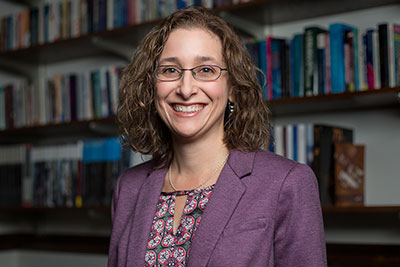
Aufderheide

Patricia Aufderheide is University Professor of Communication Studies in the School of Communication at American University in Washington, D.C. She founded the School’s Center for Media & Social Impact, where she continues as Senior Research Fellow. Her books include Kartemquin Films: Documentaries on the Frontlines of Democracy (University of California Press), Documentary Film: A Very Short Introduction (Oxford), The Daily Planet (University of Minnesota Press), and Communications Policy in the Public Interest (Guilford Press), as well as co-authoring Reclaiming Fair Use: How to Put Balance Back in Copyright (University of Chicago), with Peter Jaszi.

She has been a Fulbright Research Fellow three times, in Brazil (1994-5), Australia (2017), and South Korea (2024). She is also a John Simon Guggenheim fellow (1994) and has served as a juror at the Sundance Film Festival among others. Aufderheide has received numerous journalism and scholarly awards, including the George Stoney award for service to documentary from the University Film and Video Association in 2015, the International Communication Association’s 2010 for Communication Research as an Agent of Change Award, Woman of Vision award from Women in Film and Video (DC) in 2010, a career achievement award in 2008 from the International Digital Media and Arts Association and the Scholarship and Preservation Award in 2006 from the International Documentary Association.

Presented by the Roger Ebert Center for Film Studies.

MACS’ student-produced film special airs on WILL-TV’s ‘Prairie Fire’


Cetacean

Students in the Fall 2023 Cinematography and Sound Design course, taught by media and cinema studies lecturer Victor Font, produced a film special of Cetacean, which aired on WILL-TV’s Prairie Fire on April 18.

The one-hour episode includes interviews with Cetacean creators, Deke Weaver and Jennifer Allen, and excerpts from last fall’s live multimedia performance, which was made possible by a collaboration with the students.

Part social practice, part visual art installation, part live event, Cetacean’s three years of research, rehearsal, and planning became a live public performance—a two- and-a-half-hour long living collage of story, dance, sound, video, lo-fi effects, and a colossal installation. 

Cetacean was the sixth interdisciplinary performance from “The Unreliable Bestiary”—a lifelong project presenting a performance for every letter of the alphabet, each letter representing an endangered animal or habitat.

Learn more.

Watch the episode:

Share on social

Dr. Mike Yao explains how AI bias reflects back human beliefs


There are biases in AI in how it works, biases in the data that we feed to the AI to train them, there are biases in the way in which AI is being used and implemented, and then there are also biases and psychological processes at the psychological level that we bring naturally when we interact with AI technology.

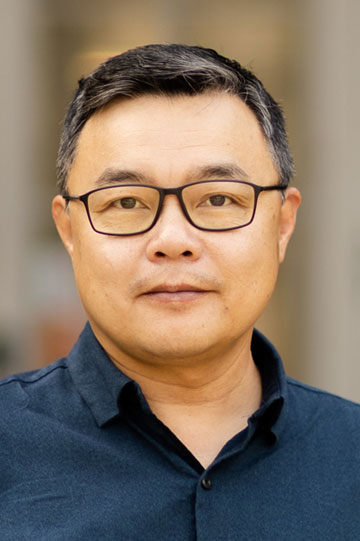
headshot of Mike Yao

Mike Yao, professor of digital media in the Charles H. Sandage Department of Advertising and director of the Institute of Communications Research, explained to NPR’s Community Voices how AI bias is generated by humans and reflects back what it learns from inputs humans provide it. He also discussed how AI can be helpful when designed with human needs in mind.

Mike Yao

Professor

Affiliations

  • Charles H. Sandage Department of Advertising
  • Institute of Communications Research 
  • Gies College of Business
  • College of Liberal Arts and Sciences

Education

  • Ph.D. Communication, University of California, Santa Barbara 
  • B.A. Psychology & Film Studies double majors, University of California, Santa Barbara

Course Specialties

  • Online privacy 
  • Technology mediated communication 
  • Technology and advertising 
  • Programmatic advertising

Research and Creative Endeavor

Mike Yao’s research focuses on the social and psychological impacts of interactive digital media. He conducts research and writes on a variety of topics such as online behavior, digital literacy, and computer-mediated communication. His current interest is in how users perceive and manage personal boundaries on social media. Specifically, he examines people’s attitudes, beliefs and self-protective behaviors related to online privacy from a psychosocial perspective by considering the influence of cognitive appraisal, social norm, and individual differences. A second area of Mike’s active research is the psychological impacts of digital media use. He examined the influence of various interactive media, such as video games and social media, on users’ online and offline social behavior. He is currently trying to extend this line of research to developing an integrated theory of digitally mediated human behavior.

Related Links

No posts found.
headshot of Mike Yao

Contact

217-300-2148

Tracy Sulkin named College of Media Dean


Dean Tracy Sulkin

Tracy Sulkin is the University of Illinois at Urbana-Champaign’s dean designate of the College of Media effective September 16, pending approval by the University of Illinois Board of Trustees in November. Sulkin, a professor of political science in the College of Liberal Arts and Sciences, formerly served as the College of Media’s interim executive associate dean.

A member of the Illinois faculty since 2002, Sulkin is a Romano Professorial Scholar in LAS and was previously an LAS Centennial Scholar. Legislative Style, the third and most recent of her books on American politics, was published in 2018.

Sulkin brings extensive administrative experience to her new position. In the department of political science, she served as the director of graduate studies and associate head for undergraduate programs. She was elected to the LAS Executive Committee and served on the LAS Curriculum Committee. She also chaired the Undergraduate Education Task Force for the campus strategic planning process.

Andreas C. Cangellaris, the Urbana campus’s vice chancellor for academic affairs and provost, recommended the three-year appointment of Sulkin to Chancellor Robert Jones.

“For the past year, Professor Sulkin has provided significant stability, leadership, and direction for the College of Media in her role as interim executive associate dean,” Cangellaris said. “I am confident she will continue to be a collaborative leader for the College of Media.”

College of Media
119 Gregory Hall
810 S. Wright St.
Urbana, IL 61801
217-333-2350