Illinois announces first dual-credit initiative, bringing media and other courses to high school students


Understanding the role of popular television shows and movies in society—and in students’ own lives—is a central focus of a high-enrollment 100-level course in the College of Media at the University of Illinois Urbana-Champaign.

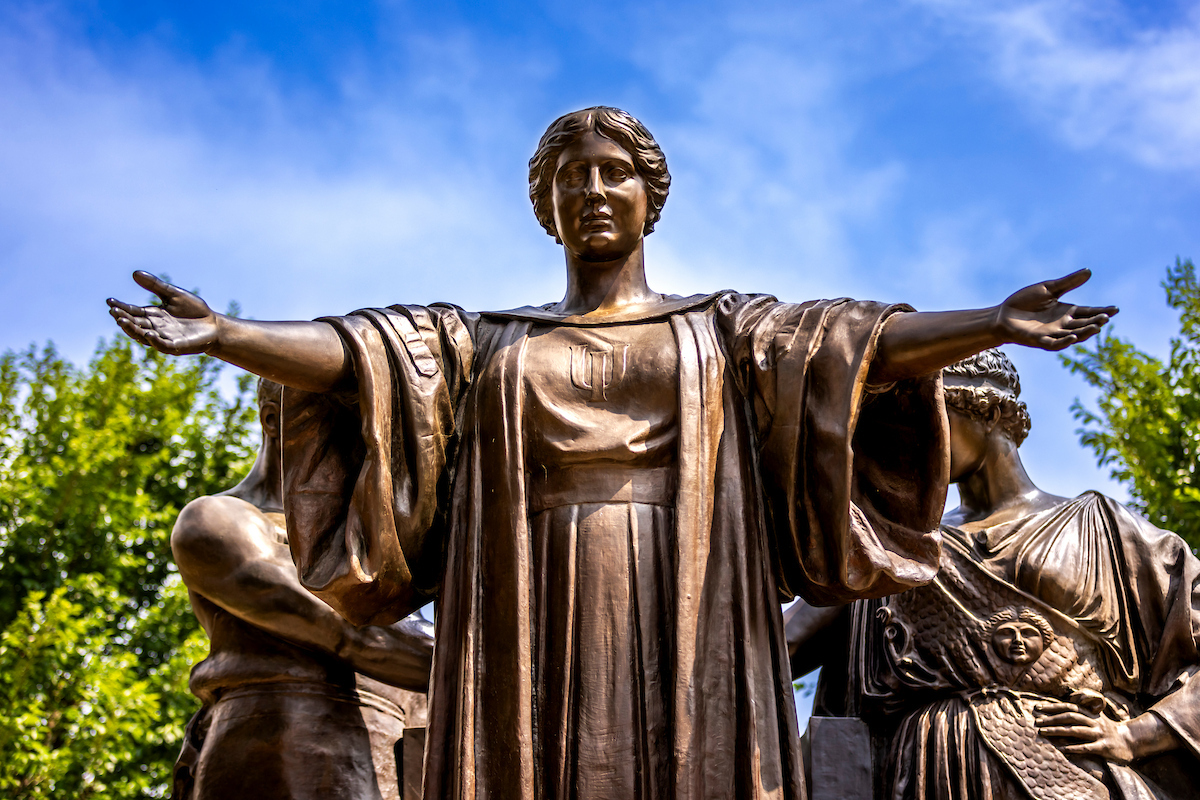
Alma Mater

Starting in the 2026-27 academic year, the media and cinema studies course “Introduction to Popular TV and Movies” will be one of four U of I courses also taught in the classrooms of select Illinois high schools as part of the new Dual Credit Learning Accelerator initiative.

The four courses are:

  • ASTR 150: Killer-Skies: Astro-Disaster
  • CS/STAT 107: Data Science Discovery
  • MACS 100: Introduction to Popular TV and Movies
  • SPED 117: The Culture of Disability

This pilot opportunity marks a new approach for the university in offering its popular general education courses directly to high school students across Illinois in the form of dual credit—at no cost to those students.

“The dual-credit initiative reflects our university’s commitment to expanding access and opportunity for students and families across Illinois,” said Provost John Coleman. “Through the Learning Accelerator’s innovative learning model, we’re bringing transformative educational experiences to high school classrooms and preparing students throughout the state for success in college and beyond.”

Led by the Office of Online Learning and the Office of Undergraduate Admissions, the Learning Accelerator was funded through the American Talent Initiative IDEAS grant to establish the university’s first dual-credit initiative.

The result is a dual-credit model that can scale up so that an academic unit at the U of I can offer any of its courses to a high school student.

The College of Media is proud to support this initiative, which strengthens the land-grant mission by expanding access to an Illinois education and promoting early student success.

“The dual-credit program offers us the opportunity to bring our exciting media curriculum to students who interact with the media but have a limited idea as to how it’s developed and created,” said Jason P. Chambers, associate dean for access and engagement and professor of advertising. “By providing students access to courses such as MACS 100, they’ll get a chance to consider a media major before arriving at the University of Illinois.”

Through the MACS 100 course, students will build media literacy skills while thinking critically about popular media. One goal of the course is to teach students how to see beyond narrative to address how the film form—such as cinematography, editing, sound, and special effects—generates meaning.

“The most important lesson, I believe, is that even ‘popular’ media, films, and TV shows produced for mass audiences have meaning and complexity,” said Jon Knipp, senior lecturer of media and cinema studies who teaches MACS 100. “These are cultural expressions that tell us a lot about the world and ourselves if we pay attention—and thinking about something deeply makes it more enjoyable.”

The four new dual-credit courses slated for the 2026-27 academic year were developed to showcase the breadth of educational topics offered at Illinois, with faculty partners who are passionate about reaching students from underrepresented populations and interested in presenting their courses in a setting outside of campus that might spark interest in their fields of study.

“We’re trying to offer both an advanced educational experience, but also something that students might not get in a regular high school class,” said Hilary Gross, the Learning Accelerator program coordinator. “The hope is that we might show high school students that college can be whatever you make it.”

For more details about this new program, see the University of Illinois News Bureau press release.

Share on social

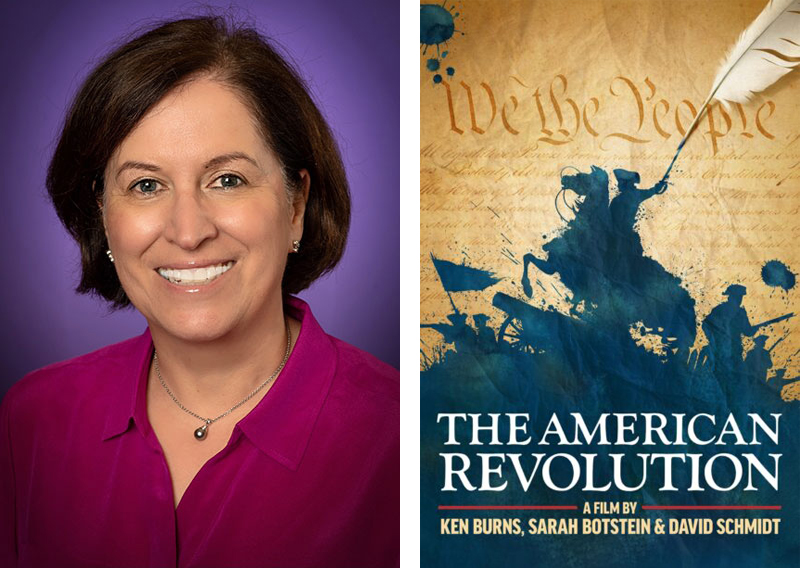
I on the Media: Melita Garza discusses journalism’s role in Ken Burns’s ‘The American Revolution’


Ken Burns’s new PBS series The American Revolution is more than a sweeping historical documentary—it illustrates the ways in which journalism helped ignite and sustain the fight for independence. Melita Garza, associate professor and Tom and June Netzel Sleeman Scholar in Business Journalism, and winner of Journalism History’s 2024 essay contest, shares her insights on journalism’s pivotal role in shaping America’s founding era.

Ken Burns's "The American Revolution" film promo

About the Media Expert

Melita M. Garza

Melita M. Garza, associate professor in the Department of Journalism and a faculty member of the Institute of Communications Research, is an American journalism historian who studies news as an agent of democracy, specializing in English- and Spanish-language news, the immigrant press, and coverage of underrepresented groups. She is the lead editor of The Routledge Companion to American Journalism History (2024). Her research has won awards from the American Journalism Historians Association, and the Association for Education in Journalism and Mass Communication divisions of: History, Minorities and Communication, and International Communication.


How does this series place journalism at the heart of the American Revolution?

The most obvious example is the documentary’s treatment of colonial reaction to the Stamp Act, showing that the two dozen weekly newspapers, along with pamphleteers, stoked support for colonial tax protests. Significant though this is, the imprint of journalism on the Revolution is much bigger than that.

Bostonians reading the Stamp Act in 1765
Bostonians reading the Stamp Act in 1765, public domain, via Wikimedia Commons

Consider that Burns starts his six-part history with a quote from Thomas Paine, America’s first political journalist. The documentary opens with a black screen that slowly transforms into the pink, purple, and yellow colors of dawn. The audience then hears a voice intoning:

From a small spark, kindled in America, a flame has arisen not to be extinguished. Without consuming, it winds its progress from nation to nation, and conquers by a silent operation. Man finds himself changed and discovers that the strength and powers of despotism consist wholly in the fear of resisting it, and that in order to be free, it is sufficient that he wills it.”

Although these words of agency come from Paine’s The Rights of Man, written in 1791 during the French Revolution, they capture the spirt of Paine’s earlier writings, such as Common Sense, which helped catalyze the colonists to pursue and persist in the American Revolution. Writing for Wired in 1995, Jon Katz explained why this pioneer of free expression should be remembered in the Internet age. “Because we owe Paine. He is our dead and silenced ancestor. He made us possible.” The documentary covers the eight years of the American Revolution, making it impossible to push too deeply into any single historical actor’s role with the depth they deserve. Ideally, however, the series will inspire viewers to take another look at Thomas Paine and other figures from our past whose impact isn’t fully understood today.

Join, or Die
Political cartoon (1754) attributed to Benjamin Franklin, public domain, via Wikimedia Commons

And there’s more. Still within the first two-and-a-half minutes of the documentary, viewers are introduced to Benjamin Franklin. Although described simply as a noted scientist and writer in The American Revolution, Franklin was a pivotal figure in the development of American journalism and is credited with publishing one of the earliest pieces of colonial visual journalism: the political cartoon. The documentary showcases the famous “Join, or Die” snake woodcut drawing, published in Franklin’s Pennsylvania Gazette on May 9, 1754. Originally designed to rouse the colonists to unite during the French and Indian War, the documentary notes that it was republished to urge colonial unity against the British during the American Revolution.

The documentary is replete with such examples of what I call “hidden” journalism, in which their groundbreaking significance to the journalism profession as a whole remains obscured.

Apart from serving as a sparkplug for rebellion, what are some other ways the documentary depicts the role of journalism in colonial life?

There are a few things, again, just in the first installment, that the documentary flicks at, which underscore the primacy of journalism and print culture more generally in the lives of the colonists. For instance, in a segment discussing the impact of British culture on colonial life, historian Jane Kamensky references the London Book Shop and the Crown Coffee House in Boston. Bookstores offered colonial citizens exposure to Enlightenment ideas, among other things, and served as centers of cultural exchange for the community. Book sellers were often also in the newspaper business. One such newspaper owner was Benjamin Franklin, who is also credited with being first to open a book shop in colonial America. Likewise, coffeehouses were central places for the exchange of news and newspapers. These are two more examples of the “hidden” journalism in the documentary.

Another aspect of journalism that might be easy to overlook in the documentary involves the episode of the Saturday, December 27, 1760, arrival of the British frigate that “brought with it big news”—the death of King George II and the ascendancy of King George III to the British throne. In early colonial America, it was often faster to get news from England by ship than it was to get news from southern colonies, considering the state of the roads at the time. Even so, having to wait two months to find out that you were being ruled by a new monarch illuminates the pace of colonial communication compared to that of today’s high speed Wi-Fi society.

What can The American Revolution teach us about telling historical stories in ways that connect with today’s audiences?

Ken Burns is well known as a gifted storyteller and the documentary’s striking visuals, sound effects and music, and well-edited commentary from experts, are staples of his work. In The American Revolution, letters and journals from young men, women, and officials and pundits on both sides are the stars. These primary sources allow individuals to speak as though they are reporting to us from the homefront and the battlefront, and that brings the Revolution right into our living rooms centuries after it ended. Simply employing solid storytelling techniques is only partly why the story resonates with today’s audiences. The other reason is that we can see parallels with our own experience. Some of these parallels are obvious. Others are a matter of perspective.

Thomas Paine
Thomas Paine (1792) by Laurent Dabos, public domain, via Wikimedia Commons

For instance, one scene shows colonists on the street reading newspapers together, with some looking like they are commenting to each other. Thinking critically about media and information, the colonists were practicing true social media. In person, face-to-face, they exchanged ideas in a way today’s often anonymous, digital exchanges can’t compare. And as the documentary also notes, word of mouth was also a prime source of news. While it is true that stories and ideas didn’t have a World Wide Web to buzz through, these mechanisms still allowed journalism, starting with Thomas Paine’s Common Sense, to go viral through the colonies. In fact, the documentary points out a prime reason for print culture’s popularity in the Thirteen Colonies: At the time, only Scandinavia was more literate than the American colonial population.

Other relatable issues that we still grapple with today, such as women’s rights, the limits of free speech, taxation, and immigration, to name a few, are also highlighted. Take immigration. In the documentary, historian Christopher Brown discusses “the sheer diversity…living in the heart of the Thirteen Colonies”:  Africans, Scots, Scots-Irish, Huguenots, Germans, and Native Americans, along with the English. The outcome of American Revolution, both the reel one and the real one, proves it was not culture, national origin, or language that brought the colonists success. In historian Christopher Brown’s words, the colonists cohered “around a set of purposes and ideals for one common cause.” In my view, the American Revolution shows how colonial journalism played a prime role in establishing coherence for that single cause: freedom.

Share on social

ICR faculty and students receive honors at 2025 National Communication Association convention


The Institute of Communications Research marked a highly productive year at the 2025 National Communication Association convention from November 19-23 in Denver, Colorado, with faculty members, students, and alumni presenting research, chairing panels, and contributing to programming at the 111th annual event.

In addition to this strong scholarly presence, several members of the ICR community were recognized with some of NCA’s most prestigious awards.

“These achievements underscore ICR’s enduring leadership in communication scholarship and its commitment to fostering impactful research across generations of scholars,” said Mike Yao, director of ICR and professor of digital media in the Charles H. Sandage Department of Advertising.

One of this year’s standout accomplishments came from ICR doctoral student Nansong Zhou (pictured above), whose paper “Serious Games as Digital Mental Health Tools: Increasing Depression Literacy and Reducing Stigma,” co-authored with Donghan Fu (University of Missouri-Columbia), was selected as a Top Student Paper in the Game Studies Division. Zhou was also elected to serve as the Division’s next Student and Early Career Representative, a leadership role that reflects his growing visibility and influence within the field. 

ICR Professor Sang-Hwa Oh and ICR alum Seo Yoon Lee receive NCA award.

ICR’s reputation for shaping the field was further affirmed by the recognition of Sang-Hwa Oh, associate professor of advertising, whose article—co-authored with former ICR doctoral student Seoyoon Lee (PhD ’23)—received the inaugural Teri Thompson Outstanding Article Award from Health Communication (pictured above). This rare honor is especially notable: Out of the journal’s 35-year publication history, only three papers were selected for this distinction. Receiving the award directly from the journal’s founding editor, Teresa Thompson, underscored the lasting influence and methodological rigor of Oh’s research on social media, public risk perception, and preventive health behaviors.

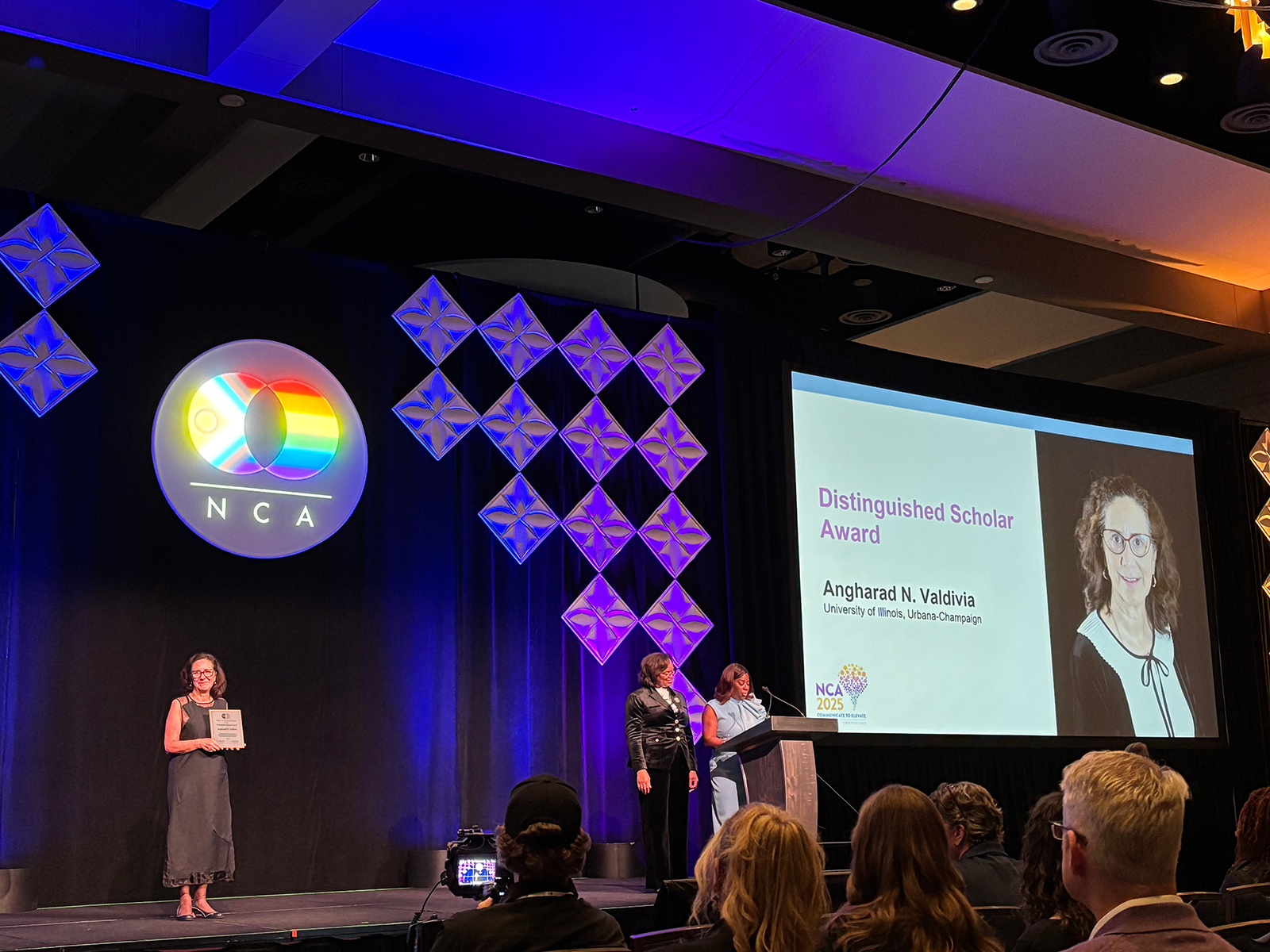
Professor Angharad N. Valdivia wins NCA Distinguished Scholar Award

The conference also celebrated the contributions of Angharad Valdivia, ICR professor emerita, who was honored with NCA’s Distinguished Scholar Award during the President’s Award Ceremony (pictured above). One of NCA’s highest honors, the award recognizes a career of groundbreaking scholarship and mentorship in media studies, Latina/Latino studies, and global communication. Valdivia’s presence throughout the conference—as panel chair, respondent, mentor, and presenter—reflected both her continuing intellectual leadership and her deep commitment to supporting emerging scholars. Valdivia’s NCA participation included:

  • Senior Mentor, 2025 La Raza Mentoring Panel
  • Member, Publications Council Meeting
  • Chair and respondent, “The Complexities of Elevating Latinidad and the Media”
  • Respondent, “Audiences Navigating Disney and Popular U.S. TV Shows”
  • Presenter (with ICR doctoral student Kendra Williams), “Barbie as a Cultural Phenomenon: Doll, Brand, and Media Icon”

ICR faculty and students also contributed important new research to the conference program. Kevin Wise, professor of advertising, and doctoral student Alice Ji collaborated on the study “Reimagining the Presentation of Important Safety Information (ISI) in Social Media Pharmaceutical Advertising,” co-authored with ICR doctoral student Veranika Paltaratskaya and Erin Willis (University of Colorado, Boulder), presented in the Health Communication Division. Their work adds to ICR’s growing presence in research addressing digital health communication and public understanding of risk information.

Ji contributed an additional presentation on ISI in pharmaceutical social media advertising as part of the Health Communication Division’s paper session. ICR doctoral student Jennifer Zhang presented her dissertation research, “More Vivid, More Deeply Processed: Exploring the Roles of Message Format in Misinformation and Correction of Health Misbeliefs,” in the Health Communication Division.

Two ICR alumni were also recognized with major awards at NCA:

Mel Stanfill (PhD ’15), University of Central Florida, won the Diamond Anniversary Book Award for the book Fandom Is Ugly: Networked Harassment in Participatory Culture (NYU Press, 2024).

ICR alum Mel Stanfill

Diana Leon-Boys (PhD ’20), University of Wisconsin-Madison, won NCA’s New Investigator Award in the Critical and Cultural Studies Division.

See NCA’s full list of 2025 national and interest group award winners.

Share on social

2025-26 Ebert Fellows announced


Each fall, the Roger Ebert Fellowship program selects three College of Media undergraduate students to participate in the yearlong fellowship that aims to shape their skills in critical writing through immersion in the film industry.

Ebert theatre- orange

The Roger Ebert Fellows chosen for the 2025-26 academic year are Paige Gaines, Amir Rehab, and Jin Wang.

The program, named after the late Pulitzer Prize-winning film critic for the Chicago Sun-Times and University of Illinois journalism alum, allows students to work with former Chicago Tribune film critic Michael Phillips in engaging with notable figures within the film and media industry and strengthening their critical analysis and writing skills.

This year, the Ebert Fellows will participate in monthly workshops both on campus and in Chicago, curate screenings through the Roger Ebert Center for Film Studies at Spurlock Museum, and engage in radio exercises with Steve Morck, senior digital media producer at Illinois Public Media.

Phillips has been the advisor since the program began in 2015. When it comes to selecting the Ebert Fellows, he looks for something beyond the conventional: persuasive, compelling and “alive.”

“Ebert was a lot more than a ‘film critic,’ Phillips said. “He brought the world around him into the writing, which is not easy to do well, and he did it just about better than anybody.”

Another yearly highlight is the Fellows’ coverage of the True/False Film Fest in Missouri. This is a two-night excursion that entails covering the festival, where Phillips encourages the students to speak with people involved in the films that interest them the most.

“Whether it’s for radio podcasting, print, or introducing a film, anything we can do to get the students a little closer to the writer they want to become is the goal,” Phillips said.


Meet the 2025-26 Ebert Fellows

Paige Gaines is a senior earning a dual degree in media and cinema studies and in communication. She is looking forward to working with the other Fellows.

Paige Gaines

“Both of the other Fellows are in advertising, so it will bring different outlooks from what I have had,” Gaines said. “I’m really interested to see what I can learn from them and what they can learn from me.”

Gaines frequently attended Ebertfest as a child and is a distant relative of Roger Ebert. She wants to improve her review-writing skills and efficiency.

The True/False Film Fest is the event that Gaines is most excited for because of the screenings of documentaries revolving around social and political issues.

“I love telling stories about people who don’t have stories told about them as much,” Gaines said. “What better way to get exposure to that scene than going to where it’s hosted?”

One of Gaines’s favorite films is Therapy Dogs, a hybrid documentary-fiction comedy,because she saw it at an important part of her life, and it ignited her love for her career.


Amir Rehab, a senior in advertising, is looking forward to working with Phillips, meeting with directors, and evolving as a writer.

Amir Rehab

“Living in the USA and Algeria has given me so many different perspectives within our media that we consume,” he said. “Through design and editing, I learned how visuals can tell stories and evoke emotions.”

Rehab transferred to the University of Illinois last year and chose advertising as a major because it combines two things he has always loved—creativity and strategy.

He currently makes his own short-form documentaries and is interested in using this program to improve his storytelling capabilities and network.

“Putting yourself out there in uncomfortable situations in order to evolve is important,” Rehab said. ”If you’re just staying in the exact same spot, you’re not going to get anywhere.”

His favorite movie is Parasite, which won the 2020 Academy Award for Best Picture,because of the powerful message through the acting and visual storytelling.

“I was extremely impressed by the cinematography—the details in distinguishing class division and income inequality. It’s a very powerful message achieved not only through acting but also through visual storytelling and camera work!”


Jin Wang is a junior in advertising. She is most excited for the immersion trips to Chicago, where the students will work in the Ebert Fellow workshop and visit art exhibitions.

Wang is eager to learn more about film this year, as her criticism in the past has mostly revolved around paintings and sculpture.

“Criticism is essential because our experiences shape how we see the world,” Wang said. “It brings different viewpoints together and helps people express their own ideas.”

She is excited to collaborate with the other Fellows by contributing different ideas and opinions.

Wang’s favorite movie is the Korean film Wedding Dress because of the themes about family and love.

“It reminds me that love isn’t just about happy moments, but also about sacrifice,” Wang said. “It’s so emotional and it makes me feel deeply connected to the story and the characters.”

Share on social

Illini Watchers brings movie fans together for analytical discussion


Every Friday night, the sound of lively movie-take debates pours from Room 1090 and drifts down the halls of Lincoln Hall during The Illini Watchers’ weekly meeting.

The registered student organization began around 2018, originally named C-U Cinefile, to review various forms of media. The Illini Watchers pride themselves on being a welcoming space for everyone, regardless of how familiar they are with the film scene.

“The club represents the legacy that the University of Illinois has been a place where criticism is formed,” said Jonathan Knipp, senior lecturer of media and cinema studies and faculty sponsor of the club.

The Illini Watchers meeting

Like a book club for movies, each meeting includes discussion mostly surrounding a film that was chosen the week before, also allowing time for members to talk about other random movies, theater screenings, books, music, and games.

“My exec team and I will make the slides with the parts we thought were interesting,” said Nicolas Roacho, junior in media and cinema studies and Illini Watchers president. “But it’s a really laid-back discussion about the film we assigned everyone to watch.”

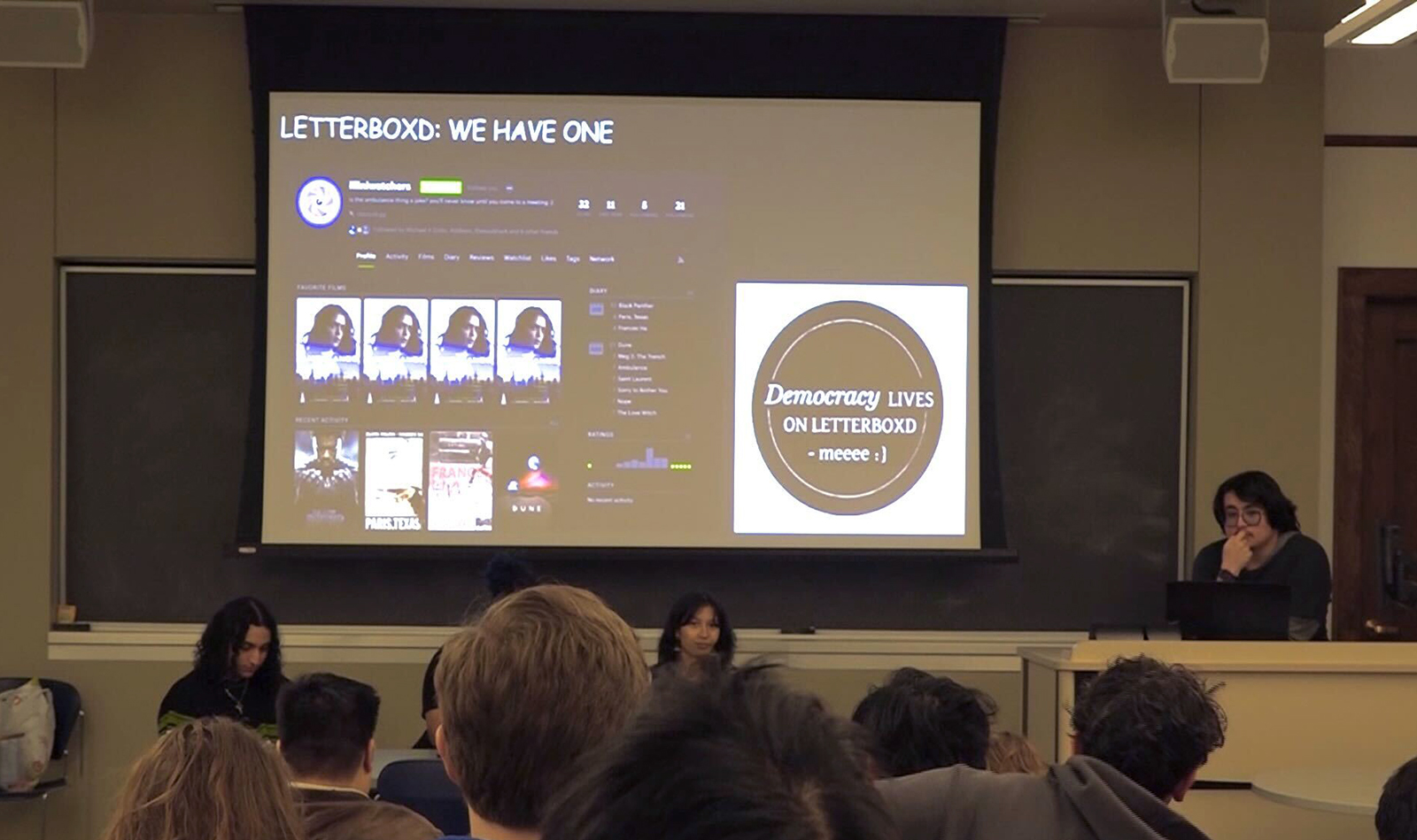
The Illini Watchers' Letterboxd page
The Illini Watchers share their film ratings on their Letterboxd page.

During the meeting, they take an average of everyone’s rating of the movie and post it on the club’s Letterboxd page, a social network for film fans.

At the end of each meeting, Roacho and other executive members announce a theme for next week, taking movie nominations from members to spin on a wheel. Whichever movie the wheel lands on is the one up for discussion the following week.

A recent theme was Hispanic Heritage Month, where all the suggested movies had a Hispanic writer, director, or lead. These themes are made to introduce members to films they might not have watched before, like international cinema, Roacho said.

Other events the club organizes are group bus rides to a movie theater, movie-themed trivia games, picnics on the Quad, and a yearly Halloween costume contest. They also sometimes collaborate with their sister club, Illini Film and Video, a film and video production organization, of which Roacho is also the president.

As the faculty advisor, Knipp looks for resources to help the club grow, with his most recent project trying to connect the club to the Roger Ebert Center for Film Studies.

His favorite part of being the advisor for the club is the same as being an instructor.

“It’s always about trying to start the conversation but not presiding over it or trying to influence it,” Knipp said. “Getting it kick-started so I can sit back and just let the students let their thoughts go wild.”

Knipp and Roacho emphasized the importance of appreciating media through their club.

“I like knowing that we are providing that community because it’s important to keep this sort of culture alive,” Roacho said.

With a membership count of just over 100, the group is diverse in majors, something both Knipp and Roacho say makes the Illini Watchers unique.

“The club is everything I wished for,” Roacho said. “There wasn’t a pool of people to talk about movies with at my high school; the people in Watchers are understanding of what I’m saying, even if they’re not too familiar with film.”

Share on social

Media literacy research and engagement initiatives address societal challenges


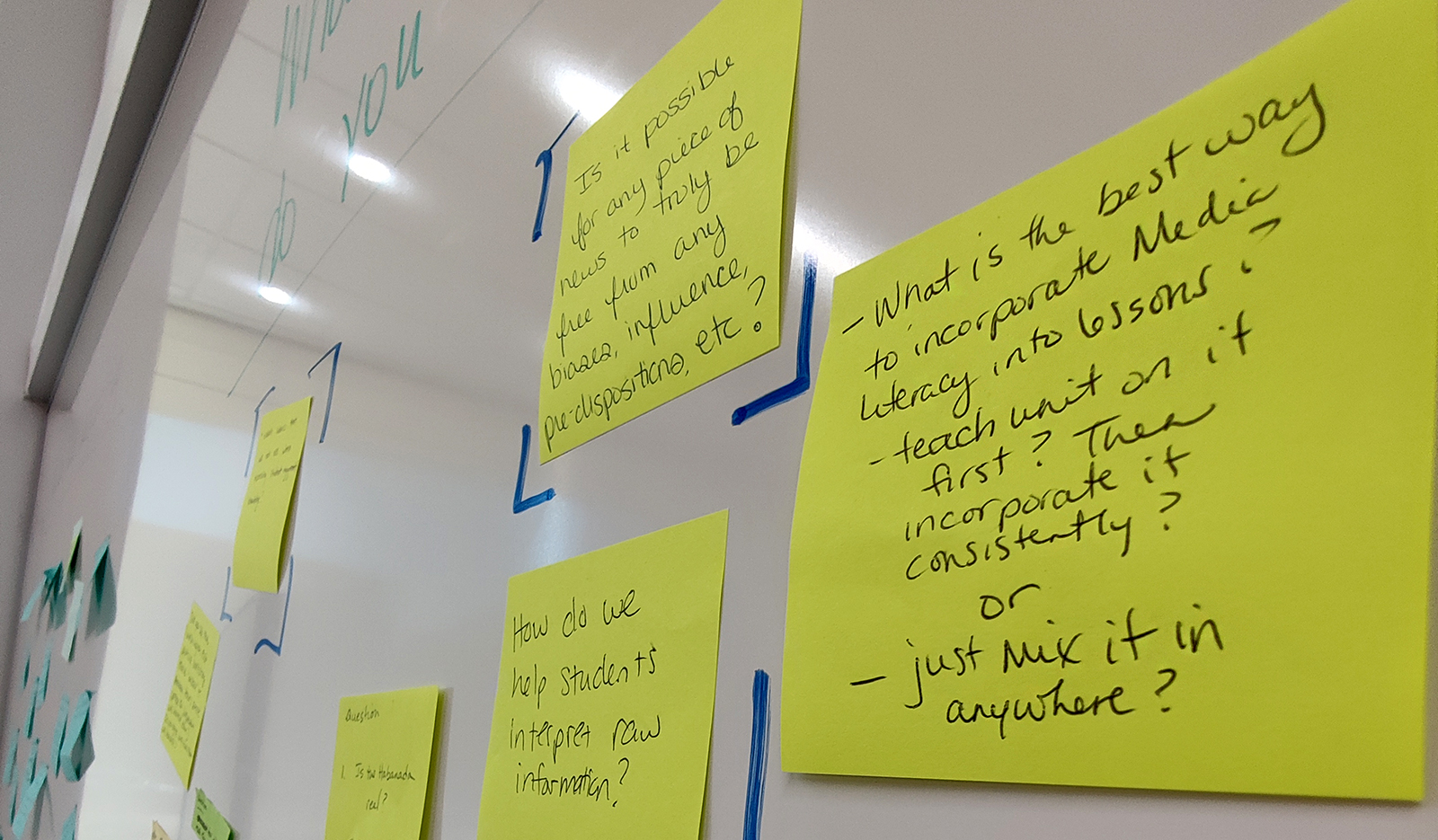
Faculty and graduate students across the College of Media are pursuing a range of activities aimed at understanding challenges to media literacy and developing interventions to improve it.

Post-Its from IMEDIA workshop

Recent activities include:

A team including Michelle Nelson, professor of advertising, Amanda Ciafone, associate professor of media and cinema studies, Stephanie Craft, professor of journalism, ICR doctoral student Gillian Paxton, and undergraduate student Maaike Niekerk, is investigating older adults’ media use, media literacy, and the role of media in fostering social connection. The research seeks to understand how older adults use media across a broad range of platforms and tools, including generative AI, and the challenges they face in doing so. The aim is to explore how improving media literacy may help them better navigate the media environment to meet their social and information needs. The study involves interviews with those who offer help and instruction regarding media and technology use through senior centers, public libraries, park districts and the like, and focus groups with older adults. This project is funded by a College of Media seed grant.

Professor Amanda Ciafone presenting at IMEDIA workshop
Amanda Ciafone, associate professor of media and cinema studies, presents at a workshop hosted by IMEDIA.

Related to this project, Ciafone was awarded funding to organize media and digital literacy workshops with European scholars and advocates to advance research, education, and transatlantic dialogue on older age and media literacy under the Jean Monnet Center of Excellence grant awarded to the European Union Center at the University of Illinois Urbana-Champaign. Ciafone said Europe has more rapid “demographic aging,” where a population’s average age increases, than the United States and robust models for media literacy policy and education.

As part of its mission to bolster research in media literacy, the College of Media hosts a regular gathering of faculty across campus to discuss research in media literacy across disciplines and to identify potential opportunities for collaboration. These conversations have so far included faculty in the College of Fine & Applied Arts, University Library, School of Information Sciences, College of Education, and College of Liberal Arts & Sciences.

The Initiative for Media Education Inquiry and Action, a collaboration between the College of Media and College of Education, is developing a media literacy micro-credential for teachers. IMEDIA was created in 2021 to help teachers in Illinois fulfill the mandate of a state law requiring media literacy instruction in public high schools. IMEDIA has offered in-person workshops for teachers to help them incorporate media literacy into their current teaching. The aim of the micro-credential is to broaden the reach of workshops by making the instruction and resources available online in a way that also offers teachers the opportunity to add a media literacy credential to their licenses.

A research study conducted by Nelson, ICR doctoral student Sakshi Bhalla, and Michael Spikes, co-founder of the Illinois Media Literacy Coalition, emerged from IMEDIA’s teacher workshops. The study, which included interviews with 20 educators from across the state of Illinois about the nature and challenges of media literacy education in their schools, found several digital divides that undermine the efficacy of state-mandated media literacy instruction in Illinois high schools. Their findings were published in the Journal of Media Literacy Education.

IMEDIA also is updating its eText, MEdia Matters, which is currently used in a variety of introductory undergraduate courses. The text will be a key resource for teachers pursuing the micro-credential and will be freely available for use in their classrooms.

Craft is part of a team comprising faculty from five universities engaged in a long-term research initiative to build a model of news literacy behavior that will inform efforts to increase people’s resistance to misinformation. The team has developed a widely used measure of news literacy knowledge and most recently has been investigating how greater news literacy knowledge translates into better news consumption behaviors reflecting that greater knowledge. The most recent study was presented in August at the annual meeting of the Association for Education in Journalism and Mass Communication.   

Share on social

Illinois Public Media’s magazine program ‘Prairie Fire’ wins five regional Emmys


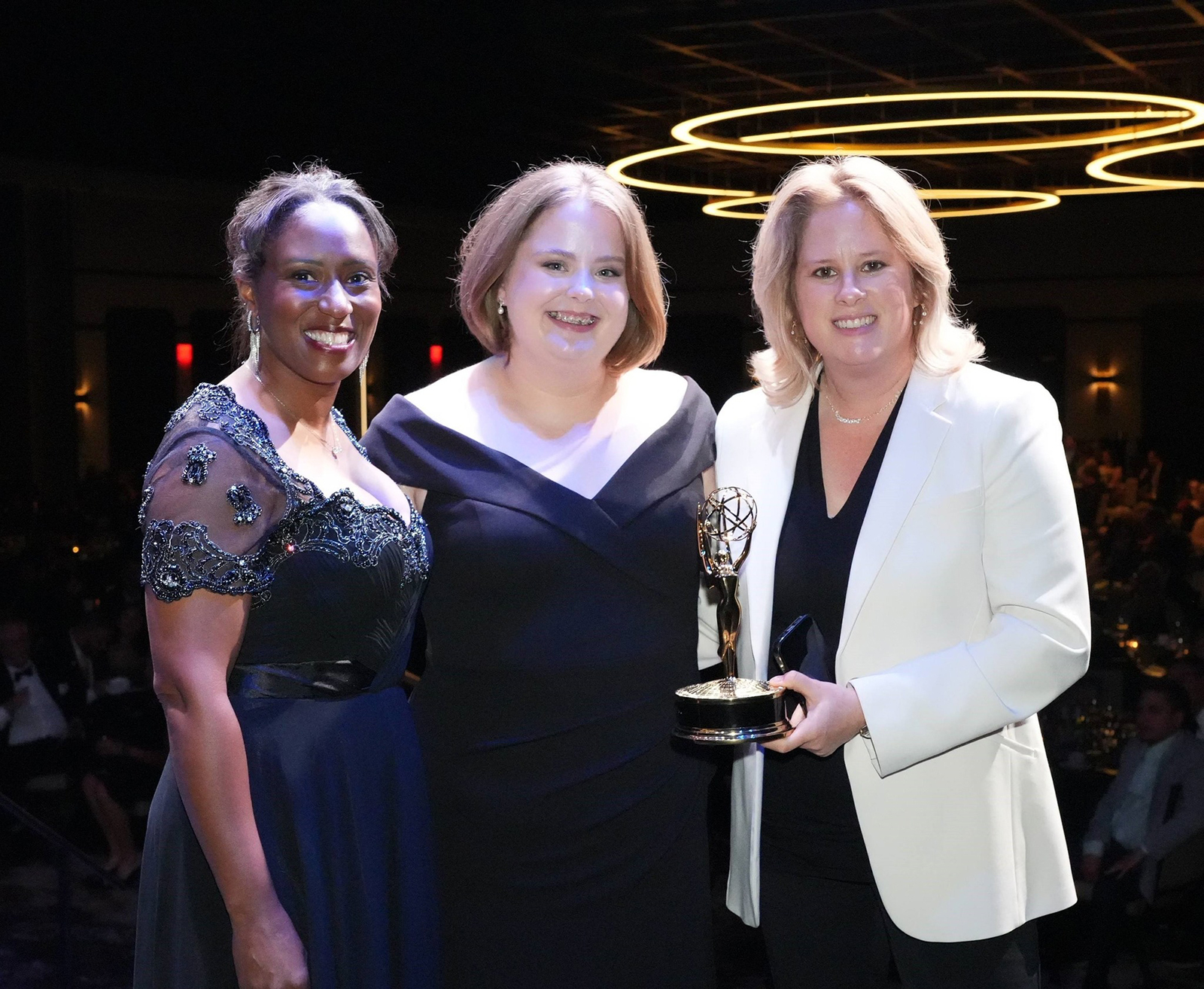
Prairie Fire, a magazine program produced by WILL-TV at Illinois Public Media, was awarded five regional Emmys across five categories at the 2025 Mid-America Regional Emmy Awards, including “Best Magazine Program” in the region.

“Our win for Magazine Program for the second year in a row is a real thrill for the Prairie Fire team” said host and producer Sarah Edwards, “because it really underscores the excellence and thought we put in to making every episode as good as it can be. Prairie Fire represents the best of PBS programming produced at the local level.”

The team, which was nominated for 10 awards, also earned regional Emmys in the following categories:

The Prairie Fire Emmy-winning production team includes Edwards, fellow producers Taylor Plantan, DJ Roach, and Tinisha Spain, along with cinematographer Daniel Clarke, and audio engineer and cinematographer James Treichler. (Pictured below: Producers Tinisha Spain, Taylor Plantan, and Sarah Edwards, who also hosts Prairie Fire, with one of the Emmys they won for their program.)

"Prairie Fire" team

“As producers of the show, we carefully curate and construct the stories of Illinois’s local characters to highlight the very best creatives, small business owners, and innovators our state has to offer,” said Plantan. “The success of the program is a testament to the charisma and talent of the Central Illinois community.”

Spain pointed to the significance of the work done by the Prairie Fire team. “Being honored with an Emmy is a deeply humbling reminder that local storytelling is important—that the stories we tell do matter,” she said.

“We’re incredibly proud of the Prairie Fire team and their dedication to telling authentic, locally grounded stories,” said Moss Bresnahan, Illinois Public Media’s executive director. “These awards reflect the quality, creativity, and heart that exemplify Illinois Public Media’s work.”

About Prairie Fire

Reimagined and brought to life once more, Prairie Fire is a new take on WILL-TV’s beloved magazine program from the mid-1990s. Rooted in storytelling, Prairie Fire brings viewers cinematic documentaries, profiles, and performances from downstate Illinois. The show airs on local PBS stations across the state of Illinois, including Nine Network St. Louis and WTTW Chicago.

Illinois Public Media is a not-for-profit public media service of the College of Media at the University of Illinois, enriching people’s lives through programs and services that educate, entertain, inspire, empower, and address community needs and concerns. Additional services include WILL-AM 580, Illinois Soul (FM 101.1) WILL-TV, Illinois Public Media News, and many more.

Seo-Jeong (Rachel) Heo

Seo-Jeong (Rachel) Heo

Email: sjheo2@illinois.edu

Research Interests

My research focuses on human–AI interaction in advertising and marketing contexts, with particular emphasis on how AI-driven advertising shapes consumer perception, attitude, and underlying psychological mechanisms. Specifically, I examine (1) virtual influencers as persuasive agents, (2) large language model (LLM) interfaces as persuasive environments, and (3) social robots as embodied communicators. Across these domains, my work aims to advance theory on AI-mediated persuasion by integrating insights from social and cognitive psychology.

Recent Publications/Presentations

Heo, S.-J., Park, S.-I., Lee, & Y.-J. (2025) Finessing Realism: Harmonizing Mixed Reality and Message Framing in Virtual Influencer Advertising – Mind Perception Theory Application. Proceedings of the 2025 American Academy of Advertising (AAA) 

Park, S.-I., Lee, Y.-J. & Heo, S.-J. (2025) In Watermark We Trust? Exploring How Consumers Cope with AI Influencer Advertising: Multidimensional Persuasion Knowledge and Construal Level Approach. Proceedings of the 2025 American Academy of Advertising (AAA) 

Lee, Y.-J., Heo, S.-J. & Park, S.-I. (2025) When Virtual (vs. Human) Celebrity Voice Matters: Interplay between Celebrity Type and Endorsing Message – Construal Level Theory Application. Proceedings of the 2025 American Academy of Advertising (AAA) 

Heo, S.-J. & Ham, C.-D. (2024), Exploring Motivation to Follow Virtual Influencers (VIs): The Role of Emotional Attachment as a Mechanism for Generating Positive Effects in VI-Endorsed Advertising, Global Advertising Colloquium, Korean Advertising Society, July 2024, Seoul, Korea.

Courses Taught

  • ADV 360: Innovations in Advertising, instructor of record 
  • ADV 283: Advertising & Brand Strategy, instructor of record 
  • ADV 281: Advertising Research Method, instructor of record 
  • ADV 150: Introduction to Advertising, teaching assistant

Awards and Honors

  • Fall 2025 Washington Media Scholars Foundation Fund for Graduate Students, Advertising Division, Association for Education in Journalism and Mass Communication (AEJMC), 2025 
  • Competitive award recognizing outstanding graduate research potential in advertising and media scholarship. Sponsored by the Washington Media Scholars Foundation. 
  • Fall 2025 Maureen Moore Fellowship, Graduate College, University of Illinois Urbana-Champaign, 2025 Graduate fellowship awarded by the UIUC Graduate College in recognition of academic excellence and research achievement. 
  • Spring 2023 List of Teachers Ranked as Excellent by their Students, Charles H. Sandage Department of Advertising, University of Illinois Urbana-Champaign 
  • Fall 2023 List of Teachers Ranked as Excellent by their Students, Charles H. Sandage Department of Advertising, University of Illinois Urbana-Champaign

Related Links

I on the Media: Mike Yao discusses dependence on AI


Recently, there has been heightened media attention around the potential misuse of generative AI tools like ChatGPT—ranging from stories about individuals using it in harmful ways to concerns about people becoming overly dependent on it for companionship or therapy. While these accounts may represent extreme cases, they raise important questions about the role of AI in everyday life and how society should think about its limitations.

The College of Media spoke with artificial intelligence expert Mike Yao to learn more.

About the Media Expert

headshot of Mike Yao

Mike Yao is a professor of digital media in the Charles H. Sandage Department of Advertising and director of the Institute of Communications Research. He also oversees the Media, Technology, and Social Behavior Research Lab at Illinois and is a contributor to campus’s Generative AI Solutions Hub. Yao’s research delves into the interplay between media, technology, society, and human communication. He examines how people engage with emerging technologies like AI and immersive multimedia across diverse social settings and how these interactions influence social behavior and human communication in digitally mediated spaces.


What have you learned about artificial intelligence so far through your research?

At the Media Technology and Social Behavior Research Lab, we study not only what AI can do technically, but also how people actually communicate with it. Our research looks at the dynamics and social processes embedded in human–AI dialogue. Instead of treating AI as just a tool that performs specific functions, we focus on the communicative side, examining biases, stereotypes, expectations, linguistic patterns, and conversational styles that emerge when people interact with AI in social or interpersonal contexts.

What we are increasingly finding is that much of the challenge stems from the interface itself. Generative AI systems like ChatGPT are conversational by design. They allow people to use natural language to give instructions or ask for support. This seems simple, but it represents a profound departure from earlier technologies. In the past, users had to click with a mouse or write a line of code, actions that were purely instrumental and utilitarian, to “communicate” with technological systems. Once the interface begins to mimic human conversation, it introduces an entirely new layer of social, cultural, and psychological meaning into the interaction.

This conversational affordance makes AI feel more like a partner than a tool, opening the door to emotional connection, dependency, and even relationship-like dynamics. People begin to apply the same relational scripts they use with other humans—seeking empathy, validation, or intimacy. That is why the risks around reliance, especially in friendship or therapeutic contexts, are so pronounced.

At the same time, this is still a very new and rapidly growing area of research. We are only beginning to gather empirical evidence about how these relationships form, what they mean, and how they might shape human-to-human communication. What is clear, however, is that AI’s conversational design fundamentally changes how people use and think about technology, creating opportunities but also raising complex questions about boundaries, responsibility, and human well-being.

Where should we draw the line between what AI tools can do (brainstorming, tutoring) versus what should remain in the hands of trained professionals (mental health counseling, medical advice)?

AI illustration

The line between AI use and human expertise is not fixed; it has to be negotiated. Historically, the affordances of technology were clear: a hammer looks like it’s meant to hit nails, and it is intended to be used for performing that task. Generative AI is different. It’s a general-purpose system whose applications vary enormously depending on how a person first encounters it; one user sees a math tutor, another a coding partner, another a conversational companion. Because we don’t yet have stable “mental prototypes” of what AI is for, people project many different expectations onto it.

This makes it risky to rely solely on instinct or isolated stories when deciding what AI should or shouldn’t do. Instead, these boundaries should be informed by empirical evidence and social science research studying how people actually use AI, what benefits and harms emerge, and in what contexts.

My own view is that AI should be framed as a complementary tool rather than a replacement. Professionals, doctors, counselors, and teachers may use it to extend their capacity, but accountability for accuracy, safety, and judgment must remain with the human expert. The stakes are different for students or learners, who are still building the very skills AI might perform for them. Outsourcing too much to AI in those contexts risks undermining education and development.

And here’s where creativity offers an important example. Human creativity has multiple dimensions: idea generation, originality, and the craft of execution. AI can assist in implementation, but it cannot substitute the human act of judgment—deciding whether something is good, meaningful, or valuable. A piece of art, for instance, isn’t only about technical execution; it’s about interpretation in a social and cultural context. That value judgment is inherently human. If we let AI replace that instead of empowering it, we risk reducing creativity to production rather than meaning-making.

What responsibility should companies like OpenAI have in building safeguards against harmful usage, and what responsibility falls on society, parents, educators, or policymakers?

Responsibility here is shared. Companies like OpenAI clearly need to build technical safeguards, set limits, and be transparent about risks. But society as a whole also has a role: parents, educators, and policymakers must help set the norms and guardrails.

We’ve faced similar challenges before. Think about movie ratings, Internet protocols, or even electricity and railroad standards. These were not set by companies alone. They emerged through collective debate, negotiation, and regulation. AI is no different.

So, while developers must act responsibly, it is also vital that we, as a society, engage in open dialogue about values; what kind of transparency, respect, and agency we want to guarantee. Only through democratic processes and evidence-based policymaking can we create the appropriate boundaries for AI use.

What strategies can educators, media professionals, and advertisers use to encourage positive, productive uses of chatbots—while discouraging harmful or unhealthy reliance?

I think the guiding principle should be this: AI should empower humans and enrich human experience, not replace it. Technology should extend human capacity, not lead us away from it.

For educators, this means being clear about boundaries. Young people and students are especially vulnerable because they may not yet have the knowledge to judge AI’s output. They might outsource their learning without realizing what they’re losing. Educators need to frame AI as a support tool, for brainstorming, practice, or feedback, while keeping the responsibility for understanding and critical thinking with the learner.

For professionals such as journalists, marketers, or advertisers, the principle is similar. AI can make processes faster or more efficient, but the responsibility for quality, accuracy, and ethical judgment always lies with the human communicator. A writer might use AI to refine a draft, but the accountability for what’s published belongs to the writer, not the machine.

In terms of messaging, media and advertisers can help by highlighting these responsible uses and reinforcing that AI is a tool to support, not substitute, human creativity, empathy, and expertise.

What risks emerge when users turn to ChatGPT for friendship, therapy, or even romantic companionship? How might this affect human-to-human relationships in the long term?

The risks are real, but they’re also complicated. Humans are creative—we often use technologies in unintended ways. Some people are turning to AI chatbots for companionship, therapy, or even romantic connection. The conversational style of these systems makes them feel supportive, echoing patterns we know from parasocial relationships with media or even earlier technologies.

The danger is that overreliance on AI could weaken human-to-human relationships. If people begin substituting machine companionship for the effort and vulnerability required in real human connections, that could have long-term social costs.

But there’s also an opportunity here: AI functions as a mirror. Instead of only asking “what is AI doing wrong?”, we might ask “what is missing in people’s lives that makes AI companionship so appealing?” Loneliness, lack of empathy, strained family dynamics—these are human issues, and AI is simply revealing them in a new way.

So, the real risk is not just technological misuse, but a failure to reflect on ourselves. If we treat every problem as “AI’s fault,” we miss the deeper lesson: what human needs are being unmet, and how can we as a society address them?

If companies promote or integrate ChatGPT into their products, what ethical obligations do they have in framing its limits? How can advertising balance highlighting its benefits without overselling its role?

Ethics can be debated, but some principles are broadly shared: transparency, respect, and human agency. Companies have an obligation not to oversell AI as a replacement for human expertise or care. They should present it as a supportive tool while being clear about what it cannot do.

Advertising should highlight real benefits, efficiency, accessibility, assistance, while also being explicit about limits. The obligation is honesty: to frame AI as a powerful supplement, not a magical replacement.

“I on the Media” is a series from the University of Illinois College of Media in which faculty at the college address current issues and research.
Azam Hasanpour

Azam Hasanpour

Email: azamh2@illinois.edu

Research Interests

  • Media Studies
  • Critical Studies
  • Social Sciences
  • Documentary Studies
  • Visual Studies
  • Visual Arts
  • Gender studies
  • Digital Humanities

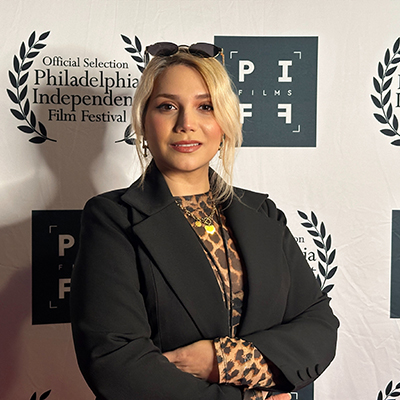
Azam is a multidisciplinary film and theatre artist with an MA in Cinema from the University of Tehran and an MFA in Film and Media Arts from Temple University. With over eight years of focused experience in filmmaking, she brings a rich background in both artistic practice and academic research. Her work spans narrative film, media art installations, and experimental documentary forms.
Azam’s interdisciplinary work bridges the arts and humanities, particularly in Digital Humanities, Visual Arts, Mixed Media, Documentary Studies and Critical Visual and Media Studies. She is interested in media art installations and essays that explore emerging documentary forms and narrative expression. She has also contributed to the organization of international festivals, including the Fadjr International Film and Theatre Festival, the Tampere Film Festival, and the Philadelphia Independent Film Festival.

Recent Publications/Presentations

Book

  • Hasanpour, A. (2018). “Structure, Time and Narrative.” Institute of Culture, Art and Communication Publications, Tehran, Iran.

Articles

  • Hasanpour, A. (2017). “From Shahrzad the Storyteller to Shahrzad the Playwright: One Thousand and One Nights, according to Reza Kamal Shahrzard.” Conference on 170 Years of Reading One Thousand and One Nights, attended by Professor Ulrich Marzolf. Tehran, Iran. I.S.B.N.: 978-600-222-371-5.
  • Mahmoodi Bakhtiari, B., Aliari, F., Hasanpour, A. (2016). “Representation of Kurds in Iranian Feature Films: A Cultural Semiotic Study.” Cultural Heritage and Tourism Research Center, No. 3, pp. 151-176. I.S.B.N.: 2538-1709.
  • Alasti, A., Hasanpour, A., Mahmoodi Bakhtiari, B. (2015). “Multiplicity of Points of View in Terrence Malick’s Trilogy.” AVANCA/CINEMA (International Cinema Conference), Avanca, Portugal. I.S.B.N.: 978-989-96858-6-4.
  • Hasanpour, A., Mahmoodi Bakhtiari, B. (2015). “The Reflection of Languages and Cultures of the Iranian People in Iranian Feature Films.” University of Tehran, Tehran, Iran.

Conferences

  • Hasanpour, A., Goshtasb, A., Mahmoodi Bakhtiari, B. (2019). “Feminine Private Shows of the Qajar Era: A Feminist Approach.” 6th International Conference of Modern Approaches in Humanities, Paris, France.
  • Hasanpour, A., Mahmoodi Bakhtiari, B. (2017). “The Reflection of Languages and Cultures of the Iranian People in TV Series: A Cultural Semiotic Study.” International Conference on Language and Media (IRIB), Tehran, Iran.
  • Hasanpour, A. (2016). “Shift of Point of View in the Cinematic Narrations of One Thousand and One Nights.” International Conference on Literature and Cinema, University of Tehran and National School of Cinema, Tehran, Iran.
  • Hasanpour, A. (2016). “From Shahrzad the Storyteller to Shahrzad the Playwright: One Thousand and One Nights, according to Reza Kamal Shahrzard.” Conference on 170 Years of Reading One Thousand and One Nights, attended by Professor Ulrich Marzolf, Tehran, Iran.

Courses Taught

  • MAS 100: Intro to Popular TV & Movies

Awards and Honors

  • Motion Picture Association Scholarship Award, Temple Film and Media Arts Departmental Award, Philadelphia, PA, USA. (2024).
  • Philadelphia Student Media maker Grant, Scribe Video Center, Philadelphia, PA, USA. $2000, (2024).
  • Full Fellowship in Film and Media Production program (MFA), Temple University, Philadelphia, PA, USA. (2022 -2025).
  • Winner of the special award for Participation in “Exchange Program, ONE (WO) MAN, ONE CAMERA, ONE SOUND at the National Film School of Denmark and International Media Support (IMS), Copenhagen, Denmark. (2016).
  • Winner of the special jury award for “Thirst”, 5th Iran International Green Film Festival and 9th Green Me Global Festival for Sustainability, Tehran, Tehran, Iran. (2016).
  • Official selection for “Baran” in the Arabian Nights Film Festival: The Cinematheque of Copenhagen and Danish film institute, Copenhagen, Denmark. (2016).

Related Links

College of Media
119 Gregory Hall
810 S. Wright St.
Urbana, IL 61801
217-333-2350