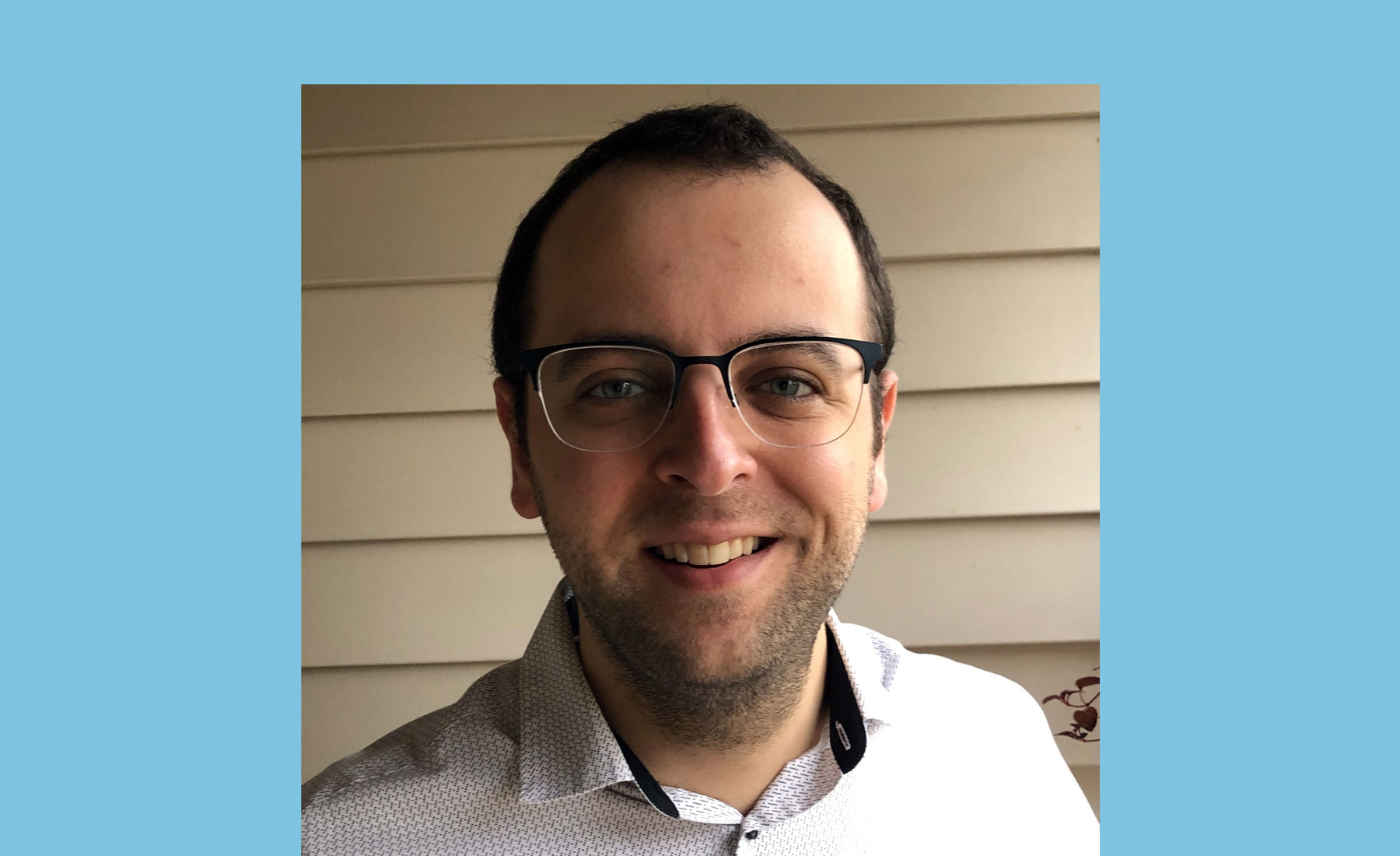
Leona Su’s research examines effects of humor, social media, and new technologies on science communication

Leona Su

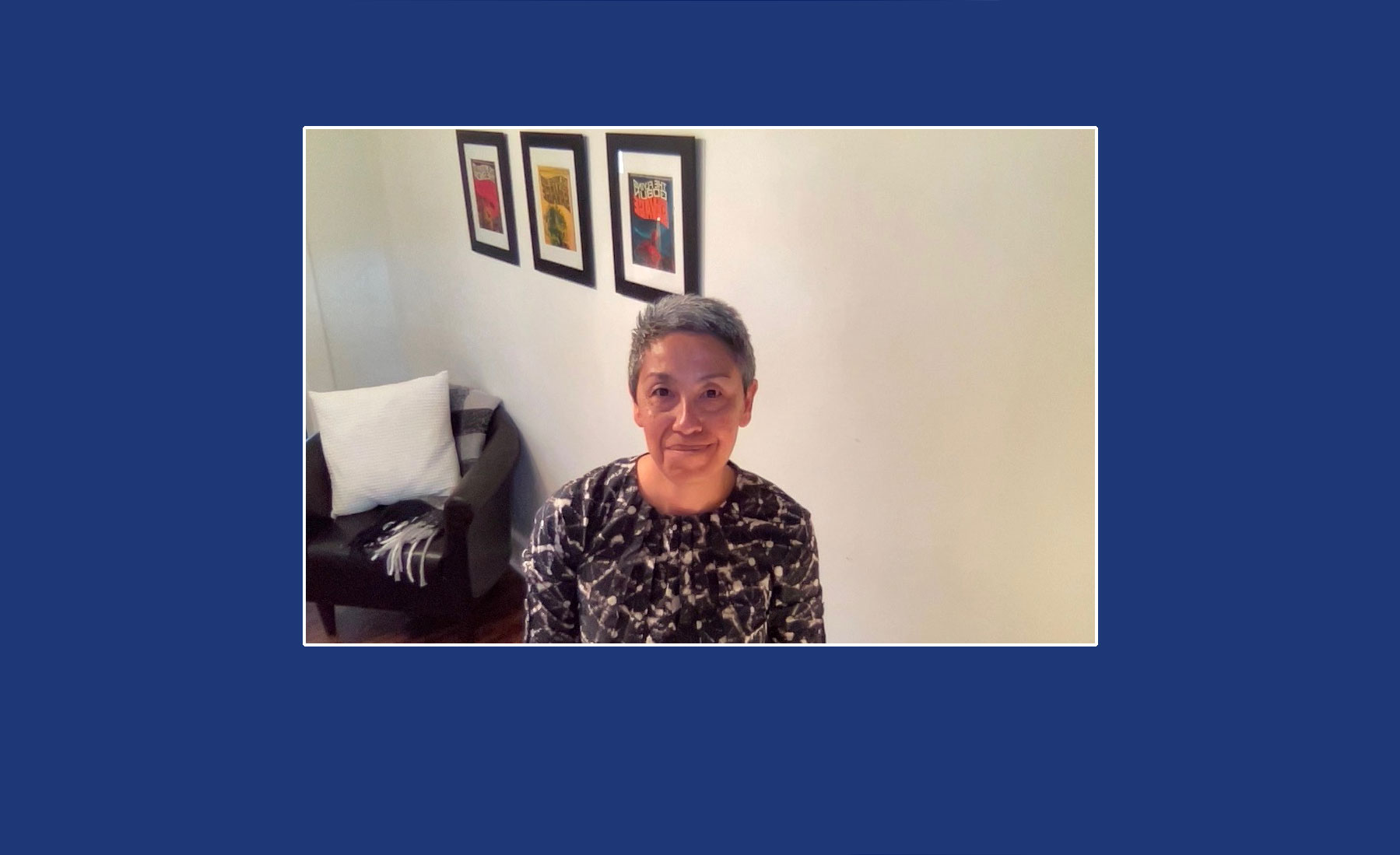
Leona Yi-Fan Su, assistant professor in the Charles H. Sandage Department of Advertising, is interested in how humor can help people engage with science.

“Science is thought of as serious,” Su said. “So you can think of humor as a way to catalyze that and make people get interested in science and be more willing to interact with science and scientists.” 

While humor has been extensively studied in fields like advertising and marketing, she said, its role in science communication is less known.

Su is a co-principal investigator on an NSF-funded project that was awarded $750,000 in 2019 to examine the effectiveness of using humor for communication about science, particularly on social media. Sara Yeo, associate professor at the University of Utah, is the principal investigator, and the other co-principal investigator is Michael Cacciatore, professor at the University of Georgia.

“It’s important to keep in mind that humor plays a role, but different types of humor can play differently on different social media platforms and when communicating about various issues,” Su said.

Humor is often thought of as a simple construct, Su said. But really, it has a range of different types and techniques, such as benign versus aggressive humor. She also noted the differences in online culture between Twitter and Instagram.

In a recently published article, Su and her coauthors reported that wordplay and satire were positively linked to the number of likes and retweets a Twitter post received. On the other hand, anthropomorphic humor—attributing human characteristics to animals or objects—was negatively linked to the presence of comments, and humor was not linked to user engagement on Instagram. 

Scientists and communicators have ample opportunities to interact with the public online, Su said.

“I think it’s important to encourage scientists to share their work with the public and to help with public engagement,” she added, and noted that her work can help them select message strategies.

Su’s broader interest is in how social media and other digital media change people’s perceptions and understandings of science. This also includes looking at the marketing techniques and brand communication strategies used on digital media by agricultural and technology businesses. For example, as a principal investigator, she is leading a project at the Center for Digital Agriculture that analyzes tweets about an emerging food technology, with the aim of understanding branding strategies and public opinion.

Above all, Su said, a key aim of her research is to bridge the gap between the general public and science.

The public should not be viewed merely as passive information receivers, Su said. That is, people don’t often make decisions solely on the facts presented to them.

It’s a common misconception that people will be more supportive of science if they “are more knowledgeable about science,” she said, but in fact, their attitudes toward science can also be affected by heuristic cues such as their politics and other predisposition factors.

Having earned her bachelor’s and master’s degrees in chemistry, Su changed her academic focus after realizing she was more interested in understanding how science is communicated.

“I feel like there’s a gap [within] science communication,” she said. “When I was a scientist, I realized there are times you feel like what you are doing is just a language of your own.”

Su hopes her research will not only help scientists, but anyone who has to communicate complex topics.

“I do hope that some of our findings here in [science] communication can actually be applied or extended to other fields,” she said. “We have to know how messages can be more effectively communicated.”

—Vivian La, Communications Intern

College of Education and College of Media team up to help Illinois high schoolers understand the media they consume


High school students in classroom

A new state law is requiring Illinois public high schools to teach media literacy. Through IMEDIA, the College of Education and the College of Media are helping teachers prepare to do just that.

When Governor J.B. Pritzker signed a bill into law on July 9, 2021, requiring that media literacy be taught in public high schools, Illinois became the first state in the nation to mandate such instruction.

The instruction, to begin with the 2022-2023 school year, will teach students how to analyze and communicate information from various mediums, including digital, interactive, audio, visual, and print.

Immediately after the bill was passed, the College of Education and the College of Media went into action, planning how to prepare Illinois teachers to be ready to instruct students in an area made critical by the massive amount of misinformation that circulates in cyberspace.

The two colleges collaborated to form the Initiative for Media Education Inquiry and Action (IMEDIA) to help fill educators’ needs for media literacy training and curriculum development. The goal of IMEDIA is to assist high school teachers with integrating media analysis and production into their classes and building a robust critical media literacy curriculum in Illinois schools. 

“Many of us in the College of Media have been working on media literacy-related research and teaching in the last several years,” said Professor Stephanie Craft, head of the Department of Journalism. “When we heard about the new law, we wanted to be able to turn that work into action. Teaming up with curriculum and instruction experts in the College of Education seemed an ideal way to do that.”

IMEDIA will launch a pilot program on campus from June 27-29, to both find out what teachers are already doing in the area of media literacy and to help them integrate a media literacy component into their curriculum, said Professor Sarah McCarthey, head of the Department of Curriculum & Instruction. The three-day workshop is for local teachers and potentially for teachers across the state.

“Media literacy is especially important in light of the last presidential election and the amount of disinformation and misinformation that is pervasive in the U.S.,” McCarthey said. “It’s more and more critical that we equip students with the ability to discern what’s factual from what’s not.”

“Preparing Illinois students to successfully navigate an increasingly complex media environment is vital to their well-being and ability to participate in democratic life,” Craft added.

The state is putting together media resources for teachers to download, McCarthey said, “but it’s important to have a professional development component to that, and our workshop is going to provide teachers an opportunity to do some hands-on things as well.”

Early talks between the Colleges of Education and Media include the development of modules that high school teachers could download to use in their classrooms. 

“We’ve also talked about in the future taking advantage of some of the credentialing programs that are in process at both the campus and state levels,” McCarthey said. “But the first step is to get this group of teachers ready for the fall.”

IMEDIA has recently received initial funding from the Office of the Chancellor. They are consulting with the Office of Foundation Relations to identify additional potential funding sources. The group also hopes to apply for Spencer Foundation funding to do a statewide survey of the media literacy landscape, to discover who is teaching what across the state. 

“The end goal is quite simple,” McCarthey said. “We want all of our students to be prepared to be critical media consumers.”

In addition to Craft and McCarthey, members of IMEDIA include College of Education faculty member Jon Hale; College of Media faculty members Amanda Ciafone, CL Cole, and Michelle Nelson, and doctoral student Sakshi Bhalla; as well as Michael Spikes, a doctoral student at Northwestern University and founder of the Illinois Media Literacy Coalition, of which IMEDIA is a part.

Media faculty and TAs make list of teachers ranked as excellent

Congratulations to all of the College of Media faculty and teaching assistants who were ranked as excellent by their students!

This list is based on Instructor and Course Evaluation System (ICES) questionnaire forms completed by students during the Spring 2021 semester. Only those instructors who distributed ICES forms at least once during this time period and who released their data for publication are included in the list. View the complete list.

Note: * denotes that the instructor ratings were outstanding.

ADVERTISING

JACOB FISHER – ADV 305

STEVE HALL – ADV 150

CHANG-DAE HAM – ADV 460

JACQUELINE HITCHON – ADV 283

* TERRY KASDAN – ADV 409

* AMANDA MABRY-FLYNN – ADV 283

* SHACHAR MERON – ADV 498

MICHELLE NELSON – ADV 582

SANG-HWA OH – ADV 410

* MARISA PEACOCK – ADV 350, 491

PETER SHELDON – ADV 390


JOURNALISM

CHRISTOPHER BALL – JOUR 199

STEPHANIE CRAFT – JOUR 250

KEN ERDEY – JOUR 445

CAROL LOMBARDI – JOUR 220

* JEAN MCDONALD – JOUR 460

ERIC MEYER – JOUR 425

MARGARET YEE-MAN NG – JOUR 460

NIKKI USHER – JOUR 199, 452


MEDIA & CINEMA STUDIES

* VICTOR FONT – MACS 480, 481

JOSH HEUMAN – MACS 320

SUSAN MUIRHEAD – MACS 372

HARSH TANEJA – MACS 572
 

TEACHING ASSISTANTS

S. DAS – MACS 100

Y. GAO – MACS 100

Y. LEE – ADV 281

* G. MALO – MACS 101

A. MUKHOPADHYAY – MACS 100

J. PYO – MACS 100

Wilson-Brown adds new dimensions to PR courses in College of Media

Carrie Wilson-Brown

Carrie Wilson-Brown returned to campus this fall as a lecturer in the Department of Media & Cinema Studies and the Charles H. Sandage Department of Advertising. She previously attended the College of Media’s Institute of Communications Research as a graduate candidate in 1993 through 1999.

This semester, she is teaching new courses in Public Relations and Entertainment Industry, Becoming an Influencer, and Intro to Public Relations. 

“I couldn’t be more honored to join the advertising and media and cinema studies faculties,” Wilson-Brown said. “This dual appointment gives me an opportunity to mentor students with varied media interests and a strong academic focus.” 

Wilson-Brown said she is looking forward to connecting with digital-savvy students who are already comfortable creating social media content daily, which is an invaluable skill for those interested in influencer marketing and entertainment public relations.

She plans to develop and teach additional courses that fuse digital storytelling, video production, and public relations. 

“I always strive to put classroom content into practice by creating course materials that aid academic discovery and community engagement,” Wilson-Brown said. “I want to expose students to the dynamism of public relations and content creation.” 

Since 2001, she had been a faculty member at Eastern Illinois University where she received teaching honors including Outstanding Faculty Member. 

Wilson-Brown received her bachelor’s and master’s from Eastern Illinois University, both with a focus on speech communication, and worked towards her doctorate at the University of Illinois concentrating on film and media studies, cultural studies, critical race studies, and Latina/o studies. 

—Da Yeon Eom, Communications and Marketing Intern

Carrie Wilson-Brown

Senior Lecturer

Affiliations

  • Department of Media & Cinema Studies
  • Charles H. Sandage Department of Advertising

Video

No posts found.

Hall wins distinguished Cummings Gold Medal Award from AAF


Steve Hall

Steve Hall, a senior lecturer in the Charles H. Sandage Department of Advertising, received the 2021 Barton A. Cummings Gold Medal Award with a unanimous vote from the American Advertising Federation. 

The award recognizes distinguished individuals for their service to advertising through volunteer work with the AAF, and this is the first time that it was given to an educator; previous winners have all been members of the industry. 

“I’m extremely lucky to have so many incredible people in my life. Doing what I do wouldn’t be possible without amazing students, alumni, faculty, administrators, friends, family, industry professionals, and the American Advertising Federation,” said Hall, who has served as faculty advisor since 1997 for AAF Illinois, the largest student chapter in the nation. 

“To be a part of Bart Cummings’ iconic legacy is special to me because of his connection to the University of Illinois as an alumnus, supporter of Charles. H. Sandage Department of Advertising, chair of the James Webb Young Board, and All-American athlete,” Hall added.

The award is named in honor of the late Bart Cummings (BS ’35, journalism), former Chief Executive Officer of Compton Advertising (now Saatchi & Saatchi Advertising), whose career was dedicated to industry service and to advancing the social and economic values of advertising. Cummings received honors such as induction to the Advertising Hall of Fame for his volunteer work serving as chair of the AAF, the 4As, the Ad Council, the Advertising Educational Foundation, and the AAF Foundation. 

Echoing Cummings’ contribution to the advertising industry, Hall’s work in the Sandage Department of Advertising has helped shape the future of the field by teaching, mentoring, advising, and connecting students, alumni, and professionals in an array of industry immersion initiatives, activities, programs, and events. 

“As educators, we should be teaching advertising students how to be students of life,” Hall said. “Teaching them to approach the world around them with curiosity, eagerness, and open-mindedness so they can achieve excellence in everything that comes their way—in whatever career path they decide to take—because the greatest reward an educator can receive is when their students do awesome work in careers they absolutely love.” 

As AAF Illinois Faculty Advisor for more than 20 years, Hall has led National Student Advertising Competition teams to the finals, nominated more Most Promising Multicultural Student winners than any other university, and created countless industry immersion and engagement programs for AAF student members to Los Angeles, New York, Chicago, Portland, and San Francisco. 

“For decades, Steve selflessly devoted himself to nurturing the future leaders of advertising, both in and outside of the classrooms,” said Professor Mike Yao, head of the Sandage Department of Advertising. “He was a champion for experiential learning before experiential learning became cool. Steve’s dedication to teaching excellence and student professional development are truly inspirational.” 

Hall has previously been recognized nationally as one of the best professors in the industry having received AAF’s Distinguished Advertising Educator Award, along with the University of Illinois Excellence in Undergraduate Teaching Award, the Charles H. Sandage Faculty Excellence in Teaching Award, and the AAF James S. Fish Aid to Advertising Education Award. 

When designing curricula, Hall advocates for finding new and creative ways for faculty and students to learn from each other. 

“Pedagogically, faculty should be willing to immerse themselves in myriad roles as educators, because significant learning also occurs when teachers become mentors, advocates, advisors, coaches, catalysts, facilitators, coordinators, collaborators, listeners, and participants in the educational process.” 

Hall believes advertising education should immerse, connect, and inspire students so they can achieve great successes in their careers and shape the future in the best way possible. 

“Advertising education should instill the maverick spirit of an inventor, conviction of a marathon runner, analytical mind of a scientist, empathy of a philanthropist, and creativity of a jazz musician in every student,” he said. 

“It should constantly strive to develop professionals who are thought-leading ‘architects’ who have the ability to balance the most intricate details with an extraordinary vision—and create blueprints that set the standard for best practices in the industry.” 

Advertising alum creates two highest-rated ads for Super Bowl


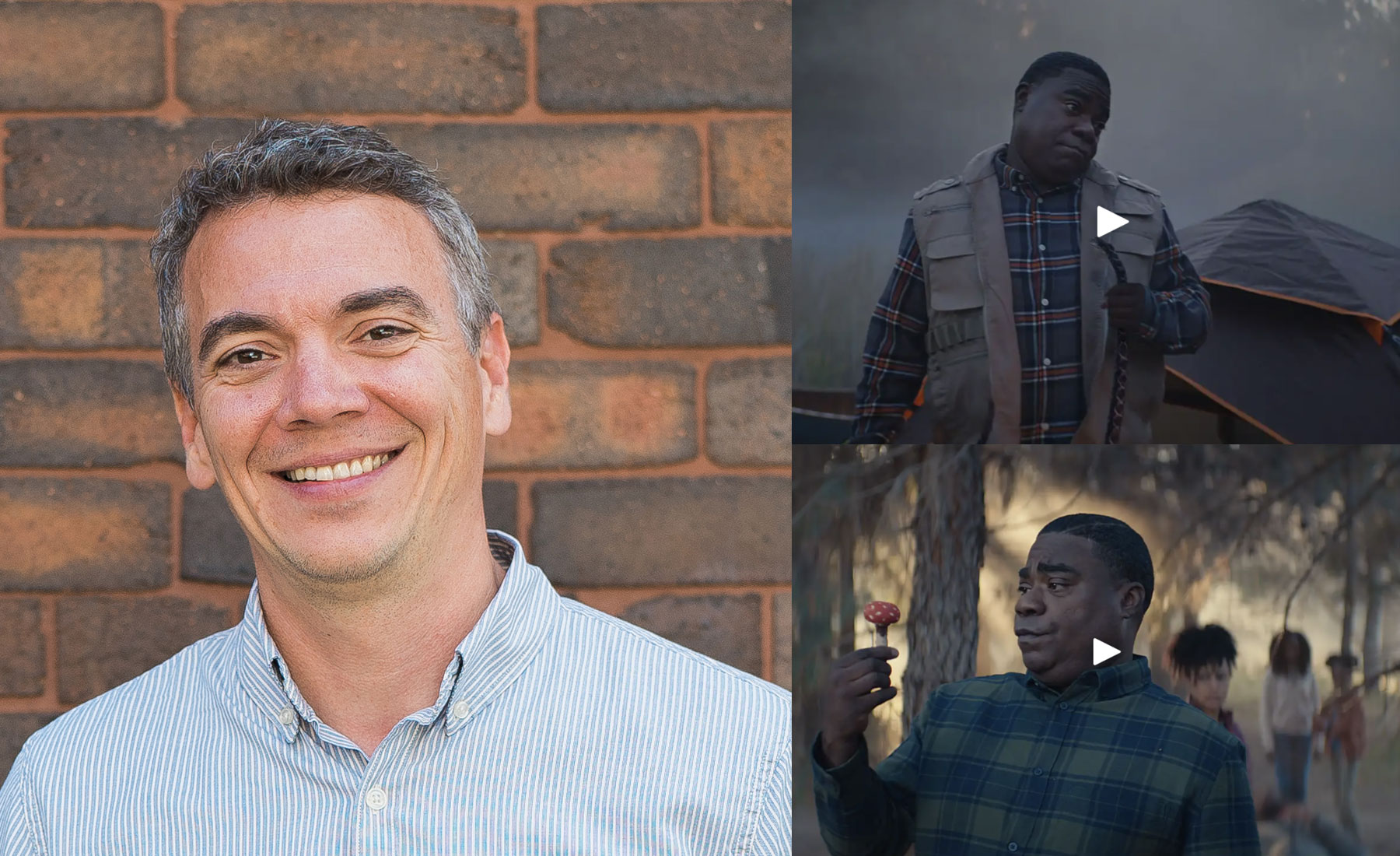
Pat Burke with Tracy Morgan in ads

Patrick Burke doesn’t usually like waking up to a work text at 5 a.m. … unless it’s saying that his commercials got the #1 and #2 spots for the USA Today Super Bowl Ad Meter poll.

“If I’m gonna get woken up to a work text at 5 a.m., that was definitely a good one,” he said with a laugh.

Burke (BS ’95, advertising) is the group creative director for Highdive, an independently-owned agency based in Chicago. After working for larger Chicago agencies like BBDO, DDB, and Ogilvy, he decided to move to Highdive in 2019.

Highdive’s winning ads this year were two commercials for Rocket Mortgage starring Tracy Morgan, humorously demonstrating the difference between being “pretty sure” and “certain” about buying a home. Burke was the writer for both of these ads. (Watch the ads here.)

Because Rocket Mortgage isn’t a full-time client of Highdive, the agency had to pitch their idea against several other agencies. Their idea was ultimately chosen.

“What’s funny is, sort of immediately, we had Tracy Morgan’s voice in our heads when we were writing the script, and there were times in the process where we were asked to explore backups in case Tracy said no, and we could never find any,” Burke said.

This isn’t the first time Burke and Highdive were awarded top spots on the USA Today Ad Meter poll. Last year, they won the #1 spot for a Jeep commercial starring Bill Murray—which was a play on the classic film Groundhog Day—and the #5 spot for another Rocket Mortgage commercial featuring Jason Momoa.

Burke said it was very rewarding to get the #1 and #2 spots for Rocket Mortgage after getting #5 for them last year.

“I was really, really happy for our clients because it meant a lot to them and it’s a lot of PR,” he said. “It makes all their hard work and championing the idea worth it.”

He said he also enjoyed working with Tracy Morgan, although he wasn’t able to meet him in person this year due to the pandemic.

“Tracy Morgan is just super, super sweet,” Burke said. “We always dealt with him online or over Zoom or on the phone, but he is just the nicest, sweetest guy and just super funny.”

Working with Bill Murray last year, however, was an especially exciting experience for Burke because the actor is a major idol for him, he said. He shared one story about when he was finishing up work and showed up to a dinner with Murray 45 minutes late.

“It’s Bill Murray, you know, he’s famous for just giving people a hard time,” Burke said. “As soon as I walk in I know I’m getting roasted for being late to his dinner. It was just like the highlight of my life, getting made fun of by Bill Murray.”

Burke said going to UIUC and the College of Media gave him a well-rounded education that helped him in his career. 

He added that the advertising faculty were very helpful, and he’s stayed in touch Steve Hall and Peter Sheldon, both senior lecturers.

“I wouldn’t trade my education for anything,” Burke said. “I think the faculty and staff have great real-world experience. They all have great connections within the industry and they stay connected to the industry.”

Sheldon said Burke was undeniably talented as a student and that he could tell he would be successful.

“He was one of those students that you know from the first month of having them, the best thing to do is to stay out of their way because they’re going to succeed.”

But despite his talent, Sheldon did fail him on his first assignment for turning it in late.

“He recovered nicely,” Sheldon said with a laugh.

He added that College of Media students can learn from Burke that it’s not enough to just be funny, but that it’s important to be smart too. Burke also proves that students don’t need to go to a portfolio school to be a successful creative in advertising. 

Sheldon said he didn’t know when first watching that the two ads from last year were Burke’s. This year, he was looking for them.

“It gives me something to dangle in front of 130 students in a lecture,” Sheldon said. “I can tell the story of how Pat Burke used to sit in that chair there and this is what he’s doing now. I thought a year ago having the first and fifth highest rated ads was like the capstone to an incredible year … then this year he comes back with first- and second-highest rated ads of the Super Bowl. It makes me proud.”

Peter Sheldon and Pat Burke on Zoom

Pictured above: Patrick Burke recently joined one of Peter Sheldon’s advertising classes to give feedback to students during a portfolio critique. 

Kalis supports students with new award for creativity in advertising


Murray Kalis

Talented advertising undergraduate students will be recognized for their creative work and provided with a monetary gift to support their creative career path, thanks to the Murray Kalis Award for Creativity in Advertising. The new award was established by College of Media alumnus Murray Kalis (BS ’61).

“Much of advertising education is quantitative based: media, research, tracking,” Kalis said. “Yet, what can truly differentiate ad agencies is qualitative. What I learned in the ad business was creative is the great equalizer in agency pitches. No matter how big our competitors were, if we had the big idea, we won the account.”

Kalis, who spent most of his career as a creative director, endowed this award to emphasize to students the importance of creativity in advertising.

“Overall, as a department head, I feel blessed and very happy that we have alumni who care deeply about our students, and who would really like to recognize the strength in our talent pool,” said Professor Mike Yao, head of the Charles H. Sandage Department of Advertising. 

The award process, which begins this December in advertising senior lecturer Peter Sheldon’s ADV 452: Creative Concepts I course, will take place during a virtual portfolio review, where at least one “upper-level creative with an extensive track record” will critique the students’ work. 

Three awards will be given: one for the best single ad, one for the best three-ad campaign, and one for the best 10-ad portfolio. Students have the ability to win in multiple categories.

The criteria for the Murray Kalis Award for Creativity in Advertising is smart positioning, outstanding creative concept, and strong execution, in addition to that “wow” factor, Sheldon explained. The winners will be given a gift award to support their efforts in pursuing a creative career path in the advertising industry.

“From the time I started at [the University of Illinois], I was always interested in majors that require creativity,” Kalis said. “In fact, I switched majors every semester, starting with architecture, to industrial design, to fine arts painting, and then to creative writing.”

Because of this, he had little to no concentration of prerequisites to start his junior year. Then, he learned that the School of Journalism only required 60 hours completed, and that the school offered a major in advertising.  

“I loved advertising because it called upon everything I knew and had learned. After all, you never know what products you might need to work on,” Kalis said. Two years later he graduated from the journalism school having majored in advertising.

“Even though our curriculum does not have a dedicated track for creativity because its history has always focused on strategy, there are many creative talents in our major,” Yao said. “We will always be looking for a way to discover and support these students who are interested in pursuing a creative path in advertising, and so this timely gift and this award will allow us to discover and cultivate this type of talent.”

Yao said it is important for students to be given a broad view of the industry and to be able to pursue their interests through the advertising curriculum, while feeling supported and recognized.

“This award really reflects our dedication and our view of the importance of this particular dimension of advertising,” he said.  

Kalis is creative director of Kalis, Inc.; a partner and creative director emeritus at Riester; a board member of the Los Angeles World Affairs Council; on the board of advisors for Dave’s Hot Chicken; and a member of the Tech Coast Angels, the largest angel investor group in the U.S. Most recently, he joined the Los Angeles-based B2B delivery startup, Ship District, as Chief Marketing Officer. 

Seattle Times editor Iniguez to be alum speaker at virtual ceremony for December grads


Alex Iniguez

According to Alex Iniguez (BS ’11, journalism), assistant metro editor at The Seattle Times, one thing that can’t really be taught in college is “the grind”—a daily devotion to work that helps manage tough days on the job. However, Iniguez said his time as a journalism student prepared him to work hard, regardless of his career path. 

“My College of Media degree is worth a lot to me, first and foremost,” he said. “I felt like I thrived in a smaller environment in the College of Media compared to the large U of I umbrella, which was a good fit for me in other ways. And I’d be remiss to not mention [The Daily Illini]. The DI was a huge part of my development, and I still meet people who worked at the DI in the wild, which is always a pleasure.”

Iniguez was selected to be the alumni speaker at a virtual ceremony to honor College of Media December 2020 graduates.

“Alex has broad news coverage experience, having reported on both sports and recent events, including the protests, in Seattle. As a recent alum, and an emerging leader in the media industry, he will have helpful advice to share with our newest graduates,” said Dean Tracy Sulkin.

Previously an assistant sports editor at The Seattle Times, Iniguez was promoted to assistant metro editor, effective November 30. His job shifted focus this summer when he spent four months assisting with coverage of the coronavirus pandemic and racial justice protests before returning to sports.

“My previous stint in metro earlier in the pandemic made me finally accept and truly know my skills are transferable,” he said. “I can work in metro for the same reasons I can work in sports. If you’re a well-rounded and prepared journalist, the possibilities are great.”

He took on the role as editor for The Seattle Times’ news section over the summer at the height of the George Floyd protests, which he said was a fascinating experience. During a couple of shifts, he took feeds from reporters via email, Slack, and WordPress, and published them to the newspaper’s website in real time, “providing a valuable and up-close look at our community.”

“I enjoyed understanding the protests and protesters better, which I largely accomplished by watching hours of [Facebook, Periscope, and Twitch] livestreams from the streets. Seeing that kind of passion, relentlessness, and dedication, and understanding where and why those feelings exist was inspiring and made me understand our world more,” he said. 

At The Seattle Times, his coverage has included the Seattle Sounders’ 2019 Major League Soccer Cup title; the establishment of a National Hockey League team in Seattle and the announcement of its name; former Seattle Mariners Major League Baseball player Ichiro Suzuki’s retirement in Japan; Seattle Seahawks quarterback Russell Wilson’s midnight contract extension; and political donations made by the Seahawks.

Recognized for his talents, Iniguez was accepted into the Poynter Institute’s 2021 Leadership Academy for Diversity in Digital Media. The yearlong program trains journalists of color working in digital media to thrive, fosters honest discourse about the challenges for journalists of color in management roles, and provides the connections, confidence, and skills to confront them.

He said the most rewarding aspect of his career is his ability to work with journalists who have the same level of curiosity as his own. 

“We get to take our curiosities, spend time researching them, and, ultimately, provide some information that might help people understand their surroundings more,” he said. “That’s a powerful feeling.”

For aspiring journalists, he has one message: Brace yourself. 

“I don’t mean that as a warning,” he said. “But journalism is a wild ride. You never know what you’ll see or hear, and you never know where your work might take you. It’s a thrilling career, if you’re willing to go for a ride.”

Furthermore, he wishes December 2020 graduates well with their future. 

“I know this is a really hard time to be coming out of school, but if you turn on your survival mode, you will figure it out,” he said. “You have time to find your place, personally and professionally. Take the time to think intently about where you want to be and what kind of person you want to be. That will guide you on your career path.”

College of Media establishes new minors and adds new courses


The College of Media is pleased to announce a number of new and innovative curricular opportunities, including a new interdisciplinary minor in media, a minor in critical film production within the Department of Media & Cinema Studies, and new courses across all three departments that address emerging trends in the media industry. 

MEDIA MINOR

The media minor, established this fall, is available to students outside of the College of Media, and offers a variety of courses from the Charles H. Sandage Department of Advertising, Department of Journalism, and Department of Media & Cinema Studies. Suggested courses for the minor are grouped in themes of diversity, social media, sports, content creation, history, and more. 

“We’re so excited to be able to offer a media minor,” said Katie Clark, senior assistant dean for student services. “So many of our courses are of interest to students across campus and this minor gives them an opportunity to take these courses in a meaningful, guided way. We know how beneficial it will be to prepare students for the job market by teaching them media-specific skills, which they can apply to any field of interest.”

For example, Media courses could help an engineering student learn what is needed to patent an invention, understand the target audience, and communicate the idea. A social work student might be interested in the power of film to bring attention to a particular social problem. A biology or chemistry student might want to pursue science communication and also understand social media strategy. 

“What we teach here in the College of Media complements well the educational and career goals of many students across campus,” said Dean Tracy Sulkin. 

To complete the minor, students must take an introductory course in each of the college’s three departments, and then choose three advanced courses from at least two different departments in the college. 

CRITICAL FILM PRODUCTION MINOR 

The new critical film production minor is an expansion of the existing media production certificate, which provides students with media-making skills. 

“The critical film production minor is not ‘film school’ in the traditional technically-focused sense,” said Derek Long, assistant professor of media and cinema studies. “Making thoughtful media in the 21st century requires so much more than just knowing how to use the camera on your smartphone.” 

While the minor’s curriculum trains students in advanced technical skills for creating moving images and sound, it also emphasizes that students should create media with the same critical eye that they use to read, write, and conduct research.

That’s an important step, Long said, toward building a more inclusive and reflective culture in the media industries, and it requires knowledge of film and media history, theory, and criticism. The critical film production minor’s core courses and electives combine those technical aspects of mediamaking with critical studies.  

According to Long, all of the minor’s core courses involve video production and editing projects. MACS 150: Intro to Digital Media Production introduces students to other forms of mediamaking, such as photography, digital image manipulation, web design, and podcast production. In the critical studies electives, students can conduct research using old film magazines and pressbooks from the late Pulitzer Prize-winning film critic and journalism alumnus Roger Ebert. The elective courses offer a variety of assignments, from organizing a film festival to participating in a fantasy box office competition.  

“Illinois alum Roger Ebert called cinema an ‘empathy machine,’ and this notion is central to the main goal of the minor: to enable students to be empathetic leaders in the world of cinema and media at the same time that they share their ideas with a digitized world,” Long said.

The minor is a great choice for students interested in careers such as film production and distribution, as well as advertising and public relations. “Students interested in the critical study or production of any kind of art—be it visual, musical, or something else—will also find the minor attractive,” Long added. 

The most useful training that the minor will provide students is learning how to work as part of an inclusive team, Long said. Effective media producers know that while technologies become outdated every year, interpersonal skills never stop being useful. 

NEW COURSES IN DATA STORYTELLING AND NEW MEDIA

The Department of Journalism has added two new courses where students can gain experience with data science applications and new media technologies.

JOUR 460: Data Storytelling

JOUR 460: Data Storytelling teaches students the power of data, which can help them to tell a better story. 

“Data alone can tell them who to interview,” said Margaret Ng, assistant professor of journalism. “Data can be a driving point for them to really find out where the story is so that they can approach their interviewee or sources more appropriately.”

The class focuses on four objectives: how to obtain the data, clean the data, analyze the data, and present the data. 

The new course has attracted students from the journalism department and other disciplines within the College of Media, as well as graphic design, statistics, and computer science majors. 

In a newsroom, there are more than journalism majors, Ng pointed out, citing frequent collaborations between data scientists, graphic designers, and journalists. While computer scientists may already have substantial software or coding skills, they may not have experience with putting data into real practice and solving newsworthy questions. 

Students will also gain experience with how to properly file Freedom of Information Act requests to government agencies and how to make an appeal if they receive a rejection.

Ng hopes all students, no matter what their major is, learn how to gather and communicate data ethically so they can present their findings in a much more engaging way to their audience.

JOUR 199: New Media, Society, & You

When designing JOUR 199: New Media, Society, & You, Christopher Ball, assistant professor of journalism, selected critical topics that are currently being shaped by new media use, as well as articles that discussed the pros and cons of new media technologies. 

The goal, Ball said, was to create a course that surveyed the ways that new technology is integrating into our lives, while also seeking a more balanced understanding of their role in modern society.

An essential part of this course is using new media technologies in creative ways, including the creation of a personal blog that they will use to showcase a variety of new media projects. Students will also create timeline infographics, diagram their information diets, analyze social media profile pictures, and create short YouTube videos.  

“In our excitement (or apprehension), we often say that these new media technologies are ‘changing our world/lives,’” he said. “However, I hope that students leave my class with the knowledge that these technologies are not changing our lives directly. Instead, it is how we choose to use these technologies, both collectively and individually, that is changing our lives. So, let’s figure out how to use them best.”

Many of the projects in this course will involve using new media in novel ways. For instance, students will learn a new skill while only using YouTube videos and web forums. 

“The goal is that students will not just learn about new media; they will use it while reflecting on some of the ways to leverage them in their career or personal life,” he said.  

Ball looks forward to hearing his students’ perspectives and thoughts on emerging technologies, since most are already “expert users.” 

“I hope that students enjoy the course and that it helps them to see the interactive technologies surrounding them a bit differently,” he said. “I also hope that my class empowers my students to use these technologies to improve their lives and, ultimately, the world around them. There is no better time to learn about new media technologies than right now.”

NEW COMPUTATIONAL ADVERTISING COURSE 

In the new ADV 461: Computational Advertising course, students will learn technologies including “web-search, auctions, behavioral targeting, and mechanisms for viral marketing that underpin the display of advertisements on a variety of locations.” One section of the course is designed for advertising majors, taught by Ewa Maslowska, and the other section, for computer science (CS) + advertising majors, emphasizes programming and computer science.

“Computational advertising relies more and more heavily on behavioral data, which often are digital by nature. In this class, we discuss what insights advertisers can gain from the traces left by consumers in the digital space,” said Maslowska, assistant professor of advertising.

Computational advertising represents a paradigm shift driven by technological developments, including the digitization of brand-consumer interactions, the availability of big data, and the development of new artificial intelligence algorithms. 

Her section of the course uses case studies to explore how different theories, methods, and evidence can shape advertising strategies and their effects. Students will gain basic analytical skills that can be applied to understanding and solving business problems.

“We explore different ways for abstraction and modeling that can be applied to advertising,” Maslowska said. 

Students will design and run an A/B test on a website, compare different tools for personality profiling, and analyze various digital data. These assignments help students to better understand the workings and limitations of the different tools that use consumer data.  

“I hope that upon completion of this course, the students will be able to understand the computational advertising ecosystem, analyze and evaluate different advertising strategies, make actionable recommendations, and reflect on the ethical and normative aspects of computational advertising, including the responsibilities of both advertisers and academics,” she said. 

The CS + advertising section of the class will be available in Spring 2021 and will focus on Internet privacy and the security of individuals as they navigate the web. Students will analyze an actual firm engaged in computational advertising. Working with massive data sets, they will learn algorithms and how companies use personalization in ads.

—Kimberly Belser, Communications and Marketing Intern
College of Media
119 Gregory Hall
810 S. Wright St.
Urbana, IL 61801
217-333-2350