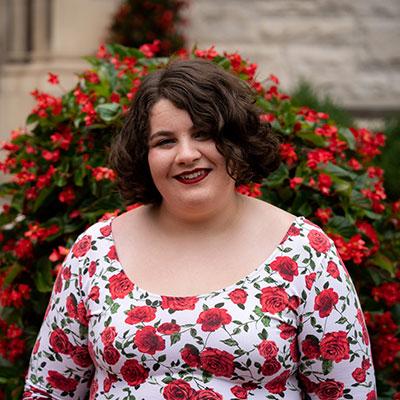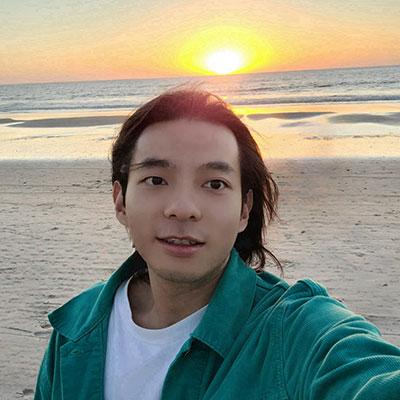
Nansong Zhou

Nansong Zhou

Email: nz20@illinois.edu

Research Interests

My research interests encompass the global media industry, China studies, and game studies. Currently, I am focused on two primary research areas. The first area examines the formation of the global video game industry. For instance, I investigate how video games evolved from being perceived as a “digital drug” to becoming a globally dominant “cultural industry” in China. However, my research is not limited to the Chinese context; I am also deeply interested in the contexts of Asia and the Global South. The second research area explores how video games integrate with AI and VR technologies, along with their impacts and potential. I am deeply interested in the dynamic interactions between games, technology, and society.

Recent Publications/Presentations

Publications: 
Zhou, N. (2024). Digital Labor in Free-to-play Games: Player as Commodity and Interaction as Labor in MMOGs. Critical Studies In Media Communication, 41(2), 137–152. 

Zhou, N. (2024). Spiritual Opium and Spiritual Opium War: A Cultural History of Arcade Games and Console Games in 1990s China. Media International Australia. 

Zhou, N. (2021). Parasocial Relationship in the Social Context: Why do Players View a Game Character as Their Child? Game Studies. Volume 21 Issue 2. 

Conferences: 
Zhou, N. (2024, June). From “Digital Drug” to “Cultural Industry”: The Making of a Global Video Game Industry. Research accepted by ICA Games Studies Division 2024, Gold Coast, Australia. 

Zhou, N. (2023, November). The Digital Drug Discourse in the 1990s China: How the Video Game became “Electronic Heroin” from “Spiritual Opium”. Paper accepted by the 109th National Communication Association (NCA 2023) Convention, National Harbor, MD, the United States. Top Student Paper Award, Chinese Communication Association. 

Zhou, N. (2023, July). Chinese Video Game Industry in Post-Cold War Era: How the Video Game became Digital Drug in the 1990s. Research accepted by the Annual Conference of the Association for Education in Journalism and Mass Communication (AEJMC 2023), Washington, DC, the United States. Top Student Papers Award (third place), History Division. 

Zhou, N. (2022, November). Labor and Exploitation in MMOGs:How Players’ Labor is Exploited in League of Legends. Paper presented at the 108th National Communication Association (NCA 2022) Convention, New Orleans, the United States. Top Overall Paper Award, Game Studies Division.

Awards and Honors

2024 
Illinois Distinguished Fellowship 
The Graduate College, University of Illinois 

2023 
Top Student Paper Award 
Chinese Communication Association, NCA 2023 Convention 

2023 
Top Student Papers Award 
History Division, AEJMC 2023 Conference 

2023 
MCC Academic Achievement Award 
Department of Media, Culture, and Communication, New York University 

2022-2023 
Mitchell Leaska Scholarship 
Department of Media, Culture, and Communication, New York University 

2021-2022 
Mitchell Leaska Scholarship 
Department of Media, Culture, and Communication, New York University 

2022 
Top Overall Paper Award of Game Studies Division 
Game Studies Division, NCA 108th Annual Convention

What Most People Don’t Know about Me

My goal is to become the best cook among media scholars and the best media scholar among cooks.

Related Links

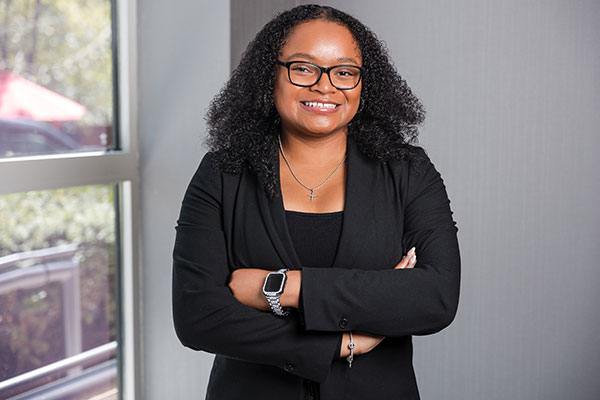
Gillian Paxton

Gillian Paxton

Email: gpaxton2@illinois.edu

Research Interests

Media Literacy, Scholastic Journalism, Visual Communication, Education

Recent Publications/Presentations

Paxton, G. (2024). The State of Media Literacy Education in Indiana Schools. Common Ground, Bloomington, Indiana. 

Mudavadi, K., Hwang, J., Wang, W., Paxton, G., Ochieng, J., and Grabe, ME. (2024). Third-Person Effects of COVID-19 Social Media Posts. International Communication Association, Health Communication Division, Gold Coast, Australia.

Awards and Honors

Future Journalism Teacher Scholarship – Aug 2021 
Phi Beta Kappa Member 
Ernie Pyle Scholar

What Most People Don’t Know about Me

I have maintained a personal media blog, posting reviews and analysis of music, books, and whatever else strikes my fancy since I was a senior in high school!

Related Links

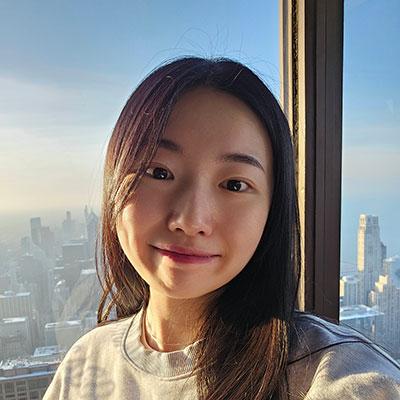
Yujin (Floria) Lee

Yujin (Floria) Lee

Email: yujinl3@illinois.edu

Research Interests

Yujin’s research interests include virtual reality, artificial intelligence, social media marketing, celebrity endorsement, media usage, and cultural analysis.

She is a doctoral student at the Institute of Communications Research. She completed her master’s and bachelor’s degrees in advertising from the University of Illinois Urbana-Champaign. 

Recent Publications/Presentations

Lee, Y.*, Fukada, M., Baptiste, P., Du, X., Nelson, M. Hey, You Put Ads in My Netflix: How Audiences Negotiate the Changing Streaming Media Landscape, American Academy of Advertising (AAA), Portland, OR, March 14-17, 2024 

Kim, W. J., Lee, D., Heo, S., Park, S., and Lee, Y. When Lonely Hearts Meet Talkative AI: Exploring AI Interactivity and Social Motivation. American Academy of Advertising (AAA), Portland, OR, March 14-17, 2024 

Ham, C., Ju, I., Heo, S., and Lee, Y. Examining the Change-of-Meaning Effect: Sequential Persuasion Knowledge Structure in Coping Mechanism with Online Behavioral Advertising, Annual conference at AEJMC, Washington D.C., August 7-10,2023

Courses Taught

  • ADV 150: Introduction to Advertising 
  • ADV 281: Advertising Research Method 
  • ADV 360: Innovations in Advertising

Awards and Honors

Earl Cummings Advertising Research Award, 2023 
List of Teachers Ranked as Excellent by their Students: FA 2022, SP 2024 
American Academy of Advertising’s Graduate Students Travel Scholarship, 2024

Related Links

Alumna Cheryl Whitlow Thompson makes lasting impact with career as renowned multimedia journalist


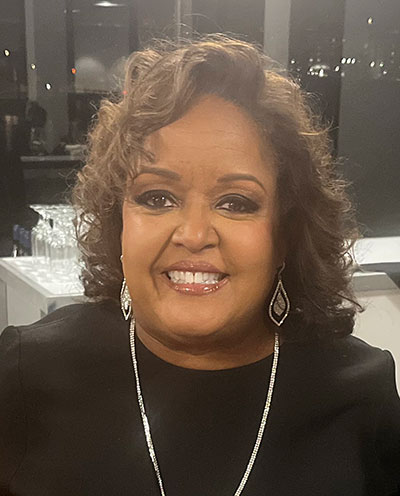
Cheryl Whitlow Thompson (BS ’82, LAS; MS ’84, journalism) will be the first to tell you journalism is not just a job to her—it’s who she is. 

Cheryl Thompson

Digging deep to uncover truths, holding those in power accountable, and asking the tough questions comes naturally to the investigative correspondent and senior editor at NPR who has spent the better part of three decades making a significant impact in the field of journalism—and earning numerous accolades for her exceptional work along the way.

In December, Thompson was honored with the 2024 Washington Association of Black Journalists Legacy Award for breaking barriers and increasing access and opportunities to people of color in journalism. 

Thompson, who also teaches journalism as an associate professor at George Washington University, recently added the title of author to her long list of accomplishments.

In Forgotten Souls: The Lost Tuskegee Airmen, Thompson shares true stories from families of the first Black military pilots and airmen who didn’t return from Europe in WWII.

“I think being a Black woman whose father was a Tuskegee Airman absolutely helped me connect with these families,” said Thompson. Her debut book is set to come out in the fall of 2025.

Thompson was born and raised in Chicago. She joined her two brothers at the University of Illinois Urbana-Champaign and earned a bachelor’s degree in speech communication in 1982. After graduation, Thompson considered going to law school but decided to pursue a master’s degree in journalism after working for a semester at an NBC affiliate in Chicago.

Thompson says she has fond memories of her time at Illinois, especially as a member of the Black Chorus led by the legendary conductor and professor of music Ollie Watts Davis, and as a student of professor of journalism Robert “Bob” Reid, who passed away in 2004.

“My savior was Professor Bob Reid. He was my advisor, and he was my savior. He really cared and had a big hand in whatever success I have had,” she said.

Thompson, who had mostly broadcast experience coming out of college, joined The News-Gazette after graduate school where she began to cultivate her inquisitive nature.

“I just had this sort of curiosity. When I would [work on] stories, I wanted to know more and more and more,” she said.

It’s also where she found another important mentor in John Foreman, long-time editor and publisher who passed away in 2018.

Thompson said she learned a lot from Foreman, including how to dig deeper on a story, and kept in touch with him long after she left the newspaper.

“I sent him every big story I did over the years because I wanted him to be proud and see what I turned into,” she said in this News-Gazette article.  

“I still say what we do is very honorable, and I don’t apologize for it,” she said. “It’s powerful. We can have impact, and we can make a difference.”

Thompson said she would always receive a handwritten note from Foreman in return saying, “I’m proud of you, kiddo”—a gesture she greatly appreciated.

If Thompson’s fire to become an investigative reporter began at The News-Gazette, her post at the Los Angeles Daily News really stoked it.

At the LA newspaper, Thompson spent six months covering the second largest school district in the country, going after stories and breaking news that eventually led to the resignation of the superintendent. Thompson said she was hooked after that.

“That was when it really all started, and I never looked back,” she said.

Thompson, who worked at the Chicago TribuneThe Kansas City Star, and The Gainesville Sun, spent 22 years at The Washinton Post, writing about political corruption, guns and criminal justice, and immigration.

She also served as the Post’s White House correspondent during Barack Obama’s first term, covered the Department of Justice, and was part of a team that won the Pulitzer Prize for National reporting in 2002 and 2016.

“I had a good run. I can’t tell you what an amazing time I had at The Washington Post,” she said.

With a desire to broaden her knowledge as a multimedia journalist, Thompson moved to NPR in 2019 and became the inaugural editor of the station’s investigations team in 2021.

Thompson earned a third shared Pulitzer Prize as the investigative reporting coach on “No Compromise,” a podcast about gun rights advocates that won the 2021 Pulitzer for Audio Reporting. She received NPR’s Public Service Journalism award the same year.

Although Thompson admits today’s era of journalism can lack reverence, she still feels it’s a noble and worthwhile profession.

“I still say what we do is very honorable, and I don’t apologize for it,” she said. “It’s powerful. We can have impact, and we can make a difference.”

Thompson couldn’t begin to count the number of hours she’s spent over the years working on her craft, but she doesn’t mind as long as she’s producing good journalism.

When she’s at home in her office she feels inspired by the more than four dozen national, regional, and local awards that hang on her wall.

“When I think I can’t do something, I just look around the room and say, ‘I got this,’” she said.

Share on social

Alexandre Gonçalves

Assistant Professor

Affiliations

  • Department of Journalism
  • Institute of Communications Research

Education

  • PhD in Communication, Columbia University
  • MSc in Comparative Media Studies, MIT
  • BA in Journalism, Faculdade Cásper Líbero (Brazil)
  • BSc in Computer Science, Unicamp (Brazil)

Background

Alexandre Gonçalves studies the role of social media in the rise of new social movements. He is also interested in the use of computational methods to understand media ecosystems. During his doctorate, he was involved in projects at the Tow Center for Digital Journalism and the Brown Institute for Media Innovation. He also conducted research at the MIT Center for Civic Media. As a Google Journalism Fellow, he worked at the Pew Research Center’s Journalism Project. Before moving to the U.S., he worked in Brazil as a science reporter for mainstream media publications and as a software developer.

Related Links

No posts found.
Alex Goncalves

Contact

217-244-2245

Journalism student partners with Education Justice Project as Humanities in Action scholar


Courtney Dillon

We CU Community Engaged Scholars and the Humanities Research Institute at Illinois selected Courtney Dillon, a senior earning a dual degree in journalism and in sociology, as one of five Humanities in Action scholars to work with community partners throughout the Fall 2024 semester.

The Humanities in Action program, now in its third year, aims to eliminate financial barriers that prevent undergraduate humanities students an opportunity to engage in community projects.

Dillon, who is on the pre-law track, learned about the program from a friend who was previously a Humanities in Action scholar. After doing some research on the program, she found that it aligned with her career goals of community engagement work through criminal or civil rights law.

The School of Social Work’s Community Learning Lab matched Dillon with the Education Justice Project, or EJP, a college-in-prison program that organizes educational programming at Danville Correctional Center through the University of Illinois. 

“I wanted to work with them because I wanted to be a part of helping people beyond serving their sentence, and that’s what I want to do in my career as well,” Dillon said. “No matter how little my task might be, I love the fact that I’m in a position where I can help somebody else. I think that’s amazing, especially to put my areas of study into work.”

Dillon has been able to assist EJP remotely with research to help produce their annual reentry guide, which provides information on housing, employment, healthcare, finances, and other resources for incarcerated individuals, their families, and service agencies across Illinois. Dillon rewrites information to be accessible for people of all backgrounds to comprehend the guide. 

As a Humanities in Action scholar, Dillon also enjoys interacting with the other students in her cohort and learning about the importance of ethical service.

“We really focus on the importance of grounding ourselves in the work that we’re doing and understanding that we are in a state of privilege that we’re able to help somebody else and [we learn] not to take those opportunities for granted,” she said.

Dillon hopes that her work with the Education Justice Project will impact individuals that read the reentry guide.

“If the guide helps just one person, that’s a win for me,” Dillon said. “There are so many people that might be reentering society and just have no idea where to start, and I think this guide is an amazing resource. I love that there’s an organization that dedicates so much time to creating it every year.”

Share on social

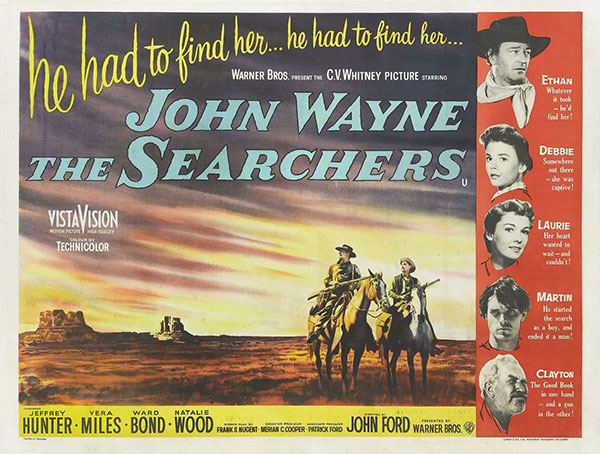
2025 Roger Ebert’s Film Festival to kick off with ‘The Searchers,’ first-ever Western screened at Ebertfest; passes go on sale November 18


Chaz Ebert and the University of Illinois College of Media announce that the opening night film of the 2025 Roger Ebert’s Film Festival will be a new 70mm print of the Western classic The Searchers (1956)starring John Wayne and Natalie Wood. The four-day festival, named for famed film critic Roger Ebert, will be held Wednesday, April 23, through Saturday, April 26, 2025. Festival passes will go on sale on Monday, Nov. 18.

The Searchers poster

“We are pleased to bring the first Western to our Ebertfest audience, and it just so happens that a film from the Golden Age of Hollywood directed by John Ford was recently restored by Warner Bros. in collaboration with the Film Foundation,” said Chaz Ebert, CEO of the preeminent movie review site Rogerebert.com and cofounder of Ebertfest. “Roger gave the film four stars, but also acknowledged the racial attitudes of the time, asking whether the film sought to endorse them, or dramatize and regret them. We look forward to a vigorous post-screening discussion with film scholars and audiences about representation in film.” 

Passes to see all the films screened at Ebertfest can be purchased through the Virginia Theatre website, or at their box office by calling 217-356-9063 or visiting 203 W. Park Ave. in downtown Champaign. All films will be shown at the historic Virginia Theatre.

Individual festival passes cost $200. VIP Sponsorship packages start at $1,800 and include VIP seating for two, lunch and dinner with the filmmakers, invitations to all festival special parties and events, and much more. 

Roger Ebert was a Pulitzer Prize-winning film critic for the Chicago Sun-Times, University of Illinois journalism alumnus, and Urbana native.

Chaz Ebert is also the author of the indie best seller It’s Time to Give A FECK: Elevating Humanity through Forgiveness, Empathy, Compassion, and Kindness.

John Wayne

Ebertfest is hosted by Chaz Ebert and Nate Kohn, the festival director since the very beginning, in collaboration with the College of Media at the University of Illinois Urbana-Champaign.

Watch for announcements of films and filmmaker guests over the next few months. The full festival program will be announced in March. 

For the latest updates, please visit ebertfest.com and follow Ebertfest on social media:

Roger Ebert’s Film Festival relies on generous gifts from donors and sponsors. Gifts of all sizes are vital to the festival and can be made online through the College of Media by selecting “Roger Ebert’s Film Festival Fund – 11331422.” For additional sponsorship options, visit the Ebertfest website: ebertfest.com/become-sponsor. 


PRESS CONTACT: 

Molly Cornyn, Festival Coordinator, mcornyn2@illinois.edu, 217-333-1590 

Share on social

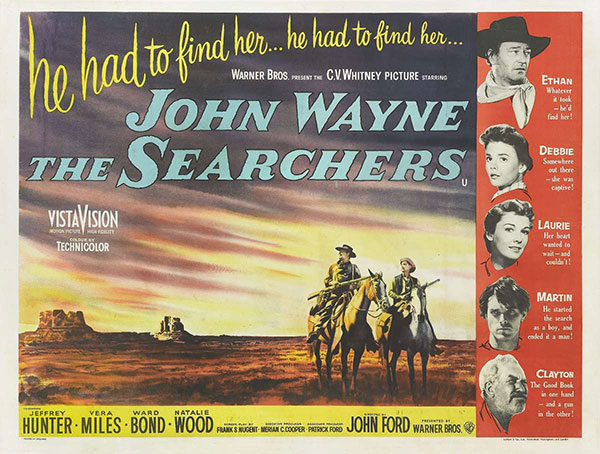
2025 Roger Ebert’s Film Festival to kick off with ‘The Searchers,’ first-ever Western screened at Ebertfest; passes go on sale November 18


Chaz Ebert and the University of Illinois College of Media announce that the opening night film of the 2025 Roger Ebert’s Film Festival will be a new 70mm print of the Western classic The Searchers (1956)starring John Wayne and Natalie Wood. The four-day festival, named for famed film critic Roger Ebert, will be held Wednesday, April 23, through Saturday, April 26, 2025. Festival passes will go on sale on Monday, Nov. 18.

The Searchers poster

“We are pleased to bring the first Western to our Ebertfest audience, and it just so happens that a film from the Golden Age of Hollywood directed by John Ford was recently restored by Warner Bros. in collaboration with the Film Foundation,” said Chaz Ebert, CEO of the preeminent movie review site Rogerebert.com and cofounder of Ebertfest. “Roger gave the film four stars, but also acknowledged the racial attitudes of the time, asking whether the film sought to endorse them, or dramatize and regret them. We look forward to a vigorous post-screening discussion with film scholars and audiences about representation in film.” 

Passes to see all the films screened at Ebertfest can be purchased through the Virginia Theatre website, or at their box office by calling 217-356-9063 or visiting 203 W. Park Ave. in downtown Champaign. All films will be shown at the historic Virginia Theatre.

Individual festival passes cost $200. VIP Sponsorship packages start at $1,800 and include VIP seating for two, lunch and dinner with the filmmakers, invitations to all festival special parties and events, and much more. 

Roger Ebert was a Pulitzer Prize-winning film critic for the Chicago Sun-Times, University of Illinois journalism alumnus, and Urbana native.

Chaz Ebert is also the author of the indie best seller It’s Time to Give A FECK: Elevating Humanity through Forgiveness, Empathy, Compassion, and Kindness.

Ebertfest is hosted by Chaz Ebert and Nate Kohn, the festival director since the very beginning, in collaboration with the College of Media at the University of Illinois Urbana-Champaign.

Watch for announcements of films and filmmaker guests over the next few months. The full festival program will be announced in March. 

For the latest updates, please visit ebertfest.com and follow Ebertfest on social media:

Roger Ebert’s Film Festival relies on generous gifts from donors and sponsors. Gifts of all sizes are vital to the festival and can be made online through the College of Media by selecting “Roger Ebert’s Film Festival Fund – 11331422.” For additional sponsorship options, visit the Ebertfest website: ebertfest.com/become-sponsor. 


PRESS CONTACT: 

Molly Cornyn, Festival Coordinator, mcornyn2@illinois.edu, 217-333-1590 

Share on social

Excerpts from ‘Bridging Divides’ series: What Does it Mean to Be an Informed Critic?


As part of the College of Media’s three-part webinar series this fall, “Bridging Divides: Conversations on Media and Disagreement,” faculty from the Departments of Advertising, Journalism, and Media & Cinema Studies led Q&As to explore how productive discussions occur across lines of disagreement and difference. 

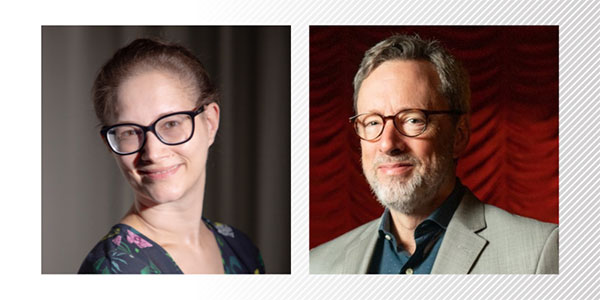
Jenny Oyallon-Koloski and Michael Phillips

Below, read excerpts from “What Does it Mean to Be an Informed Critic?” Note: Answers have been condensed for length and clarity.

Panelists: 

  • Jenny Oyallon-Koloski, Assistant Professor, Department of Media & Cinema Studies; author of Storytelling in Motion: Cinematic Choreography and the Film Musical
  • Michael Phillips, Chicago Tribune Film Critic; College of Media Ebert Fellows Mentor

 
Oyallon-Koloski: What’s the value of criticism, especially in these polarized times? Why do we need voices of critics, people like yourself, especially ones who are informed about those kind of artistic and cultural works that they write or communicate about?

Phillips: I’ve never stuck to one firm belief or answer on that because it really responds to the times you’re in. I think it’s important to have to acknowledge that every single human being has their own tastes and opinions and prejudices and responses to everything. And I just like to try to write so that your preconceptions and maybe expectations are not set in concrete. They can actually bend and they’re more porous. You can have your mind changed by a film that you didn’t think would be for you, but there are elements of it that are really working. Really in the end I think criticism works best and is most alive when it is acknowledging that you have more than two feelings about something, and they might go in opposite directions. That’s why I look to critics that I respect who try to sort out all the wildly conflicting elements that make anything worth talking about.

Oyallon-Koloski: Do you consider global perspectives, even if you’re targeting local audiences of your media outlet? How does the global perspective or the global audience play into criticism?

Phillips: This is something we all need. We just need to see, we need to hear from more than a certain kind of American filmmaker in our lives. Because then otherwise, we’re just risking a kind of cultural nationalism that does not help us at all.

Oyallon-Koloski: It often feels like what literacy there is today tends to come filtered through a decontextualized bite-sized meme culture. How much does criticism thrive on a culture where media is curated for you in intentional ways? How much does that historical knowledge play into all of this?

Phillips: It’s important. It’s also important to acknowledge that, broadly, everybody worth reading is going to have 10 very different reference shelves in their psyche. I think it’s always worth championing and reintroducing certain classics to people. But the reasons change through the decades. 

I think the critic or the academic or the media studies professor should always be reconsidering what needs to be shown to these people this semester because it will spark the kind of split or debate. Maybe it’s a film that is just begging for a cultural divide to happen literally in the classroom. And then I think it’s the critic or the professor’s role to just simply kind of referee it. And it’s wonderful to experience. It gets more dicey when you’re talking about films that have tremendously controversial content. I also don’t believe in shelving those works because they’re too hot to handle. But boy, oh boy, you really have to figure out how and when and if this is the right context. We forget or whitewash the past at our own peril in every aspect of American life.

As for the memes and the satire, I’d hate to just settle for that because that’s kind of a faint echo of the original.


Read excerpts from the other “Bridging Divides” Q&As:

Engaging with People, Perspectives, and Policies When You Don’t Agree: Lessons from Journalism

Reaching Across the Aisle: Advertising and Messaging in an Age of Polarization

Share on social

Excerpts from ‘Bridging Divides’ series: Reaching Across the Aisle: Advertising and Messaging in an Age of Polarization


As part of the College of Media’s three-part webinar series this fall, “Bridging Divides: Conversations on Media and Disagreement,” faculty from the Departments of Advertising, Journalism, and Media & Cinema Studies led Q&As to explore how productive discussions occur across lines of disagreement and difference.

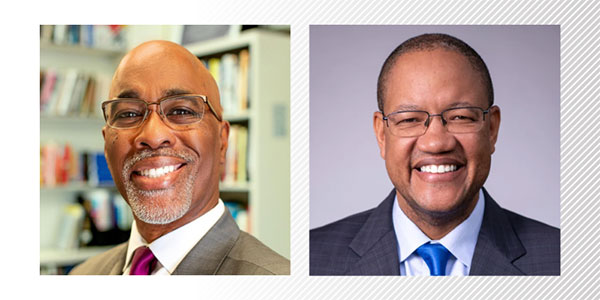
Jason Chambers and Michael Strautmanis

Below, read excerpts from “Reaching Across the Aisle: Advertising and Messaging in an Age of Polarization.” Note: Answers have been condensed for length and clarity.

Panelists: 

  • Jason P. Chambers, Associate Dean for Diversity, Equity, and Inclusion; Professor, Charles H. Sandage Department of Advertising; author of Advertising Revolutionary: The Life and Work of Tom Burrell
  • Michael Strautmanis (BS ’91, advertising; JD ’94, law), Executive Vice President for External Affairs, Obama Foundation 

 
Chambers: We live in a world in which people either love the AFC or the NFC, you either like Coke or Pepsi, Apple or Samsung, Democrat or Republican. We live in a world of these bifurcations and find your tribe and all of that. So how do you deal with those differing belief systems when you’re trying to establish a message? How do you present a core value or what might be some of those core values that you try to illustrate for people?

Strautmanis: If there is something that is a part of your identity, that is core to who you are, from which your values stem because of your experiences or because of the people that have taught you things, then I think in some ways it’s not [just] okay, it’s necessary to articulate them, to make them known, to make them seen.

But I guess the question is, what’s your goal? These things that divide us—and it could be our political parties, it could be our race, it could be our beliefs—could be used to build a connection, even if the connection comes from a different and opposing place. 

Our identities don’t have to be fixed and that can be an interesting story to tell that can often create common ground as well.

Chambers: I like the way that you put that, that our identities don’t necessarily have to be fixed. Does it sometimes feel as though we hold to things as though they must be a moment of learning for me? But if I accept that then I’m somehow being inauthentic to my tribe or I’m somehow being a traitor to the things that I’ve, at least up until this educational moment, thought that I believed in. So how do you approach those environments where you may be entering a space where you’re thinking [you’re] really going to have to work hard to find the points of common ground for folks, because at least in terms of belief system we may be on such wildly different planes?

Strautmanis: I think for me, when I’ve struggled with that, it’s because I’m afraid. And I might be afraid for good reason. I might be afraid because I’m in an environment where I feel like people are making assumptions about me based upon my identity that will hurt my ability to be successful.

I’d say one of my most basic values is learning and education. A fixed mindset that leaves you having a base—if you can think about it visually like a permeable fence that you can stand in—where you’ve got your people who love you, the people who know you, the people who you can be yourself completely with. The core of who you are. You’ve got that. And I think that really helps you then let things in and out of that fence and be able to shift and change along the way, based upon the different experiences that you’ve had. 

Literally, I can’t imagine this, but if you are mentally in your mind the same person at 50 that you are at 20, I just can’t think of anything more sad than that. That you have not been able to live a life [where you] grow and change and evolve. There is no better place to do that than in college. That’s what college is for—to come to an environment with a bunch of other people who don’t come from where you come from, who don’t look like you, who have different experiences than you have, and be in an environment that the whole point of it is to learn.

Chambers: As one who deals with audiences and creating messaging and dealing with folks of different perspectives, belief systems, politics, and other ways of thinking about messaging, do you have guidance or insight for thinking about some of these social media tools and this awesome power that we now have as individuals, as well as organizations, in a broader society? 

Strautmanis: We had this experience often, particularly in 2008, where part of the strategy to defeat [Barack Obama] politically, was to make people afraid of him, to connect him to things that were scary, and to play on a lot of very old tropes around Black men, very old tropes around Chicago, and try to find ways to have people leap over the intellectual part and go to something very core, like, ‘I need to be afraid.’

So, what we had to do is try to find a way to stimulate the ‘Is that true?’ instinct in people. If you ask yourself, when you see something, you read something, [and wonder] ‘Is that true?’ it kind of gives you the opportunity to do some of your own research.

I think that kind of messaging and strategy that has people connect to their best selves can really work across lines of difference. Our belief and our experience has been that people don’t really like hating everybody and being mad at everyone.

So, we do like to give people an opportunity to say: ‘You are a hopeful, optimistic, capable person who sees the best in others.’ And what we found is most people are like, ‘Yeah, that is me.’


Read excerpts from the other “Bridging Divides” Q&As:

Engaging with People, Perspectives, and Policies When You Don’t Agree: Lessons from Journalism

What Does it Mean to Be an Informed Critic?

Share on social

College of Media
119 Gregory Hall
810 S. Wright St.
Urbana, IL 61801
217-333-2350