Q&A with Joe Hercik

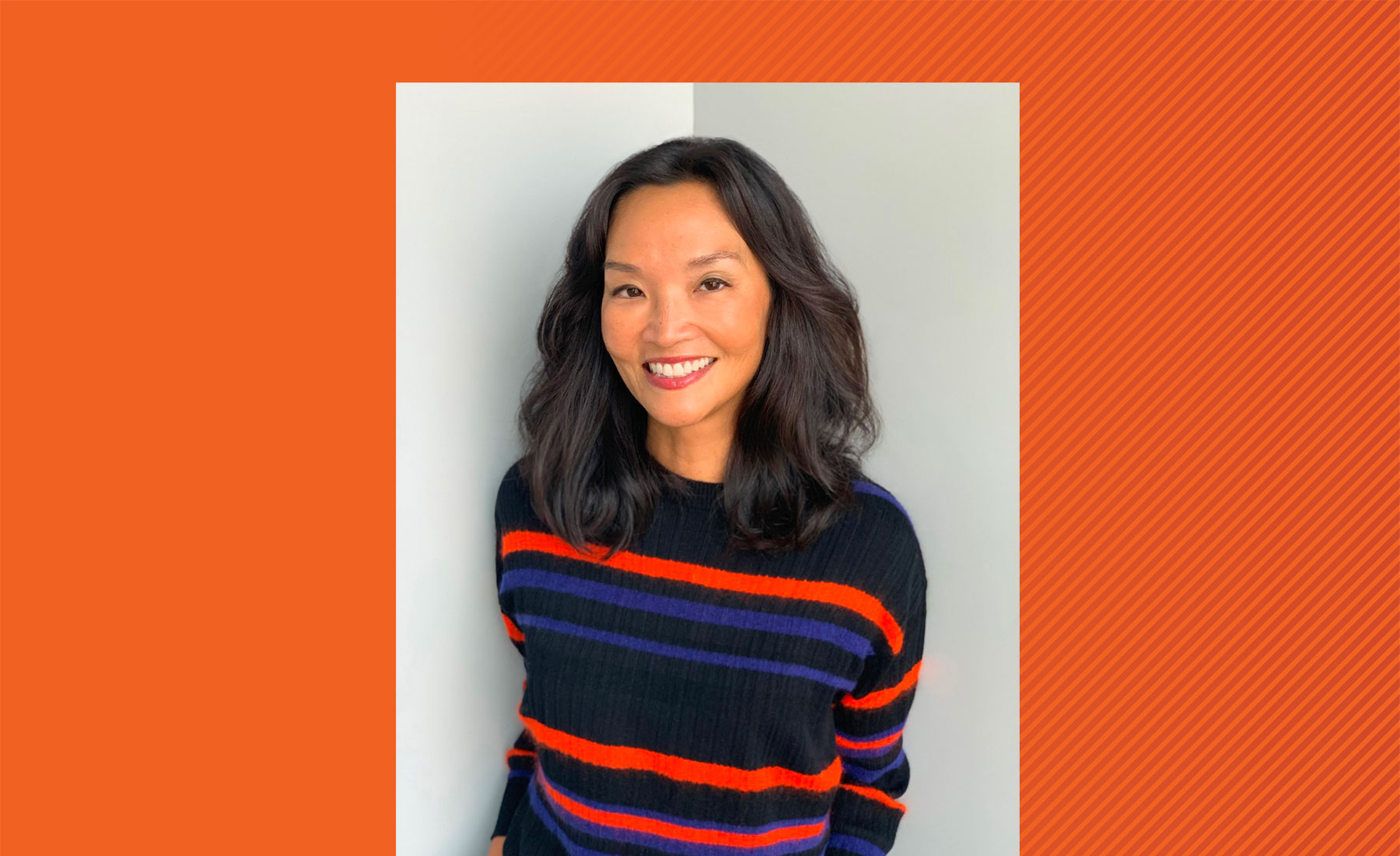
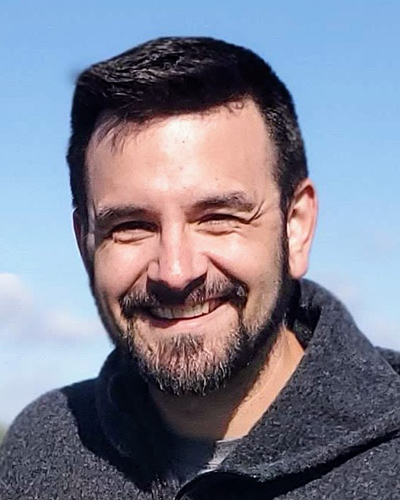
Get to know some of our College of Media alumni. Joe Hercik (BS ‘04, advertising) is a product owner for the Quantum Computing team at State Farm’s Innovation Group. Hercik also participated in a Media Career night alumni panel on “Corporate Communication” in Fall 2023. Watch a recording of the session here. 

Joe Hercik

Why did you choose advertising as your major?
When I came to the University of Illinois in 2000, I wanted to go into graphic design but didn’t get accepted into that program. I didn’t have much formal art training going into it, but I had an artistic side and was very interested. So, my first semester, I was in landscape architecture, and during that semester, I saw a journalism friend working on a project using Adobe Photoshop. I asked them what class that was for, and it was for ADV 150: Introduction to Advertising; I thought, “Here’s a way to do graphic design and get paid.” I looked into it and took classes to get experience with the College of Media. I applied to the advertising program during my junior year and began my studies there.

What was one of your most memorable experiences here at Illinois? 
By senior year in the advertising program, you tailored your classes a bit more based on your interests such as the business side or the creative track. I distinctly remember one presentation where we had someone from one of the major ad agencies, and I’ll never forget it. They held up a fashion magazine and said, “Any guess how many ads are in this?” They did the math; there were around 300, and they said, “You are one ad among 300, and you need to be able to catch their attention, keep it, and sell yourself—your product.” Nowadays, it’s more like 3,000 with online ads. This helps me understand the importance of standing out. 

Looking back, would you have done anything differently with your time at the University of Illinois?
Networking is a huge deal. You need skills, experience, and competency in what you do, but making connections and maintaining them over the years has held true throughout my career; it’s key to future success. That’s not just a life skill but also a business skill, so I probably would have been more intentional about that.

What has your career path looked like?
I didn’t have a clear path laid out to follow. It’s good to have a plan; the worst plan is still better than no plan. I made sure to use my time in the summer wisely and worked at WPGU. I did missionary work after college and fundraised my salary at the time. Over the next 15 years, I like to describe what I went through as the sales or the customer journey, where you go for more face-to-face, customer-focused work. Eventually, I went into more communications and marketing work across different business areas and departments and then into technology. I applied to State Farm on a whim and resurrected my communication-focused work, and that’s been my journey.

What does your job entail at State Farm?
I like to say that my day-to-day involves asking smart people dumb questions, and I say that because most of the people on my team are technically focused—there are three data analysts and one software engineer. Two of the analysts have PhDs, one in physics and the other in math, so there are some meetings where it’s only in math terms, and it may as well be a completely different language. My job is to say, “Okay, put this in layman’s terms as much as possible in a way I can explain it to other business areas so they can come to understand what it is we’re doing, why it’s important, and how we might be able to help them.” That’s the main focus of my work—trying to understand and align the team with leadership to show where things are and where it’s going to help manage and pace expectations to create the envisioned direction.

What advice would you give students in the College of Media?
The College of Media focuses on communication—being able to understand what it is you want to communicate and then doing that successfully, regardless of whether it’s public speaking, writing, or any other medium. It’s a very important skill to have—being able to articulate your thoughts and being persuasive—and you can apply it to whatever you do. Communication is not just a soft skill; it’s nice to have in addition to your technical or business expertise, so I would encourage students to put in the time for public speaking—practicing and studying speeches. Same with writing—simplify your message. And I know data is seen as the currency nowadays, but attention is also the current currency. Capture attention and keep it through communication.

—Interview by Chloe Barbarise, New Voices Intern
Q&A with Mike Dalton

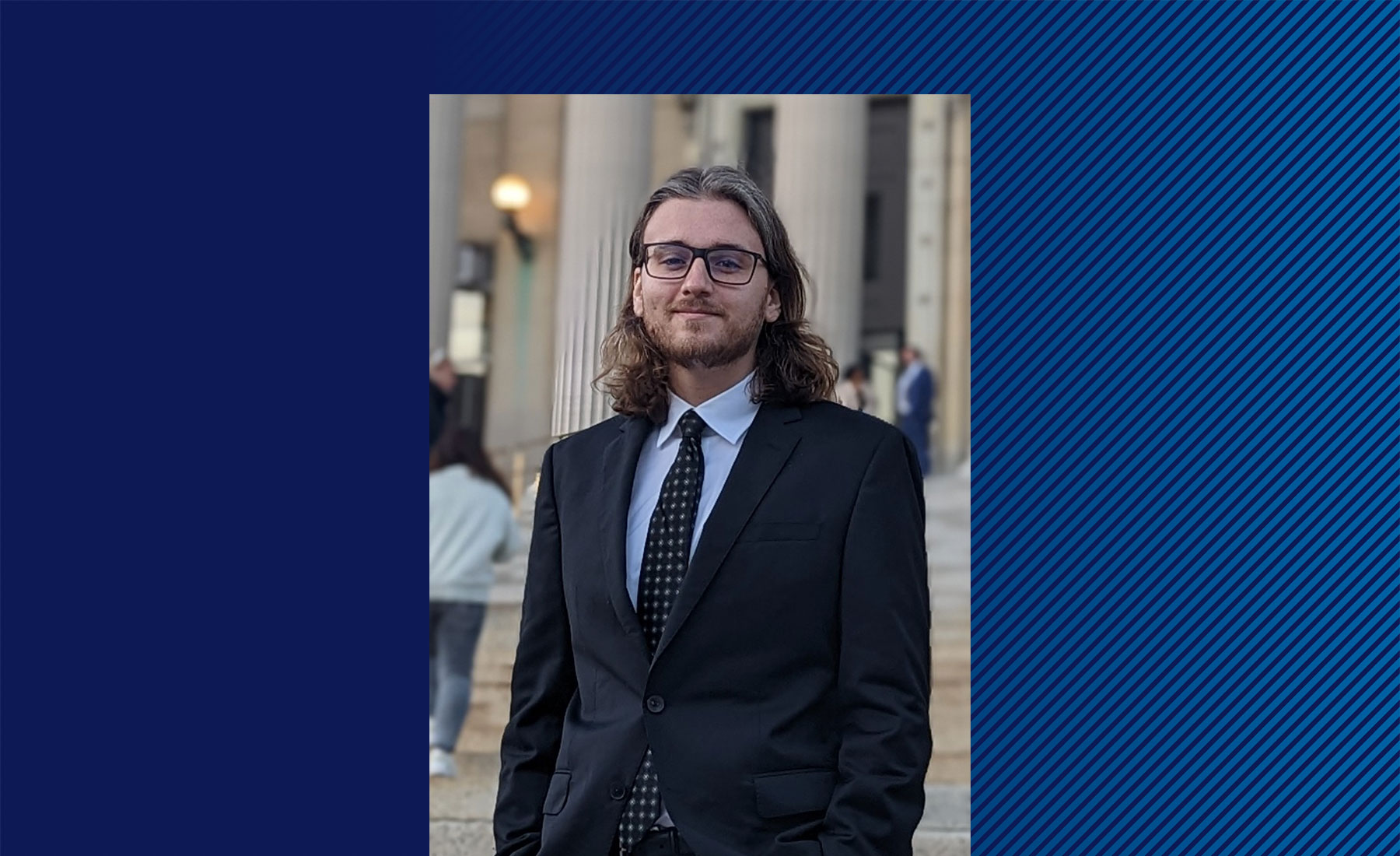
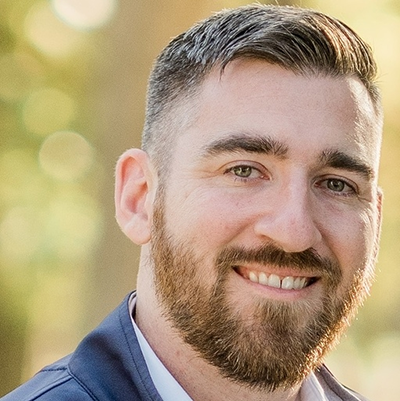
Get to know some of our College of Media alumni. Mike Dalton (BS’ 12, journalism) is currently a programmatic sales director with Raptive. Dalton also participated in a Media Career Night alumni panel on “Sales and Retail Communication” in Spring 2024. Watch a recording of the session here.  

Mike Dalton

What brought you to the College of Media at the University of Illinois?
I knew I wanted to do something within media, specifically journalism. My freshman year was the first year that the College of Media expanded the journalism program into a four-year program. During my visit to campus, I was told that the program was pretty selective, so when I got in, I think I was just filled with a lot of excitement about that, and I loved the campus.

What were some of your favorite classes that you took at Illinois?
One of my all-time favorite classes, and one of the hardest classes I ever took, was JOUR 411: Law and Communications, with Professor Steve Helle. I found that to be one of the most interesting classes the University offered within the program. It was high stakes. Everyone was giving it 110% because the exams were tough, but it was so rewarding and I learned a lot from that class. The way that it was set: you did not have to take the first two midterms, but you had to take the final, that was weighted more if you chose not to take the midterms. It was a really cool way for the professor to put the trust into the students’ hands. I took the course in the second semester of my senior year, and it was literally like, “I need to pass this class and graduate.” It was just a tremendous course that I still think about to this day.

What RSOs were you involved in during your time at the University?
I got started with Fighting Illini Productions, where I was filming sporting events and making edits and highlight videos for the teams. Eventually, I was filming with the big board cameras for the video boards at Memorial Stadium and State Farm Center. I did that, and then me and some other students co-founded JAMS, which was journalism, advertising, and media studies. We would put together a TV broadcast a few times a semester and give everyone a chance to get a head start on working in a studio and putting together a program. I started a part of it called Movie Corner where I would give movie reviews. It was just a really great experience to be able to feel that we were building something special in the college because, again, this was the first time that journalism was open to underclassmen.

What are some lessons that you learned through the College of Media and your RSOs?
Fighting Illini Productions trained me on being accountable, and I think that that is huge. We had to go there ridiculously early on football gamedays to get everything ready; then after games we’d have to dump tape and upload our footage and then get ready and be editing and start helping piece together highlights. There were plenty of times when it was 9, 10, 11, midnight, and I was sitting in the editing bay working to get my tapes done, my highlights done, and my cuts done for review by the staff within the production department. It felt stressful at the time, but it was an accountability thing that they taught us because we had a job there, and a job as students, and we had to find a way to get both things done. That’s life now. I have a family, I have personal interests, I have a career, and I have to juggle all those different things and be accountable for the work that I say that I’ll get done. That’s an experience that stuck with me.

What skills did you learn through studying journalism that you’re able to use today in your advertising sales job?
The way that you sell advertising solutions is by asking the right questions. That comes from my background in journalism. I have an interest in learning more, I want to recall things that clients tell me, and I think that that makes me more relatable and personable. All that comes from having it drilled into my brain from the College of Media—the journalism classes specifically. Dive deeper, find the story, get an answer. If you don’t like the answer you’re given the first time, find a different way to ask that question. That all came from the college.

What advice would you give to current College of Media students?
I think everyone should utilize their time at the University to lean into what interests them. It doesn’t necessarily have to be something like Fighting Illini Productions or starting a broadcast channel of underclassmen but lean into what interests you. I leaned into cinema studies as a minor because that interested me, and I knew that that was something I cared about. I leaned into an extra focus on Recreation, Sport and Tourism, pairing my interests with sports and the business side of them. Find time to lean into the things that you think might interest you. I guarantee you that it’ll help you in the long run with time management, accountability, and checking boxes. The second piece I would say is to reach out to alumni; find them on LinkedIn. The people that attend Media Career Nights or speak on Zooms, don’t be afraid to reach out to them and ask questions or ask for help. That’s how we all get by; we utilize our connections and our network to find an avenue or opportunity for us both professionally and personally. I think that that’s something that everyone should consistently remember to do.

—Interview by Brendan Gallian, New Voices Intern

MACS’ student-produced film special airs on WILL-TV’s ‘Prairie Fire’


Cetacean

Students in the Fall 2023 Cinematography and Sound Design course, taught by media and cinema studies lecturer Victor Font, produced a film special of Cetacean, which aired on WILL-TV’s Prairie Fire on April 18.

The one-hour episode includes interviews with Cetacean creators, Deke Weaver and Jennifer Allen, and excerpts from last fall’s live multimedia performance, which was made possible by a collaboration with the students.

Part social practice, part visual art installation, part live event, Cetacean’s three years of research, rehearsal, and planning became a live public performance—a two- and-a-half-hour long living collage of story, dance, sound, video, lo-fi effects, and a colossal installation. 

Cetacean was the sixth interdisciplinary performance from “The Unreliable Bestiary”—a lifelong project presenting a performance for every letter of the alphabet, each letter representing an endangered animal or habitat.

Learn more.

Watch the episode:

Share on social

Ebertfest receives 2024 Tourism Impact Award from Experience Champaign-Urbana


Ebertfest wins Experience CU Tourism Impact Award

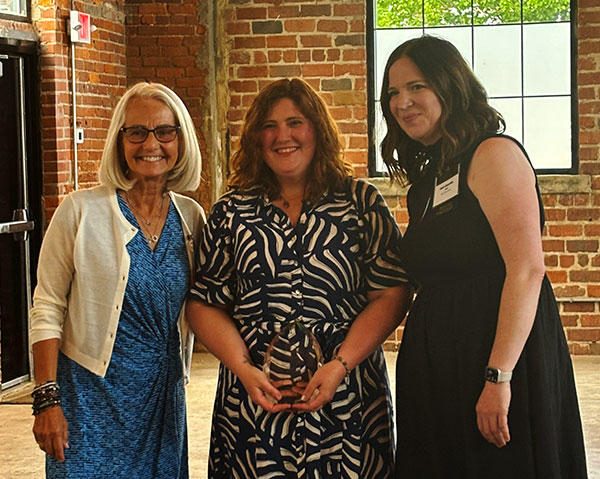
For sharing its passion with film lovers worldwide for 25 years, and making the greater Champaign-Urbana area a better place to live, work, and visit, Ebertfest was selected as one of five winners of the 2024 Tourism Impact Award from Experience Champaign-Urbana.

The Experience Champaign-Urbana Foundation presented the awards at the 11th annual Toast to Tourism on May 15 at Carmon’s, which celebrated the hospitality industry. The other winners included the State Farm Center, Uniting Pride of Champaign County, Urbana Boulders, and the Great Pumpkin Patch. Experience Champaign-Urbana, established in 1982, is the official tourism destination marketing and management organization for Champaign County. 

“Our awardees play a vital role in welcoming residents and visitors, embracing our brilliant spirit of hospitality and innovation,” said Jayne DeLuce, president and CEO of Experience Champaign-Urbana. “We continue to see people choose the Champaign-Urbana area for a place to live and visit because of efforts that these organizations and their teams have undertaken to create truly unique experiences.”

Tourism Impact Award

Roger Ebert’s Film Festival, also known as Ebertfest, was recognized for its “genuineness in welcoming everyone into your film family and creating forgiveness, empathy, compassion, and kindness wherever you go.”

“There was such a film community that grew around the festival,” recalled Chaz Ebert, co-founder, producer, and host of Ebertfest. “People have met there, people have dated there, people have gotten married there. Creating community means a great deal to me.”

“Our brilliant events and activities are being discovered by individuals and groups from around the world, bringing business in conferences, sports, group travel, and leisure travel to our area,” explained DeLuce. “Continued development and investment in the community allows us to push our region forward as a leader in the state.”

Watch Experience Champaign-Urbana’s interview with Chaz Ebert:

Pictured at top: Lynne Barnes, Experience Champaign-Urbana Foundation Board Chair; Molly Cornyn, Project Coordinator for Ebertfest; and Annie Easterday, Experience Champaign-Urbana Board Chair.

Sarah Min selected for 2024 College of Media Distinguished Alumni Award


Sarah Min

When Sarah Min (BS ’93, journalism) was appointed to President Joe Biden’s Advisory Commission on Asian Americans, Native Hawaiians, and Pacific Islanders in 2022, she knew her background in journalism would prove useful in government policy and nonprofit advocacy work. 

“For people who practice journalism, it’s a job requirement to constantly learn new things and talk to a lot of people outside of the known” Min said. “I think that was the heart of my education at the college that has really stayed with me.”                             

Plus, Min, who moved to New York City right after graduation with only the prospect of a job, likes to embrace unexpected and challenging opportunities.  

“I really look for steep learning curves. I think that’s what keeps the brain agile and [provides] intellectual stimulation, from diving into the unfamiliar,” she said. 

Min’s curious nature has been a career asset as a magazine journalist and media executive, and now, as Deputy Chief Commissioner of President Biden’s AA and NHPI Advisory Commission.

Min’s exemplary career accomplishments, along with her engagement with the college, have earned her the 2024 College of Media Distinguished Alumni Award.

“The breadth of Sarah Min’s contributions to the media industry, to nonprofits, and to government and advocacy are truly inspiring,” said Dean Tracy Sulkin. “Her career path demonstrates to our students that there are many opportunities to pursue your interests and to make a difference.”

As a member of the President’s Advisory Commission, Min and her colleagues provide recommendations to President Biden on ways the public, private, and nonprofit sectors can work together to advance equity, justice, and opportunity for every Asian American, Native Hawaiian, and Pacific Islander community.

The federal advisory commission works to address key priorities, including efforts to combat anti-Asian hate, promote data disaggregation and language access, and advance health and economic equity. 

She also serves on the board of EMILY’s List, an organization that elects pro-choice Democratic women, and Color of Change, a racial justice organization.

Min, who holds an MBA from Columbia Business School, is involved in several additional political nonprofits, working to build political power by “getting good information out to people around civic engagement.”

Min says she owes much of her success to her education, experience, and mentors at Illinois, including Bob Reid, a former investigative journalism professor who taught his students to push themselves as much as possible.

“One of the things that [Reid] always said was to stay outside your comfort zone and how important that is, but also how deliberate you have to be about that,” Min said of Reid, who passed away in 2004. “That idea has truly guided me throughout my career.” 

Working at The Daily Illini also had a huge impact on Min, who said it’s where she learned how to write, edit, and think visually about a story. 

In 2020, she established the Daily Illini Journalism Scholarship Fund with her husband, Matt Pincus, to help support undergraduates in journalism who are committed to working at least one semester at The Daily Illini.

Min said it was a way for her to honor those students who manage work and classes, while remaining committed to sustaining the practice of journalism.

“I’m proud and privileged to be supportive of young people who are willing to commit to continuing that tradition because maintaining journalistic standards is critical in our civil society,” she said. 

While the early part of Min’s career involved jobs at magazines like Glamour and Vibe, her desire to help build political power for women and people of color is where most of her professional and personal focus stands today.

Min said her previous experience and skill set applied to the kind of work that needed to be done, which is related to narrative work and storytelling and changing perceptions.

“These days it’s about how you get the truth out to people. How do you meet people where they are, how do you find the audiences,” Min said. “It’s very similar principles to journalism—understanding specific audiences and how to deliver content to each of those audiences so that they will engage with information.” 

For Min, who says the first part of her career was satisfying because she could see an immediate product, what’s most gratifying now is advocating for future leaders.

“I’m inspired to help to build a pipeline of leaders for tomorrow who take a hopeful and innovative approach to the future,” Min said. 

Eli Murray selected as winner of 2024 College of Media Emerging Leader Award


Eli Murray

A multimedia piece about an avalanche in Washington published by the New York Times in 2012, which included video, interactive graphics, and animated simulations, changed the way newsrooms presented storytelling. 

It also inspired Media alum and Pulitzer-Prize winning reporter Eli Murray (BS ’15, journalism) to think about a career as a data journalist. 

“I was in college when the New York Times published ‘Snow Fall’ and it was ground-breaking. It was the first time I had ever seen a story like that and so I felt really inspired and [felt] that was something I wanted to pursue,” Murray said.

Murray would go on to excel at visual storytelling, first at the Tampa Bay Times, where he would earn a Pulitzer Prize in Investigative Reporting in 2022, and now at the New York Times as a graphics editor. 

The College of Media is honoring Murray’s early career accomplishments and his engagement with the college, selecting him as the recipient of the 2024 College of Media Emerging Leader Award. 

“In addition to his outstanding journalistic achievements, Eli Murray has returned to campus to share his expertise with the College of Media, at events for students and for the public,” said Dean Tracy Sulkin. “He is wonderfully deserving of this year’s Emerging Leader Award.”

Murray considers himself lucky to have discovered the potential of data journalism as a student at the University of Illinois and says visual elements allow a journalist to reach a wider audience.

“I think a story that is just [relying on] data is not as strong as it can be, but I think that a story that is just about anecdotes and about people is also not as strong as it can be,” he added. 

In his current role, Murray uses code to pull data from websites and public records, crunch and analyze numbers, and create visual elements to tell stories. 

“I really do feel strongly that visuals are important in journalism, and I think that the New York Times is really setting the standard for what people can do visually in online journalism,” Murray said.

Murray is also an adjunct professor at the University of South Florida, teaching students how to code JavaScript from scratch in an online data visualization course. He’s hoping to inspire more students to consider a career in data journalism.

Murray’s interest in data journalism was bolstered during a news design class his junior year with Eric Meyer, retired associate professor of journalism. During a weeklong segment on WordPress, students learned about coding in HTML and CSS. 

“I really enjoyed that. It just clicked for me, and I recognized that I could use these skills to do journalism,” Murray said.

Murray got a few books and taught himself how to code. During his senior year, he worked at The Daily Illini as a beat reporter and then as a web developer. 

He credits his time at the DI with helping him grow his skills, build his confidence, and produce clips to land his first job after graduation.

While researching a story, Murray says it can often be difficult to figure out what the information is trying to tell you, so early on he visualizes the facts through charts and graphics.

Murray compares the process of exploring data through visuals to shucking oysters and looking for pearls. 

“You may open a hundred oysters and find two pearls in there but those are the two graphics that you can bring forward and say, ‘These are saying something enlightening. These are the ones that I’m going to share with readers,’” Murray said. 

Murray and two colleagues at the Tampa Bay Times published “Poisoned” in 2021, a six-part series uncovering the truth about dangerous lead levels at a battery recycling plant in Florida. 

Murray, who became a certified lead inspector throughout the course of his research, spent nearly two years building a database from thousands of pages of PDFs and analyzing the results. 

The reporting, which garnered Murray and his team a Pulitzer Prize, led to the implementation of new safety regulations to better protect the lives of workers and nearby residents.

Although Murray says he’s most confident working with facts and figures, affecting real change in the lives of people is the most gratifying aspect of his job. 

When he was interviewing the wife of a factory worker whose son had experienced the detrimental effects of lead poisoning, Murray realized the significance of telling their story. 

“To [the family], it was their whole entire life,” Murray said. “[Their] entire life revolved around getting care for [their] son who was lead poisoned and so that just made it really concrete to me. The reason we do this is for people, and going forward it makes me to want to put more emphasis on that side of things in my own work.”

Murray has always been motivated to find the objective truth. He advises those starting out in their journalism careers to go into a story with an open mind and be willing to go where the story takes you. 

“It’s important to be able to pivot when new information comes in and to be able to talk to people who disagree with the things that you’re seeing on the ground,” he said.

As a young reporter who has already won the most prestigious award in journalism, Murray’s career goals remain unchanged.

“I wouldn’t say that there’s any more pressure than there was at any [other] time,” he said. “Fortunately, I’m pretty early in my career, so I hope I’ve got enough time to keep doing more good work.”

Advertising recognizes faculty, graduate students with awards for exceptional teaching, research


Congrats!

The Charles H. Sandage Department of Advertising has honored several faculty and graduate students with awards for extraordinary teaching, research, service, and mentoring. 

The recipients received $500 to be placed in a discretionary account to support their teaching, service, or research, and a certificate.  

Named after James Webb Young, a legendary advertising executive and first chairman of the Advertising Council in 1945, the 2023-24 recipients include:

Faculty Awards

JWY Teaching Award 
Marisa Peacock

JWY Research Award 
Sang-Hwa Oh

JWY Service Award 
Steve Hall 

JWY Mentor Award 
Chang-Dae Ham 

Graduate Student Awards 

JWY Teaching Award 
Kirby Cook 

JWY Research Award
Jennifer Zhang 

Alum Jon Morgan, 40-year journalism veteran, pursues new writing career

Jon Morgan (BS ’84, journalism), a two-time author and journalist for 40 years, has left his position as senior editor in the Washington bureau at Bloomberg News after 13 years to pursue a freelance writing career.

Prior to joining Bloomberg in 2010, Morgan was senior editor at the Pew Research Center’s Project for Excellence in Journalism. From 1987 to 2008 he held a number of reporting and editing positions at The Baltimore Sun, including assistant city editor, state political editor, and assistant managing editor of enterprise reporting. 

Morgan has written two books on sports economics. He also studied at the University of Michigan as a 2001 Knight-Wallace Fellow.

Jon Morgan

Second annual MACS Student Showcase


MACS Student Showcase audience

The second annual MACS Student Showcase on May 4, 2024, was a faculty-curated film screening featuring the work of students in media and cinema studies courses from Fall 2023 and Spring 2024—courses such as Smartphone Cinema to the Horror Film to Cinematography and Sound, and more. Faculty wanted students to have the chance to see their excellent work on a big screen and enjoy it with their friends and family!

Watch the program and see timestamps/credits below:

MACS 140: Smartphone Cinema

00:00:16 – Scene recreation from Quentin Tarantino’s Pulp Fiction (1994)
Jin Wang, Yue Wang, Qingyang Xia, Angela Ye, Ella Yoder, Mitchelle Zavala, Enxi Zhang, Yifan Zhao, and Yvonne Rose Smith

00:01:13 – Scene recreation from Doug Liman’s The Bourne Identity (2002)
Felicity Abbott, Cameron Alagna, Jane Baer, Emily Bautista, Oscar Benavides, Britney Chen, Louis Dalpoas, Monzerrat Degollado-Hernandez, and Stephany Diaz Espino

MACS 150: Intro to Digital Media Production

00:02:48 – Choke
Marilyn MacLaren

00:10:04 – Innovative Illini
Anthony Mojica, Mikolaj Wierzbicki, Thomas Marousek, and Justin Martin

00:15:08 – The Dodger
Nolan Duquaine, Katie Farrell, Judi Georges, Ziyu Liu, and Paul Rampersaud

00:20:42 – Snack Run
Chen Chili, Akkhiel Nambbiar, and Jacob Tidrick

MACS 282: The Horror Film

00:25:50 – The Conjuring: A History of Lies
Adrien Reetz

MACS 260: Film Production

00:35:49 – Ebertfest 25th Anniversary Trailer
Bridget Nolan

00:37:30 – Inescapable
Anthony Mojica and Paige Gaines

00:44:06 – Ghostbluffers
Chen Chili, Anna Dobrzyn, Kinzie Parsons, and Armando Garcia

00:54:50 – The Inter-view
Izabella Kleinfeldt

00:59:13 – My Dear, Watson
Kris Modi and Aidan Allenfort

[30-Minute Intermission]

MACS 485: Making Video Essays

01:40:20 – A Moving Poem
Jose Figueroa Díaz

01:47:33 – Walking
Jorge Mercado

MACS 590: Essential Digital Production for Graduate Students

01:49:34 – Being There: A Videographic Essay about the Camera as Presence
Robbie Sieczkowski

MACS 370: Cinematography and Sound Design

01:55:18 – Excerpts from Deke Weaver and Jennifer Allen’s CETACEAN (The Whale)
Filmed by MACS 370 and broadcast on Illinois Public Media’s Prairie Fire

MACS 480: Advanced Filmmaking

02:05:40 – Surprise
Max Szykowny

02:44:48 – Campus Services
Akkhiel Nambbiar and Hannah Herndon
Original Script by Nathan Carlberg and Emily Watson

MACS Student Showcase flier

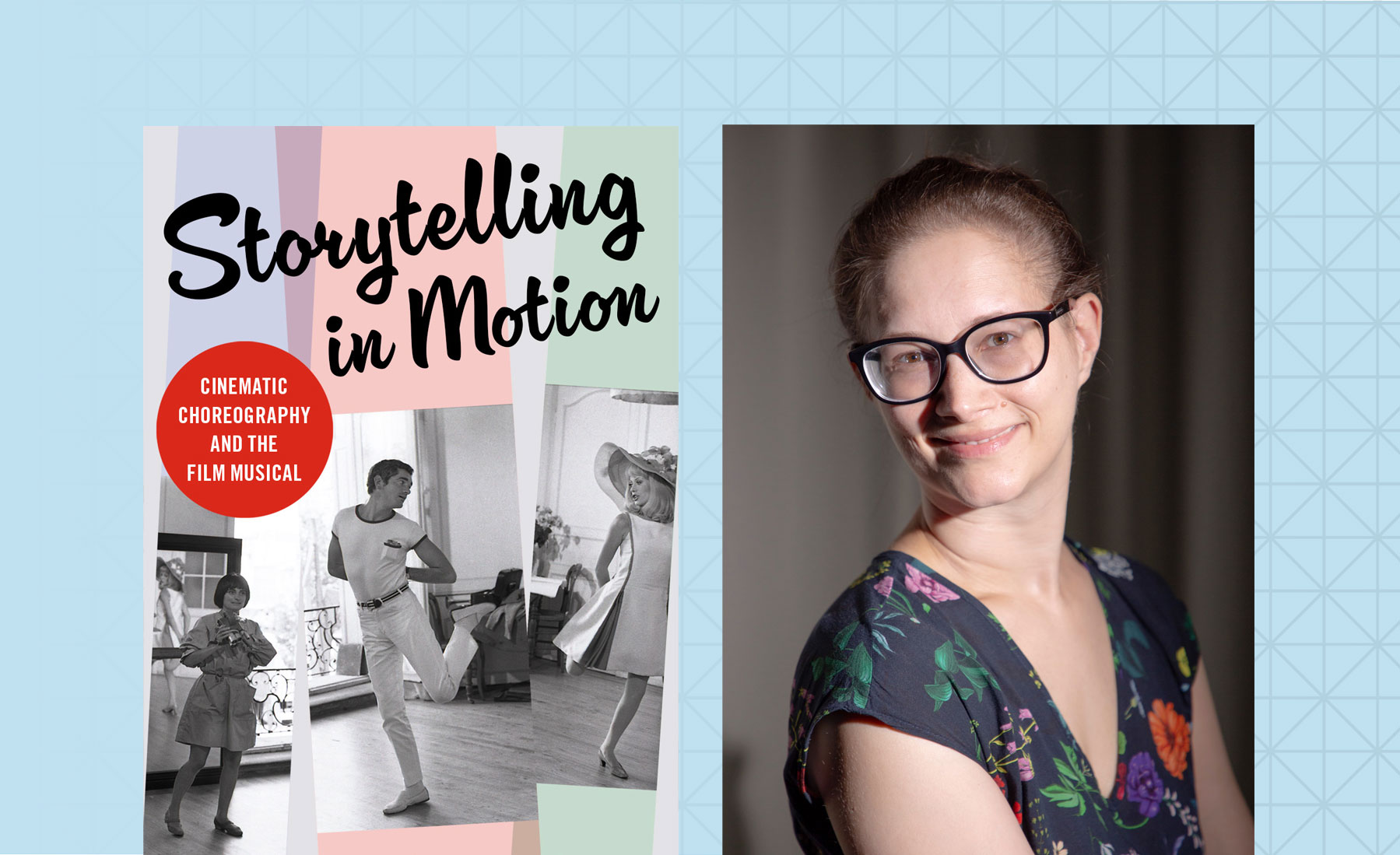
Jenny Oyallon-Koloski considers the power of movement in film in her first book: ‘Storytelling in Motion’


Three vertical mirrors hang on the wall in the office of Jenny Oyallon-Koloski, assistant professor of media and cinema studies, where she keeps an open area that allows her the space to move. 

Jenny Oyallon-Koloski and new book

As a certified movement analyst and director of the movement visualization (mv) lab, she wants the space to serve as a research environment where she can use motion-capturing technology to study the manifestations of human movement in cinematic space.

Her extensive research on how figure movement and dance create meaning in musical cinema is the subject of her first book, Storytelling in Motion: Cinematic Choreography and the Film Musical (Oxford University Press), which will be available May 17. 

Oyallon-Koloski’s idea for the book came out of her dissertation project, which tied her interest in dance and movement into her core work in film and film history. 

While her dissertation focused mainly on French filmmaker Jacques Demy, using his films as case studies, her book discusses broader ideas of how people can understand the significance of dance in film. 

“That’s one of the core questions [in the book]—how do filmmakers use movement to tell stories, and specifically in the musical genre,” she said.

Her book also compares French and American film production histories and considers the impact of time, money, and rehearsal space available to filmmakers. 

“What I found was really interesting between French and American musicals is Hollywood had a symbiotic relationship with Broadway, and those industries or artistic sectors kind of grew together. So there was all this culture around dance and musicals, at least in the Hollywood system. But in France, those artistic sectors were really separate,” she said.

That’s one of the core questions [in the book]—how do filmmakers use movement to tell stories, and specifically in the musical genre?

Oyallon-Koloski discovered an interest in dance and movement in college. While doing her dissertation research, she became a certified movement analyst at the Laban/Bartenieff Institute of Movement Studies in New York, an educational and research center that trains people in the language of movement. 

Oyallon-Koloski movement lab

“I was taking dance classes, but I wasn’t getting a specific degree in dance and I really wanted to be able to have credibility with the dance community,” she said. 

Oyallon-Koloski spent two years studying the Laban system—a method and language describing, visualizing, interpreting, and documenting human movement invented by Rudolf von Laban in the 1920s—alongside a wide range of students with interests in dance, therapy, academic research, and more. 

Using never-before-published interviews with filmmakers and choreographers, she applies the principles from the Laban/Bartenieff Movement Studies to analyze the impact of figure movement in cinema. 

Oyallon-Koloski also created three video essays to accompany her written chapters: Seeing Movement in Cinema: An Introduction to Laban Movement Analysis; Endless Conversations: Reflexive Musical Clusters; and Diegetic Flutters: Views from the bridge, which was accepted to the international Marienbad Film Festival to be held in the Czech Republic this June. 

Movement visualizations
Visualizations of movement traceforms from the mv lab.

Making video essays is one of Oyallon-Koloski’s course specialties, as well as digital media production, contemporary movies, and cinema theory. 

Although she doesn’t consider videographic criticism a substitute for writing, Oyallon-Koloski does believe audiovisual context is a way to help generate interest in films, particularly those people have rarely seen.

Oyallon-Koloski, a dual American-French citizen who speaks fluent French and lived in France her senior year of high school, says her familiarity with the culture enabled her to write a book about dance in French cinema, which some might consider a fringe topic.

After completing Storytelling in Motion, Oyallon-Koloski says she realized she still has more to say on the subject of French cinema.

“I think my next project will probably be about [Jacques] Demy and his filmography. He made about 13 films, so [the book would be] less focused on dance and movement and more film history and style,” she said. “I like working with archival collections … and I like the interplay between French cinema and international cinema.” 

Share on social

College of Media
119 Gregory Hall
810 S. Wright St.
Urbana, IL 61801
217-333-2350