Alumna Karen Petitte’s distinguished career advances gender equality in journalism


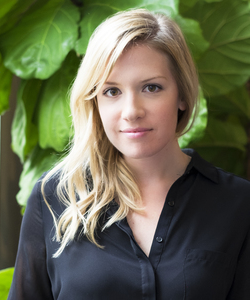
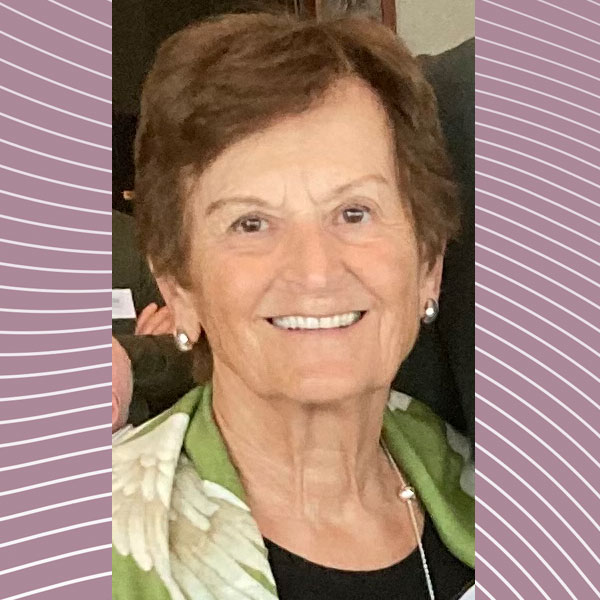
Karen Petitte

University of Illinois alumna Karen Lucas Petitte pursued a career in journalism at a time when barriers were common for women, and opportunities were few. But that didn’t stop the visionary trailblazer from building an illustrious career as an award-winning journalist—and helping to advance gender equality in journalism along the way. 

Petitte’s inspiration to become a journalist came from an unlikely source—the newspaper comic strip, Brenda Starr, Reporter. Petitte loved following the adventures of chic, newspaper reporter Brenda Starr, who traveled around the globe breaking stories (and, probably, just as many hearts).  

“She was quite glamorous, and I think at some point she met some dashing guy with a patch over his eye, and I thought, ‘Oh, I want to do that. That sounds great,’” Petitte said.  

Petitte, who earned two journalism degrees at Illinois (BS ’63, MS ’67), would eventually become a newspaper reporter like the comic book heroine. But it’s the comic’s creator, Dale Messick, whom she would truly come to emulate.

Dalia Messick, who used the pseudonym Dale Messick to avoid gender bias, was a rarity in those days as a female cartoonist. Like Messick, Petitte would forge her own path through a male-dominant field, opening doors for more women. 

After graduation, Petitte worked briefly at the Chicago Tribune and then joined the Chicago Daily News in 1968, assigned to an education beat. Originally, she had applied for an overnight reporter shift at the Chicago Daily News but was told it was “too dangerous” for women.

Although education was traditionally considered a “woman’s beat,” she was happy for the opportunity to break into the newsroom. In 1973, Petitte and a colleague won first prize from the National Council for the Advancement of Education Writing for an investigative piece on financial misconduct at Malcolm X College in Chicago. 

“It was kind of inspiring to be able to report on some of those activities, trying to bring to light things that many people would just as soon have kept in the dark,” Petitte said. 

After an initial focus on education, and later, consumer affairs, Petitte would go on to cover a variety of news stories including disasters, fires, and gender equality issues. She covered a protest at a local Chicago restaurant that had a men’s-only bar area and wrote about the discrepancies in men’s and women’s salaries. 

Eventually, Petitte was offered a position as assistant city editor at the Chicago Daily News—the first woman to ever be considered—and although she preferred reporting, she knew she couldn’t refuse.

“I didn’t really want to be an assistant city editor at the time; I like to report. But I figured, maybe I better do this, because if we [as women] keep asking for these jobs, and then we don’t take them, they’re not going to take us seriously,” Petitte said.

In 1979, Petitte took a brief detour from journalism and tried government. She spent over three years working as Chicago’s consumer affairs commissioner under Mayor Jane Byrne—the first woman to be elected mayor of a major city in the United States. That appointment enabled Petitte to help enforce consumer regulations as opposed to writing about them. 

When Byrne’s term ended, Petitte considered going into public relations but ultimately decided to return to journalism, this time entering the magazine field. Petitte worked as editor of Consumers Digest and then Modern Healthcare and Modern Physician, published by Chicago-based media company, Crain Communications. Petitte stayed with Crain Communications for 16 years before retiring in 2001. 

Petitte’s 40-plus-year journalism career is comprised of prestigious honors, including the first female president of the Chicago Newspaper Guild, an inductee into the Chicago Journalism Hall of Fame, and among the first women to serve as editor-in-chief of The Daily Illini from 1962 to 1963. 

Petitte, who was inducted into the Illini Media Hall of Fame in 2007, has fond memories of her time at the student newspaper, including working alongside the late film critic Roger Ebert (BS ’64, journalism), whom she recalls as “quite a character” and a “very smart, capable, witty guy.” And because she worked evenings at The Daily Illini, she was provided a key to get into her dorm room after the University’s curfew for women—a perk Petitte valued, knowing she had the freedom to choose her own schedule. 

In the latter part of her career, Petitte was able to mentor younger writers, sharing the skills she’d learned over her many years of reporting. She said that helping young people move along in their career was something she enjoyed more than she expected. 

Ten years ago, Petitte found another way to bring along the next generation of journalists by creating the Karen Lucas Petitte Endowed Scholarship in Journalism.

“It just seemed to me a good way to pay back the college for the education that I received, and the knowledge that allowed me to go on and build a career that was very satisfying and rewarding and fun,” Petitte said.

The endowed scholarship, created in 2003, is based on academic merit and financial need, and has created an impact and connection with students that Petitte finds extremely rewarding.

Petitte has met a few of the scholarship winners and has received many thank-you letters—reminders that she’s still helping to pave the way for future journalists, even in her retirement. 

Petitte said she has seen a gradual shift over the years, with more opportunities available for women in journalism. While she’s hesitant to take too much credit for that progress, she is grateful to have had any impact at all.

“It’s a good feeling to know that you helped change some of the patterns, and that there’s some women who came behind you who have some more opportunity,” Petitte said. “I think that’s what it’s all about.”  
Geography, language dictate social media and popular website usage, study finds


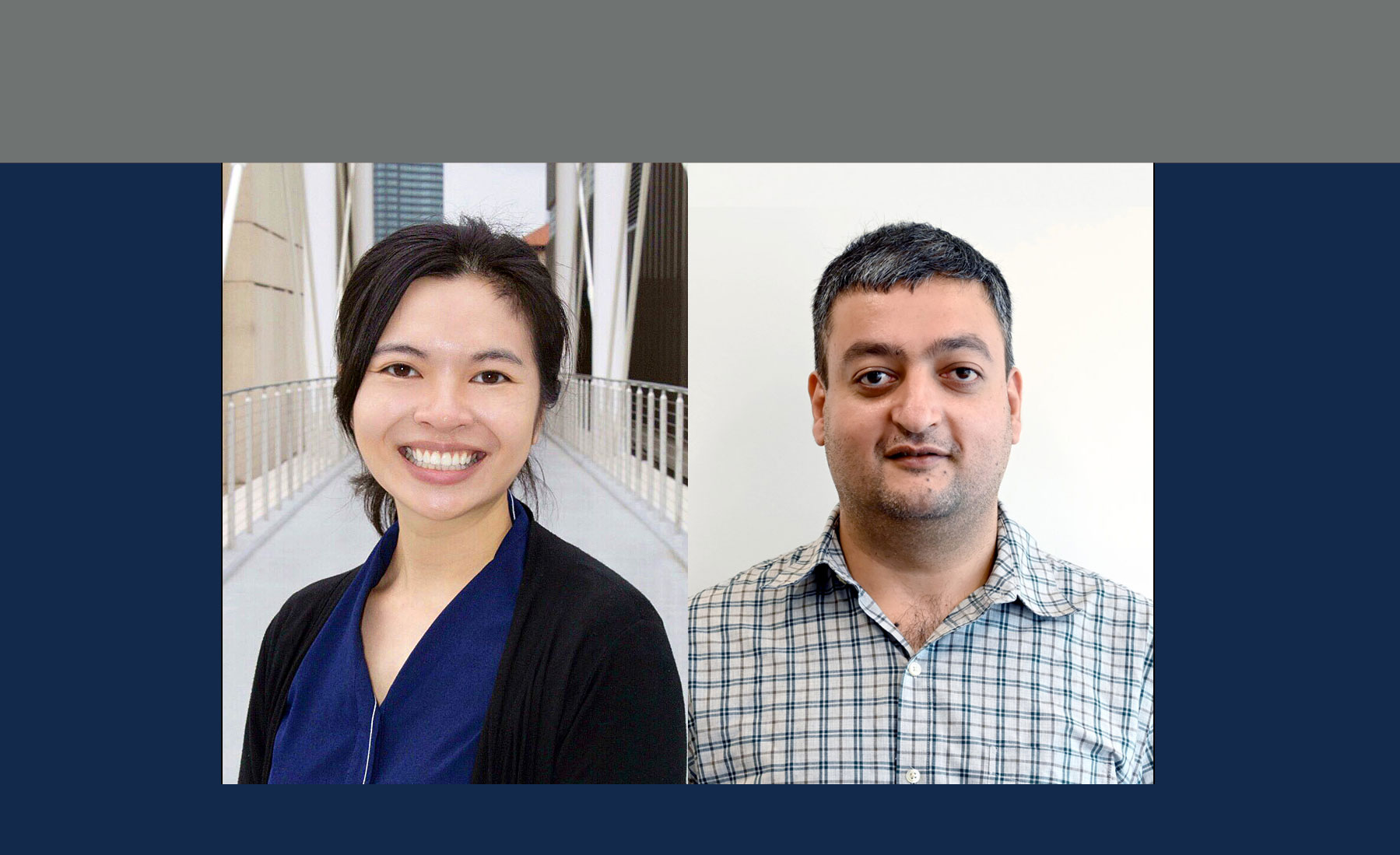
Ng and Taneja

Since its inception, the Internet has been viewed by technology experts and scholars as a way to access information at a global scale without having to overcome hurdles posed by language and geography. However, researchers at the University of Illinois Urbana-Champaign found that how people around the world use the same popular social media platforms and websites remains vastly different based on their language and geography.

A new study by Harsh Taneja, associate professor of new and emerging media in the Charles H. Sandage Department of Advertising, and Margaret Yee Man Ng, assistant professor of journalism, builds upon previous research and examines Internet consumption across 124 countries through their usage of popular websites, as well as Twitter and YouTube—two globally dominant social media platforms.

The results of the new study are published in the journal PLOS ONE.

“The goal of this work was to develop ways to assess which countries are most like each other in the usage of these popular websites and social media platforms and to identify factors that explain the similarities,” the researchers said.

The team found that language and geography remain the most salient predictors of web usage, and their role on YouTube and Twitter is just as significant as on the wider web.

“This is true of the websites they visit and also how they use social media,” Taneja said. “Sure, YouTube is the most popular online outlet in most of the world, but people in Nepal on average do not watch the same videos as people in the United States.”

The team collected and compared trending Internet traffic data and the use of hashtags for the two most popular social media platforms—Twitter and YouTube—and the 500 most-visited sites using Alexa’s Global Rank in the 124 nations studied.

“We chose to work with Twitter and YouTube because although they are both very popular, they attract different audiences, so they capture a very wide slice of Internet use,” the researchers said.

“Our analysis suggests that global web use is quite heterogeneous, whether it is website traffic or in how people use Twitter or YouTube, with social media usage being even less similar overall than the usage of websites,” Ng said.

Previous studies have shown that the free exchange of information has been hampered by government regulations and protections in nations like Russia and China, for example.

“However, government regulation is not the only reason for the restrained flow of information,” Taneja said. “Our study offers empirical evidence that people generally prefer content that focuses on their region and in their language.”

While using data reflecting trending YouTube videos and Twitter topics via hashtags may not wholly capture Internet consumption numbers, it works well as a proxy to gauge consumption on these platforms, the researchers said.

“An important caveat of this work is that we must acknowledge that trending topics are not purely based on consumption,” Ng said. “There is some sort of a black box that determines the complete picture, but tracking hashtags is an effective proxy and less biased than methods involving geolocation, for example, because many users do not reveal their location while browsing.”

Taneja and Ng said the study is beneficial to researchers studying the global flow of information—and, importantly, misinformation—and for web content producers interested in gaining a larger or more targeted global audience.

Seed funding from the Center for Social and Behavioral Science at the University of Illinois Urbana-Champaign supported this study.

Editor’s notes:

To reach Harsh Taneja, email harsht@illinois.edu.

To reach Margaret Yee Man Ng, email ymn@illinois.edu.

The paper “Web use remains highly regional even in the age of global platform monopolies” is available online and from the U of I News Bureau. DOI: 10.1371/journal.pone.0278594

View original press release.

Q&A with Jason P. Chambers

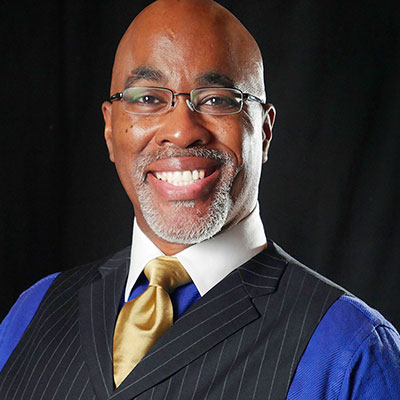
Jason P. Chambers

Get to know some of our College of Media faculty. Jason P. Chambers is the associate dean for access and engagement and professor of advertising. 

How long have you been a professor at the College of Media? What sparked your interest in teaching advertising?
I’ve been at the College of Media since August 2001. I started working here directly out of graduate school from The Ohio State University. I have always been interested in advertising, ever since I was a kid. I was one of those kids who didn’t change the channel when commercials came on—I always wanted to watch and pay attention to the content. In graduate school, I specifically examined the African American experience in advertising as professionals, entrepreneurs, agency owners, executives, and other similar roles. When I joined the College of Media, they were interested in someone who could combine history with advertising. I had this exact experience through my research, so it was the perfect opportunity.

What classes and topics do you currently teach?
Because of my administrative role as the associate dean for access and engagement, I focus my time in teaching ADV 175: Diversity in Advertising. It looks at race, ethnicity, sexual orientation, gender, age, and intersectionality. It also dives deeper into targeted advertising towards members of those communities or groups and the challenges, stereotypes, and opportunities as a result. 

What are your research interests?
Research-wise, my next book is on a gentleman named Tom Burrell. Tom Burrell was one of the first African Americans in the Advertising Hall of Fame. He’s from Chicago, and his agency, Burrell Advertising/Burrell Communications Group, was founded in Chicago in 1971. My interest remains, even after 20 years, in African American entrepreneurship and analyzing how it plays out in the advertising industry.

What do you enjoy the most about working with college students?
What I enjoy most is seeing the light come on when students can make connections between the topics I’m teaching and their interests. Much of my role is to facilitate how students grow in reaching their interests. It’s not just about dispensing information in one direction but finding ways to help students grow intellectually and professionally. After having been here for 20 years, I have seen students I taught 10, 12, and 20 years ago, nearly running Fortune 50 or Fortune 100 companies. You get to witness the minuscule role you played in that growth. It’s really gratifying to see.

What’s the biggest piece of advice you have for students graduating from the College of Media?
My biggest piece of advice is to keep learning and stay nimble. The world of advertising is in an ongoing state of flux. It’s rarely stable in terms of the way that things are done and the roles that exist within the industry. It’s also just as important to stay as flexible as you can, for as long as you can. Flexibility gives you the opportunity to take opportunities. Avoid making decisions that get you so far into your career that you get to a place where you can’t leave or feel the need to stay. Whatever the case may be, stay as nimble as possible for as long as possible.

What are some of your hobbies?
I watched far too much football. The Ohio State football, in particular, being from Ohio and graduating from The Ohio State University. I also dabble in woodworking, I’m quite the DIY’er. I’m currently building a book set of built-in shelves and cabinets in my basement. Those hobbies, in addition to hanging out with my family, my kids, and my wife, are how I like to spend my free time.

—Interview by Lauren Barjami, New Voices Intern

Q&A with Marisa Peacock

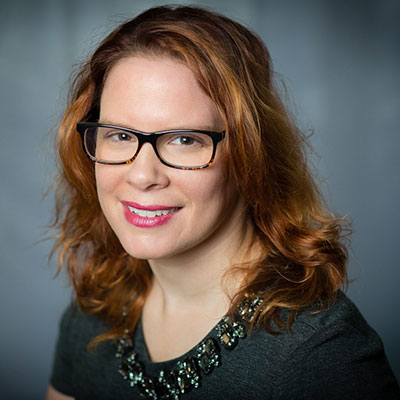
Get to know some of our College of Media faculty. Marisa Peacock has been an advertising lecturer since Fall 2019.

Peacock

What is the best part about advertising?
Two things. The first one is simple: Every industry needs advertising—it’s always going to exist. Secondly, advertising is constantly changing and creating. I specialize in social media, which didn’t exist at one point in my timeline, thus everyone is going to be doing something that doesn’t exist just yet within advertising! The limits are endless.

What is your best memory so far from your time spent at the College of Media?
Definitely working with all the students—their energy, openness, curiosity, and willingness to experiment recharges and fills me up every time. It’s a remarkable experience to work with students who put themselves into their work and achieve great things while having fun. 

What classes do you currently teach at the College of Media?
I teach ADV 498: The Sandage Project, which is an eight-week capstone class that is typically taken during the last year of coursework. A capstone class utilizes all your skills and talents over the past years to work on a real campaign with a real client! I taught it seven times, and in every instance the client wanted to pick more than one campaign. The class helps students to work in a team, execute a campaign, and use their creativity. 

What is the best way to network in advertising?
UIUC being a Top 10 school is an amazing start. You’re a part of a lot of moving parts and a huge entity. There is always something going on here and someone to talk to. Additionally, I’d say the best way to network is simply to just be yourself—don’t be afraid to promote yourself. People want to be around other people who like what they do, have great stories, and are interested in multiple things. Be that person in your own way. 

—Interview by Emily Campos, New Voices Intern

JR Reed joins College of Media Office of Advancement


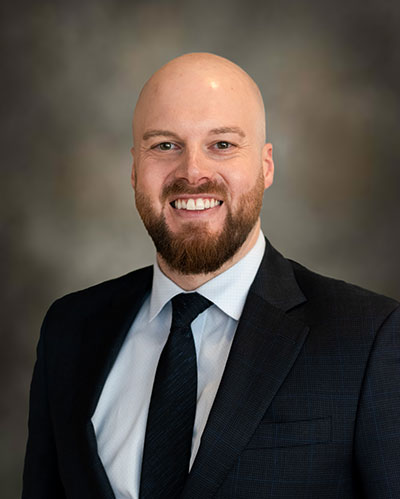
JR Reed
(Photo by Isabella Pennebaker, photography intern.)

JR Reed considers himself a lifelong learner who enjoys meeting new people and exploring new places—just a few of the many qualities that will serve him well in his new role as assistant director of advancement at the College of Media.

Reed, who officially began in January, is bringing a wealth of experience and a variety of interests, as well as a lot of drive and ambition, to the fundraising position.

For Deanne Johnson, assistant dean for advancement at the College of Media, those were some of the key reasons she felt Reed would be a great addition to the team. 

“His compassion for others and positive outlook on life were obvious from our first meeting,” Johnson said. “He brings a diverse set of skills to the position, and we are fortunate to have him on our Advancement team and in the College of Media.”

Reed said the major gift officer role initially appealed to him because he felt it offered the ability to connect with alumni and donors, hear their stories, and help them find ways to support the college. He knew the job would be a perfect match after meeting with members of the College of Media.  

“Not only did the job description match [my skills and interests] but I really connected with the team here. Everyone I’ve met has been friendly and welcoming, so it just felt right.” he said.  

He recognizes the importance of media and the role it plays in various aspects of today’s world—media is “very cutting-edge, always adapting, and impactful to people’s lives.”

A native of Tolono, Illinois, Reed grew up an Illini fan, frequently attending Illinois football and basketball games. 

“The University was always a big part of my life growing up. I was born and bred orange and blue,” he said. “It makes sense my professional trajectory would bring me back to the area, working for the University.” 

The career path leading Reed to Illinois has been a winding one which includes culinary school, a bachelor’s in business administration from Robert Morris University in Chicago, an infantry squad leader in the U.S. Army, a barber’s license, and an MBA from California Coast University. Most recently, he worked as a membership and marketing supervisor at Costco Wholesale in Champaign. Reed believes his vast experiences have prepared him for the role he’s in today.

Reed says the most valuable lesson he’s learned working at Costco and serving in the U.S. Army was the importance of taking care of people and finding solutions—whether it was soldiers, customers, or the 50-plus employees he managed. He feels it will transfer well to his advancement position.

Reed has also worked at two famous downtown Chicago attractions including the Skydeck at Willis Tower and the Chicago River Boat Architecture Tours. These experiences, coupled with organizing off-site networking events for Costco, has helped to foster his event-planning skills, which he will use in his new position as he supports Chicago-based, alumni-coordinated events. 

He anticipates his first year to be full of learning experiences, and he’s looking forward to integrating into the advancement team and engaging with alumni and donors. 

“Maybe it’s a scholarship or a deferred gift—everybody is going to have a different story and something different they want to support. That’s where I come in, as a liaison, to assure their needs are met to support the University of Illinois and the College of Media,” Reed said. 

“Perhaps the most fulfilling part of the job, and a component I will enjoy the most, is the positive impact on the lives and futures of students, faculty, and staff,” he added. “Each generous gift to the College of Media has the potential to positively transform the academic career of our students. Only rarely do we have the ability and opportunity to make such impacts, and I’m privileged to say I now have the potential to do so.”

2022 College of Media Teaching Award recipients announced


Each academic year, the College of Media seeks nominations for a teaching award that honors faculty who display a strong commitment to the undergraduate teaching mission. This year, Josh Heuman and Yiran Gao have been recognized as recipients of the 2022 College of Media Teaching Awards. 

Heuman

Heuman, a teaching assistant professor in the Department of Media & Cinema Studies and the Department of Journalism, received the Award for Excellence in Undergraduate Teaching by a Specialized Faculty Member. Heuman’s teachings range widely across the field of media studies, including courses in media industries, media law, media history, media theory, and media genre, narrative, and style. His research explores media industries and regulation, especially in television, with an emphasis on the regulation of media work. He’s also interested in the evolution of the television writers’ room where stories are first introduced.

Gao

Gao, a doctoral student at the Institute of Communications Research, received the Award for Excellence in Undergraduate Teaching by a Teaching Assistant. Since Spring 2018, Gao has consistently been ranked as excellent by her students, based on Instructor and Course Evaluation System (ICES) questionnaire forms. Her interdisciplinary research interests lie at the intersection of media studies, critical cultural studies, science and technology studies, and global studies. Her current research focuses on the roles and the impact of digital media on the formation of digital public sphere at a transnational level.

College of Media
119 Gregory Hall
810 S. Wright St.
Urbana, IL 61801
217-333-2350