Media faculty, students present research at 2026 Association for Education in Journalism and Mass Communication annual conference


Faculty and graduate students from the College of Media co-presented various topics of research at the 109th annual conference of the Association for Education in Journalism and Mass Communication on August 5-8, 2026, in New Orleans, Louisiana.

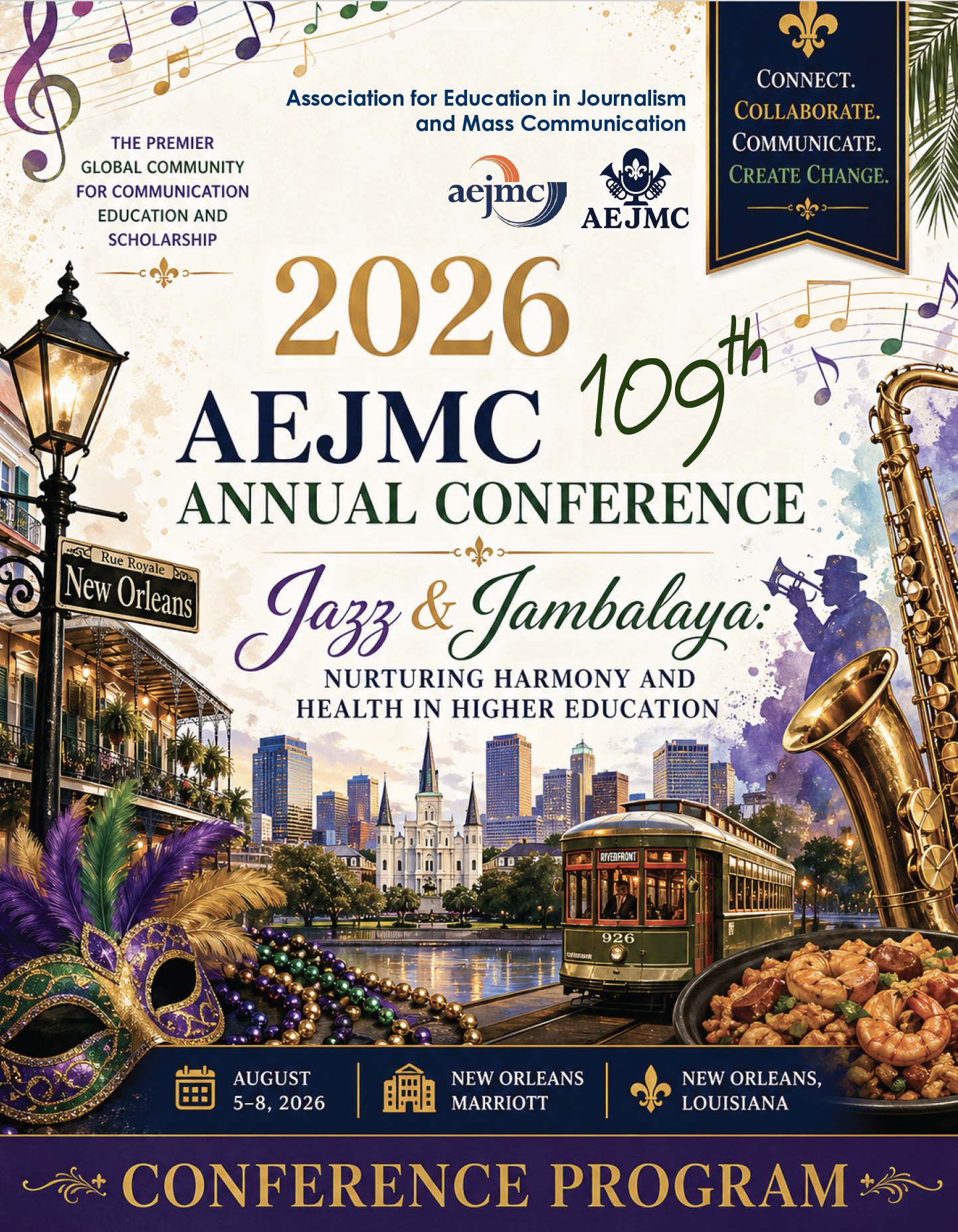
AEJMC cover

This year’s conference theme was “Jazz & Jambalaya: Nurturing Harmony and Health in Higher Education.” Presenters included faculty in the Institute of Communications Research, the Charles H. Sandage Department of Advertising, and the Department of Journalism; and graduate students in ICR’s PhD program and the MS advertising program. 

A Science Communication paper, “Exploring the Influence of Interactive and Empathetic Chatbots on Health Misinformation Correction and Vaccination Intentions,” co-authored by ICR Director Leona Yi-Fan Su and iSchool doctoral student Mobius Ziyang Gong (MS ’22, advertising) received the 2025 Article of the Year Award from AEJMC’s Communicating Science, Health, Environment and Risk Division.

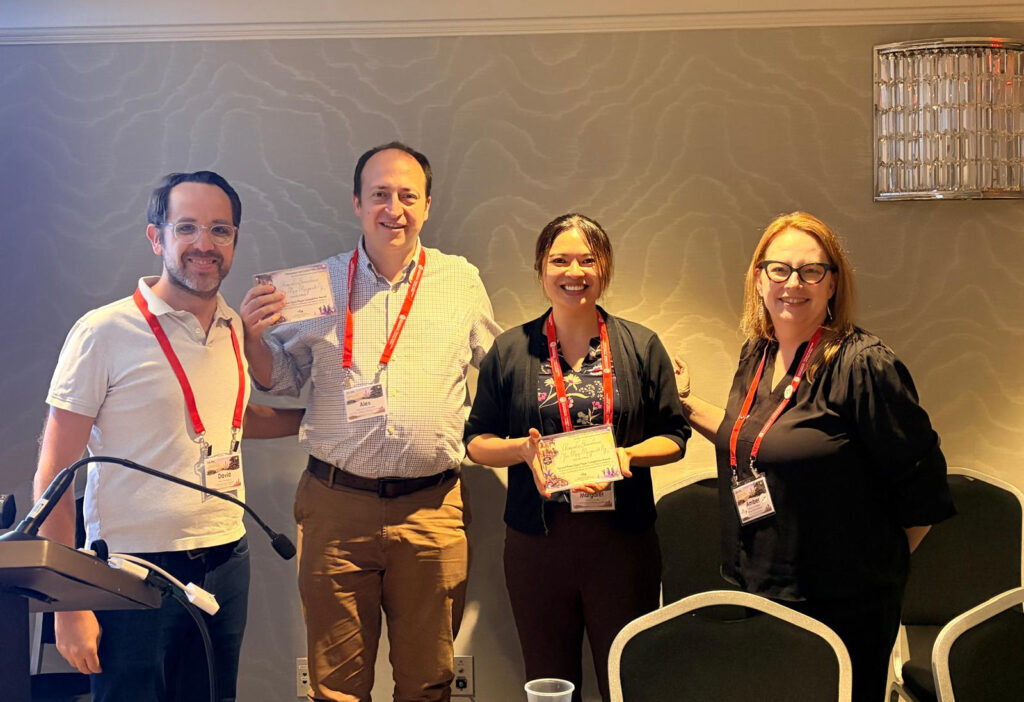
Journalism Professors Alexandre Gonçalves and Margaret Yee Man Ng received Second Place Open Competition Award for their paper “Analyzing News Outlet Social Media Use: Platform Adoption, Usage, and Migration Across Two Decades (2005–2025),” in the Newspaper and Online News Division.

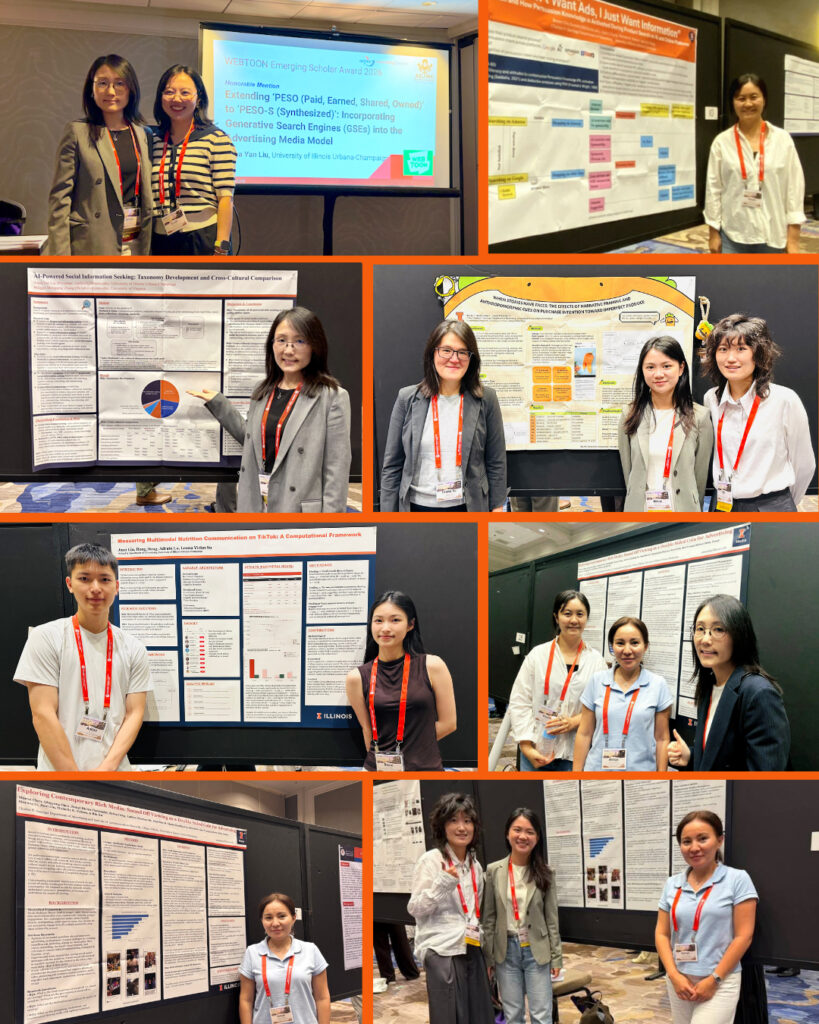
In addition, two ICR doctoral students received awards at the conference including Anthea Xiaohua He, who received second place in the Washington Media Scholar Fund Graduate Research Scholarship competition, and Anna Liu, who received an honorable mention for the Webtoon Emerging Scholar Award.

The AEJMC aims to promote the highest possible standards for journalism and mass communication education, to cultivate the widest possible range of communication research, to encourage the implementation of a multi-cultural society in the classroom and curriculum, and to defend and maintain freedom of communication to achieve better professional practice and a better-informed public.

College of Media research presenters and presentations are listed below. (Please see the AEJMC conference program for complete listings and participants.)
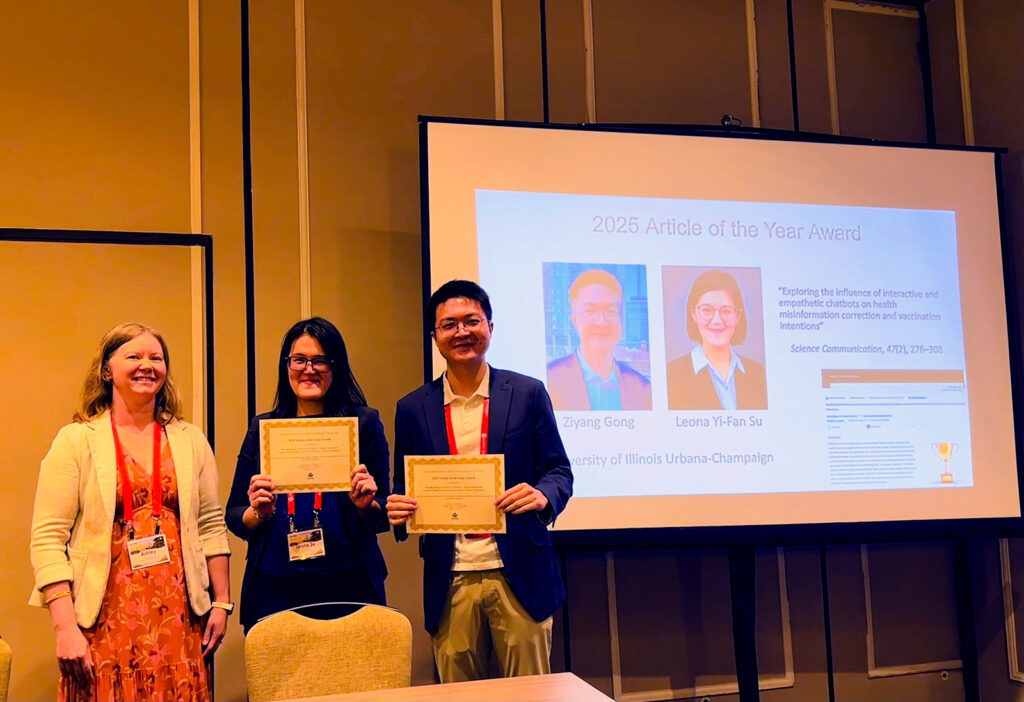
Article of the Year winners
Su and Gong received Article of the Year Award in the Communicating Science, Health, Environment and Risk Division.
Gonçalves and Ng received the Second Place Open Competition Award for their paper in the Newspaper and Online News Division.

Scholar-to-Scholar (Poster) Refereed Research Paper Session

Visual Communication Across Digital Contexts

“Visual Metaphor Complexity: Structural, Semantic, and Cognitive Dimensions”

  • Aiman Kazybayeva, ICR doctoral student
  • Kevin Wise

“Measuring Mulodal Nutrition Communication on TikTok: A Computational Framework”

  • Jiaxi Liu, iSchool
  • Leona Yi-Fan Su
  • Rong Deng, MS Advertising student
  • Yijun Lu, iSchool

Consumer Literacy & Persuasion Knowledge

“I Don’t Want Ads, I Just Want Information”: When and How Persuasion Knowledge is Activated During Product Search on AI and Online Platforms”

  • Boram Cho, MS Advertising student
  • Jiyeon Chang, ICR doctoral student
  • Michelle Nelson
  • Jiayi (Joy) Wang, (BA ’24, LAS; MS ’26, advertising)

“AI-Generated Images in Food Advertising: An Equity and Construal-Level Perspective on Disclosure and Appeal Effects”

Persuasion Message Design

“Exploring Contemporary Rich Media: Sound Off Viewing as a Double-Sided Coin for Advertising”

  • Aiman Kazybayeva, ICR doctoral student
  • Michelle Nelson
  • Haochen Ji, ICR doctoral student
  • Jiaxi Liu, iSchool
  • Minrui Chen, iSchool
  • Grace Shiyang Li, MS Advertising student
  • Seon Kim, MS Advertising student
  • Reina Deng, MS Advertising student
  • Seo-Young (Selene) Kim, ICR doctoral student
  • Nengi Divine Daminabo, MS Advertising student
  • Qingyang Chen, MS Advertising student
  • Anthea Xiaohua He, ICR doctoral student
  • Rin Xu, MS Advertising student

Communicating Climate: Framing, Narratives & Environmental Risk

“Toward Circular Fashion: A Content Analysis of Fashion Brands’ U.S. Take-Back Programs”

AI in Society: Media Frames, Bias, and Human Connection

“Understanding Attachment to Digital Media Accounts: The Role of Extended Self in Attachment and Digital Hoarding”

AI Transparency, Trust & Strategic Communication

“Legitimizing AI Through Environmental CSR: Effects on Public Attitudes and Intentions”

Media Management, Economics and Entrepreneurship Division

“When Stories Have Faces: The Effects of Narrative Framing and Anthropomorphic Cues on Purchase Intention toward Imperfect Produce”

AI Adoption and Cross-Cultural Perspectives

“AI-Powered Information Seeking on Social Media: A Computational Analysis and Cross-Cultural Comparison on Global Users’ @Grok Behaviors”

  • Anna Yan Liu, ICR doctoral student
  • Maggie Mengqing Zhang, ICR doctoral student

Award Panel Session

James W. Tankard Jr./AEJMC-Knudson Latin America Prize Book Awards

Moderating/Presiding

2026 AEJMC-Knudson Latin America Prize

The Patina of Distrust: What People Do with Misinformation [The MIT Press, 2025]

Discussant

Research Panel Session

From K-pop to AI: Emerging Perspective

“Too Agreeable to Trust? When and Why Corrective AI Can Be More Persuasive”

  • Seo-Jeong Heo, ICR doctoral student

Refereed Research Paper Session

Digital Platforms, Media Markets, and Political Influence

“For Profits or for Prophets? Journalistic Legitimization of Political Prediction Markets as Predictive Public Opinion”

  • Sakshi Bhalla, ICR doctoral student

Share on social
Study: Shoppable ads get more attention on streaming


Right now, shoppable ads are much more common on social media than in streaming. That means that they’re more unexpected in streaming—a novelty. People may pay more attention to these kinds of ads, but they also may be more wary.

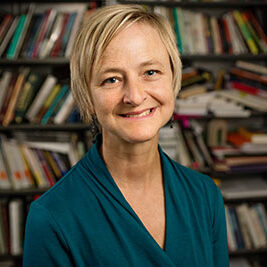
Michelle Nelson

Professor and Head of the Charles H. Sandage Department of Advertising
Michelle Nelson
Professor Michelle Nelson (Photo by L. Brian Stauffer)

A new study from College of Media faculty and students claims that consumers pay more attention to shoppable ads when streaming than when browsing social media—for better or for worse.

The research article, “Why Some Shoppable Ads Persuade: Expectancy Violations and Ad Value Across Streaming TV and Social Media,” was led by ICR doctoral student Alice Ji, with Michelle Nelson, professor and head of the Charles H. Sandage Department of Advertising, and Ruiheng (Rachel) Sun (MS ’25, advertising).

Overall, the study found that consumers respond to shoppable ads “based on how they interpret that unexpectedness, whether the violation is appraised as useful, innovative, or irritating.”

In the UK trade publication MediaCat, Nelson said most ads are invasive unless they offer some value to the consumer.

“Maybe they offer a discount, or maybe they provide valuable information to us. Ads that interrupt our media experience tend to be regarded as most intrusive,” Nelson said.

Read full article

Media faculty, students present research at 2026 International Communication Association conference


Faculty and graduate students from the College of Media co-presented various topics of research at the 76th annual International Communication Association Conference—the largest academic conference for communication scholars—on June 4-8, 2026, in Cape Town, South Africa. The ICA aims to advance the scholarly study of human communication by encouraging and facilitating excellence in academic research worldwide. 

ICA 2026 program cover

This year’s conference theme addressed “Communication and Inequalities in Context.” College of Media presenters included faculty in the Institute of Communications Research and the Charles H. Sandage Department of Advertising; graduate students in the MS advertising program; and doctoral students in the Institute of Communications Research PhD program. 

College of Media research presenters and presentations are listed below in bold.

Pre-Conference: A Causal Inference Institute in Communication Studies
Organizers

  • Shuning Lu, U of Maryland, College Park, USA
  • Ewa Maslowska, Associate Professor, Advertising
  • Harsh Taneja, Associate Professor, Advertising

When Communication Makes the Difference: From Signals to Relational Dynamics
Human-Machine Communication
“Reconsidering Gender: A Computational Examination of Conversational Dynamics between Human and Gendered AI”

  • Weizi Liu, Texas Christian U, USA
  • Haocan Sun, Beijing Normal U, CHINA
  • Mike Yao, Professor, Advertising

Human-Machine Care: Well-Being and Vulnerability
Human-Machine Communication
“Emotionally Vulnerable Subtype of Internet Gaming Disorder: Measuring and Exploring the Pathology of Problematic Generative AI Use”

  • Di Wu, Beijing Normal U, CHINA
  • Haocan Sun, Beijing Normal U, CHINA
  • Weizi Liu, Texas Christian U, USA
  • Guoming Yu, Beijing Normal U, CHINA
  • Mike Yao, Professor, Advertising

Top Papers in Human-Machine Communication
Human-Machine Communication
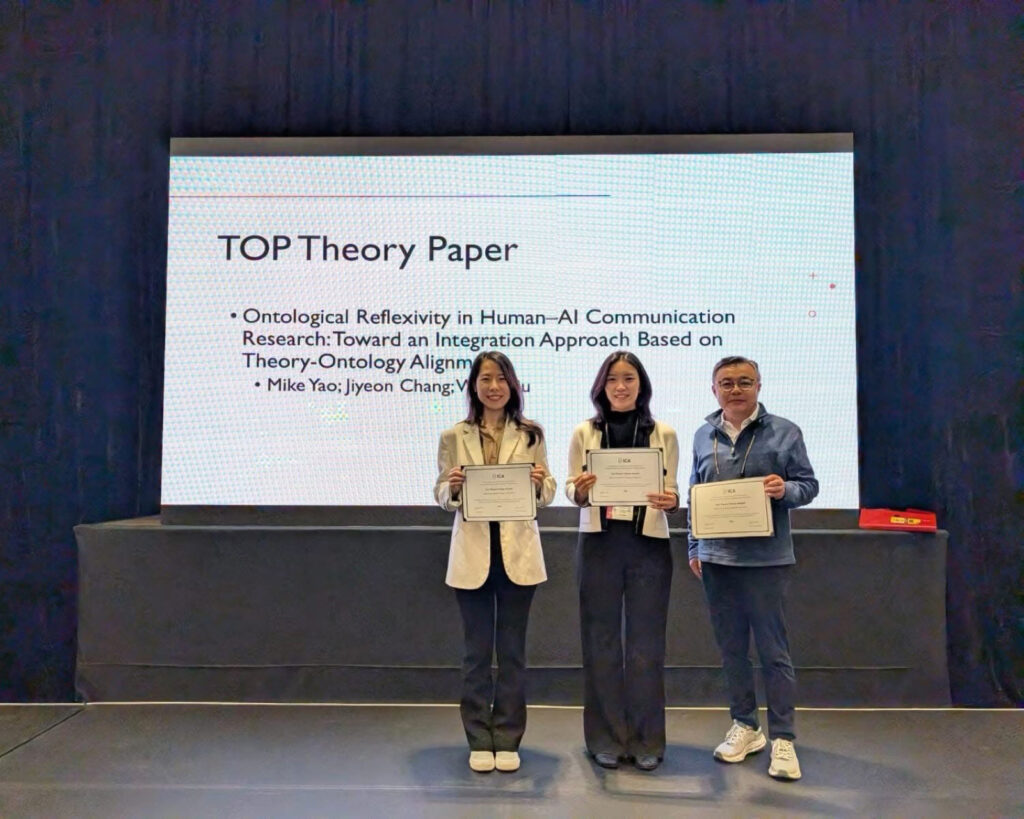
“Ontological Reflexivity in Human–AI Communication Research: Toward an Integration Approach Based on Theory-Ontology Alignment”

  • Mike Yao, Professor, Advertising
  • Jiyeon Chang, Student, ICR
  • Weizi Liu, Texas Christian U, USA
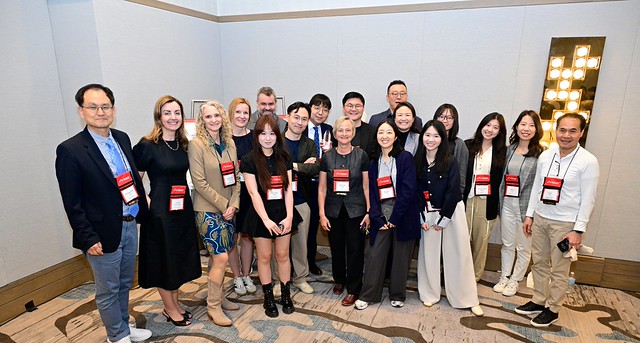
Media faculty and students at ICA

Persuasion and Consumer Behavior
Information Systems
“The Brand Transparency Paradox: Consumer Reactions to Explicit Mentions of Artificial Intelligence”

  • Viviana Zambrano Rodriguez, U of South Carolina, USA
  • Louvins Pierre, Assistant Professor, Advertising

“Exploring How Attitudes toward AI and Disclosure Influence Purchase Intention of AI-Integrated Products through Hedonic, Social, and Epistemic Value”

  • Louvins Pierre, Assistant Professor, Advertising
  • Viviana C. Zambrano Rodriguez, U of South Carolina, USA
  • Yanbo Li, Student, ICR

AI in News Production and Consumption
Information Systems
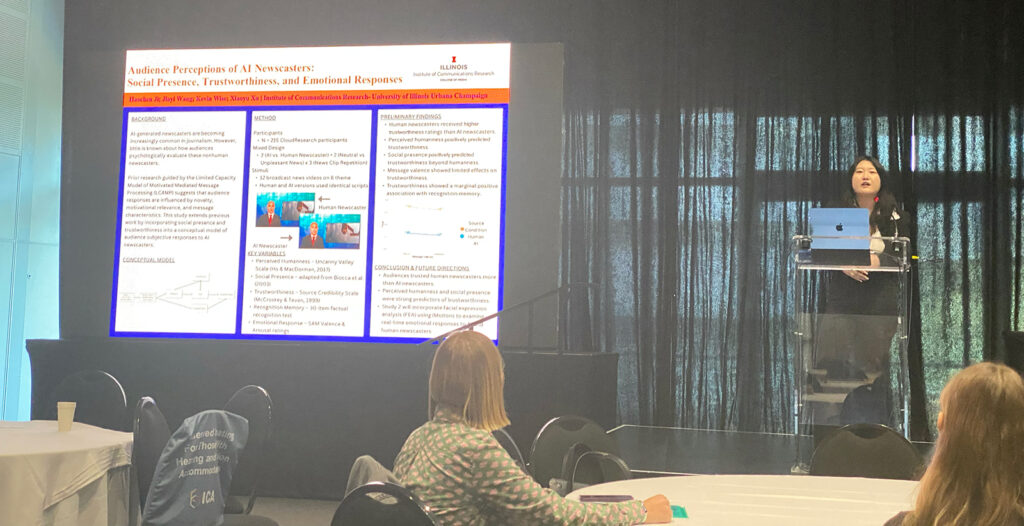
“Audience Perceptions of AI Newscasters: Social Presence, Trust, and Emotional Responses”

  • Haochen Ji, Student, ICR
  • Jiayi Wang, Student, MS Advertising
  • Kevin Wise, Professor, Advertising
  • Xiaoyu Xu, State U of New York at Cortland, USA
Media grad student presenting at ICA

AI Taking Over: Promises and Pitfalls of AI Use in Research, Journalism, and Society
Computational Methods
“When Machines Start Writing: Assessing the Impact of Generative AI on Journalism Labor Markets”

  • Sakshi Bhalla, Student, ICR
  • Jennifer Henrichsen, Washington State U, USA
  • Benjamin Toff, U of Minnesota, USA

Cognitive and Emotional Processing
Information Systems
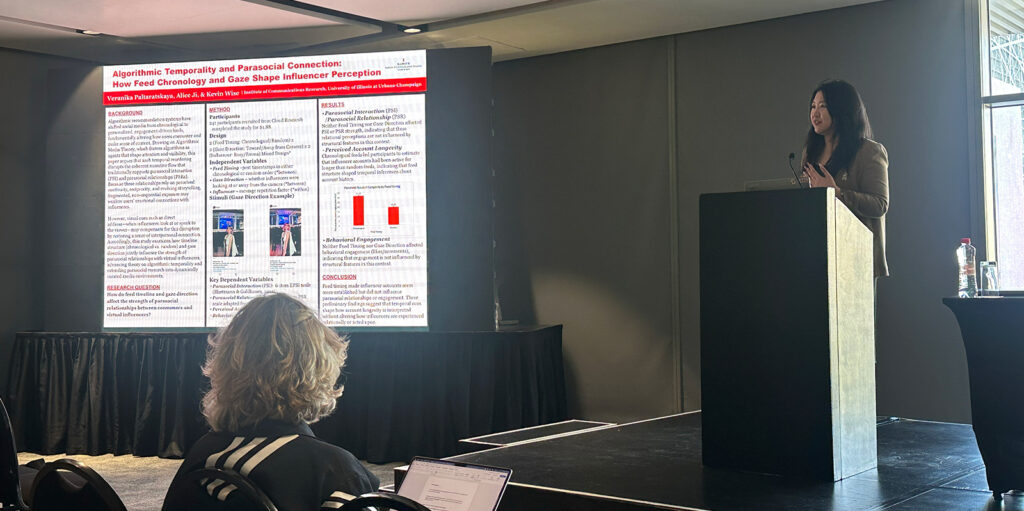
“Algorithmic Temporality and Parasocial Connection: How Feed Chronology and Gaze Shape Influencer Perception”

  • Veranika Paltaratskaya, Student, ICR
  • Alice Ji, Student, ICR
  • Kevin Wise, Professor, Advertising
Media grad student presenting at ICA

Editorial Board Meeting: Journal of Computer-Mediated Communication (JCMC)

  • Chair: Mike Yao, Professor, Advertising

MIAU-steerable AI: Trust, Adoption, Dependency, and Behavioral Regulation in Generative Tech Ecosystems
Communication and Technology
“Social Media Exit and Platform Loyalty: Generational Differences in Platform Abandonment”

  • Margaret Yee Man Ng, Associate Professor, Journalism
  • Ewa Maslowska, Associate Professor, Advertising

Computational Methods Research Escalator
Computational Methods
“When AI Imagines Consumers: A Computational Analysis of Representational Bias in Generative AI Brand Imagery”

  • Haochen Ji, Student, ICR

Co-Constructing Trust in HMC
Human-Machine Communication
Revisiting Trust in the Era of Generative AI: Factorial Structure and Latent Profiles”

  • Haocan Sun, Beijing Normal U, CHINA
  • Weizi Liu, Texas Christian U, USA
  • Di Wu, Beijing Normal U, CHINA
  • Guoming Yu, Beijing Normal U, CHINA       
  • Mike Yao, Professor, Advertising

Growing up with AI: Children’s and Adolescents’ Understanding, Trust, and Risk
Children, Adolescents, and Media
“Children and AI Mind Attribution: Reasoning and Learning with ChatGPT through Social Learning Theory”

  • Boram Cho, Student, MS Advertising
  • Jiyeon Chang, Student, ICR
  • Michelle Nelson, Professor, Advertising

Top Papers Session
Information Systems
“Following the News: Polarization and the Networked Structure of Attention”

  • Sakshi Bhalla, Student, ICR

Perception, Trust, and Bias of Artificial Intelligence
Information Systems
“Emotional and Social Drivers of Artificial Intelligence Pessimism Aversion: Extending the Appraisal Tendency Framework to AI Environments”

  • Heng Zhang, Chongqing U, CHINA
  • Nansong Zhou, Student, ICR
  • Jer Shyuan Ng, Royal Melbourne Institute of Technology, AUSTRALIA
  • Shiyi Zhang, Chongqing U, CHINA

Masculinities, Femininities in Digital Communication
Feminist Scholarship
“Masculine Anxiety and the Making of Racialized Nationalism in China: A Qualitative Investigation Into Sunxiaochuan Bar”

  • Nini Zhou, Student, ICR
  • JungHwan Yang, U of Illinois Urbana-Champaign, USA

(Photos by Boram Cho.)

Advertising and ICR faculty, students, alumni present research at 2026 American Academy of Advertising Conference


Advertising faculty with appointments in the Institute of Communications Research, doctoral students in ICR, graduate students in advertising, and ICR alumni participated in the 2026 annual conference of the American Academy of Advertising, held March 26-29 in Austin, Texas.

Through presentations and panels, they discussed research and ideas related to teaching AI and advertising, ethics, and more. Advertising Professor Chang-Dae Ham serves as the 2026-27 president-elect of AAA and will become AAA’s president next year.

Below is a list of the Illinois participants and their research.

AAA conference group shot

Special Topic Sessions

“Navigating Advertising Academic Leadership During a Time of Change: An Inside Look at Administration Roles in the Age of A.I., Program Changes, and Industry Upheaval”

Speakers: Huan Chen (University of Florida), Joe Phua (Southern Methodist University), Shu-Chuan (Kelly) Chu (DePaul University), Matthew S Eastin (University of Texas at Austin Professor and Head Michelle Nelson, Soojung Kim (University of North Dakota), Fuyuan Shen (Pennsylvania State University), Tom Reichert (University of South Carolina), Heidi Hennick-Kaminski (Michigan State University), Harsha Gangadharbatia (University of North Carolina at Chapel Hill)

“Teaching Privacy in the Age of AI: Preparing Ethical Advertising Professionals”

Speakers: Kristen Sussman (Texas State University), Faren Karimkhan (Syracuse University), Daniela Molta (Syracuse University), Associate Professor Ewa Maslowska, Carina Alderete (Accenture)


Panels

“Foundational Framework in Virtual Influencer Marketing: Bridging Operational Control and Narrative Archetypes in Virtual Influencer Design”

Speakers: ICR doctoral student Seo-Jeong (Rachel) Heo, Professor and Associate Head of Graduate Studies Chang-Dae Ham

“When Robots Cross the Line: Consumer Moral Judgments of Robots’ Harm and Authority Violations”

Speakers: ICR doctoral student Seo-Jeong (Rachel) Heo, Yuhosua Ryoo (University of Minnesota Duluth), ICR alum WooJin Kim (University of Colorado Boulder)

“Scandals, Morality, and Cancel Culture: How Consumers Judge Brands and Influencers”

Speakers: Saima Kazmi (University of Oregon), Assistant Professor Louvins Pierre, Josh Anderson (University of Arizona)

“When Identity Disclosure Matters: The Interplay of Identity Disclosure, Message Type, and Product Type in AI Influencer Advertising on Social Media”

Speakers: ICR doctoral student Se Il Park, Professor and Associate Head of Graduate Studies Chang-Dae Ham

“Beyond the Algorithm: The Double-Edged Impact of Explainable AI”

Speakers: ICR alum WooJin Kim (University of Colorado Boulder), ICR doctoral student Se Il Park, Professor and Associate Head of Graduate Studies Chang-Dae Ham, ICR alum Un Chae Chung (University of Wisconsin Whitewater)

“Peripheral Cues in a Democracy? Using the Elaboration Likelihood Model to Examine Information Cues and Negativity in Millions of Political TV Advertisements”

Speakers: ICR doctoral student Alice Ji and Professor and Head Michelle Nelson

“Zero-Click Persuasion in LLM Advertising: The Role of Response Structures and Regulatory Mode Fit”

Speakers: ICR doctoral student Seo-Jeong (Rachel) Heo, Yuhosua Ryoo (University of Minnesota Duluth)

“Measuring AI-Advertising Aversion: An Initial Scale Development and Empirical Assessment of Its Relationship with AI Anxiety”

Speakers: Assistant Professor Louvins Pierre, Viviana Carolina Zambrano Rodriguez (University of South Carolina), MS advertising student Jiayi (Joy) Wang

“From Black Box to Glass Box: The Moderating Role of AI Literacy on the Political Matching Effect”

Speakers: ICR alum WooJin Kim (University of Colorado Boulder), ICR doctoral student Se Il Park, ICR alum Un Chae Chung (University of Wisconsin Whitewater), ICR alum Seo Yoon Lee (Texas Christian University), ICR doctoral student Jiyeon Chang

“Adaptive or Defensive? How Perceived Regulatory Efficacy Shapes Consumer Coping with Targeted Advertising”

Speakers: Professor and Associate Head of Graduate Studies Chang-Dae Ham, Ilwoo Ju (Purdue University)

“Signaling Transparency or Triggering Skepticism? Exploring How AI Disclosure in Product Advertising Influences Purchase Intention”

Speakers: Assistant Professor Louvins Pierre, Viviana Carolina Zambrano Rodriguez (University of South Carolina), MS advertising student Jiayi (Joy) Wang, ICR doctoral student Nisa Rahman


Moderators

Professor Sela Sar served as moderator for a panel on the theme of “Rethinking Advertising Research”

ICR doctoral student Yujin (Floria) Lee served as moderator for a panel on the theme of “Social Representation in Advertising”

Share on social

Media students to present at 2026 Undergraduate Research Symposium


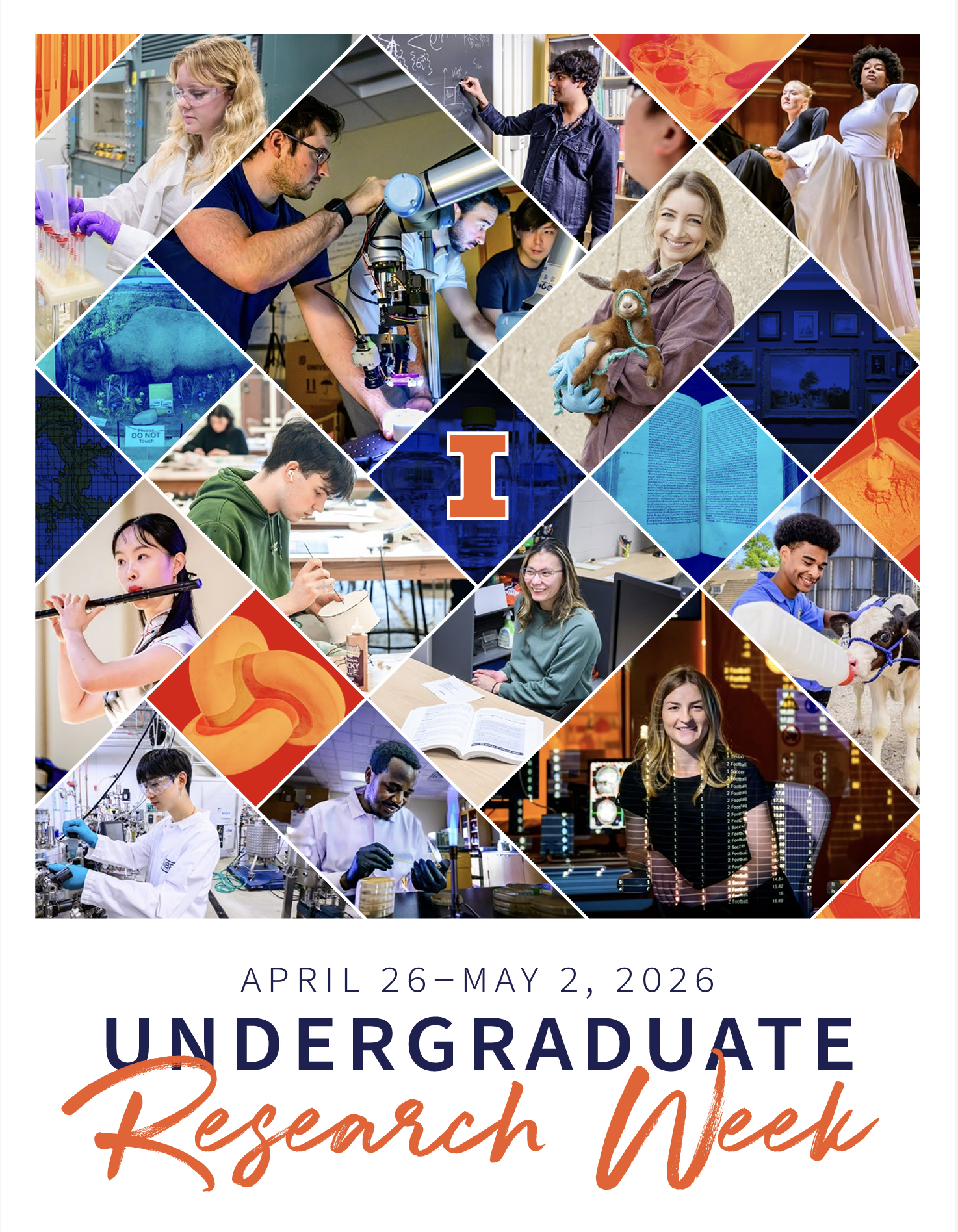
Students from all majors in the College of Media will participate in the annual University of Illinois Undergraduate Research Week, held April 26-May 2.

2026 Undergrad Research Week

Update June 2, 2026: The team of journalism students who presented “They Want to Go Home: Ghana’s Kayayei” received an Outstanding Poster Presentation Award.

***

At the Undergraduate Research Symposium, the signature event held on Thursday, April 30, at the Illini Union, students across campus will present their research.

Below is a list of Media student presentations as well as acknowledgements of Media graduate students and faculty who have mentored students presenting at Undergraduate Research Week.

See the full program.

Oral Presentations

Student Activism, Advocacy & Belonging

Queering the Dorm: Tracing Allen Hall’s LGBTQ History Through Oral History
                Jenny Lin, Senior, Journalism
                (Research Mentor: Siobhan Somerville, Gender & Women’s Studies)

Analyzing Intersectional Discrimination

Film Study on How 1990s Western-centric Narratives Impact the Representation of Chinese Characters
                Yidan Hu, Sophomore, Media & Cinema Studies
                (Research Mentor: Carrie Wilson-Brown, Media & Cinema Studies and Advertising)


Poster Presentations

Social Science & Human Behavior

An Analysis of Marketing Strategies and Best Practices in Agritourism Businesses
                Hailey Kotowski, Senior, Advertising
                (Research Mentor: Renata Endres, Recreation, Sport & Tourism)

Learning & Human Development

From Screen to Shopping Cart: Consumer Responses to “As-Seen-In” Shoppable Ads in Streaming Television
                Abby Wilson, Junior, Advertising
                (Research Mentor: Michelle Nelson, Advertising)

BTW 250 Ideas Expo

Identifying a Refined Mission for the Union Courtyard Café
                Katie Fedorski, Sophomore, Undeclared, EXP
                George Lefebvre, Sophomore, Environmental Social Sciences, ACES
                Case Rosenfeld, Freshman, Business Undeclared, BUS
                Ally Szarek, Sophomore, Advertising

Society, Culture & Social Issues

Creating With Compliance: A Student-Led Usability & Engagement Study
                Pihu Chawra, Sophomore, Industrial Design, FAA
                Thea Abang, Sophomore, Computer Science + Advertising
                Glyce Mitchell, Sophomore, Computer Science + Advertising
                R. Talagadadeevi, Sophomore, Computer Science + Advertising
                (Research Mentor: Marisa Peacock, Advertising)

Cells & Molecules

Effect of Lithium Salt Concentration on Ion Motion in PEO-Based Polymer Electrolytes

                Yueming Gong, Sophomore, Media & Cinema Studies
                (Research Mentors: Varun Nelavoy, Chemical & Biomolecular Engineering & Christy Landes, Chemistry)

Data & Information

An EEG-Based Computational Pipeline for Affective Measurement of Consumer Sentiment
                Alexia Rendon, Senior, Computer Science + Advertising
                Ocean Ng, Sophomore, Computer Science, ENG
                Aditi Cherukuri, Sophomore, Brain & Cognitive Science, LAS
                Zaynab Ahmad, Junior, Neuroscience, LAS
                Bilal Arif, Freshman, Computer Science, ENG
                (Research Mentor: Marisa Peacock, Advertising)

Nature, Life & Environment

Genetic Disorders in Domestic Cats: Inheritance Patterns and Ethical Breeding Implications
                Ziyi Wang, Sophomore, Advertising
                Taoran LI, Freshman, Comparative & World Literature, LAS
                (Research Mentor: Alicia Schneider, Animal Sciences)

Social Issues & Policy

They Want to Go Home: Ghana’s KayayeiOutstanding Poster Presentation Award
                Adelyn Mui, Senior, Journalism
                Prayse Odomes, Senior, Journalism
                Samuel Rink, Junior, Journalism
                Samuel Yohnka, Junior, Journalism
                Kaitlyn Devitt, Senior, Journalism
                (Research Mentors: Alison Davis, Journalism & Charles “Stretch” Ledford, Journalism)

Social Science & Human Behavior

Algorithmic Temporality and Parasocial Connection in Influencers
                Cody Drake, Junior, Advertising
                (Research Mentor: Veranika Paltaratskaya, Institute of Communications Research)

Food Systems

Bridging Research and Public Understanding: Inclusive Digital Engagement for Agrifood and Climate Data
                Ektarit Nophaket, Sophomore, Computer Science + Advertising
                Christina Chen, Senior, Advertising
                Zhuoyi Wu, Senior, Advertising
                (Research Mentor: Marisa Peacock, Advertising)


Undergraduate Research Apprenticeship Program 2026 Cohort

The Undergraduate Research Apprenticeship Program offers undergrads with little or no research experience the opportunity to work with graduate students and post-doctoral scholars on their research projects, explore the culture and process of research, and build on their existing abilities within a community of scholars. Running each Spring semester, the program consists of a one-on-one research experience with their research mentor, and the Introduction to Research course, designed to complement the research mentoring experience, orienting undergraduate mentees to broader topics in the research process.

  • Thea Abang, Freshman, CS + Advertising
    (Research Mentor: Marisa Peacock, Design for Responsible Innovation)
  • Cody Drake, Junior, Advertising, and Sustainable Design, FAA
    (Research Mentor: Veranika Paltaratskaya, Institute of Communications Research)

Media Research Mentors

Science & Technology | 12:15 – 1:30 PM, Illini Rooms ABC & South Lounge

Creating an Inclusive IT Learning Space: Understanding Media Literacy and Technology Access for Retired Older Adults
                Maaike Niekerk, Senior, English, LAS
                (Research Mentor: Stephanie Craft, Journalism)

Student Activism, Advocacy & Belonging | 3:45 – 5:00 PM, Room 213

The Impermanence Problem: Building Durable Student Advocacy at the University of Illinois
                Hunter Farnham, Senior, CS + Economics, LAS
                (Research Mentor: Matthew Ehrlich, Journalism)

Social Science & Human Behavior | 3:45 – 5:00 PM, Ballroom (2nd Floor)

Mindless Scrolling, Cognitive Control, and Psychological Well-Being: Correlational Evidence from a Stroop-Based Study
                Pushti Vora, Senior, Brain & Cognitive Science, LAS
                (Research Mentor: Kevin Wise, Advertising)

Share on social

Media literacy research and engagement initiatives address societal challenges


Faculty and graduate students across the College of Media are pursuing a range of activities aimed at understanding challenges to media literacy and developing interventions to improve it.

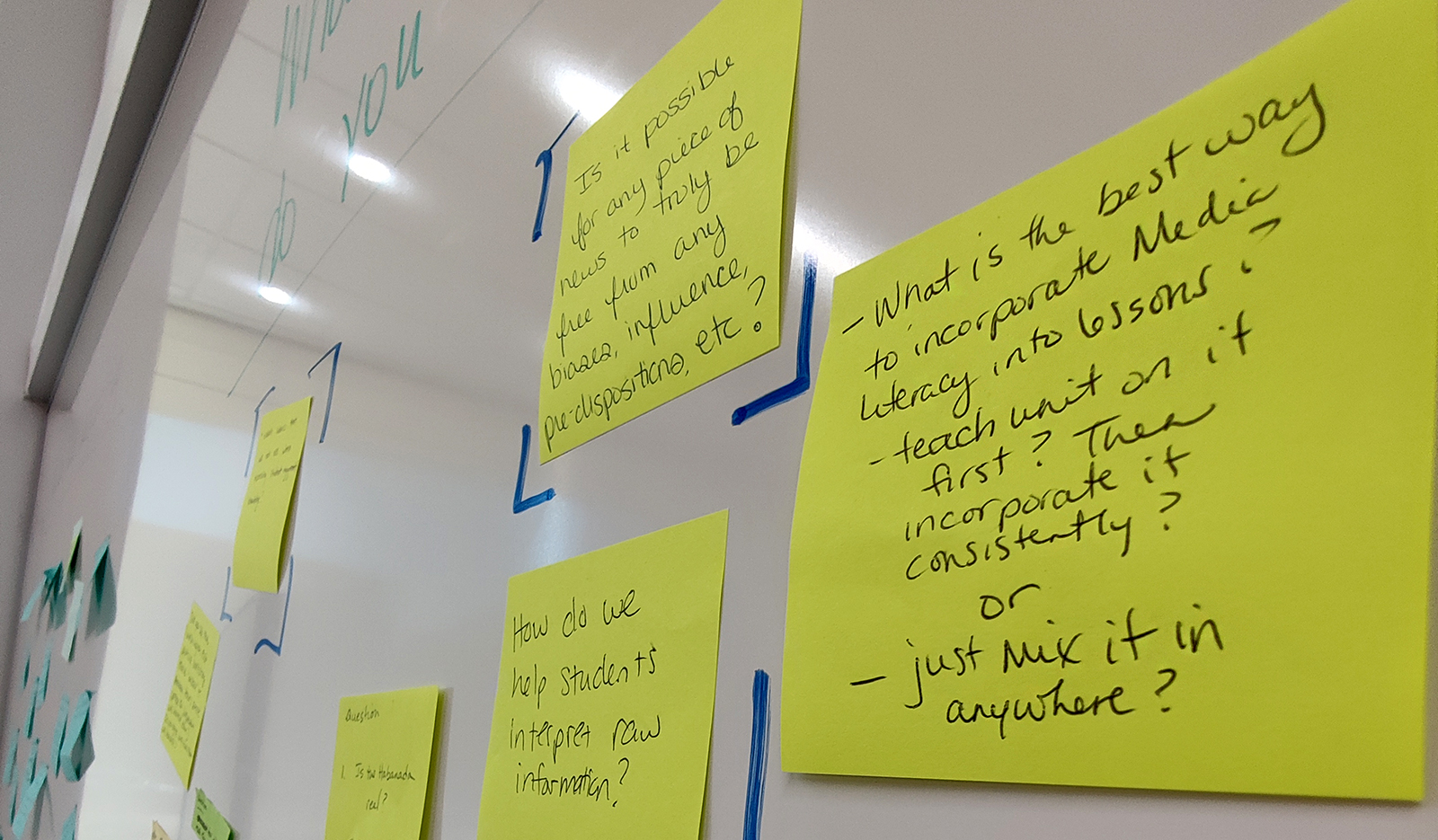
Post-Its from IMEDIA workshop

Recent activities include:

A team including Michelle Nelson, professor of advertising, Amanda Ciafone, associate professor of media and cinema studies, Stephanie Craft, professor of journalism, ICR doctoral student Gillian Paxton, and undergraduate student Maaike Niekerk, is investigating older adults’ media use, media literacy, and the role of media in fostering social connection. The research seeks to understand how older adults use media across a broad range of platforms and tools, including generative AI, and the challenges they face in doing so. The aim is to explore how improving media literacy may help them better navigate the media environment to meet their social and information needs. The study involves interviews with those who offer help and instruction regarding media and technology use through senior centers, public libraries, park districts and the like, and focus groups with older adults. This project is funded by a College of Media seed grant.

Professor Amanda Ciafone presenting at IMEDIA workshop
Amanda Ciafone, associate professor of media and cinema studies, presents at a workshop hosted by IMEDIA.

Related to this project, Ciafone was awarded funding to organize media and digital literacy workshops with European scholars and advocates to advance research, education, and transatlantic dialogue on older age and media literacy under the Jean Monnet Center of Excellence grant awarded to the European Union Center at the University of Illinois Urbana-Champaign. Ciafone said Europe has more rapid “demographic aging,” where a population’s average age increases, than the United States and robust models for media literacy policy and education.

As part of its mission to bolster research in media literacy, the College of Media hosts a regular gathering of faculty across campus to discuss research in media literacy across disciplines and to identify potential opportunities for collaboration. These conversations have so far included faculty in the College of Fine & Applied Arts, University Library, School of Information Sciences, College of Education, and College of Liberal Arts & Sciences.

The Initiative for Media Education Inquiry and Action, a collaboration between the College of Media and College of Education, is developing a media literacy micro-credential for teachers. IMEDIA was created in 2021 to help teachers in Illinois fulfill the mandate of a state law requiring media literacy instruction in public high schools. IMEDIA has offered in-person workshops for teachers to help them incorporate media literacy into their current teaching. The aim of the micro-credential is to broaden the reach of workshops by making the instruction and resources available online in a way that also offers teachers the opportunity to add a media literacy credential to their licenses.

A research study conducted by Nelson, ICR doctoral student Sakshi Bhalla, and Michael Spikes, co-founder of the Illinois Media Literacy Coalition, emerged from IMEDIA’s teacher workshops. The study, which included interviews with 20 educators from across the state of Illinois about the nature and challenges of media literacy education in their schools, found several digital divides that undermine the efficacy of state-mandated media literacy instruction in Illinois high schools. Their findings were published in the Journal of Media Literacy Education.

IMEDIA also is updating its eText, MEdia Matters, which is currently used in a variety of introductory undergraduate courses. The text will be a key resource for teachers pursuing the micro-credential and will be freely available for use in their classrooms.

Craft is part of a team comprising faculty from five universities engaged in a long-term research initiative to build a model of news literacy behavior that will inform efforts to increase people’s resistance to misinformation. The team has developed a widely used measure of news literacy knowledge and most recently has been investigating how greater news literacy knowledge translates into better news consumption behaviors reflecting that greater knowledge. The most recent study was presented in August at the annual meeting of the Association for Education in Journalism and Mass Communication.   

Share on social
Mandatory media literacy education in Illinois schools impaired by digital divides


Teachers and high school students live in vastly different media worlds, and that’s one of several digital divides that undermine the efficacy of state-mandated media literacy instruction in Illinois high schools, a recent study suggests.

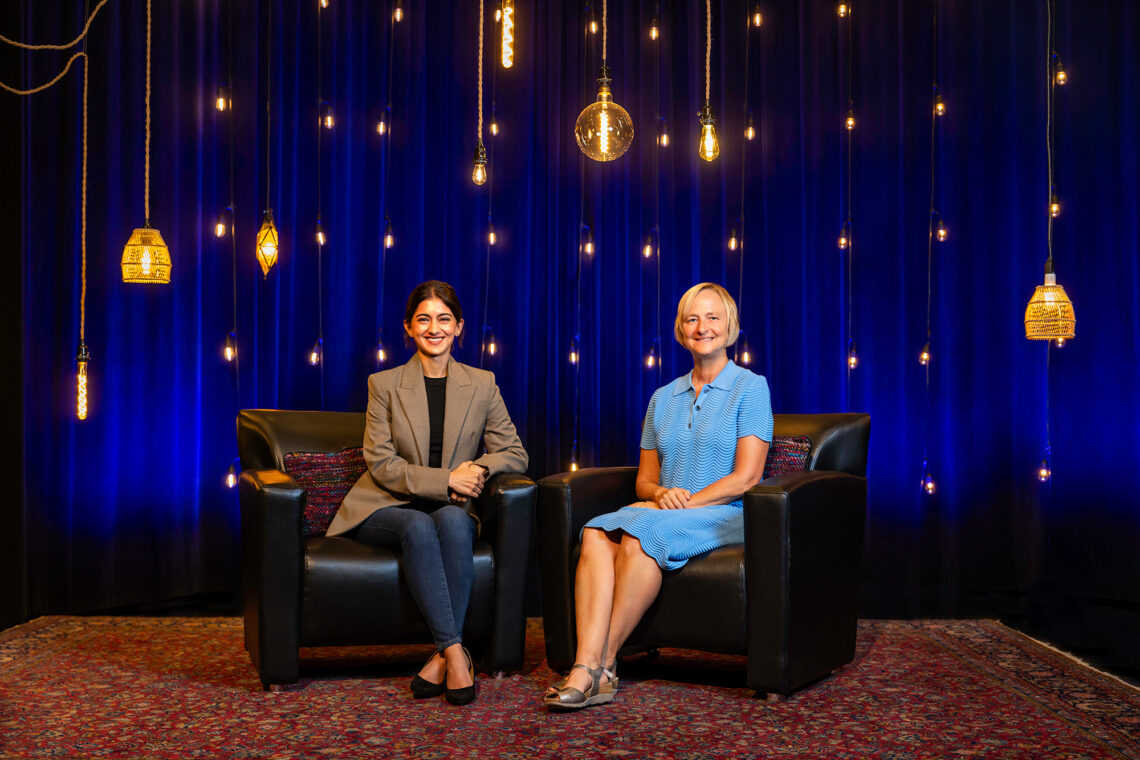
Sakshi Bhalla and Michelle Nelson
Professor and head of Advertising Michelle Nelson (right) and ICR doctoral student Sakshi Bhalla conducted a study that explored the state of Illinois’ mandate on media literacy instruction for high school students.

The researchersInstitute of Communications Research doctoral student Sakshi Bhalla and Michelle Nelson, professor and head of advertising, both of the University of Illinois Urbana-Champaign; and Michael A. Spikes, director of the Teach for Chicago Journalism Program at Northwestern Universityinterviewed 20 educators from across the state of Illinois about the nature and challenges of media literacy education in their schools. The findings, published in the Journal of Media Literacy Education, indicate that these efforts are undermined by differing media choices, skills, and perceptions of media literacy, as well as socioeconomic and political disparities.

Under a recent Illinois law, Public Act 102-0055, public high schools are required to provide at least one unit of media literacy instruction. However, a significant hurdle to effective instruction is the digital divide between the media experiences of teacherswhose media experiences are based on legacy media such as television and social media platforms with less relevance to youths, such as Facebookand those of their students, whose worlds revolve around digital and social platforms such as TikTok and Snapchat, the researchers said.  

“We discovered that there are a lot of differences in how teachers and students access the media, whether it is in terms of the platforms or more structural determinants such as teachers getting news from mainstream news media, for example, and students getting news from TikTok or partisan commentators on YouTube,” said Bhalla, the first author of the paper. “To foster meaningful media literacy, we must consider the role of students’ lived experiences, while extending lessons on media access, evaluation, and creation across a stratified population.”

Recruited from different regions of Illinois, the educators in the study represented a diverse group in terms of school size, socioeconomic profiles, and participants’ disciplines, which included art, English, and library sciences. Participants were interviewed about their awareness of the Illinois law, their understanding of the aptitudes that constitute media literacy, the challenges of teaching the subject in their schools’ settings, and the resources they need to support instruction, Nelson said.

Because the state mandate was passed without providing resources or much training, some teachers felt constrained because they did not want to navigate into political waters, and they were left wondering what to do.

The Illinois law, which took effect at the beginning of 2022-23 school year, defines media literacy as “the ability to access, analyze, evaluate, create, and communicate using a variety of objective forms, including print, visual, audio, interactive, and digital texts.”

However, the researchers said that this definition of media literacy presumes a single, shared media experience that is no longer accurate, and “the idiosyncrasies of unique media useparticularly in social and digital mediamean there may be no ‘common ground’ upon which to analyze, evaluate, or create.”

Accordingly, some teachers said they were unfamiliar with the platforms used by their students and relied on their pupils to teach them how to use these technologies, while others struggled to respond when students mentioned media or commentators they used for news and information.

Nearly half of those in the study worked in schools where at least 40% of the students were low income, and the researchers said that students’ socioeconomic profiles determine whether students are taught basic functional skills or higher-level analytical skills. In low-income schools, instruction focused on building functional skills such as keyboarding and other technical proficiencies associated with jobs, whereas teachers in more affluent school districts said that their curricula focused on higher-level skills such as critical analysis of the media landscape and assessing media’s credibility and accuracy.

With few resources for planning course content, some teachers based instruction on current events, with students discussing controversial issues such as gun violence and the war in Ukraine.

“Because the state mandate was passed without providing resources or much training, some teachers felt constrained because they did not want to navigate into political waters, and they were left wondering what to do,” Nelson said. Teachers grappled with maintaining neutrality during class discussions, which they said were often “hijacked” by students’ emotional responses to particular issues based on the types and political leanings of the media they consumed, along with those of the students’ parents and the broader community.

“Students are discovering themselves through different political ideologies. And teachers found students to be a lot more political following the 2016 presidential election, issues surrounding COVID-19, and movements such as Black Lives Matter and Blue Lives Matter, and how all of these things were entering the world of emerging adults,” Bhalla said.

But when teachers pointed out fallacious information in the media or pointed out credible sources to correct misinformation, they said their pupils perceived them as biased or responded in ways that indicated they were unconvinced by facts.

“Those in the study also struggled with the complexities of defining right-leaning or left-leaning media and evaluating media bias, because it’s multidimensional and changes with every article, news story, and political event,” Bhalla said.

Despite these many challenges, most of the teachers in the study believed that teaching media literacy and discussing controversial topics in today’s polarized climate are important. However, to be effective, media literacy education in Illinois schools must understand the media world that young people inhabit; provide better resources for them, their teachers, and schools; and provide learning for all students, honing functional skills as well as higher level proficiencies, the researchers said.

The team used their findings to develop media literacy workshops for Illinois teachers during the summers of 2022 and 2023 through the Initiative for Media Education Inquiry and ActionAn initiative of faculty and students in the College of Media and College of Education, IMEDIA supports teachers in integrating media education into their classrooms. “We had participants work in groups to create lesson plans and then share those with other people, so when everybody left, we hoped that they would have at least one lesson that they could implement the following school year,” Nelson said.


Editor’s note:

To reach Michelle Nelson, email nelsonmr@illinois.edu.
To reach Sakshi Bhalla, email sakshib3@illinois.edu.

The paper “Classroom contexts: Teachers talk teaching media literacy” is available online or from the News Bureau.
DOI: 10.23860/JMLE-2025-17-2-3

See original press release.

Share on social

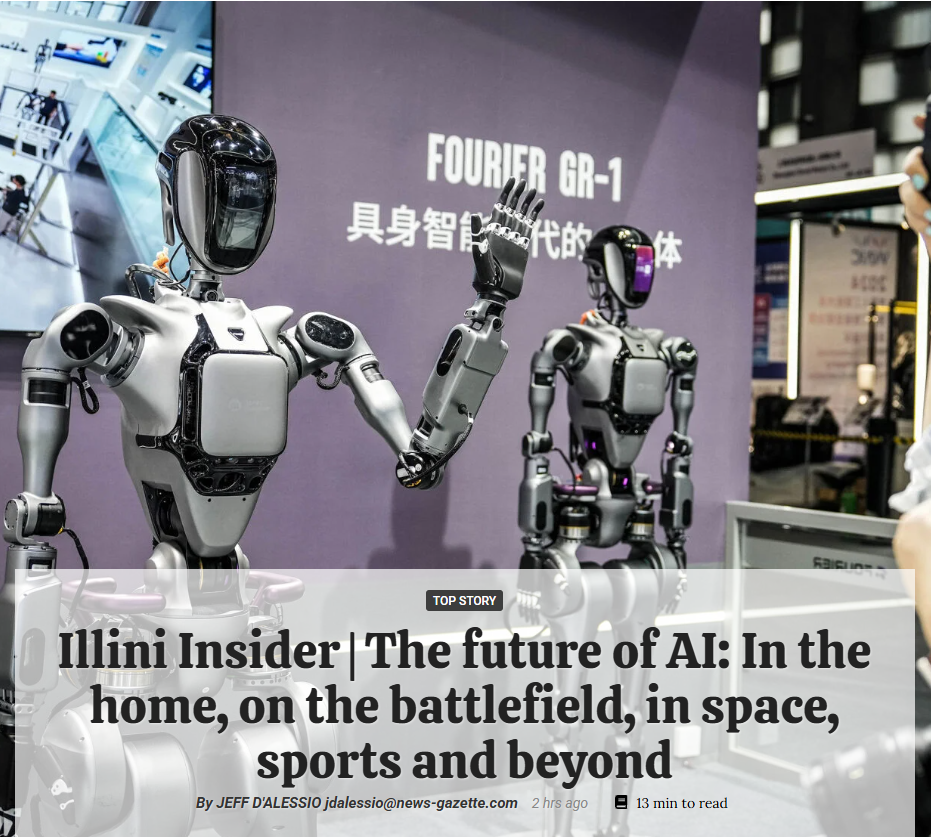
The future of AI: In the home, on the battlefield, in space, sports and beyond


I suspect AI will continue to be used to help political strategists in creating, testing and managing campaigns. This means we’ll probably receive even more personalized ads—I’m hopeful that we, as citizens, are able to know what is AI and what is not, and what is truthful and what is not, so we can make more informed decisions in the voting booth.

Screenshot-News-Gazette-AI-article-with-Michelle-Nelson-1

Ready or not, here it comes—artificial intelligence is everywhere and it’s only going to become more prevalent in the years to come, say those in the know. Michelle Nelson, professor and head of the Charles H. Sandage Department of Advertising, was one of several University of Illinois faculty who shared future predictions of AI in their area of expertise in this News-Gazette article. Nelson, who offered insights about AI and political advertising, said while artificial intelligence is used in many ways across the advertising industry, humans are still needed in the field.

Advertising and ICR faculty, students present research at 2025 American Academy of Advertising Conference


Advertising faculty and graduate students in the MS advertising and ICR doctoral programs, as well as several alumni, participated in the 2025 annual conference of the American Academy of Advertising, held March 6-9 in Pittsburgh, Pennsylvania.

ADV and ICR students at 2025 AAA
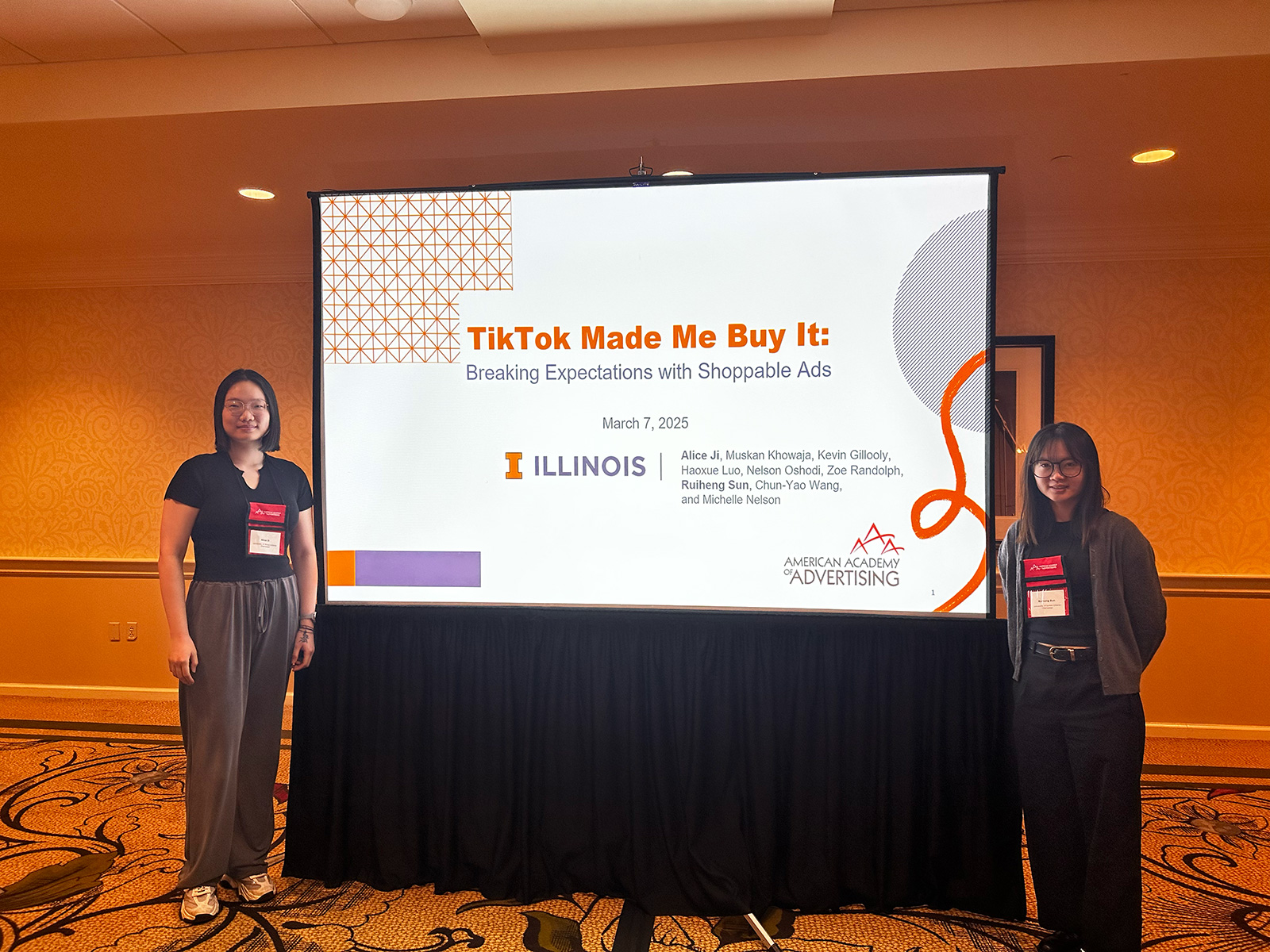
ICR doctoral student Alice Ji and advertising graduate student Ruiheng (Rachel) Sun co-present “TikTok Made Me Buy It” at the 2025 AAA conference.

Faculty and graduate students participated in eight paper presentations and three panels, discussing research and ideas related to teaching AI and advertising, disability, ethics and data, and more.

As vice president of AAA, Chang-Dae Ham, professor of advertising and associate head of graduate studies, organized the research paper reviews and conference program and Kevin Wise, professor of advertising, served as chair of AAA’s graduate student committee.

The full list of Illinois papers and authors included:

“Finessing Realism: Harmonizing Behavioral Realism and Message Framing in Virtual Influencer Advertising – Mind Perception Theory Application”
Seo Jeong Heo, Se Il Park, Floria Yujin Lee

“Does Authenticity Matter? The Impact of Visual Realism and Humanlike Expressions on the Effectiveness of Virtual Influencers”
Jinping Wang (University of Florida), Assistant Professor Guolan Yang

“Navigating Consumer Acceptance of Cultured Meat: An Exploratory Narrative Review of Communication Strategies”
Ziyang Gong, Tianli Chen, Yan (Anna) Liu, Associate Professor Leona Yi-Fan Su, Jingen Xuan

“In Watermark We Trust? Exploring How Consumers Cope with AI Influencer Advertising: Multidimensional Persuasion Knowledge and Construal Level Approach”
Se Il Park, Floria Yujin Lee, Seo Jeong Heo

“TikTok Made Me Buy It: Breaking Expectations with Shoppable Ads”
Alice Ji, Muskan Khowaja, Kevin Gilloly, Haoxue Luo, Nelson Oshodi, Zoe Randolph, Ruiheng Sun, Chun-Yao Wang, Professor and Head Michelle Nelson

“Exploring How Consumer Evaluation of Social Justice Issues Influence Brand Activism Effectiveness”
Assistant Professor Louvins Pierre, Carolyn Lin (University of Connecticut)

“Understanding Consumer Engagement with Vertical Farming Brands on Twitter: An Approach Using Guided Latent Dirichlet Allocation for Topic Modeling”
Junqi Shao, Tianli Chen, Associate Professor Leona Yi-Fan Su

“When Virtual (vs. Human) Celebrity Voice Matters: Interplay between Celebrity Type and Endorsing Message – Construal Level Theory Application”
Floria Yujin Lee, Seo Jeong Heo, Se Il Park

Panels

Teaching Data Ethics in Advertising: Pedagogical Approaches That Meet Industry Demand
Natalie Brown Devlin (University of Texas at Austin), Associate Professor Ewa Maslowska, Daniela Molta (Syracuse University), Associate Professor Harsh Taneja

“Generative AI and the Future of Advertising Creativity: Bridging the Gap Between Academia and Industry”
Weizi Liu (Texas Christian University), Yanyun (Mia) Wang (University of Boulder), Assistant Professor Louvins Pierre, Tripp Westbrook (Firehouse Agency), Linda Groendyke (Digital Insights Labs), Jon Irwin (Liquid Agency)

“Disability DEI in Advertising: Preparing Future Advertising Professionals to Embrace Disability Authentically in Their Work”
Cathy Chan Butler (American Association of Advertising Agencies), Josh Loebner (VML), Professor and Head Michelle Nelson, Edward Timke (Michigan State University), Beth Haller (Towson University), Erin Whiteside (University of Tennessee), Summer Shelton (Limelight Insights by Shugoll), Maria DeMoya (University of Tennessee), Eric Haley (University of Tennessee)

Share on social

College of Media collaborates with University, community partners to offer local children access to new opportunities in education, technology


Steve Hall with Boys & Girls Club
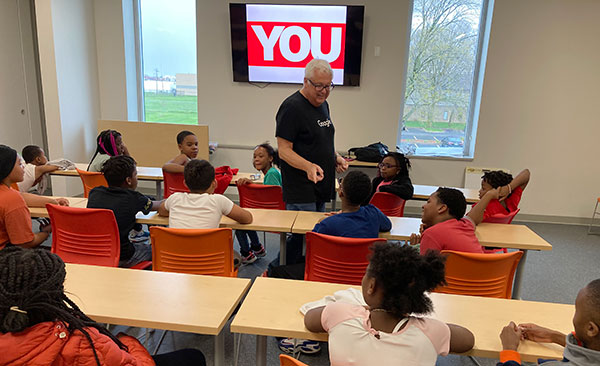
Steve Hall, senior lecturer in advertising, leads Boys & Girls Club students through a workshop on “Advertising for Good.” (Photos by Paige Duncan.)

The College of Media is collaborating with University of Illinois and community partners to present educational workshops to local children this spring as part of a new public engagement effort.

The collaboration between the College of Media and the Center for Social and Behavioral Science focuses on creating hands-on educational content appropriate for 3rd– and 4th-grade students in the Don Moyer Boys & Girls Club of Champaign, which is housed at the Martens Center in Champaign. 

“One of the College of Media’s priorities is to enhance our activities in public engagement and access,” said Jason P. Chambers, associate dean for diversity, equity, and inclusion, and professor of advertising. “Faculty and staff were eager to sign up to share their expertise in fun, engaging ways with schoolchildren.” 

College of Media faculty are leading four programs in April, offering new opportunities in education and technology and helping students understand different media topics.

Boys & Girls Club students

“This first-time collaboration between the University and the Martens Center is not just exciting but a big game changer for community outreach and education, providing a unique opportunity for the University of Illinois to deliver transformative experiences to our community,” said Paige Duncan, community engagement specialist at the Center for Social and Behavioral Science.

Duncan said the College of Media was selected as the pilot module for the CSBS area of programming because their goal is to give elementary school students an introduction to a breadth of science learning opportunities, including different concepts from the social and behavioral sciences.
“We are excited about the College of Media’s programming because it gives children a window into the making of different types of media, which is likely to increase their media literacy. We hope they will become better consumers of media—for example, in terms of judging the veracity of advertisements and movies,” Duncan said.

Steve Hall, senior lecturer in advertising, held the first workshop, about “Advertising for Good.”

“It was a remarkable opportunity to help [the children] learn how they have the ability to positively impact the world with their ideas, creativity, and advertising,” Hall said. “The kids were super energetic, enthusiastic, always asking questions, and full of insights.”

The joint effort between the University units, the Champaign Park District, and the Boys & Girls Club is part of the Chancellor’s Call-To-Action Campus-Community Compact to Accelerate Social Justice

The College of Media workshops include:

Advertising for Good
Steve Hall, senior lecturer in advertising
Students will learn how advertising and creativity can be used for public and social good through the power of storytelling. Plus, a fun, hands-on creative challenge will allow students to generate their own ideas to create a positive impact in their own schools and communities. 

Fly Like Harry Potter: How Green Screens Work
Victor Font, lecturer in media and cinema studies and Susan Muirhead, advertising staff and adjunct faculty
This hands-on workshop teaches students about the green screen process and how this technique is used in films. Students will be able to dress up in costume, pretend to fly on a broomstick, and then watch the editing process to remove the green background creating the final effect. 

Fruit campaigns

Advertising Literacy
Michelle Nelson, professor and head of the Charles H. Sandage Department of Advertising, and Marisa Peacock, lecturer in advertising
This session will provide students with an understanding of the purpose and fun one can have with advertising. Through discussion, brainstorming, and hands-on activities, students will create an ad promoting healthy food products. 

Interviewing Genesis Bryant

Introduction to Journalism and the Role of Reporters
Colleen King, director of the Richard and Leslie Frank Center for Leadership and Innovation in Media and clinical assistant professor in journalism, and Faith Lee, Mark L. Brandt Public Engagement Fellow and a junior in journalism
Following a presentation about what a journalist does, Genesis Bryant, a guard on the Illinois women’s basketball team will join the student group via Zoom for a Q&A. Using a guided worksheet, students will then write a story about the student athlete.

(Photos by Paige Duncan.)

College of Media
119 Gregory Hall
810 S. Wright St.
Urbana, IL 61801
217-333-2350