American Advertising Federation at Illinois boasts largest student chapter in the nation


The American Advertising Federation at Illinois is the largest student chapter in the nation, currently boasting more than 400 members. Caroline Burns, a senior in advertising and president of the AAF at Illinois, knows why.

AAF- 24-25
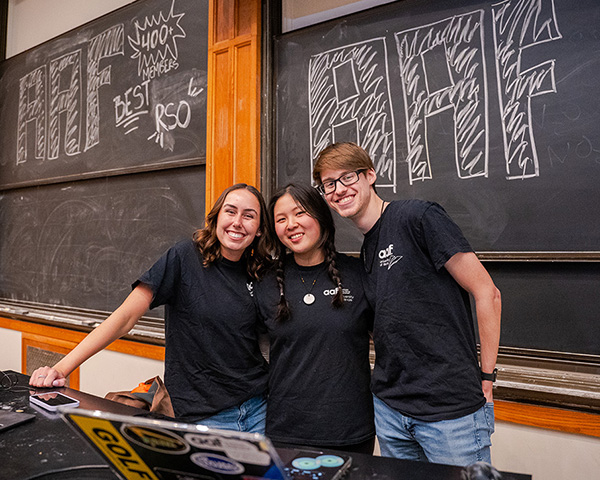
Pictured at left, Caroline Burns, senior in advertising and president of AAF at Illinois, credits the student organization with helping her find success and community. (Photos courtesy of Caroline Burns.)

“I think it’s a combination of we’ve been around for so long at the University of Illinois so there’s the legacy there, but it’s also just the people are so great. I think once you join, you find your tight-knit community and you find your people,” Burns said.

AAF at Illinois, which is one of more than 1,000 registered student organizations on campus, helps to equip members with the tools, skillsets, and experience to make an impact in the advertising field. It’s open to any major but the majority are advertising focused.

There are 13 separate agencies that operate within AAF that specialize in different areas of advertising, including video ad production, consumer insights, and experiential marketing.

While each agency has a different purpose, they all provide members with the opportunity to work with real clients, tour ad agencies, and gain insider knowledge about the industry.

Many of the agencies include student teams partnering with clients, who are typically from the Champaign-Urbana area, and helping them execute an advertising campaign.

Last semester, an AAF agency worked with the Libman cleaning supply company and created a video ad for them. This semester, a team carried out a full-service ad campaign for Atomic Wings, which recently opened on Green Street in Champaign.

AAF has just set me up for so much success—jobs, everything, I owe it all to AAF.

Burns likes to think of AAF as a mini-internship that gives students “a little peek of what your life might be like in the advertising industry.”

Some of the agencies are considered “open,” which means they are designed for any experience level, while others require an application process.

In addition to agency experiences, AAF members participate in competitions, take trips, and plan social events throughout the year.

The annual National Student Advertising Competition will be held in South Bend, Indiana, on April 12, with an Illinois team presenting an ad campaign for AT&T. The Illinois team earned second place at the district level competition in 2023.

Carrie Wilson-Brown, lecturer of media and cinema studies and of advertising, and faculty advisor for the NSAC team, said the competition is an opportunity for students to apply their classroom knowledge and skills in the advertising industry.

In addition, Wilson-Brown said preparing for the competition allows students to gain confidence and find talents and leadership abilities they didn’t know they had.

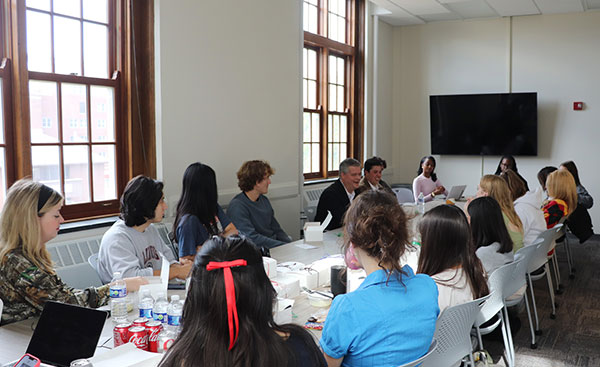
AAF meeting
AAF students at a meeting.

“There is an excitement and comradery that builds throughout the year as the team sees their ideas, plans, and goals take shape into a real-world marketing campaign,” Wilson-Brown said.

Burns thanks AAF for helping her find her first internship during her sophomore year at a networking event held in Chicago. She interned last summer at Pepsi, which led to a job offer after graduation in Boston as a customer account manager.

“AAF has just set me up for so much success— jobs, everything, I owe it all to AAF,” she said.

AAF’s spring registration opened on February 10 for new members. Burns recommends students review the agency descriptions on the website and then try different ones for a few weeks.

“[Students should] see what fits their schedule and their interest and then by the third week, they should have a pretty set idea about what they would want to stick with for the semester, whether that’s one agency, two, or even three,” Burns said.

She also advises prospective members to talk to students in the agencies and those running it. 

“There are so many opportunities to grow and network, not only personally but professionally,” Burns said. “Community is what we’re all about.”

Read more about the AAF at Illinois or follow them on Instagram @aafillinois.

Share on social
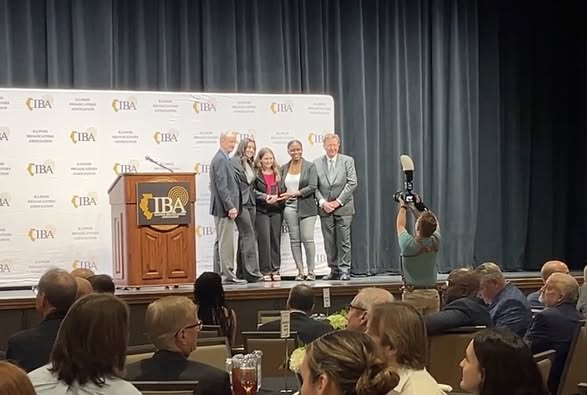
Students win Illinois Broadcasters Association Student Silver Dome Award for Television Photojournalism


Students win IBA Silver Dome award

Students from University of Illinois and Fourah Bay College in Sierra Leone won first place in the 2024 Illinois Broadcasters Association Student Silver Dome Award for Television Photojournalism.

Illinois journalism students Maggie Knutte, Faith Lee, Nour Longi, Piper Pascarella, and Stephanie Wayda, and agricultural communications student Elena Cleary, along with Fourah Bay College broadcast journalism students, were selected for their entry “The Women of Uman Tok Reframe Menstruation in Sierra Leone.”

Learn more at a screening and discussion on Thursday, Feb. 13, 2025, on “Uman Tok: A Discussion on Global Collaboration and Period Poverty.”

Learn more about the IBA awards and the student documentary.

Share on social

Todd Phillips’ ‘The Hangover’ to close 26th annual Ebertfest


Guy Maddin’s Rumours gets set for this year’s lineup

Producer Scott Budnick and Director Guy Maddin to attend this year’s festival

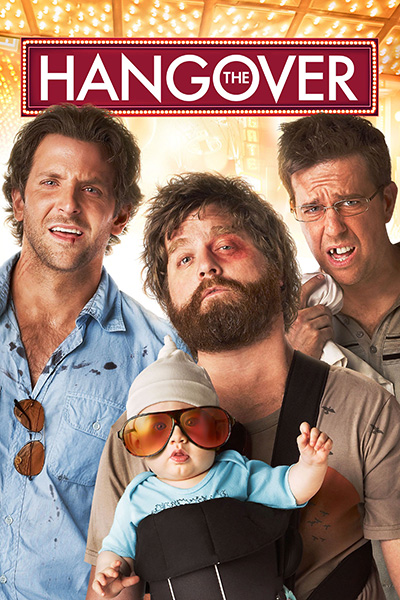
The Hangover poster

CHAMPAIGN, IL (January 15, 2025) — Roger Ebert’s Film Festival, also known as Ebertfest, announced today that Todd Phillips’ The Hangover starring Bradley Cooper, Ed Helms, Zach Galifianakis, Heather Graham, and Justin Bartha will close the 26th annual festival on Saturday, April 26, 2025, at the historic Virginia Theatre in Champaign, IL. There will be a Q&A with producer Scott Budnick immediately following the screening. 

In his 3.5/4 stars review, Roger Ebert called The Hangover “a funny movie, flat out, all the way through…a movie that deserves every letter of its R rating…. What happens in Vegas stays in Vegas, especially after you throw up.” 

In The Hangover, Doug (Justin Bartha) and three friends (Bradley Cooper, Ed Helms, Zach Galifianakis) drive to Las Vegas for a wild and memorable stag party. In fact, when the three groomsmen wake up the next morning, they can’t remember a thing; nor can they find Doug. With little time to spare, the three hazy pals try to retrace their steps and find Doug so they can get him back to Los Angeles in time to walk down the aisle.

“In 2009, a cult phenomenon was born when Scott Budnick, Todd Phillips and the entire team involved with The Hangover unveiled this offbeat comedy classic,” said Chaz Ebert, Co-Founder and Producer of Ebertfest. “This film made me realize the amazing flexibility of all the actors, but especially Bradley Cooper. Shortly after the film debuted in America, I ran into Bradley in Cannes and was surprised to see him speaking perfect French while being interviewed on French television, a far cry from his ‘Hangover’ character. Both Roger and I enjoyed the outrageousness of the movie, and I look forward to hearing the laughter and excitement from the packed house in the Virginia Theatre!”  

The festival is pleased to share that Guy Maddin’s Rumours, released in 2024 and starring Cate Blanchett, will officially screen as part of this year’s lineup. Director Guy Maddin will be returning to the festival following a well-received screening of My Winnipeg at the 2009 event. 

In his review of Rumours, RogerEbert.com’s Brian Tallerico says, “[Maddin is] A filmmaker that Roger admired so much has once again burst his imagination onto the big screen in what will surely be one of the highest-profile projects of his career (Cate Blanchett can do that)…. After all, Roger’s statement is still true: Few filmmakers obviously love movies as much as Guy Maddin.” 

Rumours follows leaders of the world’s wealthiest democracies who gather for the annual G7 Summit to draft a provisional statement regarding an unnamed global crisis. They soon become spectacles of incompetence, contending with increasingly surreal obstacles as night falls in the misty woods and they realize they are suddenly alone.

Rumours poster

“The ‘Rumours’ are true…Guy Maddin’s work of art is officially slated for our incredible Ebertfest audience!” said Festival Director Nate Kohn. “As a festival that not only celebrates the very best in film, but also the creative geniuses that masterfully tell these stories, it is only fitting that Guy Maddin be honored at this year’s event.”  

As previously announced, the 2025 Roger Ebert’s Film Festival will open with a new 70mm print of the Western classic The Searchers (1956), starring John Wayne and Natalie Wood on Wednesday, April 23.

Additional updates to the festival program will be announced in the coming weeks.

Ebertfest passes are currently available to purchase online or by calling the Virginia Theatre box office at 217-356-9063. Individual festival passes to see all films cost $200, which includes reserved seating.

Roger Ebert was a Pulitzer Prize-winning film critic for the Chicago Sun-Times, University of Illinois journalism alumnus, and Urbana native.

Chaz Ebert is also the author of the indie bestseller It’s Time to Give A FECK: Elevating Humanity through Forgiveness, Empathy, Compassion, and Kindness.

Ebertfest is hosted by Chaz Ebert and Nate Kohn, the festival director since the very beginning, in collaboration with the College of Media at the University of Illinois Urbana-Champaign.

For additional information, please visit https://ebertfest.com/ and follow us on social media:

Facebook: https://www.facebook.com/Ebertfest/

Instagram: https://www.instagram.com/ebertfest/ 

To become a supporting Festival Sponsor please contact Molly Cornyn, the Festival Coordinator, at mcornyn2@illinois.edu

###

PRESS CONTACTS:

Molly Cornyn
mcornyn2@illinois.edu
217-333-1590

Lee Meltzer
Lee@LeeMeltzerConsulting.com
551-208-8617

Share on social

Jenny Oyallon-Koloski’s piece makes 2024 best video essays by ‘Sight and Sound’


Why did I choose the most explanatory chapter from Oyallon-Koloski’s videographic book Storytelling in Motion? Because I think that her visualizations of Laban Movement Analysis using the stylized acting of Hollywood musicals should be mandatory viewing for character animators.’

Jenny Oyallon-Koloski

Jenny Oyallon-Koloski, assistant professor of Media & Cinema Studies, had a video essay from her book, Storytelling in Motion: Cinematic Choreography and the Film Musical, featured in Sight and Sound’s best video essays of 2024.

Oyallon-Koloski’s video essay, Seeing Movement in Cinema: An Introduction to Laban Movement Analysis, comes from chapter two of her book, which provides a videographic introduction to Laban Movement Analysis and the taxonomic principles that guide Laban/Bartenieff Movement Studies.

Using examples from Singin’ in the Rain, An American in Paris, Top Hat, Stormy Weather, Gentlemen Prefer Blondes, and Meet Me in St. Louis, Oyallon-Koloski breaks down the core categories of this movement system: Body, Effort, Space, and Shape. She also explains the intersections between elements through specific examples that illustrate how the performers in these films deliberately combine and isolate aspects of figure movement to convey their characters’ intentions.

The annual poll, which gives contributors the chance to share their personal highlights of videographic criticism, included 47 voters from 17 countries, drawn from the varied fields of videographic criticism, including academia, online publication and film festivals.

Film scholar Oswald Iten, who voted to include Oyalllon’s Koloski’s video essay on the list, said it should be considered “mandatory viewing for character animators.”

Watch her video essay:

College of Media spaces for faculty, staff in Gregory Hall undergo renovations


College of Media faculty, staff, and students can see notable changes at Gregory Hall after several major remodeling projects that began in May 2024 have been completed or are scheduled to wrap up this fall semester.

Student workshop in new Greg Hall space

Thanks to a sizeable investment from campus, the college has been able to focus on facility as well as technology improvements, including a new administrative suite for the academic departments and a unit-reservable event space. 

“We are grateful to the Office of the Provost for support in pursuing these projects, which are reflecting of the confidence campus has in our departments and units. These updates will enable us to accelerate our momentum even further,” said Tracy Sulkin, dean of the College of Media.

Facilities & Services staff have completely overhauled the space for the academic department suite (pictured at right), combining a classroom and adjoining office to create three new offices and a large lobby area, adding new walls, floors, lighting, doors, and transom windows that will allow natural light into the lobby.

The new suite will be the administrative home for the college’s three academic departments, with offices for the heads of the Charles H. Sandage Department of Advertising, the Department of Journalism, and the Department of Media & Cinema Studies, and their administrative support.

The College of Media main office in 119 Greg Hall will house the Office of the Dean, the college’s business office, and a small reservable meeting space adjacent to the administrative suite.

Room 225 on the second floor that formerly housed Media Tech—which has been relocated to a set of offices on the east wing of the first floor, convenient to the Media Technology Center on the lower level—has been remodeled to serve as a unit event space for departments and units for talks, faculty meetings, workshops for students, orientation and prospective student events, and more. 

This new event space (pictured at top) is designed to accommodate about 25 people. Additions to the room include fresh paint, new flexible meeting furniture, a large-screen display, Owl webcam, and Apple TV. 

Department suite construction

Conference Rooms 231 (Peterson Room) and 336 (Sandage Room) have also been outfitted with new displays, Owl webcams, and Apple TVs. 

Upgrades to the foyer in the suite of faculty offices on the second floor include removal of cubicles, additional furniture for informal gatherings, new paint, and the creation of a copy room with network and electrical upgrades.

Gregory Hall will see more changes in the summer of 2025 when the lower level will undergo renovations and create a new hybrid, flexible classroom, thanks to a generous gift from Richard and Leslie Frank. Read more about those plans.

Share on social

2025 Roger Ebert’s Film Festival to kick off with ‘The Searchers,’ first-ever Western screened at Ebertfest; passes go on sale November 18


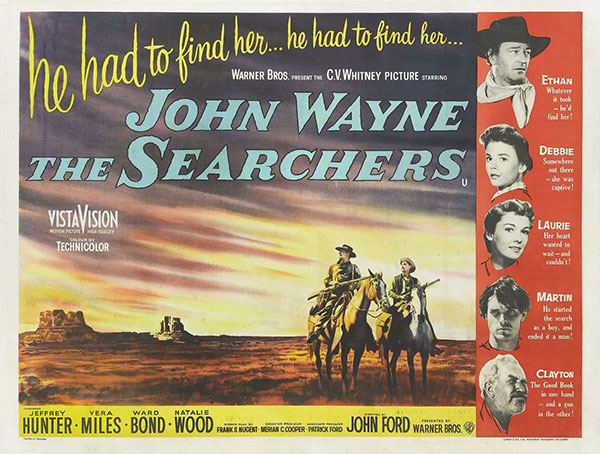
Chaz Ebert and the University of Illinois College of Media announce that the opening night film of the 2025 Roger Ebert’s Film Festival will be a new 70mm print of the Western classic The Searchers (1956)starring John Wayne and Natalie Wood. The four-day festival, named for famed film critic Roger Ebert, will be held Wednesday, April 23, through Saturday, April 26, 2025. Festival passes will go on sale on Monday, Nov. 18.

The Searchers poster

“We are pleased to bring the first Western to our Ebertfest audience, and it just so happens that a film from the Golden Age of Hollywood directed by John Ford was recently restored by Warner Bros. in collaboration with the Film Foundation,” said Chaz Ebert, CEO of the preeminent movie review site Rogerebert.com and cofounder of Ebertfest. “Roger gave the film four stars, but also acknowledged the racial attitudes of the time, asking whether the film sought to endorse them, or dramatize and regret them. We look forward to a vigorous post-screening discussion with film scholars and audiences about representation in film.” 

Passes to see all the films screened at Ebertfest can be purchased through the Virginia Theatre website, or at their box office by calling 217-356-9063 or visiting 203 W. Park Ave. in downtown Champaign. All films will be shown at the historic Virginia Theatre.

Individual festival passes cost $200. VIP Sponsorship packages start at $1,800 and include VIP seating for two, lunch and dinner with the filmmakers, invitations to all festival special parties and events, and much more. 

Roger Ebert was a Pulitzer Prize-winning film critic for the Chicago Sun-Times, University of Illinois journalism alumnus, and Urbana native.

Chaz Ebert is also the author of the indie best seller It’s Time to Give A FECK: Elevating Humanity through Forgiveness, Empathy, Compassion, and Kindness.

John Wayne

Ebertfest is hosted by Chaz Ebert and Nate Kohn, the festival director since the very beginning, in collaboration with the College of Media at the University of Illinois Urbana-Champaign.

Watch for announcements of films and filmmaker guests over the next few months. The full festival program will be announced in March. 

For the latest updates, please visit ebertfest.com and follow Ebertfest on social media:

Roger Ebert’s Film Festival relies on generous gifts from donors and sponsors. Gifts of all sizes are vital to the festival and can be made online through the College of Media by selecting “Roger Ebert’s Film Festival Fund – 11331422.” For additional sponsorship options, visit the Ebertfest website: ebertfest.com/become-sponsor. 


PRESS CONTACT: 

Molly Cornyn, Festival Coordinator, mcornyn2@illinois.edu, 217-333-1590 

Share on social

2025 Roger Ebert’s Film Festival to kick off with ‘The Searchers,’ first-ever Western screened at Ebertfest; passes go on sale November 18


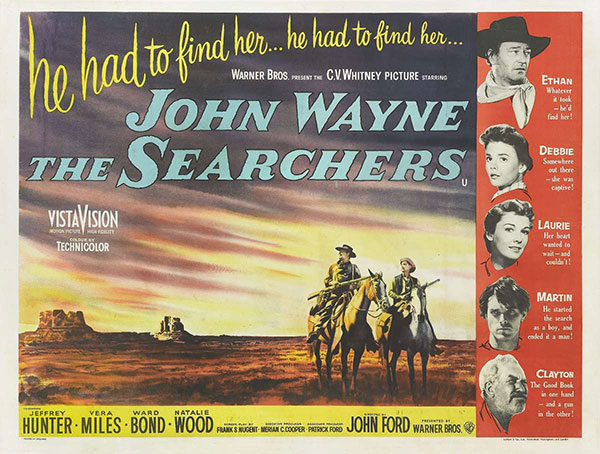
Chaz Ebert and the University of Illinois College of Media announce that the opening night film of the 2025 Roger Ebert’s Film Festival will be a new 70mm print of the Western classic The Searchers (1956)starring John Wayne and Natalie Wood. The four-day festival, named for famed film critic Roger Ebert, will be held Wednesday, April 23, through Saturday, April 26, 2025. Festival passes will go on sale on Monday, Nov. 18.

The Searchers poster

“We are pleased to bring the first Western to our Ebertfest audience, and it just so happens that a film from the Golden Age of Hollywood directed by John Ford was recently restored by Warner Bros. in collaboration with the Film Foundation,” said Chaz Ebert, CEO of the preeminent movie review site Rogerebert.com and cofounder of Ebertfest. “Roger gave the film four stars, but also acknowledged the racial attitudes of the time, asking whether the film sought to endorse them, or dramatize and regret them. We look forward to a vigorous post-screening discussion with film scholars and audiences about representation in film.” 

Passes to see all the films screened at Ebertfest can be purchased through the Virginia Theatre website, or at their box office by calling 217-356-9063 or visiting 203 W. Park Ave. in downtown Champaign. All films will be shown at the historic Virginia Theatre.

Individual festival passes cost $200. VIP Sponsorship packages start at $1,800 and include VIP seating for two, lunch and dinner with the filmmakers, invitations to all festival special parties and events, and much more. 

Roger Ebert was a Pulitzer Prize-winning film critic for the Chicago Sun-Times, University of Illinois journalism alumnus, and Urbana native.

Chaz Ebert is also the author of the indie best seller It’s Time to Give A FECK: Elevating Humanity through Forgiveness, Empathy, Compassion, and Kindness.

Ebertfest is hosted by Chaz Ebert and Nate Kohn, the festival director since the very beginning, in collaboration with the College of Media at the University of Illinois Urbana-Champaign.

Watch for announcements of films and filmmaker guests over the next few months. The full festival program will be announced in March. 

For the latest updates, please visit ebertfest.com and follow Ebertfest on social media:

Roger Ebert’s Film Festival relies on generous gifts from donors and sponsors. Gifts of all sizes are vital to the festival and can be made online through the College of Media by selecting “Roger Ebert’s Film Festival Fund – 11331422.” For additional sponsorship options, visit the Ebertfest website: ebertfest.com/become-sponsor. 


PRESS CONTACT: 

Molly Cornyn, Festival Coordinator, mcornyn2@illinois.edu, 217-333-1590 

Share on social

Excerpts from ‘Bridging Divides’ series: What Does it Mean to Be an Informed Critic?


As part of the College of Media’s three-part webinar series this fall, “Bridging Divides: Conversations on Media and Disagreement,” faculty from the Departments of Advertising, Journalism, and Media & Cinema Studies led Q&As to explore how productive discussions occur across lines of disagreement and difference. 

Jenny Oyallon-Koloski and Michael Phillips

Below, read excerpts from “What Does it Mean to Be an Informed Critic?” Note: Answers have been condensed for length and clarity.

Panelists: 

  • Jenny Oyallon-Koloski, Assistant Professor, Department of Media & Cinema Studies; author of Storytelling in Motion: Cinematic Choreography and the Film Musical
  • Michael Phillips, Chicago Tribune Film Critic; College of Media Ebert Fellows Mentor

 
Oyallon-Koloski: What’s the value of criticism, especially in these polarized times? Why do we need voices of critics, people like yourself, especially ones who are informed about those kind of artistic and cultural works that they write or communicate about?

Phillips: I’ve never stuck to one firm belief or answer on that because it really responds to the times you’re in. I think it’s important to have to acknowledge that every single human being has their own tastes and opinions and prejudices and responses to everything. And I just like to try to write so that your preconceptions and maybe expectations are not set in concrete. They can actually bend and they’re more porous. You can have your mind changed by a film that you didn’t think would be for you, but there are elements of it that are really working. Really in the end I think criticism works best and is most alive when it is acknowledging that you have more than two feelings about something, and they might go in opposite directions. That’s why I look to critics that I respect who try to sort out all the wildly conflicting elements that make anything worth talking about.

Oyallon-Koloski: Do you consider global perspectives, even if you’re targeting local audiences of your media outlet? How does the global perspective or the global audience play into criticism?

Phillips: This is something we all need. We just need to see, we need to hear from more than a certain kind of American filmmaker in our lives. Because then otherwise, we’re just risking a kind of cultural nationalism that does not help us at all.

Oyallon-Koloski: It often feels like what literacy there is today tends to come filtered through a decontextualized bite-sized meme culture. How much does criticism thrive on a culture where media is curated for you in intentional ways? How much does that historical knowledge play into all of this?

Phillips: It’s important. It’s also important to acknowledge that, broadly, everybody worth reading is going to have 10 very different reference shelves in their psyche. I think it’s always worth championing and reintroducing certain classics to people. But the reasons change through the decades. 

I think the critic or the academic or the media studies professor should always be reconsidering what needs to be shown to these people this semester because it will spark the kind of split or debate. Maybe it’s a film that is just begging for a cultural divide to happen literally in the classroom. And then I think it’s the critic or the professor’s role to just simply kind of referee it. And it’s wonderful to experience. It gets more dicey when you’re talking about films that have tremendously controversial content. I also don’t believe in shelving those works because they’re too hot to handle. But boy, oh boy, you really have to figure out how and when and if this is the right context. We forget or whitewash the past at our own peril in every aspect of American life.

As for the memes and the satire, I’d hate to just settle for that because that’s kind of a faint echo of the original.


Read excerpts from the other “Bridging Divides” Q&As:

Engaging with People, Perspectives, and Policies When You Don’t Agree: Lessons from Journalism

Reaching Across the Aisle: Advertising and Messaging in an Age of Polarization

Share on social

Excerpts from ‘Bridging Divides’ series: Reaching Across the Aisle: Advertising and Messaging in an Age of Polarization


As part of the College of Media’s three-part webinar series this fall, “Bridging Divides: Conversations on Media and Disagreement,” faculty from the Departments of Advertising, Journalism, and Media & Cinema Studies led Q&As to explore how productive discussions occur across lines of disagreement and difference.

Jason Chambers and Michael Strautmanis

Below, read excerpts from “Reaching Across the Aisle: Advertising and Messaging in an Age of Polarization.” Note: Answers have been condensed for length and clarity.

Panelists: 

  • Jason P. Chambers, Associate Dean for Diversity, Equity, and Inclusion; Professor, Charles H. Sandage Department of Advertising; author of Advertising Revolutionary: The Life and Work of Tom Burrell
  • Michael Strautmanis (BS ’91, advertising; JD ’94, law), Executive Vice President for External Affairs, Obama Foundation 

 
Chambers: We live in a world in which people either love the AFC or the NFC, you either like Coke or Pepsi, Apple or Samsung, Democrat or Republican. We live in a world of these bifurcations and find your tribe and all of that. So how do you deal with those differing belief systems when you’re trying to establish a message? How do you present a core value or what might be some of those core values that you try to illustrate for people?

Strautmanis: If there is something that is a part of your identity, that is core to who you are, from which your values stem because of your experiences or because of the people that have taught you things, then I think in some ways it’s not [just] okay, it’s necessary to articulate them, to make them known, to make them seen.

But I guess the question is, what’s your goal? These things that divide us—and it could be our political parties, it could be our race, it could be our beliefs—could be used to build a connection, even if the connection comes from a different and opposing place. 

Our identities don’t have to be fixed and that can be an interesting story to tell that can often create common ground as well.

Chambers: I like the way that you put that, that our identities don’t necessarily have to be fixed. Does it sometimes feel as though we hold to things as though they must be a moment of learning for me? But if I accept that then I’m somehow being inauthentic to my tribe or I’m somehow being a traitor to the things that I’ve, at least up until this educational moment, thought that I believed in. So how do you approach those environments where you may be entering a space where you’re thinking [you’re] really going to have to work hard to find the points of common ground for folks, because at least in terms of belief system we may be on such wildly different planes?

Strautmanis: I think for me, when I’ve struggled with that, it’s because I’m afraid. And I might be afraid for good reason. I might be afraid because I’m in an environment where I feel like people are making assumptions about me based upon my identity that will hurt my ability to be successful.

I’d say one of my most basic values is learning and education. A fixed mindset that leaves you having a base—if you can think about it visually like a permeable fence that you can stand in—where you’ve got your people who love you, the people who know you, the people who you can be yourself completely with. The core of who you are. You’ve got that. And I think that really helps you then let things in and out of that fence and be able to shift and change along the way, based upon the different experiences that you’ve had. 

Literally, I can’t imagine this, but if you are mentally in your mind the same person at 50 that you are at 20, I just can’t think of anything more sad than that. That you have not been able to live a life [where you] grow and change and evolve. There is no better place to do that than in college. That’s what college is for—to come to an environment with a bunch of other people who don’t come from where you come from, who don’t look like you, who have different experiences than you have, and be in an environment that the whole point of it is to learn.

Chambers: As one who deals with audiences and creating messaging and dealing with folks of different perspectives, belief systems, politics, and other ways of thinking about messaging, do you have guidance or insight for thinking about some of these social media tools and this awesome power that we now have as individuals, as well as organizations, in a broader society? 

Strautmanis: We had this experience often, particularly in 2008, where part of the strategy to defeat [Barack Obama] politically, was to make people afraid of him, to connect him to things that were scary, and to play on a lot of very old tropes around Black men, very old tropes around Chicago, and try to find ways to have people leap over the intellectual part and go to something very core, like, ‘I need to be afraid.’

So, what we had to do is try to find a way to stimulate the ‘Is that true?’ instinct in people. If you ask yourself, when you see something, you read something, [and wonder] ‘Is that true?’ it kind of gives you the opportunity to do some of your own research.

I think that kind of messaging and strategy that has people connect to their best selves can really work across lines of difference. Our belief and our experience has been that people don’t really like hating everybody and being mad at everyone.

So, we do like to give people an opportunity to say: ‘You are a hopeful, optimistic, capable person who sees the best in others.’ And what we found is most people are like, ‘Yeah, that is me.’


Read excerpts from the other “Bridging Divides” Q&As:

Engaging with People, Perspectives, and Policies When You Don’t Agree: Lessons from Journalism

What Does it Mean to Be an Informed Critic?

Share on social

Excerpts from ‘Bridging Divides’ series: Engaging with People, Perspectives, and Policies When You Don’t Agree: Lessons from Journalism


As part of the College of Media’s three-part webinar series this fall, “Bridging Divides: Conversations on Media and Disagreement,” faculty from the Departments of Advertising, Journalism, and Media & Cinema Studies led Q&As to explore how productive discussions occur across lines of disagreement and difference. 

Leon Dash and Colleen King

Below, read excerpts from “Engaging with People, Perspectives, and Policies When You Don’t Agree: Lessons from Journalism.” Note: Answers have been condensed for length and clarity.

Panelists: 

  • Leon Dash, Professor and Swanlund Chair, Department of Journalism; 1995 Pulitzer Prize Winner for Explanatory Reporting
  • Colleen King, Clinical Assistant Professor, Department of Journalism; Director of the Richard and Leslie Frank Center for Leadership and Innovation in Media; former Executive Producer for MSNBC’s The 11th Hour with Brian Williams  


King: How do you have all your life experiences and not put them in a story?

Dash: You get used to keeping your personal opinion, your personal reactions out of stories. It’s discipline that becomes a part of you and working as a reporter. And, you know, an editor is not going to let your opinion go past him or her. They’re going to stop you and say, ‘Oh, no, no, you’re giving me your opinion here.’

King: News judgment really cannot be totally objective. So how do journalists approach the selection of stories at times of great polarization?

Dash: Probably from their personal interests. News objectivity is a goal, but as I said, it is very difficult to achieve pure objectivity. But you know when you’re being unfair. And so that was, for me, my measure. Fairness or unfairness. [As for] what stories to select to cover, they almost present themselves.

King: How can the press go about rebuilding trust with audience members, especially younger audiences who maybe aren’t as familiar with traditional news media?

Dash: That’s a good question because [I’m] dealing with a freshman class this semester and I’ve been surprised when they tell me they get most of the information from TikTok.

And I really don’t have an answer to that question. I talk to them and I give them a current events quiz. Some of them do quite well on it. The ones that do well on the current events are reading traditional news outlets. Here the students have access as part of their student fees to The New York TimesUSA Today, and Wall Street Journal. And some of them do take advantage of that and read those papers regularly, not daily, and so they’re well up to the mark on current events.

Others follow traditional social media that they have always followed and they’re not really up on current events. So, I really don’t have an answer for that. I would like to see an answer for that. Maybe this is a part of an evolution that we have to go through as a society.

King: What are some of your big takeaways or advice for students in public affairs reporting?

Dash: It’s important to remain calm and not be defensive or offensive. I’m always telling them you have to have a bit of aggression in terms of advocating for the public, the politicians, and with the people who are elected officials. You must always be polite, and professional, but ask the question that needs to be asked.

If it’s a matter of embezzling money, you ask about it. If you know the amount of money that was embezzled, you cite that in your question and it’s public. So always be prepared to do that, no matter what the reaction of the official or the politician is to your question.


Read excerpts from the other “Bridging Divides” Q&As:

What Does it Mean to Be an Informed Critic?

Reaching Across the Aisle: Advertising and Messaging in an Age of Polarization

Share on social

College of Media
119 Gregory Hall
810 S. Wright St.
Urbana, IL 61801
217-333-2350