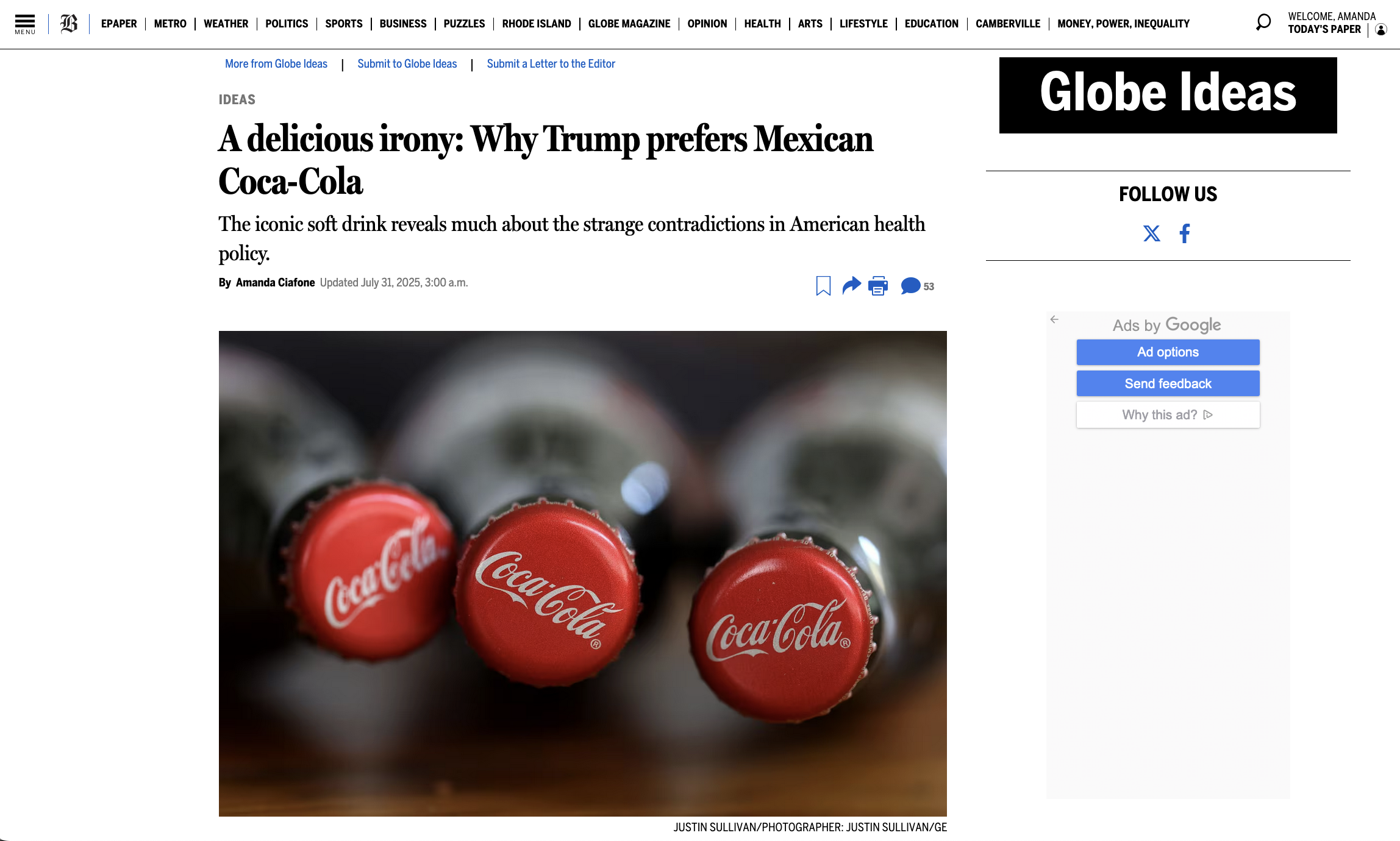
Border walls and tariffs must be high against Mexico, but the Cokes it exports to the United States get a pass. A product beloved by immigrants and cool kids alike, it is known for its real cane sugar and retro glass bottle. And it’s a product that, in its very sweetness, shows that taste is political—that what we consume is shaped by trade policies, subsidies, and the strength of our regulatory institutions.
Amanda Ciafone, Associate Professor of Media and Cinema Studies
Amanda Ciafone, associate professor of media and cinema studies, discusses the strange contradictions in American health policy in a Boston Globe op-ed piece titled “A delicious irony: Why Trump prefers Mexican Coca-Cola.”
“When President Trump recently professed his preference for ‘REAL Cane Sugar in Coke in the United States,’ he may have been remembering the Cokes of his youth. More likely he was thinking of the taste of a ‘Mexican Coke,’ the only version of Coca-Cola sweetened with real sugar, rather than high-fructose corn syrup, that is commercially available in the United States—and it’s imported from Mexico,” Ciafone writes. “It was hard not to marvel at the irony.”
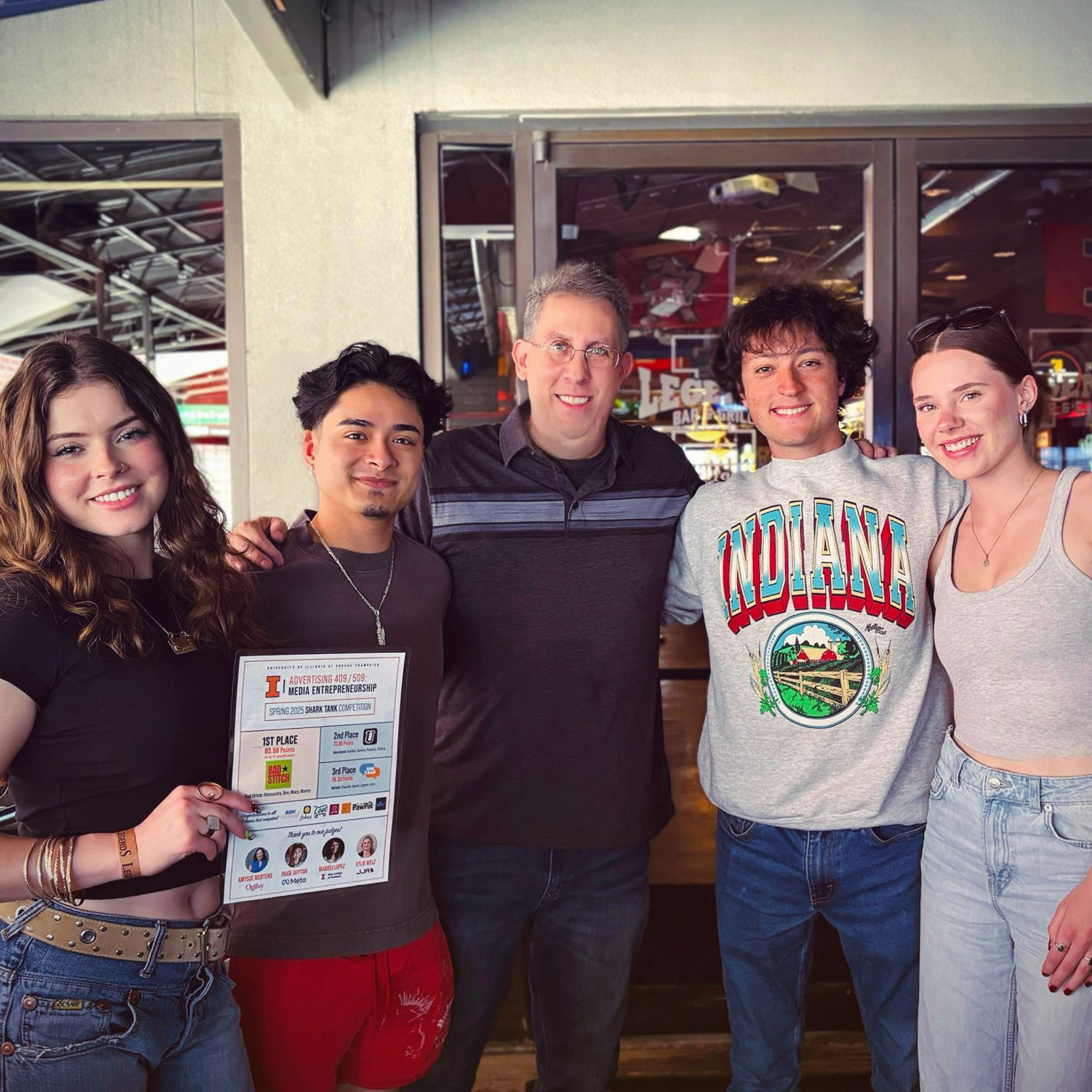
Four students in the Spring 2025 ADV 409: Media Entrepreneurship course won 2025 American Digital Design Awards presented by Graphic Design USA magazine.
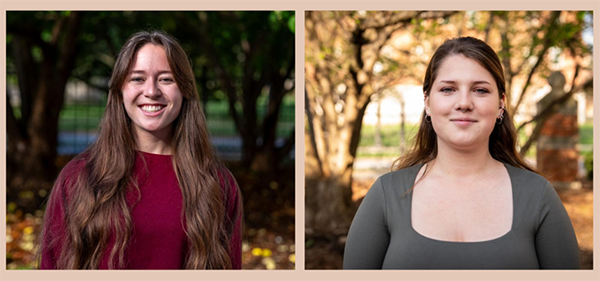
Alessandra Lopez, Macy Miller, Ben Riseman, and Emmanuel Tinajero, all 2025 graduates in advertising, were seniors at the time of the class.
The students created a comprehensive pitch deck for a new mobile app they conceptualized called Bad St!tch, which lets users share the ways they upcycle their clothes. If another user likes an upcycling idea but doesn’t want to or is unable to do it, they can hire the person who published the idea to do it for them, giving designers a way to showcase their work and potentially acquire customers.
Terry Kasdan, adjunct lecturer in advertising who teaches ADV 409, said the team won the award in the student work category for Bad St!tch’s brand identity and user interface, which they developed in class.
“As much as I still love my ‘day job’ as a digital marketer and agency owner, I have to admit, the hours I spend in class with the amazing students I’m so privileged to teach in the Charles H. Sandage Department of Advertising and Technology Entrepreneur Center are truly my favorite parts of the week. Nothing beats seeing them transform ideas into real ventures and gain recognition for their creativity and hard work,” said Kasdan.
Their work was published in GDUSA’s 25th annual Digital Design Awards Showcase, alongside entries by Bank of America, Dell, and Marriott International, Inc. Kasdan said more than 13,000 entries across all categories were submitted this year and just 100 winners were chosen.
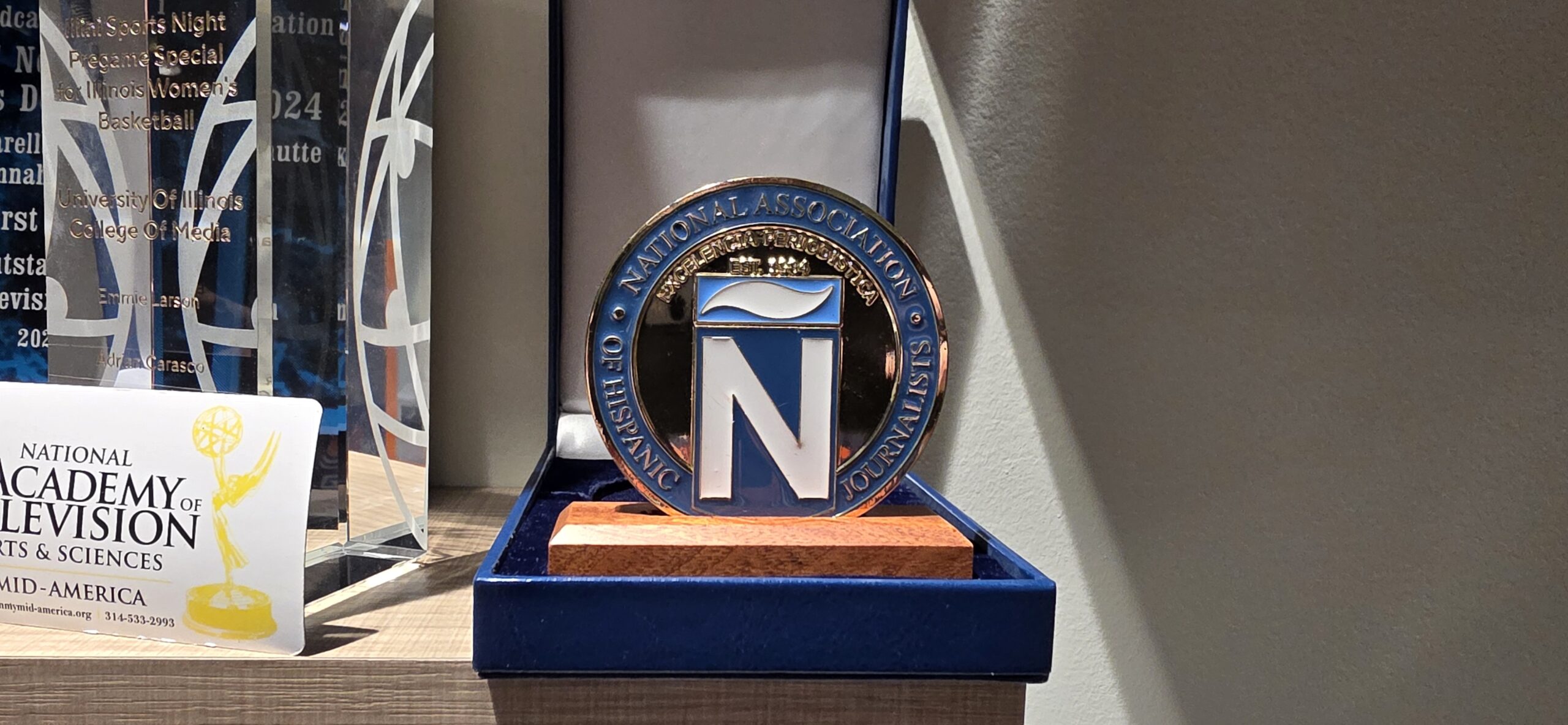
The award-winning segment featured an interview conducted by Emilio Reyes (BS ’25, journalism) with Salvatore Callesano, assistant professor in the Department of Spanish and Portuguese, and highlights the importance and impact of linguistics in Spanish-speaking families.
Reyes also co-produced the piece with Jackie Barba (BS ’25, journalism.) Both Reyes and Barba were seniors at the time of production.
The Ñ Awards honor excellence in categories ranging from investigative journalism and television and video to education reporting and student journalism.
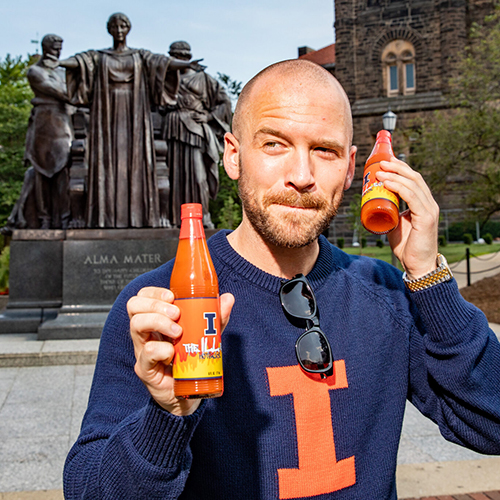
Sean Evans (BS ’08, journalism) was featured in the inaugural TIME100 Creators list: The Most Influential Digital Voices of 2025.
Evans is the host of the Emmy Award-nominated Hot Ones, the YouTube series launched in 2015 in which celebrities are interviewed while eating progressively spicy chicken wings.
The show, which is most known for Evans’s deep research on his guests and thought-provoking questions, has run for 27 seasons so far and includes interviews with a slew of famous celebrities such as Gordon Ramsay, Billie Eilish, Sydney Sweeney, and Key & Peele.
The 2025 TIME100 Creators recognizes those individuals who are shaping the future and changing the way people inform themselves.
I suspect AI will continue to be used to help political strategists in creating, testing and managing campaigns. This means we’ll probably receive even more personalized ads—I’m hopeful that we, as citizens, are able to know what is AI and what is not, and what is truthful and what is not, so we can make more informed decisions in the voting booth.
Michelle Nelson, Professor and Head of the Charles H. Sandage Department of Advertising
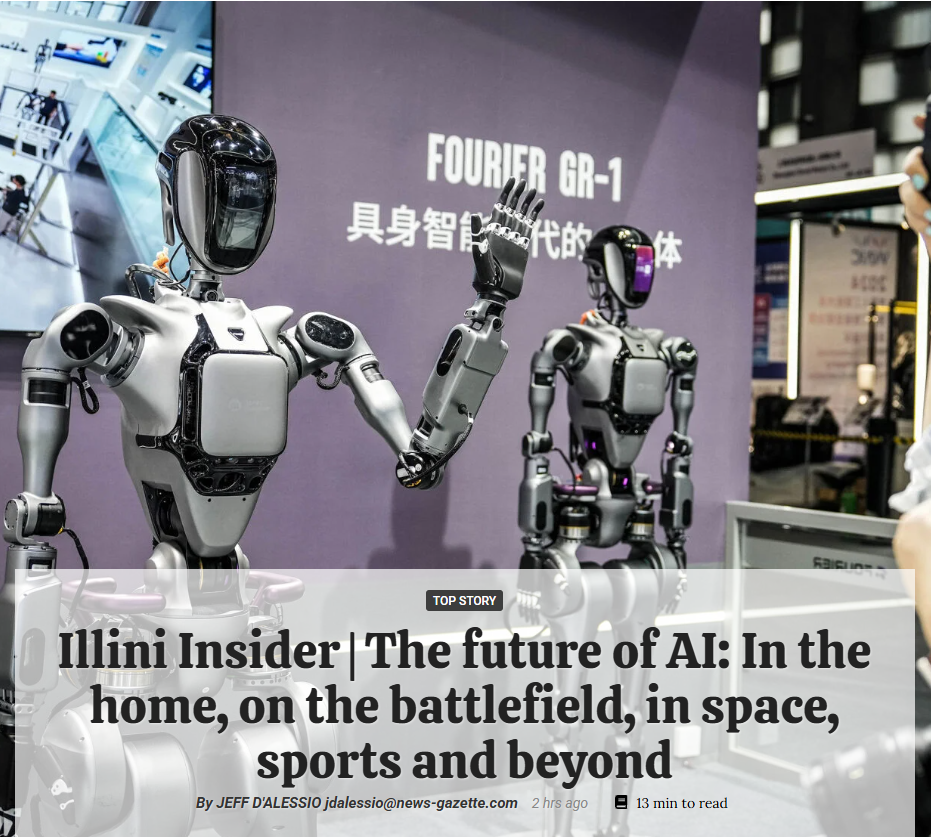
Ready or not, here it comes—artificial intelligence is everywhere and it’s only going to become more prevalent in the years to come, say those in the know. Michelle Nelson, professor and head of the Charles H. Sandage Department of Advertising, was one of several University of Illinois faculty who shared future predictions of AI in their area of expertise in this News-Gazette article. Nelson, who offered insights about AI and political advertising, said while artificial intelligence is used in many ways across the advertising industry, humans are still needed in the field.
Faculty, graduate students, and recent alumni from the College of Media co-presented various topics of research at the 75th annual International Communication Association Conference—the largest academic conference for communication scholars—on June 12-16, 2025, in Denver, Colorado. The ICA aims to advance the scholarly study of human communication by encouraging and facilitating excellence in academic research worldwide.
This year’s conference theme addressed “Disrupting and Consolidating Communication Research.” College of Media presenters included faculty in the Institute of Communications Research and the Charles H. Sandage Department of Advertising; graduate students in the MS advertising program; and doctoral students in the Institute of Communications Research PhD program.
College of Media research presenters and presentations are listed below in bold. (Please see the ICA conference program for complete listings.)
Angharad Valdivia and Supathida Kulpavaropas
Intersectional Experiences of Oppression and Resistance
Chair: Angharad Valdivia, Professor Emerita, Institute of Communications Research
Making Sense of AI Across the Media Industries: Disrupting Communication Research by Bridging Divides
“Enterprise AI: Hidden Ironies for Creators, Marketers, and Media Scholars”
Mike Yao, Professor of Digital Media, Advertising; Director of the Institute of Communications Research
Playing for a Better Life: Serious Games and Gamification
“The Power of Play: The Effectiveness of Serious Game on Depression Stigma”
Nansong Zhou, ICR student
Donghan Fu, Wuhan U, China
Zikun Liu, Wuhan U, China
Feminist Disruptions: Institutionalizing Gender in Communication Studies
“Intersectional FSD, a Utopia Yet to Be Achieved”
Angharad Valdivia, Professor Emerita, Institute of Communications Research
Alice Ji
Media Literacy and Information Environments
“The Effect of Message Fatigue on Visual Attention to, and Elaboration of Mental Health Infographics”
Alice Ji, ICR student
Veranika Paltaratskaya, ICR student
Kevin Wise, Professor of Advertising
Conversations With the Machine (Priming, Tensions, Failure, Impact)
“Competitors or Complements? Examining the Effect of Human-AI Interaction on Human-Human Interaction”
Maggie Zhang, ICR student
Sakshi Bhalla, ICR student
Yanbo Li
Algorithmic Bias and Transparency
Chair: Yanbo Li, ICR student
“Recommendation Transitions on YouTube”
Yanbo Li, ICR student
Sakshi Bhalla, ICR student
Harsh Taneja, Associate Professor of New and Emerging Media, Advertising
Organizers
Kevin Wise (center) with Chen (Crystal) Chen at left, PhD ’23, ICR; and Yanfang Wu at right, Wise’s former student while at Missouri
Consolidating Communication Research Through Causal Inference
Shuning Lu, U of Maryland
Ewa Maslowska, Associate Professor of Advertising
Harsh Taneja, Associate Professor of New and Emerging Media, Advertising
Nathan Walter, Northwestern U
Information Processing and Health Outcomes
“Debunking COVID-19 Falsehoods: A Test of Three Cognitive Predispositions as Buffers for Partisan Influences”
Wei Wang, U of Wisconsin–Madison
Yihan Danny Jia, Boston U
Maria Grabe, Boston U
Kevin Mudavadi, Indiana U Bloomington
Gillian Paxton, ICR student
Jennifer Hwang, U of California, Los Angeles
Jimmy Ochieng, Indiana U Bloomington
MIAO-nipulating Trust: AI Dialogue, Verification, and Cross-Platform Misinformation
“Comparing Conversational Agents’ and Social Media Posts’ Roles in Correcting Health Misinformation”
Ziyang Gong, iSchool
Junqi Shao, iSchool
Nisa Rahman, ICR student
Leona Yi-Fan Su, Associate Professor of Advertising
Personalization and Privacy
“Shh… Is Algorithm Listening?” How Folk Beliefs and Knowledge Shape Our Coping Mechanisms Against Targeted Ads”
Jiyeon Chang, ICR student
Se Il Park, ICR student
Yujin Lee, ICR student
Language and Social Interaction Research Escalator Session
“The Market of Marriage: Matchmaking and the Reinforcement of Gender and Class Boundaries in China”
Anqi Peng, ICR student
Making Sense of the Machine and the Communication with it
Mike Yao, Harsh Taneja, and ICR students
“The Minds Behind the Prompts: How Mental Models Shape User Interaction with Generative AI”
Weizi Liu (MS ’19, advertising; PhD ’24, iSchool)
Mike Yao, Professor of Digital Media, Advertising; Director of the Institute of Communications Research
“From ‘Ghostly Companions’ to ‘Invisible Mechanisms’: Exploring Lay Representations and Performance Expectations of AI Across Task Contexts”
Jiyeon Chang, ICR student
Mike Yao, Professor of Digital Media, Advertising; Director of the Institute of Communications Research
Weizi Liu (MS ’19, advertising; PhD ’24, iSchool)
Popular Media and Culture Research Escalator Session
“Reclaiming Dignity or Reinforcing Misogyny? A Study of Sigma Male Meme Localization in China”
Weiting Du, ICR student
Anna Liu
Promising Student Papers
“Online Ratings in the Social Context: Exploring Consumers’ Critical Data Literacy and Sense-Making of Numeric Information”
Anna Liu, ICR student
Communicating with the Machine: Dynamics and Sophistication
“Testing the Machine-Likeness Hypothesis: How Humans Communicate Like Intelligent Agents”
Hai Liang, Chinese U of Hong Kong, HONG KONG
Longhan Wei, Chinese U of Hong Kong, HONG KONG
Maggie Zhang, ICR student
Jiyuan Qi, Chinese U of Hong Kong, HONG KONG
Anfan Chen, Hong Kong Baptist U, HONG KONG
GATO-lyzing Minds: Digital Advocacy, Social Cues, and Online Persuasion Tactics
“When Humans Anthropomorphize Non-Humans: The Influence of Language Cues and Human Motivation on Anthropomorphism and Persuasion”
WooJin Kim, U of Colorado Boulder
Chang-Dae Ham, Professor of Advertising and Associate Head of Graduate Studies
Supathida Kulpavaropas
Advertising and Consumer Behavior
“Does the Phrase ‘Limited Edition’ Embedded in Ad Matter? The Influence of an Advertising Attribute on Consumer’s Choices and Variety-Seeking Behavior”
Supathida Kulpavaropas (PhD ’17, ICR)
Sela Sar, Professor of Advertising
Xiaowei Zhang (MS ’23, advertising)
Qing Ang (MS ’24, advertising)
Virtual Social Processes
Chair: Sela Sar, Professor of Advertising
“What Makes Fake News More Viral? Emotions as Catalyst for Fake News Virality”
Sela Sar, Professor of Advertising
George Anghelcev, Northwestern U
Qing Ang (MS ’24, advertising)
Xiaowei Zhang (MS ’23, advertising)
Critical (Race) Disruptions and Transformations in Dominant Communication Paradigms
“The Tensions Between Internationalizing and Intersectionalities in the ICA”
Angharad Valdivia, Professor Emerita, Institute of Communications Research
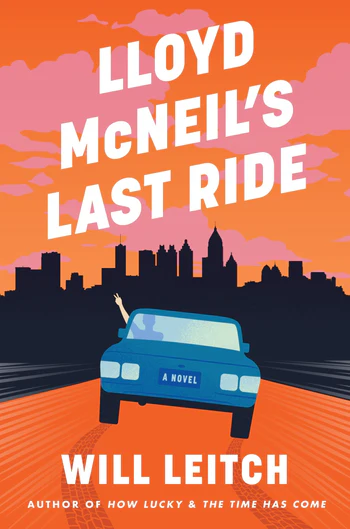
Will Leitch (BS ’98, journalism), author, sportswriter, contributing editor for New York magazine, and podcast co-host, will serve as an executive producer of the movie adaptation of his latest novel Lloyd McNeil’s Last Ride.
Lionsgate purchased the rights to the novel, published by Harper in May, which focuses on Lloyd McNeil, a beat cop in Atlanta who only has months to live. When McNeil learns his teenage son would receive a higher pension if he died in the line of duty, he devises a plan.
“With audiences desperate for more original and authentic stories worthy of the big screen, we couldn’t be more excited to be the home for Will Leitch’s truly original tale following the indelible Lloyd McNeil,” said Erin Westerman, co-president of Lionsgate Motion Picture Group. “Through action, humor, and great pathos, his book serves at once as both a manual and an inspiration for how to live life to the fullest.”
Leitch, also the author of How Lucky (praised by Stephen King as “a fantastic novel”), is a former sports editor for TheDaily Illini and was inducted into the Illini Media Hall of Fame in 2022.
Students took their classwork to broadcast television with the opportunity to create documentaries this spring for Prairie Fire, WILL-TV’s magazine program offering cinematic documentaries, profiles, and performances from downstate Illinois.
“It was so cool to see something we made [included] on a professional show,” said Adrien Reetz, a rising junior in journalism and co-producer of one of the four segments that was chosen to air.
Journalism student Adrien Reetz makes his pitch for a short documentary to the Prairie Fire production team.
“Being able to say we created something that was good enough for Prairie Fire is a pretty big deal. It’s a confidence boost for sure,” Reetz added.
Reetz, along with 11 other students in the “Advanced Documentary Production” course taught by journalism lecturer Alison Davis this spring, pitched story ideas to the Prairie Fire team.
Producers selected the top four stories and then the students self-selected into groups to work on each one. After a final review, the Prairie Fire team decided to air all four segments on May 15.
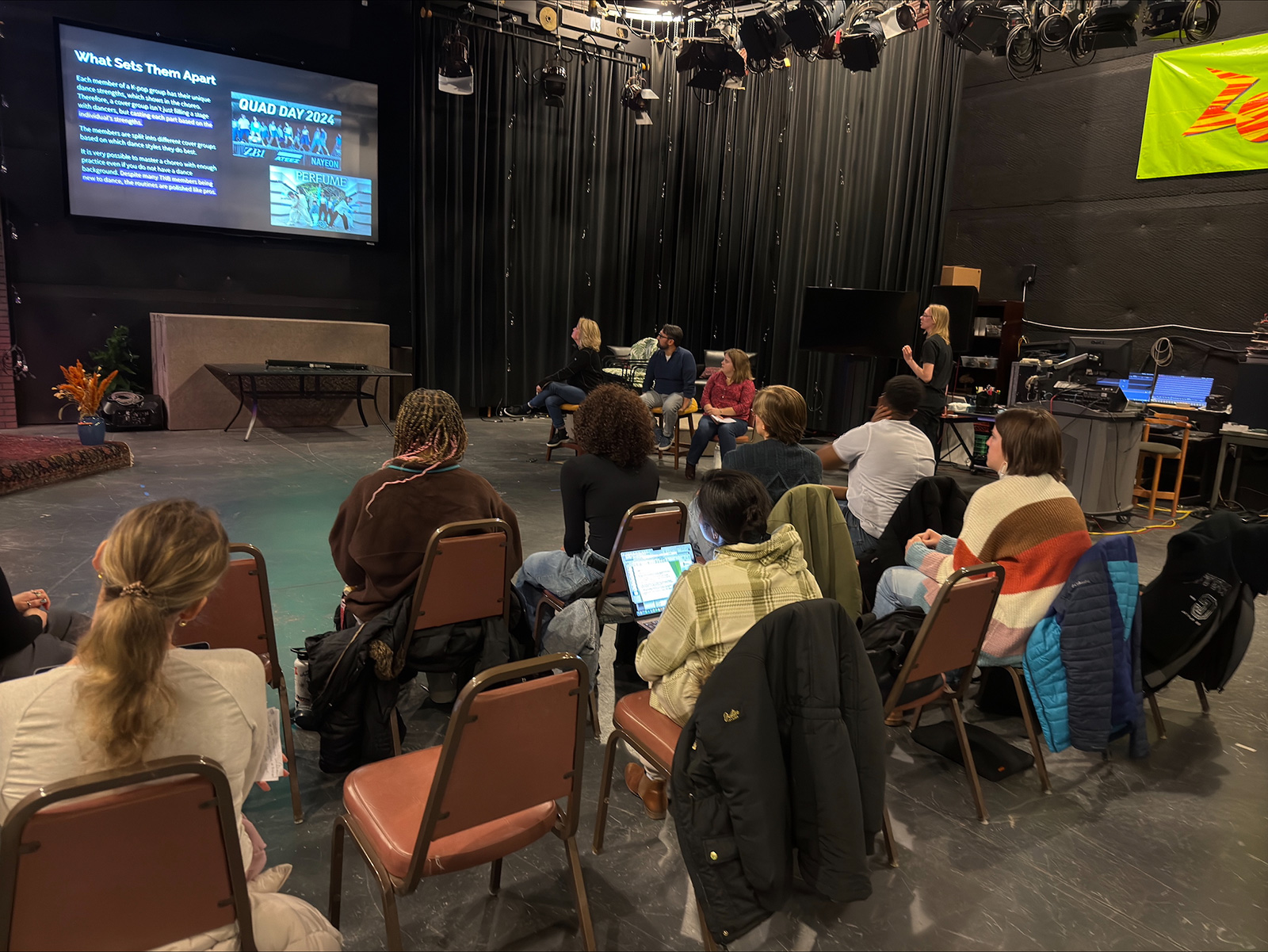
The stories focused on the Idea Store, a unique business in Champaign; the Station Theatre, a local theater group as they get ready for a show; a K-pop dance group, a community created over a love of dance; and a profile of Toni Gist, a clinical assistant professor of food science and human nutrition in the College of Agricultural, Consumer, and Environmental Sciences, who is known as the “food professor.”
Davis, who says she’s always dreamed of having her students create stories for Prairie Fire, was extremely impressed with the work they did.
“This group of students are amazing and very self-motivated. They really have a passion for documentary filmmaking and are really excited about having their work on IPM,” she said. “They have really blown me away with how dedicated they have been this semester to creating some excellent pieces.”
It was was so cool to see something we made [included] on a professional show. Being able to say we created something that was good enough for “Prairie Fire” is a pretty big deal. It’s a confidence boost for sure.
Adrien Reetz
Rising Junior in Journalism and Documentary Co-Producer
Davis started out on the original Prairie Fire, which aired from 1992 to 2008, first as a production assistant then later as the show’s producer and host, earning eight regional Emmy Awards along the way.
In 2023, the show was relaunched, which gave Davis the chance to showcase her student’s work, making it available to a larger audience while also giving budding filmmakers real-world experience.
“We thought it would be a great way to be able to teach young filmmakers about our process and how documentaries are made, from the idea stage to execution to the final product,” said DJ Roach, video production manager at Illinois Public Media. “We also thought it would be a great way for Illinois Public Media and the College of Media to collaborate on a project that gives students an outlet to showcase their talents.”
Reetz, who co-produced a segment on a K-pop dance group, said it’s hard to know how much work goes into a project like this until you do it yourself.
“That’s why hands-on experience like this class is so valuable. We learned to organize our plethora of footage and comb through interviews for the best parts,” Reetz said. “Then we had to arrange everything to make a cohesive story, which involved a lot of revising.”
Reetz said he was grateful for Davis’s help and expertise throughout the process.
“Our [instructor] offered great guidance all the way through. We couldn’t have done it without her,” he said.
Mazie Gierat, a rising senior in journalism and co-producer of the Idea Store piece, was also thankful for the opportunity to learn from and work with Davis.
“She was extremely helpful through each and every step of creating this documentary, and I absolutely loved taking this class,” Gierat said.
Watch all four student segments below:
The Idea Store: Produced by Emily Stutzman, Mazie Gierat, and Nazala Salauddin
The Station Theatre: Produced by Layli Nazarova, Sam Rink, Dwayne Banks Jr., and Emily Richie
News is vital to an informed democracy and newspapers in India remain the most credible news providers. Reinstating a national readership survey is essential—not just for the publishing industry but for the health of India’s public discourse.
Harsh Taneja, Associate Professor of New and Emerging Media in the Charles H. Sandage Department of Advertising
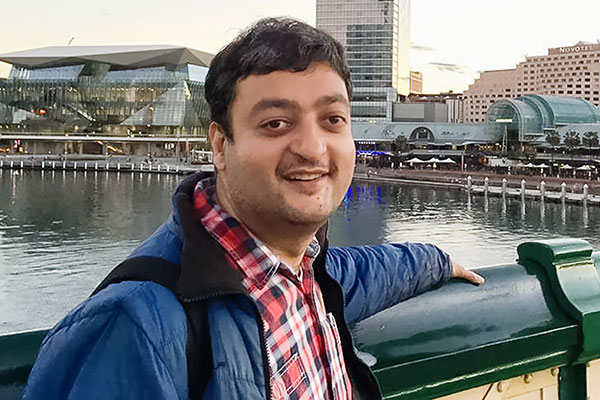
As a part of an ongoing research project, Harsh Taneja, associate professor of new and emerging media in the Charles H. Sandage Department of Advertising, recently published an opinion piece in the India news outlet Scroll-in. He focuses on the implications of not counting newspaper readership on advertising markets and the impact on democracy if the most credible providers of news disappear.
The Indian Readership Survey, suspended since 2020, is a crucial measure of public discourse, media habits, and socio-economic trends. “For the print media industry in India and their advertisers, this survey provides crucial insights into readership patterns,” Taneja wrote. “Newspapers need advertisers to stay afloat, and advertisers need readership numbers to justify their spending. Readership surveys make that possible.
“Newspapers play an integral role in civic culture,” Taneja continued. “Being informed empowers people to make more responsible individual and collective decisions. At a time when social media is rife with misinformation, and almost half of India’s internet users use WhatsApp for news, credible sources of information such as newspapers are more important than ever.”