Alum Murray Kalis wins 2025 College of Media Distinguished Alumni Award 


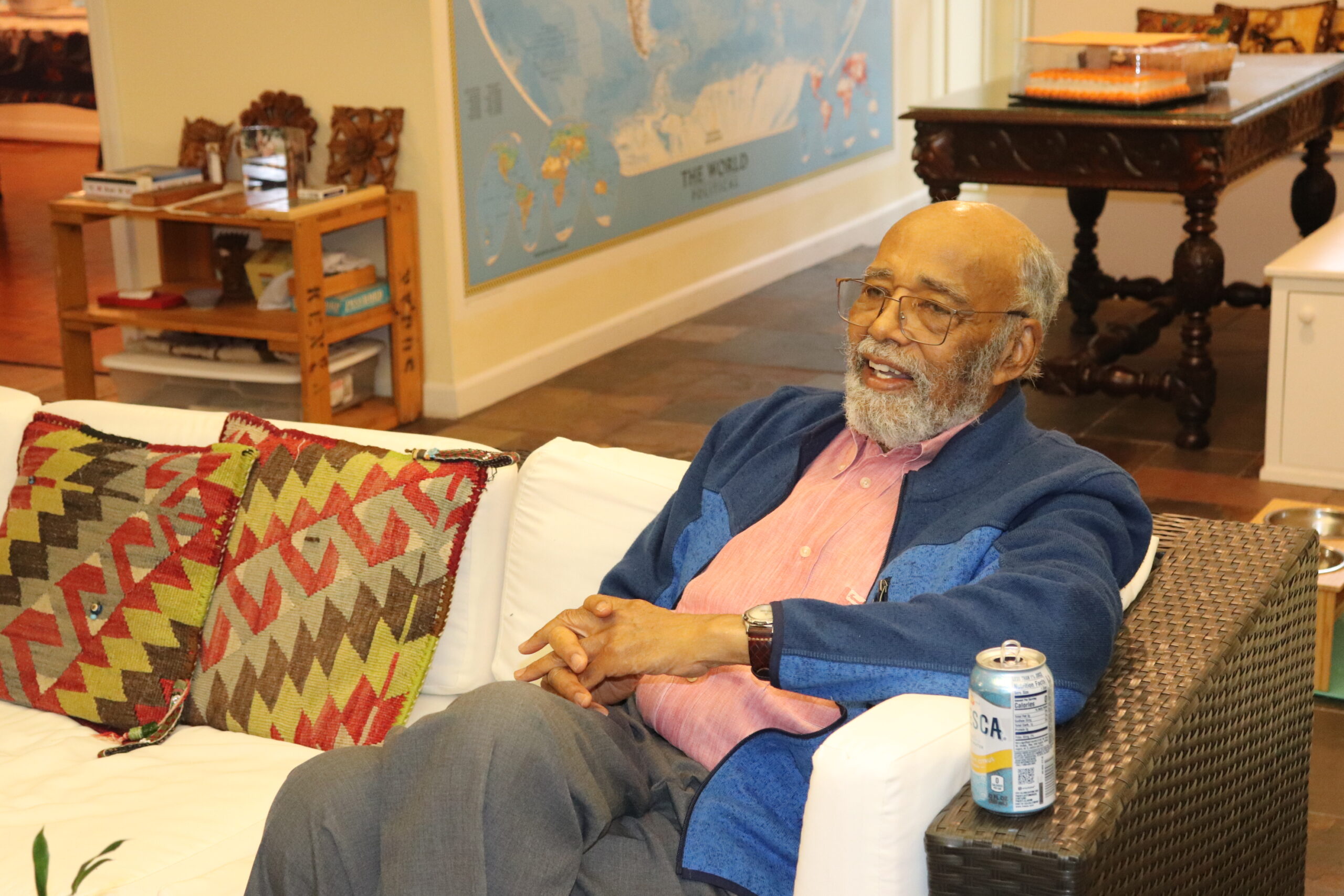
For his outstanding career accomplishments and generous monetary support of advertising students, Murray Kalis (BS ’61) was recognized by the College of Media with the 2025 Distinguished Alumni Award. 

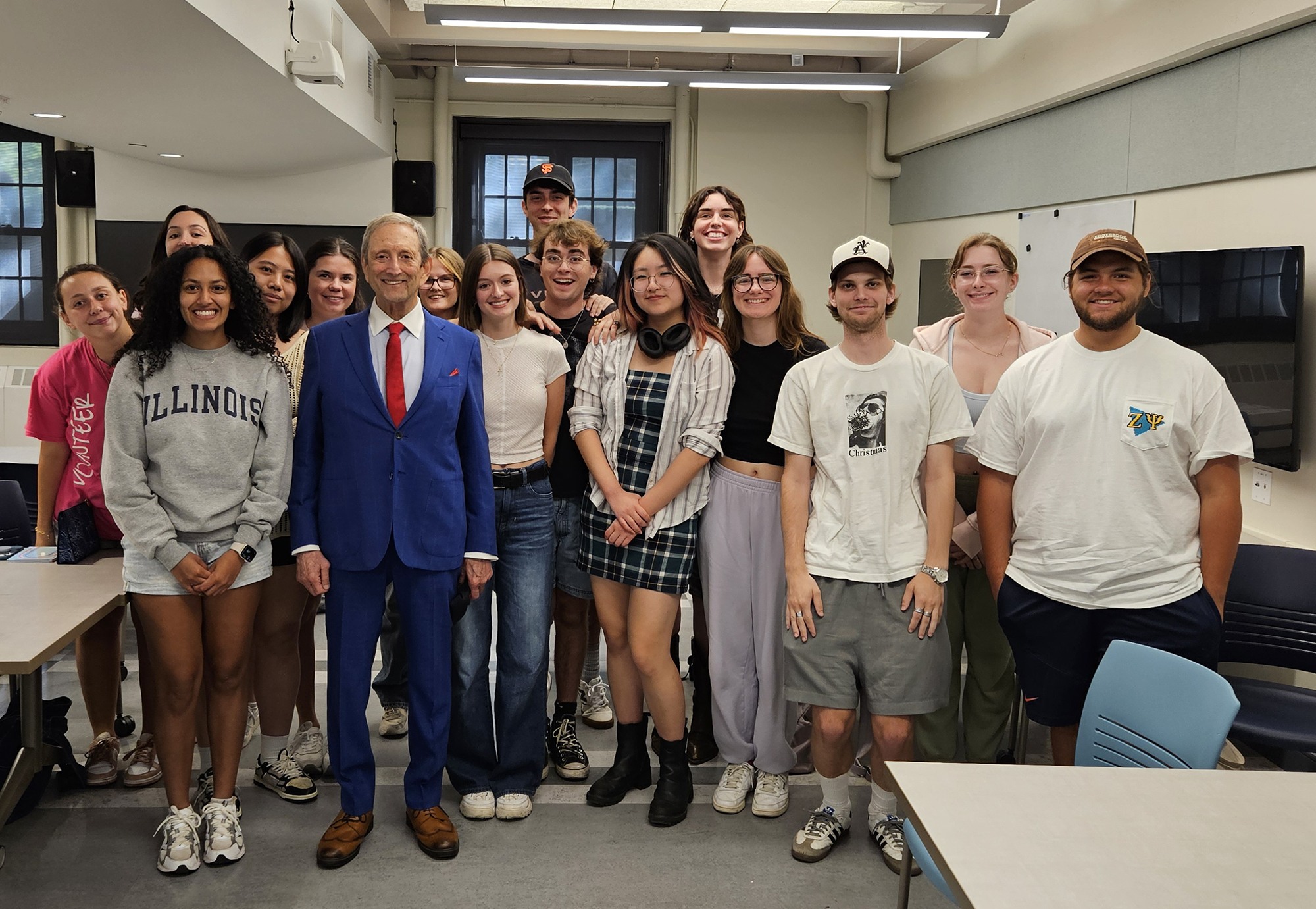
Murray Kalis with class
Murray Kalis with advertising students during one of his visits to the College of Media.

Kalis, whose work has taken him across the world and back, heading his own agency, and serving as chair of the largest global network of independent agencies, has experienced some remarkable moments throughout his 50 years (and counting) in advertising. 

He’s helped numerous companies build their brands, including United Airlines, Nestle, KFC, Wetzel’s Pretzels, Hormel Foods, and Starbucks Coffee. Most recently, a former client brought him in as a strategic investor for Dave’s Hot Chicken, where he is creating TV and social media advertising that has helped it grow to over 300 restaurants, and just begun international expansion.  

In 2020, he established the Murray Kalis Award for Creativity in Advertising to provide monetary gifts to advertising students judged for creative excellence. Students who demonstrate smart positioning, outstanding creative concepts, strong execution, and a “wow” factor receive awards for Best Single Ad, Best Campaign, and Best Portfolio. 

“The response to the Award for Creativity in Advertising has been beyond what I anticipated,” Kalis said. “The students are thrilled to express creative ideas. And the questions I get when I teach are insightful, mature, and often surprising.”

“Murray Kalis has charted an exciting career in advertising and shares his wealth of experience, advice, and encouragement with our students,” said Dean Tracy Sulkin. “The College of Media appreciates the time he devotes to our classes—as well as his advocacy of creativity through the award that he established—and we are proud to honor him with the 2025 Distinguished Alumni Award.”   

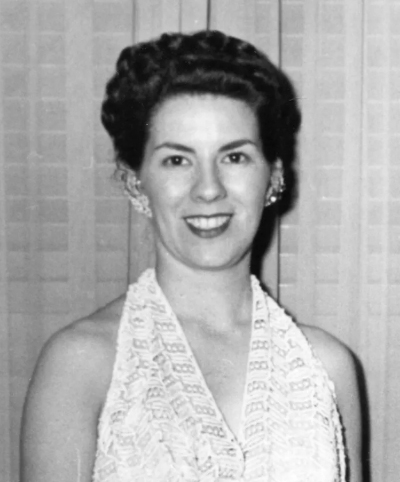
Murray Kalis early on his career
Murray Kalis early in his advertising career.

As a student at the University of Illinois, Kalis felt fortunate to be taught by the legendary “Father of Advertising Education” Professor Charles H. Sandage. 

“I can picture him to this day. He made an impression on me that still guides my work,” Kalis said. “He discovered advertising could impart its own magic: That a great ad can do more than sell, it can add value to the product itself.” 

Kalis said Sandage always approached advertising from a highly philosophical and intellectual way and encouraged critical thinking. “He used a kind of Socratic method [of teaching].” 

If students gave an incorrect answer, Sandage had a way of guiding them to the right one. 

“He would start asking you questions, and he would lead you to understand, to try to defend your position, and suddenly you realize, ‘Oh, that doesn’t make any sense,’” Kalis said. 

After receiving his bachelor’s degree—and thanks to the University of Illinois Reserve Officers’ Training Corps program—Kalis was commissioned as a lieutenant in the United States Army where he put his civilian education in advertising to work in psychological operations.

“I had two years of active duty basically running an ad agency,” he said. “We found illustrators and writers among the draftees, and we would create leaflets to be dropped out of planes.”  

Following his military service, a master’s degree in fine arts, and a college teaching position in Iowa, Murray joined ad agency Leo Burnett in Chicago. 

There, he quickly rose up from junior copywriter to creative director in an era when the ad industry resembled the glossy, high-profile lifestyles portrayed in the television series Mad Men.  

Murray Kalis checking lens

As a member of the Academy of Television Arts and Sciences and Emmys judge, Kalis met Mad Men star Jon Hamm at a reception for the cast and producers.  

Kalis said they discussed the similarities of the TV show and his real-life experience in advertising, which included “making those pitches, dealing with clients, and having to work your way through three-martini lunches.” 

Kalis’s creative career also introduced him to actor Tom Hanks. To prepare for a role as a Chicago advertising executive in the 1986 film Nothing in Common, Hanks followed Kalis around the office to get a feel for his daily routine.  

At this point in his career, Kalis says he is mainly working in social media, which is a lot different than when he first started in the business. Then, there were just three television channels that offered an opportunity to advertise. 

While media delivery options have changed over the years, Kalis said the purpose of advertising—finding solutions to consumer problems—has remained the same.  

“The media changes,” he said, “but people don’t. It’s Maslow’s Hierarchy of Needs, just like when I was entering Greg Hall for the first time.”

After all these years, Kalis is still full of energy and enthusiasm for the advertising industry.

“I love the biz. I love doing this stuff,” Kalis said. “I love looking at a product and figuring out how to match it with a consumer.” 

Above: Murray Kalis was creative director for this Dave’s Hot Chicken ad.

Share on social
Journalism alum Stephanie Lulay wins 2025 College of Media Emerging Leader Award


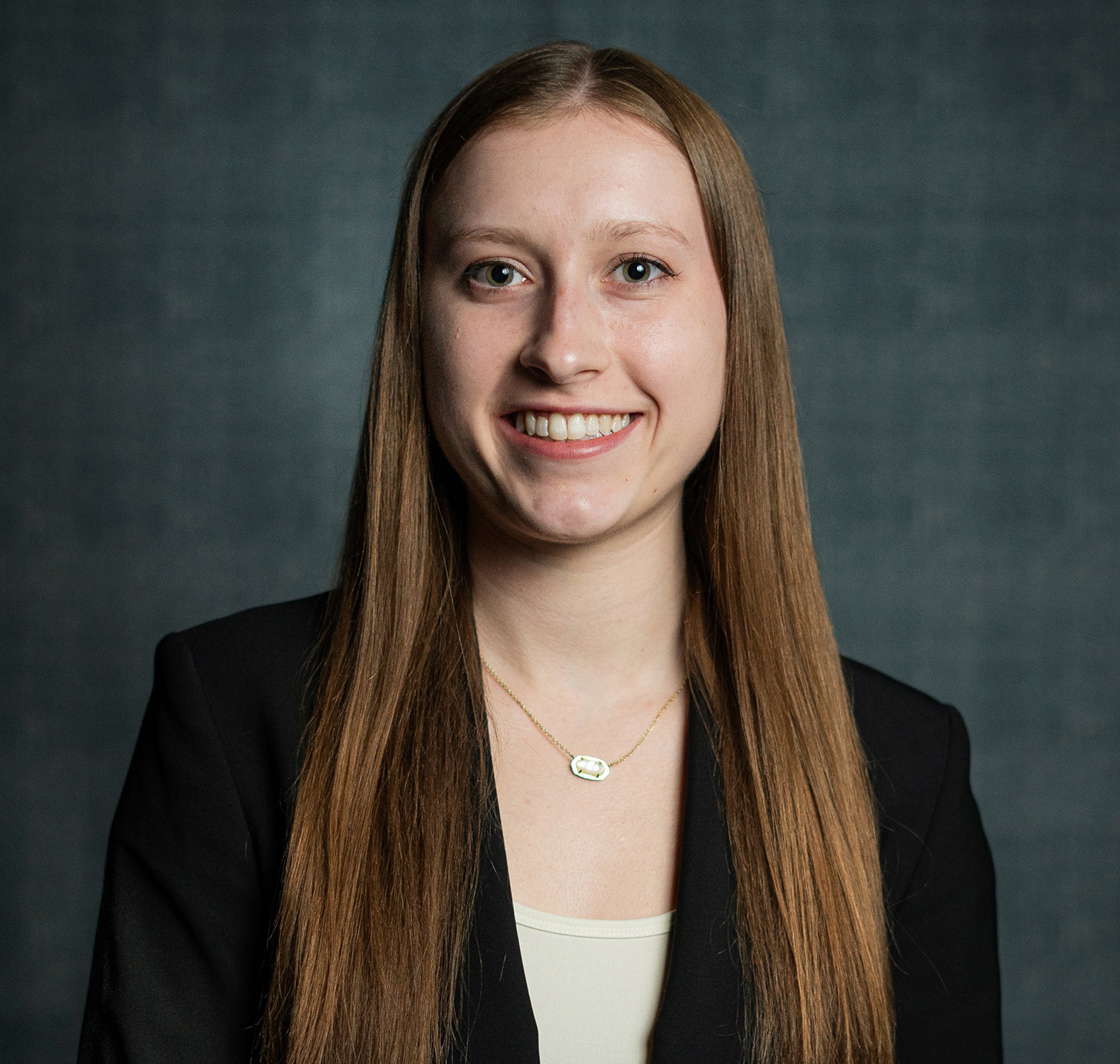
Stephanie Lulay’s (BS ’08, journalism) start-up venture, Block Club Chicago—whose mission is to deliver reliable, nonpartisan, and essential coverage of Chicago’s diverse neighborhoods—has become a news staple for readers throughout the city since its founding in 2018.

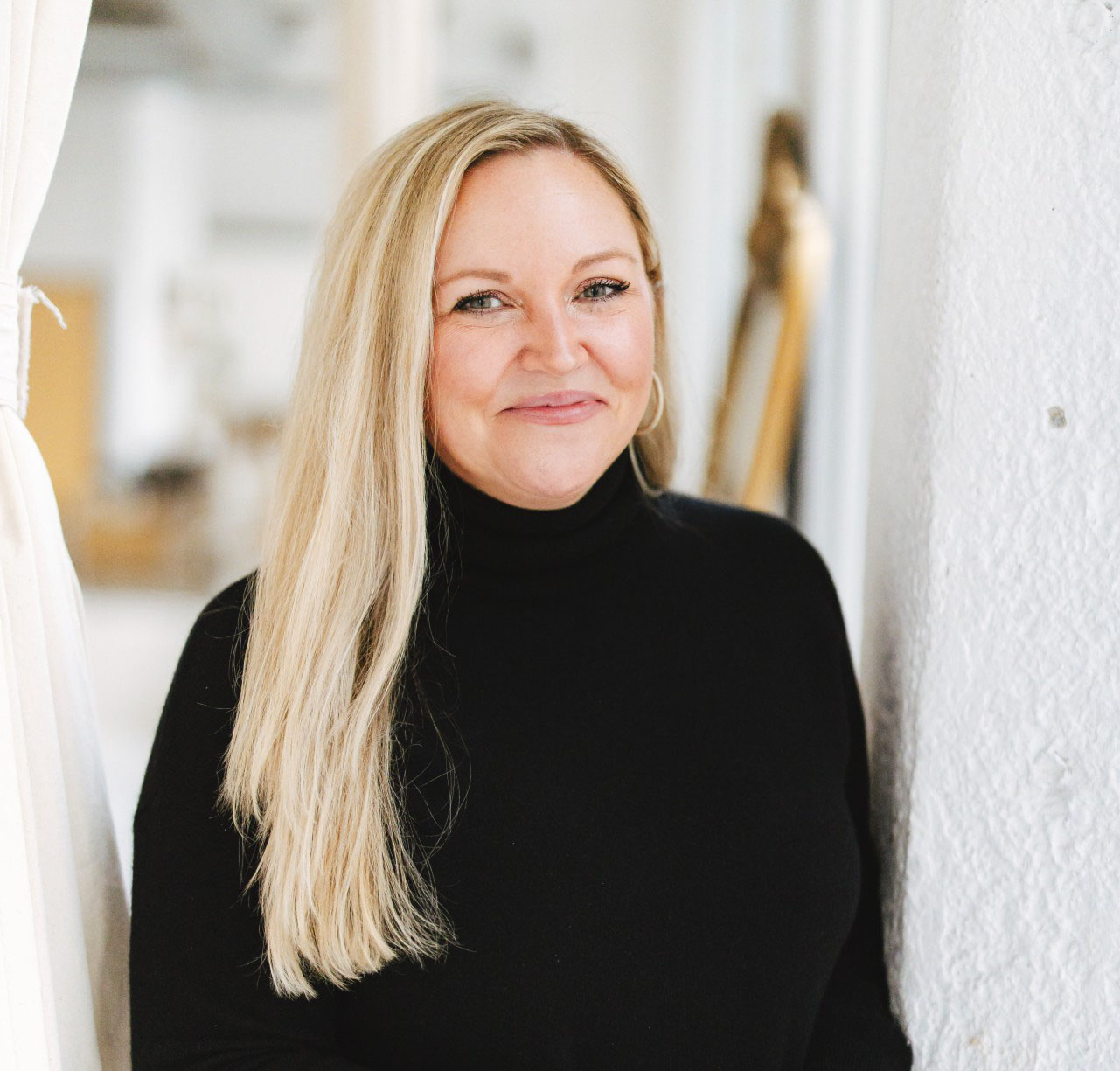
Stephanie Lulay

Lulay serves as executive editor and co-founder of the award-winning newsroom, which has 18,000 paid subscribers, more than 130,000 newsletter subscribers, and an average of 2.3 million pageviews a month. Over seven years, the newsroom has grown from a staff of eight reporters and editors to a staff of 39. Lulay credits her journalism education at Illinois as a key to her success.

“The [University of Illinois] gave me the problem-solving skills and the confidence I needed to succeed in this industry,” she said.

In honor of her career accomplishments and her continued engagement as an alum, Lulay was chosen as the winner of the 2025 College of Media Emerging Leader Award.

“The College of Media is pleased to award Stephanie Lulay as our 2025 Emerging Leader for her innovative and entrepreneurial path in the journalism industry, along with her enthusiasm for sharing her experiences with our students and alumni,” said Dean Tracy Sulkin. “Stephanie is an alum who exemplifies, in an ever-changing media landscape, how to enhance the lives of people in our state.”

Lulay calls Block Club Chicago a “freemium site”—very few articles are paywalled and most stories are accessible for free, including breaking news, health, election coverage, and news from underserved South Side and West Side neighborhoods. They also produce twice-weekly Block Club Chicago podcasts, hosted by fellow Illinois journalism alum Jon Hansen (BS ’06).

The [University of Illinois] gave me the problem-solving skills and the confidence I needed to succeed in this industry.

Their reporter model is different from traditional newspapers, too. Rather than having beats, reporters are assigned to neighborhoods, tasked with covering whatever news is most important that day. 

Lulay says their “big bet” is when they put reporters on the ground every day, it will lead to a more accurate portrayal of the neighborhoods in Chicago and build reader trust.

“That’s what makes me so excited about working for a local newsroom in this time. I When you know who is serving you, and you see them all the time — at your kid’s school, at a community meeting —that is key to rebuilding trust between media and people,” Lulay said. 

Lulay says she took what she learned at college with her into the workforce—including the hands-on experience she gained from writing and editing for The Daily Illini and the confidence she built from working closely with Brant Houston, Knight Chair Professor in Investigative and Enterprise Reporting in the Department of Journalism.

Staff of Block Club Chicago
The staff of Block Club Chicago.

“Brant really encouraged me to dig into some big investigative stories and to not think of myself just as a student, but as an investigative journalist,” she said. “Because of that, I was able to get real-life professional experience.”

When Lulay and 115 reporters across the country lost their jobs after DNAinfo sites shuttered in November 2017, one of the first calls she made was to Houston. 

Lulay describes Houston as “a godfather in the nonprofit news movement,” and said he gave her the right connections and insight to think through their plan at the start of Block Club Chicago.

Lulay has stayed engaged with College of Media students through educational webinars and classroom visits.

She hopes Block Club Chicago’s success might inspire others to start up similar newsrooms across the country, especially recent College of Media graduates.

“I would love to see some Illini students graduate, pop up in a news desert, and start a newsroom there,” Lulay said. “It’s hard work, but there is so much opportunity right now in nonprofit news and I’d love to see some students capitalizing on that.”

Share on social

Pulitzer Prize-winning Professor Leon Dash reflects on changes in journalism throughout his extraordinary career


Leon Dash, winner of a Pulitzer Prize and Swanlund Chair Professor of Journalism, sat in his office chair on the third floor of Gregory Hall, appearing calm and collected on his last day of teaching at the College of Media.

Leon Dash- retirement party
Leon Dash at his retirement celebration on May 13, 2025. (Photo by Kelly Youngblood.)

With 27 years of classroom instruction soon to be behind him, and a 30-plus-year career as an investigative news reporter for The Washington Post in his rearview mirror, Dash was looking forward to his next step—retirement.

Dash has always tended to look ahead to the next step, the next chapter, the next story.

This inclination may have contributed to him becoming a Pulitzer Prize finalist in 1987 for a six-part series on teenage pregnancy, and eventually winning the Pulitzer Prize in Explanatory Journalism in 1995 for an eight-part series, “Rosa Lee’s Story,” that shed light on an impoverished, urban family trapped in intergenerational cycles of crime and addiction.

Dash followed Rosa Lee Cunningham, her children, and her grandchildren for four years, chronicling their struggles and occasional victories for The Washington Post series, which also won the Robert F. Kennedy Journalism Award for setting “the standard for reporting about poverty.”

The piece was also named to the “Top 100 Works of Journalism of the Century” by the Arthur L. Carter Journalism Institute at New York University.

Leon Dash book cover for Rosa Lee

A year after winning the Pulitzer, Dash published a book based on the series, Rosa Lee: A Mother and Her Family in Urban America. Dash didn’t know it yet but that book, along with another one he wrote about teen pregnancy—When Children Want Children: The Urban Crisis of Teenage Childbearing—would become required reading for his journalism students one day.  

Dash’s trailblazing efforts in immersion journalism opened many doors for him, including an opportunity to join the faculty at the College of Media. In Fall 1998, he stood in front of his first class of college students and began the next half of his journalism career—this time as an instructor.

Dash said he was intimidated at first but quickly found his footing thanks to his “self-appointed” faculty mentor and fellow professor of journalism, the late Bob Reid. With Reid’s guidance, Dash said his transition from the newsroom to classroom went very smoothly.

Throughout his extraordinary career, Dash has seen the journalism landscape undergo several changes. The most notable for him is a decline in assertive news reporting.

“So many of the publications are weak when it comes to standing up to power. That used to not be the case,” he said.

At the Post, Dash said he was expected to confront people in power, if necessary, to get answers to the tough questions.

But now more than ever, media outlets are fearful of economic and legal repercussions, he said.

Dash shared a recent example involving President Donald Trump’s lawsuit against CBS News, which led to an announcement six months later by Bill Owens, executive producer of 60 Minutes, who said he was leaving his position due to a lack of “journalistic independence.”

“That was a big disappointment to me. It was painful to watch,” he said. “That kind of interference was unheard of in the past.”

Dash also believes social media has blurred the lines between what is considered news and what is considered opinion, which creates confusion; and people tend to look to a variety of political figures and social influencers for their news today, rather than trained journalists, which Dash views as “very dangerous.”

About 10 years ago, he ran into a former newspaper colleague who told him her job required her to produce two to three different ledes a day for the same story. Using the same facts, the reporter told Dash she had to create a new enticing hook to reel in more readers.

For Dash, who was accustomed to spending months on stories, the idea of churning out multiple ledes a day sounded like “a nightmare.”

Dash says he has no solutions for the many issues plaguing the journalism industry today but does encourage others to think for themselves.

He knows social media is here to stay and engages on a few platforms, sometimes connecting with former students.

Leon Dash with students
Leon Dash with students in his Great Books of Journalism course in Fall 2019.

He even joined a Facebook Group, which is now inactive, called “Dash Survivors,” created by former students to playfully discuss Dash’s more rigorous coursework.

Dash’s current news diet includes online subscriptions to The New York Times, The Washington Post, and The News-Gazette. He never thought he’d make the transition from reading print news to digital news but now he says it’s more convenient.

“I no longer have ink stains on my fingers from reading the newspaper,” he said.

Dash will miss a lot about teaching, especially working with students who have the ability and genuine interest to become a successful journalist one day.

“Those kinds of revelations are always pleasant, and I’ll miss that,” he said.

But Dash is already looking ahead to his next piece of work. Namely, he said: “A book I need to write.”

He said his forthcoming book “entails lengthy interviews with Black and white Americans focusing on what, when, and under what circumstances did they have a defining ethnic experience on the American landscape.”

Share on social

Our Elders’ Stories Bridge the Past to the Present. This Mother’s Day, Let’s Honor Them by Listening 


Stories of the past might be whitewashed, rewritten, or replaced in official spaces, but people’s consciousness of the past can’t be stripped away.

Melita Garza's mother
Melita Garza’s mother, Linda Rosa Caballero Hinojosa de Garza, circa 1940s.

In this Newsweek opinion piece, Melita Garza, associate professor and Tom and June Netzel Sleeman Scholar in Business Journalism, combines a Mother’s Day remembrance with a call to use oral history to preserve the lived experiences of events that some want to see removed from museums, books, and other official histories.

“In drawing on these personal recollections, I hope to make the case that listening to our mothers and recording their stories is a way to honor them that will endure long after the flowers have wilted, the perfume faded, and the chocolate box recycled. I say this not just as a daughter, but also as a media historian who spent more than 20 years as a reporter telling the stories of others in the Milwaukee Journal, the Los Angeles Times, the Chicago Tribune, and Bloomberg News,” Garza said.

Hailey Kotowski

Get to know some of our College of Media students! Hailey Kotowski is a Class of 2026 advertising major.

Hailey Kotowski

What excited you about majoring in advertising?
What really excited me was the versatility of the field. I liked the idea that I could do almost anything with the major. When I first got to Illinois I was undeclared and I had a variety of interests, so I wanted a path that wouldn’t limit me to just one industry. Taking ADV 150: Introduction to Advertising my freshman year really influenced my decision to major in advertising, along with my involvement in the American Advertising Federation. My classes and being part of AAF helped me explore the advertising field and encouraged me to major in it.

Which RSOs have you found most valuable for advertising students?
The first RSO I have found most valuable for advertising students is the American Advertising Federation at Illinois. AAF is a great club for advertising students to get hands-on experience, learn new skill sets, and gain knowledgeable insight into the advertising world. AAF is a good RSO to join if you want to get to know other students in the advertising major; it is a good way to make connections and to put yourself out there and to explore different opportunities and career options within advertising. Another RSO I found most valuable was Her Campus, an Illinois organization that provides an online hub for women by providing content that is both a resource and a source of entertainment, highlighting campus news, events, campus photos, fashion and lifestyle content specifically tailored for women in Illinois. Staff members will gain journalism, marketing, publicity, and digital media experience. These RSOs are great for gaining those advertising skills and getting hands-on experiences.

What advice would you give to new students in media?
I would advise new students to take advantage of as many opportunities as they can. You never know where something might lead, so it’s important to stay open and be proactive. Networking is also huge so don’t be afraid to put yourself out there and build those relationships with your professors and advisors—you never know what opportunities they can provide. The more people you know and the more visible you are, the better positioned you’ll be. It really comes down to confidence and initiative; if you know you’re qualified for something, go for it. Also joining RSOs that tie into your interests is very important; you can learn so many things from them and RSOs help you explore different interests you may have. So don’t feel like you have to join an RSO that is all about advertising; you can join a journalism club or a film club. Keep your interests and options open. The same goes for media classes. Just because you’re an advertising student doesn’t mean you have to limit yourself to just advertising classes.

What advice would you give to current advertising students who are looking to network?
My biggest piece of advice would be to be yourself. It sounds simple, but staying true to who you are makes a huge difference. Don’t be shy or scared to put yourself out there—just go for it. Confidence is also key. You have to believe in yourself and trust that you belong here. Even if something feels intimidating at first, having the confidence to try can lead to really meaningful opportunities and personal growth. It is also really important to take advantage of any opportunities that come your way; you never know where those opportunities may lead you. Joining RSOs is also super important in college and getting involved on campus is the best way to meet new people, build skills, and to find your place in the community.

Interview by Samantha Munoz, New Voices Intern

Bo Ravanh

Get to know some of our College of Media students! Bo Ravanh is a Class of 2026 media and cinema studies major.

Bo Ravanh

What inspired you to choose media and cinema studies as your major, and how did you decide that College of Media was the right fit for you?
I believe cinema is something magical. A film can bring so much good into the world. To me, that’s what the art of filmmaking is about—creating these little worlds and putting them on screen. They can change minds, shift perspectives, and leave a lasting impact. That belief is what pulled me in. The power of cinema is something I take seriously, and I would say never underestimate it. What drew me to this major was not just the subject itself but also the community. The College of Media is a place full of people who care about media and storytelling the way I do. So, choosing the media and cinema studies major felt like the right step to build on that interest and take it further.

How have opportunities at the College of Media or involvement in student organizations helped you grow in media and cinema studies?
Through my media and cinema studies courses, I have built a strong understanding of both the technical aspects of filmmaking and the art and subtext that gives a story emotional resonance with the audience. The MACS courses helped me to understand how people interpret and respond to films, including myself.

I have also been able to apply what I learn in the classroom. I joined the Illini Film and Video RSO as an opportunity to explore filmmaking in a more hands-on setting. It gave me practical experience in content production and film analysis, and it was a great way to collaborate and build connections with a community of student filmmakers who have inspired me to keep learning.

What course within the College of Media have you enjoy or would like to recommend to other students?
If I had to choose a favorite, I’d say MACS 320: Popular Culture. It’s primarily taught by Dr. Josh Heuman, who is a fantastic professor. The class covers a lot of interesting topics and helped me see how popular media affects not just us as individuals, but the world around us. I think that kind of perspective is really valuable for students who are interested in pursuing a career in content creation.

Looking back, what personal or academic achievement are you most proud of, and what is the most useful skill you gained from your time at College of Media?
I’d say one of my biggest personal achievements in college was making a 40-minute short film with a friend. It was an adventure story called The Heart of Daphne, and we didn’t make it for a class. It came entirely from our own motivation and love for filmmaking. Looking back, I don’t think we could have pulled it off without everything we’d learned here. We even hosted a big premiere, and a lot of people showed up to watch. It was such a fun and meaningful experience; it might be my favorite memory from college and definitely something I’m proud of.

What advice would you give to other incoming students?
One piece of advice I’d give is to trust your own voice. In college, especially within the filmmaking community, you’ll come across a lot of opinions about how things should be done. That actually turned out to be one of the biggest challenges for me. For a while, I felt like I had to follow a certain way of doing things to be seen as successful.

What helped me move past that was going back to the reason I started making movies in the first place. When I was a kid, I picked up a [camcorder] and started filming just for the fun of it. There were no rules, no expectations, just creativity and excitement. Remembering that helped me realize that filmmaking isn’t just about following rules. It’s about passion, creativity, and finding your own rhythm. It’s about exploring your own ideas and creating something that feels true to you. So, my advice is to stay curious and learn, because there is a lot to take in here. But also hold on to your perspective. Use what you learn to shape your own style. That is how you grow, and that is what makes you unique as a creator.

—Interview by Vivian Wong, New Voices Intern

Share on social

Aaron Anastos

Get to know some of our College of Media students! Aaron Anastos is a Class of 2026 dual degree student majoring in journalism and anthropology.

Aaron Anastos

What made you choose journalism at Illinois?
My older siblings went to Illinois, so I was already familiar with the campus. I started off as an undeclared major but by getting involved in The Daily Illini and UI7 Newsroom, I started to realize how much I enjoyed storytelling. Illinois has such a strong journalism program that I ended up declaring my major in journalism.

What student organizations have you joined?
Since my freshman year, I’ve been an opinions writer for The Daily Illini and a feature reporter for UI7 Newsroom. During my time at The Daily Illini, I served as assistant opinions editor from 2023-2024. In the UI7 Newsroom, I have my own segment called, “Aaron Anywhere.” If you get involved, you slowly start to get to know everybody and build connections.

What classes have you enjoyed the most?
I was lucky enough to take JOUR 205: History of American Journalism with Stephanie Craft, professor of journalism and associate dean for academic affairs, my freshman year. Dr. Craft is a very passionate professor and has a great knowledge of journalism. It gave me a really deep appreciation for the course. Another class that stands out is JOUR 217: Content Producing for UI7. It was like a boot camp for broadcasters and in that class, I learned I wanted to get involved with journalism. It also helped me make friendships that I still have today.

You were awarded the Ebert Fellow role for 2024-2025. What has this experience been like?
I get the opportunity to work with Michael Phillips, a film critic for the Chicago Tribune. He mentors us on writing different pieces, such as film reviews and film criticisms. We get feedback from him and get different experiences within the film industry. We recently went to the True/False Film Festival to cover the event, and it was a really cool experience. We also hold screenings every month, curating certain films through the Ebert Center. The most recent one we did was Dog Day Afternoon.

Do you have any advice for incoming College of Media students?
Do not be afraid to get involved and get out of your comfort zone. Some of the most impactful experiences I’ve had in journalism have been ones that have gotten me completely out of my comfort zone. Also, know that we have a very tight-knit community in journalism. We all have each other’s backs.

—Interview by Edgar J. Nava, New Voices Intern

Share on social

Nathan Gonzalez

Get to know some of our College of Media Students! Nathan Gonzalez is a class of 2027 journalism major.

Nathan Gonzalez

Why did you choose journalism at the University of Illinois?
When my mom gave me my first camera, I became interested in videography and editing. In high school we had a sports broadcasting program where we’d livestream all the different games and give weekly news updates. I also gained experience in print journalism in high school through our art magazine and that piqued my interest in storytelling and how I could use different channels to tell stories. When I applied here, I saw a lot of potential in what Illinois built with their journalism program. As a first-generation college student, I didn’t have much guidance, and having the administration and faculty here being so kind and helpful has allowed me to be a stronger journalist. Had I gone to a different program, I am not sure I would been offered these experiences to become the journalist I am today. They’ve really helped me navigate what the field is, what journalism is, what broadcasting and television is, and I feel like now I’m more confident about all that.

How has being here helped you narrow down the sector of journalism you hope to go into in the future?
I knew I wanted to do broadcasting, and I’ve always had a love for television. Growing up I was homeschooled and didn’t have an iPad or an iPhone, so my connection to the outside world came from watching broadcast news on television. The TV stations and the anchors were the ones who taught me about the world around me.   

When the newly remodeled Richmond Studio reopened during my freshman year, I wandered around there and told Ken Erdey, the technical coordinator for Richmond Studio, I wanted to get involved. That experience further reassured me that broadcast was the right fit. I love every aspect of the newsroom, and I feel that it really helped me become a stronger journalist.

Which class at the College of Media have you found the most valuable so far?
I would say the most valuable class I’ve taken is JOUR 400: Newsroom Experience. This class offers a lot of different opportunities. This was my first time getting hands-on experience with studio cameras. I learned how to write a package and how to use it to tell a visual story. I recently was nominated for a Crystal Pillar from the National Academy of Television Arts & Sciences for college students. A lot of what I learned in this class went into developing that package that got me that honorable mention.

What professional experiences will you be doing this summer?
As a White House Correspondents’ Association scholar, I was invited to the White House where I met and questioned White House press secretary Karoline Leavitt on the administration’s relationship with the media. Under this program, I’ll be mentored by Jose Del Pino, international White House correspondent. This summer, I’ll also be interning at Fox News in Washington, D.C., as an assignment desk intern!

Can you talk about your recent research trip to Africa?
We went to Freetown in Sierra Leone, West Africa. We were filming a documentary on period poverty. It is a very impoverished country and period products are very expensive, so girls experience mental shame due to the lack of education about what goes on.

I had never been out of the continent, let alone travel on my own, but for some reason I just thought to myself, why not? As a journalist, my job is to be, as the department likes to say, curious and fearless. So, I just said why not? Why can’t I? I feel that’s what really compelled me.

Is there a professor or faculty member at the College of Media that you’re inspired by?
Someone who I’m extremely grateful for is Kenneth Erdey. He supervises the university newsroom and was one of the first people I met at Meet Media (a welcome week activity for College of Media students where they get the chance to meet their future classmates and professors). I went up to him and asked him how to become a producer. We talked for about an hour that day and, to sum it up, he told me to go to the newsroom and keep showing up. From there he’s helped me with my writing, taught me how to sharpen my work, given me advice on interviews, worked through my packages with me, and offered critiques where I needed them. He’s always ready and willing to give any advice he can. He’s always been there to give me reassurance that mess-ups happen, and that college is the perfect place to make them. He also gave me my first job and has helped me carve out my career path. I love all my professors and they’re all very talented and have helped me very much. But Ken has been there since my freshman year and I’m very grateful for that.

What advice would you give to an undergraduate student within the College of Media majoring in journalism?
I would say to be honest with yourself. I live and breathe what I do because I love what I do. It’ll completely open your world. Journalism will make you connect with people in ways that you would’ve never thought of and connect with people you could’ve never imagined. I would’ve never imagined being in Africa interviewing a young girl about her struggles and challenges. It is truly an eye-opening field. Get ready because it will truly change you.

—Interview by Crystal Oropeza, New Voices Intern

Share on social

Brendan Gallian

Get to know some of our College of Media students! Brendan Gallian is a Class of 2027 journalism major. 

Brendan Gallian

Why did you choose journalism at Illinois? 
After visiting other schools and learning more about the College of Media, I realized Illinois offered opportunities and experiences I wouldn’t find elsewhere, and I became more excited about what Illinois had to offer. I’m grateful I decided to attend, as it opened doors I didn’t expect when I first started my college search. 

What drew you to journalism as a major? 
I’ve always loved sports. I played baseball growing up, collected sports cards, and I’m a huge White Sox fan. Journalism has given me a way to stay connected to the world of sports. Sports reporting allows me to combine my love of writing with the energy and excitement of the games. Once I got into feature writing, it became even more meaningful. Instead of focusing on scores and stats, I realized how much I enjoyed telling human stories, capturing the moments and people that don’t always get the spotlight. 

How have your experiences outside the classroom shaped your journalism skills? 
Joining The Daily Illini has been one of the most essential parts of my experience at Illinois. I started as a sportswriter in Fall of 2023, covering cross country, track and field, and later, hockey. Writing two weekly stories and covering previews and recaps pushed me out of my comfort zone. I learned how to move beyond box scores and find the bigger story, like when I wrote about a soccer player scoring his first goal in front of his family. Telling stories like that showed me how much I enjoy feature writing and finding the human side of sports.  Now, as the sports editor, I manage the entire sports section. I assign beats, edit articles, run weekly meetings, and make sure we maintain high-quality reporting. It’s a leadership role that taught me to be organized, work with different writers, and step up when needed.

Outside of The Daily Illini, I interned at Illinois Public Media (WILL), where I produced audio features, including a story about farmers installing wetlands to support local biodiversity. These hands-on experiences gave me a real-world understanding of journalism, helping me to become well-versed in conducting interviews and creating stories that matter. 

What is one of your favorite stories you’ve written? 
One of my favorite stories was about a hockey player who scored his first goal in front of his family. Rather than writing a standard recap, I focused on the personal significance of the moment for the player. That experience reinforced how much I enjoy human-interest storytelling. I also appreciated covering smaller community events, like a local model train show. These stories allow me to highlight moments that may otherwise go unnoticed. They reminded me that journalism is not solely about significant headlines but about capturing meaningful human experiences. 

What are your career goals after graduation? 
My long-term goal is to cover the Chicago White Sox for a professional publication. Although fewer journalists currently cover the team full-time, I want to help fill that gap and tell important stories about the organization. I plan to continue writing human-interest features and sports stories, focusing on the people behind the headlines. Whether I work for a traditional media outlet, a niche publication, or even a museum or historical organization, I want to keep telling meaningful stories. 

What advice would you give to incoming journalism students? 
Believe in yourself and stay committed, even when it gets difficult. Journalism is competitive, and self-doubt is normal, but persistence is key. Try everything, join student media groups, pursue internships, and take different classes because you won’t know what you genuinely enjoy until you explore. Building relationships with professors and peers is also crucial, and the College of Media has many people dedicated to helping students succeed. Most importantly, remember that journalism is about passion. If you love storytelling, that will carry you through the challenges.  

—Interview by Rein Phone, New Voices Intern

Share on social

Chloe Barbaise

Get to know some of our College of Media students! Chloe Barbaise is a Class of 2027 journalism major.

Chloe-Barbaise.jpg

Why did you choose journalism as your major?
I’ve always loved to write since I was in elementary school and my interest in journalism came about in middle school. We took a trip to our high school’s journalism program and when I saw the media room, I started to think about journalism as a career interest. Fast forward, I knew that U of I had one of the top journalism programs, and I wanted to come here to study journalism.

What’s the most important thing you have learned as a journalism student?
I would say the most important thing that I have learned is being comfortable using cameras. I did not like taking photos or videos; I enjoy the editing and writing aspects of journalism. However, last year, I took a class with Alison Davis, JOUR 215: Multimedia Reporting. Now, I’m taking another class with her, and I learned that it’s just a part of journalism.

How would you describe New Voices and working with the College of Media?
I really enjoyed being a part of the New Voices program. Daniel Almanza, assistant director of Media Career Services, manages the program and helps us with professional development and gaining different media-related experiences. The program helped us get connected to the College of Media and gave us the opportunity to write for the college website, where I conducted interviews with many faculty members and alumni that I wouldn’t have the opportunity to do otherwise. As a first-generation student, this program made me feel seen by the college as soon as I was enrolled.

Describe your role at The Daily Illini
In my first year at The Daily Illini, I became a copy editor because I love to edit. It consisted mostly of fact-checking, spelling, and grammar. In the spring, I applied to become a senior copy editor. It was a paid position that opened more doors than just continuing as a copy editor.

—Interview by Mariah Brooks, New Voices Intern

Share on social

College of Media
119 Gregory Hall
810 S. Wright St.
Urbana, IL 61801
217-333-2350