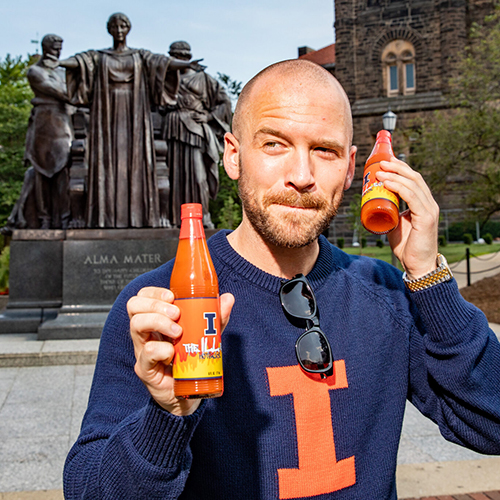
Sean Evans (BS ’08, journalism) was featured in the inaugural TIME100 Creators list: The Most Influential Digital Voices of 2025.
Evans is the host of the Emmy Award-nominated Hot Ones, the YouTube series launched in 2015 in which celebrities are interviewed while eating progressively spicy chicken wings.
The show, which is most known for Evans’s deep research on his guests and thought-provoking questions, has run for 27 seasons so far and includes interviews with a slew of famous celebrities such as Gordon Ramsay, Billie Eilish, Sydney Sweeney, and Key & Peele.
The 2025 TIME100 Creators recognizes those individuals who are shaping the future and changing the way people inform themselves.
I suspect AI will continue to be used to help political strategists in creating, testing and managing campaigns. This means we’ll probably receive even more personalized ads—I’m hopeful that we, as citizens, are able to know what is AI and what is not, and what is truthful and what is not, so we can make more informed decisions in the voting booth.
Michelle Nelson, Professor and Head of the Charles H. Sandage Department of Advertising
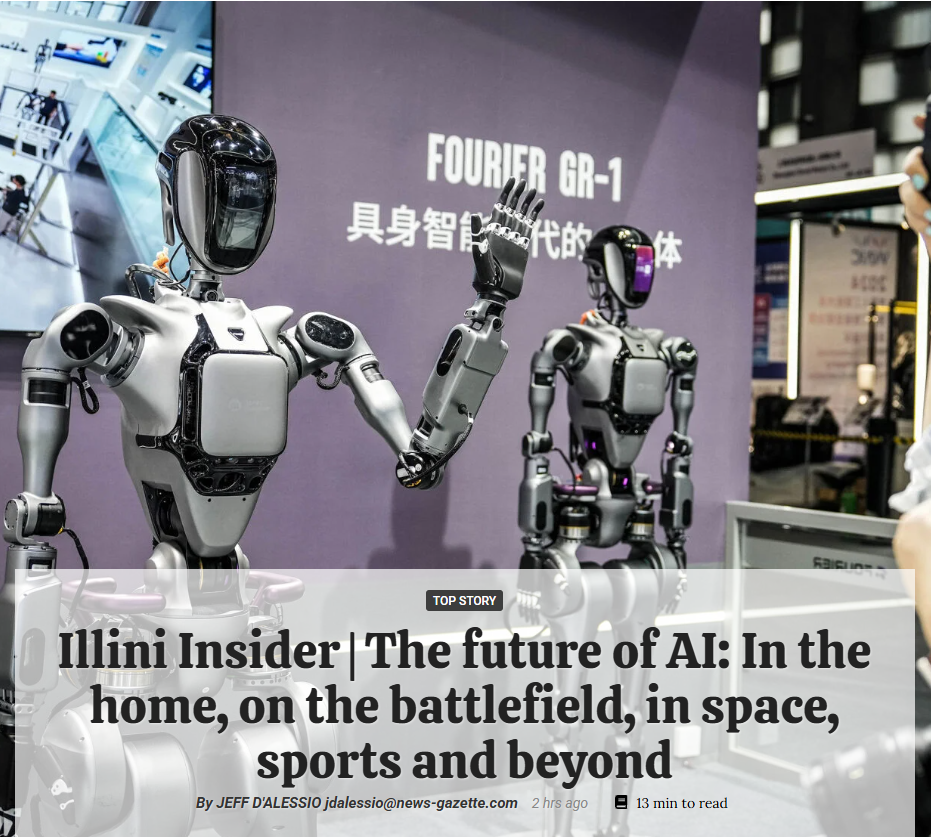
Ready or not, here it comes—artificial intelligence is everywhere and it’s only going to become more prevalent in the years to come, say those in the know. Michelle Nelson, professor and head of the Charles H. Sandage Department of Advertising, was one of several University of Illinois faculty who shared future predictions of AI in their area of expertise in this News-Gazette article. Nelson, who offered insights about AI and political advertising, said while artificial intelligence is used in many ways across the advertising industry, humans are still needed in the field.
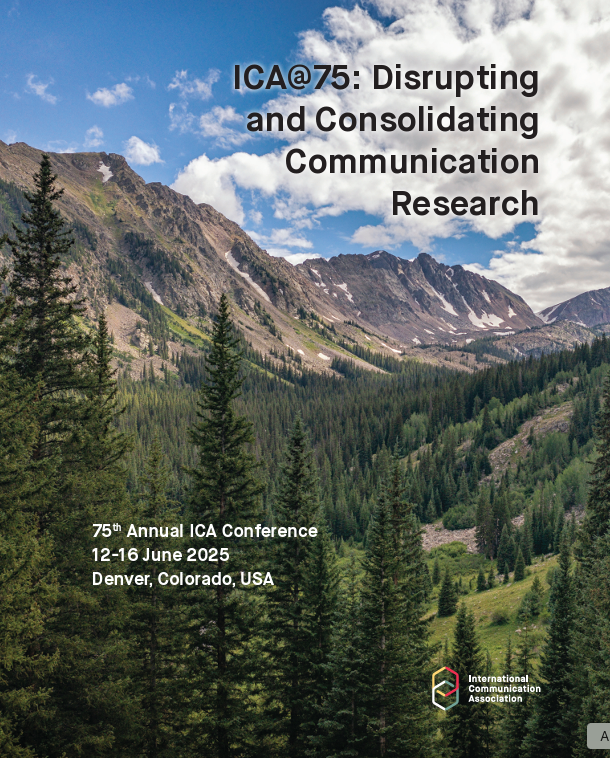
Faculty, graduate students, and recent alumni from the College of Media co-presented various topics of research at the 75th annual International Communication Association Conference—the largest academic conference for communication scholars—on June 12-16, 2025, in Denver, Colorado. The ICA aims to advance the scholarly study of human communication by encouraging and facilitating excellence in academic research worldwide.
This year’s conference theme addressed “Disrupting and Consolidating Communication Research.” College of Media presenters included faculty in the Institute of Communications Research and the Charles H. Sandage Department of Advertising; graduate students in the MS advertising program; and doctoral students in the Institute of Communications Research PhD program.
College of Media research presenters and presentations are listed below in bold. (Please see the ICA conference program for complete listings.)
Angharad Valdivia and Supathida Kulpavaropas
Intersectional Experiences of Oppression and Resistance
Chair: Angharad Valdivia, Professor Emerita, Institute of Communications Research
Making Sense of AI Across the Media Industries: Disrupting Communication Research by Bridging Divides
“Enterprise AI: Hidden Ironies for Creators, Marketers, and Media Scholars”
Mike Yao, Professor of Digital Media, Advertising; Director of the Institute of Communications Research
Playing for a Better Life: Serious Games and Gamification
“The Power of Play: The Effectiveness of Serious Game on Depression Stigma”
Nansong Zhou, ICR student
Donghan Fu, Wuhan U, China
Zikun Liu, Wuhan U, China
Feminist Disruptions: Institutionalizing Gender in Communication Studies
“Intersectional FSD, a Utopia Yet to Be Achieved”
Angharad Valdivia, Professor Emerita, Institute of Communications Research
Alice Ji
Media Literacy and Information Environments
“The Effect of Message Fatigue on Visual Attention to, and Elaboration of Mental Health Infographics”
Alice Ji, ICR student
Veranika Paltaratskaya, ICR student
Kevin Wise, Professor of Advertising
Conversations With the Machine (Priming, Tensions, Failure, Impact)
“Competitors or Complements? Examining the Effect of Human-AI Interaction on Human-Human Interaction”
Maggie Zhang, ICR student
Sakshi Bhalla, ICR student
Yanbo Li
Algorithmic Bias and Transparency
Chair: Yanbo Li, ICR student
“Recommendation Transitions on YouTube”
Yanbo Li, ICR student
Sakshi Bhalla, ICR student
Harsh Taneja, Associate Professor of New and Emerging Media, Advertising
Organizers
Kevin Wise (center) with Chen (Crystal) Chen at left, PhD ’23, ICR; and Yanfang Wu at right, Wise’s former student while at Missouri
Consolidating Communication Research Through Causal Inference
Shuning Lu, U of Maryland
Ewa Maslowska, Associate Professor of Advertising
Harsh Taneja, Associate Professor of New and Emerging Media, Advertising
Nathan Walter, Northwestern U
Information Processing and Health Outcomes
“Debunking COVID-19 Falsehoods: A Test of Three Cognitive Predispositions as Buffers for Partisan Influences”
Wei Wang, U of Wisconsin–Madison
Yihan Danny Jia, Boston U
Maria Grabe, Boston U
Kevin Mudavadi, Indiana U Bloomington
Gillian Paxton, ICR student
Jennifer Hwang, U of California, Los Angeles
Jimmy Ochieng, Indiana U Bloomington
MIAO-nipulating Trust: AI Dialogue, Verification, and Cross-Platform Misinformation
“Comparing Conversational Agents’ and Social Media Posts’ Roles in Correcting Health Misinformation”
Ziyang Gong, iSchool
Junqi Shao, iSchool
Nisa Rahman, ICR student
Leona Yi-Fan Su, Associate Professor of Advertising
Personalization and Privacy
“Shh… Is Algorithm Listening?” How Folk Beliefs and Knowledge Shape Our Coping Mechanisms Against Targeted Ads”
Jiyeon Chang, ICR student
Se Il Park, ICR student
Yujin Lee, ICR student
Language and Social Interaction Research Escalator Session
“The Market of Marriage: Matchmaking and the Reinforcement of Gender and Class Boundaries in China”
Anqi Peng, ICR student
Making Sense of the Machine and the Communication with it
Mike Yao, Harsh Taneja, and ICR students
“The Minds Behind the Prompts: How Mental Models Shape User Interaction with Generative AI”
Weizi Liu (MS ’19, advertising; PhD ’24, iSchool)
Mike Yao, Professor of Digital Media, Advertising; Director of the Institute of Communications Research
“From ‘Ghostly Companions’ to ‘Invisible Mechanisms’: Exploring Lay Representations and Performance Expectations of AI Across Task Contexts”
Jiyeon Chang, ICR student
Mike Yao, Professor of Digital Media, Advertising; Director of the Institute of Communications Research
Weizi Liu (MS ’19, advertising; PhD ’24, iSchool)
Popular Media and Culture Research Escalator Session
“Reclaiming Dignity or Reinforcing Misogyny? A Study of Sigma Male Meme Localization in China”
Weiting Du, ICR student
Anna Liu
Promising Student Papers
“Online Ratings in the Social Context: Exploring Consumers’ Critical Data Literacy and Sense-Making of Numeric Information”
Anna Liu, ICR student
Communicating with the Machine: Dynamics and Sophistication
“Testing the Machine-Likeness Hypothesis: How Humans Communicate Like Intelligent Agents”
Hai Liang, Chinese U of Hong Kong, HONG KONG
Longhan Wei, Chinese U of Hong Kong, HONG KONG
Maggie Zhang, ICR student
Jiyuan Qi, Chinese U of Hong Kong, HONG KONG
Anfan Chen, Hong Kong Baptist U, HONG KONG
GATO-lyzing Minds: Digital Advocacy, Social Cues, and Online Persuasion Tactics
“When Humans Anthropomorphize Non-Humans: The Influence of Language Cues and Human Motivation on Anthropomorphism and Persuasion”
WooJin Kim, U of Colorado Boulder
Chang-Dae Ham, Professor of Advertising and Associate Head of Graduate Studies
Supathida Kulpavaropas
Advertising and Consumer Behavior
“Does the Phrase ‘Limited Edition’ Embedded in Ad Matter? The Influence of an Advertising Attribute on Consumer’s Choices and Variety-Seeking Behavior”
Supathida Kulpavaropas (PhD ’17, ICR)
Sela Sar, Professor of Advertising
Xiaowei Zhang (MS ’23, advertising)
Qing Ang (MS ’24, advertising)
Virtual Social Processes
Chair: Sela Sar, Professor of Advertising
“What Makes Fake News More Viral? Emotions as Catalyst for Fake News Virality”
Sela Sar, Professor of Advertising
George Anghelcev, Northwestern U
Qing Ang (MS ’24, advertising)
Xiaowei Zhang (MS ’23, advertising)
Critical (Race) Disruptions and Transformations in Dominant Communication Paradigms
“The Tensions Between Internationalizing and Intersectionalities in the ICA”
Angharad Valdivia, Professor Emerita, Institute of Communications Research
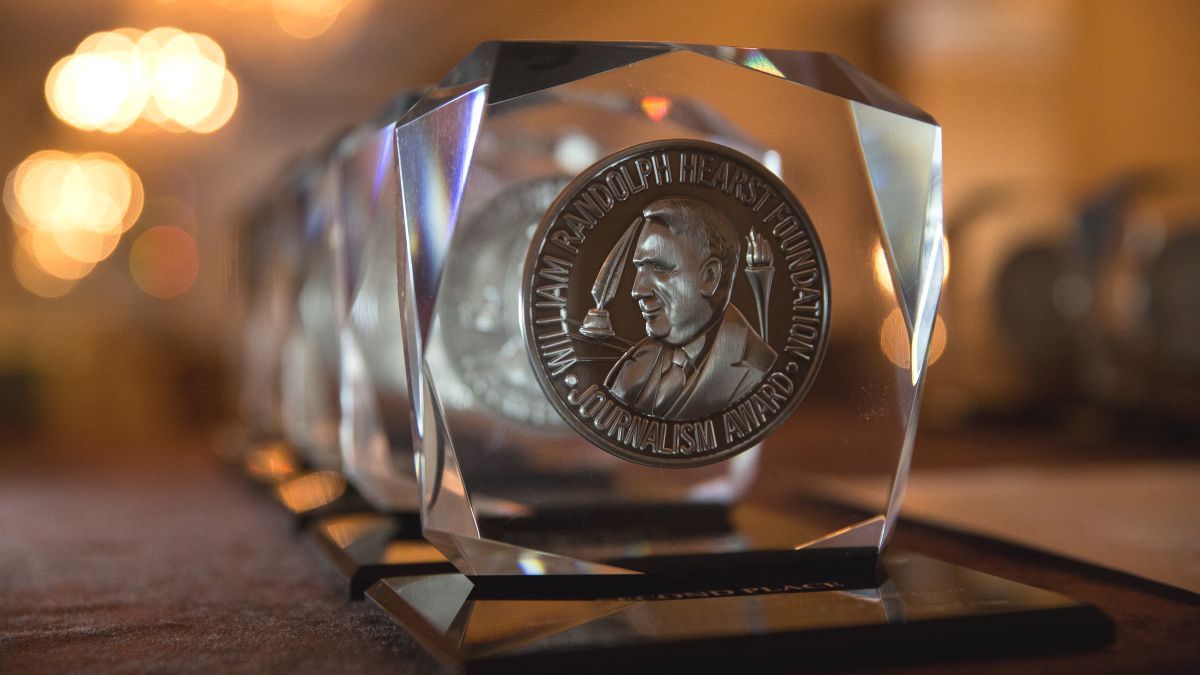
Layli Nazarova won first place and a $10,000 scholarship award in Hearst’s National Audio Championship. Madison Holcomb was named a finalist and won a $1,500 scholarship award for Hearst’s National Writing Championship.
Both Nazarova and Holcomb advanced to the Hearst Championships, the culmination of the 2024-25 Hearst Journalism Awards Program, held May 31-June 5 in San Francisco, California, to complete assignments under deadlines that were judged by media professionals.
(Photo of Madison Holcomb by Jakub Mosur.)
Nazarova’s assignment was to produce a two-minute story on the following topic: “Demonstrate how one of President Trump’s executive orders is having an impact on life in the San Francisco Bay Area. Choose from one of the following subject areas: immigration, higher education, tariffs, the economy, DEI.” Listen to her story.
Holcomb’s assignment was to write two articles: a news story from an interview with Executive Chair and Director of TPG Inc. Jim Coulter, and an article about how one of President Trump’s executive orders is affecting the Bay Area. Read her stories.
The Hearst Championships, often referred to as the “Pulitzers of College Journalism,” included 29 student journalists from across the country. The finalists were selected from 1,260 entries submitted in 14 competitions held throughout the academic year.
Journalism students Maggie Knutte, Nathan Gonzalez, Piper Pascarella, Nour Longi, and Faith Lee, and agricultural communications student Elena Cleary earned first place and a $3,000 scholarship for a documentary on period poverty titled “Tailoring Hope,” which was one of 60 entries submitted from 35 schools in the multimedia competition.
Additional credit for the documentary goes to 2024 Illinois journalism alum Stephanie Wayda and Fourah Bay College students Amadu Lamrana Bah, Stella Fredricka Bangura, Ola Deen, Nuhu Jalloh, Alpha Janneh, Aminata Kamara, Kelfala Kargbo, Rose-Lyn Koroma, and Hanna Aba Yankson.
The project is the inaugural work of the Illinois Partnership for African Women’s Health Narratives, an interdisciplinary initiative that empowers early-career African and American journalism and media students to research, produce, and disseminate the true stories of grassroots innovations to women’s health challenges in Africa—leveraging the humanizing power of first-person, character-driven storytelling to raise awareness and drive meaningful change.
“Tailoring Hope” focuses on Uman Tok, a nongovernmental organization based in Freetown, Sierra Leone, West Africa, which aims to alleviate period poverty and menstrual exclusion and educate girls and boys about sexual and reproductive health awareness. Read more about the making of the documentary.
Watch here:
Madison Holcomb, a senior in journalism, won first place in Explanatory Reporting and a $3,000 scholarship for her piece on livestock fatalities during transportation. The story was published in Investigate Midwest.
Layli Nazarova, a junior in journalism, won fourth place in Audio News and a $1,000 scholarship for her stories on campus accessibility and the designation of the Middle Eastern North African Census.
The Hearst Journalism Awards Program was founded in 1960 to provide support, encouragement, and assistance to journalism education at the college and university level.
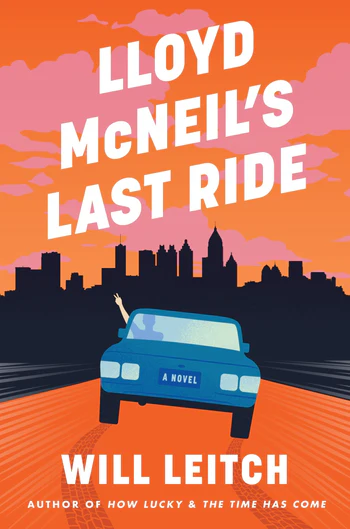
Will Leitch (BS ’98, journalism), author, sportswriter, contributing editor for New York magazine, and podcast co-host, will serve as an executive producer of the movie adaptation of his latest novel Lloyd McNeil’s Last Ride.
Lionsgate purchased the rights to the novel, published by Harper in May, which focuses on Lloyd McNeil, a beat cop in Atlanta who only has months to live. When McNeil learns his teenage son would receive a higher pension if he died in the line of duty, he devises a plan.
“With audiences desperate for more original and authentic stories worthy of the big screen, we couldn’t be more excited to be the home for Will Leitch’s truly original tale following the indelible Lloyd McNeil,” said Erin Westerman, co-president of Lionsgate Motion Picture Group. “Through action, humor, and great pathos, his book serves at once as both a manual and an inspiration for how to live life to the fullest.”
Leitch, also the author of How Lucky (praised by Stephen King as “a fantastic novel”), is a former sports editor for TheDaily Illini and was inducted into the Illini Media Hall of Fame in 2022.
Students took their classwork to broadcast television with the opportunity to create documentaries this spring for Prairie Fire, WILL-TV’s magazine program offering cinematic documentaries, profiles, and performances from downstate Illinois.
“It was so cool to see something we made [included] on a professional show,” said Adrien Reetz, a rising junior in journalism and co-producer of one of the four segments that was chosen to air.
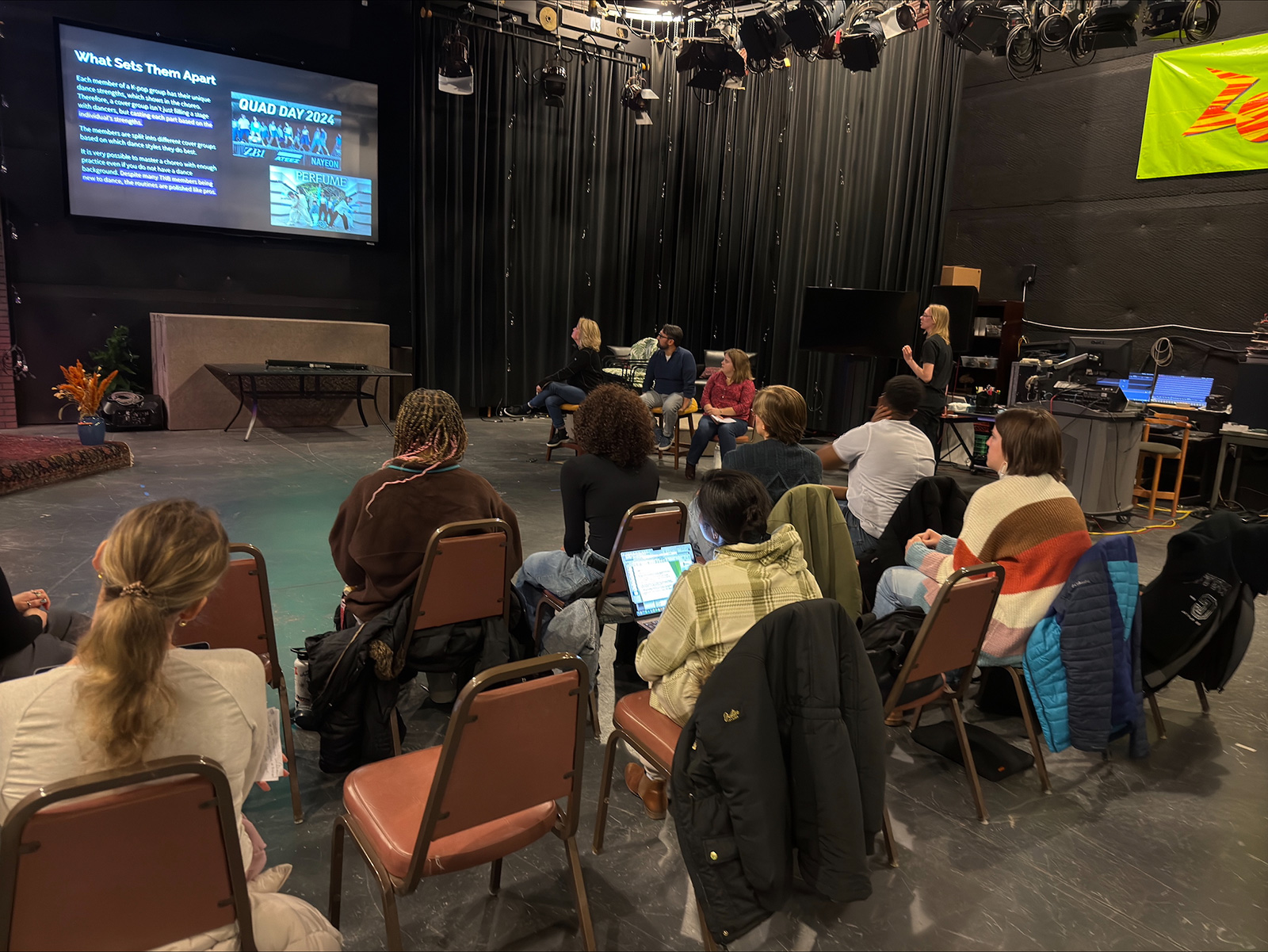
Journalism student Adrien Reetz makes his pitch for a short documentary to the Prairie Fire production team.
“Being able to say we created something that was good enough for Prairie Fire is a pretty big deal. It’s a confidence boost for sure,” Reetz added.
Reetz, along with 11 other students in the “Advanced Documentary Production” course taught by journalism lecturer Alison Davis this spring, pitched story ideas to the Prairie Fire team.
Producers selected the top four stories and then the students self-selected into groups to work on each one. After a final review, the Prairie Fire team decided to air all four segments on May 15.
The stories focused on the Idea Store, a unique business in Champaign; the Station Theatre, a local theater group as they get ready for a show; a K-pop dance group, a community created over a love of dance; and a profile of Toni Gist, a clinical assistant professor of food science and human nutrition in the College of Agricultural, Consumer, and Environmental Sciences, who is known as the “food professor.”
Davis, who says she’s always dreamed of having her students create stories for Prairie Fire, was extremely impressed with the work they did.
“This group of students are amazing and very self-motivated. They really have a passion for documentary filmmaking and are really excited about having their work on IPM,” she said. “They have really blown me away with how dedicated they have been this semester to creating some excellent pieces.”
It was was so cool to see something we made [included] on a professional show. Being able to say we created something that was good enough for “Prairie Fire” is a pretty big deal. It’s a confidence boost for sure.
Adrien Reetz
Rising Junior in Journalism and Documentary Co-Producer
Davis started out on the original Prairie Fire, which aired from 1992 to 2008, first as a production assistant then later as the show’s producer and host, earning eight regional Emmy Awards along the way.
In 2023, the show was relaunched, which gave Davis the chance to showcase her student’s work, making it available to a larger audience while also giving budding filmmakers real-world experience.
“We thought it would be a great way to be able to teach young filmmakers about our process and how documentaries are made, from the idea stage to execution to the final product,” said DJ Roach, video production manager at Illinois Public Media. “We also thought it would be a great way for Illinois Public Media and the College of Media to collaborate on a project that gives students an outlet to showcase their talents.”
Reetz, who co-produced a segment on a K-pop dance group, said it’s hard to know how much work goes into a project like this until you do it yourself.
“That’s why hands-on experience like this class is so valuable. We learned to organize our plethora of footage and comb through interviews for the best parts,” Reetz said. “Then we had to arrange everything to make a cohesive story, which involved a lot of revising.”
Reetz said he was grateful for Davis’s help and expertise throughout the process.
“Our [instructor] offered great guidance all the way through. We couldn’t have done it without her,” he said.
Mazie Gierat, a rising senior in journalism and co-producer of the Idea Store piece, was also thankful for the opportunity to learn from and work with Davis.
“She was extremely helpful through each and every step of creating this documentary, and I absolutely loved taking this class,” Gierat said.
Watch all four student segments below:
The Idea Store: Produced by Emily Stutzman, Mazie Gierat, and Nazala Salauddin
The Station Theatre: Produced by Layli Nazarova, Sam Rink, Dwayne Banks Jr., and Emily Richie
News is vital to an informed democracy and newspapers in India remain the most credible news providers. Reinstating a national readership survey is essential—not just for the publishing industry but for the health of India’s public discourse.
Harsh Taneja, Associate Professor of New and Emerging Media in the Charles H. Sandage Department of Advertising
As a part of an ongoing research project, Harsh Taneja, associate professor of new and emerging media in the Charles H. Sandage Department of Advertising, recently published an opinion piece in the India news outlet Scroll-in. He focuses on the implications of not counting newspaper readership on advertising markets and the impact on democracy if the most credible providers of news disappear.
The Indian Readership Survey, suspended since 2020, is a crucial measure of public discourse, media habits, and socio-economic trends. “For the print media industry in India and their advertisers, this survey provides crucial insights into readership patterns,” Taneja wrote. “Newspapers need advertisers to stay afloat, and advertisers need readership numbers to justify their spending. Readership surveys make that possible.
“Newspapers play an integral role in civic culture,” Taneja continued. “Being informed empowers people to make more responsible individual and collective decisions. At a time when social media is rife with misinformation, and almost half of India’s internet users use WhatsApp for news, credible sources of information such as newspapers are more important than ever.”
For his outstanding career accomplishments and generous monetary support of advertising students, Murray Kalis (BS ’61) was recognized by the College of Media with the 2025 Distinguished Alumni Award.
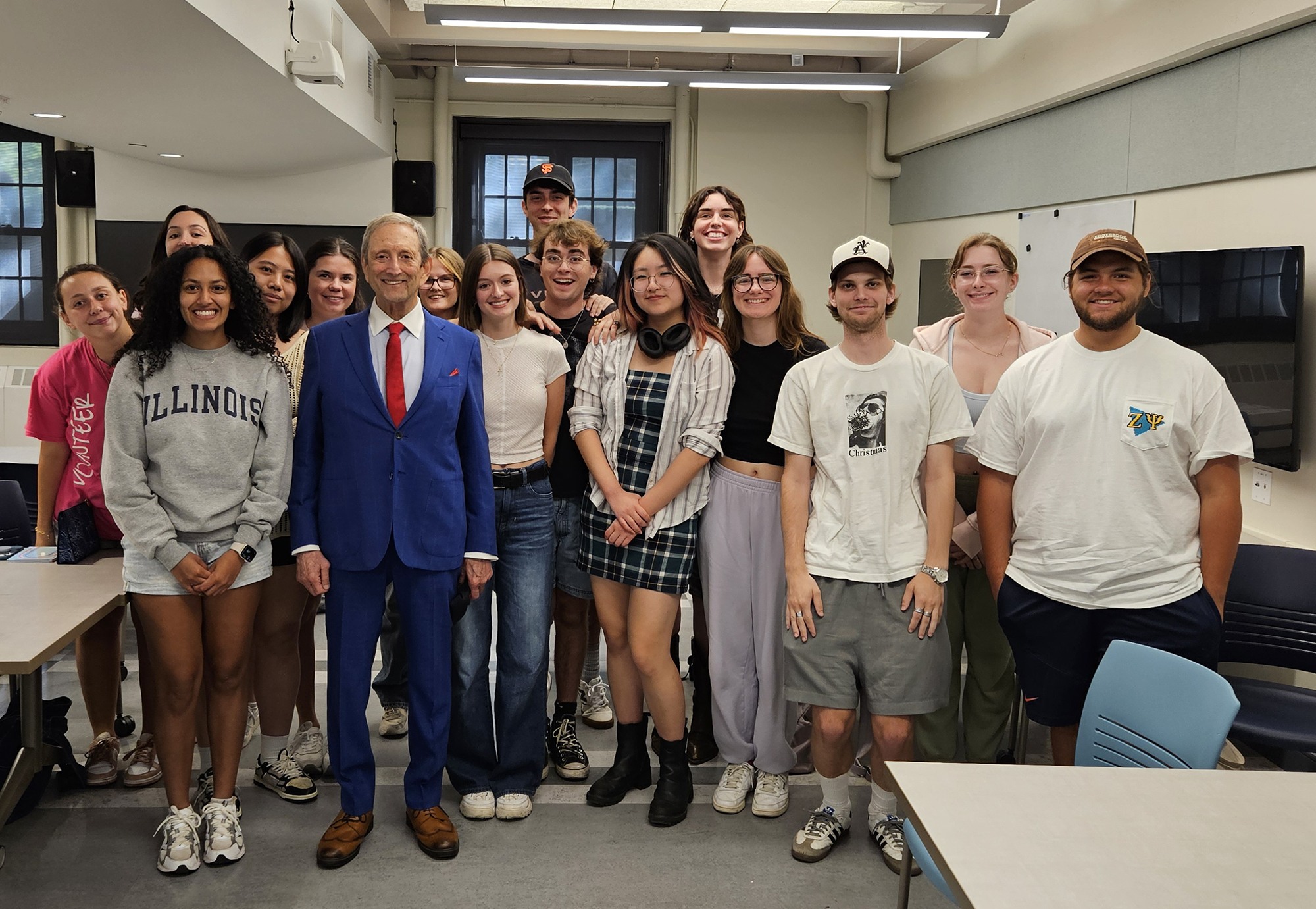
Murray Kalis with advertising students during one of his visits to the College of Media.
Kalis, whose work has taken him across the world and back, heading his own agency, and serving as chair of the largest global network of independent agencies, has experienced some remarkable moments throughout his 50 years (and counting) in advertising.
He’s helped numerous companies build their brands, including United Airlines, Nestle, KFC, Wetzel’s Pretzels, Hormel Foods, and Starbucks Coffee. Most recently, a former client brought him in as a strategic investor for Dave’s Hot Chicken, where he is creating TV and social media advertising that has helped it grow to over 300 restaurants, and just begun international expansion.
In 2020, he established the Murray Kalis Award for Creativity in Advertising to provide monetary gifts to advertising students judged for creative excellence. Students who demonstrate smart positioning, outstanding creative concepts, strong execution, and a “wow” factor receive awards for Best Single Ad, Best Campaign, and Best Portfolio.
“The response to the Award for Creativity in Advertising has been beyond what I anticipated,” Kalis said. “The students are thrilled to express creative ideas. And the questions I get when I teach are insightful, mature, and often surprising.”
“Murray Kalis has charted an exciting career in advertising and shares his wealth of experience, advice, and encouragement with our students,” said Dean Tracy Sulkin. “The College of Media appreciates the time he devotes to our classes—as well as his advocacy of creativity through the award that he established—and we are proud to honor him with the 2025 Distinguished Alumni Award.”
Murray Kalis early in his advertising career.
As a student at the University of Illinois, Kalis felt fortunate to be taught by the legendary “Father of Advertising Education” Professor Charles H. Sandage.
“I can picture him to this day. He made an impression on me that still guides my work,” Kalis said. “He discovered advertising could impart its own magic: That a great ad can do more than sell, it can add value to the product itself.”
Kalis said Sandage always approached advertising from a highly philosophical and intellectual way and encouraged critical thinking. “He used a kind of Socratic method [of teaching].”
If students gave an incorrect answer, Sandage had a way of guiding them to the right one.
“He would start asking you questions, and he would lead you to understand, to try to defend your position, and suddenly you realize, ‘Oh, that doesn’t make any sense,’” Kalis said.
After receiving his bachelor’s degree—and thanks to the University of Illinois Reserve Officers’ Training Corps program—Kalis was commissioned as a lieutenant in the United States Army where he put his civilian education in advertising to work in psychological operations.
“I had two years of active duty basically running an ad agency,” he said. “We found illustrators and writers among the draftees, and we would create leaflets to be dropped out of planes.”
Following his military service, a master’s degree in fine arts, and a college teaching position in Iowa, Murray joined ad agency Leo Burnett in Chicago.
There, he quickly rose up from junior copywriter to creative director in an era when the ad industry resembled the glossy, high-profile lifestyles portrayed in the television series Mad Men.
As a member of the Academy of Television Arts and Sciences and Emmys judge, Kalis met Mad Men star Jon Hamm at a reception for the cast and producers.
Kalis said they discussed the similarities of the TV show and his real-life experience in advertising, which included “making those pitches, dealing with clients, and having to work your way through three-martini lunches.”
Kalis’s creative career also introduced him to actor Tom Hanks. To prepare for a role as a Chicago advertising executive in the 1986 film Nothing in Common, Hanks followed Kalis around the office to get a feel for his daily routine.
At this point in his career, Kalis says he is mainly working in social media, which is a lot different than when he first started in the business. Then, there were just three television channels that offered an opportunity to advertise.
While media delivery options have changed over the years, Kalis said the purpose of advertising—finding solutions to consumer problems—has remained the same.
“The media changes,” he said, “but people don’t. It’s Maslow’s Hierarchy of Needs, just like when I was entering Greg Hall for the first time.”
After all these years, Kalis is still full of energy and enthusiasm for the advertising industry.
“I love the biz. I love doing this stuff,” Kalis said. “I love looking at a product and figuring out how to match it with a consumer.”
Above: Murray Kalis was creative director for this Dave’s Hot Chicken ad.
Stephanie Lulay’s (BS ’08, journalism) start-up venture, Block Club Chicago—whose mission is to deliver reliable, nonpartisan, and essential coverage of Chicago’s diverse neighborhoods—has become a news staple for readers throughout the city since its founding in 2018.
Lulay serves as executive editor and co-founder of the award-winning newsroom, which has 18,000 paid subscribers, more than 130,000 newsletter subscribers, and an average of 2.3 million pageviews a month. Over seven years, the newsroom has grown from a staff of eight reporters and editors to a staff of 39. Lulay credits her journalism education at Illinois as a key to her success.
“The [University of Illinois] gave me the problem-solving skills and the confidence I needed to succeed in this industry,” she said.
In honor of her career accomplishments and her continued engagement as an alum, Lulay was chosen as the winner of the 2025 College of Media Emerging Leader Award.
“The College of Media is pleased to award Stephanie Lulay as our 2025 Emerging Leader for her innovative and entrepreneurial path in the journalism industry, along with her enthusiasm for sharing her experiences with our students and alumni,” said Dean Tracy Sulkin. “Stephanie is an alum who exemplifies, in an ever-changing media landscape, how to enhance the lives of people in our state.”
Lulay calls Block Club Chicago a “freemium site”—very few articles are paywalled and most stories are accessible for free, including breaking news, health, election coverage, and news from underserved South Side and West Side neighborhoods. They also produce twice-weekly Block Club Chicago podcasts, hosted by fellow Illinois journalism alum Jon Hansen (BS ’06).
The [University of Illinois] gave me the problem-solving skills and the confidence I needed to succeed in this industry.
Stephanie Lulay
Executive Editor and Co-Founder of Block Club Chicago
Their reporter model is different from traditional newspapers, too. Rather than having beats, reporters are assigned to neighborhoods, tasked with covering whatever news is most important that day.
Lulay says their “big bet” is when they put reporters on the ground every day, it will lead to a more accurate portrayal of the neighborhoods in Chicago and build reader trust.
“That’s what makes me so excited about working for a local newsroom in this time. I When you know who is serving you, and you see them all the time — at your kid’s school, at a community meeting —that is key to rebuilding trust between media and people,” Lulay said.
Lulay says she took what she learned at college with her into the workforce—including the hands-on experience she gained from writing and editing for The Daily Illini and the confidence she built from working closely with Brant Houston, Knight Chair Professor in Investigative and Enterprise Reporting in the Department of Journalism.
The staff of Block Club Chicago.
“Brant really encouraged me to dig into some big investigative stories and to not think of myself just as a student, but as an investigative journalist,” she said. “Because of that, I was able to get real-life professional experience.”
When Lulay and 115 reporters across the country lost their jobs after DNAinfo sites shuttered in November 2017, one of the first calls she made was to Houston.
Lulay describes Houston as “a godfather in the nonprofit news movement,” and said he gave her the right connections and insight to think through their plan at the start of Block Club Chicago.
Lulay has stayed engaged with College of Media students through educational webinars and classroom visits.
She hopes Block Club Chicago’s success might inspire others to start up similar newsrooms across the country, especially recent College of Media graduates.
“I would love to see some Illini students graduate, pop up in a news desert, and start a newsroom there,” Lulay said. “It’s hard work, but there is so much opportunity right now in nonprofit news and I’d love to see some students capitalizing on that.”