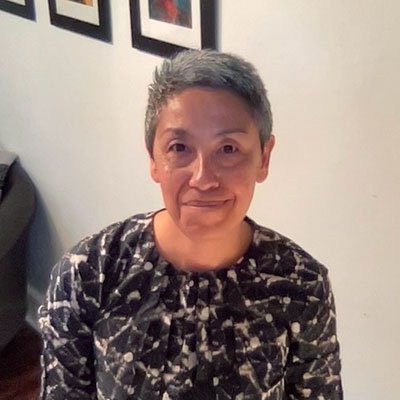
Media students present at 2024 Undergraduate Research Symposium


Undergraduate Research Symposium

Update June 4, 2024: Congratulations to the students who presented “Exploring Period Poverty in Sierra Leone” (pictured below) for receiving an award for Outstanding Exhibit at the Undergraduate Research Symposium from the Office of Undergraduate Research! Learn more about their trip to Sierra Leone.


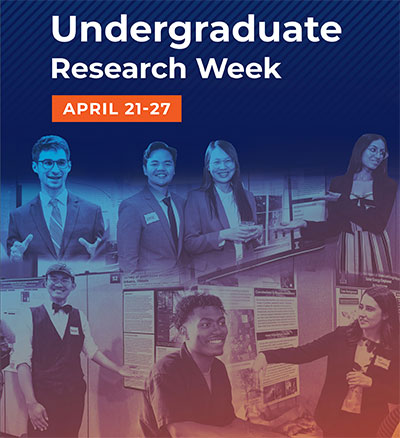
Students from the College of Media are participating in the annual University of Illinois Undergraduate Research Week, held April 21-27. The Undergraduate Research Symposium, the signature event held on April 24 at the Illini Union, features presentations, posters, and performances from students across campus. 

Media student presentations include:

Sierra Leone group presentation

On Exhibit: Robots & Medical Technology
“Exploring Period Poverty in Sierra Leone” 

  • Faith Lee, junior in journalism
  • Piper Pascarella, sophomore in journalism
  • Maggie Knutte, junior in journalism
  • Stephanie Wayda, senior in journalism
  • Nour Longi, junior, journalism
  • Elena Cleary, junior in agricultural communications (College of ACES)
  • Research Mentors: Alison Davis and Charles “Stretch” Ledford, Department of Journalism
     
Garima Sharma

CS Student Ambassadors/Research Scholars
Illinois Scholars Undergraduate Research Program Research Expo
“Comparing Human Generated Text with Machine Generated Text”
Garima Sharma, senior in CS + advertising
 

Marina Manuel

Poster Presentation: Social Science & Human Behavior 
“Mental Health and Wellbeing Outcomes among Gender and Sexuality Diverse Individuals Raised in Fundamentalist Religious Environments: Exploratory Analyses and Study Design”
Marina Manuel, senior in media and cinema studies
Research Mentor(s): Chris Fraley and Maggie Palmiero, Department of Psychology (College of LAS)

Pfeifer

Jenny Oyallon-Koloski, assistant professor of media and cinema studies, was the research mentor for Molly Pfeifer, senior in psychology (College of LAS) and cinema studies minor, who is presenting “Embracing Ambiguity in Low Concept Film Marketing” as part of the Humanities, Arts & Social Sciences poster presentations. 

View the Undergraduate Research Week program.

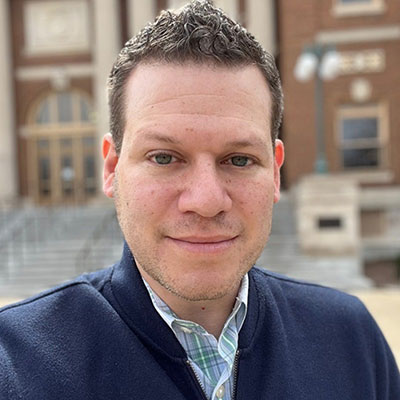
Q&A with Shachar Meron

Get to know some of our College of Media faculty. Shachar Meron is a senior lecturer in advertising.

Shachar Meron

What is your educational background? 
I actually started out as an art major as a freshman, then I shifted after that to the Division of General Studies as an undeclared student, trying to find my way. I wanted something that was creative but would still have a viable job opportunity. I took ADV 150, which I thought was so cool, and that’s how I got into advertising. 

I got my bachelor’s degree in advertising here at Illinois and then I stuck around a little extra to get my master’s in advertising here from the College of Media.

You owned an advertising business—can you tell me more about your experience with that?
I have one currently, and I also had a different one years ago. The one years ago, I was in Chicago, and I had a creative partner. I was a writer and strategist, and she was an art director and designer. We worked together at a few agencies, and we had some freelance work that we did together. We used that to launch a business called BatesMeron Sweet Design. It still exists, we named it after ourselves, we started just the two of us. It was a brand design boutique so companies that were new that needed branding, or ones that needed rebranding would come to us. I did that for five years, then I sold my half to my partner and went onto other things, including coming down here to teach. Now I own a brand strategy consultancy called Bluegreen Branding. It’s a virtual agency consultancy. I have a different partner that I work with now, but we both have jobs, so this is something that we do on the side. My consulting business has been going on for about five years now. We got our start and then about a year later, Covid hit and all of the sudden, it was a real benefit to having a virtual agency.  

What is your favorite class to teach?
I don’t want to choose! I feel like they’re my children and I can’t pick! I like different things about different classes. I’m glad that I’ve been able to create all of them the way that I want to. I really like ADV 250 Advertising and Brand Strategy because it’s very big picture, like here is the world of advertising and brands and how it fits together. Whereas my ADV 400 copywriting class is enjoyable because it’s creative, and it’s where I started. I really like ADV 490 Sandage Studios/Agency Experience because it’s a small tight-knit group, and we run it more like a business than an actual class. So I can’t really pick just one. 

What is your favorite part of teaching college students?
There’s a certain hunger in people who are young and curious and are still exploring all of their options, while learning about new things for the first time. I really enjoy being a part of all that. I really like collaborating with students, I like being able to meet with them one on one and a lot of times it’s a conversation about their career, or their future. I think that’s my favorite part, learning more about them and trying to help them find their way.

How have you seen the advertising industry change over the years, and where do you see it heading in the future?
With advertising, it’s often on the forefront of change in society and brands; lots of times advertising is focused on what’s new. At the same time, there are universal fundamentals of advertising that don’t change and I’m glad that we teach them here because it helps them stay relevant. For example, no matter what technologies are being introduced or changing the way we communicate, it’s still about forming a connection with your target audience. We’re in the persuasion business, which means understanding the people you’re trying to connect with and then trying to show them here’s a brand that meets what you want and need. As far as things that are changing, I’m using AI in my own consultancy work and also I’m starting to teach AI more in my classes, and I’m excited by that technology. Also just thinking about globalization, brands are much more multicultural than they used to be. The Internet is a part of that reason, but not the entire thing. Brands try to be more mission driven and value driven than ever before, which is a good thing but it’s not always relevant to the market that we’re talking about. There’s a lot that’s always changing.

What is your biggest piece of advice to college students?
Explore what interests you, but with the purpose of eventually creating your own path and your own career around what you want and what you’re good at. In advertising there’s like a million directions you could go. You can really make your career your own, you could start your own companies, you could create your own roles, all that kind of stuff. But many students hesitate to try new things and to explore. I think a lot of times, it comes down to short-term thinking like not taking a class because they don’t like when it meets. I get that, but then you’re passing up a class that is based around the future you want. There are so many opportunities to try things during this time of your life, just try them, check them out. But keep an eye out, if you’re like, hey, I like this, look for what more you can do. 

—Interview by Rhia Thakkar, New Voices Intern 

Advertising alum Andrea Campos to be alumni speaker at College of Media Convocation


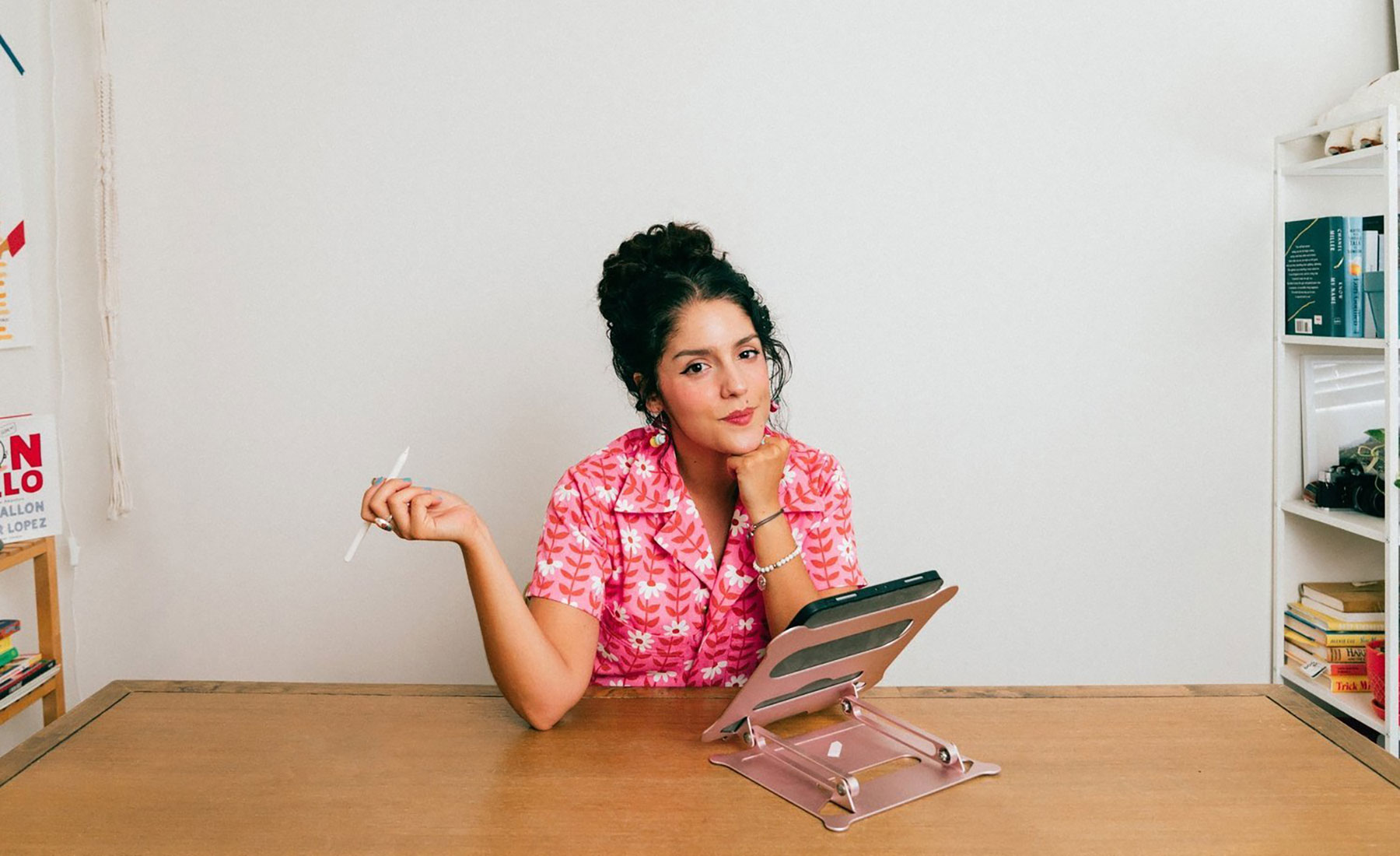
Andrea Campos

When Andrea Campos graduated from Illinois with a bachelor’s degree in advertising, she had no idea she’d be returning 12 years later as the alumni speaker at the 2024 College of Media Convocation ceremony. 

But as an artist and creative entrepreneur whose recent career accomplishments include illustrating a New York Times-bestselling children’s book with celebrities Jimmy Fallon and Jennifer Lopez, Campos has realized life is full of happy surprises, especially if you dare to follow your dreams. 

“If you would have told me in 2012 that I was going to be standing up there (on stage at Convocation), I wouldn’t believe you. I didn’t have it on my radar,” Campos said. “I never would’ve imagined it. Maybe that’s something I’ll touch on in my speech—that we all need to dream bigger, because too often, we like to count ourselves out.”

Campos, who currently resides in Los Angeles, has managed to build a successful career around spreading happiness. 

“I like that I can be an island of joy or a little space of hope in an otherwise stressful world,” Campos said. 

Her bright, colorful, fun illustrations can be found in children’s books like Con Pollo: A Bilingual Playtime Adventure and printed on lunchboxes and other products for children and infants. 

Con Pollo by Andrea Campos

Ironically, the happiness she exudes through her artwork emerged from a time when the entire world was experiencing sadness. 

In March of 2020, after nearly a decade of working as a marketing professional for companies like Gap Inc., Campos was planning to set off on a new path as a freelance photographer.  

“It really felt like it was now or never,” Campos said of her decision to switch careers. “My last day at my full-time job was March 8. And then, you know, days later the world shut down.”

With every photography project canceled due to the COVID-19 pandemic, Campos was left wondering what to do next.

Thankfully, she had saved some money so she decided to concentrate on rebuilding her creative confidence and sought out ways to relieve stress during a chaotic time.

“I decided to focus on creative activities during quarantine, simple things that would bring me joy. You know, the kind of things we used to do as kids when we were sitting at home bored,” Campos said.

She started baking, going on photo walks, and drawing, a childhood hobby she’d neglected since her high school days.     

“As part of my at-home artist residency I started drawing again, and I began to notice that it not only made me feel good, but it also helped me process my emotions,” Campos said. “It’s kind of crazy to think that if it weren’t for the world coming to a halt due to the pandemic, I would have left these treasures buried deep inside of me.”

Campos used an iPad and the Procreate app, which essentially lets users sketch on digital paper, to create “playful, positive, joyful artwork.” 

She started an Instagram page called @dreasdoodles to share her illustrations with family and friends she couldn’t connect with in person. 

Campos said she didn’t realize it at the time, but her Instagram page, which she described as her “little pocket of the Internet where it’s always sunny,” was going to completely change her life.

Campos, who was never formally trained as an artist, gained thousands of followers over the next several months.

Eventually she started to get requests from brands and small business owners to create logos and other marketing materials. 

Almost one year to the day of the inception of @dreasdoodles, Campos received an email that would change her life forever. 

An art director at Macmillan Publishers reached out to ask if she’d be interested in illustrating a celebrity children’s book. 

“When I got that email, my jaw was on the floor,” Campos said.

Later, Campos learned she was one of two artists being considered for the book, which included a chicken named “Pollo” as the main character. 

“Even though I had zero experience, I thought to myself, ‘I am going to do everything in my power to draw the cutest, baddest little chicken the world has ever seen because I know this was meant for me,’” Campos said.

She submitted her designs in April and heard in June that she got the project. 

“It was months and months of me just shaking every time I opened my email. And when I finally got that email, I just started sobbing, like straight up ugly crying,” Campos said. 

Andrea Campos on Jimmy Fallon Show

Soon after, another email came inviting Campos to be a guest on The Tonight Show Starring Jimmy Fallon. Campos went on to do several more interviews with Fallon to help promote their book.

“That was one of those moments that was just so surreal and so special. The book launch for Con Pollo is one of those things I look back at whenever I’m having a bad day and say to myself, ‘I did that,’” Campos said.

After the whirlwind of illustrating a best-selling children’s book, Campos had to consider her next step and knew her advertising and marketing experience could help her build a sustainable art business.

“Sure, I’m not working on campaigns in the same way that I was before, while at agencies. But I am still very much in the business of telling stories through my work,” Campos said. “And that skill set undoubtedly took root right here at U of I.”

Campos said Jason P. Chambers, professor of advertising and associate dean for diversity, equity, and inclusion, made a big impact on her with his teaching style and the way he weaved history into the broader advertising campaigns. 

Steve Hall, senior lecturer in advertising, also stood out in her mind due to his leadership in extracurricular student activities, such as the American Advertising Federation and the National Student Advertising Competition. 

Campos was involved with AAF and, during her senior year, presented at the NSAC. She was awarded AAF’s Most Promising Multicultural Student in 2012, which allowed her to travel to New York for networking opportunities. There, she was able to connect with someone at Energy BBDO, who offered Campos her first advertising job after graduation. 

Campos is grateful for her time at Illinois and was happy to return last fall after Hall invited her to speak to some of his advertising classes. 

These days, Campos is focusing on licensing her artwork, brand collaborations, and speaking engagements, presenting workshops at companies like Google, LinkedIn, and eBay about the power of creativity and the importance of giving yourself time to play. She also is working on writing and illustrating her own picture book.

“My biggest North Star with everything I do is being playful with a purpose and I’m trying to encourage that not only in kids but also in adults,” Campos said. “The last four years have taught me amazing things can happen if we just give ourselves the time to do something just for fun.”

As a first-generation Latina woman, part of her purpose is sharing the beautiful aspects of her Mexican heritage and culture.

When speaking to young children at schools, Campos sees firsthand how much representation matters.

“I’ve had little kids just so excited that someone who speaks Spanish is doing this,” she said. “That’s the stuff that I think will have an impact that I’ll never be able to measure and that’s what makes me so happy.”

Campos has a lot of advice to share. She encourages students to consider their priorities and to remember that growth isn’t always going to be linear.

“Your career doesn’t have to be a ladder. Chances are, it’s going to be a jungle gym,” Campos said. “It’s okay to change your mind and try different things—in fact, I think curiosity is one of the most valuable skills you can have.”
College of Media collaborates with University, community partners to offer local children access to new opportunities in education, technology


Steve Hall with Boys & Girls Club
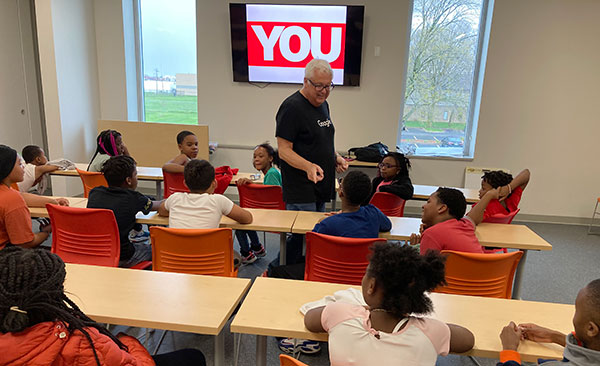
Steve Hall, senior lecturer in advertising, leads Boys & Girls Club students through a workshop on “Advertising for Good.” (Photos by Paige Duncan.)

The College of Media is collaborating with University of Illinois and community partners to present educational workshops to local children this spring as part of a new public engagement effort.

The collaboration between the College of Media and the Center for Social and Behavioral Science focuses on creating hands-on educational content appropriate for 3rd– and 4th-grade students in the Don Moyer Boys & Girls Club of Champaign, which is housed at the Martens Center in Champaign. 

“One of the College of Media’s priorities is to enhance our activities in public engagement and access,” said Jason P. Chambers, associate dean for diversity, equity, and inclusion, and professor of advertising. “Faculty and staff were eager to sign up to share their expertise in fun, engaging ways with schoolchildren.” 

College of Media faculty are leading four programs in April, offering new opportunities in education and technology and helping students understand different media topics.

Boys & Girls Club students

“This first-time collaboration between the University and the Martens Center is not just exciting but a big game changer for community outreach and education, providing a unique opportunity for the University of Illinois to deliver transformative experiences to our community,” said Paige Duncan, community engagement specialist at the Center for Social and Behavioral Science.

Duncan said the College of Media was selected as the pilot module for the CSBS area of programming because their goal is to give elementary school students an introduction to a breadth of science learning opportunities, including different concepts from the social and behavioral sciences.

“We are excited about the College of Media’s programming because it gives children a window into the making of different types of media, which is likely to increase their media literacy. We hope they will become better consumers of media—for example, in terms of judging the veracity of advertisements and movies,” Duncan said.

Steve Hall, senior lecturer in advertising, held the first workshop, about “Advertising for Good.”

“It was a remarkable opportunity to help [the children] learn how they have the ability to positively impact the world with their ideas, creativity, and advertising,” Hall said. “The kids were super energetic, enthusiastic, always asking questions, and full of insights.”

The joint effort between the University units, the Champaign Park District, and the Boys & Girls Club is part of the Chancellor’s Call-To-Action Campus-Community Compact to Accelerate Social Justice

The College of Media workshops include:

Advertising for Good
Steve Hall, senior lecturer in advertising
Students will learn how advertising and creativity can be used for public and social good through the power of storytelling. Plus, a fun, hands-on creative challenge will allow students to generate their own ideas to create a positive impact in their own schools and communities. 

Fly Like Harry Potter: How Green Screens Work
Victor Font, lecturer in media and cinema studies and Susan Muirhead, advertising staff and adjunct faculty
This hands-on workshop teaches students about the green screen process and how this technique is used in films. Students will be able to dress up in costume, pretend to fly on a broomstick, and then watch the editing process to remove the green background creating the final effect. 

Fruit campaigns

Advertising Literacy
Michelle Nelson, professor and head of the Charles H. Sandage Department of Advertising, and Marisa Peacock, lecturer in advertising
This session will provide students with an understanding of the purpose and fun one can have with advertising. Through discussion, brainstorming, and hands-on activities, students will create an ad promoting healthy food products. 

Interviewing Genesis Bryant

Introduction to Journalism and the Role of Reporters
Colleen King, director of the Richard and Leslie Frank Center for Leadership and Innovation in Media and clinical assistant professor in journalism, and Faith Lee, Mark L. Brandt Public Engagement Fellow and a junior in journalism
Following a presentation about what a journalist does, Genesis Bryant, a guard on the Illinois women’s basketball team will join the student group via Zoom for a Q&A. Using a guided worksheet, students will then write a story about the student athlete.

(Photos by Paige Duncan.)

Dr. Mike Yao explains how AI bias reflects back human beliefs


There are biases in AI in how it works, biases in the data that we feed to the AI to train them, there are biases in the way in which AI is being used and implemented, and then there are also biases and psychological processes at the psychological level that we bring naturally when we interact with AI technology.

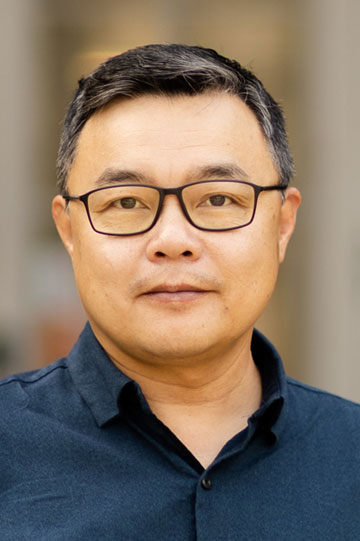
headshot of Mike Yao

Mike Yao, professor of digital media in the Charles H. Sandage Department of Advertising and director of the Institute of Communications Research, explained to NPR’s Community Voices how AI bias is generated by humans and reflects back what it learns from inputs humans provide it. He also discussed how AI can be helpful when designed with human needs in mind.

Students explore media industry in Chicago during inaugural spring break media tour


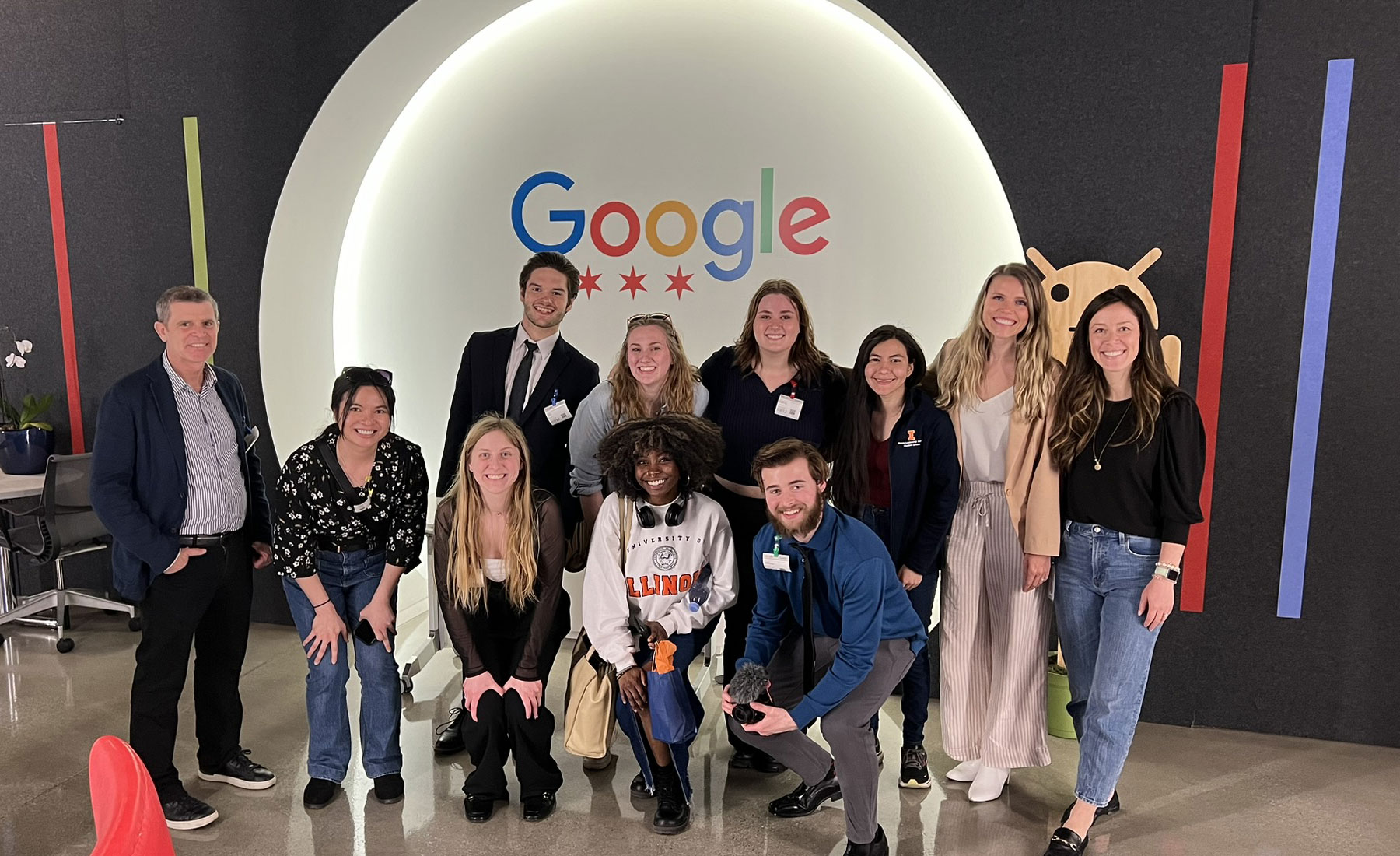
A group of College of Media students participated in a spring break media tour in Chicago, meeting Illinois alumni and visiting various industry sites including advertising agencies, news organizations, and a film studio.

Google

Led by faculty members Victor Font, lecturer in media and cinema studies, and Margaret Ng, assistant professor in journalism, seven students attended the three-day trip, held March 10-12.  

The inaugural trip was an experiential learning opportunity for students to discover more about media-related careers firsthand.  

Bekah Douglas, a junior in media and cinema studies, described the trip as a “once-in-a-lifetime journey” and credits her family and College of Media donors for making the trip possible. 

“I was so lucky to attend the College of Media’s spring break trip and have the chance to meet with the artists that make Chicago (and the world) a better place. The opportunity to travel outside of the classroom, to network, to explore the possibilities of media is priceless,” Douglas said. 

For Douglas, visiting the Lyric Opera of Chicago to participate in a press announcement for the 2024 season with Holly Gilson and her PR staff and touring the opera house, was her favorite memory.

“I have been a devoted opera fan for many years, so getting to learn the history behind the building and hearing from the artists who make the shows possible was very emotional for me,” Douglas said.

Ng also enjoyed the opera house, where students had the chance to sit on stage alongside professional journalists and watch brief vocal performances that previewed the upcoming season. 

“Witnessing the opera house’s level of preparation was a captivating experience. Additionally, observing reporters at work during a press conference taught us a great deal about media coverage of the arts,” Ng said.

Group at ABC7 Chicago

Students also met alumna Judy Hsu (BS ’93, journalism), ABC7 evening news anchor, along with other anchors and hosts, and watched a live news broadcast (pictured at right). 

“We were right behind the camera, watching the entire hour-long program unfold,” said Ng. “[The anchors] interacted with the students during the short off-camera intervals. They were so friendly and easygoing, yet they could swiftly transition back to delivering news concisely and professionally within a few seconds. I was deeply impressed by their focus and professionalism.”

Gavin Schroeder, a senior in media and cinema studies, said the trip was not only fun but informative. He enjoyed meeting other Media students and talking with professionals in their respective fields.

“[The trip] opened my mind to the similarities that people in the workforce experience. What I took away most was the advice on how to assert yourself and stand out, along with knowing how to work in a team environment,” he said.

Kartemquin visit

Schroeder said meeting with communications staff and touring McDonald’s International Headquarters was impressive. As an aspiring filmmaker, the highlight of the trip for him was a meet and greet with Gordon Quinn, founder of Kartemquin Films (pictured at right). 

Penny Bradford, a junior in journalism, was also inspired by a visit to the production studio. She said Quinn’s dedication to public media and storytelling allowed her to see a career she had not yet considered. 

“Overall, the trip brought unique experiences and allowed us to connect with [alumni] of the University, along with others that are currently in positions we may want to see ourselves [in],” Bradford said.

Payton Jarzyna, a senior in advertising, said the trip sparked excitement as she will soon enter the workforce.

“I learned about a lot of fields I didn’t even realize I could go into. I also learned more about the job application process, and how to stand out as a candidate,” Jarzyna said. “The businesses we visited and the people we talked to were super knowledgeable and helpful.”

The itinerary also included conversations with:

  • Michael Phillips, Chicago Tribune film critic and mentor to the College of Media Roger Ebert Fellows 
  • Geno Schellenberger (BS ’20, advertising), communications director at Havas Chicago 
  • Suheily Davis (BS ’04, journalism), vice president, global chief diversity officer, McDonald’s International Headquarters
  • Journalism alumni who work in nonprofit communications and fundraising, including Samantha Kiesel (BS ’13), marketing content manager at Boys and Girls Club of Chicago; Isabel Morales (BS ’13), media relations manager at the Nature Conservancy; and Rosie Powers (BS ’12), strategist for Mission Minded; along with Sarah Morris, Associate Vice Chancellor for Regional and International Advancement at the University of Illinois
WGN radio tour

In addition, students were invited behind the scenes to see:

  • A model and perimeter tour of the Barack Obama Presidential Library with UIC alumna Rebecca Silverman and the communications and content staff at the Obama Foundation
  • Blackhawks Live coaches show with Jon Hansen (BS ‘06, journalism) and Joe Brand at WGN Radio (pictured at right)
  • Google with advertising alumni Katelyn Pringle (BS ’09) and Stephanie Stewart (BS ’08, advertising), both senior account executives

See more photos from their trip.

Advertising and ICR faculty and graduate students recognized at 2024 AAA conference


AAA group of faculty and students

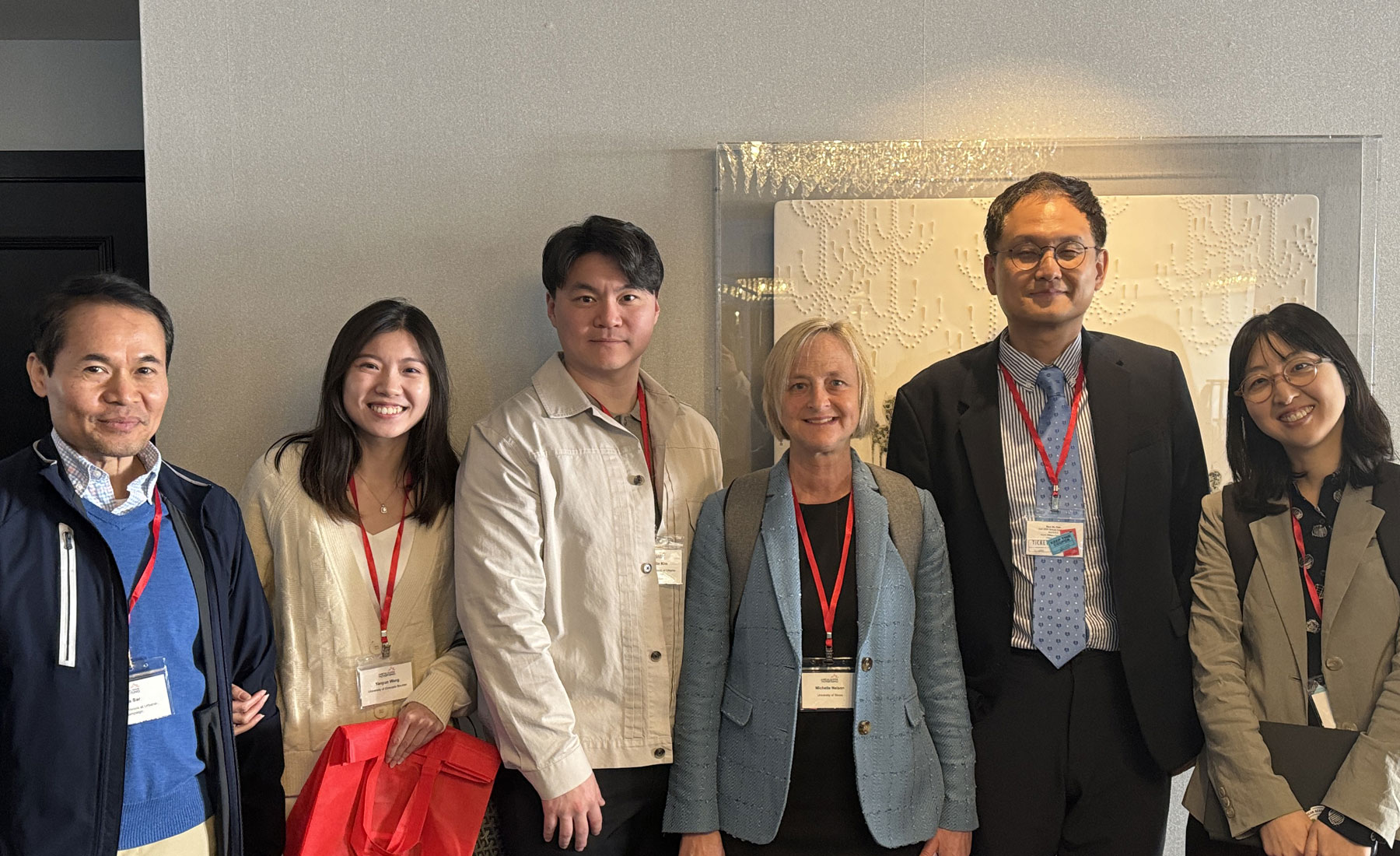
Faculty and graduate students in the Charles H. Sandage Department of Advertising and Institute of Communications Research were honored with awards and presented research at the annual conference of the American Academy of Advertising, held March 14-17, 2024, in Portland, Oregon. 

Nelson AAA award

Professor Michelle Nelson, head of the Charles H. Sandage Department of Advertising, won AAA’s Career Award, the Ivan L. Preston Outstanding Contribution to Research on Advertising Award. As AAA’s top research award, this is designed to honor an individual who has made an outstanding contribution to the discipline of advertising through a systematic and sustained program of published research. The award carries a $1,000 prize. This award is given only to active AAA members for exemplary research on advertising across 20 years or more. 

Chang-Dae Ham, associate professor of advertising and associate head of graduate studies, was elected vice president of AAA and began his term on the executive committee.

Kevin Wise, professor of advertising, was appointed head of AAA’s graduate student committee. 

ICR student WooJin Kim (Advisor: Chang-Dae Ham) won a doctoral dissertation competition award for “When Humans Anthropomorphize Nonhumans: Examining the Role of AI Interactivity and Human Motivations.” Floria Yujin Lee, a graduate student in advertising, won a travel fellowship award. 

(Pictured at top: Professors Sela Sar at left, Michelle Nelson in center, and Chang-Dae Ham at right at the conference with graduate students.)

Presentations

Pre-Conference Panel Session: “How to Develop a Successful Journal Submission: Advice from Editors and Leading Experts” – with presentation “Best practices for experimental studies” by Sela Sar, professor of advertising

Special Session: “Stepping out of the Ivory Tower: Engaged Research & Teaching in Advertising” led by Professor Michelle Nelson

Research paper presentations: 

AAA students present
“Hey, You Put Ads in My Netflix: How Audiences Negotiate the Changing Streaming Video Landscape”
Floria Yujin Lee (MS Advertising), Masashi Fukada (MS Advertising), Paris Baptiste (MS Advertising), Xinle Du (MS Advertising); Professor Michelle Nelson 

“Exploring Motivation to Follow Virtual Influencers (VIs): The Role of Emotional Attachment as a Mechanism for Generating Positive Effects in VI-Endorsed Advertising”
Professor Chang-Dae Ham and Seo Jeong Heo (ICR) 

“When Lonely Hearts Meet Talkative Artificial Intelligence (AI) Chatbot: Exploring the Role of AI Interactivity in Sociality Motivation in the Context of AI-Powered Advertising”
WooJin Kim (ICR), Professor Chang-Dae Ham, Dongchan Lee (Northwestern University), Se Il Park (ICR), Seo Jeong Heo (ICR), Floria Yujin Lee (MS Advertising) 

Michelle and Regina with alpaca and llama

(Pictured above: Alumna Regina Ahn (MS ’14, advertising; PhD ’19, ICR) and Professor Michelle Nelson met a llama and alpaca during the AAA conference.)

See more photos from the conference.


Advertising alum wins prestigious award for ag entrepreneurism

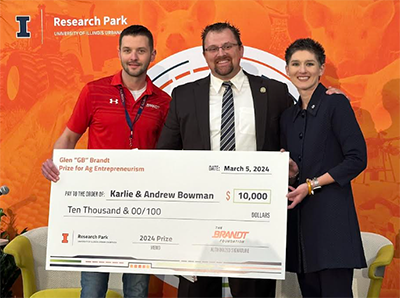
Alumna Karlie Elliott Bowman (BS ’09, ACES; MS ’10, advertising), and her husband Andrew Bowman, were awarded the 2024 Glen “GB” Brandt Prize for Ag Entrepreneurism, announced during the 2024 AgTech Summit hosted by the University of Illinois Research Park.

The prestigious award recognizes a grower, producer, or farmer who exemplifies an entrepreneurial spirit and advances innovation in agricultural practices and products.

Working with the University of Illinois, the Bowmans have developed new popcorn hybrids, resulting in specialty red and blue “hull-less” popcorn. They market the product behind the tagline, “No toothpicks required.” They have also pioneered an automated in-store popcorn demonstration unit, a reflection of their forward-thinking approach to product marketing and customer engagement.

The Bowmans are fifth-generation farmers near Oneida, Illinois, with more than 1,800 acres of corn and soybean seed beans. Karlie is also an account manager at Hill+Knowlton Strategies, one of the world’s leading strategic communications companies. 

Read more about the ag award.

See their consumer site: https://pilotknob.farm

Bowmans

How will generative artificial intelligence affect political advertising in 2024?


Michelle Nelson
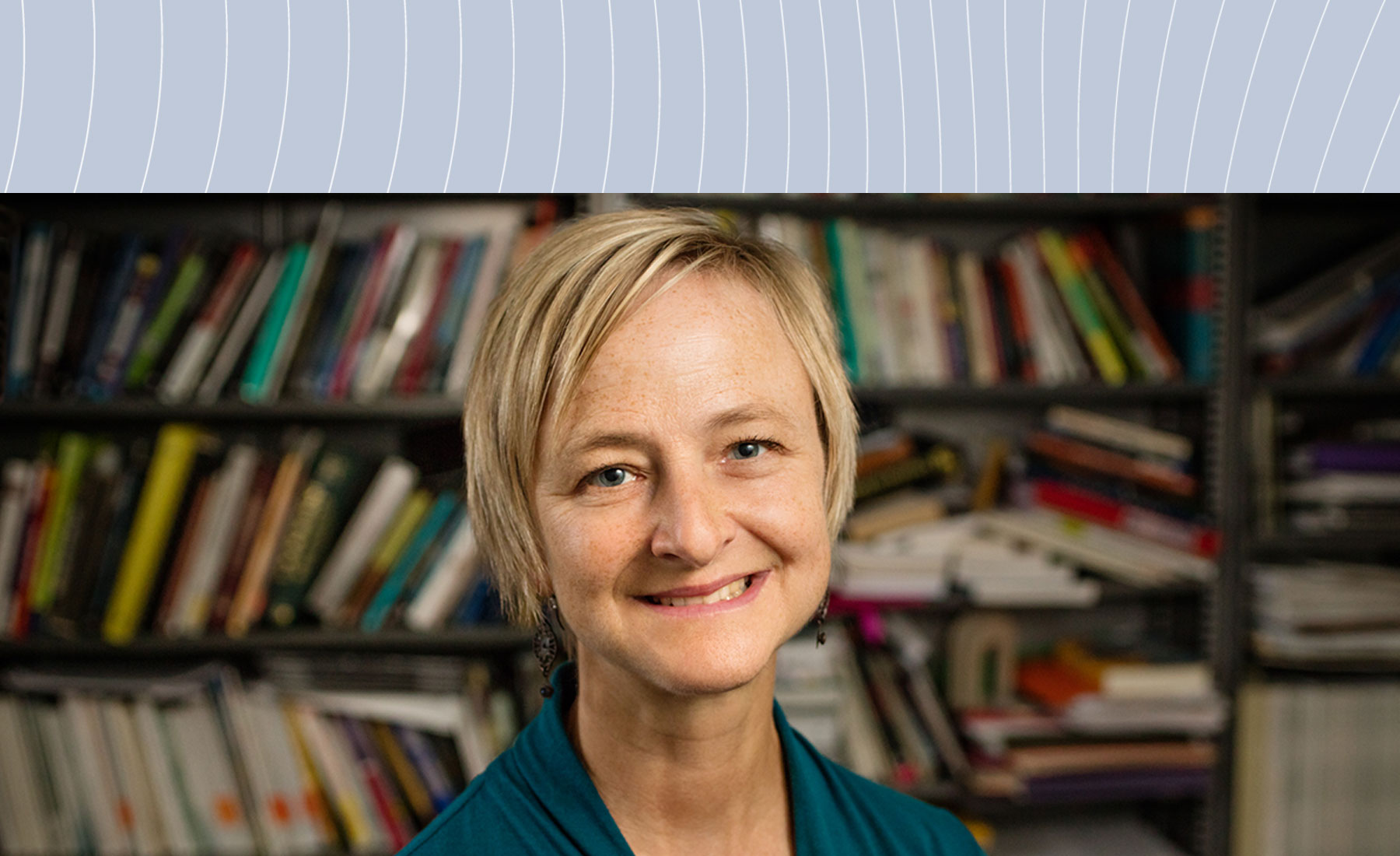
Michelle Nelson, professor and head of the Charles H. Sandage Department of Advertising, says voters should expect to see a lot more generative AI in political ads during the 2024 election cycle, warning that it might be difficult-to-impossible to tell what’s real and what’s fake. (Photo by L. Brian Stauffer.)

It’s estimated that $12 billion will be spent on political ads this election cycle—30% more than in 2020. The sheer volume of ads is remarkable, and there is vast potential to use this political information to contribute to democracy: to reach more potential voters and provide accurate information. There’s also more potential than ever for generative artificial intelligence to misrepresent candidates and policies, leading to confusion in the voting booth. News Bureau editor Lois Yoksoulian spoke with advertising professor and department head Michelle Nelson about the topic.

How is AI used in political ads, and what are some recent examples of AI-generated political ads?

After President Joe Biden announced his re-election bid, the Republican National Committee released an AI-generated political advertisement that depicted a dystopian world should Biden be re-elected. The video ad features a number of “what if” questions (e.g., What if crime worsens?) with AI-generated images. This is a classic fear appeal-negative attack ad. Emotional ads reach us, and we remember them—like the famous Daisy political ad used during the 1964 election cycle or the Willie Horton ad used in 1988. But they may also get some backlash for being too negative, too manipulative, especially because they are using AI.

Some say the Joe Biden RNC ad is the first AI-generated ad, but it’s hard to prove. However, in the top left corner of the ad, you see a disclosure in a small font: “Built entirely with AI imagery.” The video description on the GOP’s YouTube page says, “An AI-generated look into the country’s possible future if Joe Biden is re-elected in 2024.” So they are not hiding the use of AI. There’s also a spoof ad that ran on The Daily Show, which uses an AI-generated voiceover for Biden. It’s pretty easy these days to use AI tools to create content and make it look pretty real.

Are the entities behind these types of ads required to disclose that AI has been used?

The Federal Election Commission, the governmental body that regulates political communication, including advertising in the U.S., sought public comments on amending a regulation related to the use of deliberately deceptive AI in campaign ads at their meeting titled 2023: REG 2023-02 Artificial Intelligence in Campaign Ads. They have not yet made a ruling here. However, states such as California, Texas, Michigan, Washington, and Minnesota have enacted new state laws where any deepfake AI images, video, or audio need to be labeled in. A similar law is being discussed here in Illinois. It’s not clear how these state laws relate to the Constitution.

Some tech companies have started requiring disclosures. For example, Google indicated that all AI-generated political ads shown on YouTube or other Google platforms “that alter people or events” must have a prominent disclosure. There is also a verification process for political ads in some regions.

Microsoft has started their “Content Credentials as a Service” which is like a watermarking tool—it lets users digitally sign and authenticate the media—whether it’s an image or video through their Coalition for Content Provenance and Authenticity. The idea is that the watermark serves as metadata so users can see the history of the content. For example, “how, when, and by whom the content was created or edited,” whether by a person or AI. This information stays with the content so anyone can see the origin.

To what extent AI-generated political content is now being watermarked or disclosed I have no idea. It seems difficult to police all of these images at this moment in time.

What is the potential harm of using AI in political ads? 

The concerns for harm relate to possibilities for deepfakes and disinformation. Others can re-create something using AI voice or images without authorization to create stories and content that are absolutely untrue.

We’ve had tools and technology in the past, like Photoshop to manipulate existing images. Do you remember the 2004 ads featuring altered photos depicting John Kerry, the Democratic nominee for president, and Jane Fonda at an anti-Vietnam War rally? Ads are regularly embellished or altered: The colors or lighting are changed to make people look ominous or more youthful. But this is different. This is a whole new level. Anyone can make AI messages using free tools such as Open AI’s ChatGPT or Google’s Bard. This may be good when used responsibly, or it may be harmful.

Our research shows that many people don’t know that the First Amendment protects political advertising in the U.S. Political advertising is not held up to the same standards as commercial advertising, say for a cheeseburger. The Truth-in-Advertising laws by the Federal Trade Commission do not apply to political ads. That means political ads can legally be deceptive or lie. Of course, there are libel laws, but they are rarely used in this arena.

Beyond this regulatory difference in commercial and political advertising, the idea is that we want free-flowing political information to contribute to a dialogue that can enhance our democracy. Too much regulation can have a chilling effect on political speech. Yet the potential today with AI to lie and deceive and to deploy these messages in a personalized manner and at a grand scale offers a challenge perhaps to our thinking about regulation and political advertising.

Do you have any advice on how consumers can spot the use of generative AI in political ads?

They can’t. You can look for irregularities like the number of legs on the cat. But it is getting harder and harder to tell if AI makes an image or video. Whether it’s Taylor Swift, an image of Trump in jail, or a funny meme, we can’t always tell, especially as we scroll through our social media feeds. The best we can do is hope that the tech industry develops systems able to trace the origin of the content so we can see who made the image and when and how. If this tech is built in, it’s harder to fool people. We could also encourage disclosure mandates among tech companies.

But in the age of this kind of media and in an election year, we need to focus on the basics of media literacy—looking for reliable sources of information, watching the political debates and trying to form our own informed opinions.

Editor’s note: To reach Michelle Nelson, call 217-344-5068; email nelsonmr@illinois.edu

View original press release.

Q&A with Carrie Wilson-Brown

Get to know some of our College of Media faculty. Carrie Wilson-Brown is a lecturer of media and cinema studies and of advertising.

What’s it like to teach two Media majors?
The Charles H. Sandage Department of Advertising has incredibly creative faculty and creative classes, and we tend to dive into the social sciences. Most research by the tenure-track faculty is on effects: how advertising affects populations, why people are persuaded by particular messages, or what pushes us behaviorally. It’s also capitalism and buying, and for me, what’s so intriguing is coming from a creative space to get to the minutiae of what makes people psychologically tick. In the Department of Media & Cinema Studies, there’s a community of creative people who love film and television; they love to talk about film, television, and storytelling, and also the industry. I’m able to mold them together, but I get something so vastly different from the students and faculty as well.

You double-majored in journalism and communication, yet lecture on different topics. What were your reasons?
It doesn’t seem like it would have relevance with advertising, but some of the relevance is that we read advertising texts like any story, if you think about it. When I ask students, “Why advertising classes,” all can point to an advertisement that tugged at their heartstrings or made them cry or joyous. People who love certain ads see them as a way to tell stories, not only as a way to sell products to audiences. Advertisements are created for more than that, building culture with each one that is produced. On the other hand, I’m mostly doing video production classes, and 15 years later, with social media, this is what people do, and it’s such a beautiful process to see. [Students] are storytellers out of the womb, always with a camera in your hand. I love visual culture; I love helping students create visual culture.

What courses are you teaching currently?
I teach three courses this semester, two in advertising and one in media and cinema studies. I teach ADV 301: Becoming an Influencer; ADV 393: Advertising and Society; and MACS 203: Contemporary Movies. I’ve only taught it twice, but MACS 203 is fun to teach because I take “contemporary” very seriously—something I’ve watched in the past three to four years. There are a lot of films that slipped under the radar during COVID-19, so it’s great to pick newer films. We watch the movie, and then we try to apply concepts in small prompts. It’s one of those spaces of joy for students in their day where I’m like, “Let’s go watch movies.”

What has been your best memory from teaching here?
Last semester, I taught ADV 393: Advertising in Society for the first time, and I don’t have a traditional advertising background. I think when I talk about advertising, it’s from a bit of a different perspective, and there were a couple of moments where a group of four or five students wanted to clap after my lecture because it was such a crescendo. Sometimes, as professors, we get hung up on dictating knowledge, but when someone says they want to clap, they feel engaged with what I was saying and want to listen to me.

What’s one piece of advice you would give to students?
There’s no one way to be successful at college. It’s easy to be trapped because you have friends, roommates, or siblings you see are successful—whatever that looks like to you. Maybe they’re paving their way through higher education in a very particular manner, whether that’s joining groups, being in fraternities or sororities, or staying up until three in the morning. But, if you look around, you are in a community of around 43,000 people, and everybody seems to do their successes differently. Don’t figure out the formula to success because that might not be your formula. Find the way that’s best for you.

—Interview by Chloe Barbarise, New Voices Intern

College of Media
119 Gregory Hall
810 S. Wright St.
Urbana, IL 61801
217-333-2350