Anderson Cobb produces play about insurrection

Update March 7, 2023:

Anderson Cobb facilitates workshop on her play about insurrection

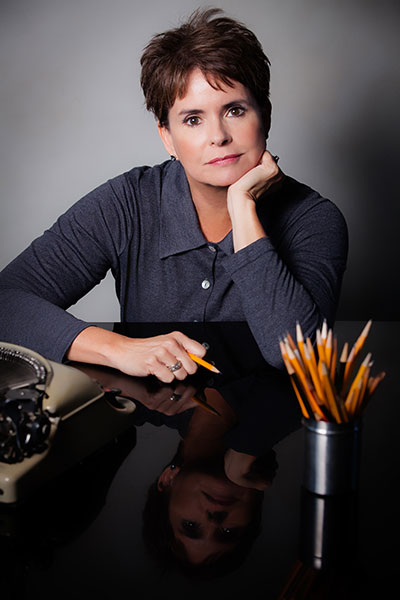
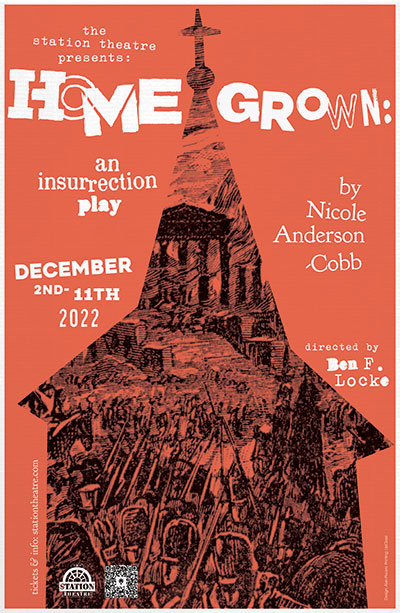
Nicole Anderson Cobb (MS ’16, journalism) recently facilitated a community workshop about her play Homegrown: An Insurrection Play, following a free screening at the First Mennonite Church of Champaign-Urbana. 

The play had previously run at the Station Theatre in Urbana in December and was also available to view virtually in February.  

During the workshop, community members gathered to discuss the themes of the play and how they relate to a person’s civic duty. 

Learn more about her play in this News-Gazette feature.


12/15/22

Nicole Anderson Cobb (MS ’16, journalism) was recently featured on Illinois Public Media radio program The 21st to discuss her play, Homegrown: An Insurrection Play. The play ran December 2-11 at The Station Theatre in Urbana. During the interview, she discussed the insurrection and the process of writing and producing the play. 

Anderson Cobb, an author, historian, and playwright, said Homegrown: An Insurrection Play considers the impact of January 6, 2021, on a fictional church community grappling with the pandemic, political polarization, and racial protest. She holds multiple degrees from the University of Illinois: BA ’95 in political science, MA ’99 in history, and PhD ’07 in history.

Watch the play’s trailer:

‘Illini Sports Night’ airs first show on B1G+ network


Update 5/9/2023: Congratulations to the students who produced this broadcast! They won the 2023 NATAS Mid-America Student Production Award in the College Sports Program category.

Illini Sports Night pregame show
(Photos by Carla Erdey.)

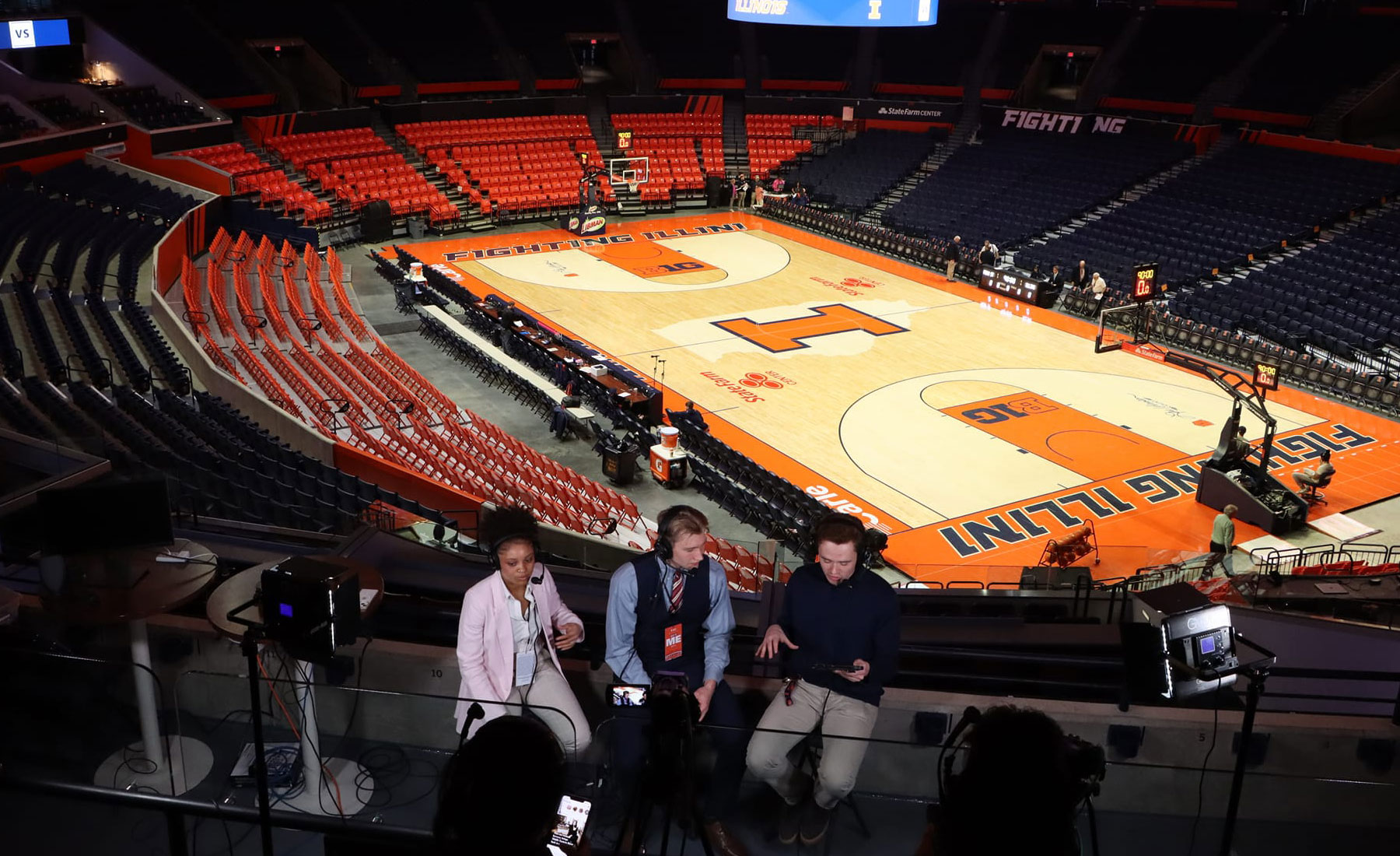
Illini Sports Night hosted a live pregame show at State Farm Center on February 19 before the Fighting Illini women’s basketball game—the first-ever collaboration between the B1G+ network and the student-produced broadcast. The half-hour show aired on B1G+, which livestreams non-televised games.

Emmie Larson, senior in journalism and executive producer of Illini Sports Night, said students prepared for their national broadcast for three weeks.

“It was awesome to see that hard work and preparation create a live show,” she said. “This is something we’ve all never done before. It was cool to know we were capable of doing that.”

The pregame show focused on the Illinois women’s basketball team and the Penn State team, featuring interviews with players on both teams, commentary from the student anchors, and a sit-down with Illinois women’s basketball head coach Shauna Green. (Watch their special broadcast below and see behind-the-scenes photos.)

Illini Sports Night is part of UI7 Newsroom, where students write, produce, and report on all sports at the University as part of the journalism curriculum at the College of Media.

“The Illini Sports Night team had the opportunity to expand the reach of the program on a national scale and gain invaluable experience that will serve them in their future career pursuits,” said Kenneth Erdey, instructor and technical coordinator for Richmond Studio, the site for the student broadcasts.

Illini Sports Night pregame show team

Adrian Carrasco, senior in journalism and producer of the show, said he’s learned a lot from this experience and from his peers.

“That’s the great thing about working here—everybody’s so prepared and on it,” he said.

While their pregame show at State Farm Center did have some unexpected elements, Carrasco said they all took it in stride and learned something new.

During their live show, former women’s basketball head coach Theresa Grentz was honored with a banner unveiling—something the Illini Sports Night team thought would happen after their show ended.

The team quickly adjusted the end of their show, with anchors remarking on the historical impact of the moment, before transitioning to B1G+ programming.

“As our job, we kind of have to be ready for everything,” Carrasco said. “We have to be ready to solve any issues that come and just be on our A-game.”

Larson said one of her biggest takeaways from the show was that you can never be too prepared.

“If you keep your head in the game, you can create something very cool and very successful,” she said.

Illini Sports Night airs Tuesdays at 7 p.m. Watch past broadcasts. 

Richmond Studio to undergo $2M renovation to create state-of-the-art broadcast facility


Richmond Studio

Students in the College of Media will have access to a state-of-the-art broadcast studio and newsroom this fall after nearly $2 million in renovations are completed at the Richmond Studio.

Since 1999, the studio—connected to Campbell Hall, the home of Illinois Public Media—has served as the site for the college’s broadcast journalism courses. Three student broadcasts are currently produced at the studio for the University of Illinois public access TV channel UI7, including UI7 Live, Illini Sports Night, and Good Morning Illini.

The renovation project, which will begin in mid-March and is expected to reach substantial completion before the Fall 2023 semester begins, is made possible thanks to a gift from Richard and Leslie Frank. In 2020, the Franks gave the College of Media $7.5 million—the largest gift in college history—to establish the Richard and Leslie Frank Center for Leadership and Innovation in Media and to renovate Richmond Studio. This project is the first major overhaul of the building since it was erected in 1996, funded by a $2 million gift from Jack C. and Marjorie Laird Richmond.

“Through their enthusiastic support and generosity, Richard and Leslie Frank are ensuring our next generation of broadcast journalists will enter the profession ready to make an impact,” said Mira Sotirovic, associate professor, Karin and Folke Dovring Scholar in Propaganda, and head of the Department of Journalism. 

The renovation project includes a fully remodeled studio with a new control room. A new equipment storage and check-out room will be built, as well as a video and audio production room where students will be able to record podcasts. 

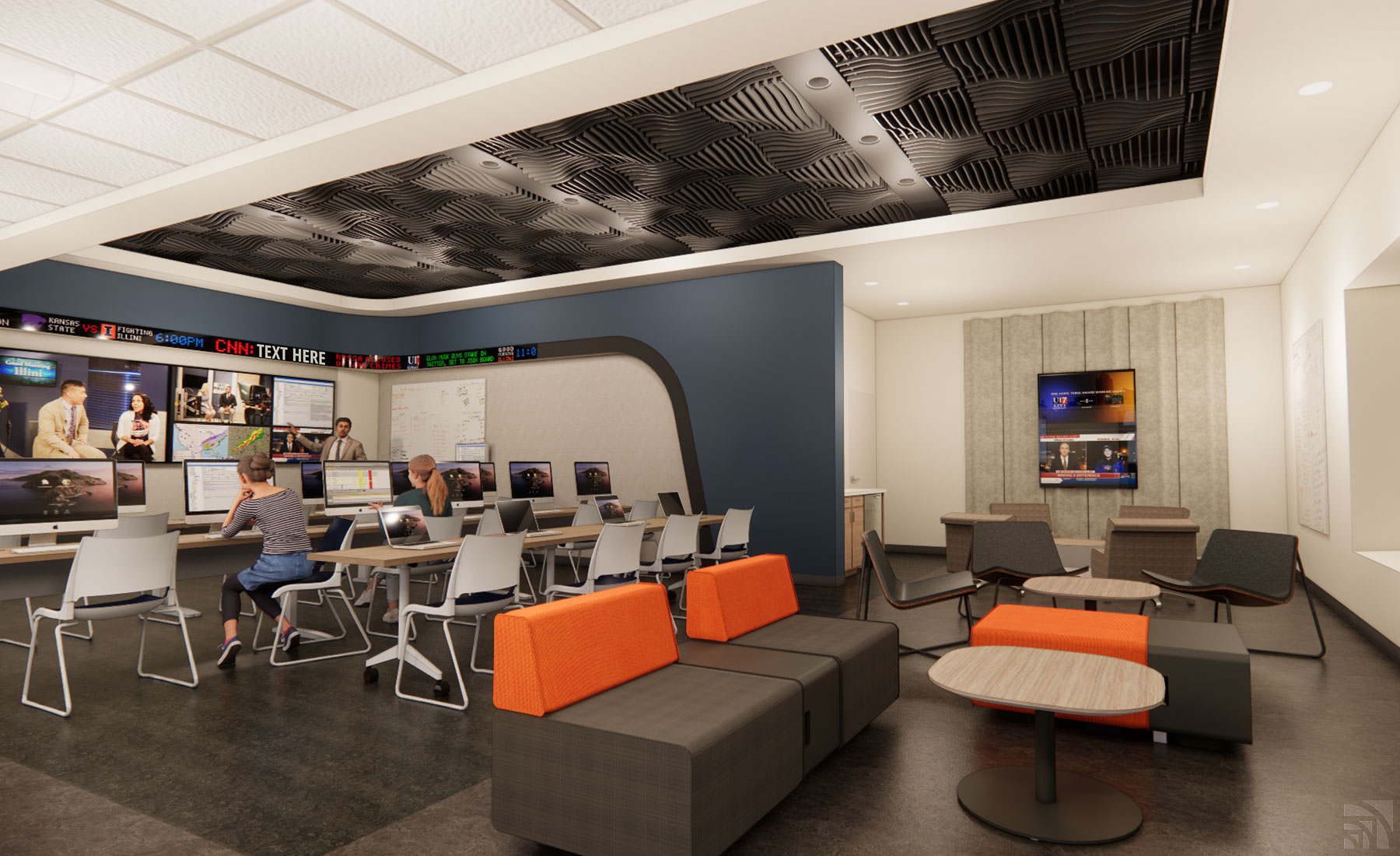
The existing classroom and computer lab located adjacent to the studio will become a collaborative room that serves not only as a class meeting space with a lab but also a newsroom and green room. A scrolling, LED news ticker will be installed around the perimeter of the newsroom and computer lab area. (Pictured above is a rendering of the newsroom and green room.)

Most of the current equipment—including studio cameras, lights, and the control systems—will be upgraded to more modern versions that newsrooms around the country are currently using, allowing students to learn best practices. 

“My commitment to the University of Illinois, and Leslie’s career and passion for journalism, inspired us to want to give back to the journalism program by creating a new, state-of-the art broadcast facility,” Rich Frank said. “We are really impressed with the program here and the people who are dedicated to making it one of the top in the country.”

“Shaping journalists starts at the university level,” said Leslie Frank. “We feel that the University of Illinois has a fantastic journalism program and think our contribution will only enhance it, giving students more advantages and opportunities to become successful in their future journalism careers.”  

Richmond Studio broadcast
Students on the set of Richmond Studio broadcast an episode of UI7 Live. (Photo by Kenneth Erdey.)

Kenneth Erdey, instructor of journalism and technical coordinator for the Richmond Studio, says he’s excited to see the new opportunities the renovations will bring to students. 

He expects to see expanded televised programming, live reporting from various locations outside of the studio, and more breaking news coverage, which will be beneficial to students. 

“On-camera talent is going to get better because there’s going to be more opportunity for them to [be on-air],” Erdey said. “Newscasts will improve because there will be more opportunities to cover breaking news.”

Alison Davis, lecturer of journalism and Emmy-award winning documentarian, is thrilled about the revamped studio and increased access to experiential learning. 

“The renovated space will not only give students access to the latest technology but it will be a space for collaboration,” Davis said. “We hope students in all classes will use Richmond to further their creativity and journalism skills whether it is joining the UI7 Newsroom RSO, creating a podcast, anchoring a newscast, or producing their own TV show.”

Erdey, who has taught at the studio for 12 years, says his goal has always been to give students a sense of a real, working newsroom. 

“I want this building to be a working experience, but also allow students to make the mistakes they need to make before they get their job,” Erdey said. “The work students are doing here is not just college work, it’s [broadcast] television.” 

March 10 is the last day classes will be held at the studio before it’s closed for construction. However, students will continue reporting for the duration of the semester, making video stories to be uploaded to ui7newsroom.com. Live studio shows will be limited to one special per show. 

“The Department of Journalism is dedicated to preparing students for an industry that will continue to evolve with changes in technology,” Sotirovic added. “When Richmond Studio reopens, the new experiences it will offer will give students a distinct career advantage in today’s dynamic media environment.”

Alumna Karen Petitte’s distinguished career advances gender equality in journalism


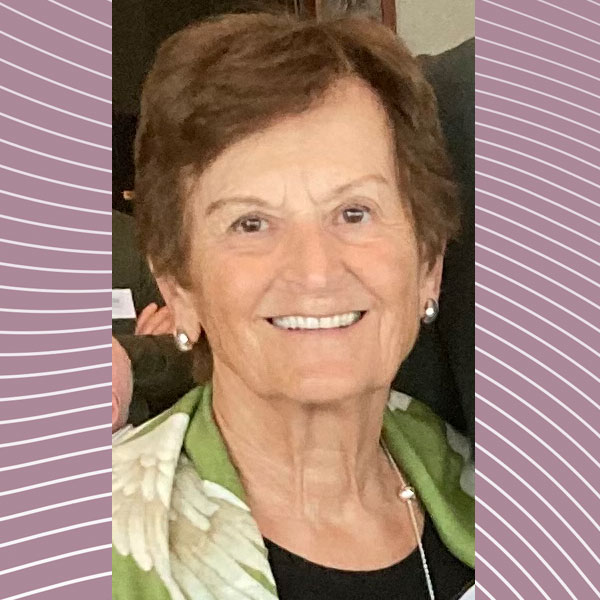
Karen Petitte

University of Illinois alumna Karen Lucas Petitte pursued a career in journalism at a time when barriers were common for women, and opportunities were few. But that didn’t stop the visionary trailblazer from building an illustrious career as an award-winning journalist—and helping to advance gender equality in journalism along the way. 

Petitte’s inspiration to become a journalist came from an unlikely source—the newspaper comic strip, Brenda Starr, Reporter. Petitte loved following the adventures of chic, newspaper reporter Brenda Starr, who traveled around the globe breaking stories (and, probably, just as many hearts).  

“She was quite glamorous, and I think at some point she met some dashing guy with a patch over his eye, and I thought, ‘Oh, I want to do that. That sounds great,’” Petitte said.  

Petitte, who earned two journalism degrees at Illinois (BS ’63, MS ’67), would eventually become a newspaper reporter like the comic book heroine. But it’s the comic’s creator, Dale Messick, whom she would truly come to emulate.

Dalia Messick, who used the pseudonym Dale Messick to avoid gender bias, was a rarity in those days as a female cartoonist. Like Messick, Petitte would forge her own path through a male-dominant field, opening doors for more women. 

After graduation, Petitte worked briefly at the Chicago Tribune and then joined the Chicago Daily News in 1968, assigned to an education beat. Originally, she had applied for an overnight reporter shift at the Chicago Daily News but was told it was “too dangerous” for women.

Although education was traditionally considered a “woman’s beat,” she was happy for the opportunity to break into the newsroom. In 1973, Petitte and a colleague won first prize from the National Council for the Advancement of Education Writing for an investigative piece on financial misconduct at Malcolm X College in Chicago. 

“It was kind of inspiring to be able to report on some of those activities, trying to bring to light things that many people would just as soon have kept in the dark,” Petitte said. 

After an initial focus on education, and later, consumer affairs, Petitte would go on to cover a variety of news stories including disasters, fires, and gender equality issues. She covered a protest at a local Chicago restaurant that had a men’s-only bar area and wrote about the discrepancies in men’s and women’s salaries. 

Eventually, Petitte was offered a position as assistant city editor at the Chicago Daily News—the first woman to ever be considered—and although she preferred reporting, she knew she couldn’t refuse.

“I didn’t really want to be an assistant city editor at the time; I like to report. But I figured, maybe I better do this, because if we [as women] keep asking for these jobs, and then we don’t take them, they’re not going to take us seriously,” Petitte said.

In 1979, Petitte took a brief detour from journalism and tried government. She spent over three years working as Chicago’s consumer affairs commissioner under Mayor Jane Byrne—the first woman to be elected mayor of a major city in the United States. That appointment enabled Petitte to help enforce consumer regulations as opposed to writing about them. 

When Byrne’s term ended, Petitte considered going into public relations but ultimately decided to return to journalism, this time entering the magazine field. Petitte worked as editor of Consumers Digest and then Modern Healthcare and Modern Physician, published by Chicago-based media company, Crain Communications. Petitte stayed with Crain Communications for 16 years before retiring in 2001. 

Petitte’s 40-plus-year journalism career is comprised of prestigious honors, including the first female president of the Chicago Newspaper Guild, an inductee into the Chicago Journalism Hall of Fame, and among the first women to serve as editor-in-chief of The Daily Illini from 1962 to 1963. 

Petitte, who was inducted into the Illini Media Hall of Fame in 2007, has fond memories of her time at the student newspaper, including working alongside the late film critic Roger Ebert (BS ’64, journalism), whom she recalls as “quite a character” and a “very smart, capable, witty guy.” And because she worked evenings at The Daily Illini, she was provided a key to get into her dorm room after the University’s curfew for women—a perk Petitte valued, knowing she had the freedom to choose her own schedule. 

In the latter part of her career, Petitte was able to mentor younger writers, sharing the skills she’d learned over her many years of reporting. She said that helping young people move along in their career was something she enjoyed more than she expected. 

Ten years ago, Petitte found another way to bring along the next generation of journalists by creating the Karen Lucas Petitte Endowed Scholarship in Journalism.

“It just seemed to me a good way to pay back the college for the education that I received, and the knowledge that allowed me to go on and build a career that was very satisfying and rewarding and fun,” Petitte said.

The endowed scholarship, created in 2003, is based on academic merit and financial need, and has created an impact and connection with students that Petitte finds extremely rewarding.

Petitte has met a few of the scholarship winners and has received many thank-you letters—reminders that she’s still helping to pave the way for future journalists, even in her retirement. 

Petitte said she has seen a gradual shift over the years, with more opportunities available for women in journalism. While she’s hesitant to take too much credit for that progress, she is grateful to have had any impact at all.

“It’s a good feeling to know that you helped change some of the patterns, and that there’s some women who came behind you who have some more opportunity,” Petitte said. “I think that’s what it’s all about.”  
Geography, language dictate social media and popular website usage, study finds


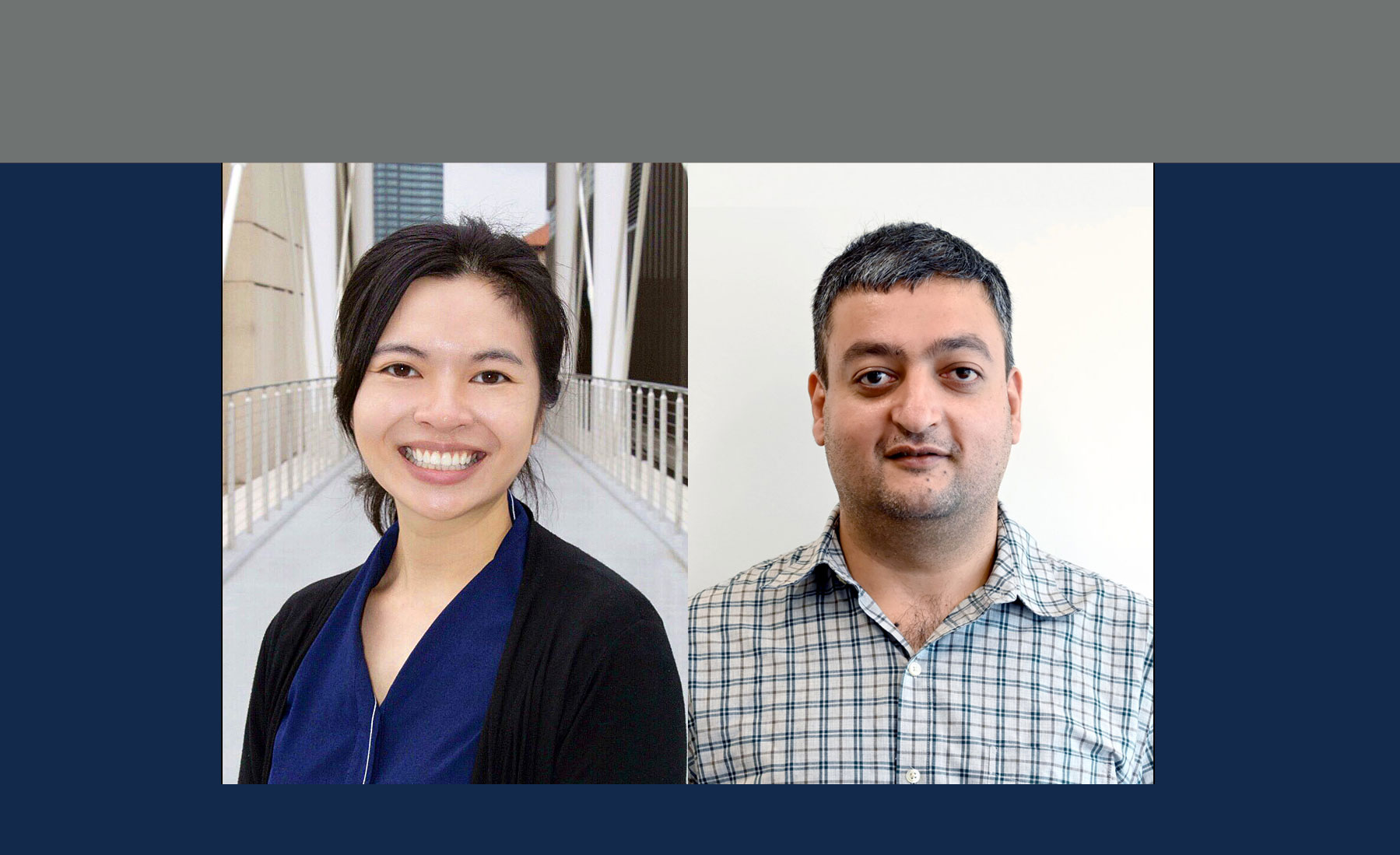
Ng and Taneja

Since its inception, the Internet has been viewed by technology experts and scholars as a way to access information at a global scale without having to overcome hurdles posed by language and geography. However, researchers at the University of Illinois Urbana-Champaign found that how people around the world use the same popular social media platforms and websites remains vastly different based on their language and geography.

A new study by Harsh Taneja, associate professor of new and emerging media in the Charles H. Sandage Department of Advertising, and Margaret Yee Man Ng, assistant professor of journalism, builds upon previous research and examines Internet consumption across 124 countries through their usage of popular websites, as well as Twitter and YouTube—two globally dominant social media platforms.

The results of the new study are published in the journal PLOS ONE.

“The goal of this work was to develop ways to assess which countries are most like each other in the usage of these popular websites and social media platforms and to identify factors that explain the similarities,” the researchers said.

The team found that language and geography remain the most salient predictors of web usage, and their role on YouTube and Twitter is just as significant as on the wider web.

“This is true of the websites they visit and also how they use social media,” Taneja said. “Sure, YouTube is the most popular online outlet in most of the world, but people in Nepal on average do not watch the same videos as people in the United States.”

The team collected and compared trending Internet traffic data and the use of hashtags for the two most popular social media platforms—Twitter and YouTube—and the 500 most-visited sites using Alexa’s Global Rank in the 124 nations studied.

“We chose to work with Twitter and YouTube because although they are both very popular, they attract different audiences, so they capture a very wide slice of Internet use,” the researchers said.

“Our analysis suggests that global web use is quite heterogeneous, whether it is website traffic or in how people use Twitter or YouTube, with social media usage being even less similar overall than the usage of websites,” Ng said.

Previous studies have shown that the free exchange of information has been hampered by government regulations and protections in nations like Russia and China, for example.

“However, government regulation is not the only reason for the restrained flow of information,” Taneja said. “Our study offers empirical evidence that people generally prefer content that focuses on their region and in their language.”

While using data reflecting trending YouTube videos and Twitter topics via hashtags may not wholly capture Internet consumption numbers, it works well as a proxy to gauge consumption on these platforms, the researchers said.

“An important caveat of this work is that we must acknowledge that trending topics are not purely based on consumption,” Ng said. “There is some sort of a black box that determines the complete picture, but tracking hashtags is an effective proxy and less biased than methods involving geolocation, for example, because many users do not reveal their location while browsing.”

Taneja and Ng said the study is beneficial to researchers studying the global flow of information—and, importantly, misinformation—and for web content producers interested in gaining a larger or more targeted global audience.

Seed funding from the Center for Social and Behavioral Science at the University of Illinois Urbana-Champaign supported this study.

Editor’s notes:

To reach Harsh Taneja, email harsht@illinois.edu.

To reach Margaret Yee Man Ng, email ymn@illinois.edu.

The paper “Web use remains highly regional even in the age of global platform monopolies” is available online and from the U of I News Bureau. DOI: 10.1371/journal.pone.0278594

View original press release.

2022 College of Media Teaching Award recipients announced


Each academic year, the College of Media seeks nominations for a teaching award that honors faculty who display a strong commitment to the undergraduate teaching mission. This year, Josh Heuman and Yiran Gao have been recognized as recipients of the 2022 College of Media Teaching Awards. 

Heuman

Heuman, a teaching assistant professor in the Department of Media & Cinema Studies and the Department of Journalism, received the Award for Excellence in Undergraduate Teaching by a Specialized Faculty Member. Heuman’s teachings range widely across the field of media studies, including courses in media industries, media law, media history, media theory, and media genre, narrative, and style. His research explores media industries and regulation, especially in television, with an emphasis on the regulation of media work. He’s also interested in the evolution of the television writers’ room where stories are first introduced.

Gao

Gao, a doctoral student at the Institute of Communications Research, received the Award for Excellence in Undergraduate Teaching by a Teaching Assistant. Since Spring 2018, Gao has consistently been ranked as excellent by her students, based on Instructor and Course Evaluation System (ICES) questionnaire forms. Her interdisciplinary research interests lie at the intersection of media studies, critical cultural studies, science and technology studies, and global studies. Her current research focuses on the roles and the impact of digital media on the formation of digital public sphere at a transnational level.

Award-winning journalism alumna Kalodimos releases true crime podcast

Award-winning alumna Demetria Kalodimos (MS ’83, journalism) has released a nine-part true crime podcast about a 1975 cold case murder.

Carol’s Last Christmas examines the murder of Carol Rofstad at Illinois State University in 1975. The podcast, which was produced by Kalodimos’ company, Genuine Human Productions, is the culmination of a two-year investigation with Alexandra Daskalopoulos, a journalist and legal researcher, and George Seibel, a retired Chicago police officer who founded the Institute for Cold Case Solutions at Morton College.

Kalodimos, who was named Tennessee Broadcaster of the Year in 1995 and inducted into the Tennessee Journalism Hall of Fame in 2016, was a television news anchor at WICD Channel 15 in Champaign before her 34-year career as principal anchor and investigative reporter at WSMV-TV Nashville.

In addition to podcast, documentary, and music video production, she is currently executive producer of the non-profit, web-based Nashville Banner, a locally owned, civic news organization.

Kalodimos has anchored and reported the news for more than 40 years and has won some of the top awards in broadcast journalism including 16 Emmys, three Investigative Reporters and Editors national awards, and three Edward R. Murrow Awards for investigative reporting. She was named 2021 Professional in Residence at Lipscomb University School of Communication.

Kalodimos

New journalism master’s degree track focusing on science and technology receives campus funding

MS Journalism in science and technology

With a significant need for professionals to communicate science, discoveries, and innovations to the general public, a flexible hybrid/online program—with a focus on science and technology—will be offered through the journalism master’s degree beginning Fall 2023.

Students can earn the Master of Science in Journalism degree with a focus on science and technology journalism entirely online in as few as two semesters full-time or can tailor a part-time schedule over additional semesters. Students also may opt to take courses that “stack” to a professional credential, and those courses can later be applied to a degree. 

The new program is a collaboration between the College of Media and the Carl R. Woese Institute for Genomic Biology and was one of 10 projects selected this year to be funded by campus’s Investment for Growth program, to enhance the visibility and impact of the University of Illinois. 

“The Department of Journalism is proud to expand our curricula to train current and future journalists how to communicate important scientific and technical information to the general public,” said Mira Sotirovic, head of the Department of Journalism and associate professor and Karin and Folke Dovring Scholar in Propaganda. “We have seen a growing interest in, and a growing need for, science communication and are thrilled to receive Investment for Growth funding to begin meeting the demand.”

The new curricula will also offer a science and technology communication certificate for undergraduates, and the online 400-level courses in this track will expand paths to degree completion for undergraduates.

“Scientific research and innovation are present in our daily lives, in seen and unseen ways,” said Claudia Lutz, outreach manager at the Institute for Genomic Biology. “As the last few years have reminded us, this is particularly true of the field of genomics, which intersects with almost every aspect of both life sciences and society. We are excited to help give future science journalists an inside look at how science is done and a broader awareness of its impact.”

The timing of this program coincides with needs voiced by the science communication industry for such training, especially since the COVID-19 pandemic, but also to report on critical stories of our time including climate change, nuclear and chemical warfare, and health and wellness. For example, Scientific American published “How the Pandemic Remade Science Journalism,” (2022), NiemanLab reported on “Reporting That Hits Home: Covering Science for Local Audiences” (2022), and the Proceedings of the National Academy of Sciences covered “Science Audiences, Misinformation, and Fake News” (2019). 

The online master’s program and individual course modules are ideal for journalists and prospective journalists who want to improve and specialize in science writing or to gain a competitive advantage in the field; scientists and their academic colleagues who wish to be more effective in communicating to lay audiences; and communications professionals who work for nonprofits, government agencies, or science- or technology-focused corporations who are interested in boosting their skills and understanding.

Courses will cover writing science stories in plain English; the basics of data journalism, including building databases and analyzing data; visualization in newsrooms; humanizing data through video storytelling and humanizing science communication by harnessing virtual reality; and more. Students will also examine the science of genomics and its applications to environment, health, and technology through course modules. See a sample course sequence for the master’s degree and sample course modules.

As part of the preparation for enrolling students next fall, the Department of Journalism is hiring a new professor in science, technology, data, or digital journalism to supplement the course offerings. 

“They will have an important role in the new concentration,” Sotirovic said. “The new faculty member will teach courses in science journalism, as well as some combination of courses in data journalism, social media analytics, and other courses based on their own expertise and interests.” 

Additionally, the Institute for Genomic Biology is hiring a postdoctoral fellow in science communications curriculum coordination. This position will help develop course materials and oversee experiential learning for students in the program.

Learn more about the program and the application details. The deadline to apply is March 3, 2023. 

For more information about this program, please email Mira Sotirovic.

—Holly Rushakoff

Media faculty receive SHIELD Illinois grant to study public attitudes of COVID-19 testing

SHIELD testing site

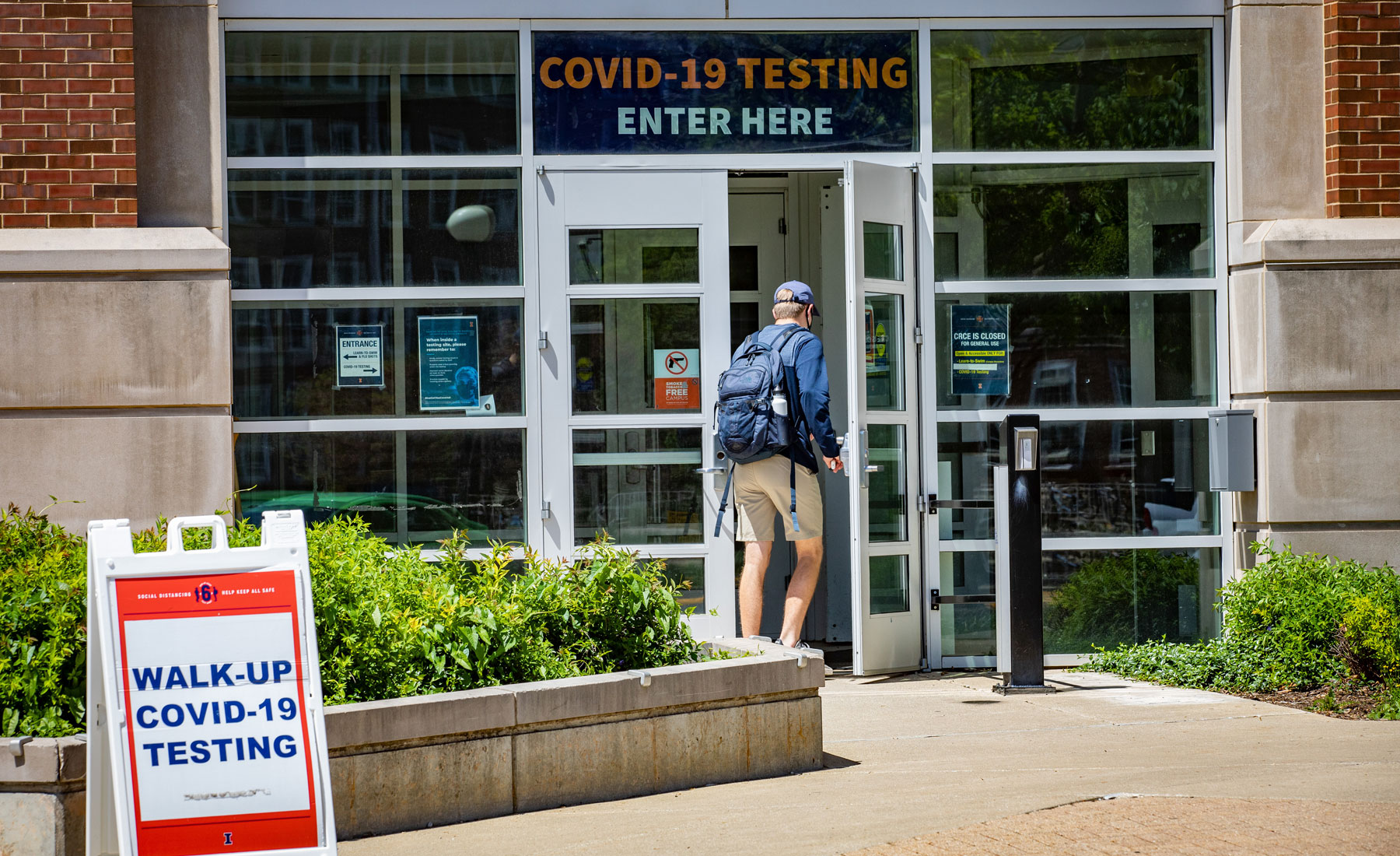
Three College of Media faculty have received a $25,000 research grant from SHIELD Illinois for a project that will examine public attitudes, news framing, and online engagement about SHIELD COVID-19 testing. The analyses will help inform best practices and strategies for future campaigns addressing public health crises.

SHIELD is the University of Illinois System’s statewide saliva-based COVID-19 testing program that began in Fall 2020. More than 1,700 K-12 schools, community colleges, universities, and other organizations make up the program’s client base.

MUSE research team
The MUSE research group.

The faculty members conducting the research are Ewa Maslowska, assistant professor of advertising; Margaret Ng, assistant professor of journalism; and Harsh Taneja, associate professor of new and emerging media in the Charles H. Sandage Department of Advertising. Last spring, they formed a research group called MUSE to study media users and consumers through interdisciplinary methods. The SHIELD research is the group’s first funded project.

Maslowska, Taneja, and Ng broadly research media usage: Maslowska specializes in marketing communication and consumer behavior. Taneja focuses on how and why people consume media. Ng studies how data from social media platforms can be used to explore an event or issue in a different way.

The group will investigate social media discourse, news coverage, and other data to understand how the public responded to SHIELD’s communications. Their findings will be published in academic articles, compiled into a report for the general public, and posted on an interactive online dashboard in summer 2023. SHIELD plans to use the findings to further benefit the state of Illinois.

In initial observations, Taneja said that COVID-19 is different from past public health crises because of the influence of social media.

In terms of physical transmission, “COVID -19 is perhaps similar to several other bugs in the past in how far and fast it can spread,” he said. “And then you add social media, which is available to both increase the scale and the speed of transmission of information about it.”

In a state as diverse as Illinois, geographic differences also must be considered when analyzing public perceptions of COVID-19.

“We are very mindful of the fact that attitudes towards COVID, in general, downstate, tend to be very different from attitudes towards COVID, than, let’s say, in Chicago,” Taneja added.

Even though vaccine hesitancy has existed before COVID-19, Ng said that this pandemic was the first time every citizen needed to make a personal decision about vaccination in a relatively short period of time. While social media has become the main source of information, misinformation about vaccination is also widespread. 

“With minimal restrictions on post content, misinformation easily becomes widespread on social media,” Ng said. “That’s why a study on the SHIELD health campaign will reveal the opportunities and challenges the effort encountered in the past two years.”

The last few years have given media scholars like Ng and her colleagues new research opportunities. The pandemic and other public health crises shouldn’t just be understood from a biological perspective, she argues.

“It really depends on the communication side—communication scholars have a very unique position to help make sure that society as a whole can get that benefit from vaccination,” Ng said. “And I’m very glad that we got the funding so that our media expertise can benefit the whole state at both a societal level and at an individual level.” 

—Vivian La, Communications Intern

Political journalists from CNN, NPR, Wall Street Journal, Chicago Tribune to speak on politics and elections

Frank Center panelists

The Richard and Leslie Frank Center for Leadership and Innovation in Media at the University of Illinois Urbana-Champaign will host four of the country’s top political journalists—David Chalian from CNN, Domenico Montanaro from NPR, Vivian Salama from the Wall Street Journal, and Alice Yin from the Chicago Tribune—for a panel discussion on what it’s like to cover politics and elections in 2022. 

Titled “Reporting on Politics and Elections in 2022,” the panel will be held Thursday, Oct. 13, from 6-7 p.m., in the Knight Auditorium of Spurlock Museum, 600 S. Gregory, Urbana.

The event is free and open to the public and will be broadcast live via Zoom; register to join via Zoom at https://go.illinois.edu/politics-elections-2022

Panelists include:

  • David Chalian, CNN Political Director
  • Domenico Montanaro, NPR Senior Political Editor
  • Vivian Salama, Wall Street Journal National Security Reporter 
  • Alice Yin, Chicago Tribune City Hall Reporter
  • Moderator: Colleen King, Frank Center for Leadership and Innovation in Media Director and Clinical Assistant Professor of Journalism

The panelists will weigh in on the upcoming midterm elections and potential national outcomes, from the fate of President Joe Biden to the control of Congress, and more. Audience questions will be welcomed toward the end of the hour or may be submitted through the Zoom registration form.

David Chalian is CNN’s vice president of political coverage and political director. In his role, Chalian oversees CNN’s daily political coverage across all platforms, the polling and decision desk operations, and helps guide the editorial content for the network’s special event political programming.

Domenico Montanaro is NPR’s senior political editor/correspondent. Based in Washington, D.C., his work appears on air and online delivering analysis of the political climate in Washington and campaigns. 

Vivian Salama covers national security for the Wall Street Journal, based in Washington. She has covered U.S. foreign policy and national security issues for nearly two decades, reporting from more than 75 countries. Most recently, she has reported extensively from Ukraine.

Alice Yin is a reporter for the Chicago Tribune’s metro desk, responsible for covering the ins and outs of Cook County government and the Obama Presidential Center. 

This event is presented by the Frank Center for Leadership and Innovation in Media at the University of Illinois College of Media. 

Learn more at https://media.illinois.edu/frankcenterpanel2022

For more information, please contact Colleen King, director of the Frank Center for Leadership and Innovation in Media and clinical assistant professor of journalism, at cck@illinois.edu.

College of Media
119 Gregory Hall
810 S. Wright St.
Urbana, IL 61801
217-333-2350