Margaret Ng selected as Center for Advanced Study Associate for 2026-27 academic year


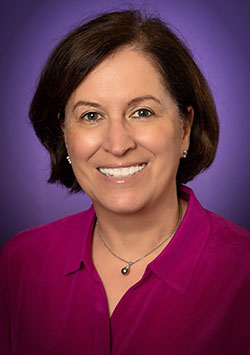
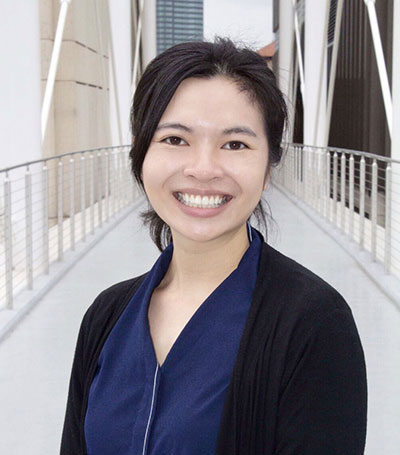
Margaret Ng, associate professor of journalism and a faculty member in the Institute of Communications Research, has been selected as a Center for Advanced Study Associate for the 2026–2027 academic year.

Margaret Ng

As a CAS Associate, Ng will take time off from teaching in Fall 2026 to advance her research on “platform migration,” focusing on how regulatory bans, algorithmic shifts, and geopolitical tensions drive user migration between social media platforms. She argues that these shifts are fueling digital nationalism and reshaping digital sovereignty in an increasingly fragmented society.

Ng said recent events highlight the urgency of this topic, including the restructuring of TikTok in the U.S. and regulatory restrictions in Taiwan, the decline of Twitter/X use among journalists and academics, and the rise of Truth Social as the de facto official channel for the U.S. Presidency. These events reveal how global tensions and local politics are transforming the platforms people choose and the public spheres they build. 

“We live in an era of rapid digital migration. We are seeing a wave of “digital migration” where users are trading in the dominant platforms for new communities that match who they are and what they care about.” Ng said.

“This project examines the forces behind this shift—from algorithmic decay and privacy concerns to political polarization and digital fatigue—and how these movements are reshaping the social, political, and cultural dimensions of online life.”

Ng said her study will particularly investigate digital migration across the United States, Hong Kong, and Taiwan by integrating large-scale computational analysis, surveys of thousands of users, and in-depth interviews with college students, journalists, tech workers, and elderly users. Drawing from those insights, the project will develop a framework that explains how political systems, institutional pressures, and everyday user practices intersect to shape modern migration patterns. 

Ng said the findings promise to advance both theory and policy by documenting how these digital migrations create new forms of labor precarity, fragment public discourse, and erode the shared information environment essential for democracy.  As users segregate into platforms that reflect their personal identities, the project explores how this new “digital mobility” challenges Big Tech dominance, redefines national sovereignty online, and ultimately reshapes the future of media, regulation, and public life.

Ng was appointed a CAS Associate for the Fall 2026 semester upon the recommendation of CAS professors and with concurrence of campus and university administrations.

CAS Associates are tenured Illinois faculty members whose project proposals are selected in an annual competition. They are granted one semester of teaching release time to pursue an individual scholarly or creative project. 

The Center for Advanced Study works with every department on campus to identify and support the most productive, high-achieving, and innovative faculty at Illinois, providing them with connections and funding to pursue their work. Members of this accomplished community are invited to participate in CAS activities throughout the year and given opportunities to present their work to the CAS community. See CAS’s upcoming events.

Share on social

Centennial Circle: Investing in the next century of media education

Join a once-in-a-lifetime opportunity to shape the future of the College of Media at Illinois

Futuristic illustration of person viewing screens


A centennial is more than a milestone—it’s an invitation to define the future together.

As the College of Media approaches its 100th anniversary, we celebrate our proud legacy and commit to advancing the next era of media education and research. Illinois Media graduates have informed the public, shaped culture, advanced technology, and transformed the way the world connects. To ensure this momentum carries into the next century, the College of Media invites its most passionate supporters to help lead the way through the Centennial Circle.

The Centennial Circle will be launched to honor visionary donors who make transformational investments. Induction into the Centennial Circle recognizes gifts of $100,000 or more to any fund in the College of Media between January 1, 2026, and December 31, 2027. Donors can make an outright gift, a pledge, or a deferred gift such as a bequest in their will or a beneficiary designation of their IRA.

College of Media Dean Tracy Sulkin emphasized the historic significance of the Centennial Circle as the college celebrates its 100th anniversary in 2027.

“A centennial invites us to honor our past while envisioning a bold future. In this unique moment, philanthropy will play a central role in shaping the next 100 years of media,” said Dean Sulkin. “Joining the Centennial Circle is an opportunity to create a powerful, lasting legacy—one that uplifts generations of students and strengthens media education and research at Illinois for decades to come.”

Donors may choose to support any fund in the College of Media, including the Centennial Fund, which helps meet emerging priorities, from technology advancements and innovative pedagogy to faculty and student research. Recent examples of donor-funded impact include the founding of the Richard and Leslie Frank Center for Leadership and Innovation in Media and the Roger Ebert Center for Film Studies, student support such as scholarships and the Media Technology Center, and faculty support such as research initiatives and named professorships.

Preparing students for academic and professional success means ensuring they can navigate, analyze, and communicate effectively in an ever-changing media landscape. Support for the Centennial Fund positions the college to address complex societal challenges, including AI, media literacy, civic and public engagement, and the accessibility of news and information.

Joining the Centennial Circle is an opportunity to create a powerful, lasting legacy—one that uplifts generations of students and strengthens media education and research at Illinois for decades to come.

Tracy Sulkin

College of Media Dean

“The Centennial Circle reflects the power of partnership between the College of Media and our alumni and friends,” said Deanne Johnson, senior assistant dean for advancement. “By aligning philanthropic vision with emerging priorities, donors help ensure Illinois remains at the forefront of media education for generations.” 

The historic cohort of Centennial Circle donors will be recognized during a College of Media centennial celebration and featured across the college’s communication channels. Recipients will also get a commemorative Centennial Circle lapel pin.

Join us in shaping the College of Media’s second century:

We welcome the opportunity to explore how your philanthropic vision can align with your passions and create lasting impact for the College of Media’s second century. To learn more, please contact Deanne Johnson, Senior Assistant Dean for Advancement, at 217-244-5466 or jhns@illinois.edu.

Share on social

I on the Media: Melita Garza discusses journalism’s role in Ken Burns’s ‘The American Revolution’


Ken Burns’s new PBS series The American Revolution is more than a sweeping historical documentary—it illustrates the ways in which journalism helped ignite and sustain the fight for independence. Melita Garza, associate professor and Tom and June Netzel Sleeman Scholar in Business Journalism, and winner of Journalism History’s 2024 essay contest, shares her insights on journalism’s pivotal role in shaping America’s founding era.

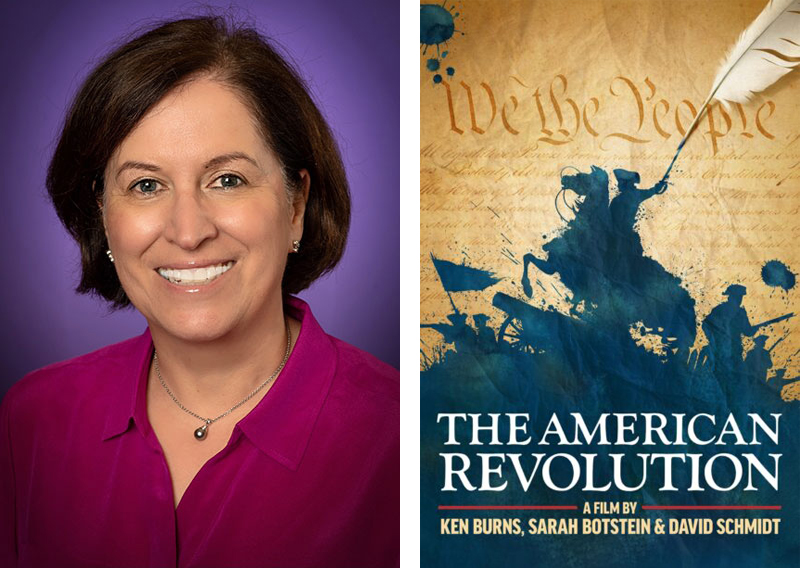
Ken Burns's "The American Revolution" film promo

About the Media Expert

Melita M. Garza

Melita M. Garza, associate professor in the Department of Journalism and a faculty member of the Institute of Communications Research, is an American journalism historian who studies news as an agent of democracy, specializing in English- and Spanish-language news, the immigrant press, and coverage of underrepresented groups. She is the lead editor of The Routledge Companion to American Journalism History (2024). Her research has won awards from the American Journalism Historians Association, and the Association for Education in Journalism and Mass Communication divisions of: History, Minorities and Communication, and International Communication.


How does this series place journalism at the heart of the American Revolution?

The most obvious example is the documentary’s treatment of colonial reaction to the Stamp Act, showing that the two dozen weekly newspapers, along with pamphleteers, stoked support for colonial tax protests. Significant though this is, the imprint of journalism on the Revolution is much bigger than that.

Bostonians reading the Stamp Act in 1765
Bostonians reading the Stamp Act in 1765, public domain, via Wikimedia Commons

Consider that Burns starts his six-part history with a quote from Thomas Paine, America’s first political journalist. The documentary opens with a black screen that slowly transforms into the pink, purple, and yellow colors of dawn. The audience then hears a voice intoning:

From a small spark, kindled in America, a flame has arisen not to be extinguished. Without consuming, it winds its progress from nation to nation, and conquers by a silent operation. Man finds himself changed and discovers that the strength and powers of despotism consist wholly in the fear of resisting it, and that in order to be free, it is sufficient that he wills it.”

Although these words of agency come from Paine’s The Rights of Man, written in 1791 during the French Revolution, they capture the spirt of Paine’s earlier writings, such as Common Sense, which helped catalyze the colonists to pursue and persist in the American Revolution. Writing for Wired in 1995, Jon Katz explained why this pioneer of free expression should be remembered in the Internet age. “Because we owe Paine. He is our dead and silenced ancestor. He made us possible.” The documentary covers the eight years of the American Revolution, making it impossible to push too deeply into any single historical actor’s role with the depth they deserve. Ideally, however, the series will inspire viewers to take another look at Thomas Paine and other figures from our past whose impact isn’t fully understood today.

Join, or Die
Political cartoon (1754) attributed to Benjamin Franklin, public domain, via Wikimedia Commons

And there’s more. Still within the first two-and-a-half minutes of the documentary, viewers are introduced to Benjamin Franklin. Although described simply as a noted scientist and writer in The American Revolution, Franklin was a pivotal figure in the development of American journalism and is credited with publishing one of the earliest pieces of colonial visual journalism: the political cartoon. The documentary showcases the famous “Join, or Die” snake woodcut drawing, published in Franklin’s Pennsylvania Gazette on May 9, 1754. Originally designed to rouse the colonists to unite during the French and Indian War, the documentary notes that it was republished to urge colonial unity against the British during the American Revolution.

The documentary is replete with such examples of what I call “hidden” journalism, in which their groundbreaking significance to the journalism profession as a whole remains obscured.

Apart from serving as a sparkplug for rebellion, what are some other ways the documentary depicts the role of journalism in colonial life?

There are a few things, again, just in the first installment, that the documentary flicks at, which underscore the primacy of journalism and print culture more generally in the lives of the colonists. For instance, in a segment discussing the impact of British culture on colonial life, historian Jane Kamensky references the London Book Shop and the Crown Coffee House in Boston. Bookstores offered colonial citizens exposure to Enlightenment ideas, among other things, and served as centers of cultural exchange for the community. Book sellers were often also in the newspaper business. One such newspaper owner was Benjamin Franklin, who is also credited with being first to open a book shop in colonial America. Likewise, coffeehouses were central places for the exchange of news and newspapers. These are two more examples of the “hidden” journalism in the documentary.

Another aspect of journalism that might be easy to overlook in the documentary involves the episode of the Saturday, December 27, 1760, arrival of the British frigate that “brought with it big news”—the death of King George II and the ascendancy of King George III to the British throne. In early colonial America, it was often faster to get news from England by ship than it was to get news from southern colonies, considering the state of the roads at the time. Even so, having to wait two months to find out that you were being ruled by a new monarch illuminates the pace of colonial communication compared to that of today’s high speed Wi-Fi society.

What can The American Revolution teach us about telling historical stories in ways that connect with today’s audiences?

Ken Burns is well known as a gifted storyteller and the documentary’s striking visuals, sound effects and music, and well-edited commentary from experts, are staples of his work. In The American Revolution, letters and journals from young men, women, and officials and pundits on both sides are the stars. These primary sources allow individuals to speak as though they are reporting to us from the homefront and the battlefront, and that brings the Revolution right into our living rooms centuries after it ended. Simply employing solid storytelling techniques is only partly why the story resonates with today’s audiences. The other reason is that we can see parallels with our own experience. Some of these parallels are obvious. Others are a matter of perspective.

Thomas Paine
Thomas Paine (1792) by Laurent Dabos, public domain, via Wikimedia Commons

For instance, one scene shows colonists on the street reading newspapers together, with some looking like they are commenting to each other. Thinking critically about media and information, the colonists were practicing true social media. In person, face-to-face, they exchanged ideas in a way today’s often anonymous, digital exchanges can’t compare. And as the documentary also notes, word of mouth was also a prime source of news. While it is true that stories and ideas didn’t have a World Wide Web to buzz through, these mechanisms still allowed journalism, starting with Thomas Paine’s Common Sense, to go viral through the colonies. In fact, the documentary points out a prime reason for print culture’s popularity in the Thirteen Colonies: At the time, only Scandinavia was more literate than the American colonial population.

Other relatable issues that we still grapple with today, such as women’s rights, the limits of free speech, taxation, and immigration, to name a few, are also highlighted. Take immigration. In the documentary, historian Christopher Brown discusses “the sheer diversity…living in the heart of the Thirteen Colonies”:  Africans, Scots, Scots-Irish, Huguenots, Germans, and Native Americans, along with the English. The outcome of American Revolution, both the reel one and the real one, proves it was not culture, national origin, or language that brought the colonists success. In historian Christopher Brown’s words, the colonists cohered “around a set of purposes and ideals for one common cause.” In my view, the American Revolution shows how colonial journalism played a prime role in establishing coherence for that single cause: freedom.

Share on social

Independent journalist Chris Cillizza to visit the University of Illinois for a conversation on political reporting


Chris Cillizza, an independent news creator on Substack and YouTube, will be on the University of Illinois Urbana-Champaign campus for a conversation about reporting on politics and independent journalism on Tuesday, Dec. 2, from 5-6 p.m.

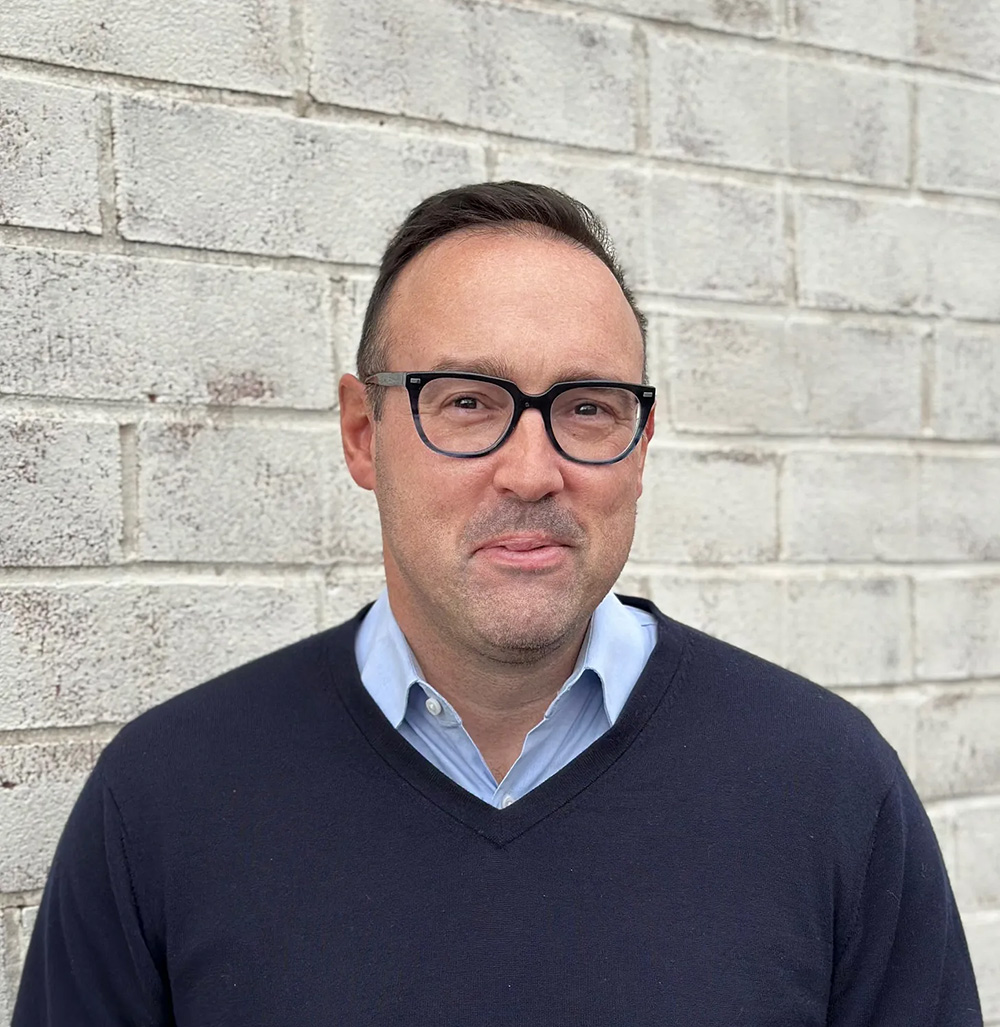
Chris Cillizza

This event is free and open to the public and is presented by the Richard and Leslie Frank Center for Leadership and Innovation in Media at the University of Illinois College of Media. 

Attendees may join the event in Lincoln Hall (Room 1092), 702 S. Wright, Urbana, or register to join via Zoom. The conversation will be led by Colleen King, director of the Frank Center and clinical assistant professor of journalism. 

Cillizza has more than 32,000 subscribers to his daily political newsletter, “So What,” on Substack and more than 130,000 subscribers to his YouTube channel. 

He also hosts a show called “Politics Aside with Chris Cillizza” for the Monumental Sports Network. In it, Chris talks to some of the most powerful people in Washington about the sports they play, love, and watch. He is a political analyst for NewsNation. He contributes content to the Daily Beast and Noosphere. Prior to his career as an independent journalist, Chris spent more than 20 years in mainstream media. He previously served as politics reporter and editor-at-large for CNN and is founding editor of the Washington Post political blog “The Fix.”

For more information, please contact Colleen King at cck@illinois.edu

Share on social

Take 5 with Media Alumni: Carlye Wisel


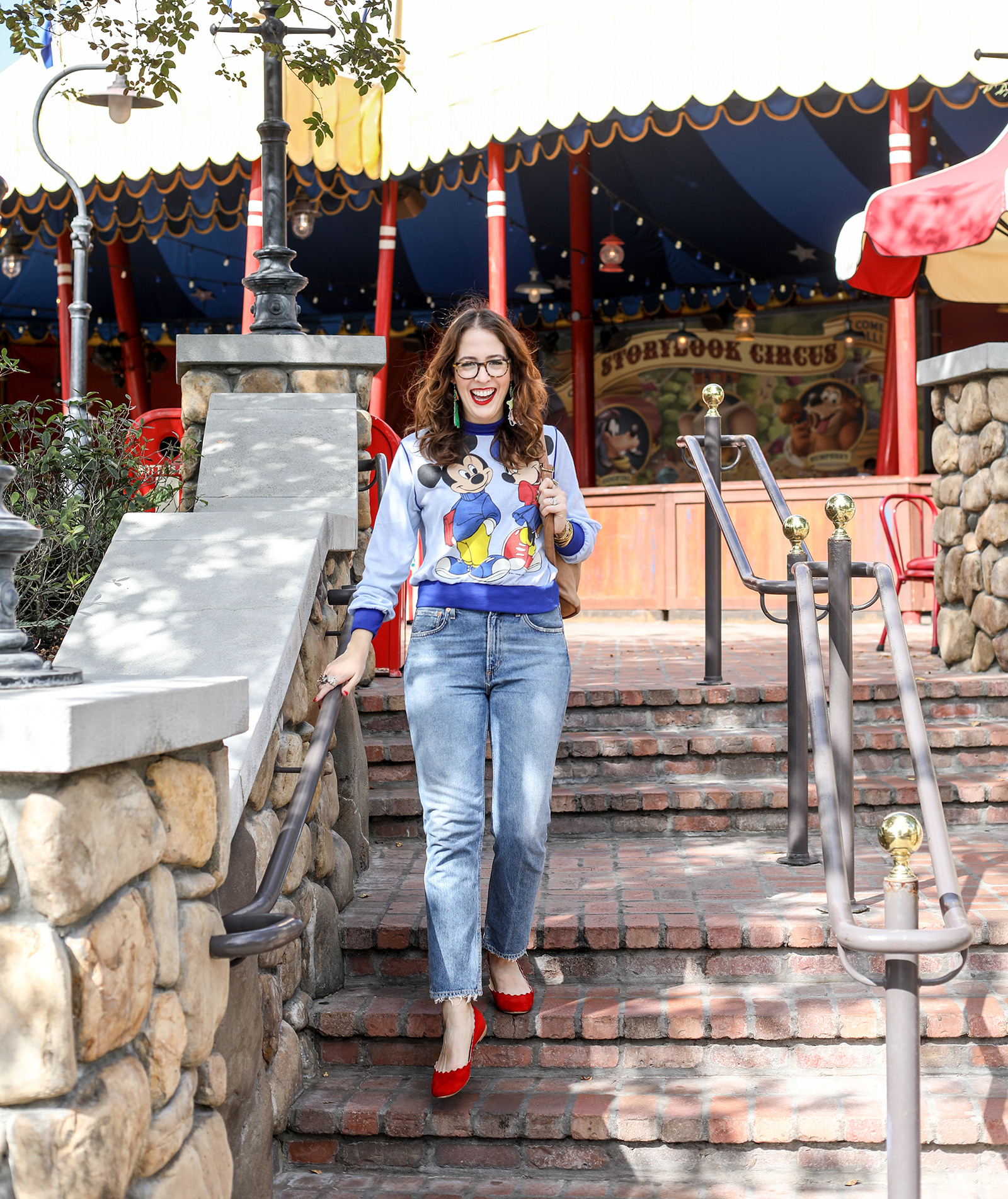
Carlye Wisel (BS ’09, journalism) was a lifestyle reporter interviewing famous musicians and celebrities like Mick Jagger and Kim Kardashian before a bachelorette trip to Disney World changed her career trajectory. Now, as a freelance journalist covering Disney and Universal theme parks, Wisel has contributed to magazines like Travel + Leisure, Glamour, National Geographic,and TIME, shares creative content with nearly 60,000 Instagram followers, and hosts a highly rated podcast, Very Amusing.Learn more about this College of Media alum who has built a journalistic career at the intersection of pop culture, travel, and joy.

1. You started as a lifestyle reporter, but a visit to Walt Disney World changed your life. What about that experience hooked you and made you focus full-time on theme parks?

Part of what I love about having a journalism background and having experience in reporting is that you can choose any career you want. If you randomly end up in Orlando and ask yourself, ‘What is going on in this city?’ you can [turn it into] a job, which is exactly what happened to me. I got married in 2015 and my husband suggested I go to Disney World for my bachelorette party. There were 11 or 12 of us, and it was the most complicated vacation I’ve ever planned in my entire life. A normal person would think it was too difficult, and never want to go back again, but me, as a reporter, went, ‘What’s going on here?’ And I needed to just dial in and figure out how people do this, and that hunt for more information and learning more about Disney World has sustained me 10 years to this day, where I’m still invested and curious in everything that’s happening there.

2. On the outside, it appears that you have a “dream job.” Is that accurate or a misconception? What kinds of challenges does your job present that most people wouldn’t realize?

I love my job, but it is, at the end of the day, challenging. While no one wants to hear someone complain about how often I have to go to the Magic Kingdom, there is an element to reporting on one of, if not the largest, entertainment companies in the world that often gets under-discussed. Everything I say—even if I say it casually into a mic instead of written down for a major publication—has to be at the same level of expertise and professionalism. That is where the lines blur, and it can be really tricky, especially when you host your own podcast. Because I can’t ever tell people something that isn’t fact-checked or isn’t true. Everyone makes mistakes, but as a reporter, it’s very important to me that even if I’m yapping in my house [on my podcast], just telling a story about a theme park, all of it has to be true and accurate. And so, I do still very much live a life of a newspaper reporter, even in this fun context.

3. You’ve won numerous awards for your stories, with your work published in a variety of outlets including The New York Times. What’s one story you’ve written throughout your career that stands out the most?

The most challenging story that I have written while covering theme parks was definitely the one I wrote for Vox after Walt Disney World reopened during the pandemic. My job for a long time was real light and fun. It was roller coasters, it was “lands,” it was fun-themed cupcakes. And then it became local government, union mandates, and wastewater levels. It really became a very serious reporting job. And that shift was something I didn’t expect but thank goodness I had the training for it. I went to Disney World for the reopening, and it was really challenging to report about, because I felt like ‘I’m in this space, I need to make sure I represent every single person in this puzzle.’ I needed to represent cast members, who are the employees at Walt Disney World. I needed to represent local government. I spoke to [Florida State House Representative] Anna Eskamani, who is incredible, just one of the most prolific voices in Florida government today. I was able to really piece together a full picture of what it’s like, not just, ‘These are the lines! These are the 6-foot tape [markers] on the ground.’ I was able to really report about it from all angles, and that was extremely challenging, but definitely one of the proudest moments of my career, because I felt like I really was in a time and place where I was able to cover it as accurately as humanly possible.

4. Has your podcast changed the way you think about storytelling compared to print or online journalism? Is podcasting and creating content for social media an evolution of more traditional reporting?

I’m still a journalist, but I think that podcast host, content creator, reporter—that all needs to be woven in, which is modern-day journalism in a nutshell. I do think the lines have blurred a lot, because there is a huge spectrum. I don’t think you have to choose which bucket you’re in, and if people perceive you as a content creator, that’s totally fine. Just as the way social media evolves, my career has shifted. And I really don’t know what happens next. Now the modern model of what I do is, ‘If you’re freelance, you have a niche, you’re known for this one thing. You write some stories, you have a podcast, you’re on social media, you post videos, and maybe you have a newsletter.’ And what’s interesting is that four years from now, that won’t be the case. But because I have a journalism background, because I chose to study a trade and not just a subject, I really do feel like I can pivot to whatever comes next, because at the end of the day, it’s all storytelling. And if you can get information out in a clear, concise way, that’s really all that matters, not the formula from which that comes.

5. What advice would you give to students or aspiring journalists who want to tell stories that capture wonder, creativity, and joy? Do you have any suggestions for students who want to turn their passion for writing about a niche topic into a profession?

The great thing about graduating from the College of Media is that you’re going to have the skills, no question. Now, the challenge is finding out how to make your passion your profession. Let’s say you have a different media job and want to report on this one wacky thing. You can self-publish posts, newsletters, even videos about it. You can become an expert, the face of that, and likely be hired to report about it. 

Remember, at the end of the day, you came from studies that benefit you in any career you end up taking. Having the expertise is only half of it. The more abilities you have, the easier it’s going to be to get work. Early on in my career, I would upsell a story by [providing photos]. If you have video skills, on-camera skills, voiceover skills, it will always benefit you. The more experience that you can have under your belt in all these different facets of reporting, the easier it’s going to be—freelance or full-time—to land a job.

Share on social

Media literacy research and engagement initiatives address societal challenges


Faculty and graduate students across the College of Media are pursuing a range of activities aimed at understanding challenges to media literacy and developing interventions to improve it.

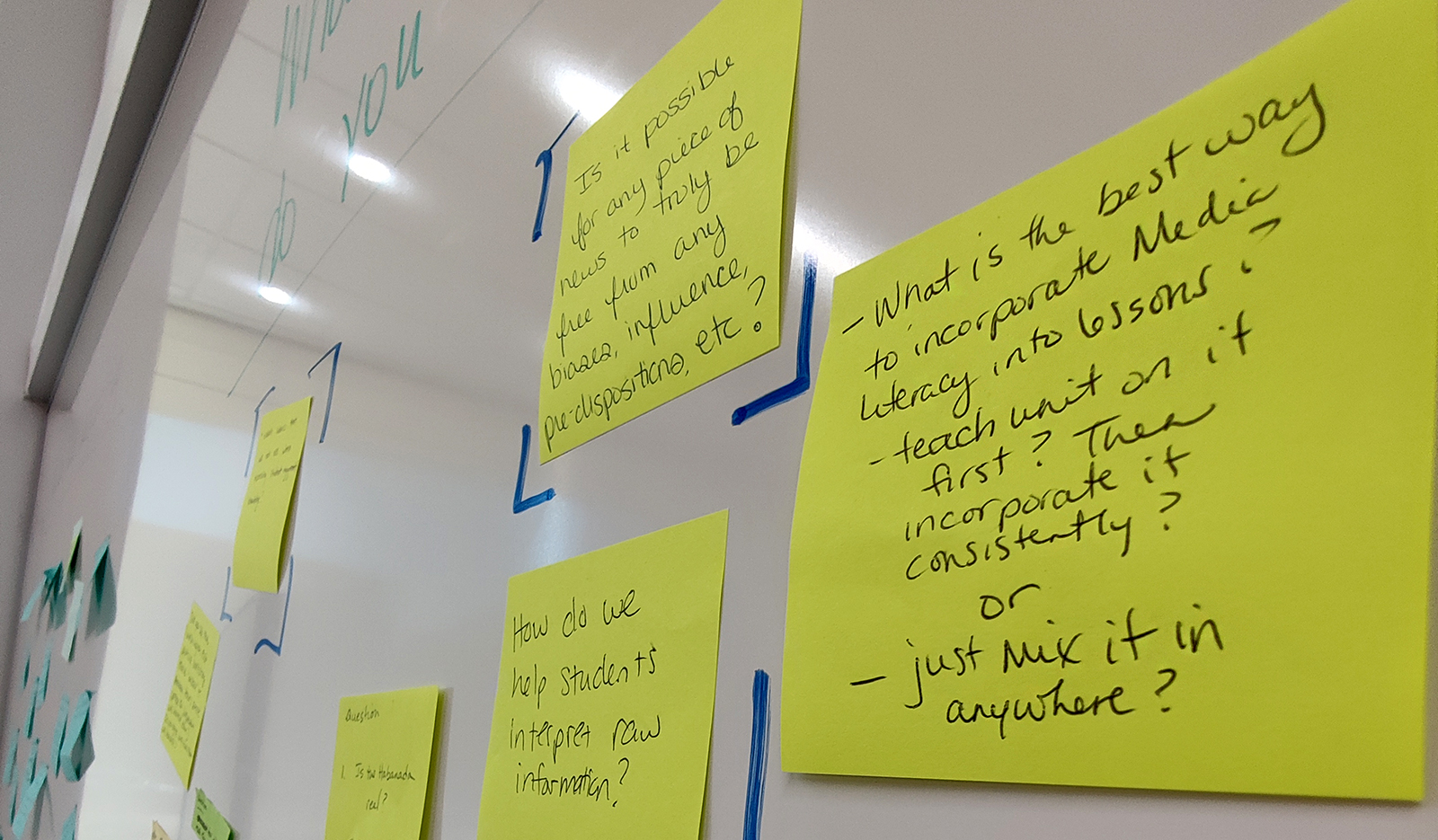
Post-Its from IMEDIA workshop

Recent activities include:

A team including Michelle Nelson, professor of advertising, Amanda Ciafone, associate professor of media and cinema studies, Stephanie Craft, professor of journalism, ICR doctoral student Gillian Paxton, and undergraduate student Maaike Niekerk, is investigating older adults’ media use, media literacy, and the role of media in fostering social connection. The research seeks to understand how older adults use media across a broad range of platforms and tools, including generative AI, and the challenges they face in doing so. The aim is to explore how improving media literacy may help them better navigate the media environment to meet their social and information needs. The study involves interviews with those who offer help and instruction regarding media and technology use through senior centers, public libraries, park districts and the like, and focus groups with older adults. This project is funded by a College of Media seed grant.

Professor Amanda Ciafone presenting at IMEDIA workshop
Amanda Ciafone, associate professor of media and cinema studies, presents at a workshop hosted by IMEDIA.

Related to this project, Ciafone was awarded funding to organize media and digital literacy workshops with European scholars and advocates to advance research, education, and transatlantic dialogue on older age and media literacy under the Jean Monnet Center of Excellence grant awarded to the European Union Center at the University of Illinois Urbana-Champaign. Ciafone said Europe has more rapid “demographic aging,” where a population’s average age increases, than the United States and robust models for media literacy policy and education.

As part of its mission to bolster research in media literacy, the College of Media hosts a regular gathering of faculty across campus to discuss research in media literacy across disciplines and to identify potential opportunities for collaboration. These conversations have so far included faculty in the College of Fine & Applied Arts, University Library, School of Information Sciences, College of Education, and College of Liberal Arts & Sciences.

The Initiative for Media Education Inquiry and Action, a collaboration between the College of Media and College of Education, is developing a media literacy micro-credential for teachers. IMEDIA was created in 2021 to help teachers in Illinois fulfill the mandate of a state law requiring media literacy instruction in public high schools. IMEDIA has offered in-person workshops for teachers to help them incorporate media literacy into their current teaching. The aim of the micro-credential is to broaden the reach of workshops by making the instruction and resources available online in a way that also offers teachers the opportunity to add a media literacy credential to their licenses.

A research study conducted by Nelson, ICR doctoral student Sakshi Bhalla, and Michael Spikes, co-founder of the Illinois Media Literacy Coalition, emerged from IMEDIA’s teacher workshops. The study, which included interviews with 20 educators from across the state of Illinois about the nature and challenges of media literacy education in their schools, found several digital divides that undermine the efficacy of state-mandated media literacy instruction in Illinois high schools. Their findings were published in the Journal of Media Literacy Education.

IMEDIA also is updating its eText, MEdia Matters, which is currently used in a variety of introductory undergraduate courses. The text will be a key resource for teachers pursuing the micro-credential and will be freely available for use in their classrooms.

Craft is part of a team comprising faculty from five universities engaged in a long-term research initiative to build a model of news literacy behavior that will inform efforts to increase people’s resistance to misinformation. The team has developed a widely used measure of news literacy knowledge and most recently has been investigating how greater news literacy knowledge translates into better news consumption behaviors reflecting that greater knowledge. The most recent study was presented in August at the annual meeting of the Association for Education in Journalism and Mass Communication.   

Share on social

How well does NPR incorporate history into its journalism?


When journalists don’t have access to historical tools, and don’t have that impetus to go and check out things, they are presenting news that is really not informing the public. And nobody wants to do that.

Melita M. Garza

When news stories ignore the past, the audience sometimes struggles to fully understand the issue. Because of this, history professors stress the importance of incorporating historical context into news coverage of current events. Doing so enables journalists to bring forth a more complete and informed story, which benefits the audience.

Melita Garza, associate professor and Tom and June Netzel Sleeman Scholar in Business Journalism, stressed the importance of including current events within the context of historical background in this installment of the News Literacy Edition of the NPR Public Editor. In her research, Garza says she has seen journalists declare something “unprecedented” when what they reported on was not, in fact, unprecedented.

Read full article

Social media stampedes: How mass user exit reshapes the digital landscape


Leaving social media does not always mean disengagement from news, but it does disrupt habitual news consumption. Some people report feeling less informed about current events after quitting Facebook, as social media is a key news source for many. However, they also experience benefits like reduced anxiety and improved well-being.

Margaret Ng

According to the Pew Research Center, at least half of U.S. adults rely on social media for information about current events. But what happens when they leave those platforms behind?

Margaret Ng, associate professor journalism, explores the phenomenon of “social media stampedes”—cases of mass user exodus from a specific platform, the (un)successful migration to alternative sites, and the long-term implications for trusted digital information networks—in this opinion piece for MediaWell.

Read full article

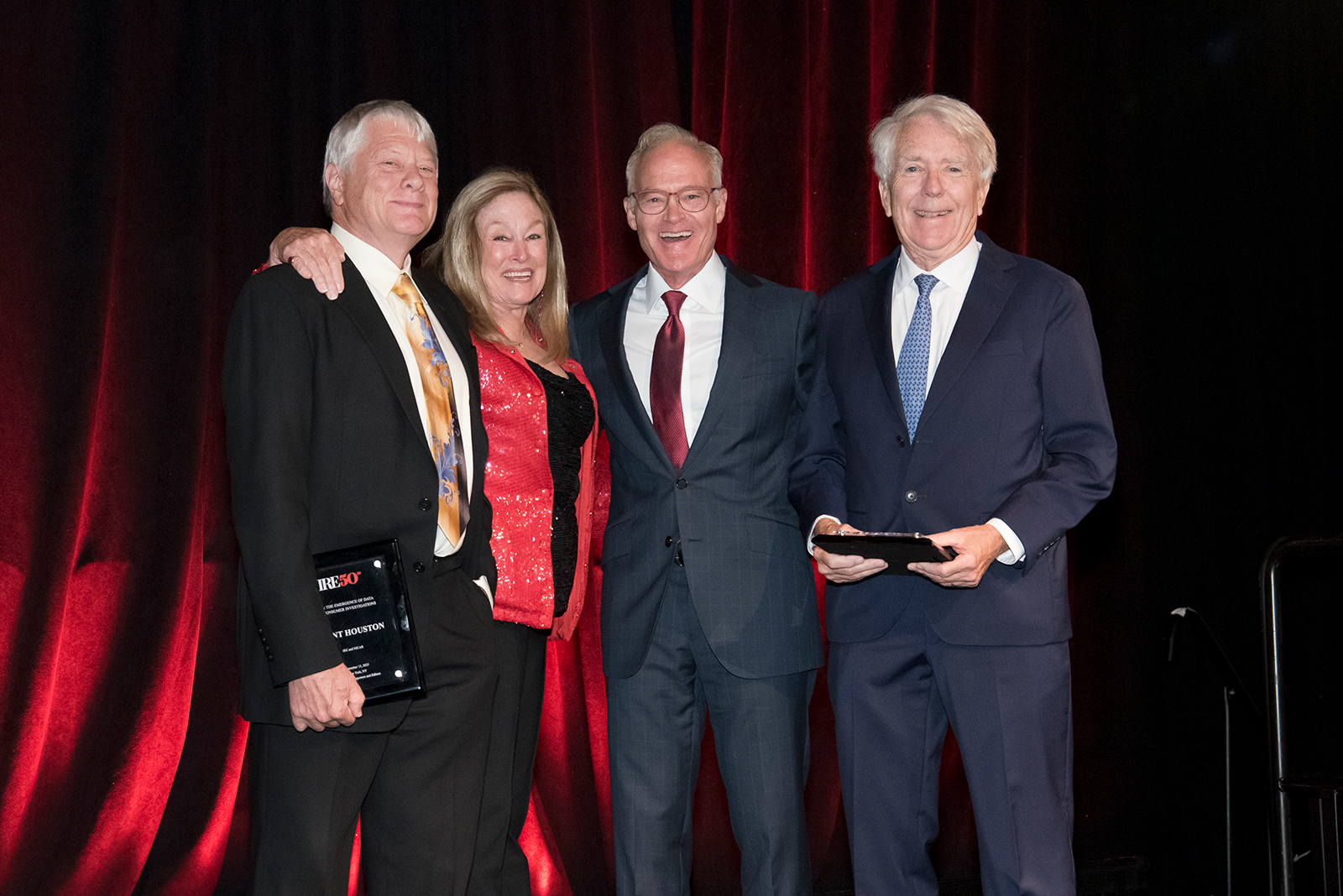
Professor Brant Houston to be honored at Investigative Reporters & Editors 50th anniversary gala


Brant Houston at the IRE gala

Update 9/19/2025:

Pictured above: Professor Brant Houston, left, is honored with awardees Lea Thompson and James B. Steele (far right), with host Scott Pelley, correspondent for 60 Minutes. (Photo by Nathalie Schueller.) The Investigative Reporters and Editors 50th Anniversary Gala raised $1.5 million for journalism training.

See more photos from the event.


Brant Houston, Knight Chair Professor in Investigative and Enterprise Reporting in the Department of Journalism, will be honored at the Investigative Reporters & Editors 50th Anniversary Gala on Monday, Sept. 15, in New York City.

Brant Houston

The event, which also serves as a fundraiser and live auction, recognizes journalists representing milestones from each decade since the organization’s founding in 1975. Co-chairs of the event are Paul Sagan, chair of ProPublica; AG Sulzberger, publisher of The New York Times; and Judy Woodruff, senior correspondent at PBS NewsHour. 

Houston will be honored for his impact on the industry during the 1980s, for his contributions to “The Emergence of Data and Consumer Investigations.” The other honorees in his category include James B. Steele of The Philadelphia Inquirer, Time, and Vanity Fair; and Lea Thompson of NBC News and WRC-TV in Washington, D.C.

Houston served as the executive director of Investigative Reporters and Editors from 1997 to 2007.

He co-founded the Global Investigative Journalism Network in 2003 and serves as chair of its board of directors; he also co-founded the Institute for Nonprofit News in 2009. 

Houston currently oversees the online newsroom at Illinois, CU-CitizenAccess.org, which serves as a lab for digital innovation and data journalism. 

“These stars of journalism, who all received training at IRE, exemplify the power and future of journalism, the very foundation of democracy,” said IRE executive director Diana Fuentes.

The gala will also feature Michael Keaton, acclaimed actor, director, and press freedom advocate, accepting IRE’s first Champion of Investigative Journalism Award, recognizing his spot-on portrayal of journalists and steadfast support for a free press.

IRE, a grassroots nonprofit organization dedicated to improving the quality of investigative reporting, was formed to create a forum in which journalists throughout the world could help each other by sharing story ideas, newsgathering techniques, and news sources.

Share on social
Journalism student Nathan Gonzalez chosen for New York Times Corps


Nathan Army aircraft

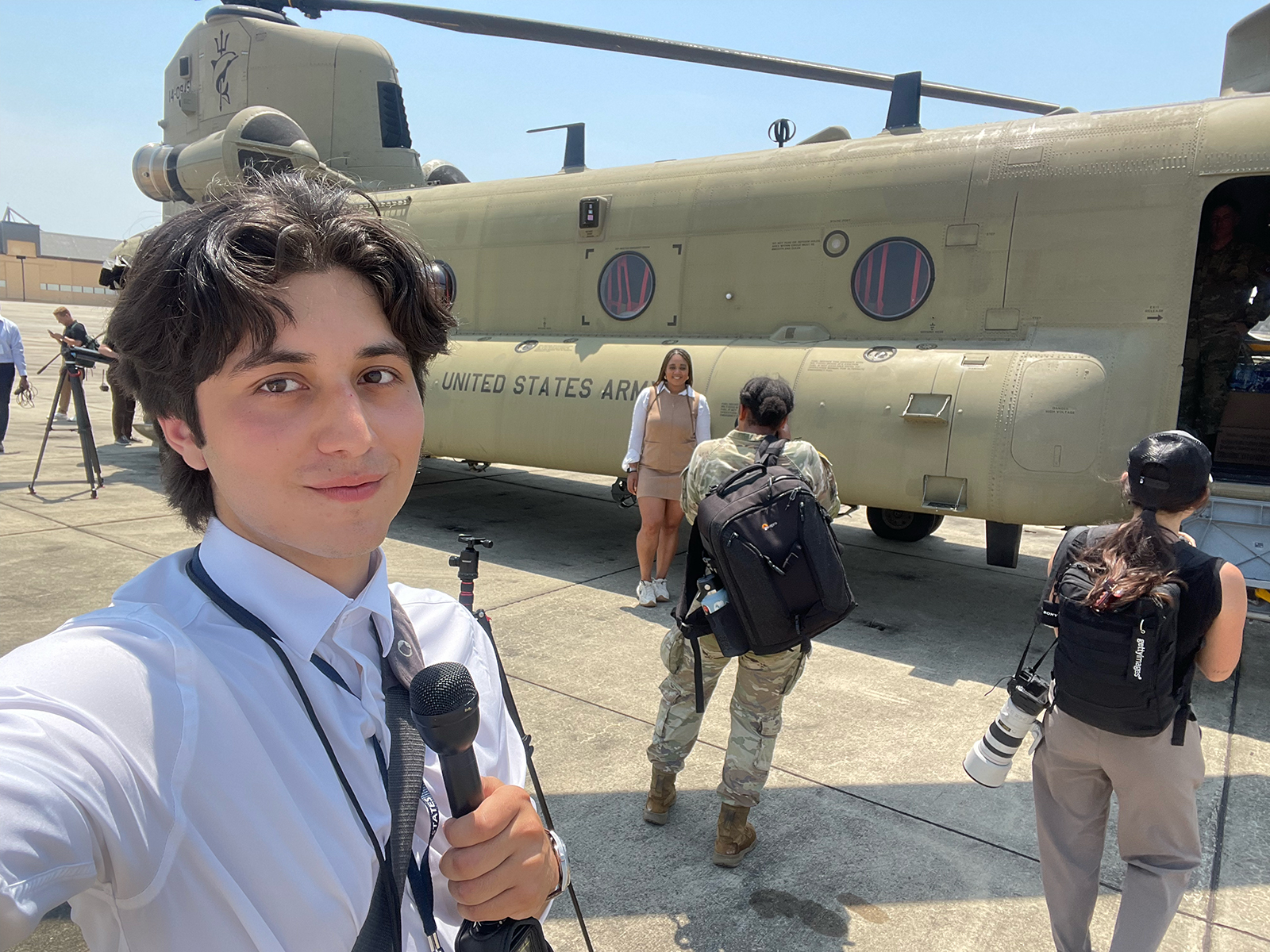
Nathan Gonzalez, a junior in journalism, was one of 19 undergraduate students nationwide chosen to join The New York Times Corps, the newsroom’s talent-mentorship program for aspiring journalists.

Gonzalez will be paired with NYT Pentagaon reporter John Ismay, receiving career guidance and professional development sessions until he graduates. After completing the program, Gonzalez will have the opportunity to visit the New York Times newsroom to learn from other journalists in person. 

Gonzalez recently wrapped up a summer internship for FOX News at the Washington, D.C., Bureau, producing coverage of protests, U.S. District Court cases, Senate and House committee hearings, live shots, interviews, and press conferences with members of Congress.

Some of the content he produced aired on shows like Fox News LiveThe Big Weekend ShowThe StoryAmerica ReportsAmerica’s NewsroomSpecial Report with Bret Baier, and The Will Cain Show.

Since its launch in 2022, the Times Corps has offered mentors to 80 undergraduates who demonstrated a commitment to the field of journalism. The best-performing corps members are considered for The New York Times Fellowship, a yearlong work program, and other journalistic opportunities.

Share on social

College of Media
119 Gregory Hall
810 S. Wright St.
Urbana, IL 61801
217-333-2350