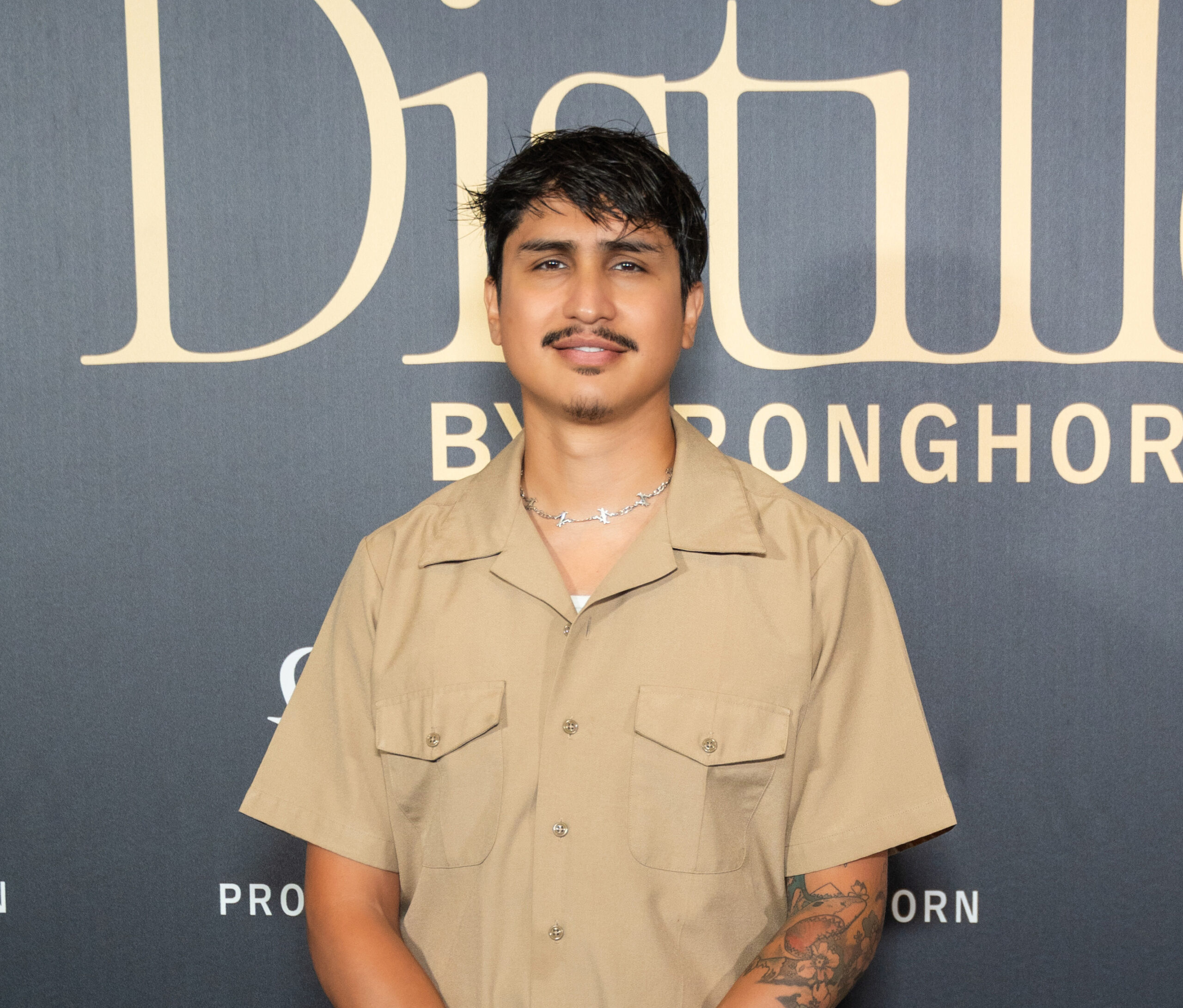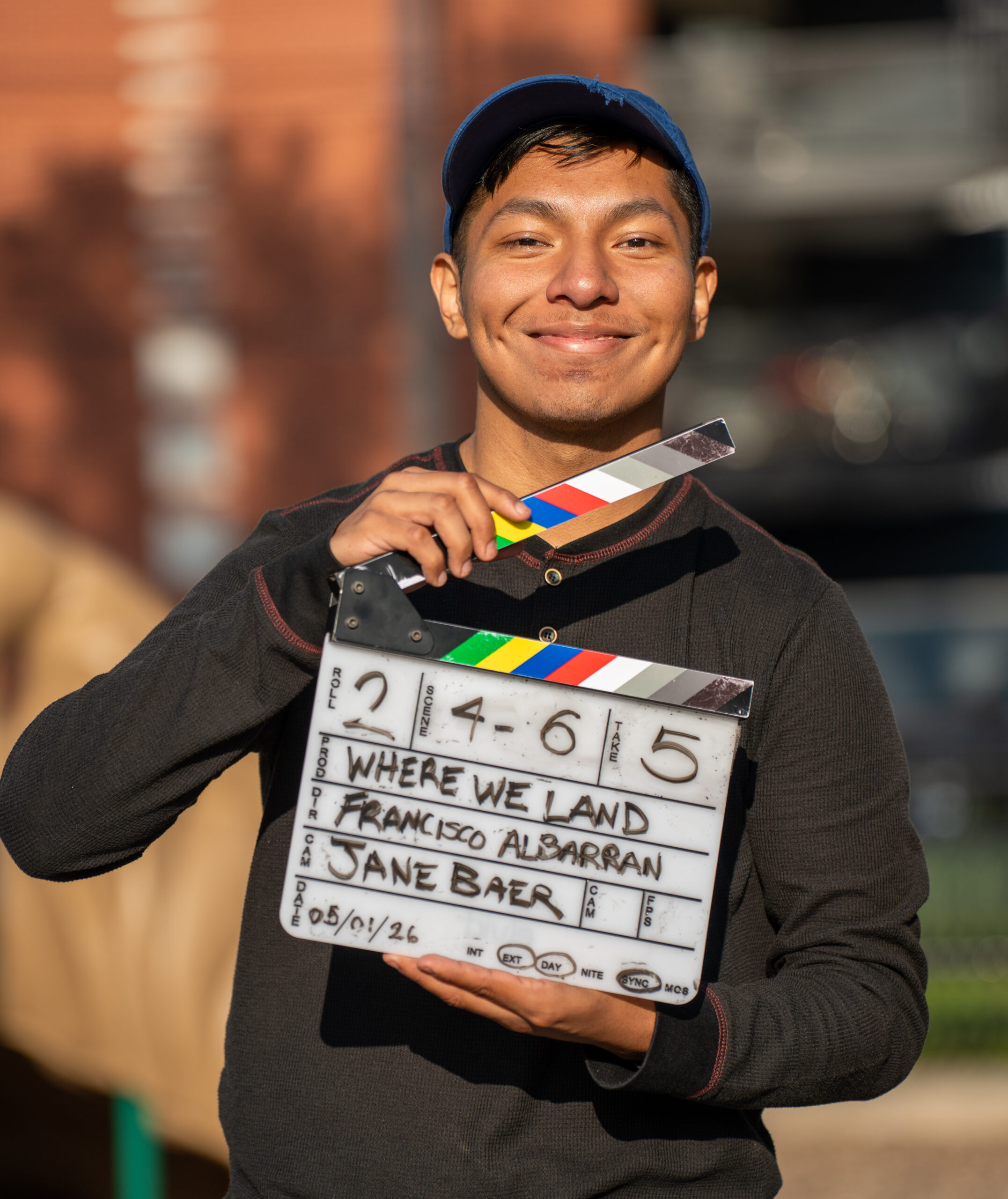
Francisco Albarran

Get to know some of our College of Media students! Francisco Albarran is a Class of 2026 media and cinema studies major.

Why did you choose to major in media and cinema studies (MACS), and how did you decide that it was the right fit for you?

During the lockdown in 2020, I really got into watching movies and TV shows. I fell in love with the concept of putting my ideas onto the big screen, but I was also really inspired by [University of Illinois College of Media alum] Roger Ebert and his history with film reviews. When I started school here at Illinois, I knew it was the right fit since the college really felt like a village with everyone in MACS helping and learning alongside each other.

Talk about your internship at Flyover Film Studios.

During one of my MACS classes, we took a field trip to Flyover with senior lecturer Victor Font, where we toured the studio and learned about the internship, which was available in the fall semester. I got to meet the founders Sarah Sharp and Rob Stern, who talked about Flyover and the internship program they offered. I was one of the first recipients of the internship, which was really exciting.

That summer and fall, I worked on films like Chili Finger, Moses the Black, and even The Bear. I typically worked in construction for the movie sets, as a driver for cast members, or as a production assistant. Each day on set felt like a different adventure. It was an amazing experience to have celebrities give words of encouragement and advice on filmmaking. While working on these sets, I got to meet a lot of the cast members, including Bryan Cranston, Wiz Khalifa, and Deontay Wilder.

Are there any other opportunities at the College of Media that helped you grow in media and cinema studies?

Currently, I am in the process of starring, writing, and directing a Mexican immigrant boxing film titled Where You Land. This film was a huge step out of my comfort zone, and I was incredibly nervous to start, but I hope I can send my message to other young Mexican immigrants. It’s a great opportunity to be able to work on something I’m passionate about, and get to do things I’ve never done before, like acting.

What course within the College of Media would you recommend to other students?

I would highly recommend both MACS 480: Advanced Filmmaking and MACS 481: Advanced Filmmaking Studio. Since the College of Media is small, I had a community of film students who were just as passionate as me. At first, I didn’t get involved, but getting to know other students in these courses helped me learn from so many new people.

What advice would you give to incoming students majoring in MACS?

If I could go back to my freshman year, I would tell myself to start putting out work early, such as submitting projects to film festivals. It’s such a great benefit to do as a freshman compared to doing it later. Some other things I would encourage incoming students to do is to get out of their comfort zone and believe in themselves because there is no such thing as failing, only experiencing and learning for later on. As a student in class, or in a film studio, you will learn something new every day—from something or someone you would never expect to learn from—which is the beauty of the filmmaking process.

—Interview by Paulina Alvarez, New Voices Intern

Share on social
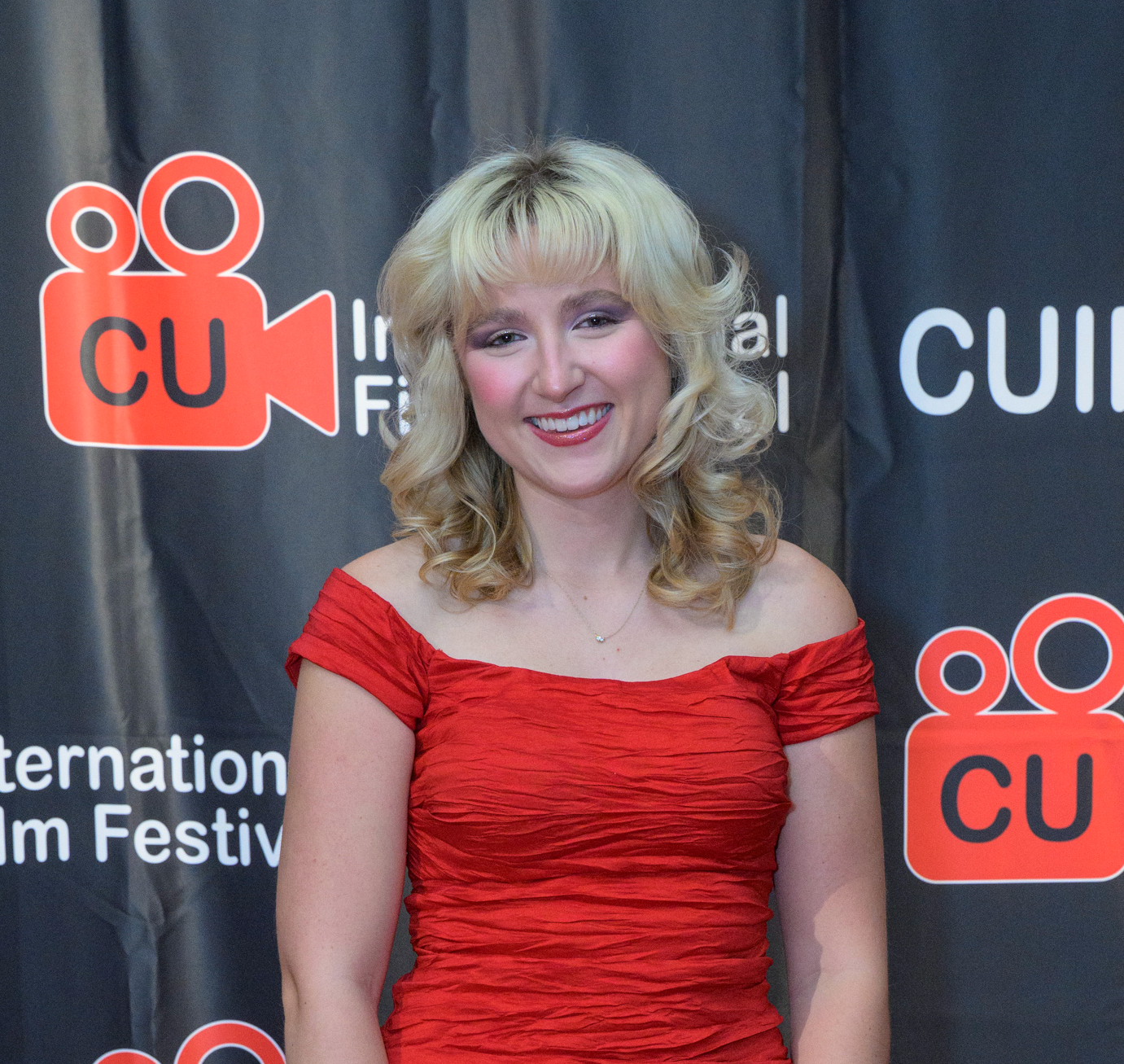
Ella Yoder

Get to know some of our College of Media students! Ella Yoder is a Class of 2027 media and cinema studies major.

Ella Yoder

What made you choose the media and cinema studies (MACS) major?

During my search for universities, the University of Illinois Urbana-Champaign stuck out quickly, specifically, the media and cinema studies (MACS) major. MACS allows its students to engage with film production as soon as freshman year, while other universities I was looking at set a limit for production courses to juniors and seniors. Personally, I knew I had a desire to learn about films and wanted a university that would give me hands-on learning opportunities that I could take advantage of the minute I got to campus. I am so happy that I found the College of Media because of the standards they set for their students with the required engagement that offers a holistic view of the film and cinema industry.

How did you first get interested in your major?

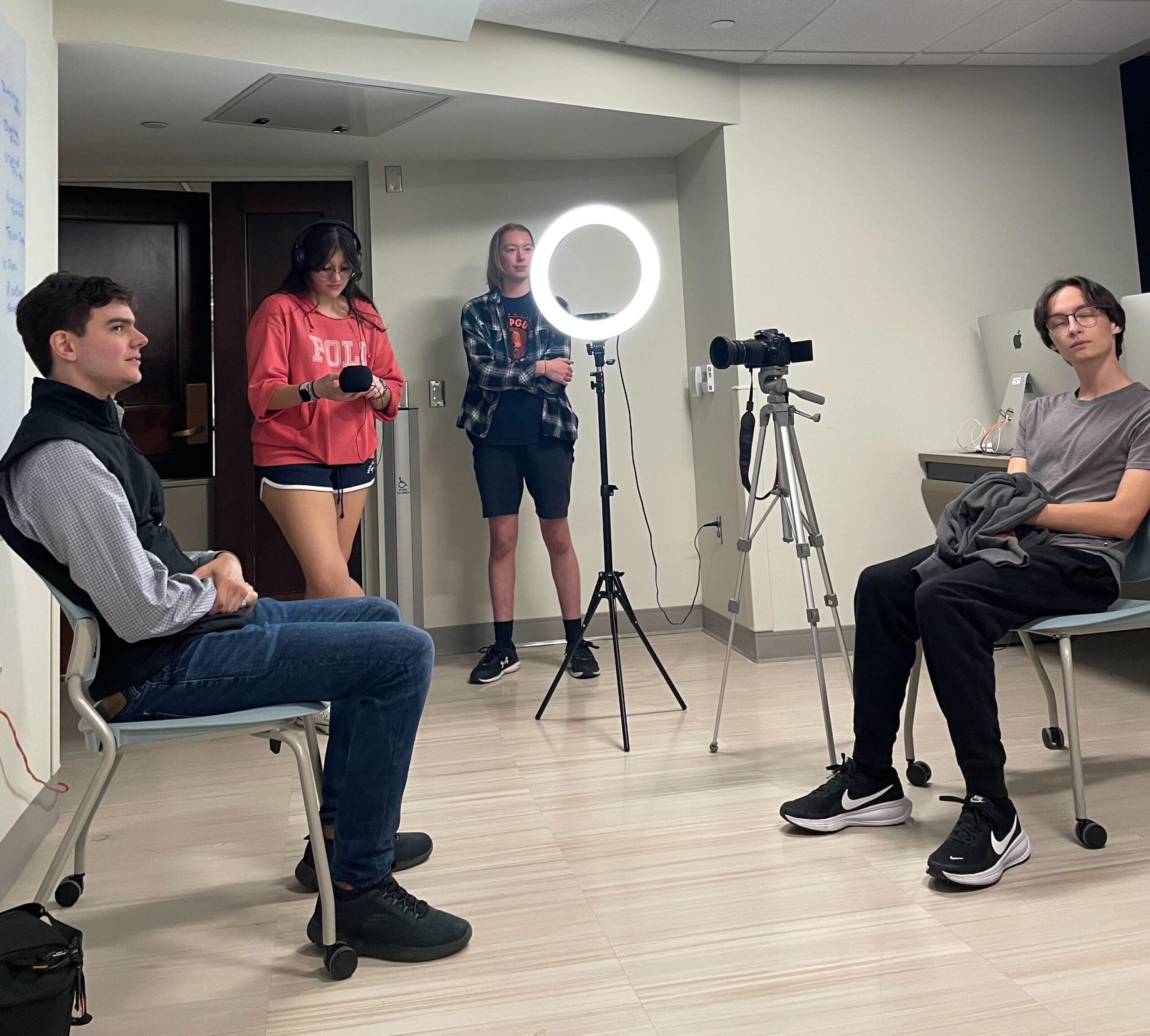
As a kid I always enjoyed making little movie projects. I was the type of person who spent their free time making up funny stories and filming them as a movie rather than going outside. This interest in producing movies only grew as I got older. Starting off as a child with a vision, to now, being a junior in college, I have begun working as a production assistant at a local production studio to continue my passion for filmmaking. While I am on set for these larger productions, I am reflecting on my younger self who had no idea the College of Media was waiting for me to pick up that camera.

What College of Media resources have you found helpful in navigating college?

A resource I will forever promote is the Media Technology Center. There are so many similar offices on campus. The College of Media has their own dedicated unit that is open to students in Media courses in the college to rent out different required items. The range of available equipment may vary per location, but typically there will always be microphones, tripods, lighting, and even green screens ready to be used! The rentable equipment has been particularly useful for me when trying to work on my class projects. With the easy-to-use check-in and check-out system, I truly recommend more students to utilize this resource.

Are there any professors who have been critical to your academics?

Even before the start of my first year, I knew that the professors of media and cinema studies in the College of Media were going to be beyond helpful to my future. This is because I reached out to a few instructors during the summer ahead of my first classes—and there were quite a few who responded with a desire to meet with me and explain the major and all that encompasses studying as a MACS major. This brief introduction into the friendly environment of the faculty stuck with me as I proceeded throughout my time at the University of Illinois.

—Interview by Evita Zimmerman, New Voices Intern

Professor Julie Turnock receives Guggenheim Fellowship


Julie Turnock

Julie Turnock, professor of media and cinema studies, was one of two University of Illinois Urbana-Champaign professors to be awarded a 2026 Guggenheim Fellowship.

English professor Christopher Kempf also received the prestigious award. They are among 223 individuals working across 55 disciplines chosen through a rigorous peer-review process from nearly 5,000 applicants, according to the announcement of the fellows. The John Simon Guggenheim Memorial Foundation awards fellowships to exceptional individuals in pursuit of scholarship in any field of knowledge and creation in any art form, under the freest possible conditions.

Turnock’s project, “Beyond King Kong,” is a technical, industrial, and aesthetic history of the special-effects industry in the Hollywood studio era, circa 1915-1960, well before the digital era. It goes beyond 1933’s special effects landmark King Kong to examine the historical economic structures that organized personnel and production of this distinctive sector of studio-era filmmaking. Attending to the material conditions of special visual effects production and informed by extensive archival research, it centers on the labor performed by unsung “below-the-line” effects workers rarely considered in cinema histories but whose skills make much of “movie magic” possible.

Turnock is the director of the Roger Ebert Center for Film Studies and the author of the books The Empire of Effects: Industrial Light and Magic and the Rendering of Realism and Plastic Reality: Special Effects, Technology, and the Emergence of 1970s Blockbuster Aesthetics. She is the recipient of a National Endowment for the Humanities Fellowship and is a 2020-2022 College of Media Scholar.

Read original press release.

Share on social


Take 5 with Media Alumni: Emmanuel Camacho


Emmanuel Camacho (BS ’11, media and cinema studies), founder of Manny Reel Films, is a Los Angeles-based film director and producer with a decade of experience crafting compelling visual narratives. His career spans music videos, short-form documentaries, and branded content, collaborating with industry giants like Nike, Google, Tidal, and Moët Hennessy. He has directed and produced a tour documentary for Lil Wayne, an inside look at Deadmau5’s record label, and Distilled (2024), a half-hour special on AMC+. Learn more about this College of Media alum, whose work merges documentary storytelling with cinematic aesthetics, capturing authentic moments that resonate across platforms.

Emmanuel Camacho

1. What first drew you to filmmaking and production, and how did that evolve into your current role today?

My first real appreciation for film and filmmaking began when I was 13. My older siblings, Paulina and Orlando, took me to the theater to see Kill Bill, directed by Quentin Tarantino. I remember being completely enthralled by the experience and asking myself, “How can a film make you feel so much?” That question stayed with me and sparked a deep love for cinema.

As I got older, that curiosity turned into intention. I enrolled in film-related classes and programs and eventually pursued a degree in media and cinema studies at the University of Illinois. After finishing undergrad, I knew I wanted to fully commit to building a career in filmmaking. I interned under Chicago-based documentary filmmaker Ben Kolak and later worked as an after-school arts instructor at the National Museum of Mexican Art, teaching Chicago high school students digital media arts.

From there, I began working independently, taking on clients across sportswear, food and spirits, nightlife, and music and culture media. Today, I live in Los Angeles and work with a wide range of clients producing social media content, editorial work, and long-form projects across film and television.

2. What do you consider your biggest career accomplishment. Is there one project that felt especially meaningful to you?

One of my biggest career accomplishments is sustaining my business as an independent filmmaker through major shifts in the media landscape, including the economic impact of COVID-19. Longevity in this industry isn’t guaranteed, and I credit it to staying grounded in my creative convictions while also building strong, lasting relationships with producers, clients, collaborators, and the friends and family who have supported me along the way.

A project that felt especially meaningful was directing a Google commercial in 2021, “Helping Small Businesses: Irazu, Chicago, IL.” It was one of the largest commercial projects I’ve directed, and beyond the creative fulfillment, it played a pivotal role in my career. The opportunity allowed me to make the full move to Los Angeles and continue pursuing my work as a film director at the next level.

Watch Camacho’s commercial:

3. What advice would you give to students who want to break into directing or production but don’t know where to start?

My biggest piece of advice is to create as much as possible and learn to enjoy the process of working. Early in my career, I passed on opportunities because I was too focused on compensation, when I should have been prioritizing experience and growth. That time is invaluable.

If paid opportunities aren’t consistent, create your own projects. Experiment with lighting, scout new locations, and revisit your edits to explore different approaches and workflows. With the Internet today, your work can reach audiences far beyond your immediate circle—you never know who might discover it and be inspired.

If this is truly what you want to do, do it. Stay persistent, stay curious, and keep making work.

4. The media landscape is constantly changing—how do you keep your work both current and true to your vision?

From a young age, I’ve been deeply interested in new media—likely influenced by growing up during the early days of the commercial Internet. I believe it’s important, especially as a student and creator, to stay informed about emerging trends and to actively experiment with new tools and technologies, including AI. Beyond technical growth, I draw inspiration from watching contemporary films, visiting museums, and engaging in creative conversations with friends and colleagues.

Staying true to my vision comes from having developed a clear and intentional visual identity over time. Through years of practice, I’ve learned how to create instinctively while maintaining a consistent point of view. I know what I want my work to look and feel like, and that confidence behind the camera is something I continue to refine through regular practice and self-reflection.

5. What’s one dream project you’d love to direct or produce in the future?

My ultimate dream project is to direct a feature film of my own. I’m especially drawn to telling lighthearted, character-driven stories set in Chicago, my hometown. Since moving to Los Angeles, I’ve become more aware of how Chicago is often portrayed through darker, heavier narratives—projects like The Chi or Chicago P.D. frequently frame the city as rough or dangerous.

While those stories reflect a real side of Chicago, they don’t represent the whole picture. I believe there’s an opportunity to reimagine the kinds of characters and stories that come from the city that highlight its warmth, humor, and humanity, and reveal the beauty that exists beneath the surface.

My hope is to bring those stories to life and, in doing so, inspire both Chicagoans and those who only know the city from afar to see it in a new light.

Share on social

College of Media launches new bachelor’s degree in sports media


After years of planning, a new bachelor’s in sports media is ready for prime time.

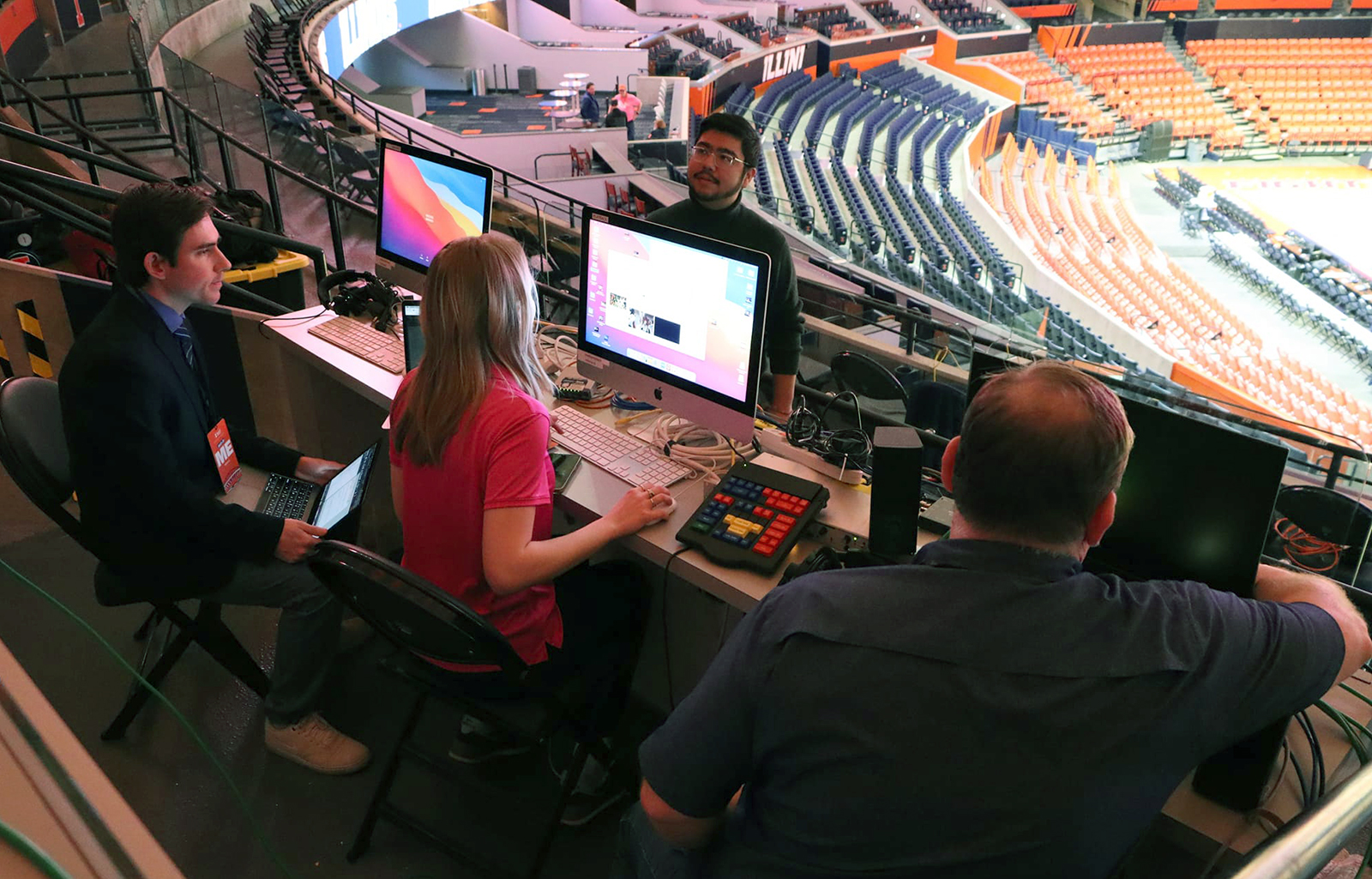
Illini Sports Night hosting live pregame show before Illinois women's basketball game.

In response to a growing interest from students—and with a proven track record of successful alumni across the sports media industry—the College of Media is expanding its roster to offer a Bachelor of Arts in Sports Media.

The program will prepare students for a variety of careers in sports media, including as PR and strategic communication managers, content creators and digital storytellers, social media and data analysts, sportscasters and producers, and more.

The new undergraduate degree received official approval from the Illinois Board of Higher Education in Spring 2026.

This is an area of high interest from students and employers alike, and, together with our campus partners, we are prepared to offer students a first-rate experience marked by the innovation, rigor, and personalized attention that defines all of our degree programs in the College of Media.

Tracy Sulkin

College of Media Dean

Starting April 27, current University of Illinois Urbana-Champaign students may apply to transfer into the BA in sports media for Fall 2026. Transfer students from outside the University of Illinois can apply to the program for Spring 2027. First-year students can apply for Fall 2027 entry.

Courses from all three departments in the College of Media—Advertising, Journalism, and Media & Cinema Studies—will make up the core curriculum for the sports media degree.

“We’re excited to offer this interdisciplinary degree to prepare students for exciting career paths within sports media. This is an area of high interest from students and employers alike, and, together with our campus partners, we are prepared to offer students a first-rate experience marked by the innovation, rigor, and personalized attention that defines all of our degree programs in the College of Media,” said Dean Tracy Sulkin.

As streaming, podcasting, and multi-screen sports viewing continue to reshape how teams, fans, and brands interact, graduates who understand these evolving dynamics will have an advantage in the job market.

Illini Sports Night interviews sports anchor alum Cassie Carlson

The College of Media already offers sports-focused courses, including “Sports Public Relations,” “Sports Journalism,” “SportMedia, Technology & Culture,” and just this spring, “Sports Advertising & Branding” debuted. Students can also gain firsthand production and reporting experience through Illini Sports Night, a program covering Illinois Athletics, through the course “Newsroom Experience.”

Sports media majors will be able to take elective courses within the Department of Recreation, Sport, and Tourism in the College of Applied Health Sciences, such as “Sport Analytics: Data-Driven Decision Making,” “The Foundations of Sport Management,” and “Issues in Intercollegiate Athletics: The Big Ten Conference.”

To expand experiential learning opportunities, the College of Media plans to collaborate with alumni working in the sports industry to create additional immersion and internship opportunities. These efforts will build upon past programs that included tours of athletic companies like Nike and Adidas. Alumni currently hold top positions across sports media such as producing, anchoring, and writing for national networks and publications; leading communications and videography for professional sports leagues; working with celebrity athletes, athletic brands, and sports teams; and some have even competed as Olympic athletes.

Students will also benefit from the extensive opportunities that come with the University of Illinois’ premier athletics program and its membership in the Big Ten Conference. For example, students have produced live pregame shows for Illini Sports Night in collaboration with the B1G+ network, and many intern at Fighting Illini Productions, the video team for the University’s Division of Intercollegiate Athletics. Additionally, DIA colleagues serve as adjunct instructors in the College of Media, and both local and national sports personalities frequently visit classes, including Brian Barnhart, the Illinois football and men’s basketball play-by-play announcer, and Gus Johnson, the lead college football and basketball play-by-play announcer for FOX Sports.

The BA in sports media is the sixth undergraduate degree offered by the College of Media, along with advertising, computer science + advertising, journalism, media and cinema studies, and an online degree in media for transfers. Learn more about Media’s academic programs.

Share on social

Content Creation Lab to help local high school students acquire media production skills


An open, hands-on media studio for local high school students will launch this spring that encourages critical thinking, media literacy, and community engagement.

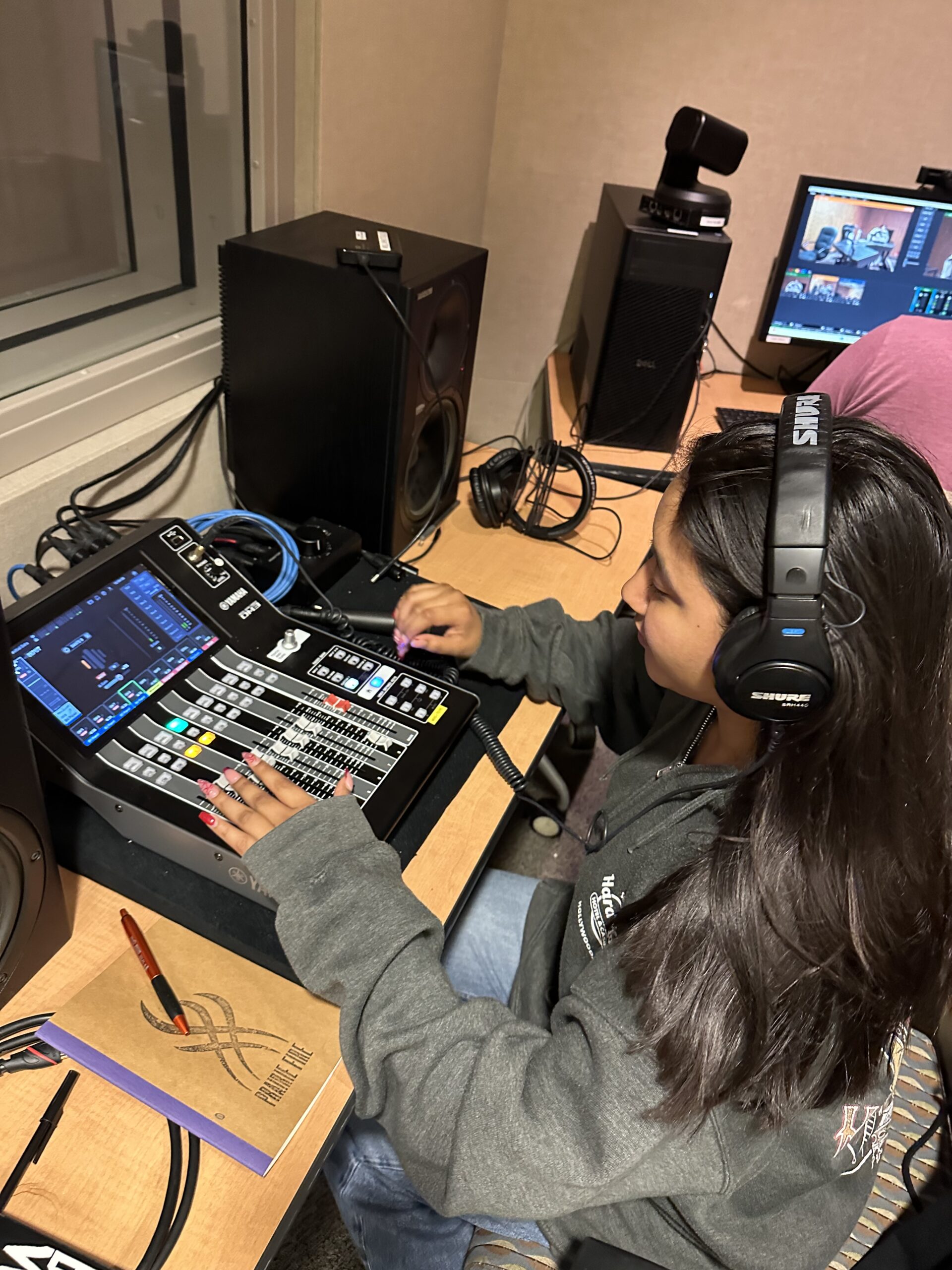
audio workshop at IPM

Angela Aguayo, associate professor of media and cinema studies, created the Content Creation Lab to help young teens acquire media production skills. The pilot program, which will be held in new podcasting studios at Illinois Public Media, was awarded a grant from the College of Media and is supported by the Illinois Community Media Project.

The first Content Creation Lab workshop will kick off this spring on Saturdays, 10 a.m. to 12:30 p.m., on April 4, 11, and 25. There is no fee for students to participate.

Aguayo said the program will offer a space for teens to try out new ideas, collaborate, self-direct, and articulate their own perspective on the world through media production.

“My biggest hope is that local youth can see the College of Media and the Content Creation Lab as a resource hub and a space for exploration, that we are a location where students can come decide if they’re interested in developing lives as media makers, creators, and thinkers,” said Aguayo.

This spring, the Lab will focus on media literacy, audio production, storytelling, and podcasting. In Fall 2026, instruction in video production and short-form storytelling will also be taught.

Aguayo has been training a team of undergraduate and graduate students who will help facilitate the open studio lab, guiding participants to develop their own projects through a practice of media literacy and encouraging them to direct their curiosity toward the local community as a place of discovery. The student-led team includes journalism major Leonor Carrillo; Earth, society, and environmental sustainability major Angela Conde; and Institute of Communications Research doctoral students Tom Farrenkopf and Gillian Paxton. Carrie Wilson-Brown, senior lecturer of media and cinema studies and of advertising, will also help oversee the project.

There’s a barrier to students trying media production, and the idea of the Lab is to lower that barrier so that students who might want to pursue media—either as a hobby or as a profession or as a pathway of study—can do so without having it cost anything.

Angela Aguayo

Associate Professor of Media and Cinema Studies, Creator of Content Creation Lab

“We’re going to lead students through the process of thinking about the things that concern them the most, the questions that they have about their world and their local community, and where those stories show up,” Aguayo said.

High schoolers will also be able to experiment with audio and video tools to learn more about recording and editing, an invaluable opportunity for local teens who may not have access to production equipment or facilities. The Lab’s partnership with Illinois Public Media will provide an opportunity for young people to work in a professional media facility and acquire mentorship from experts there.

“There’s a barrier to students trying media production, and the idea of the Lab is to lower that barrier so that students who might want to pursue media—either as a hobby or as a profession or as a pathway of study—can do so without having it cost anything,” Aguayo said.

In addition to providing instruction and hands on experience with media tools, Aguayo would like to see the Content Creation Lab function as a space for continued research on the evolving pedagogical approaches to youth media production.

While some students may end up with a finished product, Aguayo envisions the Content Creation Lab as a creative space for development.

“The Lab is not outcome-focused, it’s process-focused. What we’re really doing is [determining] how we can help students understand that media production is a productive way to contribute to their community.”

Share on social

Ebert Symposium 2026 focuses on fandom and the media


Ebert Symposium 2026

The 2026 Chaz and Roger Ebert Symposium, presented by the Roger Ebert Center for Film Studies, will address “Onscreen Fantasies/IRL Illusions: Fandom, Parasocial Relationships, and the Media.” Join us for this free two-day event on March 30-31, featuring a film screening, a roundtable discussion, and keynote address.

Monday, March 30

Film Screening: The Wiz

7 p.m., Knight Auditorium, Spurlock Museum

The Wiz 1978 poster

Before Wicked, there was The Wiz.

Join the Ebert Center for a screening of Sidney Lumet’s The Wiz (1978). See cultural icons such as Michael Jackson, Diana Ross, and Nipsey Russell follow the yellow brick road in this musical retelling of The Wizard of Oz.

While considered a failure upon its release, the film has since developed an enduring and charming legacy, as well as a dedicated cult fan base.

The film will be introduced by Dr. Alfred L. Martin, Jr., Chair of the Department of Cinematic Arts at University of Miami, and Ebert Symposium keynote speaker.


Tuesday, March 31

Roundtable Discussion

2-3:30 p.m., Knight Auditorium, Spurlock Museum

Cait Coker
Youngin Kang
Gustavo Nery
Stephanie Pérez
Kendra Williams
Nansong Zhou

Join a roundtable discussion with doctoral students from the Institute of Communications Research on the Ebert Symposium theme of “Onscreen Fantasies/IRL Illusions: Fandom, Parasocial Relationships, and the Media.” Not only will it explore themes from The Wiz and the Ebert Symposium keynote speech, but it will also expand to all types of media. Moderated by Cait Coker, Curator of Rare Books and Manuscripts at the University of Illinois, this discussion will be held among ICR students Youngin Kang, Gustavo Nery, Stephanie Perez, Kendra Williams, and Nansong Zhou. Audience participation is encouraged. 

Keynote Address

4 p.m., Knight Auditorium, Spurlock Museum
Or register to join via Zoom

Alfred Martin Jr.

“What The Wiz Was (and Is): Media Industries, Distribution, Reception and The Wiz”

The Ebert Symposium keynote will be delivered by Dr. Alfred L. Martin, Jr., Chair of the Department of Cinematic Arts at University of Miami.

As a part of the Ebert Symposium’s theme, “Onscreen Fantasies/IRL Illusions: Fandom, Parasocial Relationships, and the Media,” Martin draws attention to The Wiz as the first Black-cast blockbuster and re-assesses its significance to issues of Black media production, initial reception, distribution, and its enduring fandom. Concomitantly, this presentation is about the ways, particularly within a socio-political environment hostile to Blackness, The Wiz provides a prism through which to place the feminist “I” and joy into research. Engaging media industry studies, fandom/reception studies, and media studies, this presentation argues that the history and ongoing legacy of The Wiz is far more complicated than reducing it to a financial failure.

Martin is associate professor of media studies and chair of the Department of Cinematic Arts at the University of Miami. He is author of Fandom for Us, by Us: The Pleasures and Practices of Black Audiences (New York University Press, 2025) and The Generic Closet: Black Gayness and the Black-Cast Sitcom (Indiana University Press, 2021), editor of Rolling: Blackness and Mediated Comedy (Indiana University Press, 2024), and co-editor of The Golden Girls: Tales from the Lanai (Rutgers University Press, 2025). A former marketing communications executive and ballet dancer, in his spare time, Martin is a ballet teacher, coach, and choreographer.  

Share on social

Documentary Club provides students a platform for real-life storytelling


From capturing fall aesthetics to investigating local ghost stories, students in the Documentary Club take a deeper look into campus life.

Documentary Club

The registered student organization began in Spring 2024 to create a supportive space for both amateur and professional documentary filmmakers. They meet weekly in Gregory Hall to discuss and work on current projects, as well as host workshops to enhance their interviewing, filmmaking, and editing skills.

“I don’t necessarily need it to be good, professional, or amazing,” said Paige Gaines, president of the Documentary Club, and a senior earning a dual degree in media and cinema studies and in communication. “I just want people to make something and grow their skills because I think those skills are really transferable.”

Gaines said she was inspired to form the club because there was no official community for documentary-making on campus.

“I decided to be the change that I wanted to see and make a club for anybody who wants to be able to tell their own stories.”

Gaines says that documentaries are important because they shed light on stories that are often forgotten about in the media.

“There are so many different, wonderful, and beautiful things that are being discovered in our world,” Gaines said. “A lot of people have made big differences in our world, and those stories are often not talked about.”

The club is modest in size, with only five members, but welcomes interested students to join them. They currently have a handful of projects in the works, including a mini-series about campus life called Candid Campus. That project will feature footage from campus that shows what students see and hear on a typical school day at the University of Illinois.

“We’re going around campus and just seeing what’s happening,” Gaines said, adding that they are working with other student organizations to make short informational videos about them.

Gaines’s most recent video in this project is a profile about Velosity Dance, a sorority-led dance club.

“Filming dance is so interesting,” Gaines said. “You can play around a lot with how the body moves, so I’m really excited for the final project.”

The documentaries usually take a semester to complete and are often captured on smartphones or cameras that students in College of Media courses can check out from the Media Technology Center.

“We use whatever we can get our hands on,” Gaines said. “It’s truly just a hodgepodge; we fix it all in post-production, where we do a lot of color correcting to make everything look cohesive.”

Gaines’s favorite part of the club is the community.

“It may be small, but we are mighty,” Gaines said. “I love working with the people here. I just hope these friendships and relationships will last because it’s something I have found really fulfilling.”

To learn more about the Documentary Club, watch their videos on YouTube, visit their website, or check out their Instagram. To join Documentary Club, or to ask questions, please email uiucdocumentaryclub@gmail.com.

Photos courtesy of Paige Gaines.

Share on social
Centennial Circle: Investing in the next century of media education

Join a once-in-a-lifetime opportunity to shape the future of the College of Media at Illinois

Futuristic illustration of person viewing screens


A centennial is more than a milestone—it’s an invitation to define the future together.

As the College of Media approaches its 100th anniversary, we celebrate our proud legacy and commit to advancing the next era of media education and research. Illinois Media graduates have informed the public, shaped culture, advanced technology, and transformed the way the world connects. To ensure this momentum carries into the next century, the College of Media invites its most passionate supporters to help lead the way through the Centennial Circle.

The Centennial Circle will be launched to honor visionary donors who make transformational investments. Induction into the Centennial Circle recognizes gifts of $100,000 or more to any fund in the College of Media between January 1, 2026, and December 31, 2027. Donors can make an outright gift, a pledge, or a deferred gift such as a bequest in their will or a beneficiary designation of their IRA.

College of Media Dean Tracy Sulkin emphasized the historic significance of the Centennial Circle as the college celebrates its 100th anniversary in 2027.

“A centennial invites us to honor our past while envisioning a bold future. In this unique moment, philanthropy will play a central role in shaping the next 100 years of media,” said Dean Sulkin. “Joining the Centennial Circle is an opportunity to create a powerful, lasting legacy—one that uplifts generations of students and strengthens media education and research at Illinois for decades to come.”

Donors may choose to support any fund in the College of Media, including the Centennial Fund, which helps meet emerging priorities, from technology advancements and innovative pedagogy to faculty and student research. Recent examples of donor-funded impact include the founding of the Richard and Leslie Frank Center for Leadership and Innovation in Media and the Roger Ebert Center for Film Studies, student support such as scholarships and the Media Technology Center, and faculty support such as research initiatives and named professorships.

Preparing students for academic and professional success means ensuring they can navigate, analyze, and communicate effectively in an ever-changing media landscape. Support for the Centennial Fund positions the college to address complex societal challenges, including AI, media literacy, civic and public engagement, and the accessibility of news and information.

Joining the Centennial Circle is an opportunity to create a powerful, lasting legacy—one that uplifts generations of students and strengthens media education and research at Illinois for decades to come.

Tracy Sulkin

College of Media Dean

“The Centennial Circle reflects the power of partnership between the College of Media and our alumni and friends,” said Deanne Johnson, senior assistant dean for advancement. “By aligning philanthropic vision with emerging priorities, donors help ensure Illinois remains at the forefront of media education for generations.” 

The historic cohort of Centennial Circle donors will be recognized during a College of Media centennial celebration and featured across the college’s communication channels. Recipients will also get a commemorative Centennial Circle lapel pin.

Join us in shaping the College of Media’s second century:

We welcome the opportunity to explore how your philanthropic vision can align with your passions and create lasting impact for the College of Media’s second century. To learn more, please contact Deanne Johnson, Senior Assistant Dean for Advancement, at 217-244-5466 or jhns@illinois.edu.

Share on social

Illinois announces first dual-credit initiative, bringing media and other courses to high school students


Understanding the role of popular television shows and movies in society—and in students’ own lives—is a central focus of a high-enrollment 100-level course in the College of Media at the University of Illinois Urbana-Champaign.

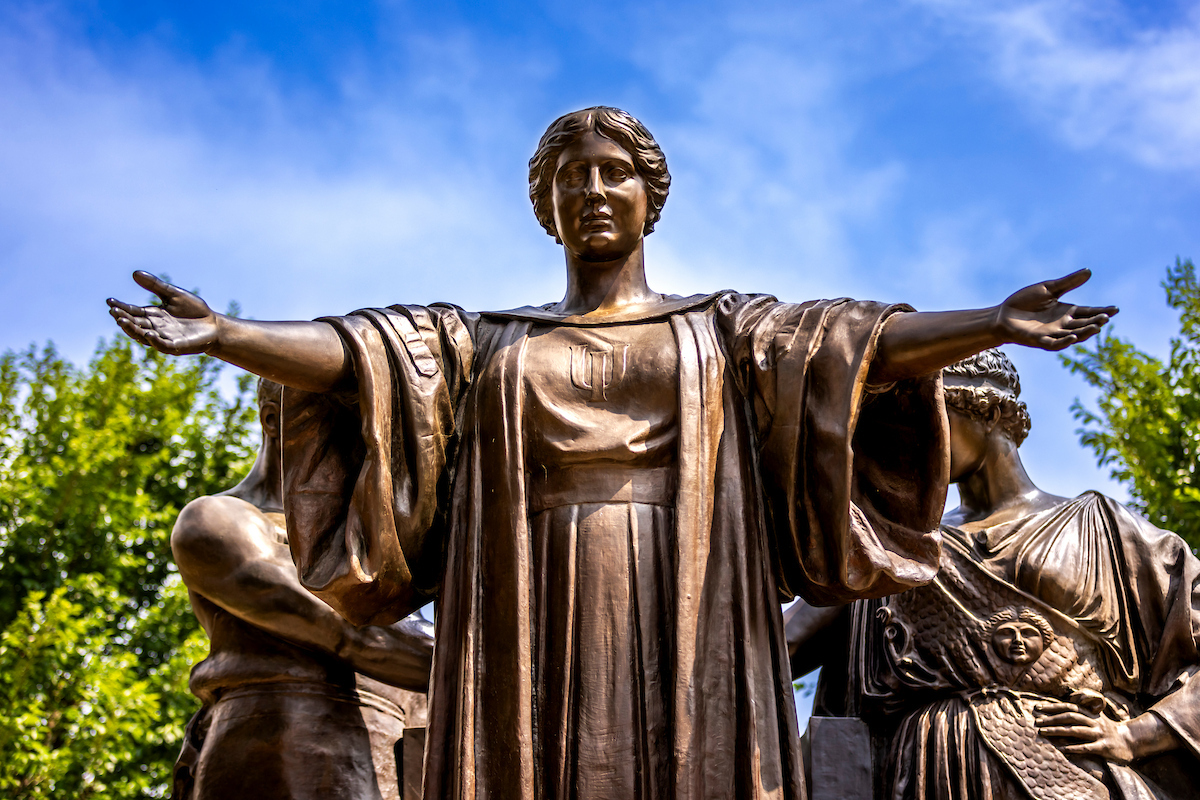
Alma Mater

Starting in the 2026-27 academic year, the media and cinema studies course “Introduction to Popular TV and Movies” will be one of four U of I courses also taught in the classrooms of select Illinois high schools as part of the new Dual Credit Learning Accelerator initiative.

The four courses are:

  • ASTR 150: Killer-Skies: Astro-Disaster
  • CS/STAT 107: Data Science Discovery
  • MACS 100: Introduction to Popular TV and Movies
  • SPED 117: The Culture of Disability

This pilot opportunity marks a new approach for the university in offering its popular general education courses directly to high school students across Illinois in the form of dual credit—at no cost to those students.

“The dual-credit initiative reflects our university’s commitment to expanding access and opportunity for students and families across Illinois,” said Provost John Coleman. “Through the Learning Accelerator’s innovative learning model, we’re bringing transformative educational experiences to high school classrooms and preparing students throughout the state for success in college and beyond.”

Led by the Office of Online Learning and the Office of Undergraduate Admissions, the Learning Accelerator was funded through the American Talent Initiative IDEAS grant to establish the university’s first dual-credit initiative.

The result is a dual-credit model that can scale up so that an academic unit at the U of I can offer any of its courses to a high school student.

The College of Media is proud to support this initiative, which strengthens the land-grant mission by expanding access to an Illinois education and promoting early student success.

“The dual-credit program offers us the opportunity to bring our exciting media curriculum to students who interact with the media but have a limited idea as to how it’s developed and created,” said Jason P. Chambers, associate dean for access and engagement and professor of advertising. “By providing students access to courses such as MACS 100, they’ll get a chance to consider a media major before arriving at the University of Illinois.”

Through the MACS 100 course, students will build media literacy skills while thinking critically about popular media. One goal of the course is to teach students how to see beyond narrative to address how the film form—such as cinematography, editing, sound, and special effects—generates meaning.

“The most important lesson, I believe, is that even ‘popular’ media, films, and TV shows produced for mass audiences have meaning and complexity,” said Jon Knipp, senior lecturer of media and cinema studies who teaches MACS 100. “These are cultural expressions that tell us a lot about the world and ourselves if we pay attention—and thinking about something deeply makes it more enjoyable.”

The four new dual-credit courses slated for the 2026-27 academic year were developed to showcase the breadth of educational topics offered at Illinois, with faculty partners who are passionate about reaching students from underrepresented populations and interested in presenting their courses in a setting outside of campus that might spark interest in their fields of study.

“We’re trying to offer both an advanced educational experience, but also something that students might not get in a regular high school class,” said Hilary Gross, the Learning Accelerator program coordinator. “The hope is that we might show high school students that college can be whatever you make it.”

For more details about this new program, see the University of Illinois News Bureau press release.

Share on social

College of Media
119 Gregory Hall
810 S. Wright St.
Urbana, IL 61801
217-333-2350